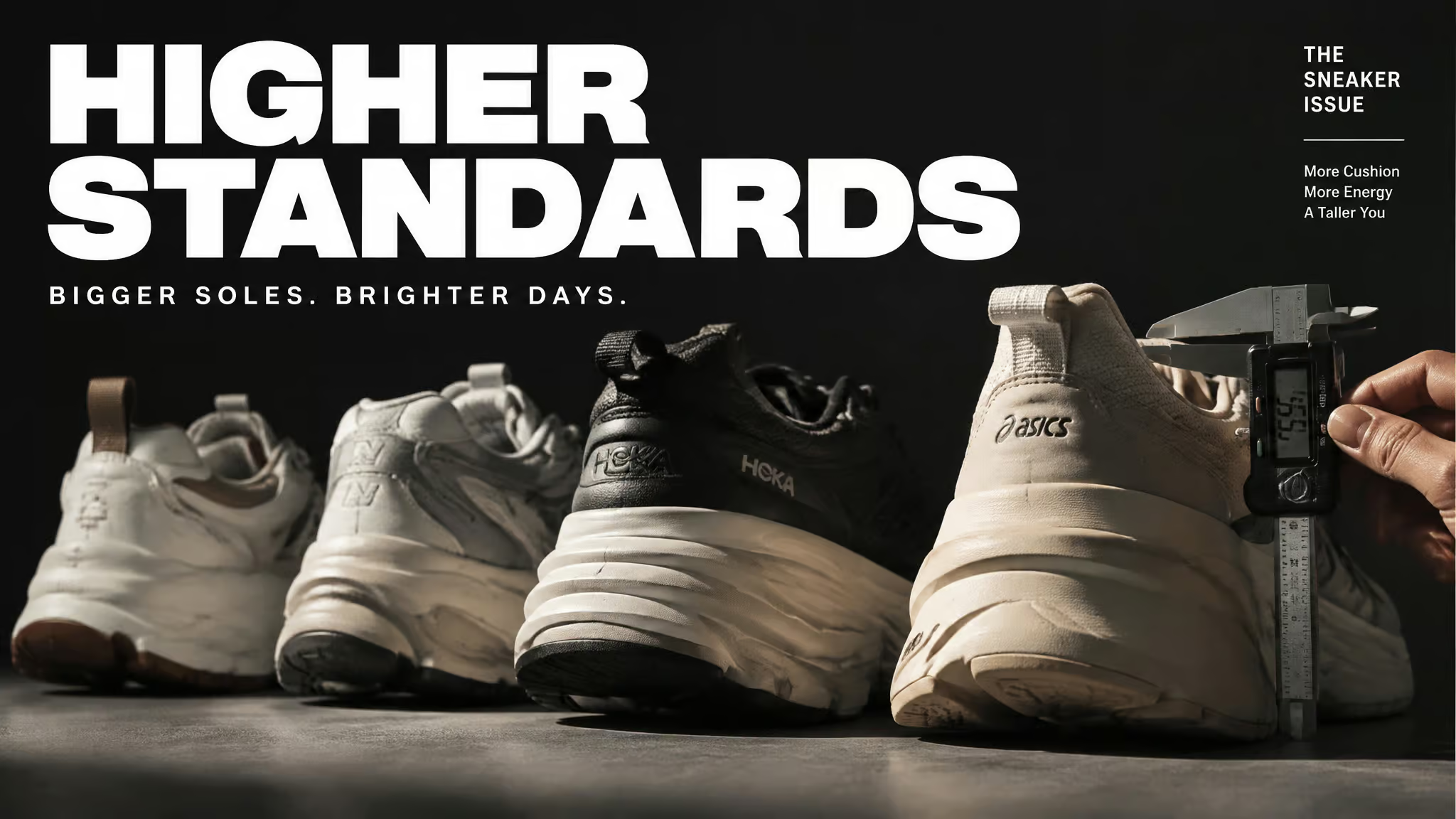
If you want one number to hold onto: a shoe makes you genuinely taller when its heel stack clears 35mm AND the midsole is firm enough not to squash under your weight. Regular chunky sneakers get you about an inch of gain off the visible sole. Elevator shoes hide a wedge inside and claim up to around 2.6 inches from the engineered ones, with platform Converse showing roughly 3″. Here’s the yardstick everything else hangs on: the average sneaker measures 30.7mm at the heel and 19.5mm at the forefoot, weighs 13.8oz, and costs $115. Weights are measured in men’s US 9, so size up your expectations accordingly if you wear a 13.
And here’s the twist most articles skip: the height you see is not the height you keep. Soft foam feels great for ten minutes, then your foot sinks in and takes the height you paid for with it.
Key Takeaways
The Nike Air Max DN is the best overall pick, with a 40.3mm heel stack from its visible Dynamic Air unit, plus a 104 shock absorption score and 58.4% energy return.
A shoe only counts if it’s tall AND firm: 35mm+ heel stack and a midsole firmer than 33 on the Asker C hardness scale, because soft foam compresses and eats your gain.
Elevator shoes add the most hidden height (Gova tops out at 2.6 inches from $139), but every lift figure in that category is the brand’s word; nobody independent has lab-measured one.
Table of Contents
What actually makes a shoe height-boosting
Two things, and you need both. The heel stack has to hit at least 35mm, and the midsole has to be firmer than 33 on the Asker C scale, which is just a gadget that pokes the foam to see how soft it is. Tall enough to matter, firm enough to keep the height. That’s the whole filter.
The Air Max DN’s 40.3mm heel is a good reference point for what a real height shoe looks like.
The classic first-timer mistake is grabbing the tallest-looking soft-foam shoe on the wall. Feels like a cloud in the store. An hour into walking, you’ve sunk into it and you’re back at your normal height with sore arches. Quick self-test: press your thumb into the midsole. If it collapses like a marshmallow, you’re buying height you’ll lose by lunchtime.
How these numbers were actually measured
The millimeter figures in this piece come from RunRepeat, an independent lab that buys every shoe with its own money. No sponsors, nobody paid them to like anything, and all the results are public if you want to go check the numbers yourself.
They don’t mess around, either. Shoes get cut in half and measured with calipers at set points. Softness gets stabbed with a durometer. Durability gets checked with a Dremel, and leather gets verified with a torch and a scratch awl. Over 30 data points per shoe, worn and measured.
Which is why the caliper numbers here outrank any brand’s inch claim. Marketing says whatever it wants. Calipers don’t.
Nike Air Max DN: best overall (40.3mm)
If you just want the one answer, this is it. The 40.3mm heel comes from that big visible Dynamic Air unit, so the height is real and out in the open. It soaked up impact at a 104 score, and 58.4% energy return means it doesn’t feel dead underfoot by the afternoon. 13.1oz, so slightly lighter than the average sneaker. Breathability scored 5/5. Sweaty-feet guys, this one’s for you.
The honest caveat: the upper doesn’t stretch and the toebox runs low. Wide or high-volume feet risk pressure points, maybe black toenails. If that’s you, skip it and look at the 9060 below.
New Balance 9060: best chunky pick (37.2mm, but heavy)
For guys who want the tall look on purpose. The stack runs 37.2/26.0mm against that 30.7/19.5mm average, so yeah, it’s noticeably taller. Heel shock absorption hit 100, and the platform base is huge at 121.0/103.1mm, which is why a shoe this chunky doesn’t wobble. Twist resistance is 4/5, grip is 18.6% better than average, and the Dremel durability test left only an 0.8mm dent. The outsole holds up.
The con is blunt: 15.1oz / 427g. That’s a lot of shoe on a Tuesday commute. You’ll feel it by the end of the day.
HOKA Bondi 9: tallest tested pick (41.3mm)
41.3/32.2mm makes this the tallest of the tested picks, and the heel’s 146 shock absorption score beats plenty of actual running shoes. It cushions like a proper runner but looks like a dad shoe. The new supercritical EVA foam is why it manages to be both tall and light: 10.7oz, actually lighter than the previous Bondi, which is genuinely surprising for this much shoe. Durability checks out too, with an 0.9mm Dremel dent and solid toebox scores.
But: narrow toebox. Slim feet only. Wide-footed guys should skip it and save themselves the return shipping.
Nike Air Max 270: best futuristic pick (36.4mm)
36.4/20.3mm puts it above average without going full platform. The giant heel bubble delivers a 107 shock absorption score, so the comfort is real, not just looks. It’s also light at 10.6oz and flexible, which you wouldn’t guess from that big unit back there. Breathability is 5/5.
Fun bit of lore: it was the first pure lifestyle shoe in the Air Max line. Built for looking good, not running. Which is exactly the job here.
The trade-off: weak heel grip. Slippery tile or rain, pay attention. That smooth Air unit is the reason. Treat it as a dry-climate, casual, all-day shoe.
Nike Air Force 1 ’07 LV8: best business casual (36.7mm)
The one that works with actual clothes. 36.7/20.1mm of height is hidden in a silhouette nobody questions, with a full-length Air unit putting rearfoot protection at 101. The leather is genuine, verified with a torch and scratch test, and wipes clean. Fake leather is everywhere at this price, so that matters. 5/5 twist resistance means great ankle support.
Cost, honestly: $115, heavier than other AF1s, not for wide feet, and the break-in is long. Classic AF1 reality. If you go for the Nocta premium version, it runs big; size down half.
A creator who measured real-world gains on video clocked the AF1 at about 2 inches. Not bad for a shoe you can wear to the office.
The lab’s unnamed dad-shoe pick, and why we won’t invent it
Here’s a strange one. The source describes a genuinely great dad shoe: lighter than average, real suede, extra-thick cushioning, and six width options, which is a big deal if you’ve got wide feet. Strong arch support and stability, an outsole that lasts, breathes well. Cons are real too: delicate mesh on the toebox and a bit stiff out of the box.
But the model name isn’t given anywhere in the source. And I’m not going to guess and dress it up as a pick. If you see a shoe matching that description, you’ll know what to check for. That’s the useful part anyway: the traits, not the name.
New Balance 574: best budget pick ($90)
The surprise here is that the cheap option is genuinely tall. 38.2/25.2mm is well above average, so the $90 shoe out-stacks plenty of $150 ones. Heel cushioning is 92, decent for the money but not class-leading, and I’ll say that straight. Grip is 27.9% better than average at 0.55, genuinely one of the grippiest here. Real suede, holds up over time, and it comes in a pile of colorways.
The cons: runs warm, the platform’s a bit stiff, and the tongue wanders around. Honest cons, but none of them are dealbreakers at this price.
What Nike adds, what New Balance adds, and why basketball shoes fall short
One creator ranked shoes by actual measured height gain on video, and he kicks off with sneakers rather than men’s height increasing boots. These are his rough numbers, not lab calipers, but the relative order holds. The Nike shoes he ranked by actual stack height line up with these numbers: Air Force 1 around 2 inches ($115), Air Max 97 about 1.6 inches, Air Max 95 about 1.4. New Balance: 530 about 1.7 inches ($100), 2002R about 1.5 ($140), 960 at 1.6-plus, and 990 V6 at roughly 1.66 ($200, FuelCell foam, and his comment section says size down half). Adidas note: the Ultraboost 5 gets creator mentions but has no lab stack data, so I can’t rank it. Flagging the gap rather than faking a number.
As for basketball: the data answers it. Hoops shoes cap at a 38.4mm heel stack, versus 50.5mm for sneakers overall, 50.1 for road running, and 46.9 for hiking boots. Regular sneakers are already the tallest game in town. Hiking sandals and tennis shoes fall under the 35mm bar entirely. Skip them if height is the goal.
Elevator shoes: hidden lifts, and which claims to distrust
Elevator shoes are footwear with hidden internal wedges that add roughly 2.4 to 4 inches. Unlike chunky sneakers that make you taller, where the boost equals the visible sole, the wedge hides inside so nobody clocks it. GuidoMaggi is the big premium name, and around 3.1 to 4 inches per model is the best-supported figure. The 4 to 6 inch stuff is marketing. Some retailers frame it as 2 to 5 inches.
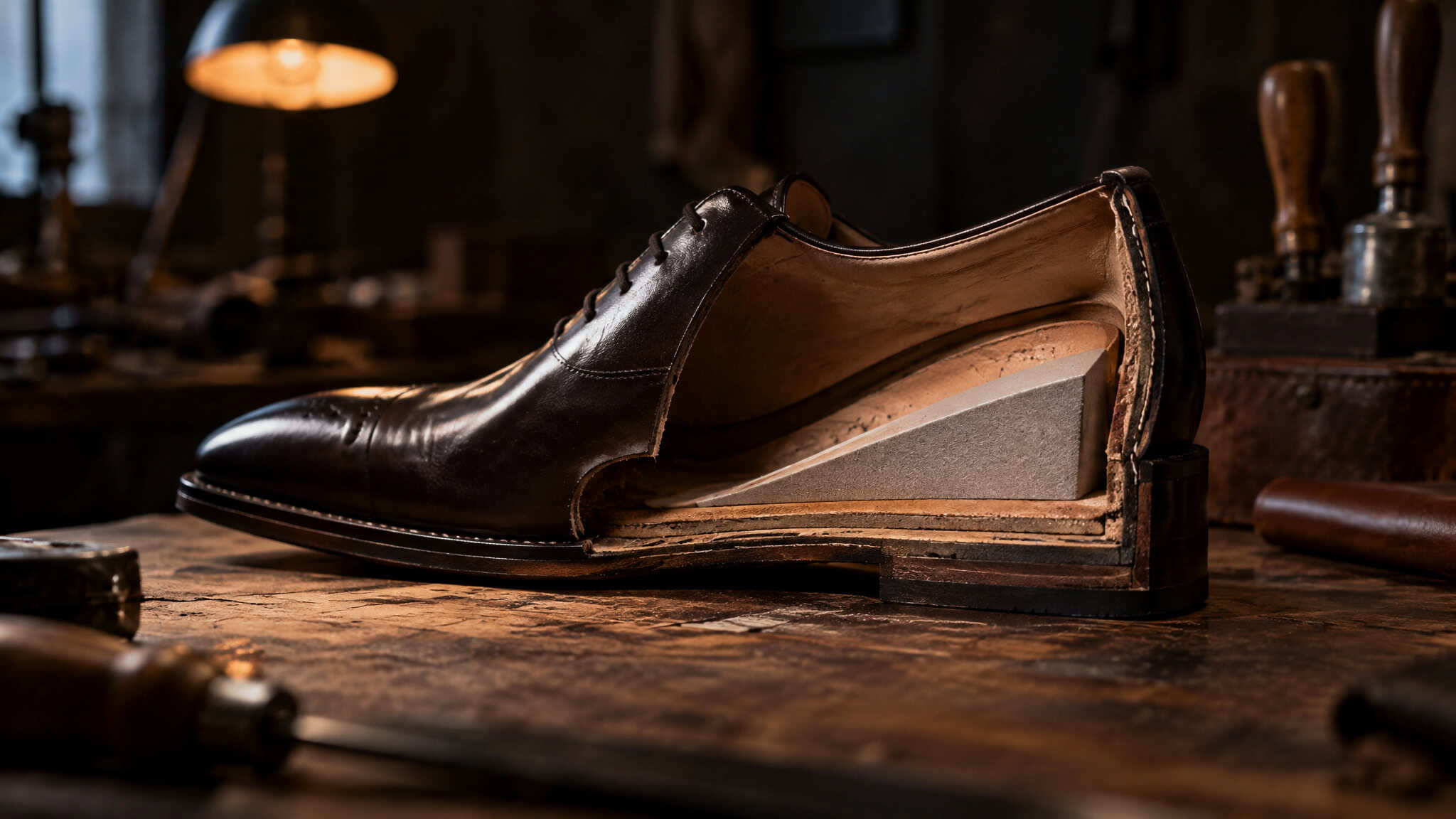
What does that look like in practice? A guy who’s 5’7″ (1.70m) reads as about 6’1″ (1.85m). A 5’9″ guy gets near 6’3″. Tallmenshoes.com is the established budget option: 2 to 5 inch claims, discreet packaging, a satisfaction guarantee. Treat the before/after photos as marketing, not measurement.
Say it once, clearly: nobody independent has lab-measured any elevator shoe. Every lift figure is the brand’s word. The tradeoff is hidden 2.4-plus inches versus a visible 1 to 1.6 inch sneaker gain, at higher cost and unverifiable numbers. For a deeper dive on that category, see our elevator shoes guide.
Gova: engineered elevator shoes from $139
For a genuine, everyday-wearable 2-inch-plus lift, the Gova Casse v2 is the entry point: 2.4 inches of hidden lift at $139. This is the ~2-inch answer for men who don’t want to wear obvious platforms. It carries 4.7 stars across 27 reviews with a 93% recommendation rate, small sample, sure, but that’s a strong record and I’d rather report it exactly as it is. And if you’re aiming beyond this class, my guide to 3 to 4 inch lifts covers what’s actually achievable at that height.
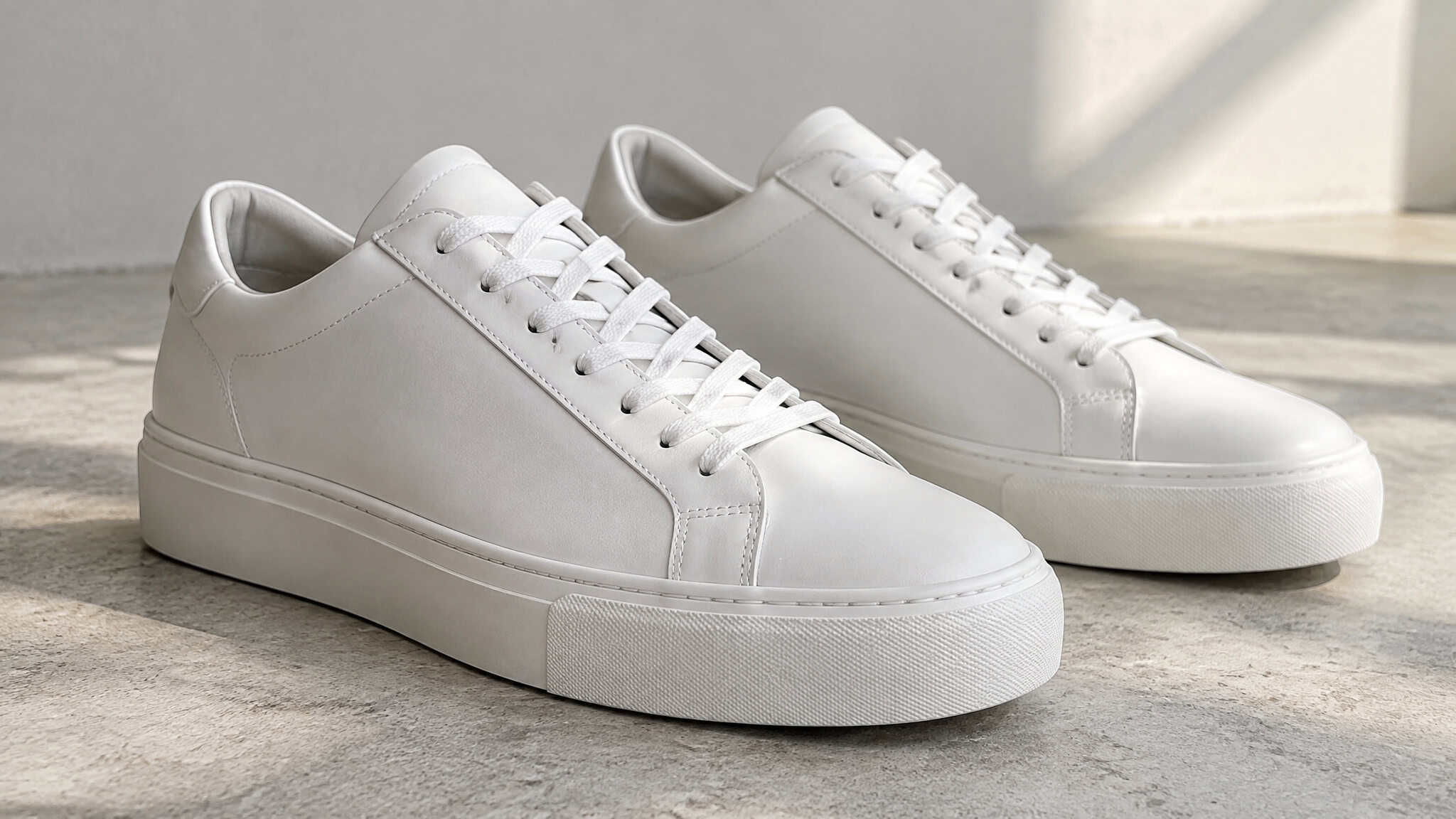
What separates Gova from the cheap end of this market is how the lift is built. It’s engineered into the sole structure itself, not a wedge you slide in, so nothing shifts or shows. Real leather, suede, and EVA, designed in Buenos Aires, which at least signals it’s not another relabeled factory catalog. Pricing runs $139 to $179, which puts it in Common Projects / Koio territory. That’s the point: these read as fashion sneakers that happen to lift you. There’s a 30-day money-back guarantee and free US shipping (5 to 10 days standard, 3 to 5 express).
The lineup, briefly:
- Casse v2, 2.4 inches, minimal everyday silhouette, breathable enough for all seasons. The starter.
- Aoraki, 2.6 inches, the max lift in the range. Leather with denim panel accents that reads as a fashion sneaker, not a secret weapon. Running low on stock, mentioned here as a fact, not a sales tactic.
- Veleta, $179, the dressier play for nights when a chunky sneaker doesn’t cut it. Premium leather and suede, clean minimalist shape. Priciest in the range and thin on stock.
Now the honest caveats. The lifts here are still brand-claimed, not independently measured, same as every elevator shoe on the market. Two of the three models have low stock. And Gova’s 2.6-inch ceiling is more modest than GuidoMaggi’s 3 to 4 inch figures.
But that modesty is part of why Gova reads as credible: modest claims, decent review record, real materials. That’s more than the 6-inch marketing crowd can say. If you’re weighing this against mainstream options, our roundup of shoes that make you 2 inches taller covers the sneaker side.
Drop-in inserts, insole swaps, and the reseller trap
Straight answer on insoles: the insert is the weakest option. Cheap and immediate, yes, but it eats your toe room, changes how you stand, and can slide around mid-walk. Built-in systems spread the load properly and stay invisible. That’s why they cost more, and it’s why they’re worth it if you’ll actually wear them.
One nuance on swaps: the stock insole is already counted in the measured stack, so there’s no hidden bonus height under the footbed. Only swap insoles where the stock one comes out and there’s actual room. Good news for orthotics guys: 93% of tested height-boosters take a swap, and most stock insoles are under 5mm anyway. More detail in our height increase insoles guide.
Reseller warning, buddy-to-buddy: much of the cheap market is the same factory shoe under five different logos. Synthetic uppers, insoles that compress flat, weak lift, prices too good to be true. Dead within months. The sniff test: if the identical shoe shows up under multiple brand names, walk.
Red flag: If the exact same shoe appears under five brand names at suspicious prices, the “lift” will compress flat within months.
Heel drop, weight, and what tall shoes do to your body
Most tall-shoe problems are fit, comfort, or durability, and each pick fails in its own specific way. The Air Max DN’s non-stretchy upper squeezes broad feet. The Bondi 9’s toebox is narrow. The 270’s heel slips on wet ground.
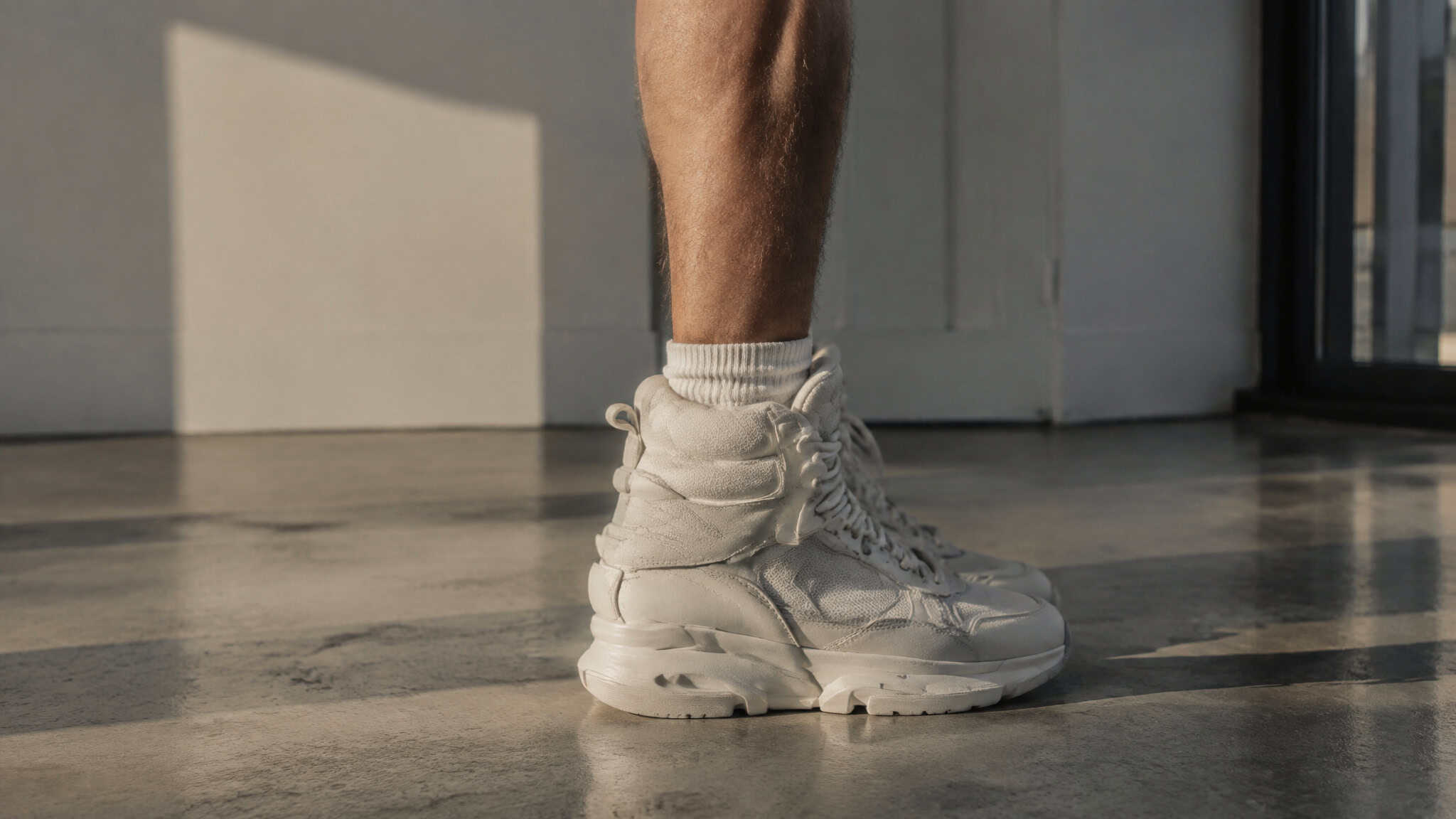
The 574’s platform runs stiff. And bargain reseller shoes fall apart within months. Know the failure mode before you buy.
Then there’s what tall shoes do to you over a full day.
Drop. Heel-to-toe drop is the number nobody checks, and it decides which parts of your legs do the work. Flat shoes work your feet and Achilles. Mid-drop leans on your knees.
A 9mm-plus drop shifts the load to your hips, glutes, and thighs, so if you’ve got an injury history in one of those areas, think twice about a big drop. The spread in this category runs from 0mm all the way to 22.6mm. Interesting stat: basically no height-boosting shoes are flat. 76% run 9mm or more of drop, some over 20mm. Makes sense once you think about it: lift lives in the heel.
RunRepeat’s full database backs this up, with 9% of all tested shoes running over 20mm of drop. There’s a fuller drop guide if you want the whole topic.
Weight. Counterintuitive truth: taller doesn’t mean heavier anymore. The new foams changed that. The Bondi 9 is 10.7oz; the 9060 is 15.1oz, and the Bondi is the taller shoe.
What the foam is made of matters more than how tall the sole is. But weight still counts if you’re on your feet all day. Heavy shoes wear you out faster than you’d think, so give yourself a few wears to adjust before judging a pair.
Looking taller without lifts: pointed toes, low vamps, platforms
If heels are off the table, the best no-heel trick is the pointed-toe flat: the point pulls the eye down the leg line, so the shoe reads longer. The Talbots Katrina Bit Nappa loafers are a solid pick; I own the navy pair and like that the toe stays sleek instead of going boxy. Naturalizer makes a supportive slip-on pointed flat for long days, the VIVAIA Veronica combines a low vamp with a point and holds up through hours of standing, and for the Camel Loafer Flats, I sized up to 9.5, which is the kind of intel a product page won’t give you.
Low vamp works the same eye logic in the other direction: more visible foot equals a longer-looking leg. Especially nice for women over 50 who want nothing cinched at the ankle, and slingbacks do the same job elegantly. Almond toe splits the difference: longer-looking than round but forgiving on wide feet or bunions. The Rothy’s Almond Loafer is the classic everyday option and was 50% off at the time of the source, so watch for sales. The J&M Ulyssa stacks almond toe plus a platform for a double effect.
The only measured gains in this tier: platform loafers at a real 1 to 2 inches, easier to walk in than heels because the height spreads across the whole sole, and platform Converse at about 3 inches. Those took her from 5’5″ to 5’8″. Size down half, and wear baggy pants if you don’t want the wavy platform shouting. Everything else here is perception, not measurement.
How to choose: height shoes by occasion and budget
Match the pick to the situation: $90 NB 574 for value, $115 AF1 LV8 for business casual, $139 to $179 Gova for hidden lift, GuidoMaggi if budget isn’t the constraint.
| Pick | Price | Heel stack | Gain | Wide feet? | Best for |
|---|---|---|---|---|---|
| New Balance 574 | $90 | 38.2mm | ~1 in+ | No option | Everyday value |
| Nike AF1 ’07 LV8 | $115 | 36.7mm | ~2 in | No | Business casual |
| Nike Air Max DN | ~$115 avg | 40.3mm | ~1.5 in | No | Best overall |
| HOKA Bondi 9 | varies | 41.3mm | ~1.5 in | No | All-day cushion |
| Gova Casse v2 | $139 | hidden | 2.4 in | Partial (leather gives a little) | Invisible lift |
| Gova Aoraki | varies | hidden | 2.6 in | Partial | Max hidden lift |
Prices as given in sources; may vary. Sizing corrections: platform Converse and the 990 V6 run half a size big, the Nocta AF1 fits big, and wide-footed buyers should skip the DN and Bondi 9 entirely.
Height facts, and why shoes are the practical answer
Stated dry: under 5’3″ (~160 cm) is genuinely rare, around the 2nd percentile for European men. The average European male sits at about 5’10” (178 cm). Over 6’1″ (185 cm) counts as tall. Growth plates fuse at 18 to 20, and nothing grows after about 30. Leg-lengthening surgery means two invasive operations, a lengthy recovery, and considerable cost, which is why elevator shoes, with best-evidenced lift around 3.1 to 4 inches (though those are brand claims, not lab-tested), do the arguing for them.
A pair of shoes doesn’t. The cost comparison does the arguing on its own. Height shoes are a proportionality tool, not a fix, and whether any of this matters is personal. The guy comfortable at 5’7″ doesn’t need a lecture.
Frequently Asked Questions
What shoes make you taller?
Chunky sneakers with a firm, tall midsole are the reliable option: anything with a heel stack over 35mm that doesn’t compress under your weight. The Nike Air Max DN (40.3mm), HOKA Bondi 9 (41.3mm), and New Balance 574 (38.2mm) all clear that bar. For hidden height, elevator shoes with built-in wedges claim 2.4 to 4 inches.
Are elevator shoes worth it compared to chunky sneakers for adding height?
Elevator shoes hide 2.4-plus inches inside the shoe versus the visible 1 to 1.6 inches you get from a chunky sneaker, so they win on raw height and discretion. The trade-offs are higher cost and unverifiable numbers: every lift figure is the brand’s own claim, since nobody independent has lab-measured one. Chunky sneakers give you caliper-verified height for less money.
What shoes make you look taller?
Pointed-toe flats pull the eye down the leg line so the shoe reads longer, and low-vamp styles show more foot for a longer-looking leg. Almond toes split the difference between lengthening and foot-friendly. But these are perception tricks, not measured gains — only platform loafers (1 to 2 inches) and platform Converse (about 3 inches) in that tier actually add height.
What are shoes that make you taller called?
Shoes with hidden internal wedges are called elevator shoes, and they add roughly 2.4 to 4 inches invisibly. Visible-sole options are just chunky sneakers or platform shoes, where the boost equals the stack you can see. There’s no special category name for the sneaker side — it’s just tall midsoles.
What to put in your shoes to make you taller?
A height increase insole is the cheap, immediate answer, but it’s the weakest option — it compresses, crowds your toes, and can shift as you walk. Good news for orthotics wearers: 93% of tested height-boosting shoes accept an insole swap, and most stock insoles are under 5mm anyway. Only swap where the stock footbed actually comes out and there’s room.
Why does my tall shoe stop making me tall after a while?
Because soft foam compresses under your weight. A shoe only keeps its height if the heel stack clears 35mm AND the midsole is firmer than 33 on the Asker C hardness scale. Quick test: press your thumb into the midsole — if it collapses like a marshmallow, you’ll sink back to normal height within an hour of walking.