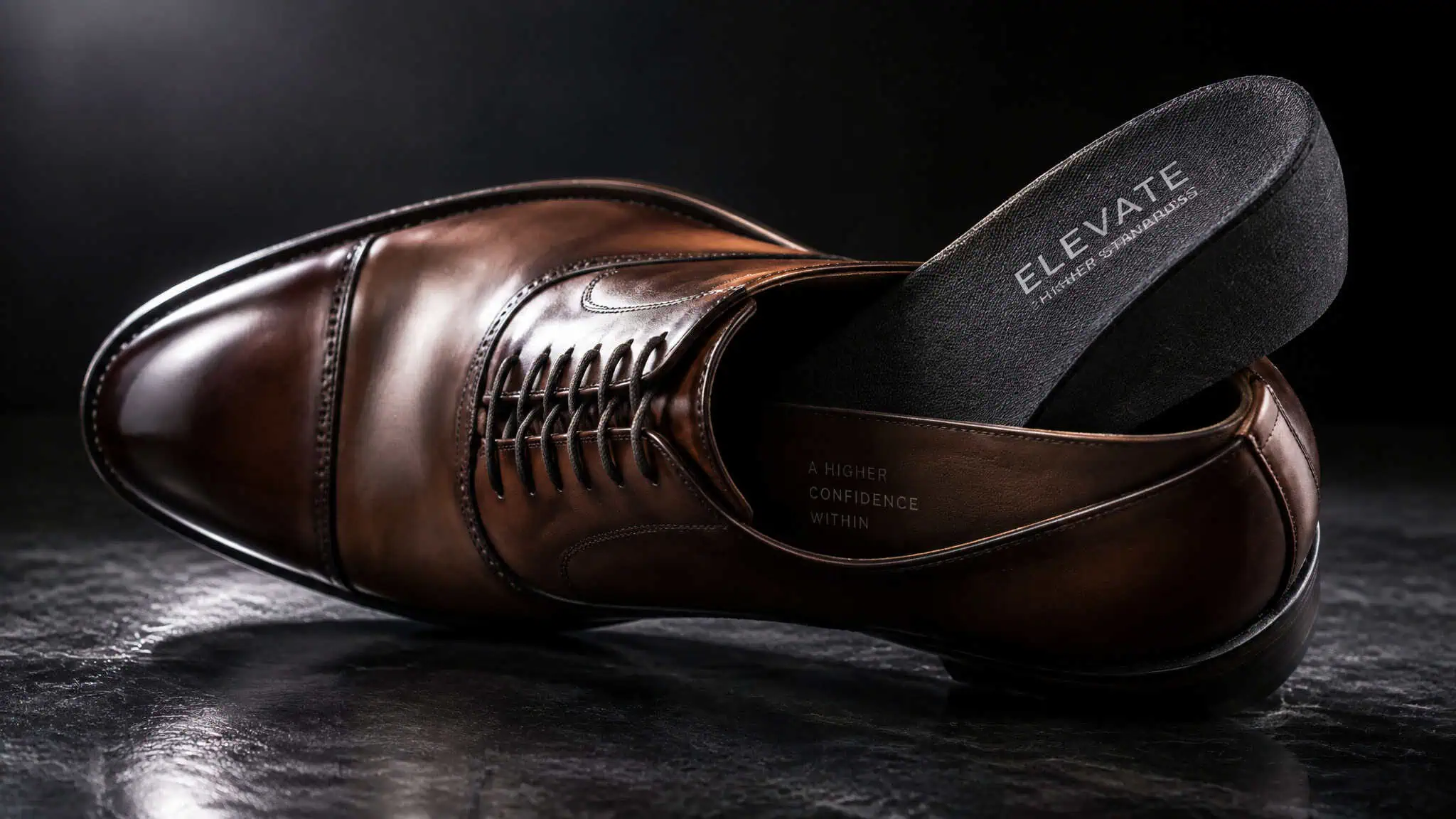
Nobody’s embarrassed wearing height increase insoles. Nobody’s checking your loafers for foam. The embarrassment is buying the wrong one: the 5-inch wedge that pops out of your dress shoe at a wedding, or the cheap pair that promised an inch and quietly flattened to a quarter-inch by your 2pm meeting. We looked at a lot of these, north of a hundred options, and it comes down to two decisions.
How tall do you actually want to go, and does your shoe have room for it. Get those right and this is a $20 purchase that just works. Get them wrong and you’re the return statistic.
Key Takeaways
Aim for a 1-2 inch lift with a hard ceiling around 2.5 inches; commercial lifts are sold up to 5 inches, and buying-guide estimates suggest roughly 90% of 5-inch purchases won’t fit the shoes they’re meant for.
Match lift to shoe: low-tops and loafers max out at 1-1.5 inches, mid-tops take 1.5-2.5, high-tops and boots handle 2.5-3, and sandals are a no.
Soft materials lie about height: a soft 1-inch insole can compress to 0.25 inch under your weight, so medium-density or firmer is the honest sweet spot.
Table of Contents
How much height do shoe lifts really add?
Expect 1 to 2 inches of wearable lift, with a hard ceiling around 2.5 inches. That’s the whole article if you want it in one sentence.
Here’s the problem: commercial lifts are sold anywhere from half an inch to 5 inches. The gap between what’s on the shelf and what actually works on your foot is where the money gets wasted. Buying guides put it bluntly, and it’s an estimate rather than hard research, but the figure is that roughly 90% of guys who buy 5-inch lifts end up with a pair their shoes can’t hold. The other 10%?
They fit. And those guys spend the day walking hunched forward, managing a five-inch slope with every step. Even when the purchase “works,” the win is fake.
The reframe that matters: the height on the box and the height you can actually wear are two different numbers. This isn’t a comfort preference, it’s physics. Your shoe only has so much room above your heel, and your ankle only hides so much. Once you push past about 2.5 inches, your shoes and your back both tap out. Compression makes it worse, which we’ll get into, but the box number is already lying before your body weight gets involved.
So the honest shopping advice isn’t “pick a comfortable height.” It’s stay under a measurable ceiling, then buy the best-built lift inside that ceiling. Before you order anything, stick a ruler in your shoe. That thirty-second check is the next section, and it’s the difference between one purchase and three returns.
Which height insoles work in low tops, loafers, high tops, and boots?
One rule worth memorizing: more shoe above the ankle means more lift you can hide.
| Shoe | Max lift |
|---|---|
| Low-tops / loafers / dress shoes | 1-1.5″ |
| Mid-tops | 1.5-2.5″ |
| High-tops / boots | 2.5-3″ |
| Sandals | Basically none |
The ruler test takes a minute: measure from the factory insole straight up to the top of the shoe. That’s your total interior heel room. Worked example: a 5-inch interior fits a 2-2.5 inch insole while leaving about 2.5 inches minimum for your actual foot. Do that math before you click buy. If you want a flush fit instead of bunching at the toe, most decent insoles are trim-to-fit with pre-marked lines, so two minutes with kitchen scissors and they match your actual shoe.
What are some good shoe lifts for increasing height? The six picks
We landed on six: a best overall plus five trade-off picks covering budget, premium, adjustable, arch support, and convenience. Every one has a flaw, and the real decision is which flaw you can live with.
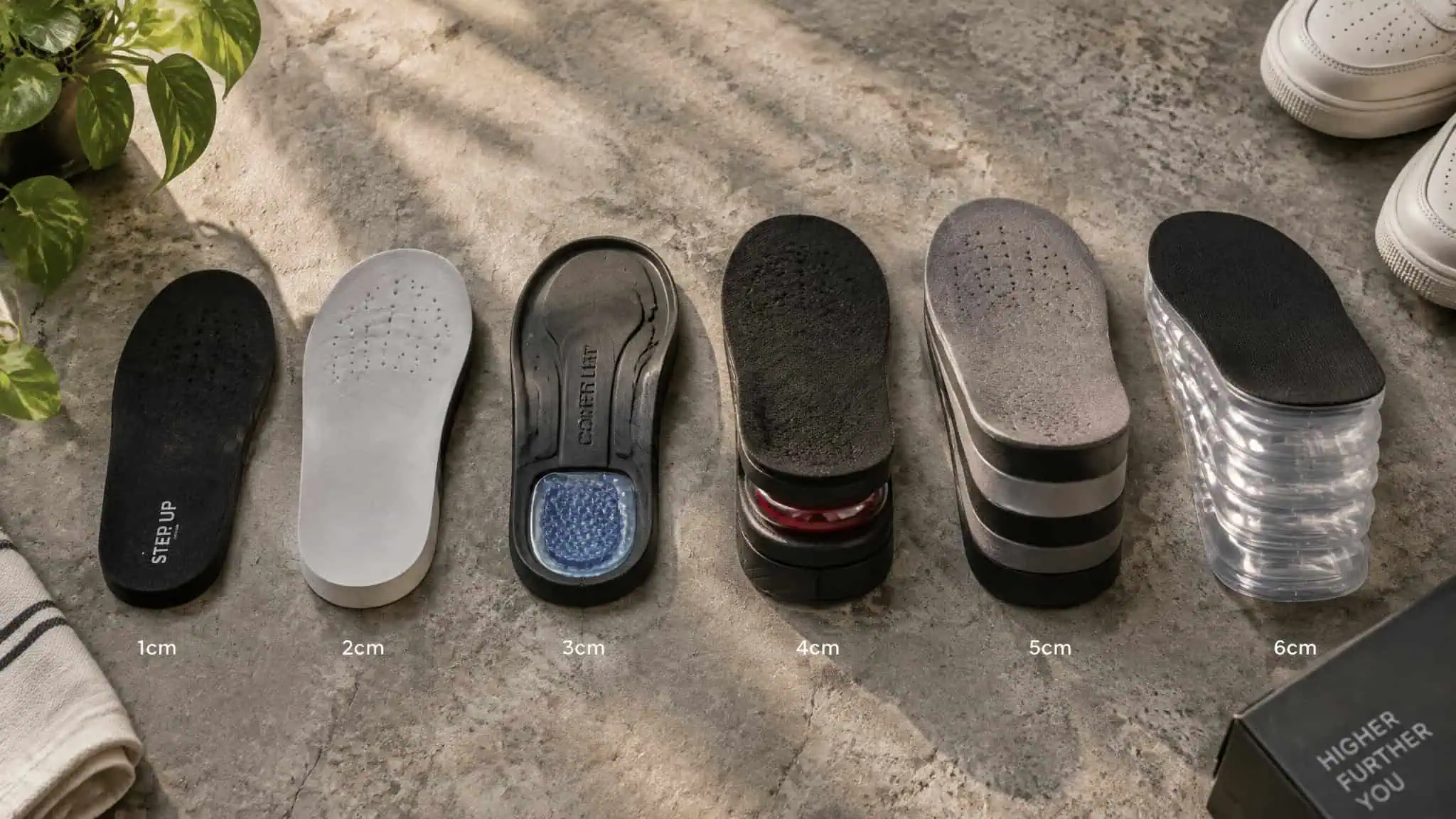
Yurruon Memory Foam Insoles, best overall. It earned that spot after evaluating 100+ options. EVA cushioning, which in plain terms is soft, bendy foam that doesn’t turn rock-hard by noon. The U-shaped heel cups your foot and holds your heel in place instead of letting it wander, which matters more on a lift than you’d think. Three heights: 0.6″, 1″, or 1.4″, that 1.4″ max is the cap for the sane range, black only.
The real test is hour six, not minute one, and these pass it. The flaw is baked in: it maxes out at 1.4 inches. That said, that’s the sane range anyway.
CALTO Half Elevator Insole, budget. Half an inch, that’s it, one height, black or blue. Flexible EVA, skid-resistant so it doesn’t slide around under your foot, and a bonus of heel support and Achilles relief. The trade-off at this price: it only supports the middle of the foot, not the whole sole. Honestly, it’s the cheapest way to find out whether you like the whole idea before committing real money.
Mendez Premium Height Increase Insole, the nice one. Hard-but-forgiving PU foam with a micro felt top: firm where it counts, soft on top, holds its height. A 1″ base plus an optional 0.5″ insert means you buy one and get two heights. Someone called it the BMW of insoles, and the comparison fits: it looks and feels like the expensive one.
The catch, spelled out: it can poke out above the shoe collar. That’s the tell nobody wants.
SOL3 Quick Lifts, convenience. 1″, 1.5″, or 3″ foam, shows up tomorrow on Prime. Flaws first, because they’re real: it tapers off fast, leaving a gap where your foot floats instead of being supported, and there’s barely any mid- or lower-sole support. It’s a heel-only lift, and if your actual goal is height, shoes that make you taller do the job more evenly. The 3″ size is the aggressive end and most guys shouldn’t buy it.
Genuine upside: real heel pain relief if you’re on hard floors. This is a sometimes-insole, not a daily driver.
Shaboo Prints 2-4 Layer, adjustable. Air-cushion layers you stack or remove, from 1.2″ to 1.97″. Tune it per shoe: two layers in low-profile loafers, all four in boots. Low for running errands, maxed when height matters, or skip the stacking entirely with height-adding sneakers.
That per-day tuning is the one thing adjustable lifts genuinely get right. The flaw: all four layers get uncomfortable on extended wear. The tallest configuration is not an all-day configuration.
Benoo Height Increase Insoles, arch support. If cheap heel-only lifts wrecked your arches, this is the fix. A conservative 1″ gel lift that slopes down to support the whole foot, so the smart design here isn’t the height, it’s the slope. It’s one honest way to stand 2 inches taller without wrecking your posture, though the catch is your foot sinks into the gel, so some of the height you paid for just disappears. You’re trading comfort for inches, know that going in.
One honest gap: everything tested here is men’s-sized. For women, trim-to-fit trimming down with the pre-marked guidelines is the closest real guidance available; there’s no separately vetted women’s pick in this roundup.
Which insole material keeps its height: memory foam, gel, or polyurethane?
It’s not the box height, it’s the material. Soft stuff compresses, and medium-density is the honest sweet spot. The number that kills the bargain impulse: a soft 1-inch insole can shrink to 0.25 inch under your body weight. That’s a 75% loss, and you paid full price for it. Air-cushion layers give up about an eighth to a quarter inch, which is the bounce taxing your lift a little.
The market is basically three materials, so pick by how you live. Memory foam molds to your foot and feels plush, which makes it desk-job material: great at a desk, less great on concrete. Silicone gel has the best shock absorption for pavement and holds up well. Polyurethane is firm and doesn’t quit, built for 8-hour standing shifts in retail, hospitality, or healthcare. Like a tire compound, grip or longevity, pick your priority.
One guy actually wore these types and graded them: air-pocket designs scored highest at 6.5/10, basic foam lowest at 1-2/10. Take it as one person’s hands-on verdict, not gospel, but the spread tells you most cheap materials barely work.
Full length insoles vs half heel lifts, and fixed vs adjustable
Format follows height, a rule that applies across every category of height-boosting footwear. Heel-only lifts are fine under 1.5 inches if they slope gradually; short ones can get away with the wedge. At 1.5 inches and up, go full-length with a gradual taper toward the toe. That’s not an upgrade, it’s a requirement. Once you’re going tall, do it properly.
Then pick your priority. Solid PU lifts are firm, stable, and durable, the lift that survives an 8-hour shift, which makes them the call if you stand all day for work. Adjustable layered systems are tunable across shoes and days, but they feel less planted. Flexibility costs stability.
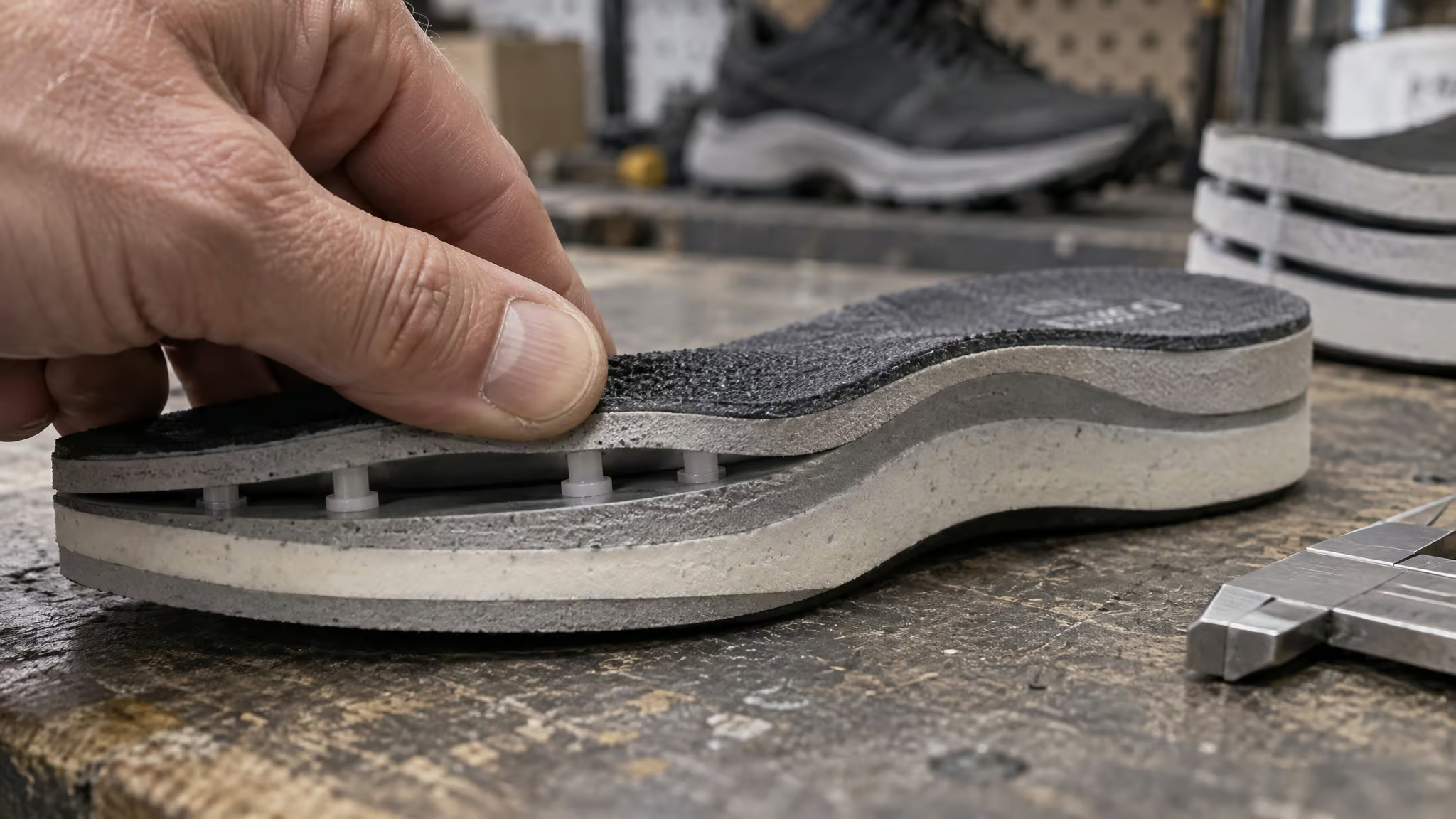
One blunt warning: cheap layered lifts can have mismatched pegs and holes that let the layers slide apart mid-walk. The failure mode is invisible until your foot finds it, and that’s how people get hurt. Check the connectors lock before you buy.
How to spot a quality height insole, and what your money actually buys
Feel for three things with your thumb: real arch support, a proper rise through the instep, plus a deep heel cup. On multi-layer designs, press the connectors. Mismatched rectangular holes and round pegs shift under load, and a lift coming apart under your foot is an injury, not an inconvenience. And pick something breathable, because these live in your shoes all day and whatever happens in there stays in there.
Price tiers tell you what you’re actually buying. Under $10 usually ships slow from overseas. $10 to $25 is often bulk-resold with weak support. Over $25 generally gets you better materials and design. The overall range runs $5.50 to $200, averaging around $20, and the tails are where the mistakes live.
Well-made lifts last 4 to 6 months, so figure on replacing them a couple times a year. They’re consumables, not investments.
On arches: heel-only lifts with no taper leave your arch hanging, and that’s where the pain comes from. Default to arch support unless your shoe literally lacks the room, and if you need the exception case, that’s the Benoo situation.
Quick test: Press the connectors on any layered lift before buying — mismatched pegs and holes that shift under your thumb will shift under your foot.
Do height increasing insoles really work, or are they bad for your feet?
Yes, they work, and daily wear is safe if you buy the right kind. The horror stories are a cheap-rigid-plastic problem, not an insole problem. Properly designed lifts use ergonomic materials, high-density polyurethane and shock-absorbing gel, built for exactly this. The rigid bargain-bin plastic is what creates pressure points and imbalance.
Side effects are mostly good. A heel lift nudges you upright: shoulders back, spine settling into place, less strain on your back, your core doing its job. Guys report feeling more confident in meetings and social situations. Take that for what it’s worth, but it’s a common report.
Modern contoured insoles stay invisible in shoes with adequate ankle coverage. The two honest downsides: sore feet at the end of a long day, and lifts that sit too tall visibly sticking out. Not a doctor here; this is buying advice.
And you’re not the only guy buying these. The foot orthotics market was worth $4.22 billion in 2024 per Fortune Business Insights, and height-insole demand alone was projected around $309 million for 2025 per Market Report Analytics. Small market, real market.
Height increasing insoles vs elevator shoes, and the sneaker alternative
The $20 insole is the smarter first purchase; elevator shoes’ “better engineering” pitch comes mostly from vendors selling them. The trade-off: insoles can slip at the heel, cramp your toes in a shoe that doesn’t fit them, and are a hassle when you’re swapping them between pairs. The counterweight: an independent reviewer rated built-in height shoes 5/10 and called them painful across a full wedding day. If you’d rather skip insoles entirely, lab-tested criteria (heel stack of 35mm or more, midsole firmer than 33 Asker C) identify sneakers like the Nike Air Max DN (40.3mm heel stack) or New Balance 574 ($90, 38.2mm) that add real height with zero fit risk, and 93% of height-boosting shoes take an insole swap anyway.
Picking your pair
Ruler in the shoe, lift within the limit, material matched to your day, quality check, then pick the flaw you can live with. One to two inches, matched to the shoe, medium-density or firmer. That beats chasing whatever maximum the box is advertising. Prices may vary, but the physics doesn’t.
Frequently Asked Questions
Which height insoles work in low tops loafers vs high tops and boots?
More shoe above the ankle means more lift you can hide: low-tops, loafers, and dress shoes top out at 1-1.5 inches, mid-tops handle 1.5-2.5, and high-tops and boots take 2.5-3. Sandals are a no. Before buying, run the ruler test — measure from the factory insole straight up to the top of the shoe, and make sure the insole leaves at least about 2.5 inches of room for your actual foot.

