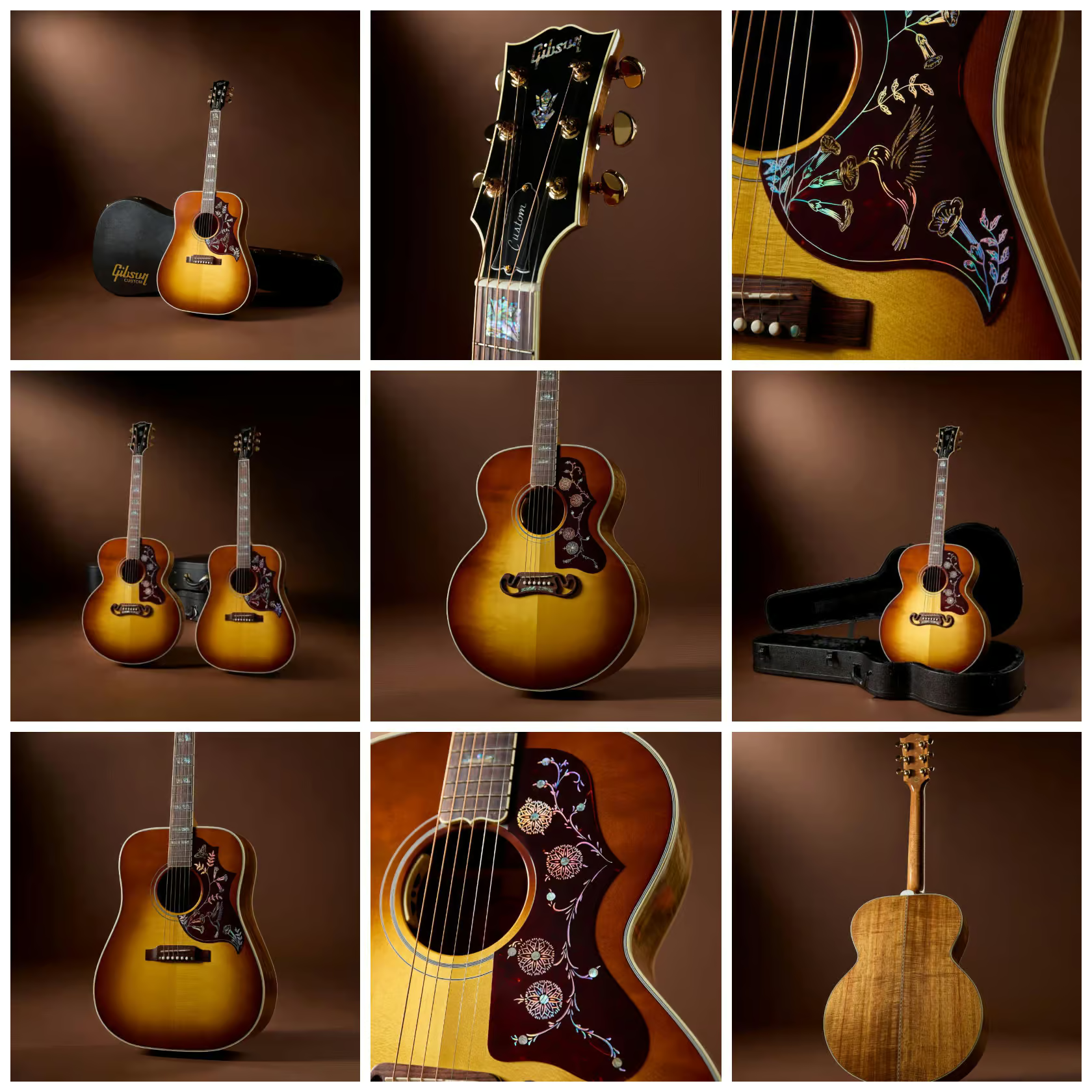
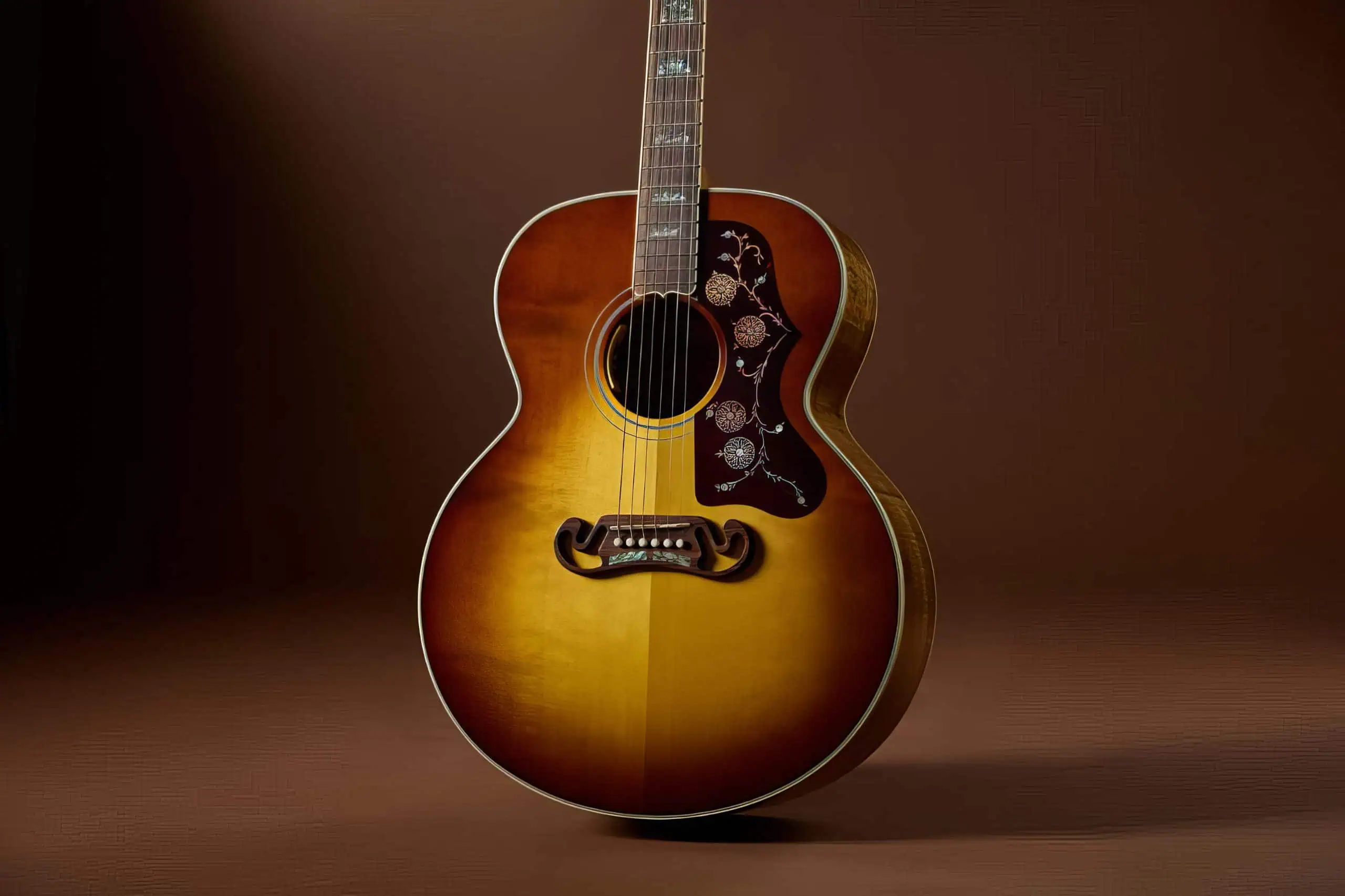
Gibson Custom rolled out two new koa versions of its two most famous acoustics yesterday. On September 14, 2026, per the press release, the Gibson Custom SJ-200 Elegant Koa and Hummingbird Elegant Koa joined the Artisan Series, each pairing richly figured koa back and sides with an AAA Sitka spruce top, all finished in Honey Burst. That’s it for finish options, by the way. One color, both guitars. Which simplifies the decision, because once you stop shopping for a burst pattern, the real choice is just: SJ-200 or Hummingbird.
Some context on where these sit. Artisan Series is Gibson Custom’s line for elevated production builds, above the standard catalog, below one-off Custom Shop work. In practice that means same family, upgraded woods and trim. Both guitars are hand-built by the luthiers at Gibson Acoustic in Bozeman, Montana, the same shop that builds every Gibson acoustic, just with richly figured koa, AAA spruce, and abalone trim on the bench.
Gibson says the wood’s sparkling highs develop greater warmth and complexity with regular play, meaning the guitar you audition this month won’t be the guitar you own in a year. Gibson frames that as a feature, and the spec details below bear that out.
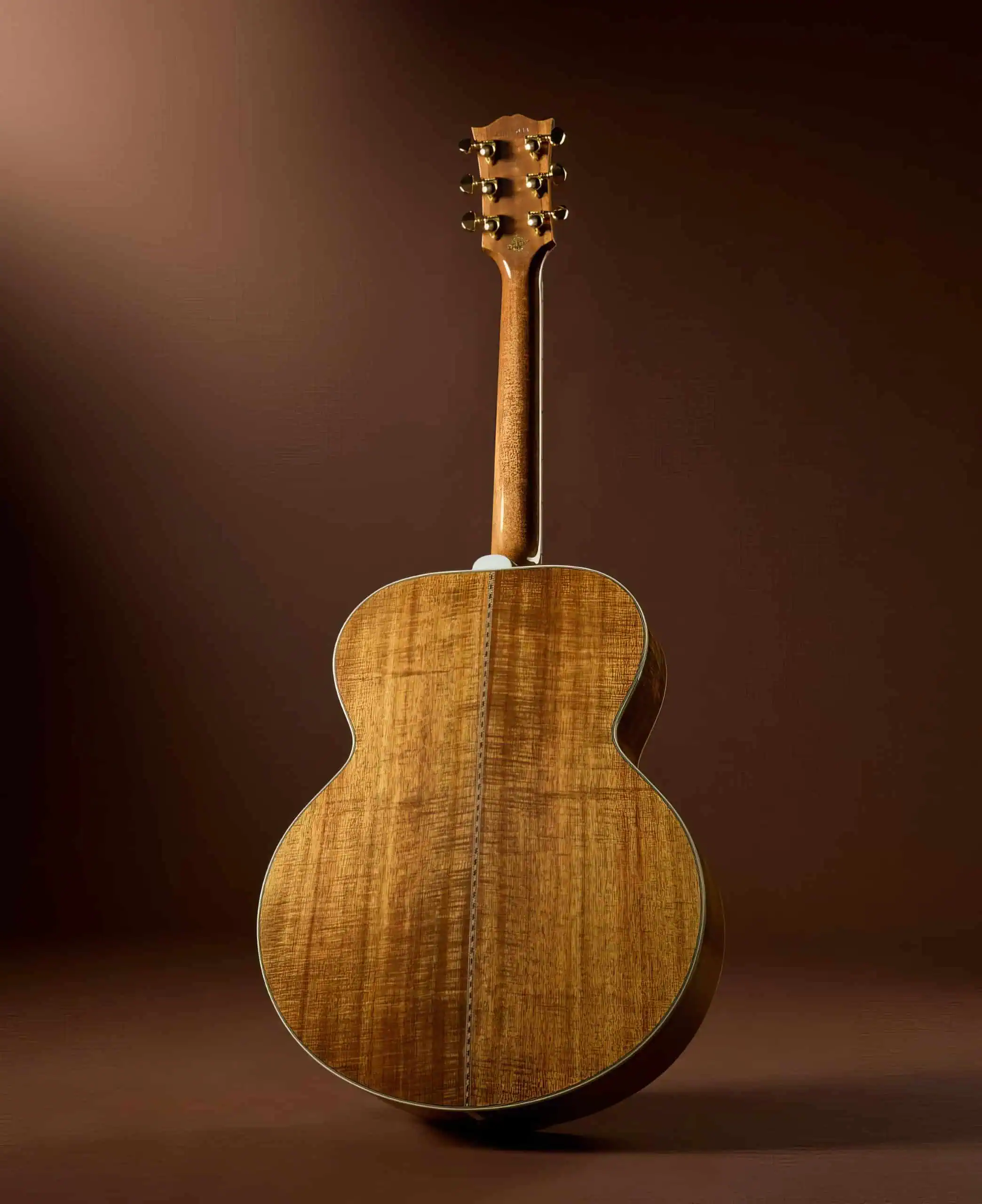
Below: full specs on both models, the five actual differences, and how koa behaves over time. The short version of the differences, body shape, bridge, inlays, pickguard art, and pickups, is where it gets interesting, because Gibson fitted different L.R. Baggs systems to each guitar, and that tells you who each one is for. There are also the small touches buyers at this level expect: a three-rope marquetry strip running down the center of each koa back, the kind of inlay detail you only see in person at a dealer. You can see where the money went.
Key Takeaways
Announced September 14, 2026, the two new Elegant Koa models are Artisan Series builds sharing figured koa back and sides, an AAA Sitka spruce top, and a Honey Burst finish.
The five real differences: body shape (super jumbo vs square-shoulder dreadnought), bridge (moustache vs belly-up), inlays (graduated crown vs split parallelogram), pickguard art, and electronics (L.R. Baggs Anthem with internal mic vs the simpler VTC pickup-only system).
Koa starts bright and sparkly and warms with regular play, so the tone you hear in the store won’t be the tone you own a year from now. Both models ship with a Gibson Custom hardshell case. No MSRP was announced, so check Gibson.com and dealers for live pricing.
Table of Contents
What Gibson said: Robi Johns on honoring two legends
Gibson’s official positioning comes from Robi Johns, Gibson Acoustic Senior Product Development Manager, someone who actually shapes these guitars, so the quote carries some weight. His pitch: the SJ-200 and Hummingbird are defining chapters in Gibson acoustic history, and the Koa versions honor that character while adding Koa’s beauty, clarity, and evolving warmth, designed to connect more deeply with players over a lifetime of music.
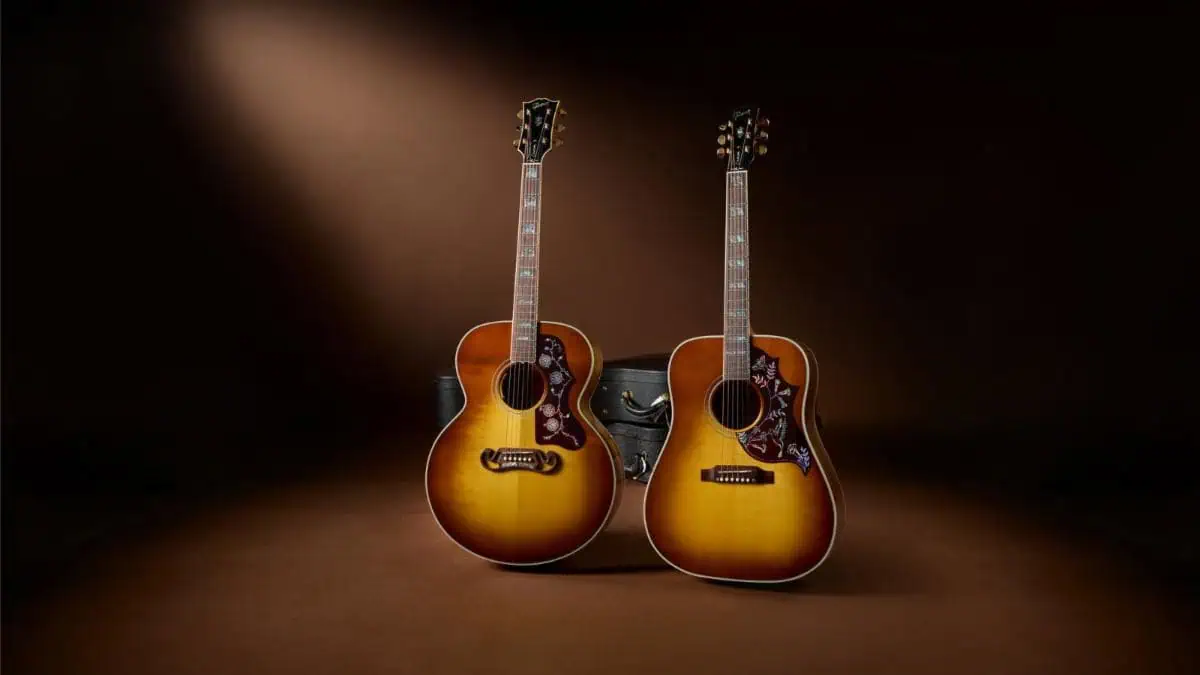
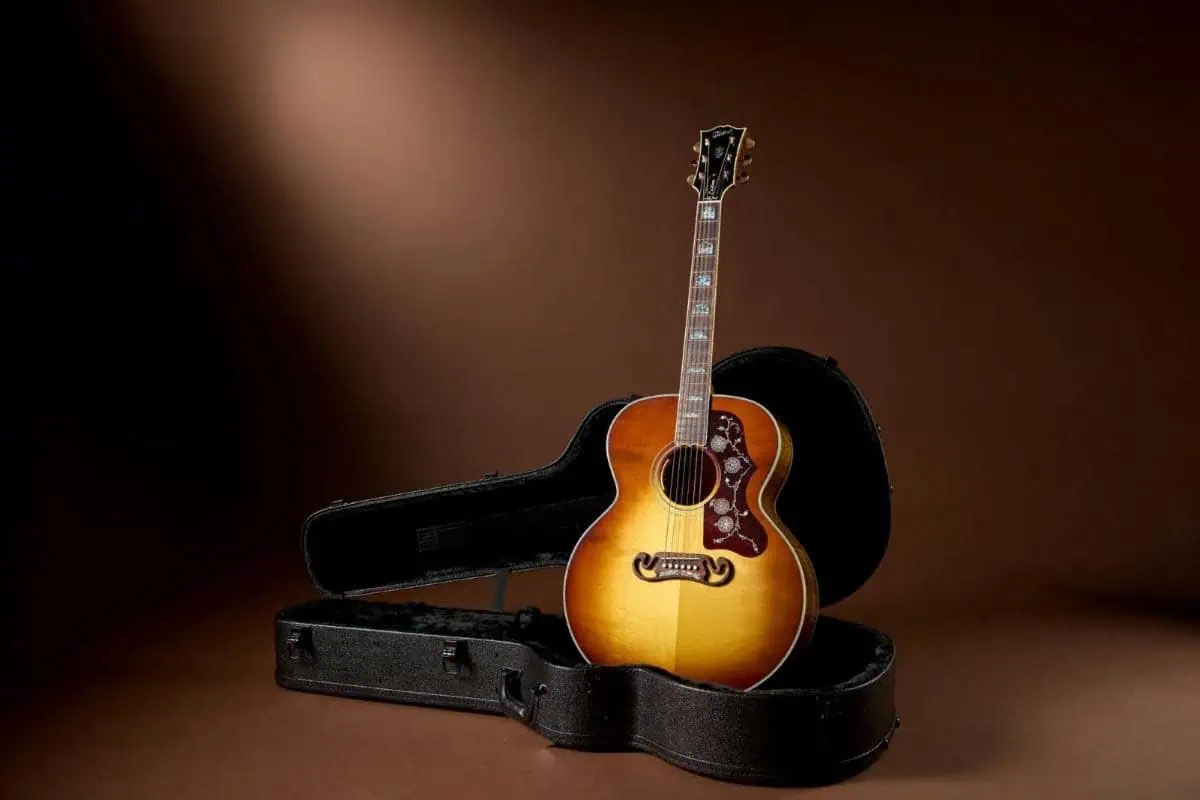
That’s the marketing frame, so treat it accordingly. The grounding fact underneath it: both guitars are handcrafted by the luthiers in Bozeman, same as the rest of the line from a company headquartered in Nashville, TN. Whether koa plus a legend equals a lifetime bond is something only your ears and wallet can settle.
Koa and spruce: what both guitars are built from, and how koa changes
Koa is a premium tonewood, prized for vibrant figuring and lively response, almost 3D in the grain, but its character shifts over time, and that’s the buying consideration most coverage skips.
The recipe is identical for both: richly figured koa back and sides with a AAA Sitka spruce top. A three-rope marquetry strip runs down the center of each back. Here’s the honest tradeoff. Koa starts bright and sparkly and develops warmth and complexity with regular play. A pattern koa owners commonly report: the first weeks sound brighter than the guitar sounds a year in.
So if you love today’s sound, understand you’re buying an instrument that won’t stay that sound. Johns’ “lifetime of music” line is literal, not rhetoric. If that trajectory bothers you, rosewood or mahogany models deliver a more settled character out of the box, that’s the whole comparison, and it’s a legitimate one.
SJ-200 Elegant Koa: the King of the Flat-Tops in koa
The SJ-200 has been called the King of the Flat-Tops since its 1937 debut, a reputation earned through commanding projection, tonal depth, and a look you can spot across a room.
The trim on the Elegant Koa version, compactly:
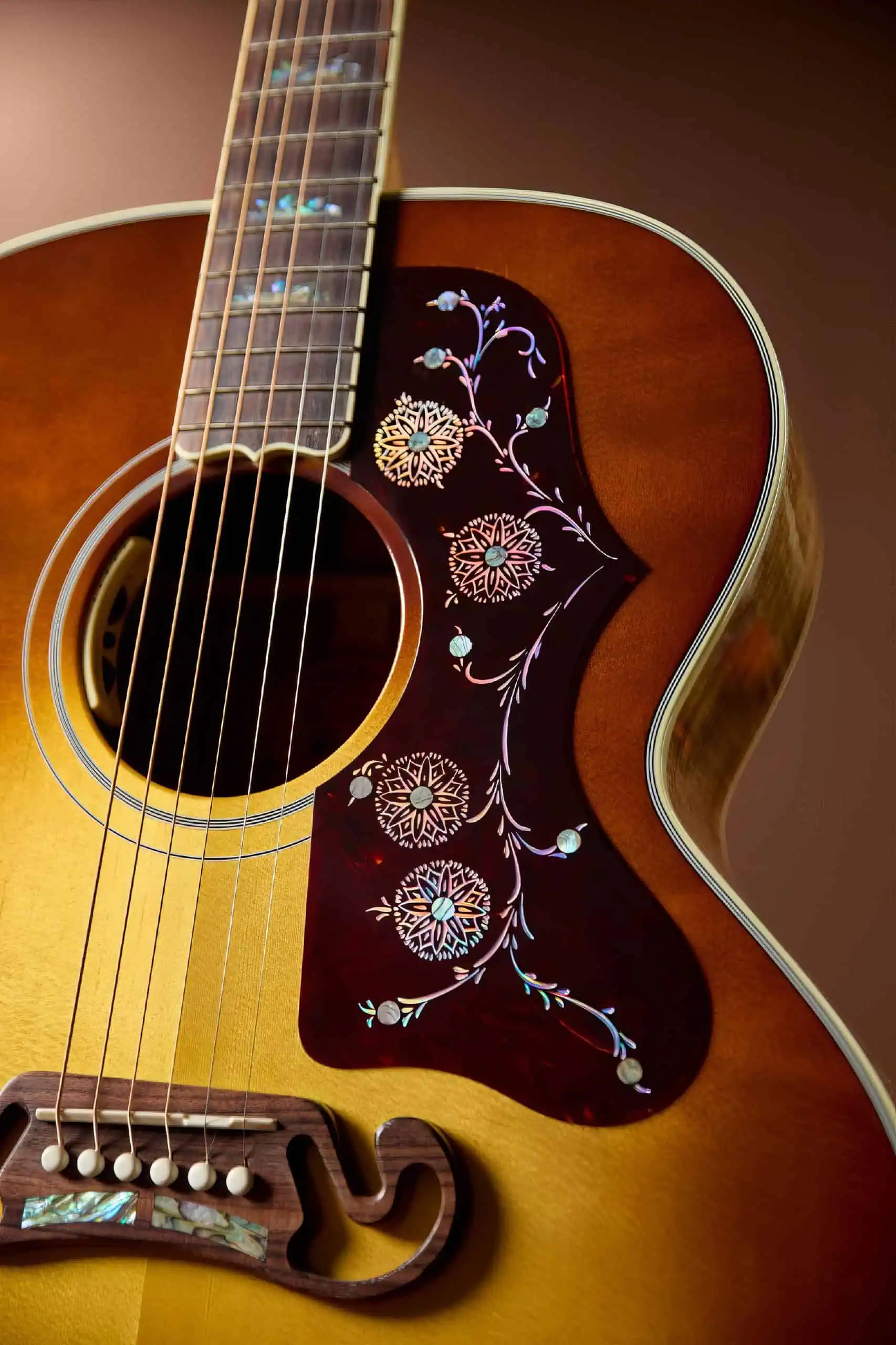
- Rosewood two-bar moustache bridge with abalone bar inlays, the signature SJ-200 bridge, dressed up
- Tortoise-shell-colored pickguard with abalone dot inlays and a silver-foil stamp that shifts with the light
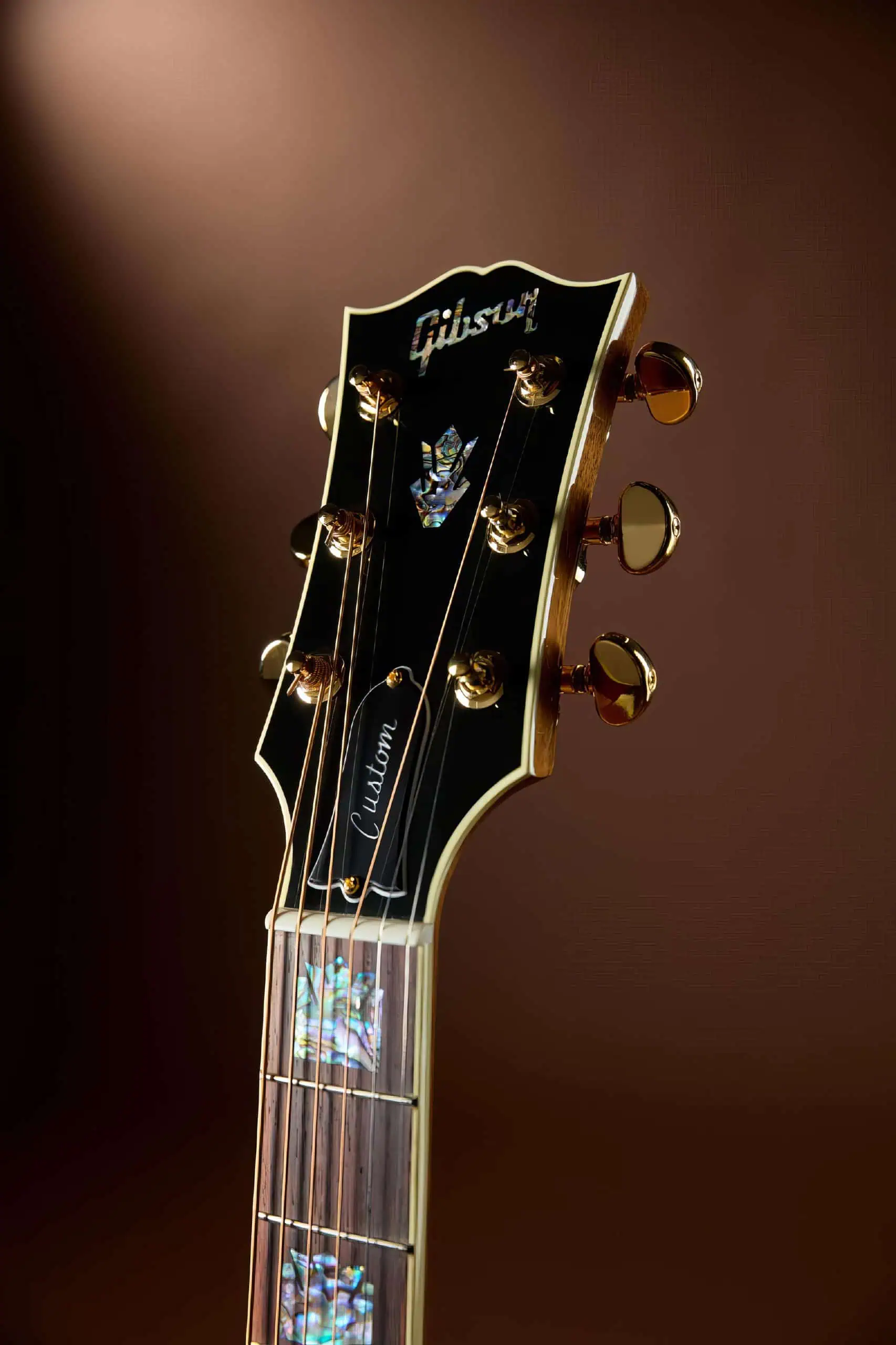
- Mahogany neck, Round profile; bound rosewood fretboard, 20 frets, abalone graduated crown inlays
- Single-ply bound headstock with the Gibson logo and crown in abalone
- TUSQ nut, saddle, and bridge pins; gold-plated Grover Rotomatic tuners
The moustache bridge and graduated crown inlays are your at-a-glance identifiers here, remember those for the comparison. TUSQ is a consistent synthetic that resists buzz and dead spots; that’s fine, even good.
SJ-200 electronics: the L.R. Baggs Anthem’s mic-and-pickup blend
The SJ-200 Elegant Koa carries an L.R. Baggs Anthem: an under-saddle Element pickup plus an internal microphone and preamp, with volume, mix, phase, and battery-check controls tucked at the edge of the soundhole.
The spec split suggests a deliberate choice. A mic/pickup blend makes sense for a projection-first super jumbo, it’s how the plugged-in tone keeps the guitar’s natural voice, and the mix control gives you live flexibility mid-set. One tradeoff in buyer terms: the internal mic means a battery to manage.
And here’s the thing worth flagging: players frequently assume both flagships share identical electronics. They don’t. This is the only one of the two with a built-in mic.
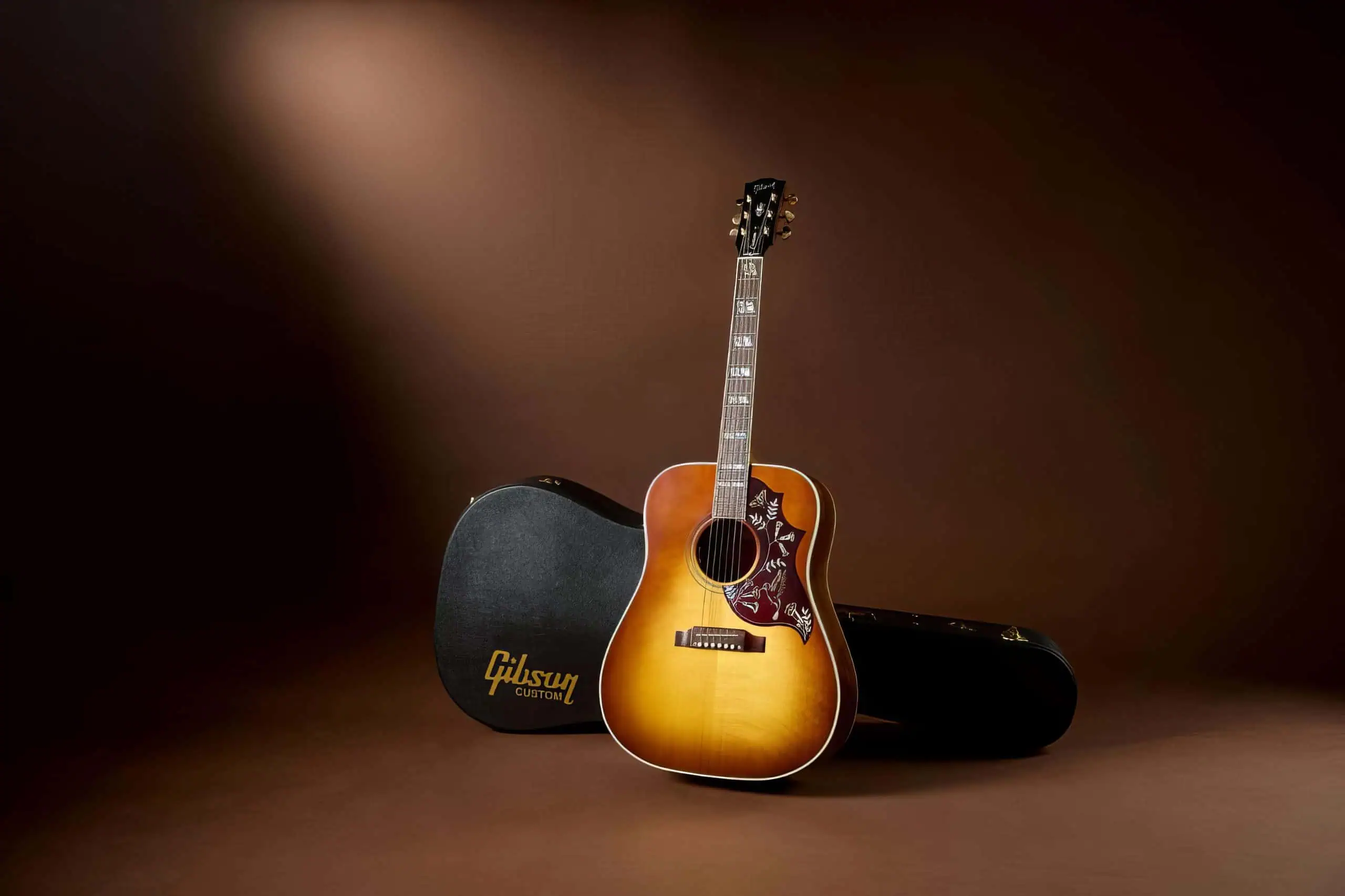
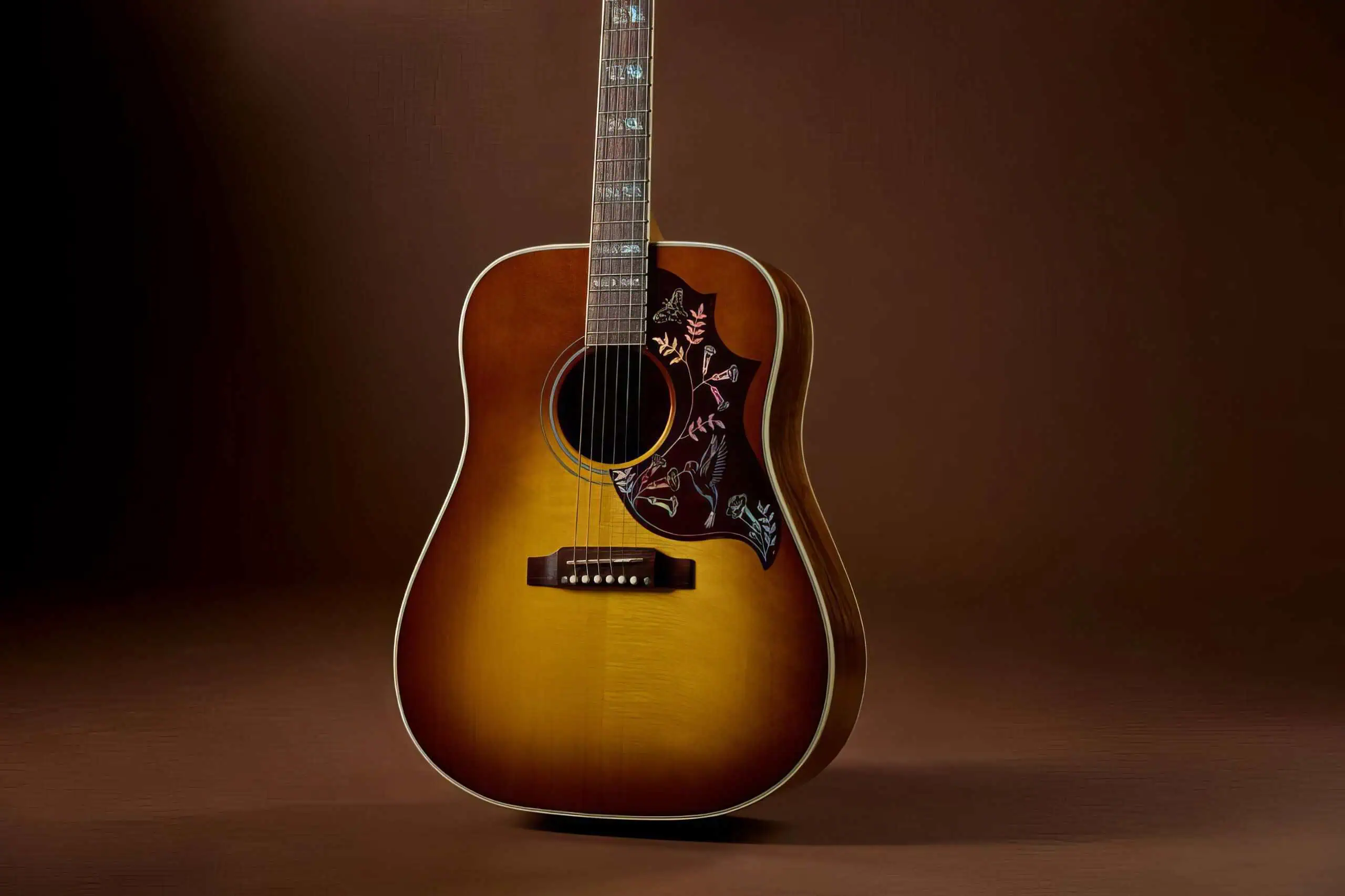
Hummingbird Elegant Koa: Gibson’s first square-shoulder dreadnought, reimagined
The Hummingbird arrived in 1960 as Gibson’s first square-shoulder dreadnought and became one of the most recognizable, most versatile acoustics going, powerful but flexible, easy between lead lines and rich rhythm work.
The koa/spruce recipe matches the SJ-200, so no need to rehash it. The appointments:
- Rosewood belly-up bridge with abalone dot inlays
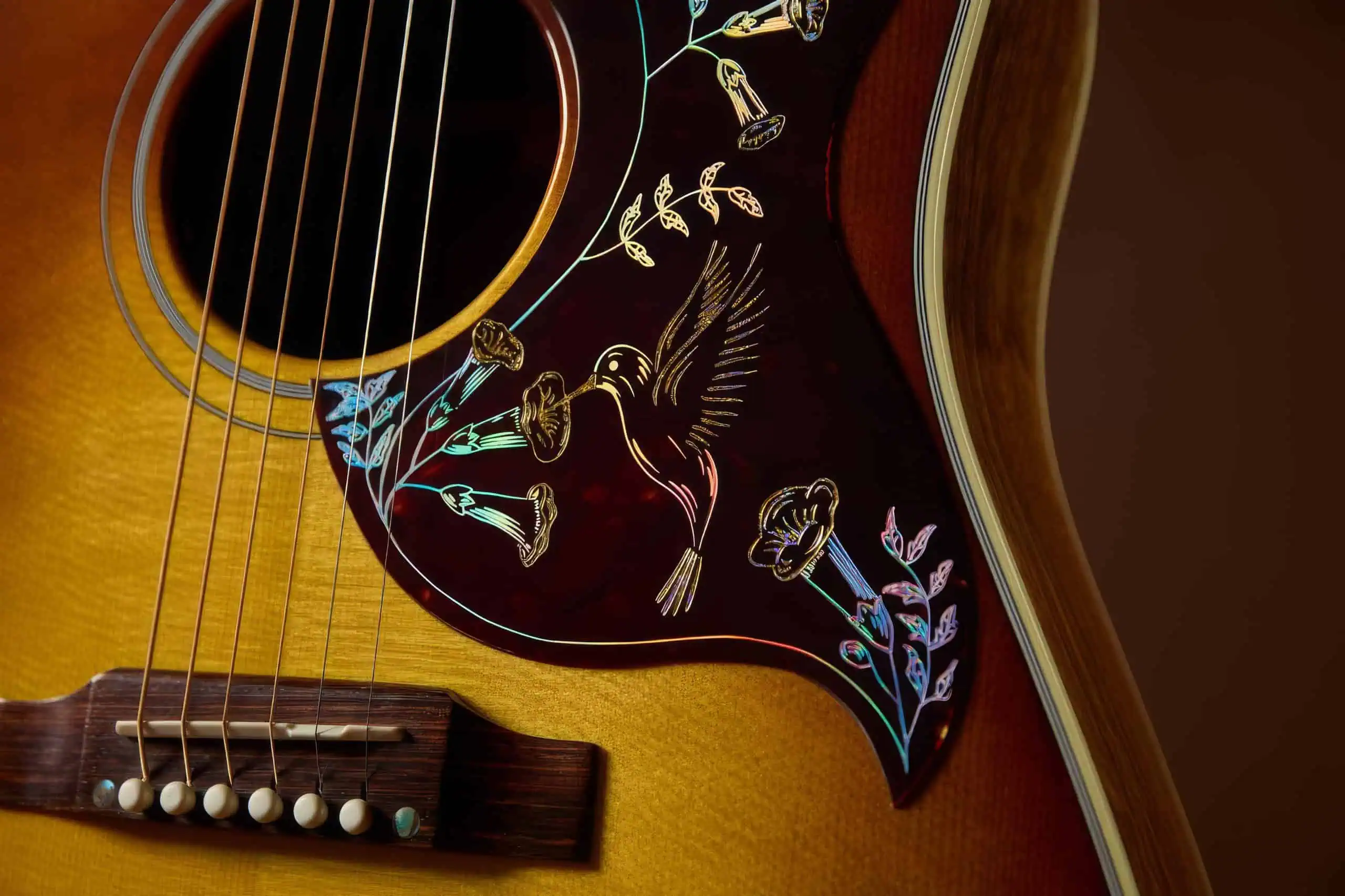
- Tortoise pickguard with the traditional artwork, flowers, a butterfly, a hummingbird, plus gold and silver-foil details that shift iridescently under stage light
- Mahogany Round-profile neck; bound rosewood board, 20 frets, abalone split parallelogram inlays
- Abalone logo and crown on the headstock, same as the SJ-200
- TUSQ hardware; gold Grover Rotomatics
That pickguard artwork is the model’s identity. Buyers either want it badly or they don’t. The upgraded foil treatment changes how it reads on stage under changing light.
On electronics: the Hummingbird gets the L.R. Baggs VTC, an Element under-saddle pickup and preamp with discreet soundhole volume and tone. No internal mic. What that means plainly: what you hear unplugged is roughly what the audience hears, with less to fuss over. That’s the fastest fix for the most common spec confusion between these two.
Quick test: If you need a built-in mic for plugged-in gigs, that’s the SJ-200; if you want plug-and-play simplicity, that’s the Hummingbird.
SJ-200 vs Hummingbird Elegant Koa: the five real differences
The real differences between these two guitars are exactly five, body shape, bridge, inlays, pickguard art, and electronics, and everything else is shared platform. Both models run the same figured koa back and sides, AAA Sitka spruce top, mahogany Round neck, 20-fret bound rosewood board, TUSQ hardware, gold Grover Rotomatics, and the same hardshell case. Pick a side based on the table, not the spec sheets.
| Feature | SJ-200 Elegant Koa | Hummingbird Elegant Koa |
|---|---|---|
| Body shape | Super jumbo | Square-shoulder dreadnought |
| Bridge | Two-bar moustache with abalone bar inlays | Belly-up with abalone dots |
| Fretboard inlays | Graduated crown | Split parallelogram |
| Pickguard | Silver-foil stamp with abalone dots | Full traditional artwork with gold and silver foil |
| Electronics | Anthem (pickup + internal mic; volume/mix/phase/battery-check) | VTC (pickup only; volume/tone) |
Which one fits your playing?
The asymmetry suggests Gibson tuned these for different players, not near-identical variants. The Anthem’s mic-blend suits the SJ-200’s projection-first stage voice, you’re paying for huge sound and the pickup rig to reproduce it honestly. The VTC’s discretion fits the Hummingbird’s versatile all-rounder character.
So, condition-qualified: projection-first performers lean SJ-200. Versatility-first players and recording types lean Hummingbird. That’s our read of the documented specs, not Gibson’s stated rationale, they haven’t said why the pickups differ, and we’re not putting words in their mouth. But the pattern holds up on paper.
What it’s like to play, and what’s in the box
Same mahogany Round-profile neck on both, so it’s the familiar Gibson feel. Each ships with a Gibson Custom hardshell case. If you’ve played a Gibson acoustic before, these will feel like home on day one, at this price, that matters more than any inlay.
The realistic use cases: gigs, recording, songwriting, noodling at midnight. The hand-done appointments make each one look like nobody else’s,. And the case deserves its own sentence: at this tier it’s expected, but it’s protection you’re not buying separately, and paired with the Bozeman hand-build it completes the ownership package.
Pricing and where to buy the Elegant Koa models
You can buy both models worldwide through authorized Gibson dealers, at the Gibson Garage locations in Nashville, London, and Miami, at Gibson.com, and previously owned Gibsons are also available through Gibson Certified Vintage. The Garages are the place to actually play one. One honest flag: the announcement lists no MSRP, so live pricing and stock are confirmed at Gibson.com and dealers, and prices may vary. On value: SJ-200s and Hummingbirds have historically held their worth. Gibson Gazette has more on the SJ-200 Elegant Koa, and Gibson’s acoustic catalog lets you compare against cheaper standard-line models.
Closing: a century of flat-tops, a tonewood that keeps changing
Gibson was founded in 1894, is headquartered in Nashville, and has spent 130-plus years shaping music, plus it owns Epiphone, Kramer, MESA/Boogie, KRK, and Maestro, and connects with players through the Gibson App, which is why a century-spanning flat-top lineage can absorb a koa experiment credibly. Close on the real thesis: these are guitars designed to change with the player. Johns’ “lifetime of music” line isn’t sentiment. It’s what koa does.
Frequently Asked Questions
Is koa a good tonewood for an acoustic guitar, and how does its tone change over time?
Koa is genuinely premium — lively, strikingly figured, almost 3D in the grain. The honest tradeoff is that it starts bright and sparkly and develops greater warmth and complexity with regular play, so the guitar you audition this month won’t sound like the one you own in a year. If you’d rather have a settled character out of the box, rosewood or mahogany models are the more conservative pick.