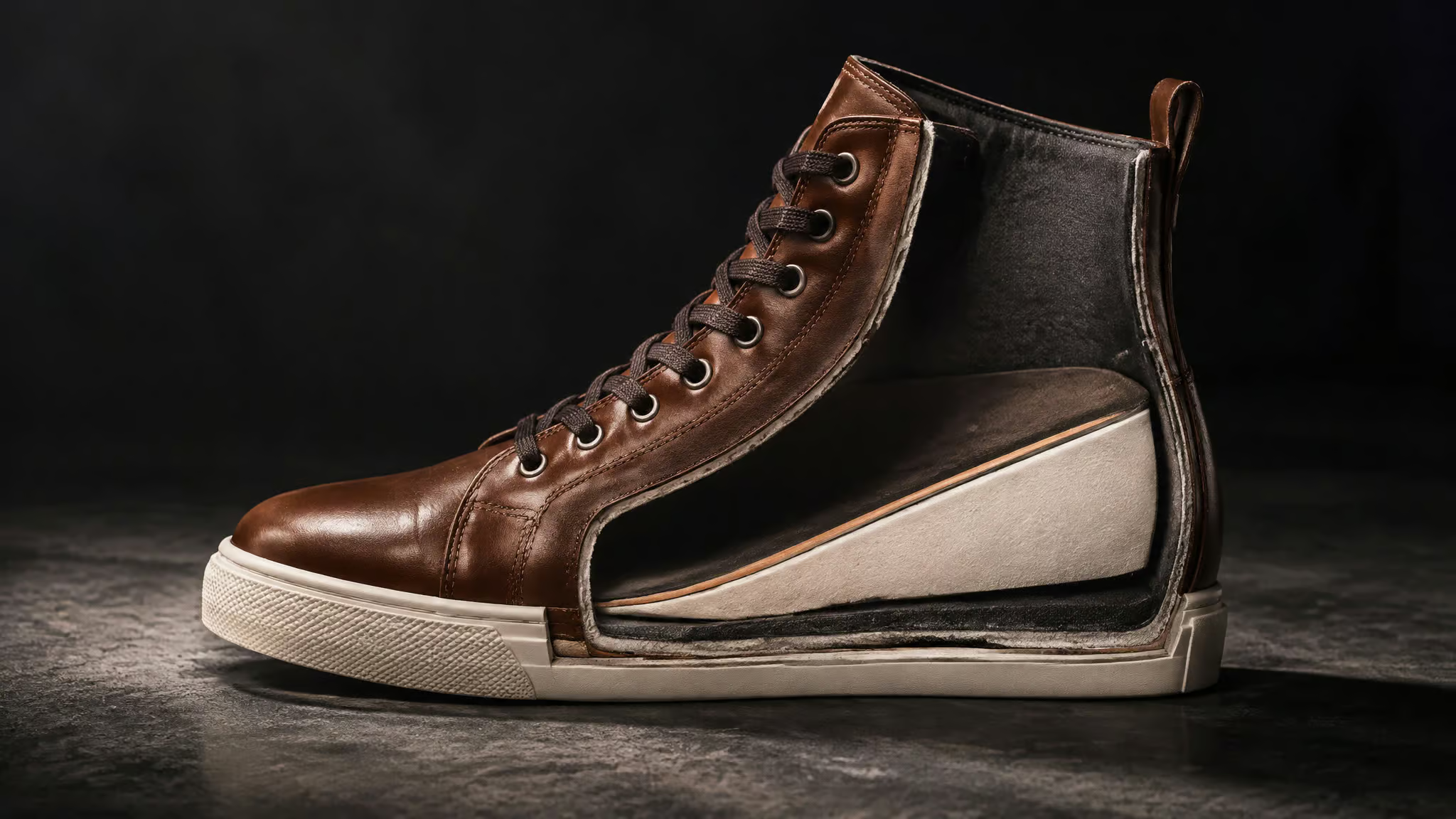
Elevator shoes are ordinary-looking shoes with a thick hidden insole inside that adds height, like a lift kit for your feet. Your heel sits elevated on a platform at the back of the shoe, and the footbed slopes down toward the toe. That’s the whole trick. Advertised lifts run from about 2 inches up to 6. The bigger numbers deserve some side-eye; the believable, discreet zone is 2 to 3.5 inches.
The real stakes are believability and comfort. My take going in: start low, not high. If you open up a well-made pair, you can see it yourself. The inside is noticeably higher up on the back side, where the heel goes.
Key Takeaways
At 2 to 3 inches of lift, elevator shoes read as normal mid or high tops to strangers, but people who already know you will notice the change.
Roughly 2.5 to 3.5 inches is the sweet spot where comfort and discretion balance; 5 to 6 inch pairs are bulky, awkward, and obvious to everyone.
Expect about 48 hours to relearn your walk, keep the heel snug (sizing up makes your foot slide forward), and verify a brand’s claimed inches against what’s actually in the insole stack.
Table of Contents
What’s inside an elevator shoe: the hidden lift anatomy
You’ll see these called height-increasing shoes or hidden-lift shoes, and plenty of brands sell them. The one this piece can speak to in real detail is CALTO, because a hands-on walkthrough of a pair exists; I’m not going to name-drop other brands I can’t back up.
Inside, there are three parts doing the work. An inclined heel platform at the back raises your heel. A raised interior back wall holds everything in place. And layered removable insoles let you adjust or maintain the lift. On the CALTO pair, this was visible: the footbed sits higher at the back, exactly where your heel lands.
The useful part for you is that this anatomy is inspectable. You can judge construction from a product photo or by handling a pair in a store. Look for the sloped platform and the raised back wall. If a brand’s photos never show the interior, that tells you something too. One honest caveat: this describes typical construction, not a certified standard every manufacturer follows.
Why 3 inches doesn’t feel like heels
They don’t feel like heels because your whole foot rests on a gentle incline instead of pivoting on a spike: heel raised at the back, footbed sloping down to the toe. The scooped footbed locks your heel in place, and the outer sole absorbs part of the lift so the visible heel keeps normal proportions. Think wedge, not stiletto.
Can you tell if someone is wearing elevator shoes?
At 2 to 3 inches, effectively no. Strangers won’t register it. The guy who wore the 3-inch CALTO pair said they read as ordinary mid tops or high tops, and they were less noticeable than he expected going in. The understated styling helps too: nothing about the shoes pulls eyes down to your feet, which is honestly the boring reason the trick works.
The honest counterpoint: people who already knew him did clock the 3-inch change. That’s worth knowing before you buy. Discreet means strangers don’t notice, not that your friends are blind.
Higher tiers are where the tells concentrate. The interior slope gets steeper, the silhouette bulkier, and your walk changes. The tested 6-inch pair was immediately obvious. One 5.2-inch model got described as ridiculous, and that’s a fair word for it.
Detectability scales with lift height plus silhouette. Stay low and stay quiet.
Choosing your lift height: 2 vs 3 vs 4 vs 6 inches
Yes, roughly 2.5 to 3.5 inches is where comfort and discretion balance, and it’s the tier I’d tell any first-timer to start with. Every added inch steepens the incline and multiplies both discomfort and detectability, so bigger isn’t automatically better.
The discreet tier: 2-3.5 inches
This is the livable range. Near-invisible to everyone else, enough to notice in the mirror, and it gets through a day without making your feet hate you. CALTO’s claimed 3.5-inch lift sits right at the top of it. If you want maximum quiet, something around 2.4 inches is a defensible sweet spot: enough lift to see the difference yourself, low enough that nobody else does.
The middle tier: 4 inches
Four inches is the height most buyers look up first, and it’s workable. But it pushes the incline toward the edge of comfortable, and it only passes if the shoe format hides heel rise naturally. That means boots or dress shoes, where taller heels are expected anyway. A 4-inch lift in a low sneaker is asking for attention. There’s a whole guide to height-boosting footwear if you’re shopping at that tier.
The max-lift tier: 5-6 inches
Here’s the verdict up front: 6-inch pairs function, but you pay in bulk, an altered walk, and everyone knowing. The tested 6-inch pair was bulky and awkward, and it delivered no extra confidence. Walking problems at this height are real in the practical sense: your gait changes and your feet notice, though the honest cost is comfort and obviousness, not injury. And when the reveal is unavoidable anyway, what exactly are you hiding? A far subtler approach is shoes that make you 2 inches taller, which add height without the tell.
A quick menu:
- 2-2.5 inches: maximum discretion, barely any adjustment period
- 2.5-3.5 inches: the everyday pick, my starting recommendation
- 4 inches: fine in boots or dress formats, pushing it elsewhere
- 5-6 inches: a statement, not a secret
Start at 3. Live with it. Go higher only if you actually want to.
Comfort and fit: the 48-hour adjustment and why loose is worse than snug
Snug heel, room in the toe, and expect a break-in. And counterintuitively, loose is worse than snug. The thick interior padding in well-made pairs makes them genuinely comfortable, but walking 3 inches taller is awkward at first and it hurts a bit. Give it about 48 hours to relearn your gait, which means don’t debut a pair cold at a wedding.
One reviewer flatly wouldn’t wear them daily. For some guys these are occasion shoes, and that’s a legitimate way to own them.
The fit rule that matters: the snug heel is structural. It anchors the slope. If you size up “to make room,” your foot slides forward off the incline, and the tell-tale combo shows up later: heel slip plus forefoot soreness after a full day. It’s the most common first-buyer mistake in this category.
Which styles look natural: dress shoes, casual trainers, boots
Style choice and lift height are one decision, not two. For daily wear, casual leather trainers and mid-tops are the pick. For a 4-inch lift, go boots or dress formats, because taller natural heel proportions hide the rise for free. Chamaripa builds the lift as a hidden system inside the shoe rather than a thick outer sole, so the silhouette stays normal, see this guide to 4-inch lift shoes for what’s achievable and how to wear tall lifts convincingly. The silhouette determines how much lift you can hide without trying.
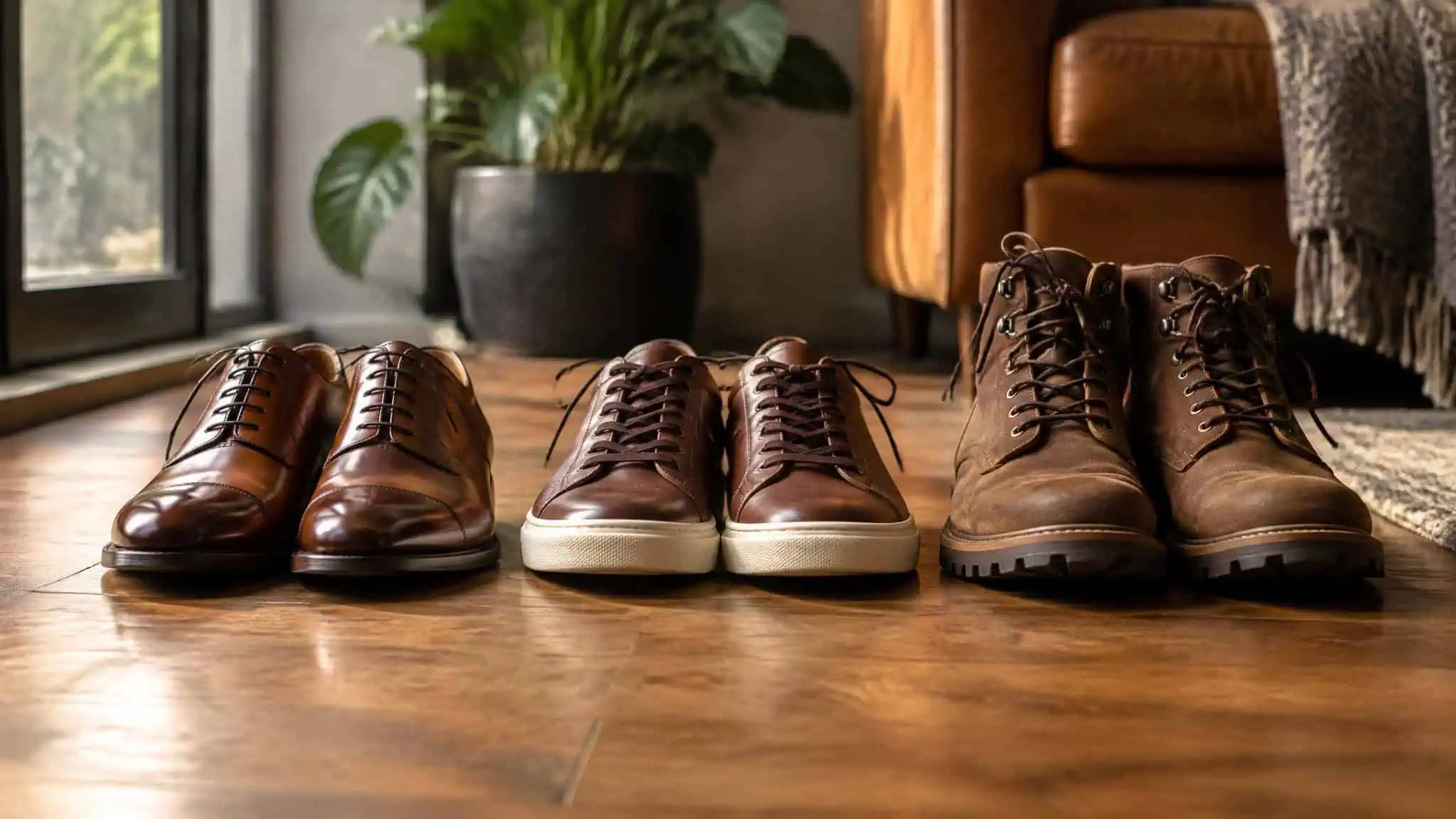
Dress shoes and chelsea boots
Dress shoes and chelsea boots already run tall in the heel, so a lift disappears into proportions nobody questions. That’s free concealment, the same trick behind shoes that make you taller, which quietly add 2-4 inches while feeling flat and comfy. If your wardrobe skews suits and sport coats, this is the lowest-effort path: the shoe is doing the hiding work before anyone looks twice.
Casual leather trainers
This is where most guys live. A CALTO-style casual leather shoe reads as an ordinary mid or high top, which is exactly what you want. The lift hides inside while the outside looks like something you’d wear to a bar or a casual office. Daily-wear versatility lives here more than anywhere else in the category.
Height-increasing boots and cosplay
Boots are the obvious fit for taller lifts, since the shaft hides heel rise as a bonus. And there’s one niche where height is the feature, not the secret: costume and cosplay buyers actively search for height-increasing boots to nail a character’s build. Nobody at a convention is grading your subtlety.
Quick comparison:
| Style | Hides a 3-inch lift? | Hides a 4-inch lift? | Daily wear? |
|---|---|---|---|
| Low sneakers | Partial (reads slightly off) | No | Yes |
| Casual leather trainers / mid-tops | Yes | Partial (heel rise shows) | Yes |
| Dress shoes / chelsea boots | Yes | Yes | Yes |
| Boots | Yes | Yes | Yes |
| Cosplay boots | Yes | Yes | Occasion |
How to evaluate a brand before buying: the CALTO benchmark
It’s worth noting the reviewer disclosed getting the product free and still listed dislikes. That’s the stance to bring to every brand claim in this category, including the flattering ones. CALTO is a useful benchmark. The pair in the walkthrough had leather or convincing synthetic uppers, faux fur lining for warmth, and a box that included a shoe horn, spare insoles, and care instructions.
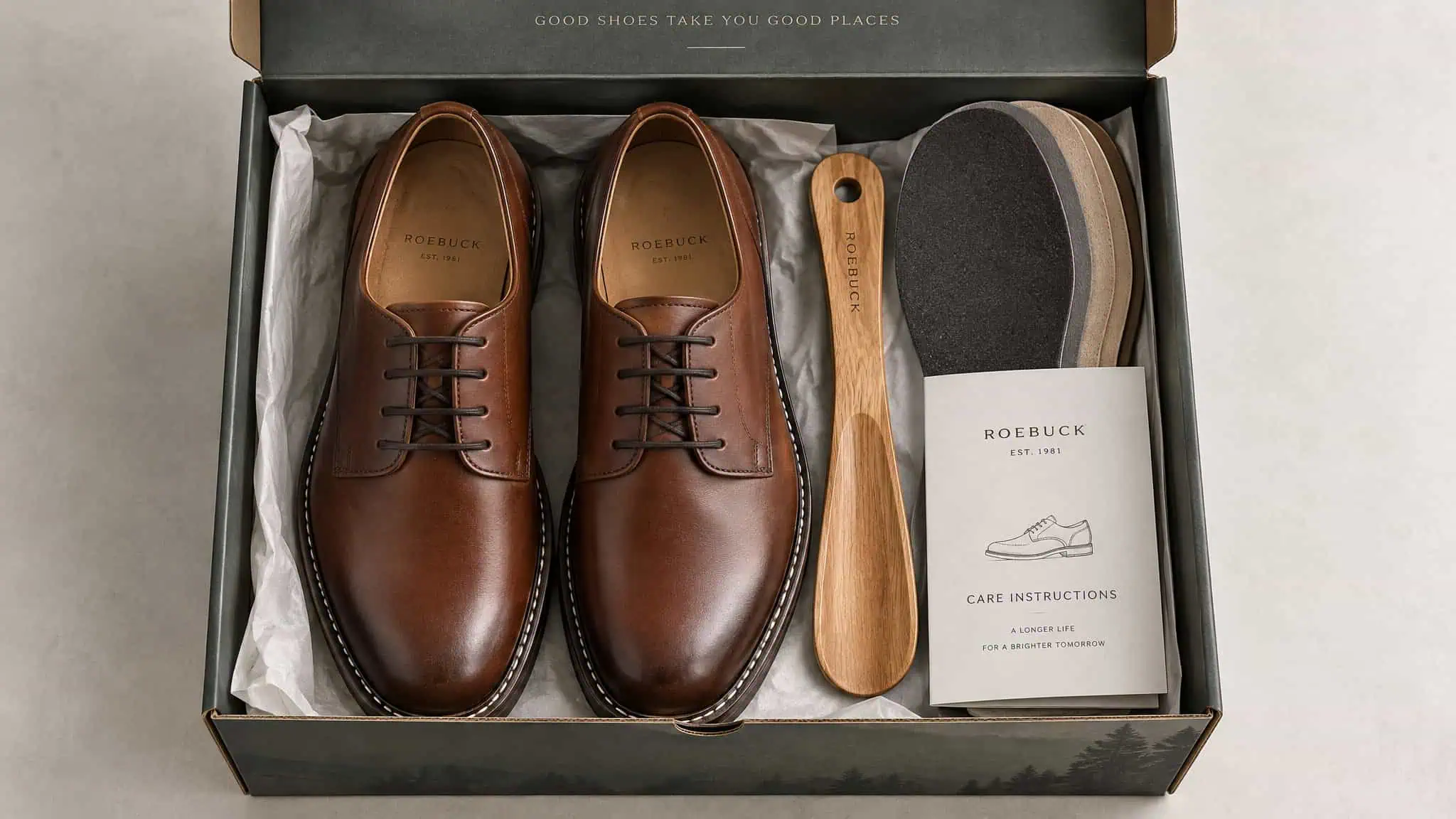
Package completeness is the quality proxy: spare insoles signal a brand that expects lift layers to be maintained, while a bare box suggests a one-shot product. A reviewer praised the craftsmanship and put the real-world gain at about 3.5 inches.
Now the gap nobody else covers: advertised inches can count removable or compressible insole layers, and no independent measurement standard exists for any of this. So verify. Check whether the claimed number assumes the spare insole is installed, then compare the insole stack with layers removed against the claim. That’s the whole method.
Quick test: Check whether the claimed lift assumes the spare insole is installed, then count the insole stack with layers removed against the claim.
Last practical point: online selection is broad, but a fixed incline fits every foot differently. Let an in-store trial or a generous return policy decide where you buy.
What height actually buys you: first impressions and the height-fishing debate
For all-day standing, a 2 to 3 inch pair with thick interior padding is the only realistic candidate, and even then, some reviewers declined to wear them daily. That’s the honest ceiling. Don’t promise yourself work-day comfort you may not get.
One wearer went from 5’7″ to 5’10” with a 3-inch lift. He got more looks and faster warm-up during initial approaches. Roughly 20% of women said they preferred him with the shoes on; about 80% said height wasn’t a big deal after a few minutes. Past the first impression, outcomes barely moved.
How tall you read, meaning posture and ease, mattered about as much as how tall you are. Keep in mind that’s one guy’s experiment, not survey data.
Then there’s the debate people love online: undisclosed lifts get called height fishing, a bait and switch. The counterargument writes itself: makeup, heels, push-up bras. Shrug included. The practical threshold is around 5 inches of boost, which is what reads as deceptive, while 2 to 3 inches sits inside normal variance and never triggers the conversation. Modest lift is simply the lower-risk social bet.
Before you buy: fitting reality and who these shoes are for
Four checks before money changes hands: press the insole stack, check the heel scoop depth, walk on a hard floor, and look at the sole proportions from the side. Buy in-store or somewhere with easy returns. Women’s hidden-heel shoes and cosplay boots get searched plenty even though nearly all category content is men’s; women’s formats lean sneaker and flat rather than hidden wedges. Start at 3 inches, verify the claim, and judge the shoes on what they’re actually for: better first impressions.
Frequently Asked Questions
What are elevator shoes called?
They’re also called height-increasing shoes or hidden-lift shoes, and plenty of brands sell them under those names. The construction is the same regardless of label: a thick concealed insole that raises the heel while the outer shoe looks ordinary.
Can you tell if someone is wearing elevator shoes?
At 2 to 3 inches of lift, effectively no — strangers won’t register it, and the shoes read as ordinary mid or high tops. People who already know you, though, will notice the height change. Detectability scales with lift height plus silhouette, so 5 to 6 inch pairs are obvious to everyone.
Which elevator shoes are the most comfortable?
Well-made pairs with thick interior padding are genuinely comfortable, and the lowest lifts are easiest to wear. For all-day standing, a 2 to 3 inch pair is the only realistic candidate, and even then some reviewers declined to wear them daily. Every added inch steepens the incline and multiplies discomfort.
How much lift should I start with if I’m a first-time buyer?
Start at 3 inches. Roughly 2.5 to 3.5 inches is the sweet spot where comfort and discretion balance — near-invisible to others but noticeable in the mirror and livable all day. Live with it before going higher; every added inch multiplies both discomfort and detectability.