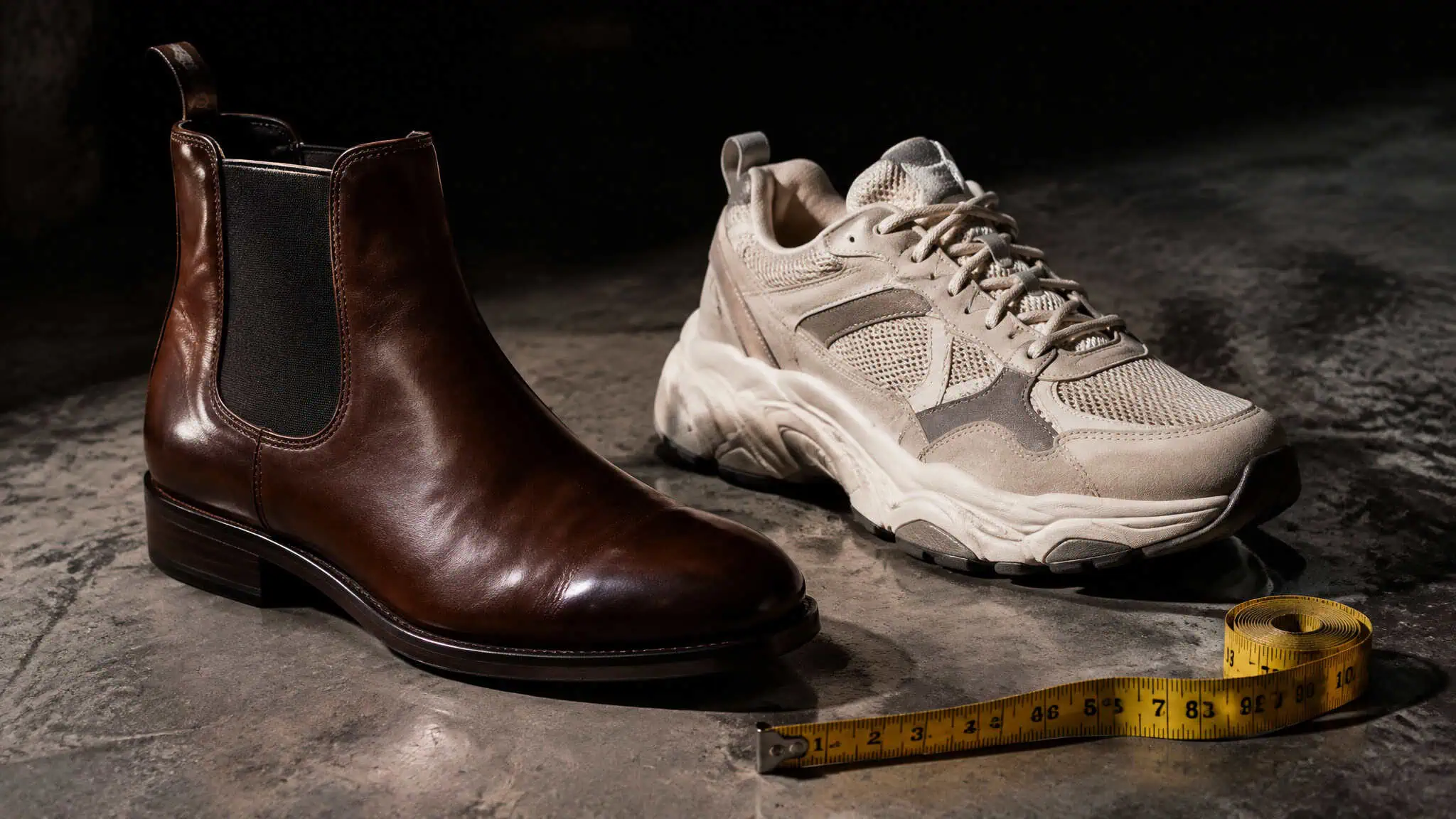
A guy orders a pair of “4-inch” height sneakers online, measures himself in the bathroom, and comes up about an inch and a half taller. Maybe an inch and three quarters if he’s generous with the posture. That gap between what the listing promised and what the floor actually gave him is where most of the confusion about height shoes lives, so let’s kill it right now: a real 4-inch lift exists, but it’s not a sneaker. It’s a hidden-lift elevator shoe, built with the rise concealed inside the shoe itself, and only a handful of brands make them at that elevation.
Elevator shoes are exactly what they sound like: normal-looking footwear with the lift secretly built into the construction. Nobody sees a platform. You just stand taller. The motivation isn’t complicated and doesn’t need a pep talk. Height touches posture, presence, and occasionally actual job requirements, and if a shoe handles that matter-of-factly, that’s a legitimate purchase.
Here’s the split that everything else hangs on. On one side you’ve got regular sneakers and casual shoes with thick soles, where what you see is what you get. RunRepeat‘s independent lab measured those stacks, and even the tallest ones top out around two inches of real gain. On the other side there’s the hidden-wedge category, where the brands get serious.
Mario Bertulli, an Italian shop that’s been around long enough to have an actual support line, claims 2 to 3.9 inches. GuidoMaggi, the high-end Italian option, claims a 4 to 6 inch maximum-height line. Those are brand claims, not lab numbers, and we’ll keep them labeled as such. But the category itself is real, and this piece separates what’s measured from what’s marketed.
Key Takeaways
Regular sneakers physically cap near 2 inches of measured gain (RunRepeat’s tallest casual sneaker stack is 50.5 mm), so a true 4-inch boost only comes from hidden-wedge elevator shoes like GuidoMaggi’s maximum-height line.
GuidoMaggi claims 4-6 inches from models like the Chester, DAEGU, and Pucon; Mario Bertulli caps at 3.9 inches and Jennen runs 4-10 cm (~1.5 to almost 4 inches), all as manufacturer claims with no independent lab testing.
A 4-inch lift pushes into high-drop territory (76% of height-increasing shoes are 9 mm+ drop), shifting muscle load to your glutes, hips, and thighs, so 3 to 3.9 inches is the smarter first buy for most guys.
Table of Contents
What a 4-inch lift really means: two categories of height-boosting shoes
Realistically, regular shoes add about 1.4 to 2 inches, and only hidden elevator lifts reach 4 to 6. That’s the whole answer, and it splits the market in two. Casual shoes with visible height are the honest option: the boost you see is the boost you get. Elevator shoes hide a bigger wedge inside, which is how they get past the ceiling that physics puts on visible soles.
The lab that measured all those sneakers uses two criteria for what counts as a genuine height-boosting shoe: a heel stack of at least 35 mm, and a midsole firmer than 33 on the Asker C durometer scale. That second number is a firmness measurement, and it matters because soft foam squishes under your body weight. A shoe can print 35 mm on the label and deliver 30 mm once you’re standing on it. The stack isn’t always the gain.
Buyer rule: Trust measured stacks over label numbers — soft foam compresses under body weight, so real gains run lower than the print.
Here’s the caveat that shapes the rest of this article: nobody independently lab-tests elevator shoes. Every brand inch claim runs on the honor system. Keep that in mind when we get to the numbers.
The visible ceiling: how much height normal shoes actually add
Hidden lift versus visible stack is the decisive choice here, and the sneaker data shows why. RunRepeat’s lab bought every shoe itself, took no sponsorships, cut shoes in half with a Dremel, and measured stacks with digital calipers at 12% and 75% of the insole length across 30+ parameters per shoe. All the data is published if you want to dig. Even the tallest casual sneakers they tested fall short of 4 inches.
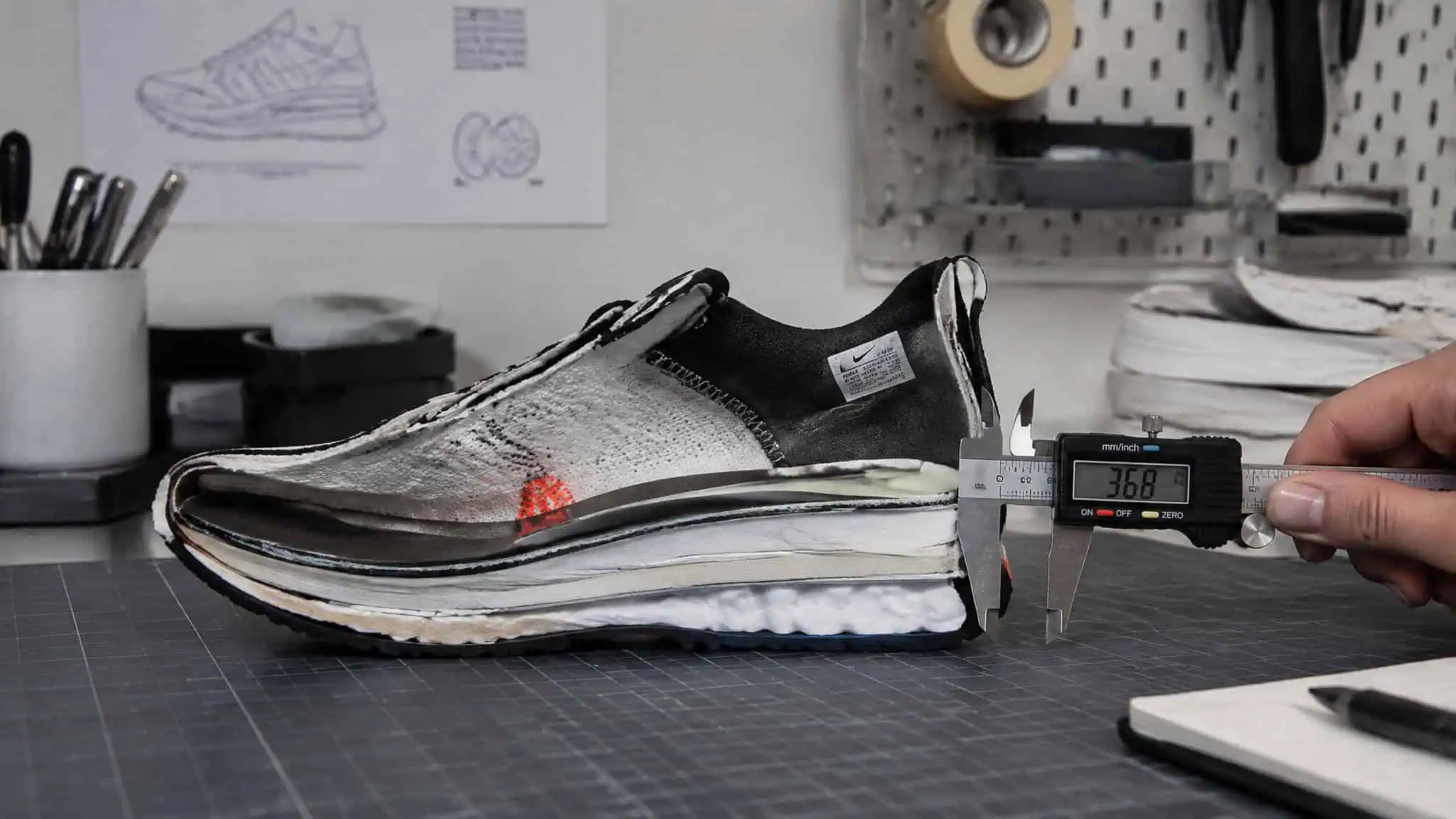
The picks, compressed:
- Nike Air Max DN (best overall): 40.3 mm heel, about an inch and a half, whose Dynamic Air system delivers 104 SA shock absorption, 58.4% energy return, 13.1 oz, and 5/5 breathability. Shallow toebox and non-stretchy upper pinch broad or high-volume feet.
- HOKA Bondi 9: 41.3/32.2 mm, the tallest tested, world-class 146 SA shock absorption, only 10.7 oz. Narrow toebox, so slim or low-volume feet only.
- New Balance 574 (budget): 38.2/25.2 mm, $90 against a $115 lab average, six widths, grippiest of the group at 0.55 friction. Stiff, breathes poorly, tongue wanders, delicate toebox mesh.
- Air Force 1 07 LV8: 36.7/20.1 mm, genuine leather verified by torch and scratch tests, 5/5 torsional rigidity. Long break-in, and the fit runs narrow through the forefoot.
- NB 9060 (chunky): 37.2/26.0 mm versus the 30.7/19.5 mm average, great grip, but 15.1 oz is heavy for the category.
- Nike Air Max 270: 36.4/20.3 mm, 5/5 breathability, 10.6 oz, weak wet-surface heel traction.
Calibrate against the average sneaker: 30.7 mm heel, 13.8 oz, $115. And the category maxima tell the rest of the story: sneakers top out at 50.5 mm, road running at 50.1, trail 47.3, hiking boots 46.9, walking 45.7, basketball at only 38.4, training at 36.2. Those maxima ignore foam softness, so real gains run lower. The “4-inch basketball shoe” doesn’t exist height-boosting footwear has realistic inch limits, so stop looking for it.
Height increasing shoes that add 4 inches: the brands and models that actually do it
If you want the full 4 inches, you’re buying hidden-lift construction, and there are three names worth knowing. GuidoMaggi’s maximum-height tier, including the Chester, DAEGU, FABRIANO, Baltic, Zibo, and Pucon, claims 4 to 6 inches while looking, per the brand, indistinguishable from standard luxury footwear, a bigger jump than the 2-4 inches most elevator shoes quietly add. The internal build spreads your weight across the foot so the extra height doesn’t concentrate pressure, which is their answer to the obvious “doesn’t 6 inches hurt?” question. The Pucon comes in shiny varnish leather if you want a pair that announces itself. Backstory in one line: luxury Italian brand founded by Emanuele Briganti, handmade in Italy, standard sizing, a retail footprint spanning New York, Milan, Tokyo, Malaga, and Lecce, and worldwide shipping.
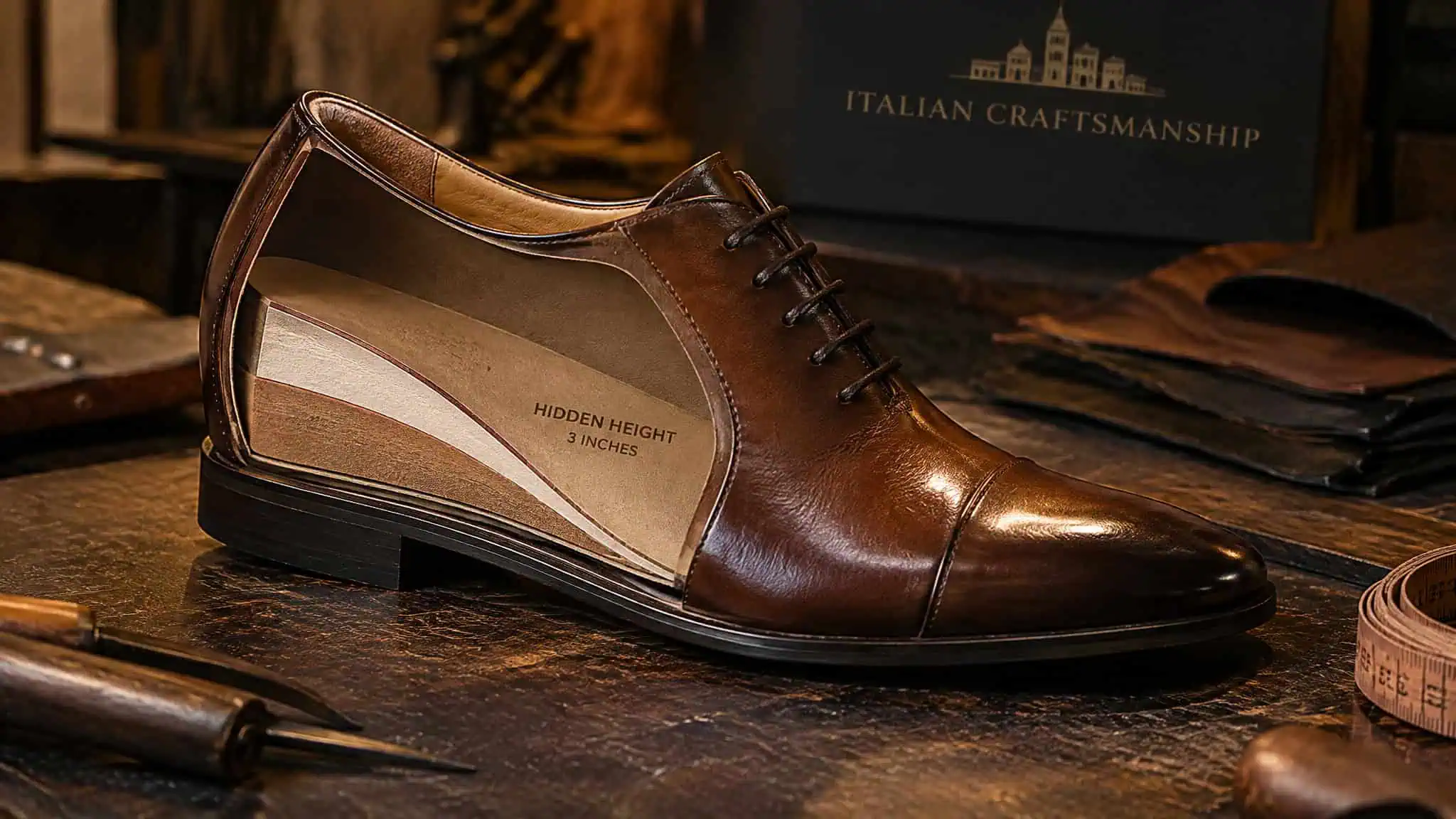
Mario Bertulli is the other Italian shop, and its claim is an invisible integrated lift of 2 to 3.9 inches. Up to almost 4. I read that 3.9 cap as a comfort-derived engineering limit rather than an arbitrary marketing range, which says something about where the brand thinks the comfort ceiling sits. Practical terms: free delivery over $220, free returns on your first order, and an actual phone line with real hours (Monday through Thursday 8:30am to 5pm, Friday until 4pm).
Jennen is the Australian budget-friendlier outlier, with 4 to 10 cm of hidden lift (roughly 1.5 to almost 4 inches) across formal shoes, wedding shoes, boots, and some women’s designs, plus standalone lift insoles for shoes you already own. Express worldwide delivery runs 7 to 12 business days.
| Brand | Claimed max lift | Independent testing? |
|---|---|---|
| GuidoMaggi | 4-6 inches | No |
| Mario Bertulli | 3.9 inches | No |
| Jennen | ~10 cm (almost 4 inches) | No |
The best calibration point anywhere in this space is a documented try-on, though you don’t need a specialty shoe to see a real bump, even Nike models ranked by actual stack height show everyday sneakers add a bit of height. Reviewer Rodel Flordeliz of Nognog in the City is 5’10” and hit roughly six feet wearing Jennen’s white Mr. Netaj sport shoe, a 6 cm gain of about 2.4 inches in actual wear. His measurement, his framing: a minutes-long, non-surgical alternative to pills or leg-lengthening surgery. Given that the average Filipino guy stands about 5’4″, it’s easy to see why that review landed. But note what it also proves: a real, verified-feeling gain at 2.4 inches, not 4.
Every figure above is a manufacturer claim unless someone like Flordeliz measured it. That’s the honest state of this market.
Which shoe styles can carry a 4-inch lift (and which cap out lower)
Boots are the strongest 4-inch category; dressier silhouettes cap out lower. GuidoMaggi’s catalog maps it out, alongside roundups of shoes that add about 2 inches without looking like elevator shoes. Dress shoes like the Brandon and Piacenza run 2.4 to 3.1 inches in clean Oxford and Derby shapes that read boardroom, not gimmick. Loafers (Riviera, Gosaldo, Gabarret, Antas) cover smart-casual. Sneakers (Biarritz, Banff, Marinette) also sit at 2.4 to 3.1, giving you everyday casual height without looking like gym shoes.
The boots are where 4 inches lives. The Marylebone Chelsea boot reaches 2.4 to 4 inches in full-grain leather and is probably the easiest rec in the whole lineup; it works with slim trousers, dark jeans, or a suit. Ankle boots like the Telfer and Blonie in leather, or the Estevan and Rovigo in suede, hit the same 2.4 to 4 inch range and dress up or down, which makes them the workhorse. Full-length boots like the Fada, Crete, and suede Estevan have tall shafts that add visible height on top of the hidden lift, a double win.
The Clovis in alligator is collectible money and priced like it. Slip-ons for guys on their feet all day: the Fumel goes up to 6 cm, the Jaca 2 to 2.8 inches. At the very top there’s an ultra-luxury shelf (Tamala and Barsat in crocodile, Rossmore in shell cordovan) priced for rare materials and handwork. And if your feet or taste don’t fit the catalog, bespoke lets you pick the leather, color, finish, and exact height, which is the direct route to targeting 4 inches precisely.
Comfort limits: what a 4-inch lift does to your body
A 4-inch lift means high drop. 76% of height-increasing shoes run 9+ mm and 9% exceed 20 mm, and that drop shifts muscle load off your feet and onto your glutes, hips, and thighs. If your hips are cranky, think twice. Weight compounds it, since heavier builds fatigue faster, so give yourself a week to ease in before an all-day debut.
Quick test: A few short wears beat one long debut — if your hips complain in the first week, the height is doing more than your body wants.
Wearing 4-inch lifts convincingly
The prerequisite is hidden-wedge construction. Real elevator shoes look like standard footwear, which is the entire game; anything with a visible platform is a different, louder look. The calibration point is Flordeliz’s try-on again: a 2.4-inch gain on a 5’10” frame read as completely normal, nobody clocking a gimmick. Four inches demands that same invisibility, just engineered bigger.
Practically, the styling playbook is occasion-based: dress shoes for the office, Chelsea or ankle boots for everything in between, sneakers for weekends. The ramp-up week from the comfort section matters here too, because a tentative gait gives away a lift faster than any sole ever will. Height is just a fact about you, tied to presence, posture, and occasionally job requirements. The shoe handles the height; walking like yourself handles the rest.
Buying a 4-inch pair safely: fit, insoles, and trusting the inch claims
Since no third party audits elevator-shoe height claims, the brand’s own purchase terms are your real safeguard. On Amazon specifically: no source evaluates those marketplace listings for trustworthiness, so the honest criteria available are brand-direct terms and the lab-measured data on regular sneakers.
Fit is where max-lift shoes fail first. The structured uppers that conceal big lifts tend to pinch broader feet; the Air Max DN and 270 exclude wide feet, the Bondi 9 is narrow, and the AF1 needs a long break-in. The tell is a shoe that fits in the store photos but crushes your toes by day three, so check toebox volume while the return window is still open. On insoles, good news: 93% of height-increasing shoes are orthotic-friendly, the stock insole already counts toward the measured stack, and most have room for a thicker insert. Check for the orthotic-friendly tag before you swap anything.
Purchase terms worth knowing: Mario Bertulli’s free delivery over $220 and free first-order returns, GuidoMaggi’s standard sizing and bespoke program across five showrooms, and Jennen’s 7 to 12 business day worldwide delivery. Prices may vary, but those terms are the actual safeguard.
Cost, height limits, and the honest ceiling
Can shoes add 6 inches? Depends. GuidoMaggi sells up to 6 inches, but nobody’s published safety or comfort testing at that elevation, and the same drop and weight mechanics that strain at 4 inches scale upward, so treat everything above roughly 4 inches as manufacturer claims plus scaling risk. Six inches converts to about 15 cm.
On cost, no source gives exact elevator-shoe prices; the honest anchors are the $90 NB 574 as a sneaker benchmark, Mario Bertulli’s $220 free-delivery threshold, and GuidoMaggi’s rare-materials tier at the top. One more gap: women’s-specific 4-inch data is thin, with Jennen’s “some women’s designs” being about the extent of it. And a 4-inch heel, a single visible stem, is a different geometry and stability problem than a 4-inch hidden lift.
Choosing your 4-inch lift: the practical verdict
Honestly, 3 to 3.9 inches is the smarter first choice for most guys. It sits inside what a major brand builds for comfort, since Mario Bertulli’s deliberate 3.9 cap reads like an engineering limit, and the adjustment period, fatigue data, and drop-load facts all say 4 inches is the edge of the range, not the middle of it. If daily comfort matters, start at 3 to 3.9 inches, or go boots with a ramp-up week. Go 4 to 6 inches only through hidden-lift construction with free returns, and only if you’re honest with yourself about the drop.
If you’re on your feet ten hours a day or your hips already complain, start lower. The height will still be there when you’re ready for it.
Frequently Asked Questions
How much height do 4 inch heels add?
A visible 4-inch heel is a different geometry than a hidden lift, but the real-world gain is usually less than the nominal height because your foot tilts and the heel compresses. For elevator-style footwear, brands claim a full 4 inches only with hidden-wedge construction inside the shoe, not with a standard visible heel stem.
How many inches can shoes add to height?
Realistically, regular sneakers and casual shoes add about 1.4 to 2 inches — even the tallest lab-measured casual sneaker stack tops out at 50.5 mm. Only hidden-lift elevator shoes reach 4 inches or more, with GuidoMaggi claiming up to 6 inches, though those are manufacturer claims with no independent lab testing.
Do height increasing shoes really work?
Yes, but the honest gain depends on the category. Lab-measured regular sneakers deliver roughly 1.4 to 2 inches, and one documented try-on showed a 6 cm Jennen sport shoe adding about 2.4 real inches on a 5’10” reviewer. True 4-inch gains require hidden-wedge elevator shoes, and every brand inch claim in that category runs on the honor system since nobody independently tests them.
Which shoe adds the most height?
Hidden-lift elevator shoes add the most, with GuidoMaggi’s maximum-height line (models like the Chester, DAEGU, and Pucon) claiming 4 to 6 inches while looking like standard luxury footwear. Boots are the best style category for carrying a big lift — the Marylebone Chelsea boot and ankle boots like the Telfer and Blonie claim up to 4 inches, and full-length boots add visible shaft height on top of the hidden lift.
Why do ‘4-inch’ sneakers measure shorter in real life?
Because label numbers measure the stack, not what survives your body weight. Soft foam compresses when you stand on it, and the lab standard for a genuine height-boosting shoe requires a heel stack of at least 35 mm and a midsole firmer than 33 on the Asker C durometer scale. If a listing promises 4 inches but it’s a regular sneaker, expect closer to an inch and a half on the tape measure.