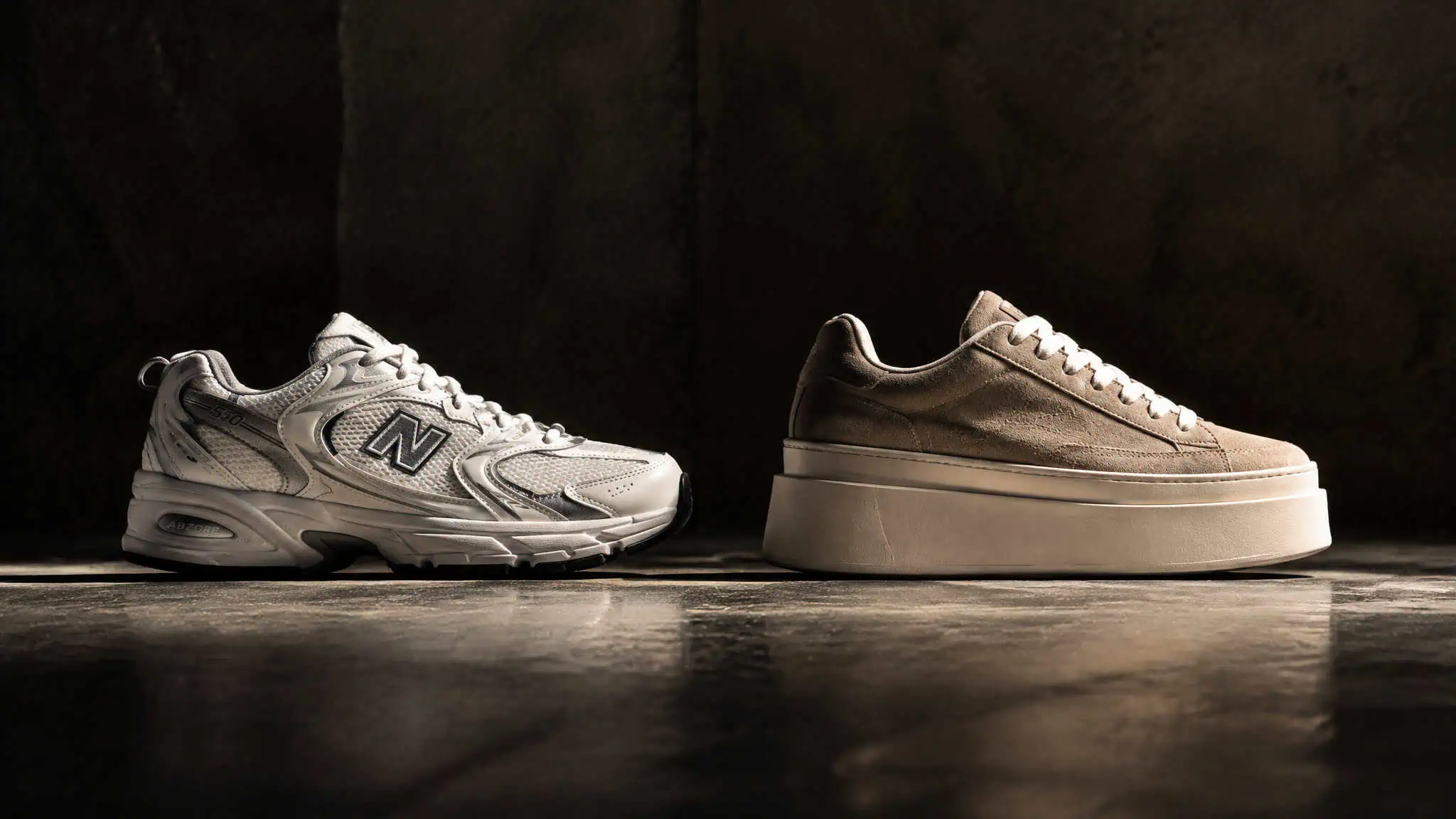
Here’s the number nobody on a product page wants to give you: 2 inches is 50.8mm of heel stack. And the tallest sneaker anyone has put calipers on topped out at 50.5mm. So regular shoes get close. They rarely hit it.
Here’s the honest version. Visible-stack sneakers deliver around 1.4 to 1.75 inches. Platforms hit a true ~2, and hidden-wedge elevator shoes go past it. Every figure below is either measured with actual calipers or labeled as a brand claim, because the difference matters when you’re spending your money. We’ll walk through measured sneakers, chunky picks, platforms, boots, elevator shoes, and insoles, with the fit caveats that decide whether any of them actually work on your feet.
Key Takeaways
A true 2 inches requires 50.8mm of heel stack, and no regular sneaker has ever measured that high (category max: 50.5mm), so platforms or hidden-wedge elevator shoes are the only honest routes.
The tallest lab-measured sneaker is the HOKA Bondi 9 at 41.3mm (~1.63 in), with the Nike Air Max DN close behind at 40.3mm (~1.59 in).
The discreet sweet spot is 1 to 2 inches of lift; beyond that, comfort, walking feel, and “is that guy wearing elevator shoes?” all become real problems.
Table of Contents
Can regular shoes really add 2 inches? The honest math
No regular sneaker measurably reaches 2 inches. The category max is 50.5mm of heel stack, and the tested height-boosting picks run 36.7 to 41.3mm, roughly 1.45 to 1.63 inches, against a 30.7mm average sneaker. The 50.5mm ceiling and the 30.7mm baseline are the two numbers that frame everything else in this article.
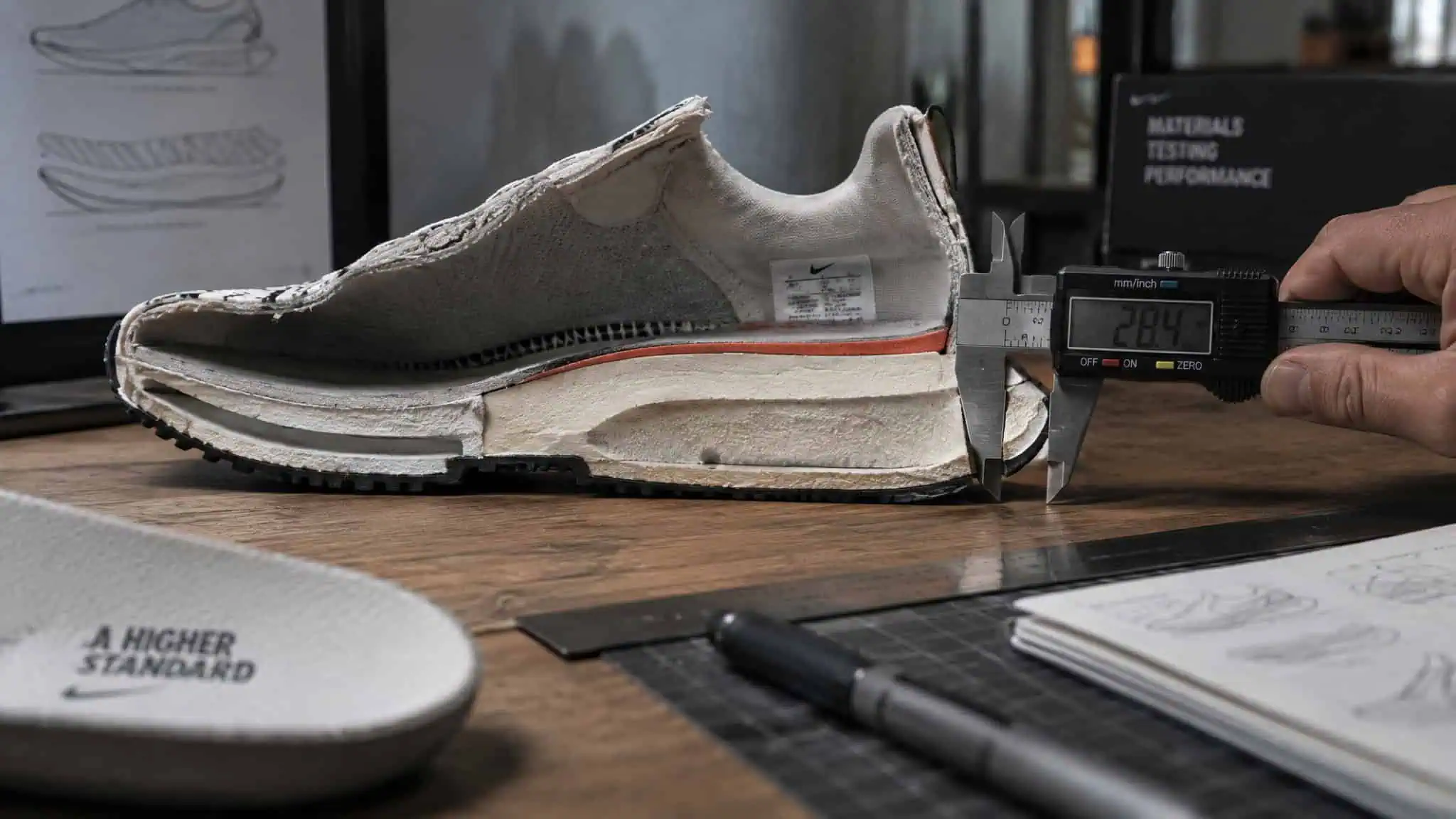
What 2 inches actually means
2 inches equals 50.8mm. That’s it. It sounds small in inches and enormous once you realize a normal sneaker carries 30.7/19.5mm of stack. For context on how the categories cap out: road running maxes at 50.1mm, trail at 47.3mm, hiking boots at 46.9mm, walking shoes at 45.7mm, basketball at 38.4mm, and training shoes at 36.2mm. Hiking sandals and tennis shoes don’t even clear the 35mm threshold that separates “tall” from “regular.”
What each shoe type adds
Rough ranges: regular sneakers 0.75-1.25 inches, chunky sneakers 1-1.75, boots 1-2, platforms about 2, elevator shoes 2-3+ inches claimed, insoles 0.5-2. If you only want an inch, almost any decent sneaker already does the job. The sweet spot for looking normal is 1-2 inches.
One recurring pattern worth knowing before you measure anything at home: buyers check a shoe advertised as “adds 2 inches” while wearing it, and get less. Foam compresses under body weight and your foot sinks into the upper. The label measured air; your foot measures reality.
How height-boosting shoes work: stack, firmness, drop
The measurements in this article come from an independent lab that buys every shoe with its own money, cuts each pair in half, and measures with digital calipers at 12% and 75% of the internal length, logging 30+ parameters per shoe with no sponsorships. That’s why you can trust a millimeter number here and not a marketing inch.
Stack height
The lab’s cutoff for a height-boosting shoe is a heel stack of at least 35mm, measured with a caliper. Below that, you’re just wearing a sneaker.
Firmness
Midsoles need to be firmer than 33 Asker C. Asker C is just a hardness scale for foam, and the reason the number matters is blunt: soft foam sinks under your body weight and hands the height back. A 35mm heel that squishes delivers less than the sticker says.
Drop
Of tested height shoes, 76% are high-drop (9mm+). Drop shifts where the stress lands: zero-drop works your foot muscles and Achilles harder, mid-drop loads the knees more, high drop pushes it up to the glutes and hips. Directional guidance, not a diagnosis. Podiatrists generally point to a 6-10mm drop.
Weight
Tall doesn’t have to mean heavy. The HOKA Bondi 9 pairs a 41.3mm stack with 10.7 ounces against a 13.8-ounce average sneaker, thanks to premium foams. Still, give yourself a few days to build up to full-day wear.
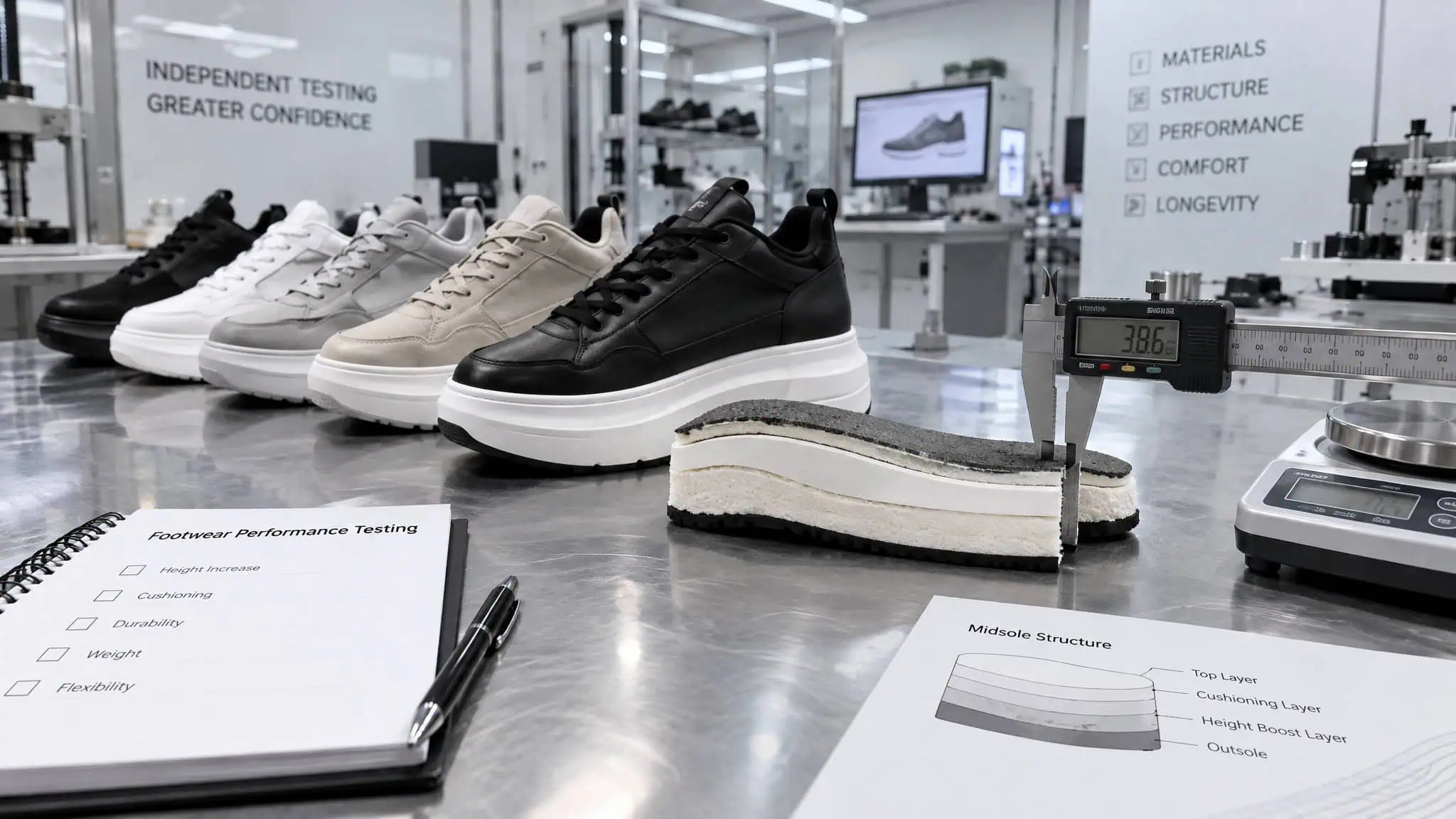
Lab-tested height-boosting sneakers with measured stacks
These are the sneakers with real caliper numbers, and the Air Max DN starts the list at 40.3mm. Here’s how they stack up, literally.
Best overall: Nike Air Max DN
40.3mm of heel stack, about 1.59 inches, measured with digital calipers. That’s a real, verifiable lift, not a marketing claim. The Dynamic Air system makes it feel springy underfoot and takes the edge off impact, and the 58.4% energy return means it doesn’t ride like a dead brick despite the height. At 13.1 oz it’s lighter than average, and it breathes about as well as a sneaker can (5/5).
It earned my pick as the best overall height-boosting sneaker, not because of a trophy, but because it balances lift, weight, and normal looks better than anything else measured. The catch: the upper isn’t stretchy, the toebox is low, and broad feet can hit pressure points. It’s also getting hard to find.
Best chunky: New Balance 9060
37.2/26.0mm, versus the 30.7/19.5mm average, which is exactly why it reads tall. Chunky is a look, and if you’re into it, this is the one. The 121mm platform base means it’s stable, not tippy, and traction is 18.6% grippier than average. Downsides: 15.1 oz, it squeaks, and it runs warm.
Best shock absorption: HOKA Bondi 9
41.3/32.2mm, the tallest sneaker the lab has measured, with a platform under the whole foot, not just the heel. The supercritical EVA midsole scores 146 SA for heel shock absorption, and at 10.7 oz it’s lighter than the average shoe. The catch matters: the toebox is narrow despite the oversized frame. Slim feet only.
Best business casual: Nike Air Force 1 07 LV8
36.7/20.1mm, which is decent lift without the platform silhouette, and that’s the whole point: it looks fine at the office and nobody asks questions. The leather checked out as genuine under a torch and scratch awl test, not just a tag claim. Full-length Air means cushioning runs the whole shoe, and 5/5 torsional rigidity means it supports your ankle instead of folding. Downsides: heavy, long break-in, and a fit that punishes wide feet.
Best budget: New Balance 574
$90 against a $115 lab average, and the stack is 38.2/25.2mm, which is taller than several shoes costing more. Traction is 27.9% grippier than average, and there’s real suede at this price, which surprised me a little. The cushioning scores a modest 92 SA and breathability is weak. Fair trade for ninety bucks.
Best dad shoe: New Balance 990 V6
About 1.6 inches, $200, and here’s the surprise: it’s lighter than the average sneaker. It comes in six widths, with arch support and stability that genuinely impressed the lab, and a thick cushioning setup that still feels fine after a day on your feet. The toebox mesh is delicate, and sizing is disputed, so check returns policies. Dad shoes are exactly what they sound like, and that’s the selling point.
One pattern across all of these: guys who pick on stack height alone and ignore toebox volume end up returning shoes like the DN or Bondi 9 with pressure-point complaints. Match the shoe to your foot, not just the millimeters.
How much height do Nike Air Max sneakers actually add?
Roughly 1 to 1.75 inches, depending on the model. That’s the honest headline for the whole line.
Why Air Max is the no-thinking starting point
If you’re overwhelmed by options and don’t want to research, start here. The visible Air unit and thick midsole read as completely normal sneaker design, never as elevator shoes, and if you want to go taller, see this guide to 3 to 4 inch lifts. Some models fit narrow or run small, so check sizing. They work best with tapered pants, streetwear, and gym-to-casual looks.
The Air Max 270
The futuristic pick, and the first 100% lifestyle Air Max. Measured stack: 36.4/20.3mm, 10.6 oz, 5/5 breathability. One flag: heel traction is limited on wet or slick surfaces.
Per-model gains
Air Max 95 runs about 1.4 inches but fits narrow, so go up half a size. The 97 gives about 1.6 inches. The Plus, 90, and Uptempo ’95 sit in the same range. If you want high cushion with a more technical look instead of the dad-shoe vibe, the VaporMax is the alternative.
Chunky and comfort sneakers: 1 to 1.75 inches
Chunky and comfort sneakers land in that 1 to 1.75 inch range honestly: the height comes from visible, bulky soles you can see and wear all day. The New Balance 9060’s stable 121mm base and the Ultraboost’s Boost stack prove the category works, so it’s just a matter of which look fits your wardrobe. Here’s how the picks break down.
The chunky streetwear picks
The Puma RS-X Efekt Premium adds about 1 to 1.5 inches, all of it sitting in that chunky sole. Be upfront with yourself: the sole brings visual weight too, and it’ll overpower slim pants. Pair it with streetwear or relaxed pants. The Adidas Ozweego runs the same chunky retro logic in a different flavor, so choose on vibe and fit.
The comfort pick
Adidas Ultraboost 5, $180, about 1 to 1.5 inches from the Boost stack. Comfortable enough for walking and travel, fits athletic-casual fine. The knit upper reads too sporty with anything tailored, so know that going in.
The New Balance trio
The 2002R adds about 1.5 inches for $140 and is wide-foot-friendly, which matters enormously if it matters to you. The 530 does about 1.7 inches for $100, but fits big, so size down. The 960 sits at about 1.6 inches. All three quietly do the job.
The statement piece
The Converse Run Star CX Platform adds about 3 inches, the biggest number in this article, and it’s also the wildest-looking pick, right at the top of what platform shoes can add before you cross into what shoes make you taller territory. Not for everyone, and I say that as a compliment. Size down half a size and wear it with baggy pants so the platform doesn’t scream. We’ll come back to this one in the comparison section, because it’s the crossover case: technically a platform, visually a statement.
Platform sneakers that get closest to 2 inches
Platforms are the only regular-looking shoes with a verified ~2-inch lift, and they’re just one category among many height-boosting options covered in what shoes make you taller, a guide spanning elevator shoes, chunky sneakers, boots, and insoles with realistic inch gains. One pricing note up front: the figures below come from InStyle‘s April 22, 2026 update and may have shifted since, so treat them as starting points.
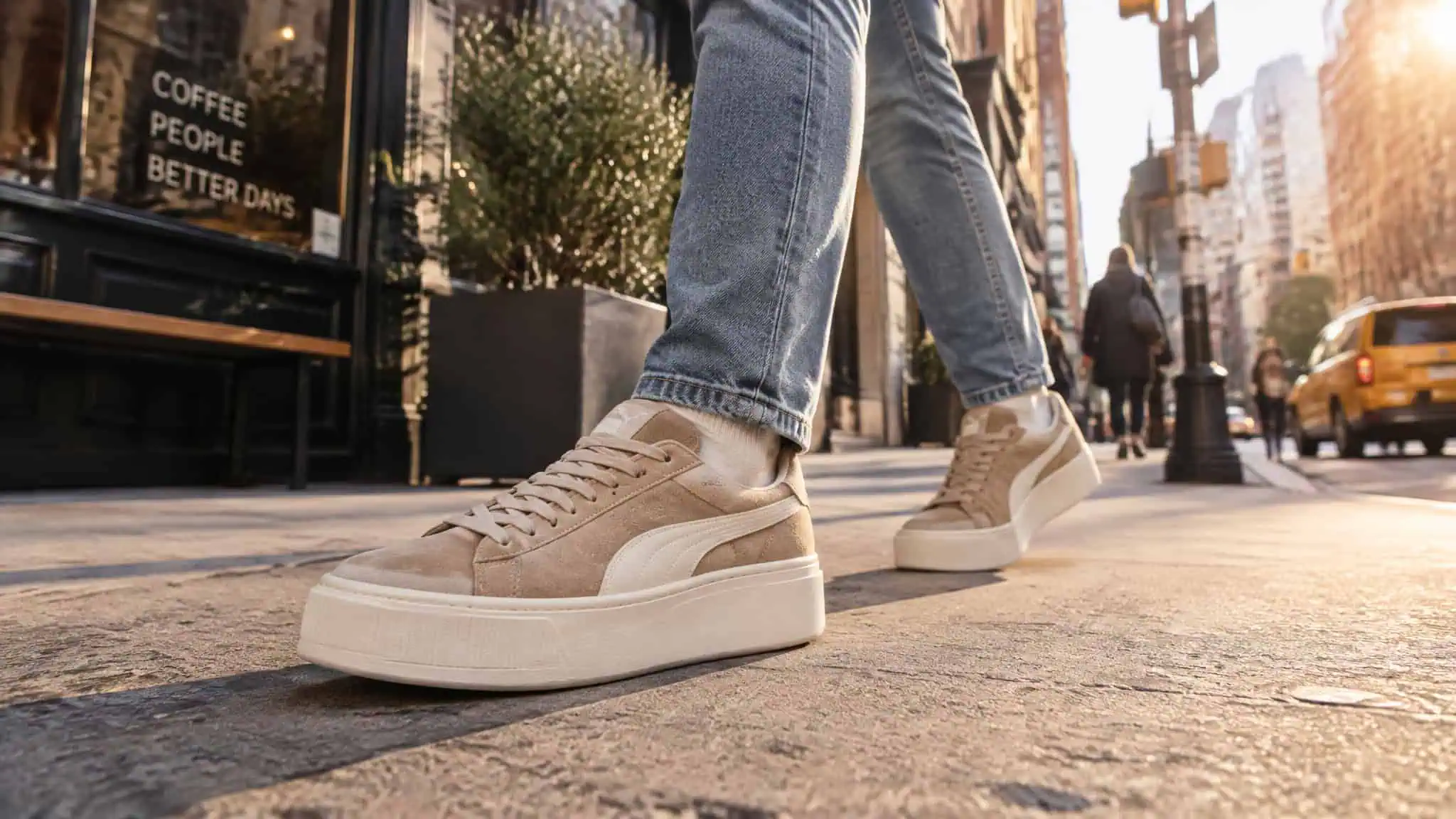
A quick framing note from the stylists: designer Linda Cui Zhang points out that the right platform reads as intentional style rather than compensation, and podiatrist Dr. Nelya Lobkova adds that platforms can actually absorb shock well. Both worth remembering as you read, especially if you’re considering purpose-built elevator shoes, where hidden lifts and comfort trade-offs make those styling points matter even more.
Adidas Gazelle Bold Platform
A true 2-inch platform under the classic suede look. $120 at Nordstrom or Finish Line, $100 at Foot Locker. Sizes 5-11. Leather upper, lightweight, stable base. It runs slightly big, so size down, and the wide tongue needs adjusting every single wear. That’s the small daily tax.
Converse Chuck Taylor All Star Lift Platform
Classic Chucks with a sneaky height bump. From $42 at Asos versus $80 Amazon and $75 Nordstrom, which is the deal worth hunting. The EVA foam sole supports high arches without inserts, a real win if that’s your foot type. Expect some heel pain on the first wear; it fades.
Dr. Scholl’s Time Off
$110 regularly, down to $75 at Amazon, Macy’s, and Famous Footwear. Slip-on with stretch laces, built-in arch support, wide toe box. A pregnant tester found them squishy, supportive, and comfortable, and testers stayed comfortable past 10,000 steps. Don’t dismiss the brand.
New Balance 515H
$70 at DSW and just $48 at Kohl’s, the cheapest real entry here. Subtle, non-bulky boost; a tester who’s exactly 5 feet appreciated exactly that. Fabric, suede, and mesh upper with EVA throughout, noticeably better ankle support than other platforms and lighter too. Her trick: lock the laces down around the ankle for stability.
Tory Burch Ladybug
1.75-inch platform, the shorter, more subtle designer lift. $210 at Nordstrom versus $300 at Amazon, so do the math. Understated logo, easy to dress up.
Nike Air Force 1 Shadow
$79 from $135 at Nike.com. True to size, solid grip, but the toebox creases.
Veronica Beard Valentina
$295 at Nordstrom or Zappos, $330 at Neiman Marcus, so skip the markup. Premium leather or suede slip-on in nine shades, sizes 5-13, the widest range in the lineup. Runs medium width; go half a size down if you’re between sizes.
UGG RetroFi Low
The winter pick, and the grippy sole on wet surfaces is arguably the most important thing about it. Sugarcane-based EVA midsole, runs wide (good or bad depending on your feet), and definitely not for summer.
Height-boosting boots: 1 to 2 inches that look natural
Boots quietly deliver 1 to 2 inches of lift, and a thick outsole just looks normal on a boot, so there’s nothing to disguise. Match the style to the vibe: Velasca Resegott for polished, Dr. Martens Jadon for platform, Timberland Earthkeepers for rugged, Red Wing Iron Ranger for heritage. The one honest caveat: heavy boots are miserable in hot weather.
Chunky vs. platform sneakers for 2 inches of height
Chunky sneakers give you stable, lab-verified 1 to 1.75 inches you can wear all day. Platforms are the only regular-looking shoes that hit a true ~2 inches, but they’re casual-only. Boots disguise 1 to 2 inches better than anything, in cold months.
Here’s how the options actually compare:
| Type | Typical verified gain | Look | Stability | Fit risk | Best setting |
|---|---|---|---|---|---|
| Chunky sneaker (NB 9060) | 1-1.75 in measured | Intentional chunk, reads normal | Yes (121mm stable base, 18.6% grippier) | Yes (15.1 oz, squeaks, runs warm) | All-day casual, streetwear |
| Platform sneaker (Gazelle Bold) | True ~2 in | Classic suede, subtle platform | Yes (stable base, lightweight) | Yes (runs big, tongue needs adjusting) | Yes, casual only |
| Boot (Red Wing Iron Ranger) | 1-2 in | Thick outsole looks natural | Yes | Partial (heavy, hot weather) | Work, fall/winter, dates |
| Hidden-wedge elevator shoe (Gova) | 2-3+ in claimed, unverified | Passes as ordinary | Partial (no lab data) | Yes (no fit verification) | Anywhere discretion matters |
Now the routing, because the table alone doesn’t buy shoes. Wide feet go straight to the New Balance 990 V6 or 2002R, and never the Air Max DN or Bondi 9, whose narrow toeboxes are the most common reason for returns. For business casual, it’s the AF1 07 LV8 or boots; the AF1 needs break-in patience and the boots want cool weather. For anything athletic, stick with Ultraboost-style comfort and leave platforms alone entirely.
And if budget decides: $42 gets you the Chuck Taylor Lift at Asos, $90 gets the NB 574, $180 gets the Ultraboost 5. Three real price points, three real lifts.
If a reader insists on the full 2 inches and casual platforms don’t fit the occasion, hidden wedges are next. There’s a verification catch there worth knowing about first.
Elevator shoes: the only route to a true 2 inches
Elevator shoes are the only regular-looking way to reliably exceed 2 inches. But here’s the trade: regular shoes publish measurable millimeters, while every inch figure on an elevator brand’s product page is an unverified marketing claim. Same rule for all three brands below, stated once with dry honesty and no sermon: nobody has put these in a lab.
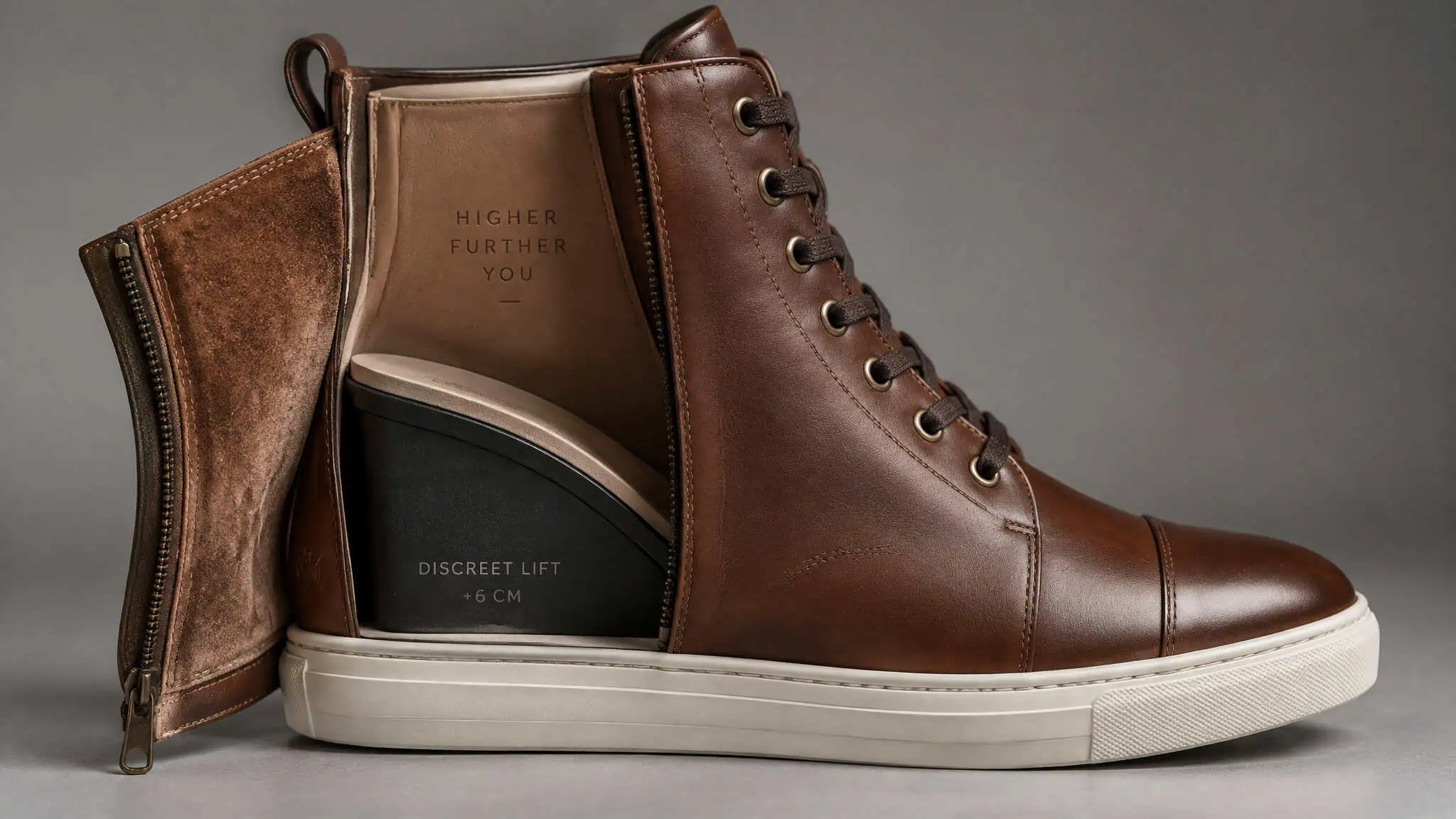
There are two kinds of height-boosting shoes. Casual height-increasing shoes show you what you get: platforms and taller stacks, nothing hidden. Elevator shoes hide the lift in built-in wedges, which buys you a bigger boost and a normal silhouette.
Gova
The lift is built into the design, no frankenstein insole needed. Listed models advertise 2.4 to 2.7 inches: the Elbrus black sneaker-boot at 2.6, the Mont Blanc Chelsea at 2.7, the Casse white sneaker at 2.4, the most normal-looking of the bunch. The Valetta fits true to size like a Dunk or Air Max, which is a genuinely useful fit anchor.
CALTO
The max-lift, formal-leaning option, advertising about 2 to 3+ inches. Best when you want serious height or a dress shoe. Discretion is medium: some designs hide the lift, some don’t. If you go this route, start with moderate lift, not the tallest pair. The higher you climb, the more comfort, pant length, and walking feel start to matter.
Mario Bertulli
The Italian heritage name, claiming 2 to 3.9 inches with “invisible” integrated soles, marketed for work, sport, going out, and holiday. The sole being built in and invisible from outside is the entire appeal. The 3.9 figure, like all their figures, is a marketing number, not a lab measurement. Free shipping over $220 and free first-order returns soften the try-it risk.
One tradeoff curve runs through all three: comfort and discretion decline as lift rises. The 3 to 4 inch territory blows well past the 1 to 2 inch discretion sweet spot, and if you’re eyeing 4 inches specifically, we’ve covered the limits of that in more depth elsewhere.
Red flag: No elevator brand on this list has lab-verified lift numbers. Treat every claimed inch as marketing until you’ve worn them.
Lift insoles: what they actually add
An insole adds only what the shoe’s internal volume allows, not the insert’s nominal height, because the stock insole is already counted in the measured stack. That single fact kills the most common insole misconception.
The common misread looks like this: a guy buys a thick 2-inch insert, drops it into a low-top, and ends up with heel slip and crowded toes instead of height. That’s not bad luck. It’s geometry. The population stats back it up: 93% of tested height-boosting shoes are orthotic-friendly (removable insole with room), 52% ship with stock insoles thinner than 5.0mm, and only 1% run thicker than 10mm. There just isn’t spare volume in most shoes.
Practical rules. Insoles add about 0.5 to 2 inches depending on the insert, and they’re the cheapest way to experiment before committing to new shoes. They work best in high tops, boots, and roomy sneakers. Start with half an inch to an inch; it’s far easier to wear, and taller inserts in low-tops can let your heel slip out.
The Oliver Cabell high top play
The high-top shape hides a moderate insert far better than a low-top ever will, which is the practical logic of this pick. You get about an inch from the shoe itself, a cleaner leather look that passes in nicer settings, and honest math on top: push the insole too thick and it crowds your toes and pushes your heel up out of the shoe.
Are height-boosting platform shoes bad for your feet?
It depends on whether the shoe hits the expert spec sheet. Platforms are fine for casual daily wear when they meet it, genuinely helpful for some foot conditions, and disqualifying for others.
The podiatrist spec sheet
Dr. Nelya Lobkova, Dr. Helen Branthwaite, and Dr. Miguel Cunha all land on roughly the same spec: under 13 oz (each extra gram costs roughly 1% more energy output), a 6-10mm drop, a firm non-squishable midsole, a rubber outsole with forefront rocker, a rigid padded heel counter, and a finger’s width of toe room. Shop at end of day, when feet are swollen to their true size.
Who should skip them
Platforms are unsuitable for athletics, and risky for flat feet, overpronation, Achilles issues, plantar fasciitis, high arches, and balance or ankle conditions. Flip side: bunions, hammertoes, and neuromas may actually benefit from the shock absorption a platform provides. Check which list you’re on.
When to replace them
Every couple of years or 300 to 500 miles (800 km), whichever comes first. Worn traction or flattened insoles are the signals. As a durability proxy, the lab’s Dremel wear test dented the top picks’ soles just 0.8 to 0.9mm, so a good platform wears slowly, but it does wear.
How to make the extra height look natural
Pant geometry matters as much as the shoe. Little to no pant break, so fabric doesn’t pool at the ankle and eat the lift you paid for. Match the cut to the bulk: straight, relaxed, or tapered, scaled to the shoe. And skip skinny jeans with chunky height sneakers; the contrast makes the sole look bigger, not the legs longer.
Baggy pants disguise the ~3-inch Run Star CX platform. Boots make thick soles look natural from October through March. Color-matching pants to shoes lengthens the leg line. Then there’s the part nobody wants to hear: slouching cancels the visual gain.
Posture does work that no insole can. And try shoes on at the end of the day with a finger’s width of toe room, because comfort shows in how you walk, and a confident stride is half the height.
The bottom line on shoes that make you 2 inches taller
A true 2 inches comes from platforms or hidden-wedge designs; visible-stack sneakers measurably deliver about 1 to 1.75 inches, and 1 to 2 inches is the discreet sweet spot. Quick hits: chunky sneakers, boots, high tops, and insoles all make you taller (normal sneakers about an inch, elevator shoes 2+ claimed). The tallest sneakers are Air Max models, AF1s, Puma RS-X, NB 990s, Ozweego, and Ultraboost. Elevator shoes read obvious when the lift is high or the shape is bulky, and small insoles work in roomy high tops while tall ones crowd your toes. Pick by measured stack first, then by fit and setting.
Frequently Asked Questions
Do shoes add 2 inches to height?
Regular sneakers don’t. A true 2 inches is 50.8mm of heel stack, and the tallest sneaker ever lab-measured topped out at 50.5mm — with tested height-boosting picks running 1.45 to 1.63 inches. If you want a verified ~2 inches, platforms are the only regular-looking route, and hidden-wedge elevator shoes go past it.
Which shoes give you 2 inches in height?
Platform sneakers are the honest answer: the Adidas Gazelle Bold delivers a true 2-inch platform under a normal-looking suede silhouette, and the Converse Run Star CX Platform claims about 3 inches. Hidden-wedge elevator shoes from brands like Gova, CALTO, and Mario Bertulli advertise 2 to 3+ inches — but those figures are marketing claims, not lab measurements.
What is the maximum heel stack height in regular sneakers?
The tallest sneaker ever put under calipers measured 50.5mm of heel stack, just shy of the 50.8mm that equals 2 inches. By category, road running caps at 50.1mm, trail at 47.3mm, hiking boots at 46.9mm, and basketball at 38.4mm. The tested height-boosting leader is the HOKA Bondi 9 at 41.3mm.
Are height-boosting platform shoes bad for your feet?
They’re fine for casual daily wear when they hit the podiatrist spec sheet: under 13 oz, a 6-10mm drop, a firm non-squishable midsole, a rubber outsole, a rigid heel counter, and a finger’s width of toe room. Platforms are risky for flat feet, overpronation, Achilles issues, and plantar fasciitis, but bunions, hammertoes, and neuromas may actually benefit from the shock absorption. Replace them every 300 to 500 miles or when traction wears flat.
When do height insoles fail and when should I buy height increasing shoes instead?
Insoles fail when the shoe lacks spare internal volume — 93% of height-boosting shoes are orthotic-friendly, but most stock insoles are thin, so a thick insert crowds your toes or slips your heel out of low-tops. If you want more than about an inch reliably, buy purpose-built shoes instead: platforms deliver a true ~2 inches and elevator shoes have the lift built in, no insert geometry fighting the shoe’s shape.
Why does a shoe that ‘adds 2 inches’ measure less when I wear it?
Foam compresses under your body weight and your foot sinks into the upper, so the label’s number was measured with air, not a person inside the shoe. That’s why midsole firmness matters: soft foam sinks and hands the height back, while a firmer midsole (above 33 Asker C) holds its stack. The same logic applies to checking claimed lift figures — treat marketing inches as unverified until you’re standing in them.