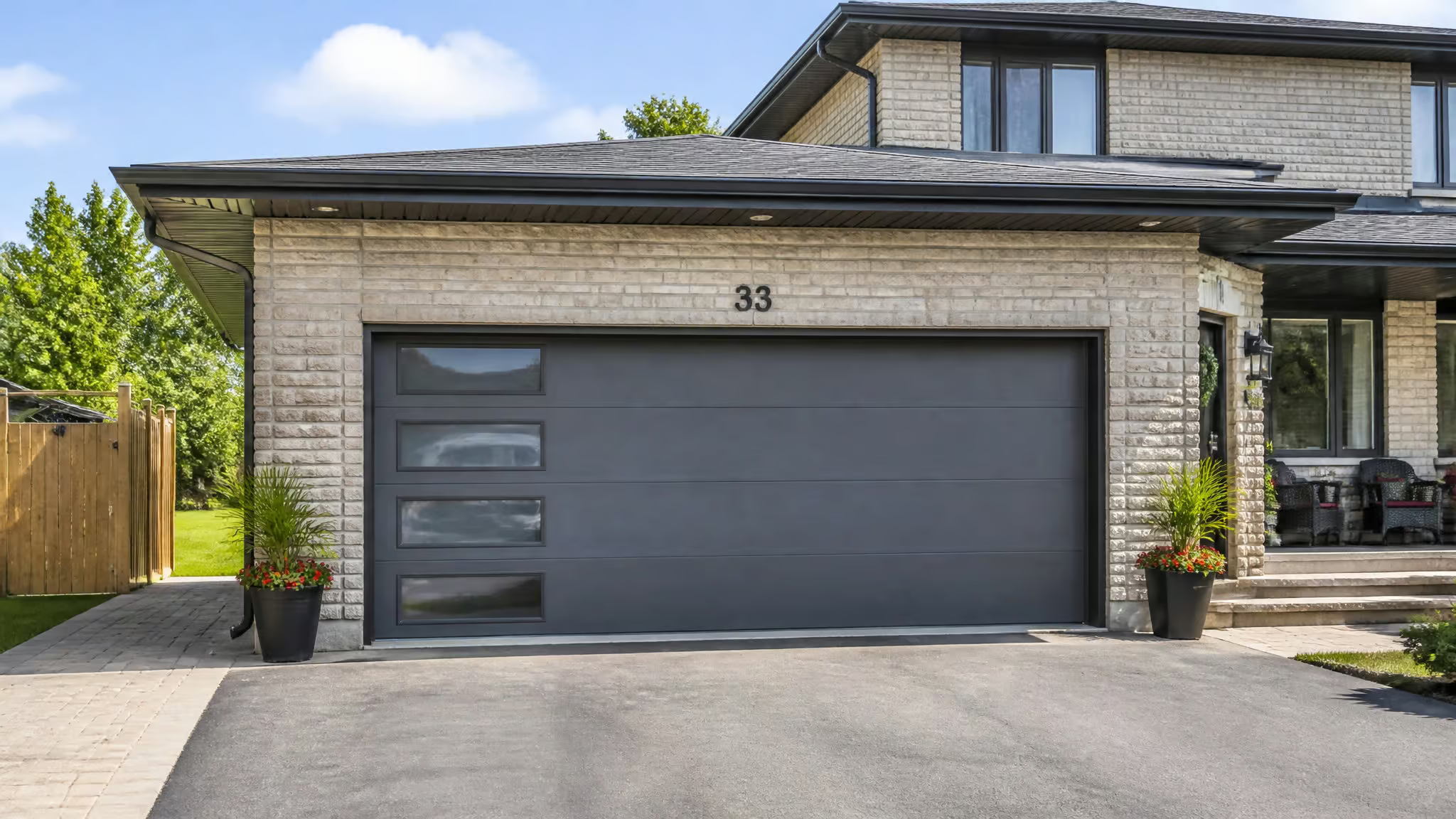
You’re staring at a house that needs to sell, a pile of contractor quotes, and a real fear that most of the money’s about to vanish into the wrong project. I’ve watched sellers make this mistake for years, and it’s almost always the same story: they spend on the kitchen because that’s what gets them excited, then discover at resale that the kitchen returned a fraction of what went in. Meanwhile, a $4,317 garage door, the single best investment on the JLC 2025 Cost vs. Value Report, comes back at 349.3%. You put in about four grand, you get back more than $15,000. Nothing else on that list comes close.
That gap is the whole article. Nearly everyone renovates before selling. Zillow’s 2024 data says 72% of sellers took on at least one improvement project before listing, and Harvard researchers figure Americans will spend close to $518 billion on remodeling by the end of 2026. Most of that money is going to the wrong stuff.
According to Victory Home Remodeling, home window replacement is one of the most impactful upgrades for property value and energy savings. This is the honest version of the list, the upgrades that actually put money back in your pocket at closing, and the ones that just make you feel better about living there while you’re stuck with the mortgage.
Key Takeaways
The garage door is the highest-ROI upgrade on the JLC 2025 Cost vs. Value list: about $4,300 in, roughly $15,000 back, a 349.3% return at resale.
A minor kitchen remodel runs around $27,500 and returns about 96%, while a mid-range bathroom returns roughly 74%, so the projects sellers obsess over are the weakest financial performers on the list.
Exterior and utility signals beat interior decor, a black front door can pull $6,450 more per Zillow, and the projects that shrink your buyer pool, like oversized pools and garage conversions, are the ones to skip.
Table of Contents
The projects that actually pay off
If you want a straight ranking of the top upgrades to increase home value in 2025, it starts with what a buyer sees from the street, not what you’d enjoy living in. The JLC Cost vs. Value Report is the closest thing the industry has to a scoreboard, and it’s brutally clear about which direction the money flows. The best returns are boring exterior swaps. The worst are the glamour projects.
That runs against every instinct you have, because you’re the one who lives there. You know the kitchen is dated and the bathroom feels like 1987. Here’s the thing though: a buyer spends about thirty seconds forming a first impression, and that impression is built from the driveway and the front elevation. The projects that signal “this house has been maintained” outperform the ones that signal “this owner had taste.”
Every section below follows that rule. Exterior first, utility second, decor a distant third.
The garage door is the best return on the list
Lead with the number, because it’s absurd: 349.3% return on cost. That’s the top of the entire JLC 2025 Cost vs. Value list, and it’s not close. The reason is simple. A garage door is the first thing a buyer sees when they pull up, and a clean, modern one signals a maintained home before anyone walks through the front door. It’s also a low-friction swap. In and out in a day, no permits drama, no living through a remodel.
Different sources put the numbers slightly differently. One version cites $4,672 and a 268% return, and a specific example, a 16-foot by 7-foot insulated steel door, runs about $4,500 and returns roughly 194%. Don’t get hung up on the exact percentage. The point holds across every version: the cost is in the low four figures and the return is enormous.
Buy the right spec and this is a set-and-forget project. Look for a 16 by 7 insulated steel door with an R-12 or higher foam core. Steel takes a dent without showing it, and you don’t have to baby it. Clopay Classic Collection is a solid name to start with. One honest caveat: ROI percentages shift with your climate and neighborhood standard, so check comps on your street before you assume a universal number.
A steel front door is right behind it
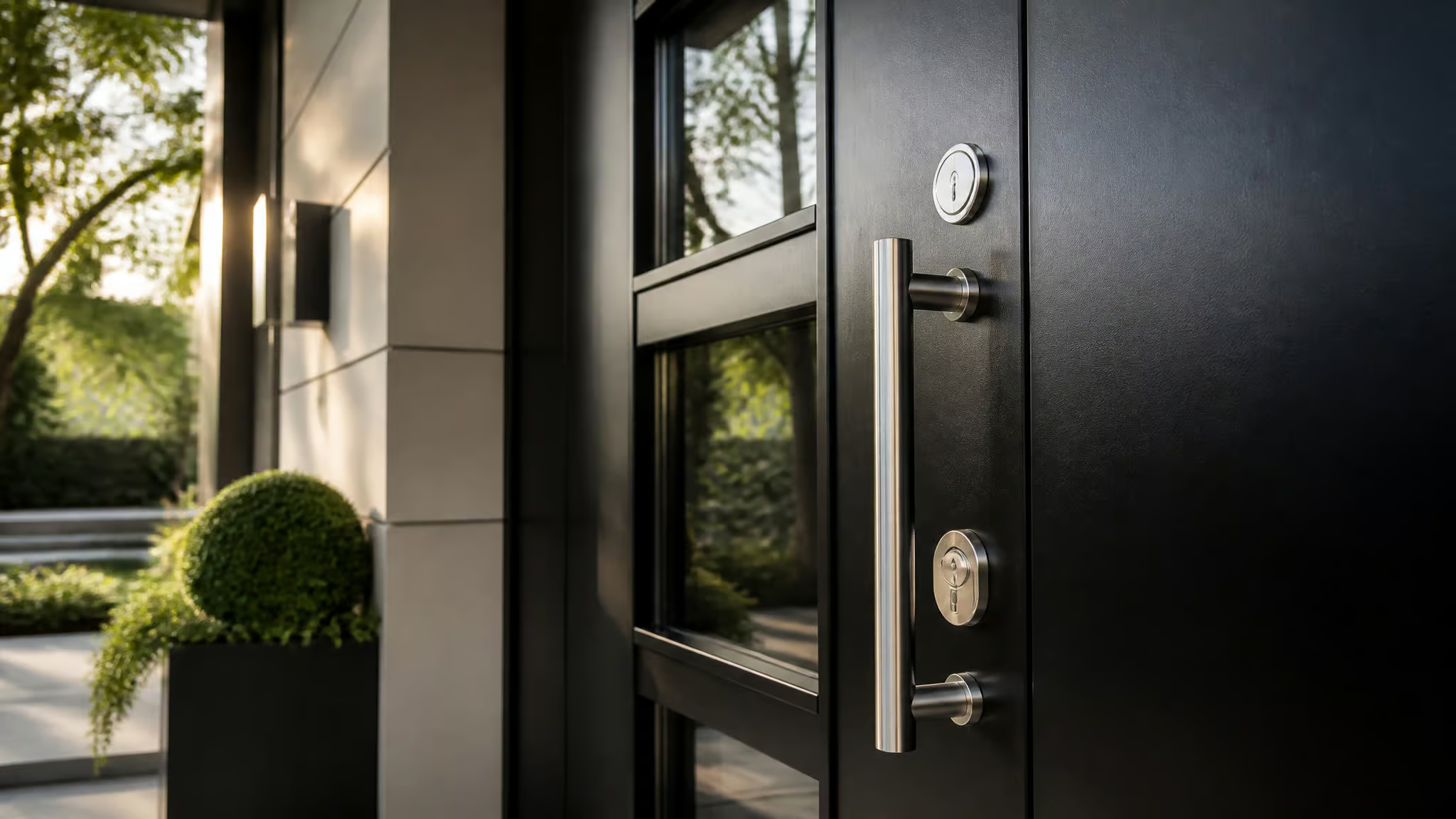
The front door is the handshake of the house. Spend about $2,400 and you’ll get roughly 188% back at resale, with another source putting the return as high as 216%. That’s more than your money back for a project you can knock out in a weekend.
The material argument is easy. Steel beats wood on durability and security, and it’s cheaper than fiberglass. With a foam-insulated core, it also stops the draft that comes through the entry, so you’re buying curb appeal and lower energy bills in one swap. Two real options to search for: the JELD-WEN Lite Craftsman Primed Steel Front Door at around $636, and the Chatam by Stanley Doors at about $898.
Notice the pattern forming. Both are exterior swaps that return multiples of their cost. That’s not a coincidence. The exterior is where resale money lives.
The minor kitchen remodel
The word “minor” is doing real work here. A minor kitchen remodel runs about $27,500 and returns roughly 96%, which is close to a wash. You’re not making money, but you’re not losing much either. Worth doing if you’ll also enjoy the kitchen while you live there, and worth doing if the alternative is a buyer walking into 1992.
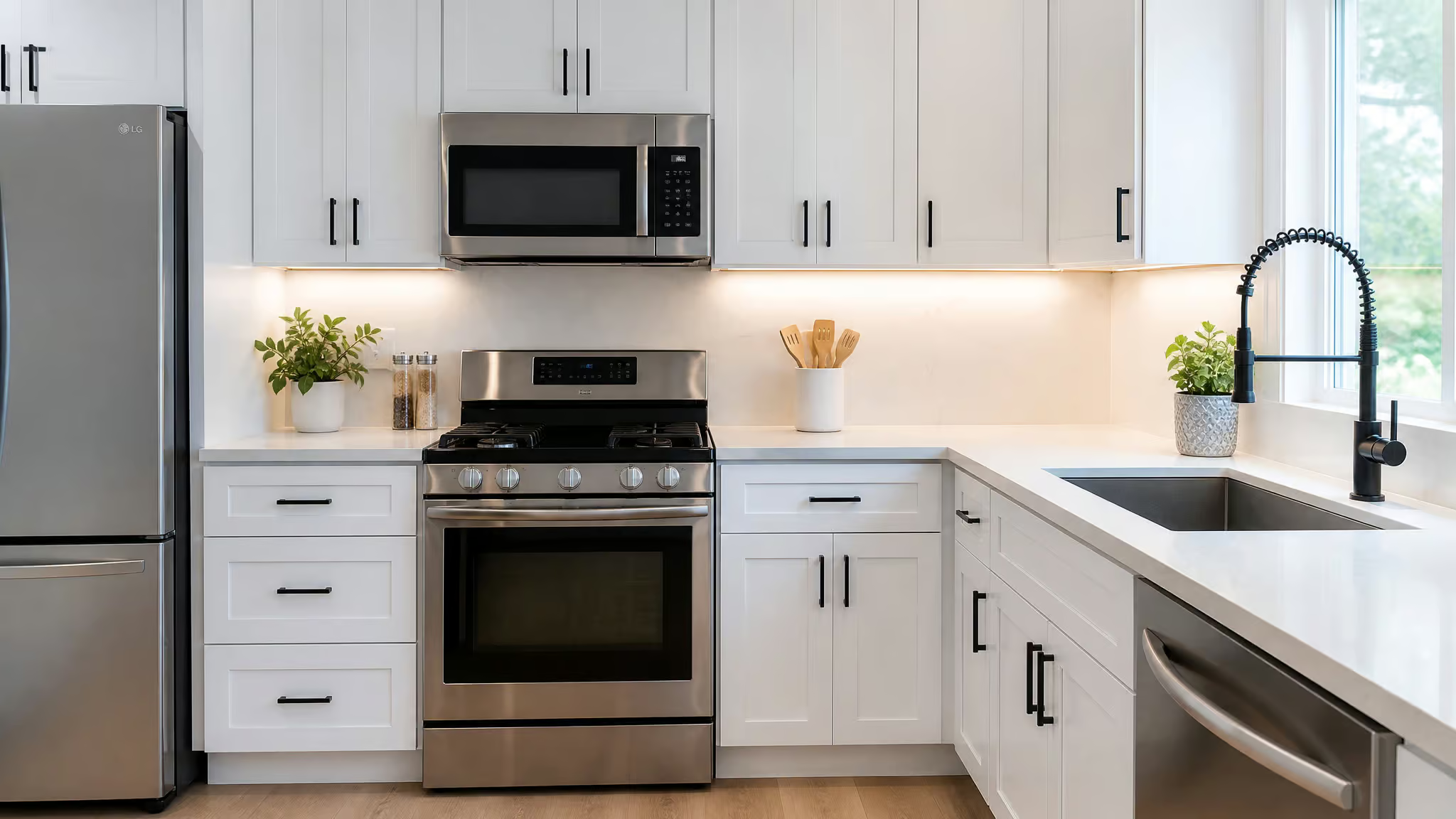
The scope is the discipline. New cabinet doors, updated countertops, modern fixtures, energy-efficient appliances. That’s it. You’re refacing and swapping, not knocking down walls.
Stick to the safe palette, white, gray, or navy cabinets, quartz or granite counters, stainless appliances, under-cabinet lighting. These are the choices that don’t scare anyone off.
Here’s the comparison you were actually looking for: a kitchen returns about 96%, a mid-range bathroom about 74%. Kitchens first, baths second. And skip the custom tile backsplash or imported fixtures if this is for resale. That’s money you won’t get back, because buyers see it as someone else’s taste.
Refacing or paint instead of new cabinets
Refacing replaces your cabinet doors, drawer fronts, and hardware while keeping the boxes, and it costs 30 to 50% less than new cabinets. Painting is even cheaper. If the boxes are in good shape, a fresh coat can do wonders for a few hundred bucks. Keep it to white, gray, or navy, and pair it with brushed nickel or matte black hardware so it looks intentional. You’re reframing “new kitchen” as “refaced kitchen,” and buyers can’t tell the difference in a listing photo.
The Energy-Star appliance swap
New Energy-Star appliances cut energy use by 10 to 50%, and a matching stainless set runs $3,000 to $6,000. That set is the visible “updated kitchen” signal, the thing that photographs well and reads as modern. Check with your local utility before you buy, because rebates can knock the effective cost down further.
Durable countertop overlays
Overlays run $2,000 to $5,000 depending on square footage and material, and they give you the “new countertop” look without a full replacement. Quartz is the practical pick here. It resists stains and scratches better than granite and doesn’t need sealing, which is one less maintenance task a buyer has to think about.
The mid-range bathroom remodel
A mid-range bathroom remodel costs around $25,000 and returns about 74%. Not a home run, and it sits well below the kitchen’s 96%, but here’s the killer detail: a dated bathroom is a disqualifier. Buyers reject the house before they see the rest of it. A bathroom that doesn’t look like 1987 can be the difference between a sale and a stale listing.
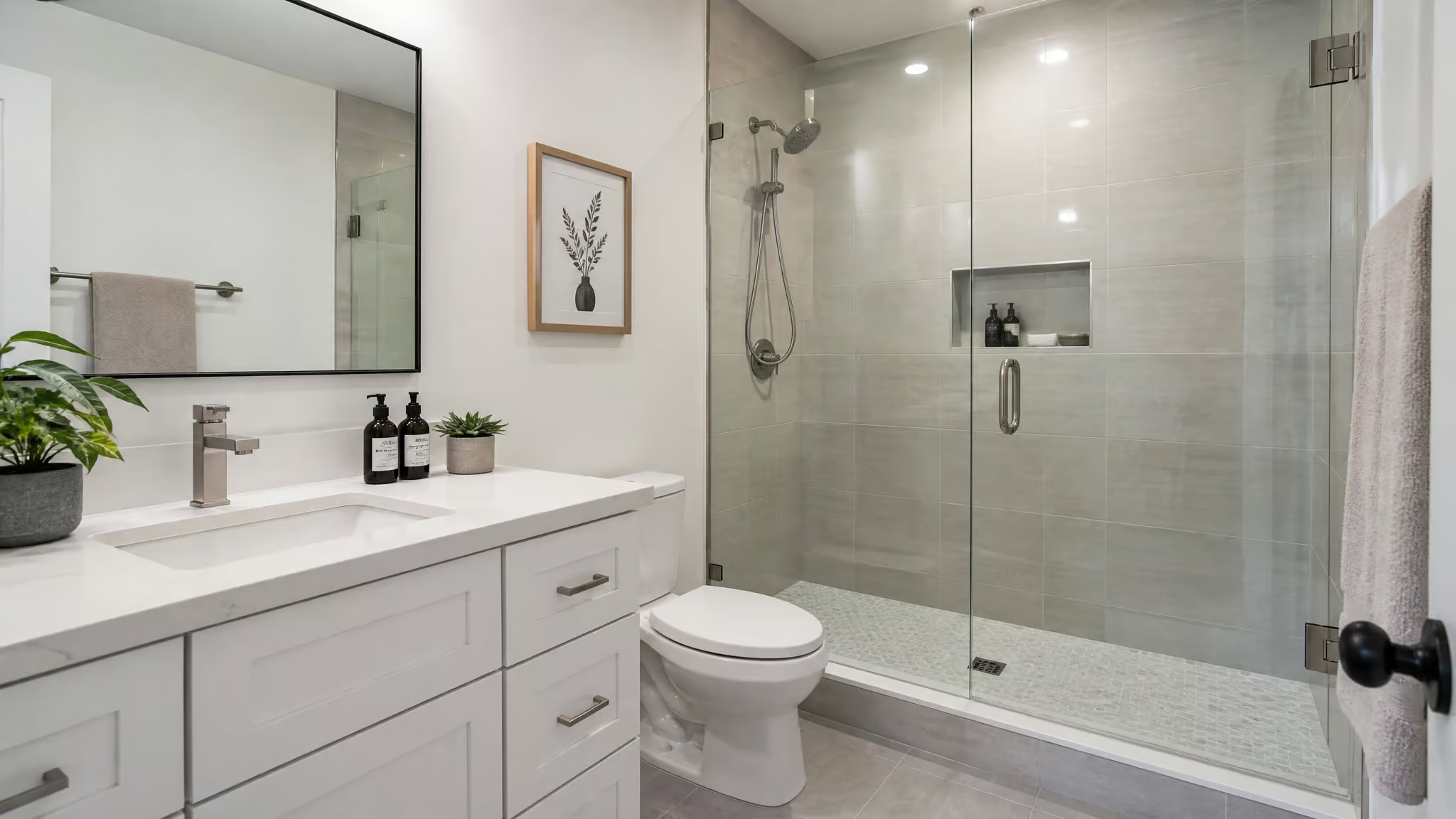
If you’re going mid-range, the scope is the full package a buyer actually touches. New tub, tile surround, vanity, toilet, and fixtures. Practical choices: ceramic or porcelain tile, a vanity with real storage, and a frameless glass shower door if there’s room. Skip the trendy colors and ornate fixtures. They date fast, and buyers don’t pay for someone else’s bold choice.
If the budget won’t stretch to $25,000, the three updates below get most of the signal for a fraction of the cost.
Low-flow fixtures
Modern low-flow fixtures cut water use by 20 to 60% without making you feel like you’re in a prison shower. They run $200 to $500 per fixture, and many cities and counties offer rebates, so the actual cost is often lower. It’s a cheap, visible upgrade that also reads as “updated.”
Fresh grout and better lighting
This one’s under $500 total. Clean grout lines make tile look new, which is amazing for the price, and modern lighting changes how the whole room feels. It’s the cheapest way to make a bathroom feel fresh without touching anything structural.
The bathroom face-lift
Over a quarter of sellers improved their bathroom before selling in 2024, so this is a common play. Replace the vanity lights, re-caulk or reglaze the tub instead of replacing it, swap a faucet. A weekend and a few hundred dollars versus a $25,000 gut. Most buyers can’t tell the difference from a listing photo.
The rest of the high-ROI run
These are the remaining projects that return solidly, and they all follow the same rule: they signal maintained, not decorated.
Windows. Ten old windows swapped for vinyl runs about $21,000 and returns roughly 67%. That’s a chunk of change, but drafty windows scream “this house hasn’t been looked after,” and inspectors flag them, which gives buyers leverage. Look for vinyl with low-E glass and argon gas fill, the best insulation-per-dollar combo on the market.
Siding. Fiber-cement siding, the stuff that looks like wood but doesn’t rot, costs about $20,600 for 1,250 square feet and returns roughly 88%. It resists rot, fire, and pests, and holds paint longer than wood or vinyl. It comes in horizontal lap, vertical board, and shingle styles, so you can match the neighborhood. Fair warning: it’s heavy, so you need a pro, not a weekend DIY. If you’d rather go cheaper, vinyl siding runs about $17,950 for the same area and recovers about 97%.
Deck. A 16 by 20 pressure-treated wood deck with railings, stairs, and a built-in bench costs about $17,600 and returns roughly 83%. Pressure-treated lumber is the value pick; composite costs more but you won’t be staining it every few years. Numbers vary a lot by size and material. One source puts a wooden deck return between 45 and 55% with costs from $3,600 up to $7,200, so don’t promise yourself a specific number.
Roof. Nobody wants to think about this one, but a worn roof can sink a sale or force a renegotiation. A new roof with 30 squares of fiberglass asphalt shingles runs about $30,700 and returns about 57%. It’s a lot of money, but if the roof is shot, you’re not choosing whether to replace it, you’re choosing when to take the hit.
NAR members flag roofing as a top priority for a reason. Pick shingles with a wind rating that matches your area, and go impact-resistant if hail is a thing where you live.
Stone veneer. Putting stone veneer on the front of the house makes it look expensive without the full-masonry price tag. Two specific products worth searching for: River Rock irregular stones by Coronado Stone Products, and Chisel Gray Stackstone by Glen-Gery. It’s a permanent “upgraded” look on the front elevation.
Attic insulation. This is one of the cheapest things on the whole list that actually moves the needle on comfort and bills. Adding attic insulation often costs under $2,000 and can return all of it or more, especially if you stack an energy audit and utility rebates. Blown-in fiberglass or cellulose gets the attic up to the recommended R-value, and pair it with air sealing around ducts and vents, because that’s where the drafts actually come from.
Heat pump. If you want a utility upgrade that can actually pay for itself, converting a furnace to a heat pump costs about $18,800 and can return over 100%. That’s rare. Federal tax credits from the Inflation Reduction Act knock some of that down, and a heat pump handles both heating and cooling. Catch: it only works well if the house is properly insulated and the ductwork is sealed, so don’t skip that part.
That’s the run. Every one of these reads to a buyer as “this house has been maintained,” not “this owner had good taste.” And maintained is what people pay for.
The bigger bets: basement, office, ADU
These are the larger projects where you’re spending real money and making a real judgment call.
Basement. Finishing a basement has a potential ROI of 70% per Angi, and it averages $32,000 but can run up to $100,000 depending on how fancy you go. The real value: it adds heated square footage, which can push the house into a higher price bracket. It’s not just a room, it’s more house. Make sure the basement is dry and well-insulated, add egress windows, and use moisture-resistant flooring, or you’re building a mold problem, not a bonus room.
Home office. Remote work has made a dedicated office a buyer expectation, not an amenity. 23% of the U.S. workforce worked from home in late 2025, and the remote-work services market is projected to hit $58.5 billion by 2027. That’s a sign this isn’t a fad. You don’t need a full build-out either.
A converted walk-in closet might be all you need. An attic conversion runs $20,000 to $40,000 and delivers about 70% back, but only if the insulation, ventilation, and lighting are right.
Backyard ADU or studio. This is the high-reward, high-hassle option. Costs run $50,000 to $150,000 depending on size and finishes, and it can deliver rental income, guest space, or room for aging parents. The zoning catch is real though. Rules vary by location, so check with your city before you get excited, because this might not even be allowed on your lot.
Open floor plan. Homebuyers want smaller homes, but they want each square foot to feel like it has personality. Builders are putting porches on 68% and patios on 64% of new builds, which tells you buyers expect outdoor living space as standard, not luxury. An open plan can make a house feel more “theirs,” but you need structural support and definition between spaces, and it’s not right for every style. A two-story Colonial doesn’t lend itself to a wide-open floor plan, so talk to a contractor before you swing a sledgehammer.
The cheap fixes that actually move the needle
Here’s where the numbers get ridiculous in your favor. A weekend and a few hundred dollars can pull $6,450 out of a buyer’s pocket. Zillow’s data says buyers prefer black front doors over gray and would offer $6,450 more for a black front door. A paint color. That’s the single most absurd, most credible stat in this whole article.
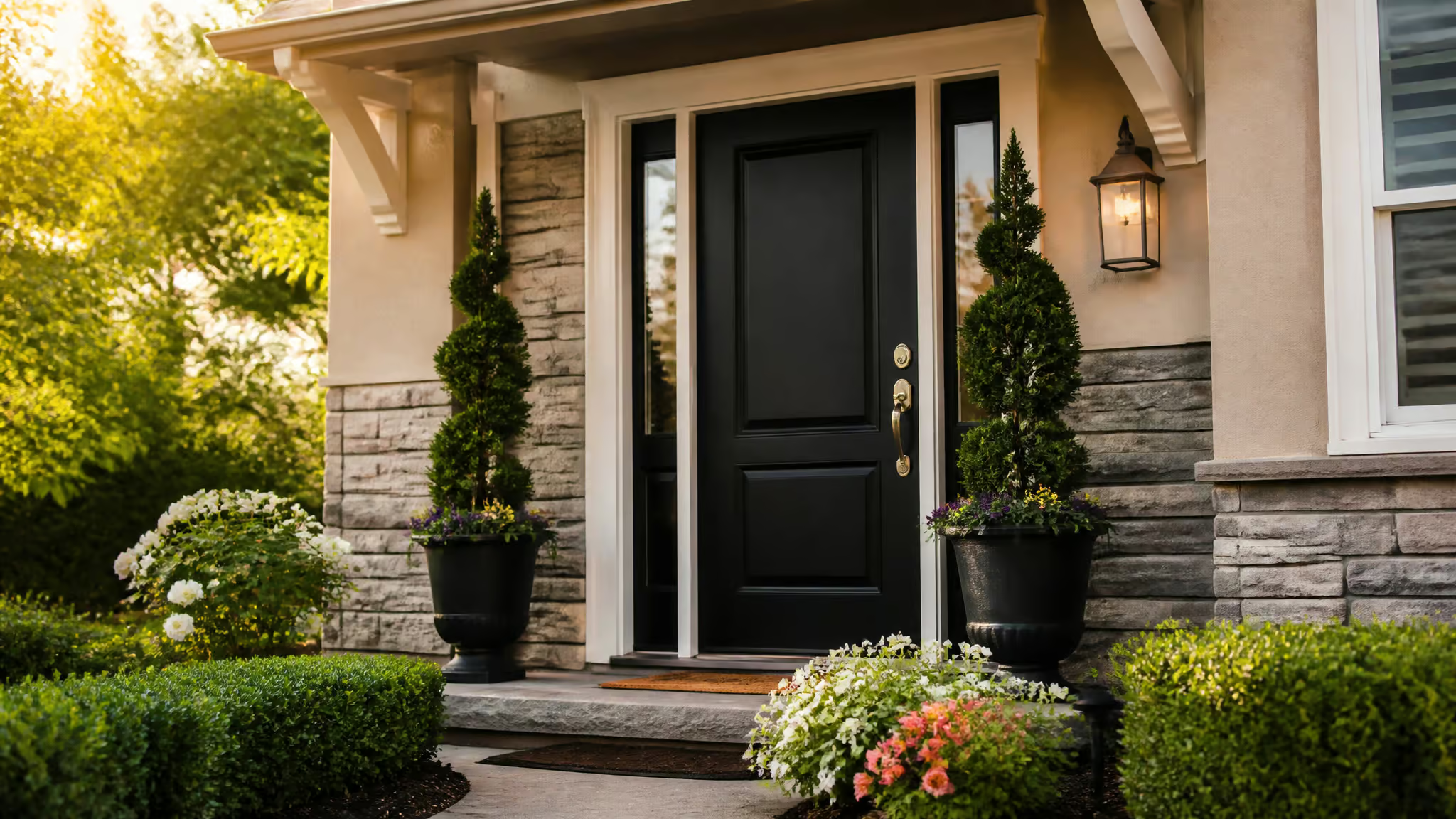
The full curb-elbow builds on it. Curb appeal work in general can add about 7% to the value. Pressure-washing the exterior runs $241 to $418, which is sometimes all the house needs. A full repaint averages about $3,177 per Angi if you need it, but a touch-up on flaking trim and a fresh front door can do the job for far less.
For the yard, NAR’s Remodeling Impact Report pegs standard lawn care and basic landscaping at near or above 100% cost recovery. Spend $500 to $2,000 on tidy plantings and it usually returns multiples. Mature trees can lift the appraised value. Sod or seed bare patches at least six weeks before listing, trim shrubs, edge walkways, add fresh mulch, and plant seasonal flowers near the entry. Outdoor lighting transforms listing photos, and these projects rank among the top 10 things that add value to your home.
Interior paint is the most common pre-listing project. 32% of sellers painted the interior in 2024, and for good reason, a fresh coat signals well-maintained and contemporary. This is where the color data gets fun: an olive-green kitchen can pull an extra $1,600 versus other colors. 20% of sellers replaced or repaired carpets and flooring. Deep-clean what you have, buff or refinish scratched hardwoods, and if you’re replacing, heated flooring earned 2% more saves and 3% more shares on Zillow.
The rest of the cheap stuff stacks fast. A standard steel mailbox costs about $35, a craftsman model with post kit about $69. House numbers and exterior lighting updates run under $500. Beyond those, a few more cheap upgrades to increase home value come in at under $500 too, things like fresh paint, updated hardware, and landscaping touches. A concrete parking pad solves a real buyer objection in tight-parking neighborhoods for about $1,200.
A fire pit is a top priority for buyers in outdoor spaces. A couple of Shine Company Vermont Porch Rockers from Kohl’s at $169.99 each, and the porch suddenly reads “stay a while.” Swapping dated kitchen and bath fixtures runs $500 to $1,500 and makes a dated room feel current without a remodel.
None of these is dramatic on its own. Together, they change the buyer’s first impression from “dated fixer-upper” to “well-maintained.” For more of the under-$500 plays that appeal to future buyers, see our best home upgrades for resale value.
Smart home: keep it simple
Smart home is a “nice-to-have” that moves a listing’s save rate, not the sale price. 36% of buyers rated smart-home capabilities as highly important in Zillow’s 2024 data, and homes with smart lighting were saved 3% more. The honest read: smart features generate interest, not a higher offer.
The two upgrades buyers actually understand are a smart thermostat and smart lighting. A smart thermostat runs $200 to $300, cuts energy use 10 to 15%, and pays for itself in about a year. Brands like Nest and Ecobee integrate with the rest of a smart setup. That’s it.
Don’t build a full automated system a buyer will have to learn. A complicated system looks like a project, and buyers don’t pay extra for homework. For the listing-side view of what drives saves and shares, check out our Zillow value guide.
Energy upgrades buyers can verify
61% of buyers say energy efficiency is a priority when making improvements. That’s a stat you can hand your listing agent. But buyers get told “energy efficient” constantly, so the upgrades that work are the ones you can point to and prove.
Two cheap moves carry the signal. Attic air sealing, closing gaps around ducts, vents, and electrical penetrations, costs $500 to $1,000 and can cut heating and cooling costs 15 to 20%. And a solar-ready electrical panel upgrade runs $1,500 to $3,000 and positions the house for future solar without the full panel cost today. Both are explainable in a listing and verifiable on an inspection. Air sealing is also a daily-living comfort win, the kind of thing our comfort-focused upgrade guide digs into.
Match the neighborhood, don’t beat it
Here’s the cold water. Your upgrades should match the street’s standard, not exceed it. If every comparable home on your block has granite counters and stainless appliances, granite is table stakes, not a premium. Over-improving won’t raise the sale price if you’re already on par with the neighborhood ceiling.
Extra spending past that point just doesn’t move the number. For the appraisal-specific view of what counts, see our appraisal upgrade guide.
NAR members point to painting, new roofing, and bathroom renovations as the top priorities. That list reads like the spine of this article: cheap visual refresh, big-ticket structure, and the disqualifier room. And do the budget math before you start, not after you’re three projects in. Decide what you can afford and how you’ll fund it first. That one sentence saves more sellers than any contractor advice I can give.
The upgrades that can sink your sale
The cautionary flip side. A project that narrows your buyer pool is a project that costs you money, even if it’s beautiful, expensive, or both.
Luxury custom tiling. What looks bold to you can look like a hassle to a buyer. Over-customization narrows the audience, and the more specific your taste, the fewer people will pay for it. Same logic applies to professional-grade appliances and marble counters. They’re enjoyment money, not resale money.
An oversized pool. This is the classic. $50,000 to $100,000 to install, then ongoing maintenance, insurance, and energy costs on top. Families with young children see a safety hazard, and in cooler climates a pool is often a liability. You’re gambling on which buyer shows up, and the monthly drain is real while you wait. Pools are polarizing, full stop.
Garage conversion. Converting the garage to living space trades away something most buyers expect. Homes without garages often sell for less and take longer to move. You gain a room and lose the garage, and the market usually doesn’t reward the trade. For the full rundown on what to avoid, here’s our worst ROI upgrades list.
The rule: every dollar you spend should widen the buyer pool, not shrink it.
The boring repairs that close the deal
Small repairs are a trust signal. A buyer walks a house, and if the little things are fixed, loose handles, drip-free faucets, no cracked caulk, they infer the big things are fine. If the little things are broken, they assume the worst about what they can’t see.
That’s why a pre-inspection is the smart move. Spend the money to find the problems before the buyer’s inspector does, and fix them on your own schedule at your own price. Fewer issues for the buyer to nitpick means a smoother negotiation. A pre-inspection can identify exactly what a buyer will care about, so you’re not guessing.
How to pay for it without getting burned
Cash is the cheapest option, obviously. No interest, no risk. For anything discretionary, pay cash.
A HELOC is the standard for mid-range projects. It’s a revolving credit line with a variable interest rate, so you borrow as needed and the rate can move. Rates are typically lower than credit cards, and the interest may be tax-deductible if you use it for improvements. The constraint to know: lenders require your remaining mortgage plus the draw to stay under 90% of the home’s pre-improvement value, so you need equity built up.
A cash-out refinance replaces your existing mortgage with a bigger one and pockets the difference. Fixed rate, lump sum, predictable. But you’re taking on a bigger mortgage, so only use it for the big structural work where a fixed rate protects you.
The dangerous option is 0% APR credit card offers, 12 to 18 months same-as-cash. It works for a small project only if you’re ruthless about the payoff date. Miss the deadline and the interest hits hard, and it may be applied retroactively from the start. Treat that as the trap it is. The only rule that matters: never finance a project whose projected return doesn’t clear the cost of the money.
If you’d rather skip the work
If this whole article just exhausted you, fine. You can skip all of it.
Sell as-is. No upgrades, let the buyer deal with it. Make it clear you won’t make repairs before closing, and price accordingly, because you’re pricing in the buyer taking on the work. One honest warning: buyers may negotiate even lower. As-is means you start from a lower number.
Offer a credit at closing. Instead of doing the repairs, give the buyer money to do them. You save time, they get control. The catch: the credit requested is often higher than what the repairs would have cost you, because buyers overestimate. Doing it yourself is sometimes the cheaper route.
Opendoor’s concierge service is the full-convenience middle path. They coordinate improvements through vetted local contractors, handle the costs at closing out of the sale proceeds so you don’t pay upfront, then you sell directly to Opendoor and skip repairs and showings. You trade potential profit for speed and certainty. That’s a fair trade for a lot of sellers who don’t want to run a renovation.
Where the money comes back
Rank it this way. Exterior first: garage door, front door, siding, windows, roof. Then the kitchen and bathroom refresh, done minor and neutral. Then the low-cost signal fixes: paint, landscaping, door color.
Then the strategic adds: basement, office, energy upgrades. And a hard skip line for the value traps.
The rule to remember is one sentence. Spend on what a buyer can see from the street and won’t have to fix, not on what you personally think is beautiful. Maintained beats beautiful, every time, and the neighborhood standard is your ceiling. If you want the clean ranked version of the whole thing, here’s our top 10 value-add list.
People also Ask
What are the top 10 things I can do to increase the value of my home?
The highest-ROI projects are: garage door replacement (349% return), steel front door (188%), vinyl siding (97%), minor kitchen remodel (96%), fiber-cement siding (88%), deck addition (83%), bathroom remodel (74%), basement finishing (70%), window replacement (67%), and attic insulation (often over 100% with rebates). Exterior and utility upgrades consistently outperform interior decor.
What are 10 home upgrades that are not worth the money?
The biggest value traps are luxury custom tiling, professional-grade appliances, marble counters, oversized pools, and garage conversions — all of which narrow your buyer pool. Also skip custom tile backsplashes, imported fixtures, trendy bathroom colors, and ornate fixtures. These projects signal personal taste rather than maintenance, and buyers don’t pay for someone else’s bold choices.