You’re staring down the decision every seller faces: what do you fix before listing, and what do you leave alone? Most of us do something. Zillow’s 2024 Consumer Housing Trends Report found that 72% of sellers took on at least one improvement before selling. The problem is, most of us guess wrong.
Here’s the uncomfortable math: with mortgage rates stuck past 6.5%, buyers are pickier than ever. They’re not settling. Homes that feel turnkey are still selling; homes that feel like projects are sitting. So the question isn’t whether to upgrade, it’s where the money actually does something.
The answer surprises most people. The best return on investment isn’t the kitchen. It’s the garage door.
Key Takeaways
Replacing a garage door costs about $4,317 and returns roughly $15,081 at resale, a 349.3% ROI, the single highest-return project in the 2025 Cost vs. Value Report.
A minor kitchen remodel recoups about 113% of its cost, while a major upscale kitchen overhaul recovers only about 51%, the same room, two very different outcomes.
Pools are a gamble: averaging around $41,870 to install, they polarize buyers and rarely pay for themselves at closing.
Table of Contents
The garage door: the highest-ROI project on the list
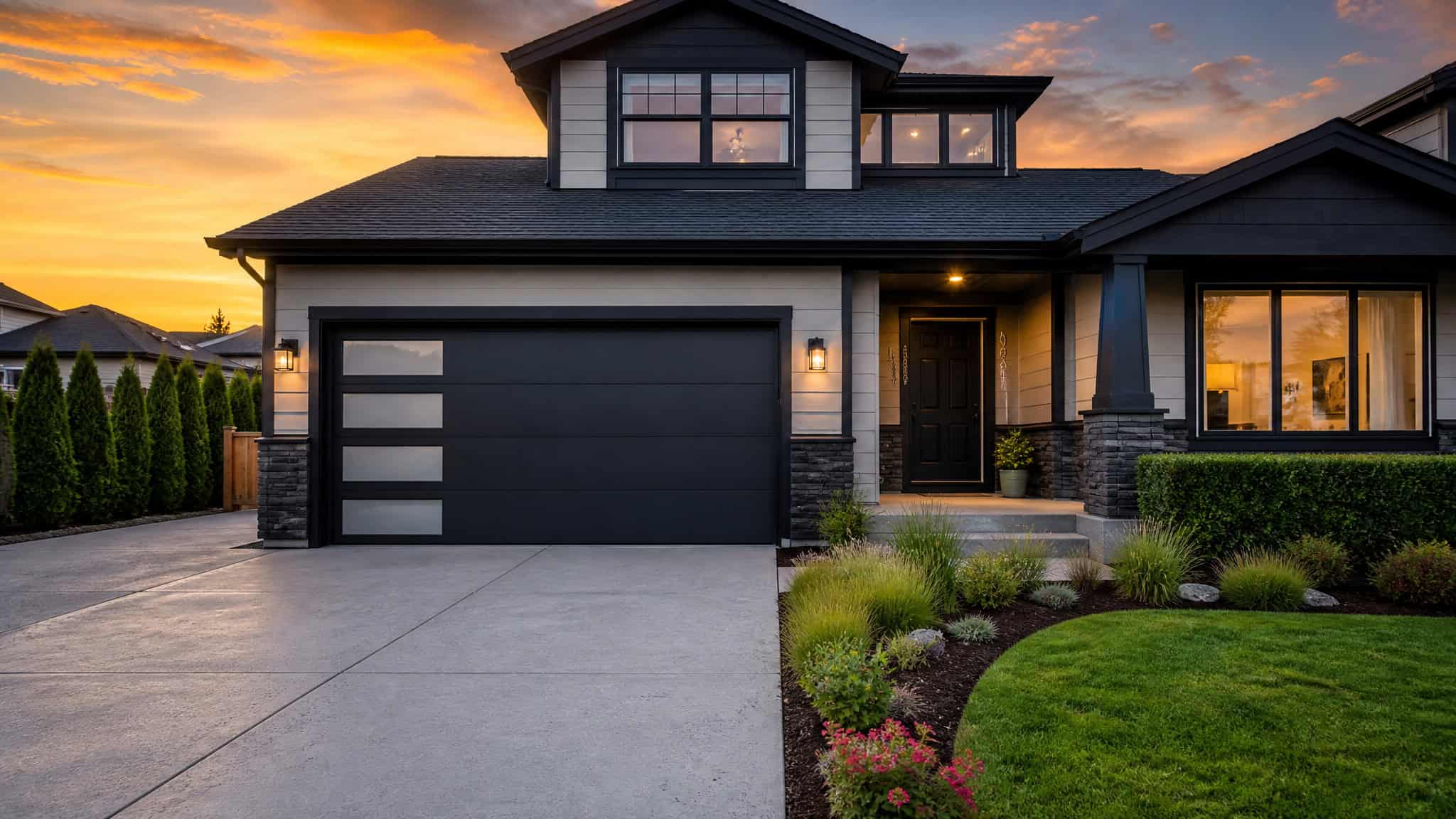
People don’t believe this at first. A garage door? Really. But the data is clear. The Journal of Light Construction’s 2025 Cost vs. Value Report puts it at the top: spending about $4,317 returns roughly $15,081 at resale.
That’s a 349.3% ROI, and it’s not close to the next project. HomeLight’s numbers differ somewhat, showing about $4,672 average cost and 268% ROI. Either way, it’s the strongest return you’ll find in any category.
The reason is simple: the garage door takes up a big chunk of your home’s facade. It’s one of the first things a buyer sees, and it’s usually the biggest visual element of the front of the house. If it’s dented, faded, and dated, the whole house reads as neglected.
You don’t need a top-tier custom door either. The Clopay Classic Collection runs around $683 and modernizes the facade. The visual impact doesn’t scale with price, a clean, current door signals “this house is maintained.”
Interior painting: the most common, and one of the most profitable, pre-listing fixes
If you only do one thing, paint. Fresh paint adds an average of $12,130 to home value, according to a recent survey. It’s also the most common pre-listing project for a reason: 32% of sellers painted their interiors before listing in 2024, per Zillow. The NAR 2025 Remodeling Impact Report shows 50% of sellers painted their entire home while 41% painted one room.
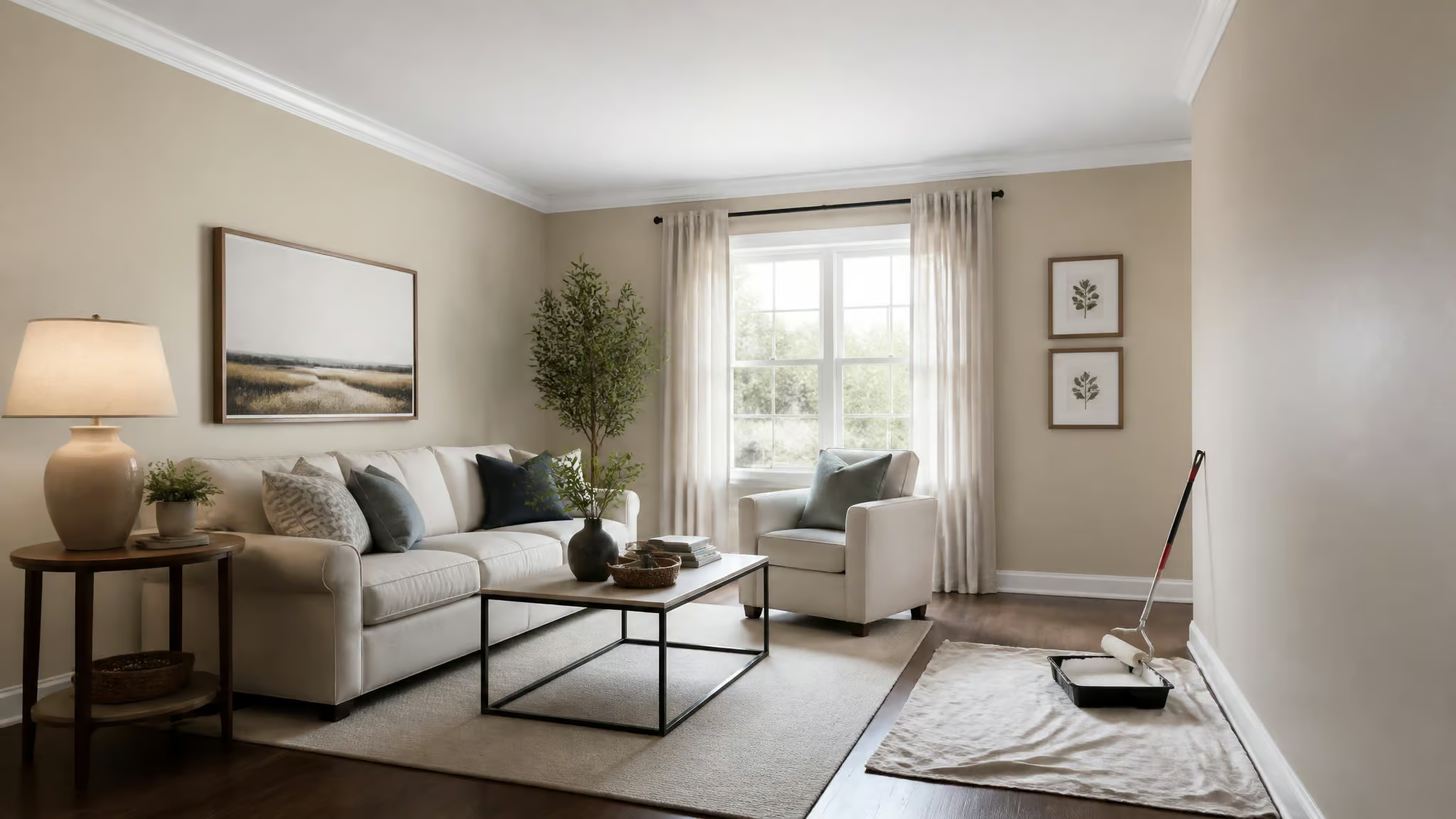
The return here isn’t just aesthetic. A fresh coat delivers a powerful signal that the home is well-maintained and contemporary, that’s not me projecting, that’s Amanda Pendleton, Zillow’s home trends expert, on the record. Buyers pay for the feeling that they won’t have to repaint anything for years.
Why neutral colors (mostly) win
The safe bet is warm neutrals, creams, greys. Realtors consistently report that these attract more offers and sell faster because buyers can picture their own furniture in the space. Vibrant colors you love? They can deter buyers. Neutrals also photograph better for online listings, which is where most buyers start.
The surprise: some bold colors add real money
Here’s the twist: not all color advice is play it safe. Zillow’s research found an olive green kitchen can add $1,600 compared to other colors. And a black front door? That’s covered below, but it can add $6,450. So the rule is more like neutral on the walls, strategic on the accents.
Front door: paint it black or replace it with steel
Black doors aren’t just a trend, they’re a measurable value play. Zillow’s research shows buyers prefer black to gray and would offer about $6,450 more. An interior-grade door painted black with a satin finish is the cheapest psychology you’ll ever buy.
If your door is worn beyond saving, replace it. A steel front door recovers roughly 100% of cost, per NAR 2025 data. HomeLight shows stronger numbers: about 216% recovery on a $2,435 door. The discrepancy is regional, and both numbers mean the same thing: you’re not losing money on this.
Concrete options: the JELD-WEN Lite Craftsman steel door runs around $636. The Chatam by Stanley Doors is about $898. Both give that solid, heavy feel without full wood prices.
And if you’re wondering about red doors: houses with them sell for a bit more money, per Russell from the 7News piece. The black-door premium is bigger, but red isn’t hurting anything either.
Exterior painting and pressure washing: a weekend that resets first impressions
Nearly 1 in 5 sellers paints the exterior before listing, per Zillow data. A full exterior paint job averages about $3,177, according to Angi. Pressure washing runs $241 to $418. Here’s the thing: a full exterior paint job can wait if your siding is sound. But a pressure wash is a lazy Saturday that removes years of grime, mildew, and neglect from your curb appeal.
If you’re painting, the 2026 palette is leaning toward jewel and earth tones. Brick&Batten designers recommend Sherwin-Williams’ Peppercorn, a dark gray neutral that photographs well and gives a substantial, modern feel. It’s one designer’s pick, but it’s a safe one.
Landscaping and curb appeal basics: the minute that decides the sale
Here’s a number that should terrify you: most buyers decide if they like a house within two or three minutes of seeing the front and walking through the front door. Not the tour, two minutes, that’s it. Curb appeal is the whole first impression, and it happens before anyone opens the fridge.
Zillow’s data shows 25% of sellers completed landscaping as a pre-listing project in 2024. Curb appeal updates can recoup up to 100% of investment. We’re not talking about hiring a landscape architect, we’re talking trimming bushes, planting fresh flowers, power washing the driveway. Small changes, big decision window.
Mailbox and house numbers: the $35 detail that signals how you maintain the home
This is the one that gets overlooked, and it drives Roxanne Baum, a Compass agent in Atlanta, up the wall.
“The mailbox kills me. You have a beautiful home, and they have a dented-up old mailbox, so when you pull up, you think, OK, what’s the inside look like if they can’t even replace a mailbox?”
She’s right. A dented mailbox or faded house numbers tells buyers the current owner let maintenance slide, and they’ll look for more evidence inside. You can fix this for almost nothing. A standard-size steel mailbox in a durable finish costs about $35.
A craftsman mailbox and post kit from Postal PRO runs about $69. Black 4-inch nail-on aluminum house numbers start at about $3 per digit.
That’s the pattern: sellers will spend thousands on a backsplash while the mailbox sits there dented. Buyers notice. So should you.
Stone veneer on the front of the house
This is a premium look without the full cost of real stone. Replacing 1,250 square feet of existing siding with new vinyl siding costs about $17,950 and recovers roughly 97% of that at resale, per the 2025 Cost vs. Value Report. Adding stone veneer as an accent, around the entry, the corners, the foundation, gives high-end character for far less than full stone.
Two products worth knowing: River Rock irregular stones from Coronado Stone Products and Chisel Gray Stackstone from Glen-Gery. Both give that substantial, custom feel buyers associate with expensive homes. Just don’t do the whole front elevation in it, you’re going for an accent, not a castle.
Parking pad addition: an inexpensive way to stand out
In many markets, off-street parking is a real differentiator. A concrete parking pad costs about $1,200, which is one of the cheapest meaningful upgrades you can make.
That’s a huge upgrade. It doesn’t cost that much, but it does bring value, Baum says.
She notes that a paved driveway puts homes ahead of the competition in her area. Atlanta, where a car is basically required. That’s a regional observation, not a universal rule. In dense urban areas with street parking, a parking pad might be worth significantly more.
In rural areas where land is cheap, buyers may not care. Know your market.
Deck or patio addition: outdoor living buyers already expect
Here’s a stat that tells you everything about buyer expectations: builders are adding porches to 68% and patios to 64% of new builds. That means buyers now expect outdoor living space as standard, not luxury. If your house doesn’t have one and the comps do, you’re at a disadvantage.
A backyard wooden deck gives 45% to 55% ROI, which is mid-tier, but remember the baseline point. You can build a deck for around $3,600 to $7,200. It’s a way to keep up with the market standard rather than necessarily standing out. Skipping it entirely makes your house one of the few without usable outdoor space.
Buyers also love fire pits, those rank as a top priority for outdoor living spaces. A fire pit extends usable seasons from three months to nine. No specific cost data here, but it’s not a big line item.
Pool and hot tub combo: high cost, polarizing appeal
Here’s the blunt answer to “what upgrades aren’t worth it”: pools, usually. A pool may cost $41,870 on average, and while ROI has increased in recent years, it’s still low.
Pools are polarizing. Some buyers see a backyard oasis. Others see a safety hazard for kids and a never-ending maintenance drain. You’re not just installing a pool, you’re narrowing your buyer pool to people who specifically want one. And the ROI math doesn’t work in most markets.
Same logic applies to high-end upgrades: professional-grade appliances, marble countertops, expensive landscaping and water features. Buyers often won’t pay the premium for top-tier custom anything. They may love your house, but they’re pricing it against comparable sales that don’t have the expensive stuff.
Front porch furnishings: help buyers picture sitting there
This is about staging, not renovation. Staged porch furniture helps buyers envision using the space, that two-to-three-minute decision window again. A couple of Shine Company Vermont Porch Rockers from Kohl’s run $169.99 each. That’s $340 to help a buyer make a decision in the first few minutes. Best money you’ll spend.
Kitchen fixture swaps: the $20 hardware refresh
Before you remodel anything, swap the hardware. New faucets, drawer knobs, and pulls give a modern, cohesive look for almost nothing. The rule is simple: pick one finish, brushed nickel, matte stainless steel, or oil-rubbed bronze, and stick with it. Consistent hardware and finishes throughout the kitchen create a sense of intention.
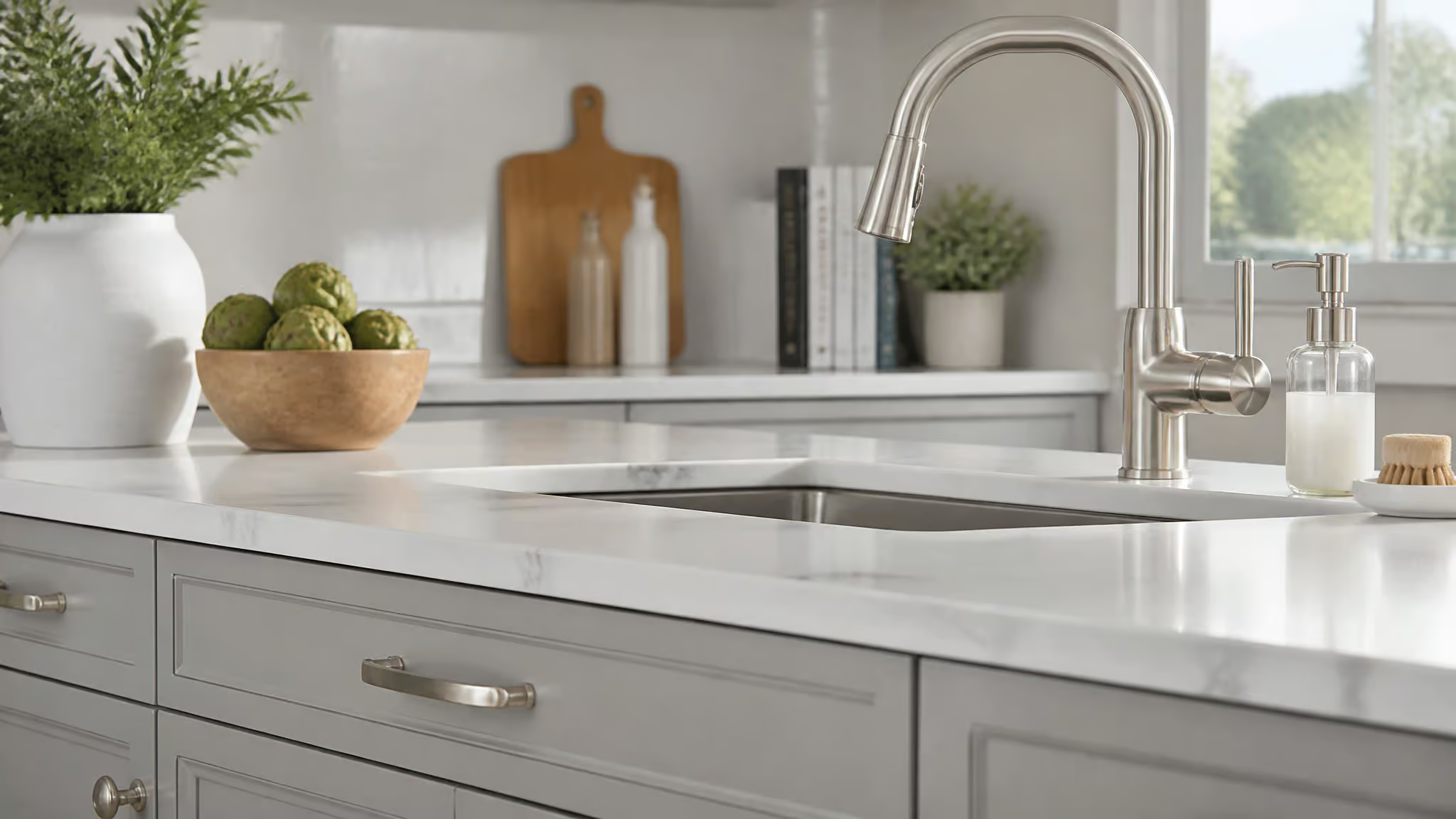
Mixing finishes looks scattered. That’s not designer snobbery; it’s just how the eye works.
Minor kitchen remodel: 113% ROI beats a full overhaul
Here’s where most sellers make their worst mistake. They assume a gut kitchen remodel guarantees a return. The data says otherwise.
A minor kitchen remodel of a 200-square-foot kitchen costs about $28,458 and recoups about $32,141 at resale. That’s a 113% ROI. A major upscale kitchen overhaul? You’re recouping about 51% of expenses. The same room. Half the return.
The upgrades that make a difference: granite countertops at about $3,250 average (or granite tiles at $5 to $15 per square foot), cabinet fronts rather than full replacement, new hardware, and updated fixtures. For those seeking budget-friendly options, cheap upgrades to increase home value like fresh paint and landscaping touches can also pay off. Baum’s advice: If they have old cabinets that can be painted, I say paint them.
The trap is the renovation-show mentality. Those kitchens on TV cost $100,000 and buyers still won’t pay extra for them at resale. Your personal taste, that $12,000 backsplash you love, is money you won’t get back.
Bathroom remodel: midrange recovers 80%, upscale just 42%
Same story in the bathroom. A midrange remodel of a 5×7-foot bathroom costs $26,138 and recoups about 80% at resale. An upscale overhaul? You’re recouping 42%. By the way, a quarter of sellers made bathroom improvements before selling, it’s the most-common pre-listing project after paint.
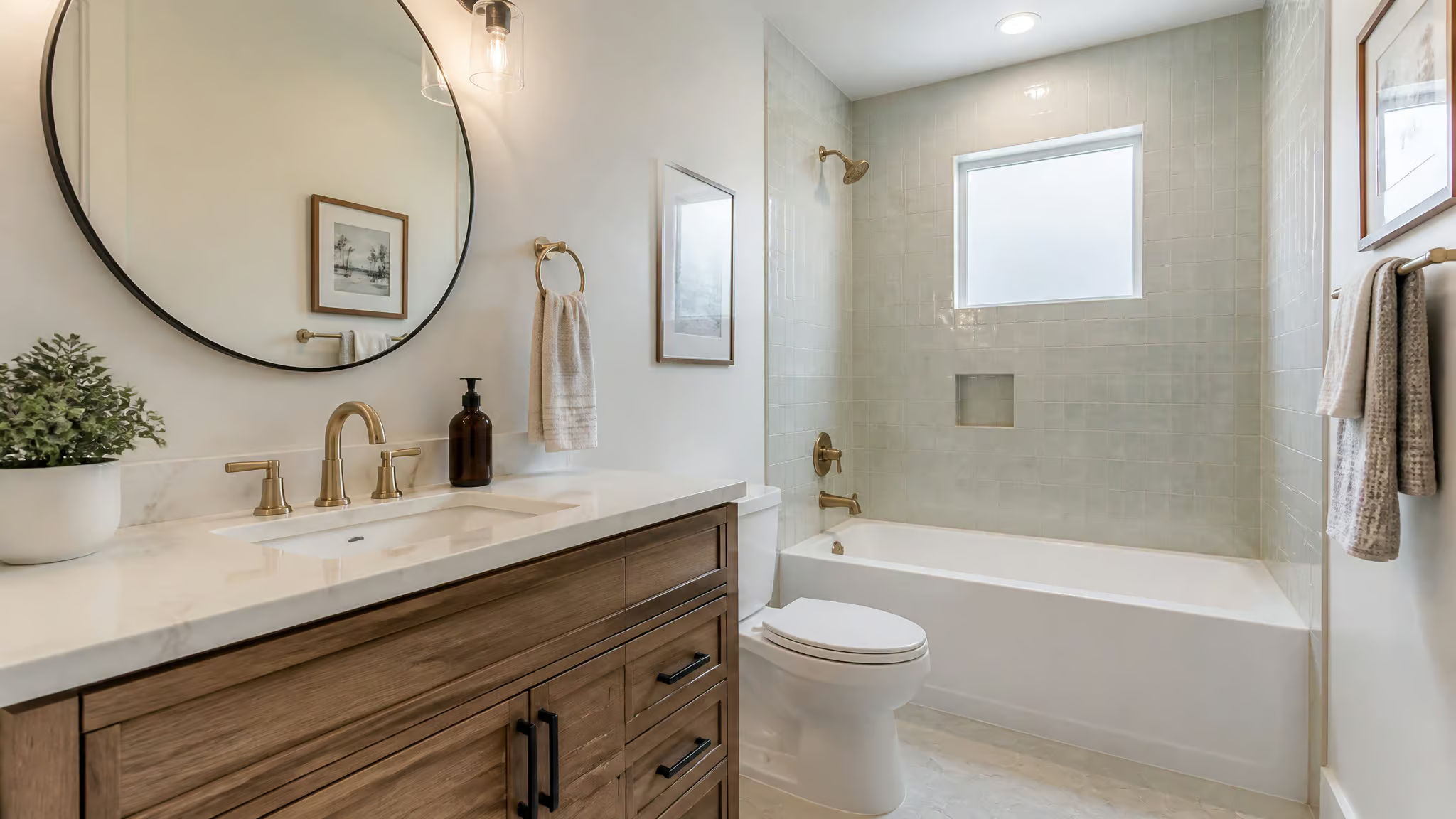
But here’s the thing: you don’t need a remodel to get the ROI. Over a quarter of sellers made improvements to their bathroom before selling. Most of the perceived value comes from simple fixes, but if you’re planning a bigger return, check out these top upgrades to increase home value to guide your strategy.
- Replace the vanity lighting with something modern
- Re-caulk or reglaze the tub instead of replacing it
- New faucets
- Retile the shower surround rather than rebuild it
These deliver most of the perceived benefit at a fraction of the cost. The bathroom reads as “updated” because the visible elements are clean and current, not because you moved the plumbing.
Flooring: clean, refinish, or replace, and when to skip it entirely
Flooring updates can increase home value by $11,731 on average, per HomeLight’s survey data. That’s the highest single dollar figure of any upgrade on this list. But the right move depends entirely on what you’re working with, and focusing on smart, high-return upgrades can make all the difference when you’re ready to sell.
Refinish hardwood vs. install LVP
Refinishing hardwood floors costs about $1,891, or roughly $3 to $8 per square foot. That’s the highest-ROI flooring move available if your hardwoods are in decent shape. A few scratches and dull spots are fixable; existing hardwood is a feature buyers like.
If the hardwood is beyond saving or you have old carpet, luxury vinyl planks (LVP) are the replacement: $3 to $10 per square foot, less expensive and sturdier than hardwood. Baum’s recommendation: It’s so durable. It looks great, and it cleans up easily. LVP gives the look buyers want at a price that makes the numbers work.
Deep clean and damage repair first
Before you tear anything out, deep clean. Carpet cleaning runs $40 to $90+ per room and can bring old carpet back to acceptable. If your hardwoods have scratches and stains, buff or refinish rather than replace. Replacing old flooring with new materials like hardwood, laminate, or tile can return up to 70% of the investment, but only if the existing flooring is genuinely beyond saving.
One important nuance from Russell: in higher-end homes, leave decent carpets knowing a buyer will swap them for hardwood. Generally, if I get to a higher-end home and the carpets are decent, I don’t advise them to replace the carpets because I know that someone’s going to come in and replace it with hardwood. The buyer has a vision. Don’t spend money fighting their vision.
Heated flooring, a comfort feature with measurable interest
Zillow’s data on heated flooring shows homes with it receive 2% more saves and 3% more shares. That’s an engagement metric, not a direct price bump, but engagement matters when buyers are scrolling through listings at night. Heated floors are a “that’s nice” feature that makes a listing memorable.
HVAC replacement: a buyer-confidence upgrade buyers actually want
This is the unsexy upgrade that protects the sale. A dated HVAC system surfaces as an inspection objection and a negotiation discount, buyers know it’s a $7,500 replacement coming, and they’ll want a credit for it. The average HVAC replacement costs about $7,500, including unit, installation, removal, and disposal, though it varies by size and system.
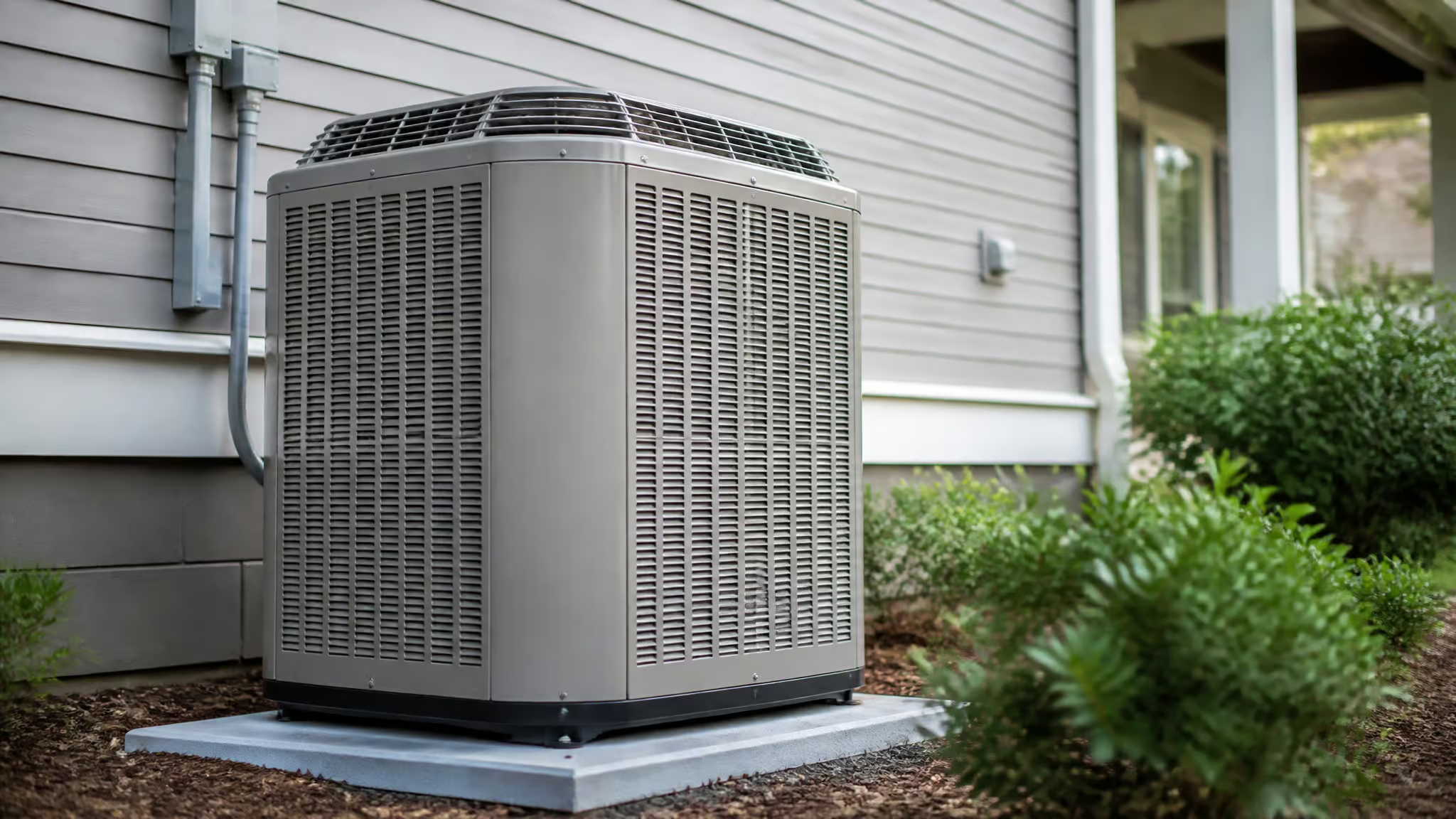
The strategy here is protection, not ROI. Replace the aging system before listing so the inspection doesn’t turn into a discount. You won’t get a headline ROI percentage, but you also won’t lose the sale over a 12-year-old unit that buyers view as a ticking clock. If you’re replacing anyway, multi-zone HVAC systems rank among buyers’ top five most-wanted technology features, per the NAHB. That’s a genuine selling point for the upgrade.
New siding: 97-114% cost recovery when it’s needed
New siding recoups 97% to 114% of cost at resale. But the “when it’s needed” part matters. If your siding is damaged, dated, or rotting in a visible way, replacement pays off. If your siding is sound, spending thousands on cosmetic replacement is the wrong move, that’s money you won’t recover.
The takeaway: siding replacement is a fix-it-when-broken upgrade, not a decorative project.
Low-flow toilet replacement: a quiet efficiency upgrade
This is a cheap, easy box to check. Federal law has capped toilets at 1.6 gallons per flush since 1994, so anything older than 30 years is not only inefficient but possibly non-compliant. Modern low-flow models use 1.28 gallons per flush (GPF) and move less water more forcefully into the bowl. No performance sacrifice.
Options: the Glacier Bay 1.28 GPF single flush round toilet runs about $95. The Kohler Cimarron 1.28 GPF elongated is around $269. Both do the job. It’s a small, visible efficiency upgrade that costs less than a weekend of takeout.
Energy-efficient appliances and windows: the up-to-80% ROI category
Energy-efficient improvements can provide up to 80% ROI. The key phrase is “up to”, that’s a ceiling, not a guarantee. Window replacement recoups about 71% to 74% at resale. Energy Star certification reduces energy use without sacrificing performance.
One regional nuance: minimum window efficiency standards vary nationwide by climate zone, so “efficient” windows in Minnesota aren’t the same as in Texas. Check the U.S. Department of Energy guidelines for your area before buying.
Accessible laundry room: a top buyer want, especially for older buyers
Here’s something that rarely makes the “best upgrades” lists, but the NAHB data says it’s one of the top features buyers want: a laundry room. Specifically, an accessible one. Baby Boomers have overtaken millennials as the largest homebuyer group, and they value practical living arrangements.
In higher-priced homes. Russell says her market shows this above $200,000, a larger laundry room with a drop zone or connected to the master bedroom is expected. Her key insight on layout: “You’re able to access your laundry room from your master bedroom, but you also can access it from her hallway.” That dual access, practical from any part of the house, is the feature buyers in this demographic look for.
Walk-in shower conversion: appeal to the biggest buyer group now
Related to the Boomer shift: walk-in showers. Prefab walk-in shower kits cost between $700 and $3,000. The MAAX Mediterranean III Corner Shower Kit and the Ella Liberty Shower Kit, which includes grab bars and a molded seat, are solid options.
Russell’s observation is honest: Families with children still like a bathtub, but more people prefer walk-in showers. So this isn’t for every buyer. But if you’re selling to a demographic that includes Boomers, and the largest buyer group now, a walk-in shower removes a real barrier.
Smart home technology: thermostats and lighting buyers save to come back to
Smart home features don’t have a direct dollar ROI, and anyone who tells you otherwise is selling something. But the engagement data is real. Zillow’s analysis found homes with smart lighting saved 3% more on the platform. Smart thermostats adjust energy use based on prices or your phone’s instructions, those run $150 to $400+. 36% of buyers rated smart home capabilities as important.
The value mechanism is indirect: saves, shares, and “come back to this listing” behavior. But in a market where buyers scroll through dozens of listings, being memorable matters. Smart features create that “oh, this is nice” moment that turns into a saved listing, which turns into a showing.
Security cameras and systems: the feature 76% of buyers call essential
This is no longer a luxury. The NAHB reports that 76% of recent buyers rated security cameras as essential, up from 40% in 2012. That’s a massive demand shift in a decade. 61% desire wired home security systems. Professional monitoring runs $4 to $60 a month.
The takeaway: this is baseline expectation now, not an upgrade. If your home doesn’t have a security system, or at least cameras, you’re missing what a majority of buyers consider essential.
Kitchen fixture swaps: done right
Back to the kitchen for a second, because there’s one more thing: lighting. Layered lighting, overhead, task, and accent, adds depth and makes a kitchen feel current. If recessed lighting isn’t an option, here’s what Robb from the source text says: “Recessed is great, but if that isn’t possible, there are battery-operated options for sconces and under-cabinet lighting that can increase the value of your kitchen, closet, stairs, and bathrooms.”
The battery-powered options are also removable if you’re showing the house, you don’t have to leave them. That’s a cheap win.
What to avoid: the worst ROI upgrades
The pattern is consistent: anything that reflects personal taste rather than broad market appeal is a risk. Pools, high-end upgrades, professional-grade appliances.
Marble countertops. Expensive landscaping and water features.
The data says what it says: a pool may cost $41,870 and you’re narrowing your buyer pool to a subset who wants it. High-end finishes are the same problem in miniature, a $15,000 built-in espresso machine is a very niche selling point.
If you’re putting money in your house right before selling, put it where buyers agree: garage door, paint, fixtures. That’s where the return lives.
When you have no budget: sell as-is or offer a closing credit
If the money isn’t there, and that’s a real situation, not a failure, you have options that actually work. Many homes sell as-is. The key is being clear about it: no repairs before closing, and the price reflects that. Price it right, and be ready for buyers to negotiate around the condition issues.
Alternatively, offer a credit for repairs after closing. It’s a way to make the deal work without doing the work. The caveat: the credit might be more than the repairs would have cost. You’re paying for the convenience of not managing the project. That’s a trade-off, and sometimes it’s the right one.
Financing your upgrades: home equity loans and HELOCs
If you’re thinking about doing the work but don’t have the cash, the options are straightforward. A home equity loan, a second mortgage, gives you a lump sum at a fixed rate. A HELOC (home equity line of credit) is a revolving line of credit with a variable rate. More flexible, but riskier because the rate can move.
Most lenders cap how much you can borrow. A concrete example: on a $350,000 home with a $270,000 mortgage, you’d have roughly $80,000 in equity. At 90% of pre-improvement value, you could borrow around $45,000. The interest might be tax-deductible, though check with an accountant on that one. Credit unions often offer competitive rates, so shop around.
Just remember the key constraint: you can’t borrow more than a certain percentage of your home’s value, and lenders factor in your income and credit. The mortgage rates that are making buyers picky, those affect your borrowing too.
The bottom line on ROI
Here’s the ranking the data supports:
| Upgrade | Cost | Recoup | ROI |
|---|---|---|---|
| Garage door replacement | $4,317 | $15,081 | 349% |
| Minor kitchen remodel | $28,458 | $32,141 | 113% |
| Siding replacement (when needed) | varies | 97-114% | ~100% |
| Exterior paint + pressure wash | ~$3,600 | varies | high |
| Interior paint | varies | $12,130 avg. | very high |
| Stone veneer accent | varies | ~97% | ~97% |
| Energy-efficient improvements | varies | up to 80% | up to 80% |
| Bathroom remodel (minor) | $26,138 | ~80% | 80% |
| Window replacement | varies | 71-74% | ~72% |
| Deck addition | $3,600-7,200 | 45-55% | ~50% |
| Major kitchen overhaul | varies | ~51% | ~51% |
| Bathroom overhaul (upscale) | varies | ~42% | ~42% |
The pattern is obvious: Buyers pay for the feeling that a home has been maintained, not for the seller’s taste. They’ll pay for a garage door that makes the house look cared-for. They’ll pay for a kitchen that’s updated but not over-built. They’ll pay for a bathroom that’s fresh but not marble-clad. What they won’t do is pay for your dream home. They’re buying theirs.
Start with the garage door, then paint, then the fixtures. You’ll get more of your money back at closing than any other approach, and you’ll actually sell the place.
People Also Ask
What are 10 home upgrades that are not worth the money?
High-end, personalized upgrades generally offer poor returns. Pools, professional-grade appliances, marble countertops, expensive landscaping, and major upscale kitchen or bathroom overhauls all recoup less than 60% of their cost on average. These projects appeal to a narrow buyer pool and often reflect the seller’s taste rather than broad market appeal, making them risky investments before a sale.
Is a minor kitchen remodel worth it before selling?
Yes, a minor kitchen remodel is one of the best investments you can make, recouping about 113% of its cost. Focus on affordable updates like granite countertops, new cabinet fronts, and modern hardware rather than a full gut renovation. A major upscale kitchen overhaul, by contrast, recovers only about 51% of its cost, so resist the urge to overbuild.
What’s the difference between a minor and major kitchen remodel in terms of ROI?
A minor kitchen remodel, costing about $28,458, recoups roughly $32,141 at resale, a 113% ROI. A major upscale overhaul, however, recovers only about 51% of its cost. The difference is that minor updates like painting cabinets, swapping hardware, and adding granite countertops appeal to a broad range of buyers, while expensive custom features are seen as overbuilding that buyers won’t pay extra for.