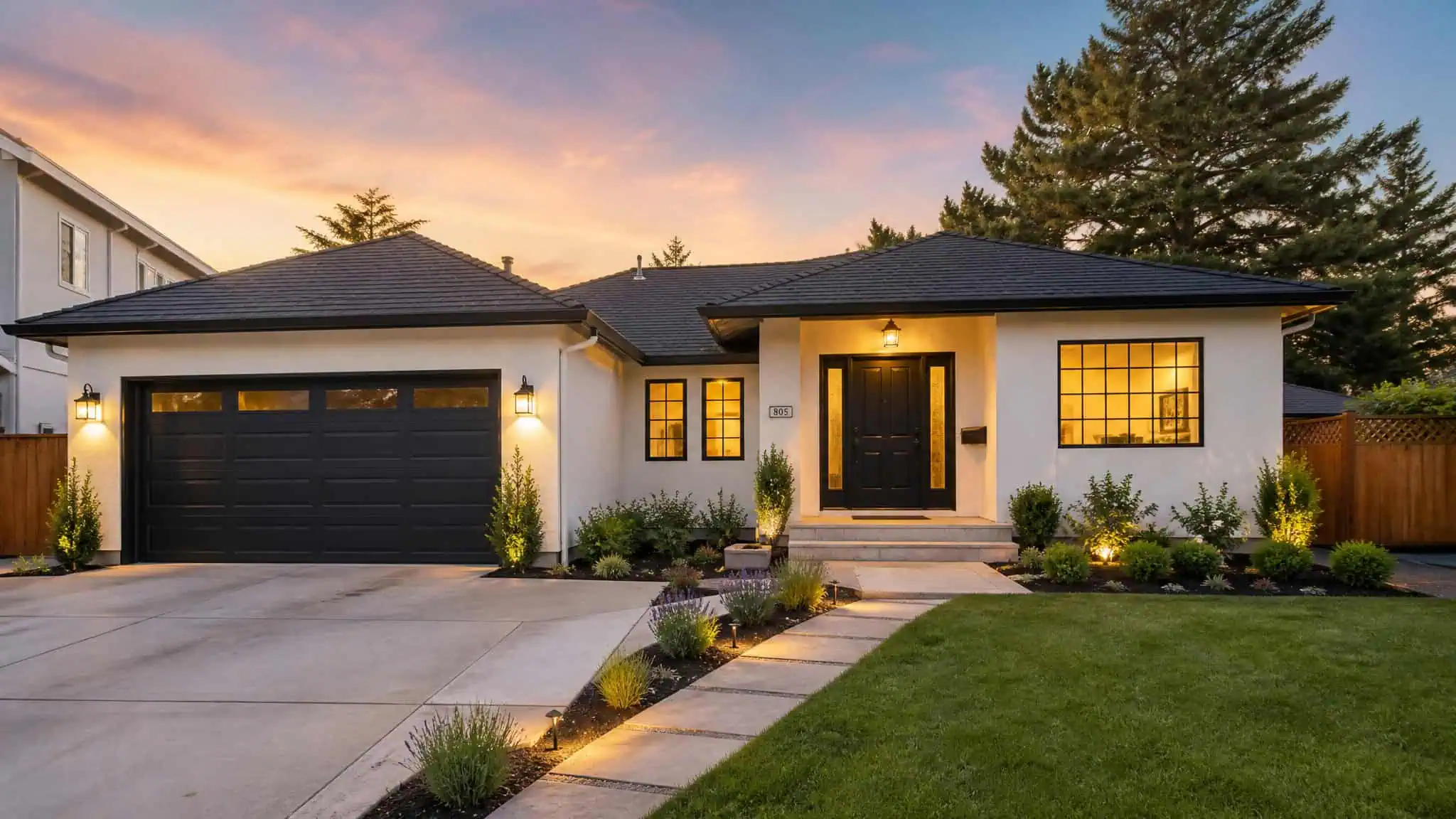
There’s a house in Colorado Springs that sat on the market for nearly nine months. Nothing structurally wrong with it, no foundation drama, no roof horror story. It just read as tired. Zero offers.
Then the owner did something that looks like nothing: fresh paint, upgraded lighting, new photos. Within a week, a full-price cash offer.
No renovation. No kitchen gut. A paint-and-light pass and a better story to tell. That’s the whole argument of this piece in one listing: cheap upgrades move homes in ways expensive ones often don’t.
The conventional wisdom is that adding value means spending value, new kitchen, finished basement, a contractor you’ll be polite to for six months. But the data tells a different story. Garage door replacement is the #1 ROI project in the country, averaging a 268% return.
Fresh paint adds over $12,000 to a home’s value, per the National Association of Realtors. Meanwhile, a $15,000 custom range added exactly zero to one expert’s listing.
The timing matters, too. Mortgage rates crossed 6.5%, and buyers are pickier than they’ve been in years. With annual inflation at 3.5% as of June 2026, along with labor shortages and economic uncertainties, renovation costs are only getting more expensive. 72% of sellers made at least one improvement before listing. 84% of renovators are doing it to increase value, not to personalize. Buyers have options, and they’re choosing the house that doesn’t ask for work.
This is a two-track play. First: the under-$200 cosmetics, paint, hardware, lighting, style, that make a place look like money. Second: the data-backed projects where the ROI is actually documented. We’ll hit both, with the 30% rule as the guardrail and zero guru act.
Key Takeaways
Garage door replacement is the #1 ROI project in the country: roughly $4,600 invested returns about $12,500 on average (268% per JLC national data), and it takes 2-6 hours, the highest-return, lowest-disruption upgrade you can do.
Fresh paint adds an average of $12,130 to a home’s value (NAR Remodeling Impact Report), and Zillow’s data shows a black front door outperforms gray by $6,450, a weekend and under $100 of material.
In a Colorado Springs case, a home that sat nearly nine months drew a full-price cash offer within a week of a $200 paint-and-lighting pass plus new photos, proof that cheap upgrades work as selling tools even when they don’t move an appraiser’s number.
Table of Contents
Budgeting: the 30% rule and how much to spend
Keep total renovation spending under 30% of your home’s current value. That’s the general rule, and it’s the one worth memorizing before you buy a single can of paint. It’s a guideline, not a law, but it protects you from the classic mistake of over-improving a house that your buyer will compare against cheaper comps.
For most homes, that 30% covers a meaningful set of projects. Landscaping, a bathroom renovation, new entry doors, and cosmetic updates can all happen inside a $50,000 budget. And with 2026 being a year for tax credits, some of those projects can even offset their own cost. Whole-home reno or anything requiring structural changes blows past that number fast, which is exactly why the cheap path wins on paper.
The ROI math on any project is simple: what does it cost, what does it return at sale, and how long do you have to live with it in between. Most of the projects below beat that test. A few (pools, sunrooms, custom anything) fail it hard.
Bottom line: The 30% rule is a ceiling, not a target. The best returns live in the bottom 10% of that budget.
Paint & color updates: the best DIY upgrades under $200
If you want the best DIY upgrades under $200 that increase resale value, the answer is paint, plus a few hardware and lighting swaps. It’s the cheapest, most obvious move in the book: a can of paint and a Saturday. Don’t overthink it.
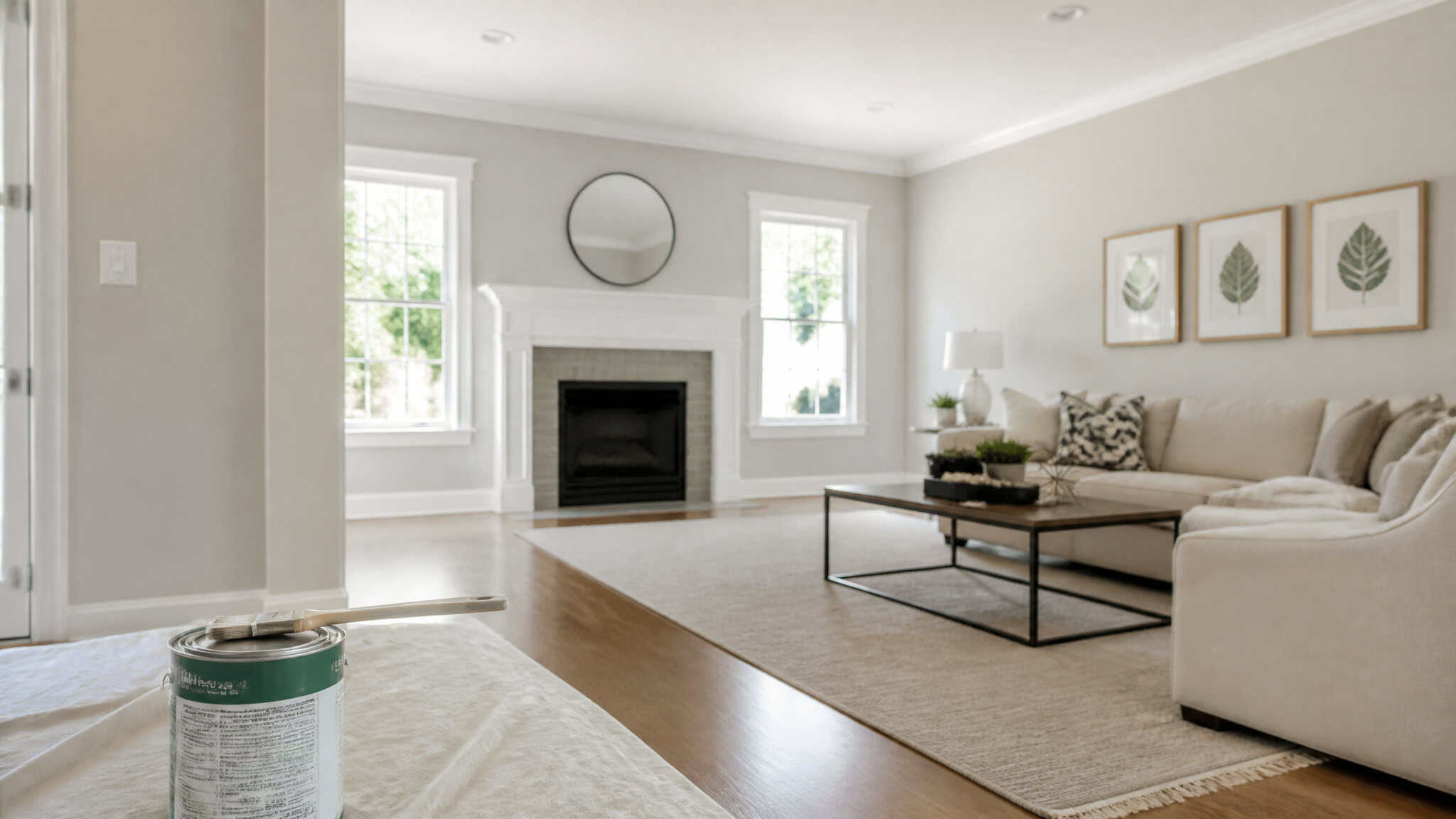
Under $100 a gallon. No contractor, no permit, no drama. And the return is documented: a fresh coat adds an average of $12,130 to a home’s value, per the NAR’s Remodeling Impact Report. That’s a return on a single can.
Nearly 50% of sellers painted their entire home before listing, and 41% painted at least one interior room.
The high-value plays:
- Paint the front door. It’s the first thing a buyer sees. A fresh door says the place is cared for before anyone steps inside. Zillow’s data shows black doors beat gray by $6,450, real money for a weekend project.
- Paint a room, not the whole house. One room, one weekend, instant change. If your tile is dated but functional, paint it. It’s a way to kill the ugly without a demo.
I’ve done it in three bathrooms for under $200 each. A fraction of re-tiling costs.
- Paint the vanity. The vanity is the first thing you see in a bathroom. A coat of paint makes it look new instead of tired. Same idea as the tile: paint it, don’t replace it.
- Don’t forget the garage door. It’s a huge chunk of the front of the house. If it’s ugly, painting it is a fix, and it’s curb appeal.
- Get the sheen right. Flat for walls, satin for trim, semi-gloss for doors. The right sheen and a clean technique are the difference between “did this themselves” and “done right.”
Stick with light neutrals, they let buyers picture their own furniture in the room, and they photograph better, which matters for the listing. A Maryland agent I’ve seen describe it calls the look an Easter egg hunt: one color flowing through the rooms, and the photos work, a technique that photographs well.
If you want to feel like a designer, try color drenching, painting walls, trim, and doors the same color. It makes a room feel cohesive and custom, and it photographs like money. A low-risk place to try it is a bedroom. I did it in mine; worst case, you repaint a room in a weekend.
Architectural detail: custom character for under $200
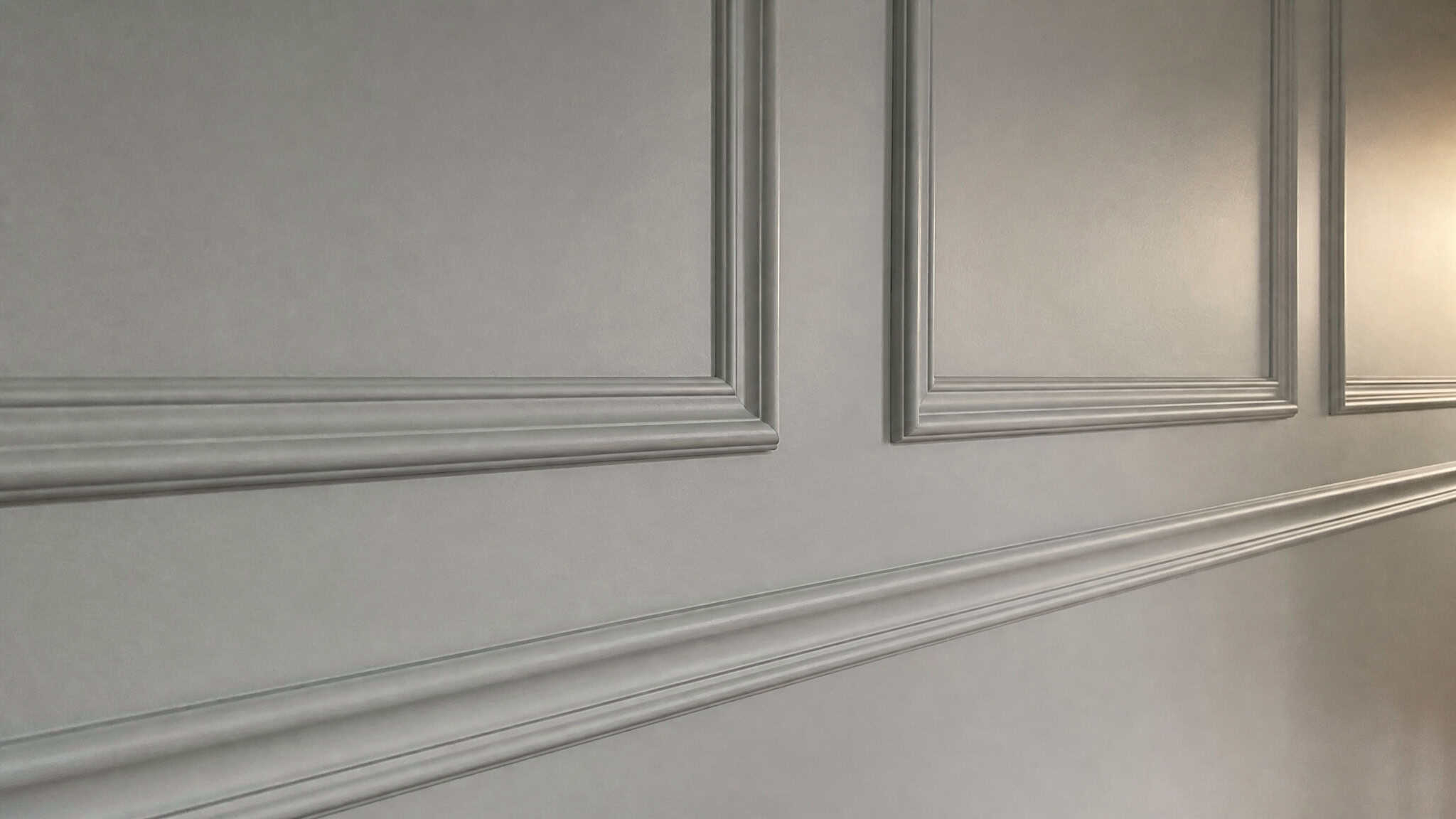
If you want to make a room look expensive without redoing it, moulding and trim are the cheapest way to fake custom. It’s the trick designers lean on: a flat wall with picture-frame moulding reads as “someone cared about this house” in a way that paint alone can’t.
- Picture frame moulding. Add it to a blank wall and it looks like a deliberate design choice instead of an afterthought. Under $200 in materials for a standard room.
- Chair rail. It breaks up a wall visually and protects the paint where chairs hit it.
- Beadboard. Install it on a wainscot or a backsplash wall and you get texture and depth. It reads as intentional, not leftover.
- Crown moulding. The classic finishing touch that makes a room feel complete. Renters and buyers both notice the difference.
- Board and batten with hooks. Functional and good-looking, a hallway with hooks reads as “useful” instead of “empty.”
- Upgrade bifold doors with wood trim. The hollow-core bifold is the giveaway a house is builder-grade. Dressing it with wood is a weekend trick that changes the sightline.
The containing discipline: pick one surface per room. Overdo it and you’re back to “DIY guy with a nail gun,” which is not the look you’re selling.
Hardware and finishing details: the under-$500 ROI winners
The best-return-on-investment home improvement under $500 is a pass through the house tightening every knob, handle, cover, and hinge. Paint, light fixtures, and hardware swaps, these are the upgrades that improve both aesthetic and resale value, and they cost almost nothing compared to what they change.
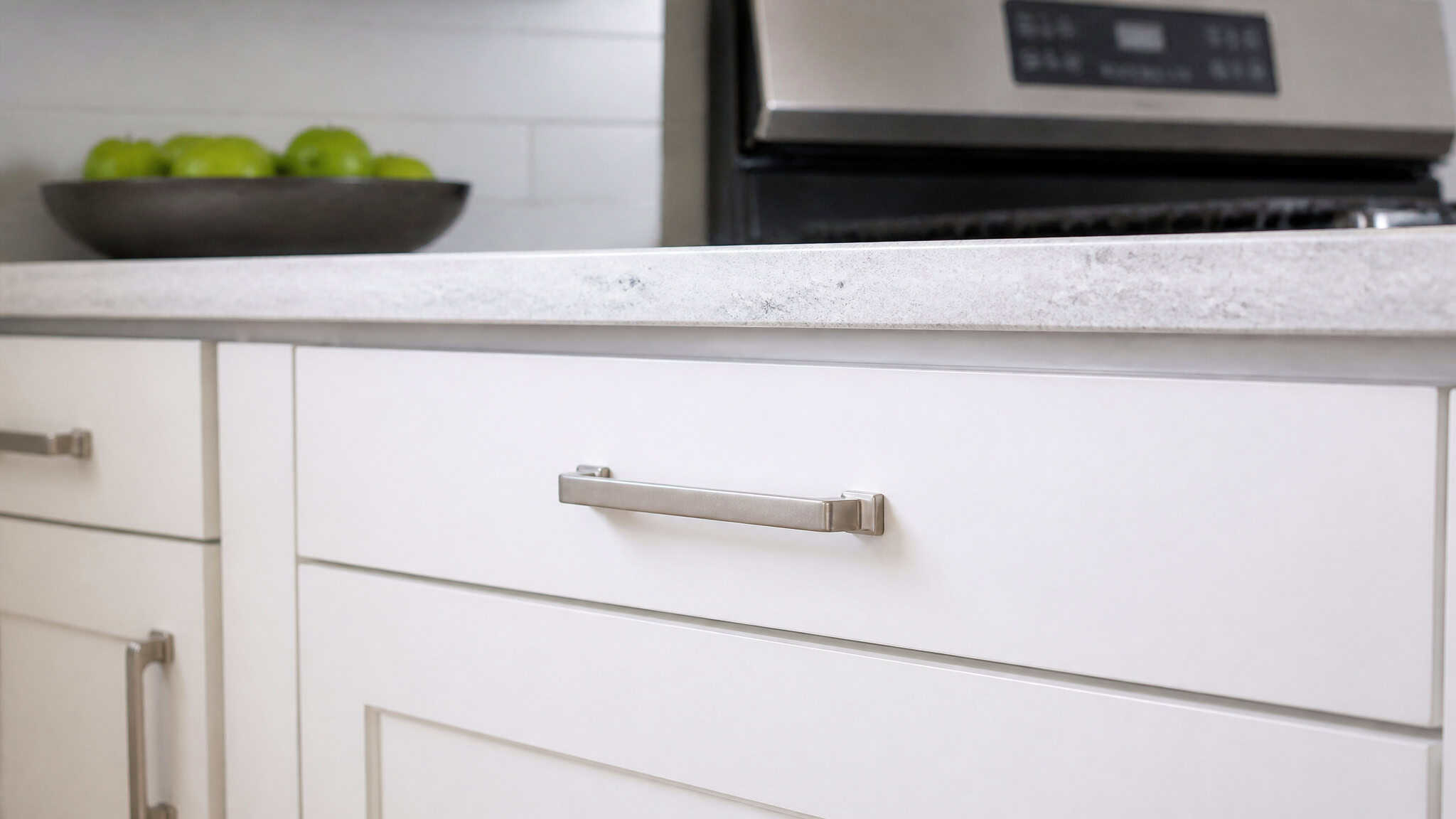
Start with the kitchen and baths. Updating cabinet knobs and pulls changes the entire feel of the room without touching the cabinets themselves. Buyers open drawers, and the hardware is what their hands land on. A real estate agent told me it’s the thing he brings up constantly, it does change the entire room, a detail buyers notice when opening drawers.
- Swap interior doorknobs. Doing it over time is fine, nobody’s inspecting your hall closet on day one. But standardizing the hardware makes the house read as maintained instead of piecemeal.
- Upgrade the front door handle. That’s the one piece of hardware every buyer touches first. Don’t cheap out.
- Paint outlet covers and light switch covers to match your walls. It sounds insane. It looks like you paid someone to paint every cover, which reads as “expensive house.”
- Keep all the finishes consistent. A mix of brushed nickel, brass, and oil-rubbed bronze in one sightline is the finish-cabinet equivalent of wearing two different shoes. Choose one metal and commit.
Baseboards deserve their own paragraph. They’re the most overlooked trim in a house, and they take a beating. If you’re going to replace them, go with the most water-resistant option you can afford, as one contractor puts it, if you plan on renting the house, always recommend the most water-resistant baseboard you can buy. MDF is cheap but swells like a sponge when it gets wet.
And match the interior doors. Standardizing them creates continuity that makes the whole layout more cohesive. Whether you go traditional with shaker-style doors or modern with slab doors, consistency wins.
Lighting: the fastest overlooked upgrade
Lighting is the cheapest way to change how a room feels, which is why it’s the first thing I’d spend on before any renovation. A room with good light reads as bigger, cleaner, and worth more, a room with one buzzing overhead fixture reads as “apartment.”
- Swap the light fixtures. The builder-grade boob light in the hallway is the giveaway. Replace the visible fixtures first: entry, kitchen, dining, bath. You don’t need to spend designer money, a clean modern fixture at a mid price point changes the room’s whole mood.
- Layer the light. Recessed lighting is great, but if that isn’t possible, battery-operated sconces exist now and they’re good. You want overhead, task, and accent lighting in the rooms where people live.
- Go warm. Bulbs at 2700K read as warm and inviting. Mixing color temperatures is a subtle thing buyers can’t name but they feel it, one room icy blue and the next amber throws people off, even when they can’t say why.
- Add dimmers. It’s a $15 part and it makes every room feel adjustable, which reads as finished.
Quick test: Stand in the room at dusk. If you can’t see without flipping on the overhead, you need more light layers.
Window treatments: the finish buyers notice
If your windows are naked or the blinds are ugly, that’s the first thing a buyer’s eye lands on, and it’s fixable in an afternoon. Nothing says “maintenance deferred” like sagging vertical blinds from 2008.
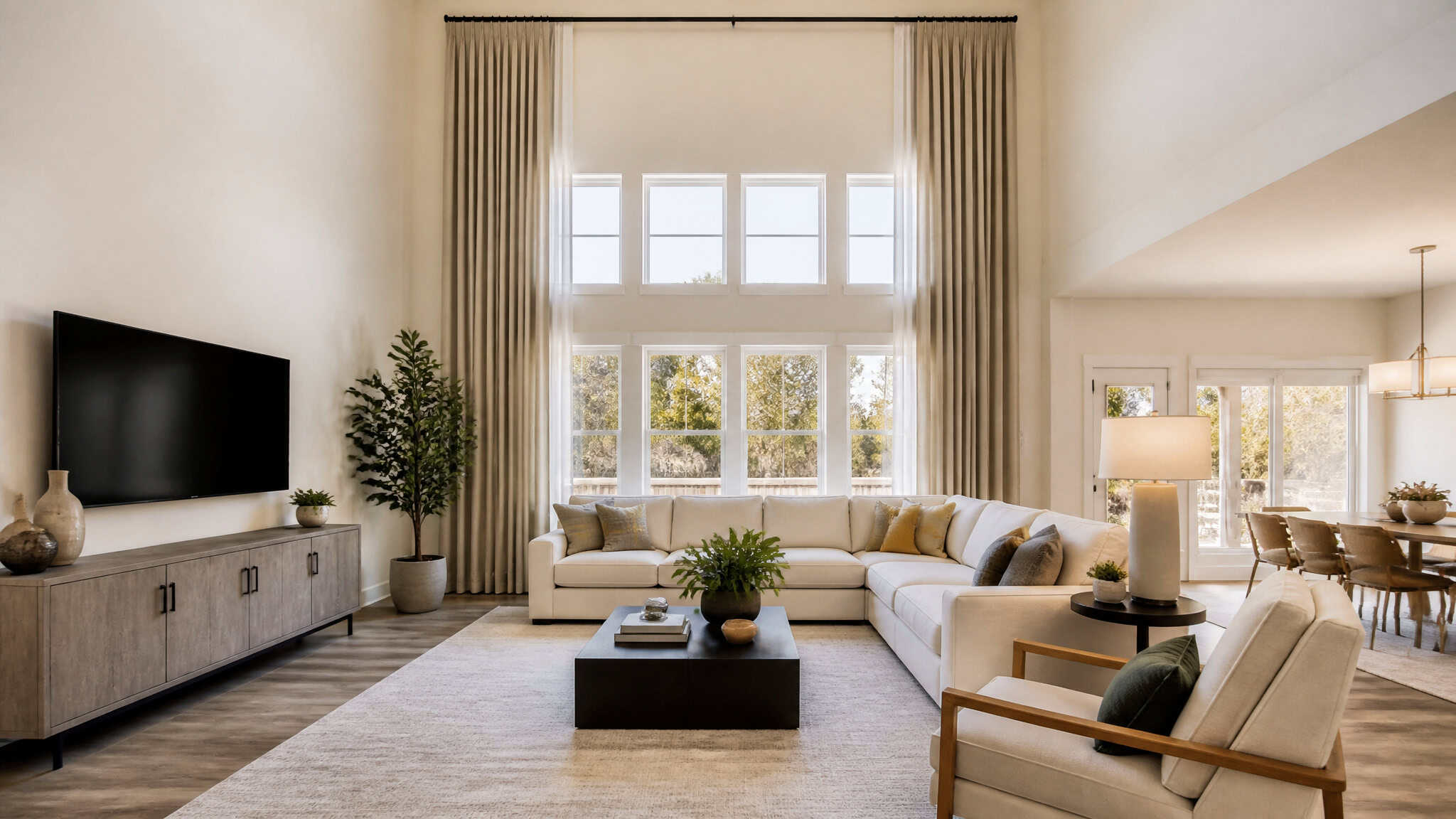
The free trick: hang curtains high and wide. Mount the rod a few inches below the ceiling and extend it past the window frame. It makes the ceiling feel taller and the window feel bigger. Costs nothing extra, changes the whole room.
For the treatments themselves:
- Floor-length curtains read as intentional. Short curtains that stop at the sill read as a mistake.
- Woven blinds are the safe modern play, natural texture, neutral color, works with most styles.
- Skip the sheers. They read as dated and they photograph like dust catchers.
Do the living room and the primary bedroom first. Those are the two rooms that sell the house.
Styling and scale: the upgrades that cost nothing
The cheapest home upgrades that add the most value are free: correcting your room’s scale and letting buyers picture their own stuff in it. If your furniture is too big for the room, or the room is empty and echoey, the house photographs smaller than it is, and the photos are what get people to book a showing.
- Fix the furniture-to-room ratio. An oversized sofa in a small living room makes the whole house feel cramped. Buyers may not articulate it, but they feel it the minute they walk in.
- If the room is empty, stage it, even cheaply. A chair, a rug, a lamp in the corner. An empty room looks like a problem; a staged one looks like an opportunity.
- Buyers can’t picture their stuff in someone else’s clutter. The more neutral and depersonalized, the better. Light neutrals for walls, rug, and sofa give buyers a blank canvas.
Mix, don’t match. The thing that makes a room look designer instead of catalog is deliberately combining wood tones and metals. Two different wood tones in a room reads as curated; four reads as chaotic. Same with metal finishes, pick a dominant and one accent. That’s the whole trick.
- Style the built-ins. Bookshelves and built-ins photograph terribly when they’re just shelves of stuff. Edit them down: books grouped by color, a couple of objects, some empty space.
- Add plants, even good fake ones. They soften corners and make a room feel alive. Buyers don’t inspect whether the plant is real; they register “alive.”
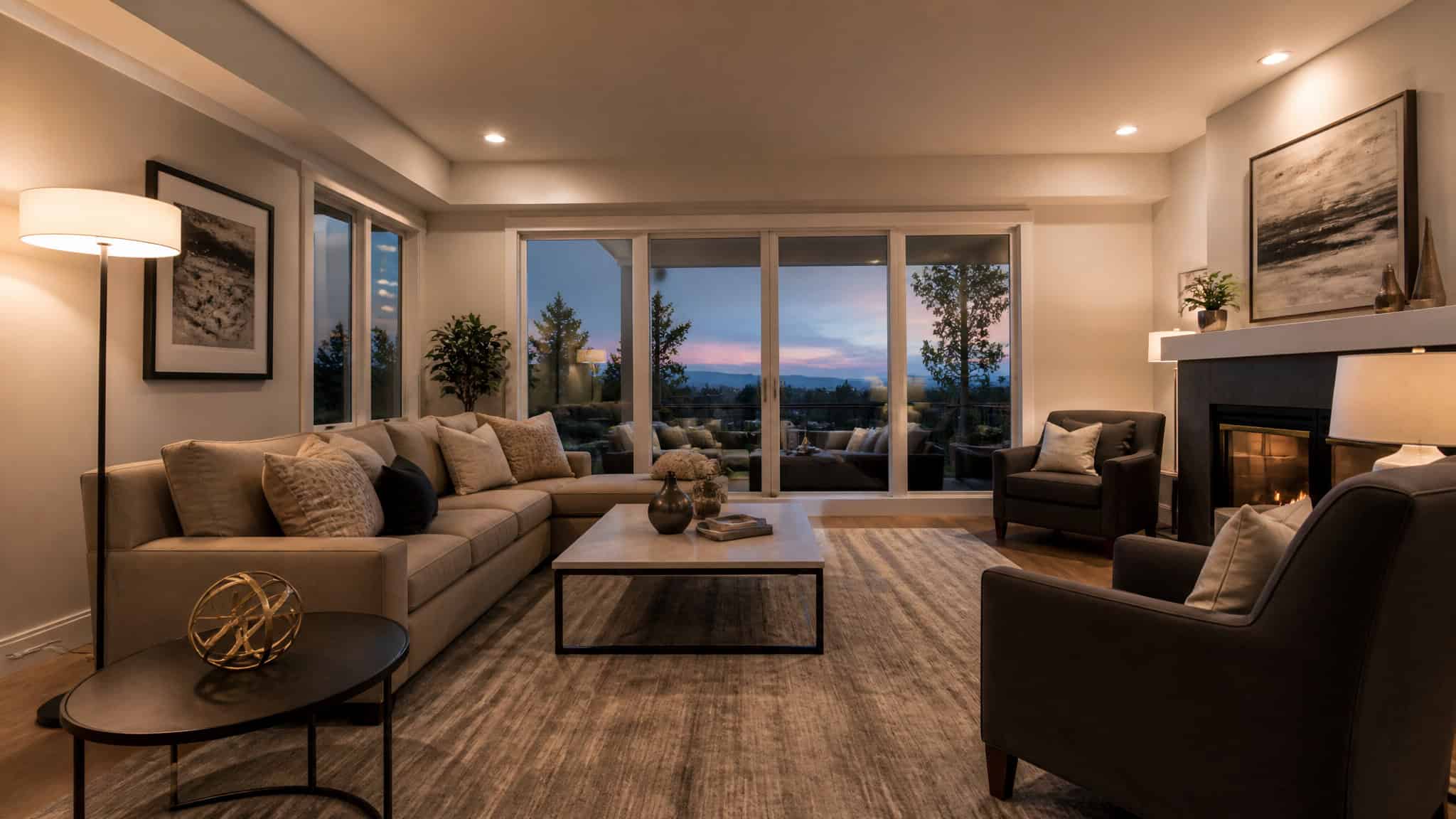
- Throw pillows are the cheat code. A couple of textured throw pillows on a neutral sofa reads as styled instead of staged.
None of this costs money you don’t already have. It’s the difference between “lived in” and “neglected,” and it costs about four hours on a Saturday.
Curb appeal: where the housing-envy ROI lives
Replacing your front door returns 100.9% on average per JLC’s national data, and if you choose steel, the average jumps to 216%. That’s the single highest-return upgrade in the entire house, and it’s a project you can knock out in a weekend.
The outside is what gets people in the door. The data backs it: curb appeal improvements can raise a home’s value by 7% or more, per research in the Journal of Real Estate Finance and Economics, and why enhancing your home’s curb appeal is worth the investment goes beyond the numbers, it’s about the satisfaction and pride that come with a well-maintained exterior.
The exterior upgrade ladder:
- Entry door replacement (steel). The 216% ROI figure is the reason this is the anchor project. A steel door also reads as secure and low-maintenance, which buyers like.
- Garage door replacement. The #1 ROI improvement in the country at 268% per JLC national data. Cost: roughly $4,600. Resale value added: about $12,500.
And it takes 2-6 hours. A local expert frames it as returning 90-95% of cost, one of the highest ROI improvements you can make. Every number on that project is a good number.
- Fiber-cement siding replacement. It’s a major project, but it returns 114% on average and lasts about 30 years. That’s the long-term play for homes with siding that’s past its prime.
- House numbers. Swapping builder-grade house numbers for something modern is a $30 upgrade that photographs well.
- Exterior lighting. A couple of clean fixtures at the entry reads as “cared for” in every evening photo. Buyers almost always see the house at least once in daylight, but they search at night.
- Fresh paint on the front door. Even if you’re not replacing it, paint changes the entire read of the facade. Black outperforms gray by $6,450, per Zillow.
- Landscaping. It was one of the most commonly completed projects for sellers in 2024 (25% did it), and it’s the one photo buyers scroll past first. You don’t need a garden redesign, clean edges, fresh mulch, a trimmed lawn, and one statement plant by the door.
- Driveway sealing. Cracks read as neglect to the same buyers who notice the door. In snowy markets, a paved driveway is especially important, agent Gina Baum notes it’s a key feature buyers there look for.
If you want to go bigger on exteriors, there’s a full guide to the top upgrades to increase home value that goes deeper on the major projects.
Field note: The garage door is the single highest-return project in the country. If you do one thing this year, make it this.
High-impact renovations: where the big returns actually are
If you’re thinking bigger than a Saturday project, the national data is clear about which renovations pay, and which ones only feel like they do. The 2025 JLC Cost vs. Value report tracks the averages, and the returns land in a specific order.
- Garage door replacement. 268% return. Cost about $4,600, adds about $12,500. Two to six hours of work. There is no better project in this entire list.
- Steel entry door replacement. 216% return. A weekend project that changes the whole facade.
- Fiber-cement siding replacement. 114% average, with a 30-year lifespan. The long-game play.
- Kitchen remodel (midrange). Cost about $28,500, resale value about $32,100, a 113% return at the national average. That’s the midrange number; the high-end kitchen redo does not return the same percentage, which is why the advice is always “don’t out-kitchen your neighborhood.”
Then it tapers:
- Bathroom remodel. Cost about $26,100, resale about $20,900, that’s rough on the surface, but the experts put the real-world return at 60-70% in many markets. Before you gut the bathroom, ask yourself whether it’s actually dated or just tired. Often the answer is paint, hardware, and a new vanity top.
- Window replacement (vinyl). The national average sits at 76% per Zillow’s data, with local experts landing at 71-74%. Vinyl is the material that hits those numbers, wood and fiberglass cost more and don’t return more.
- Deck addition. 95% return on average per one analysis, and well-designed patios add 8-10% to home value with around 80% ROI. The outdoor living space is where the return actually is.
- Basement finish. The national average hangs around 70-71%, per Angi’s data. But the real value is in shifting the price bracket: in one Georgia example, a finished basement added $40,000, $50,000 to the home. If finishing the basement moves your house into the next comparable tier, that’s the bigger win than any single room.
Here’s the honest answer to the “$100k question”, how to increase home value by $100k. It’s rarely one project. It’s usually three things stacking: a basement finish that shifts your comparables, a kitchen that reads updated instead of tired, and curb appeal strong enough that offers land above the comps. None of those alone gets you $100k. Together, they change the bracket.
Energy efficiency and smart home: the new buyer expectations
A smart thermostat is worth it for resale, not because it raises the price, but because buyers now expect it. Recent buyers rated it as a standard feature, and the generation of buyers in the market right now assumes a modern home has one. It’s $150, $400 and installs in an hour.
The bigger shift is in security. In 2012, only 40% of recent buyers rated security cameras as essential. Now it’s 76%, according to the National Association of Home Builders. That’s an expectation shift in a decade. A smart doorbell and a camera system are the new smoke detectors: cheap, expected, and a “yes” for buyers who would otherwise hesitate.
- Smart thermostat. $150, $400, fifteen-minute install, reads as “modern.”
- Security cameras. A simple system at the entry points. Buyers see them and register “safe,” even if they never open the app.
- Energy-efficient appliances. Energy Star-rated appliances read as lower monthly costs, which buyers increasingly factor into their offer.
- Insulation and windows. These are the two energy upgrades buyers ask about. If you’re replacing windows, vinyl is the material that returns its cost76% national average. Installing exterior windows and skylights can result in up to $600 in tax credits through 2032, per the IRS.
These rarely raise the sale price on their own. They’re expectation setters. A house with none of them reads as dated to a 30-something buyer whose last three apartments had all three. If you want to find available rebates and tax credits near you, the DSIRE database is the easiest way to see what’s on offer.
Built-in storage, home offices, and flex space
The upgrades buyers pay for in 2025 are usable space and visible storage. Walk-in closets, a finished garage wall with shelving, a home office nook, these read as “this house has room to live” in a way that a formal dining room doesn’t.
- Built-in shelving for closets. A closet with an organizer reads as double the storage in photos. The wire shelving kits at any home center do it for a few hundred dollars per closet.
- Kitchen cabinet storage. Pull-out shelves and drawer organizers read as “upgraded” every time a buyer opens a cabinet. Cheap, and buyers open every cabinet.
- Garage storage. A wall of shelving or slatwall in the garage reads as “organized house.” It’s the room buyers always examine and always apologize for mentally.
- The home office. Buyers now ask specifically. A spare room with a desk, a good light, and a quiet door reads as a finished office instead of a junk room.
The laundry room is the underrated one. The NAHB’s data shows it’s one of the most-wanted features in a home. If your laundry room is a hallway closet with a stackable unit, it’s fine. If you have a dedicated laundry space, keep it clean, well-lit, and organized, buyers notice it more than you think.
Kitchen and bathroom refreshes: when not to remodel
Paint the cabinets first, only replace them when they’re genuinely beyond saving. If the cabinet boxes are solid and the doors aren’t warped or falling off, a fresh coat of paint, new hardware, and a new countertop will make the whole kitchen read as updated for a fraction of the remodel cost.
The full kitchen remodel (midrange) runs about $28,500 and returns about $32,100, a 113% average. That’s a good number if your kitchen is actually past it. But most kitchens aren’t past it; they’re just tired. Tired is fixable with paint and hardware.
The kitchen refresh that reads as money:
- Paint the cabinets. Same sheen rules as trim, satin or semi-gloss, clean technique. White and light gray cabinets are the safe resale plays.
- Swap the hardware. New knobs and pulls on painted cabinets read as a full remodel to most buyers.
- Upgrade the faucet. A modern pull-down faucet in brushed nickel or matte black changes the whole sink area.
- New countertop if you can swing it. Quartz at the mid-range is the safe modern choice. If you can’t, deep-cleaning and re-sealing what you have goes a long way.
For local cabinetry work, a local millwork installer is often the better call, one contractor I’ve seen recommends going with a local cabinetry or millwork installer for closets, kitchen cabinets, and vanities, because he finds the price can be more negotiable and local materials are easier to procure. Worth knowing before you click on the big box store’s package deal.
Bathrooms get the same logic:
- Paint the vanity instead of replacing it. Same move as the kitchen.
- Re-caulk and re-grout. This is the “tired bathroom” giveaway. Fresh white caulk and grout makes tile read as clean instead of dated.
- Swap the faucet and showerhead. Modern fixtures, a weekend, done.
- The mirror and lighting. A framed mirror and a proper vanity light change the whole room.
Low-flow toilets are a sleeper upgrade. They’ve been standard since the 1.6 gallons-per-flush mandate in 1994, but if your house predates that, replacing the toilets reads as “updated” and saves the buyer water. A solid low-flow like the Glacier Bay runs about $95; the step-up Kohler Cimarron is around $269. Both are DIY-installable in an afternoon.
Walk-in showers are the bathroom trend that reads as current. Prefabricated options run $700, $3,000 from brands like MAAX and Ella, and they’re the shower style this generation of buyers actually wants, the tub-shower combo reads as dated to buyers under 40.
Flooring: the quiet return
If the flooring is dated but functional, deep clean it before you replace it, and if you do replace it, skip the stuff that screams “landlord.” This is the most-touched surface in the house and the one buyers look at longest without realizing it.
- Deep clean what you have. If you have hardwood under the grime, a proper clean can make it read as a feature instead of a problem. Same with tile and grout, that’s a weekend and some elbow grease.
- Refinish instead of replace. If the hardwood is in decent shape, refinishing is a fraction of replacement cost and returns more per dollar.
- If you’re replacing, go with something that reads as intentional. Hardwood or quality LVP in a neutral tone. If you want the specifics on LVP and the good-better-best tiers, the best home upgrades for resale value guide gets into it. The rule: don’t put cheap flooring in the rooms buyers photograph first.
- Skip the carpet in main areas. Buyers under 40 read wall-to-wall carpet as a future expense to rip out. The exception is bedrooms, where it reads as cozy.
Upgrades to avoid: where your money goes to die
For resale value, avoid these: pools, sunrooms, wallpaper, over-customization, luxury remodels, and garage conversions. That’s the short list of projects that return less than you spend, or, in some cases, make the house harder to sell.
- Pools. In warm climates (Florida, Arizona, Texas), a pool can be neutral-to-positive. Everywhere else, it’s a liability list: maintenance, insurance, safety, and a huge chunk of buyers who filter it out completely. It’s a lifestyle purchase, not an investment.
- Sunrooms. They sound appealing, but the return is poor and the added square footage often doesn’t count the way finished space does. Buyers read them as “seasonal room I’ll never use.”
- Wallpaper. This is the one that confuses people because it can look expensive. It doesn’t matter, the overwhelming majority of buyers see wallpaper and register “removal project.” Paint reads as done; wallpaper reads as work.
- Over-customization. The $15,000 custom range that doesn’t increase the sale price, that’s the documented story. Custom features that only you wanted are features the next buyer has to live with or remove.
- Luxury remodels. The high-end kitchen redo returns a worse percentage than the midrange one. The national data is consistent: the more expensive the remodel, the lower the return. Out-kitchen your neighborhood and you’ve spent money you won’t get back.
- Garage conversions. Pools and conversions are the two most likely to reduce your buyer pool. A garage converted to living space removes the one thing many buyers require, and the un-permitted versions create inspection problems.
The rule: don’t build for yourself when you’re selling. Build for the buyer, a principle that guides all resale decisions.
Red flag: If a project starts with “custom” or “luxury,” assume it returns less than it costs until proven otherwise.
Climate, demographics, and your local market
If you’re in a warm, extreme-weather market like Florida, the cheap upgrades that matter are energy efficiency and impact-resistance, not a pool. Energy-efficient windows, good insulation, and a strong exterior door read as this house can take a storm and a summer to Florida buyers, and they’re the ones that return their cost. The pool, counterintuitively, is not the value-add tourists assume it is, outside specific neighborhoods, it’s a maintenance line item on the listing disclosure.
The bigger picture shift is demographic. Baby Boomers have overtaken millennials as the largest group of homebuyers, that’s a NAR finding that changes which upgrades matter. The features Boomers prioritize are different from the millennial list:
- Walk-in showers over tub-shower combos. The step-in shower is a serious accessibility feature for buyers planning to age in place.
- Laundry rooms on the main floor or at least not in the basement. Boomers ask about the stairs.
- Single-story layouts or main-floor primary bedrooms. Same logic.
- Good lighting. Boomers notice dim rooms more than any other buying group.
The real takeaway: know who’s buying in your actual market. The millennial-first-condo neighborhood and the downsizing-Boomer neighborhood want different things. The cheapest tools for understanding your local comps conversation gets into how to read your specific market’s data, but the short version is: look at what’s selling fastest near you and what’s sitting. That’s your answer.
Financing the upgrades: cash, second mortgage, or HELOC
If you can afford to pay cash, that’s your best option, you avoid debt and interest payments entirely. The drawback is that the money is tied up until you sell. If you’re financing, you have two main paths, and they’re not the same thing.
- HELOC (home equity line of credit). You borrow against your equity as you need it, and you only pay interest on what you draw. Good for projects with rolling costs, a refresh where you’re buying materials over a few weeks. Rates are generally variable, which matters if rates are climbing.
- Second mortgage (home equity loan). You get a lump sum at a fixed rate and make fixed payments. Better for the bigger, one-shot projects, a kitchen remodel, siding, a roof. Predictable payment, predictable timeline.
The borrowing math is concrete: lenders generally cap your borrowing so that your remaining mortgage plus the new loan stays under 90% of your home’s value. So if you owe $270,000 on a $350,000 home, that’s 90% of the value ($315,000) minus what you still owe ($270,000), which leaves you roughly $45,000 of accessible equity. That’s a solid kitchen remodel budget or a very strong refresh budget.
The strategic note: if rates are high, a HELOC or loan is more expensive than the same project would’ve been a few years ago, which is exactly why the cheap-path projects in this article earn their place. A $2,000 refresh financed briefly beats a $30,000 remodel financed at a high rate if the refresh does the same job for the buyer’s eye.
Cost check: A $2,000 refresh financed briefly beats a $30,000 remodel financed at a high rate if the refresh does the same job for the buyer’s eye.
DIY vs. hiring pros: where to spend your Saturdays
Do the cosmetic work yourself and hire pros for anything structural, electrical, or load-bearing. That’s the dividing line, and crossing it is how weekend projects become insurance claims.
The DIY list (safe, cheap, high return), a list that maximizes value:
- Painting, walls, doors, cabinets, exterior trim
- Hardware swaps, knobs, pulls, handles, hinges
- Light fixture replacement (if the wiring is straightforward)
- Caulk, grout, and weatherstripping
- Landscaping and mulch
- Curtains, mirrors, and styling
The hire-a-pro list (do not DIY), a list that minimizes risk:
- Anything structural, walls, beams, foundations
- Electrical beyond swapping a fixture
- Plumbing beyond a faucet or toilet
- Roof, siding, and window installation
- Any project requiring a permit
For the big jobs, the advice from contractors I’ve seen is consistent: get local quotes, and don’t assume the big-box installers are the best deal. Local millwork and cabinetry installers often beat the big stores on price and quality, one contractor I’ve talked to specifically recommends going local for closets, cabinets, and vanities, because the price is more negotiable and local materials are easier to procure, a strategy that reduces cost.
The other rule: don’t underestimate the cost of your own time. If a project takes you three weekends and you could’ve worked three Saturdays of overtime instead, that’s math too. Do what you’re good at, and pay for what you’re not, a principle that optimizes effort.
Timeline and disruption: what takes what
The highest-return projects are also the least disruptive, that’s the secret of this whole list. Compare the projects on a weekend basis and the picture changes completely.
| Project | Time | Disruption | Return |
|---|---|---|---|
| Garage door replacement | 2-6 hours | Minimal | 268% (avg) |
| Steel entry door | 1 weekend | Low | 216% (avg) |
| Paint (interior) | 1 weekend per room | Low | Highest per-dollar |
| Hardware & fixtures | 1 weekend | Minimal | Very high |
| Landscaping | 1-2 weekends | None | High |
| Kitchen remodel (midrange) | ~6-8 weeks | High | 113% (avg) |
| Bathroom remodel | ~4-6 weeks | High | 60-70% (typical) |
| Basement finish | 8-12 weeks | High | 70% (avg, plus bracket shift) |
The takeaway is obvious: two weekends of work gets you a garage door, an entry door, a paint pass, and a hardware refresh, and that combination beats the return of one kitchen remodel for a fraction of the cost and none of the living-through-it misery. Do the cheap pass first. If the house still reads as tired after that, the remodel will be cheaper because you’re not carrying a dated read into the new work.
Will cheap upgrades move the appraised value?
The honest answer: mostly no, and it doesn’t matter. Appraisers work from comps, square footage, bedrooms, bathrooms, and comparable sales in your neighborhood. They are not moved by your new faucet. The Zillow estimate and the appraiser’s number will not jump because you painted the front door.
What the cheap upgrades actually do, a list that clarifies their role:
- They pull in offers. The Colorado Springs house that sat nine months and sold in a week after a paint-and-light pass, that’s not the appraiser’s number moving. That’s buyers choosing your house over the comp that skipped the refresh.
- They protect your asking price. When a buyer walks into a tired house, they build a renovation-line-item in their head and deduct it from their offer. A refreshed house doesn’t trigger that mental deduction.
- They avoid the “this needs work” discount. Buyers who can’t see past cosmetics, and that’s most of them, mentally discount tired houses hard. One real estate agent I’ve seen puts it bluntly: some buyers don’t have the vision to see what the house could be. The cheap pass is what gives them the vision.
The short version: if your house sits, the estimate drifts down with the market. Selling fast at a strong price is what protects the number, a strategy that mitigates depreciation.
For the appraisal specifically: the appraiser will note the comps, not your paint. If you need the appraisal to come in higher, the moves that actually register are the ones that change comps, the finished basement that shifts your bracket, the square footage that’s properly counted, the garage that’s clean and functional.
The final call
A garage door returns 268%. A steel entry door returns 216%. A fresh coat of paint adds five figures to the average sale. And a $15,000 custom range added exactly zero to one expert’s listing.
The smart money is two weekends of work in this order, a sequence that maximizes impact:
- Paint. Front door, the kitchen cabinets that are tired-but-solid, the room that photographs worst.
- Hardware. Every knob, handle, and cover the buyer will touch.
- Lighting. Fixtures, warm bulbs, dimmers.
- The entry and garage. A steel door and a garage door replacement are the two highest-return projects in the entire house.
- Curb appeal. Numbers, exterior light, mulch, clean edges.
Then, if you’re selling: fresh photos. The Colorado Springs house proved that the photos matter as much as the upgrades, a lesson that affects marketing.
You don’t need the six-figure remodel to sell at a strong price. You need the house to not read as tired, a principle that guides all upgrades.
People Also Ask
What can I do inexpensively to add value to my house?
The highest-return moves are surprisingly cheap: fresh paint (averaging over $12,000 in added value), new hardware, upgraded lighting, and a garage door replacement (268% ROI). These cosmetic upgrades pull in offers and protect your asking price without the cost or disruption of a full remodel.
What upgrades increase home value the most?
Garage door replacement leads with a 268% average return, followed by steel entry doors at 216% and fiber-cement siding at 114%. A midrange kitchen remodel returns about 113%, but the cheap pass — paint, hardware, lighting — often delivers the highest return per dollar spent.
Does painting your front door black increase home value?
Zillow data shows a black front door outperforms gray by $6,450 in added value. It’s a weekend project under $100 in materials that changes the entire read of the facade — a cheap, high-impact curb appeal move.
Is a kitchen remodel worth it for resale?
A midrange kitchen remodel returns about 113% on average, but the high-end version returns less. Before gutting, ask if your kitchen is actually dated or just tired — paint, new hardware, and a faucet swap can make it read as updated for a fraction of the cost.
Why do cheap upgrades move homes faster than expensive renovations?
Buyers mentally deduct renovation costs from offers on tired houses, but a refreshed house doesn’t trigger that discount. A paint-and-light pass can pull in offers within a week, as seen in a Colorado Springs home that sat nine months and then sold at full price — the appraiser’s number didn’t move, but buyers chose it over the comp that skipped the refresh.
What home improvements should I avoid for resale value?
Pools, sunrooms, wallpaper, over-customization, luxury remodels, and garage conversions are the money pits. They return less than you spend and can shrink your buyer pool — a $15,000 custom range added zero to one expert’s listing. Build for the buyer, not yourself.