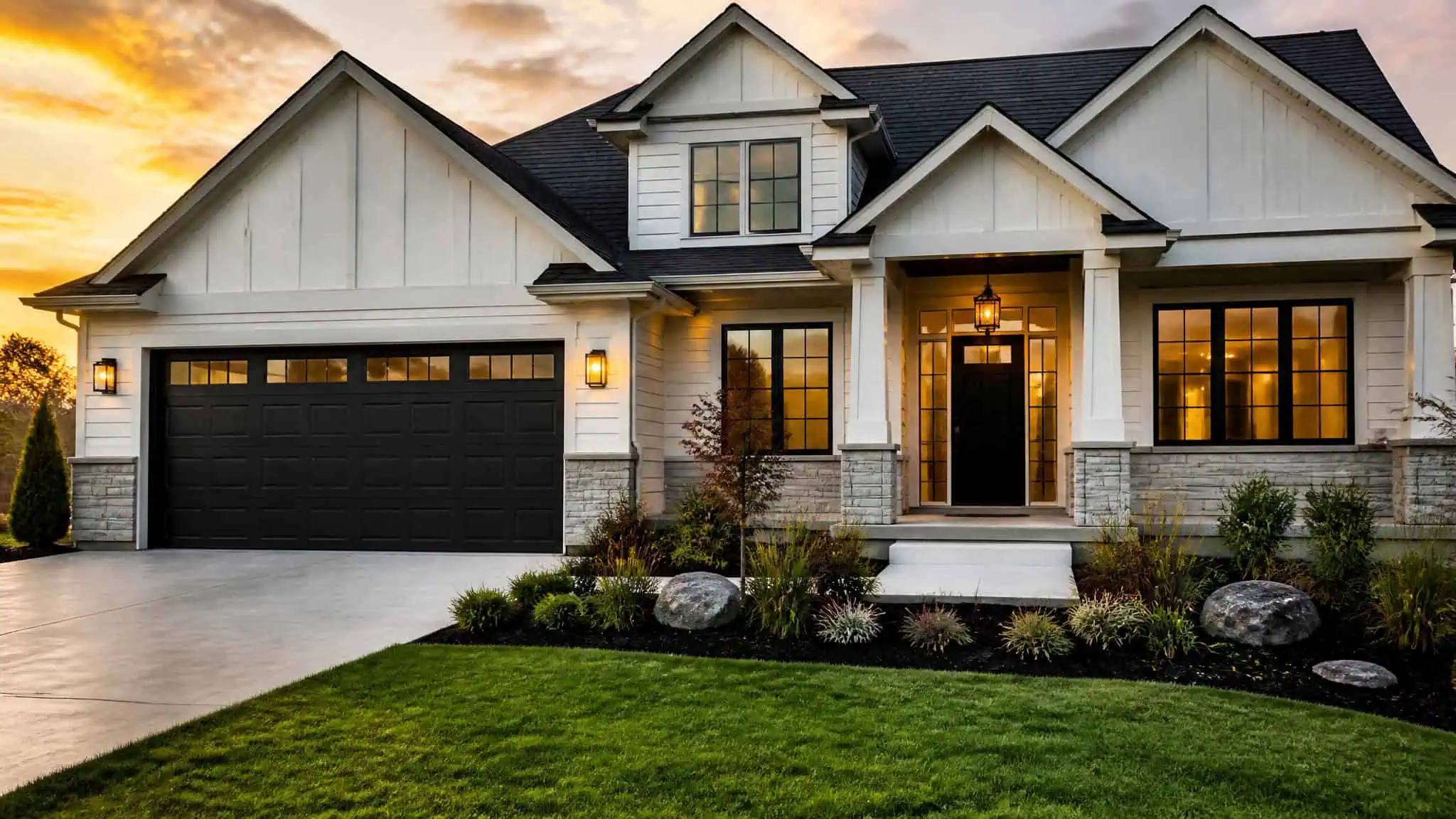
Mortgage rates have spent a long stretch above 6.5%, and that’s quietly changed how homes sell. The ones that feel move-in ready are still drawing offers; the ones that feel dated are sitting. Most sellers are trying to close that gap, and worth asking why: a Cinch Home Services survey found 62% of owners renovate mainly to raise their home’s value, yet most improvements never return their full cost.
So you’ve got a problem to solve. You want the appraisal number higher, and guessing wrong wastes thousands. Most of the advice floating around is aimed at people who just like remodeling. The research cuts through it. Appraisers credit heated square footage, functional layout, and overall condition before anything else, and the modest refresh routinely out-earns the full remodel.
And a few hundred dollars of exterior work can outweigh a pricey interior one. Here’s what moves an appraisal, where the numbers disagree, and where I’d spend. If you want the full spread first, the guide to the highest-ROI upgrades covers the broader field.
Key Takeaways
Appraisers price heated square footage, functional layout, and system condition ahead of any luxury finish, so a finished basement or a five-year-old HVAC beats marble every time.
Minor kitchen and bathroom remodels are the ROI winners: kitchens recover 85.7%-113% while major overhauls return 41.8%-51%, and midrange bathrooms recover 66.7%-80% versus 36.7%-42% for upscale.
The cheapest exterior signals earn the most per dollar: garage doors return 133%-349.3%, steel entry doors around 216%, and a $35 mailbox with fresh house numbers sets the tone before anyone steps inside.
Table of Contents
Why the Appraisal Lens Changes What Pays Off
Appraisers credit three things before anything else: gross living area, meaning heated square footage; functional layout; and overall condition. Luxury touches like marble and pro-grade appliances get far less credit than a finished basement or a five-year-old HVAC. And to be clear, an appraisal isn’t an inspection. The appraisal is about value against comparable sales; the inspection is about defects.
That distinction should shape every spending decision. Craig Steinley, president of the Appraisal Institute (MAI, SRA, AI-GRS, AI-RRS), suggests waiting on major renovations when your stay is uncertain, since returns grow with how long you live there and some projects are worth doing purely for quality of life. That’s the sane read. Money on a house you’ll keep uses a different scoreboard than money on a house you’re selling. Steinley’s MAI and SRA credentials reflect the Institute’s highest professional designations, signaling deep expertise in valuation.
Two practical resources before you commit anything. The Appraisal Institute keeps a free “Find an Appraiser” database, and it’s worth one conversation with a local agent or appraiser before you sign a contract. ROI is market-dependent. What carries in Georgia may do nothing in Maine. And watch the demand side: Baby Boomers have overtaken millennials as the largest homebuying group, and they weight heating and cooling costs plus energy efficiency heavily, which is its own signal about where to put money.
Curb Appeal and Exterior Upgrades with the Best ROI
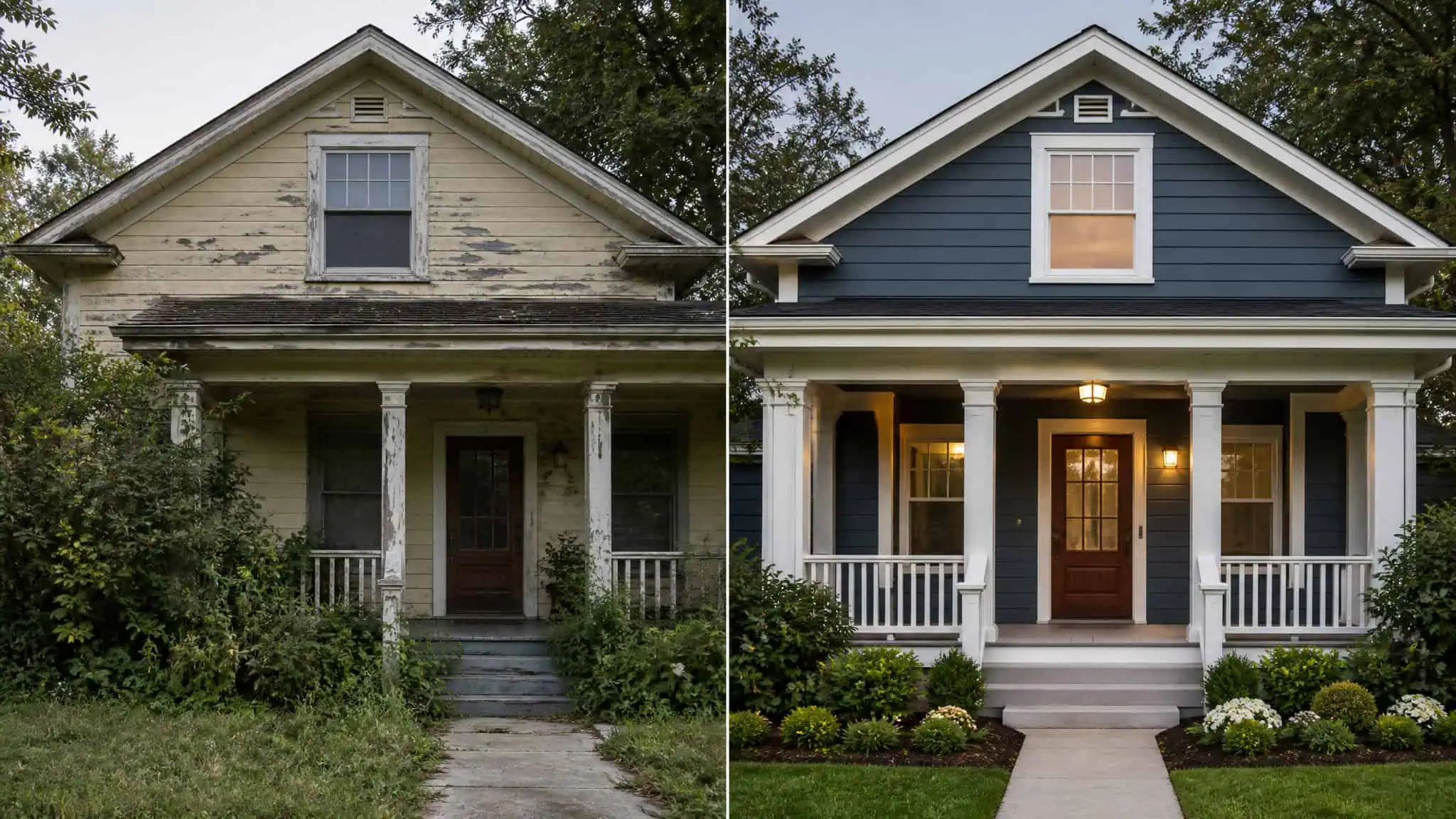
A dated exterior reads as a neglected house before anyone sees the kitchen, since it’s the first impression appraisers and buyers form. On the numbers, the biggest single exterior play is the garage door, and it depends on which source you trust: HomeLight puts a new door at about 133% ROI, roughly $2,800 back, while the Journal of Light Construction’s 2025 Cost vs. Value Report says 349.3% on an average cost of $4,317 and $15,081 in resale value. The gap is methodology, not fraud, and both are directionally right: a fresh door changes the whole face of the house for a few thousand dollars.
Exterior paint: the 152% ROI first impression
HomeLight estimates a fresh coat of exterior paint returns about 152%, or $7,600 in resale value. Angi puts the average whole-house job around $3,177, and if that’s more than you want to spend, pressure washing runs $241-$418 and strips a decade of grime off. Touch up flaking paint and give the front door a fresh color. For 2026 the palettes lean jewel and earth tones, and Brick&Batten, a virtual design firm, recommends Sherwin-Williams’ Peppercorn for siding if you want a safe, modern pick.
Garage door replacement and why the figures conflict
The 2025 Cost vs. Value Report calls the garage door the highest-ROI project this year. The 133% number measures cost recovery at resale; the 349.3% figure works off a different cost basis. What matters is the outcome: instant curb appeal and a visible fix. Material prices vary, but the Clopay Classic Collection runs around $683 and is a solid, affordable starting point.
Steel entry door: 216% recovery, energy savings, and low maintenance
A steel entry door costs about $2,435 and recovers roughly 216% on average. Buyers like them for practical reasons, not just looks: energy efficiency, low maintenance, and blocking cold air. The JELD-WEN Lite Craftsman Primed Steel Front Door is a solid pick, and Stanley makes a version with decorative glass. If the front of your house reads tired, this is the single fixture that upgrades it.
Siding and stone veneer: 97%-114% exterior armor
New siding is one of the better exterior investments you can make. Vinyl runs about $17,950 and recovers around 97% per the 2025 Cost vs. Value Report, and fiber-cement or vinyl overall recoups 97%-114%. At the lighter end, stone veneer on the front gives instant character. Coronado’s River Rock and Chisel Gray Stackstone are good starting points, and Glen-Gery offers brick veneer options that add a classic, durable facade.
Mailbox, house numbers, and the $35 first impression
Agents say small details grab attention, and the math backs them up. A standard steel mailbox is about $35, with the Postal PRO craftsman kit at $69. House numbers run about $3 per digit for black 4-inch aluminum. A leaning box and rusty digits tell a buyer the whole house is this tired, and fixing it costs less than a tank of gas. Even a simple upgrade like a Kohl’s mailbox set can refresh the entry for under $50.
Parking pad, front porch, and regional extras
Where street parking is tight, a concrete parking pad is a legitimate selling point at around $1,200. In Baum’s area, winter weather makes paved driveways a competitive advantage, so a concrete pad can be a practical edge. On the porch, staging matters. A dressed-up front porch shows buyers how they’d use the space, and a couple of rockers helps them picture the Saturday morning. Shine Company’s Vermont Porch Rockers run about $170 each.
The black front door and other Zillow data points
Zillow research found a black front door can boost offers by $6,450. That’s one paint color, and it’s the cheapest five figures on this list. If you’re not repainting the whole house, at least do the door.
Tidy outdoor spaces cost almost nothing
A quarter of sellers tackled landscaping in 2024, and it was one of the most common pre-sale projects. You don’t need a landscape architect. Mowing, weeding, trimming, and fixing exterior lights costs almost nothing and tells buyers the home is cared for. That matters, because buyers assume a neglected yard means a neglected interior.
Kitchen Upgrades: Minor Beats Major
Kitchens top the list of rooms that sell houses, but a full gut before an appraisal is usually a mistake. The freshest supported claim in this guide is simple: a minor kitchen remodel recoups 113% per HomeLight on a roughly $28,458 job, about $32,141 back, while Remodeling magazine lands the same scope at 85.7% on about $27,000. Either way it crushes a major upscale overhaul, which returns just 41.8%-51%.
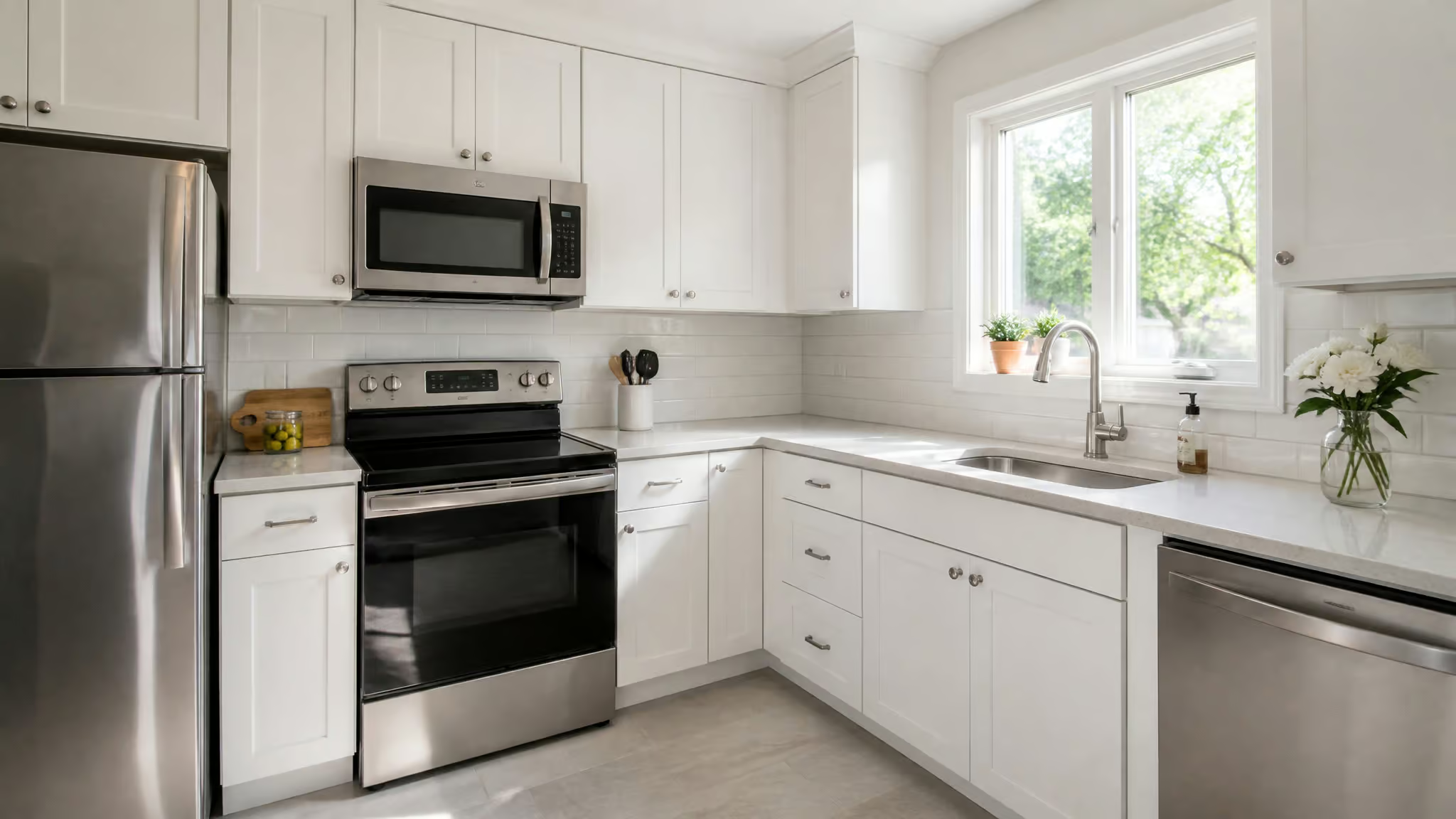
Minor kitchen remodel ROI and why the numbers disagree
The HomeLight figure and Remodeling’s figure disagree on methodology and market, but they agree on the direction: spending less returns more. A modest kitchen update, covering roughly 200 square feet with new cabinet fronts, countertops, and appliances, keeps the existing layout intact. Sellers pay more at sale time for pro-grade appliances, marble, and top-end cabinetry, but those don’t come back proportionally.
Cabinet fronts, subway tile, and fixtures beat a gut
What “minor” means: new cabinet fronts, subway tile backsplash, updated hardware, granite or quartz counters, and energy-efficient appliances, with the layout exactly where it is. Granite runs about $3,250, or go with tiles at $5-$15 per square foot. Painting old cabinets saves money, as agent Gina Baum recommends. The money goes to flow, storage, and cooking ease, not materials.
What to skip: high-end finishes that don’t pay back
A major upscale kitchen remodel can run past $150,000 and return about 41.8% per Remodeling magazine. That’s roughly half the money gone. The kitchen also has to match the rest of the home. If the style, size, and quality run ahead of the neighborhood, it reads as over-improved and the value doesn’t follow.
Should I remodel the kitchen before an appraisal?
If the layout works and the cabinets are sound, a minor refresh is the move. If it needs a full gut, do it for yourself, not the appraisal. One data point: Zillow found an olive green kitchen fetches about $1,600 more, so the paint color can earn its keep if you’re already in there. Minor beats major, period.
Bathroom Upgrades That Add Real Value
Same minor-beats-major math, applied to the second room buyers judge hard. A midrange bathroom remodel costs about $26,138 and recoups roughly 80% per HomeLight, while an upscale overhaul returns just 36.7%-42%. Bathrooms are a big deal to buyers, so this is worth the effort, but keep it midrange.
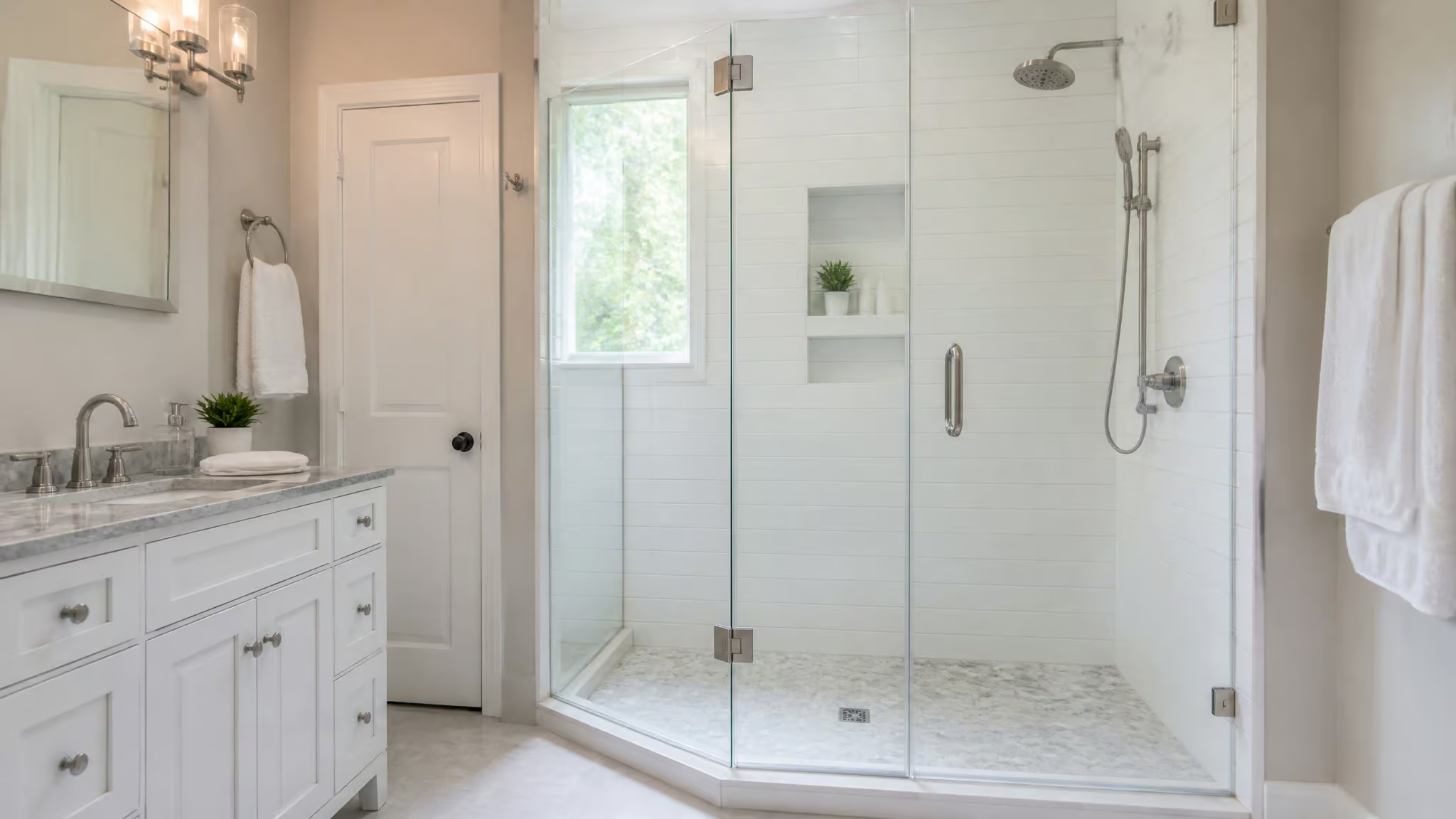
Midrange remodel vs. upscale overhaul: 80% vs. 42%
The 80% figure comes from a 5×7-foot remodel per HomeLight; Remodeling magazine’s read is 66.7% on the same scope. An upscale overhaul returns 36.7%-42%. The pattern is the same as the kitchen: keep it clean, keep it reasonable, and you keep most of your money.
Walk-in shower: the feature more buyers prefer than tubs
More buyers prefer walk-in showers over tubs these days, though families with kids still want the tub, so know your market before you rip one out. If you go walk-in, prefab kits run $700-$3,000 plus installation. The MAAX Mediterranean III corner kit and the Ella Liberty kit with grab bars and a molded seat are solid starting points.
Low-flow toilets and water-saving fixtures
Toilet tech has come a long way since the 1994 law capped tanks at 1.6 gallons per flush. Modern low-flow models use 1.28 GPF and move less water more forcefully, so no more double-flushing. The Glacier Bay 1.28 GPF runs about $95; the Kohler Cimarron is around $269. Pair them with water-saving faucets and showerheads.
Heated floors, double vanities, and the spa treatment
Double-sink vanities, extra storage, and heated floors make a bathroom feel like a retreat, and Zillow data shows heated flooring draws more saves and shares. But remember the upscale numbers above. The spa treatment is for you, not the appraisal.
The affordable refresh: lighting, faucets, caulk, and reglaze
A bathroom refresh doesn’t have to be a gut. Swap dated lighting, re-caulk or reglaze the tub, replace faucets, retile the shower surround, upgrade the vanity. Clean lines and consistent finishes matter more than expensive materials. A bathroom that feels like a retreat colors how buyers judge the whole house, and over a quarter of sellers make bathroom improvements before listing, so you’re not alone in thinking about it.
Adding Livable Square Footage Before an Appraisal
Heated square footage is the lever appraisers credit most reliably, and finishing the basement is how most homes get more of it: roughly 70% ROI per Angi, on a $32,000 average cost that can reach $100,000. In Georgia homes priced $250k-$400k, an unfinished basement adds $15k-$20k and a finished one adds $40k-$50k, per top Atlanta agent Leighann Russell. Jennifer Bien of DAHLIN Architecture notes that well-planned basement finishes can maximize usable space and appeal. This is the difference between living space and storage space, and it’s what bumps a home into a higher price bracket.
Finish the basement: the biggest bump in value per cost
The pattern I see constantly is homeowners treating the basement as storage while the house sits below comparable properties with finished basements. The lost potential is invisible until it isn’t. At 70% ROI and a $40k-$50k swing in mid-range markets, it’s the highest-value square footage you can add.
Build or convert a home office for remote workers
Remote work isn’t fading. The remote-work services market is projected to hit $58.5 billion by 2027, and 23% of U.S. employees were working remotely as of late 2025. A dedicated office is a real value-add, and you don’t need a full addition: a converted walk-in closet or a backyard ADU can work.
Open up the floor plan, with a structural caveat
Open floor plans are the preference for most buyers. But consult a contractor or structural engineer before removing walls. Some styles, like two-story homes and Colonials, don’t take kindly to open plans. And interestingly, buyers say they prefer smaller homes; they just want each square foot to reflect personality. Customization, not endless square footage.
Make the laundry room more accessible
Buyers consistently rank a laundry room among their top desired features, according to NAHB data. In homes above $200k, buyers expect larger laundry rooms with drop zones. Access from the master bedroom or hallway is a plus. You don’t need fancy machines, just a usable, accessible space.
Adding a bathroom vs. finishing space
Adding a full bathroom yields about 51% ROI per This Old House, at $6,000-$76,000 and up. That’s a convenience add, not a money-maker. A half-bath near existing plumbing can be a relatively cheap addition and often makes more sense than a full gut.
Core Systems and Deferred Maintenance Get Flagged First
Appraisers weight condition and systems age before they look at cosmetics. Buyers ask when the HVAC went in and whether there’s a tankless water heater before they notice the tile, and homes 10-15 years old are where this hits hardest, since the big-ticket items are reaching end-of-life. No cosmetic upgrade offsets a failing system.
HVAC replacement: the ~$7,500 deduction-killer
The average HVAC replacement runs about $7,500, which covers the new unit, installation, removal, and disposal, and it varies by size and system. Multi-zone HVAC ranks among buyers’ top-five most-wanted tech features, per NAHB, so it’s not just maintenance, it’s a selling point.
Water heaters and tankless upgrades
Water heaters are expected to last 8-12 years. When yours is at the tail end, a tankless unit adds greater value than a like-for-like swap. It’s the answer buyers want to hear.
Why system age outranks cosmetics in the appraisal
Condition and systems age outrank cosmetics in the appraisal equation. No countertop or paint job offsets a 20-year-old furnace. If the appraisal is coming, fix the systems first, because that’s the deduction that kills more deals than any dated kitchen.
Energy Efficiency and Sustainability Upgrades
Do energy-efficient upgrades increase appraisal value? Yes, but not by charging a premium. The value comes from signaling a modern, well-maintained home and lowering the monthly carrying costs. Over 50% of homeowners pursue eco upgrades just to cut bills, and that’s the honest reason to do them. Geothermal heating and wind energy are among the more ambitious options that can appeal to eco-conscious buyers, though they require significant upfront investment.
Energy Star windows and appliances: the 71%-74% window ROI
Window replacement recoups 71%-74% at resale, and the standards vary by climate zone, so check the U.S. Department of Energy’s regional guide before you buy. Double-paned glass with Low-E coatings and understood energy-performance ratings matter. Energy Star appliances, think dryers, washers, dishwashers, and fridges, cut the bills without sacrificing performance.
Attic insulation, solar panels, and the best-ROI list
Realtor.com‘s best-ROI energy list: attic insulation, energy-efficient windows, new doors, solar panels, and a programmable thermostat. These are the upgrades buyers actually notice, and each one reads as a well-maintained home.
Rebates from the Inflation Reduction Act and utilities
The Inflation Reduction Act has provisions for energy-efficient improvements, and utility companies offer their own rebates and incentives. Check those before you spend. If you’re using a contractor for major work, a LEED-certified one keeps green work to standard.
Smart thermostats that pay for themselves
Smart thermostats adjust energy use based on gas or electricity prices and can be controlled remotely from your phone. It’s the rare upgrade that pays you back monthly and looks modern at the same time. One caveat across all of it: many green products don’t meet minimum efficiency standards, so look for the ENERGY STAR logo and read the specs before trusting a claim.
Smart Home and Security Features Buyers Want
The demand shift here is the fastest on this entire list. Security cameras jumped from rated essential by 40% of buyers in 2012 to 76% today, per NAHB. That’s a decade of security becoming a baseline expectation.
Security cameras: now a buyer essential
76% of recent buyers call security cameras essential, and wired systems are desirable for 61%. More than half of households with security systems already have cameras, so it’s become the norm. Monitoring runs $4-$60 a month depending on options.
Smart thermostats and appliances
Kitchens with smart appliances are in demand. Smart thermostats run $150-$400 and up plus installation by a trained electrician or HVAC contractor, and they adjust to energy prices and answer to your phone. Copeland and the AprilAire 8910W are both solid options. It’s a low-cost modern signal that reads as “this home is updated.”
Smart lighting and the Zillow engagement data
Zillow found 36% of buyers rate smart home capabilities as highly important, and homes with smart lighting earn 3% more saves and 3% more shares on the platform. Small bumps, but they’re free attention.
Interior Finishes and Modern Details That Signal Care
Consistency signals maintenance. A home with mismatched doors, worn baseboards, and jarring room colors looks neglected no matter how much was spent on the kitchen. This is where a sharp contractor’s eye beats a decorator’s mood board.
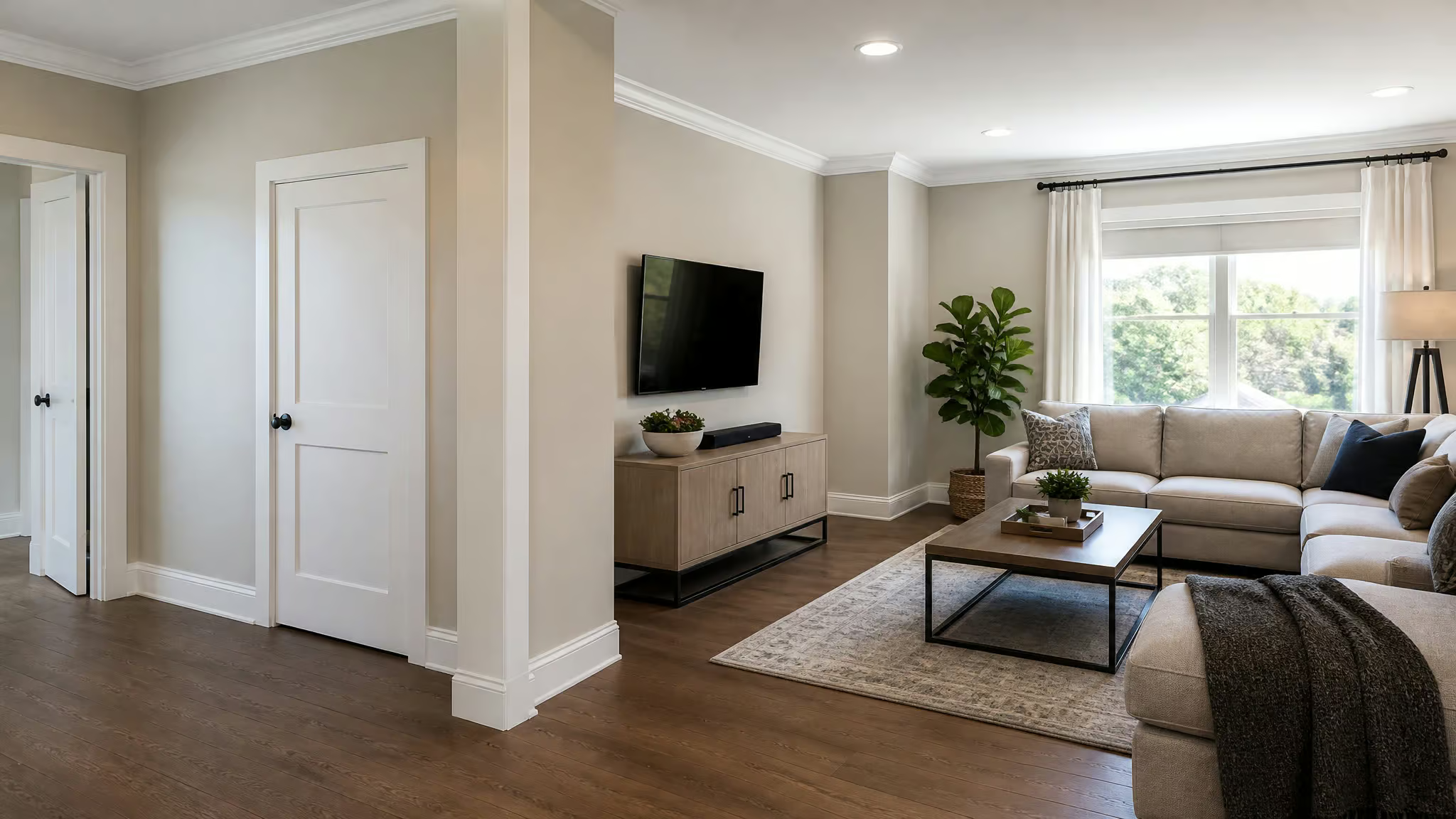
Neutral paint: the $12,130 everyday win
The NAR 2025 Remodeling Impact Report says 50% of sellers paint the entire home and 41% paint one room. Fresh paint adds about $12,130 on average per HomeLight, and 32% of sellers painted interiors in 2024 per Zillow. Light neutrals photograph well and help buyers imagine their own stuff in the space. Baum’s take: different colors in each room turn online viewing into a hunt for what the house actually looks like, and a uniform color lets the listing flow.
Flooring: refinish hardwood or lay luxury vinyl planks
Refinishing hardwoods averages $1,891, or $3-$8 per square foot. Luxury vinyl planks run $3-$10 per square foot, clean easily, hold up to real life, and are sturdier than hardwood, with gray and espresso the popular picks. Flooring updates add about $11,731 on average per HomeLight, but the cost recouped depends on your price range and condition. In higher-end homes, replacing decent carpet with hardwood is usually the right call per Russell. And if your carpets are fine, cleaning runs $40-$90 and up per room; do that before you replace anything.
Built-in storage and local millwork installers
For closets, kitchen cabinets, and vanities, construction manager Saige Robb likes going with a local cabinetry or millwork installer. “I find that the price can be more negotiable, and local materials are easier to procure.” Built-in storage that uses space well and stays unobtrusive goes far for value. As Robb puts it, “It doesn’t cost that much, but it does bring value.”
Replace baseboards with water-resistant profiles
Baseboards are a quick tell of a home’s age, especially after new floors. Older profiles or worn trim make a space feel unfinished, so replace them with a slightly taller, more modern profile. Robb avoids MDF, since it oversaturates with water, swells, and collects mold. Get the most water-resistant option you can afford.
Standardize interior doors for visual flow
Door inconsistencies are more noticeable than you’d expect, because doors get used constantly. Pick the dominant style in the house and let it lead throughout. Mixing door styles is a fast way to make a house feel patched together.
Architectural moulding that photographs well
Wall moulding, whether crown moulding or picture-frame panels, can elevate a room’s appearance, Robb says. It photographs well in listings and gives a polished look that supports a higher asking price.
Consistent hardware and finishes across rooms
Match the knobs, faucets, hinges, and switch plates. Brushed nickel and matte stainless are the current picks; oil-rubbed bronze if you want a classic vibe. The rule is consistency. Mismatched hardware is the kind of detail buyers notice subconsciously and can’t always name.
Lighting and natural light: windows, fixtures, and the Kelvin scale
Buyers want bright homes with natural light. Window replacement recoups 61.2%-68.5%, up to 74%, and double-paned glass with Low-E coatings is the standard. New light fixtures create a lighter, brighter room at low cost. Bright white or daylight bulbs are brighter; soft white or warm white are subtler. Replace burned-out bulbs, match bulbs within a set, and think layered lighting: overhead, task, accent. Color temperature is measured on the Kelvin scale, and mixing color tones within a room creates a subtle disconnect buyers can’t quite place.
Bring the outdoors indoors: windows, greenery, and air quality
Natural light and indoor plants are the popular direction, though floor-to-ceiling windows aren’t cheap, so weigh the cost. Water filtration is a quieter value-add worth a mention: under-sink reverse osmosis units or a whole-house system at the main water line. Clean water and greenery read as a healthy, cared-for home.
Outdoor Living Spaces and the Pool Question
If you want reliable expansion, decks and patios are the safe bet. Pools are the gamble.
Deck or patio: the 45%-55% expansion of usable space
A backyard wooden deck costs $3,600-$7,200 and yields 45%-55% ROI. Builders add porches to 68% and patios to 64% of new builds because they extend usable living space at a reasonable cost. Buyers expect a place to dine, drink, and hang out, so a simple deck often beats a fancier interior finish.
Fire pit: a top buyer priority
A fire pit is a top seller priority and a cozy gathering spot on cooler evenings. It costs far less than a full outdoor build and adds a lifestyle feature buyers can picture themselves using.
Pools and hot tubs: the polarizing bet
The pool reality: average cost is $41,870, and ROI has crept up in recent years, but it’s not universally value-adding. Some buyers see a safety issue or a maintenance burden, not a perk. The same logic applies to expensive landscaping and water features, which buyers can read as a hassle. The rule: if you want the pool for your own family, build it. Just don’t build it expecting the appraisal to pay you back.
Low-Cost Upgrades That Move the Appraisal Needle
Paint, lighting, and landscaping are the low-cost upgrades that matter, and the proof is a real-world example: a Colorado Springs listing sat on the market for nearly nine months with no offers. After fresh paint, upgraded lighting, and new listing photos, it drew a full-price cash offer within a week. That’s the entire case for the cheap wins.
Interior paint: the 32%-of-sellers signal
Zillow says 32% of sellers painted interiors in 2024. A fresh coat signals the home is well-maintained and contemporary, per Zillow’s Amanda Pendleton. If you’re only going to do one thing before the appraisal, this is it.
Small repairs and a pre-inspection
Small repairs show the home is cared for and streamline negotiation, giving buyers fewer reasons to haggle. A pre-inspection surfaces the must-do items before buyers find them on their own. 72% of sellers take on at least one improvement project before listing. The distinction matters: the pre-inspection isn’t the appraisal. It’s your early-warning system.
The listing that sat nine months, then sold in a week
Back to Colorado Springs. Fresh paint, better lighting, better photos. Nine months of nothing, then a full-price cash offer in a week. No gut remodel, no additions, just the signal that the home was cared for. That’s the efficient market working in your favor.
Financing Your Upgrades: The 90% Rule
Most homeowners discover the borrowing cap after the contracts are signed, so know it before you commit. Most lenders require your remaining mortgage balance plus the amount you borrow to stay under 90% of the home’s pre-improvement value.
HELOC vs. second mortgage vs. cash
A HELOC is a home equity line of credit, a revolving credit line secured by your equity with a variable interest rate. A second mortgage gives you a fixed lump sum at a fixed rate. Cash means no debt and no interest, which is the cheapest option that exists.
The 90% loan-to-value cap, worked out
Say your home is worth $350,000 and your mortgage balance is $270,000. 90% of $350,000 is $315,000, which leaves you $45,000 to borrow. Budget your project before you renovate, or fund the gap out of pocket. Borrowing against equity for a project that returns less than it costs is how you lose money twice.
If you can’t renovate: sell as-is or offer a closing credit
Selling as-is means accepting an adjusted price, because buyers will negotiate lower if the property is in rough shape. Offering a credit at closing lets buyers cover repairs after closing, though the credit they request can exceed what the repairs would have cost you. And one insurance note: contact a Farm Bureau agent to confirm your coverage handles renovations before you start swinging hammers.
How to Read ROI and Avoid Over-Improving
The risk of a major renovation before an appraisal is over-improving beyond what the neighborhood comps support. That’s how you spend real money and add no proportional value.
Every ROI figure in this guide is a range, not a promise. The garage door spans 133% to 349.3% depending on the source. The kitchen runs 85.7%-113%, the bathroom 66.7%-80%, and windows 61.2%-74%. Different methodologies, different markets. Treat them as directional, not contractual.
The high-end caveat follows from that: marble, pro-grade appliances, expensive landscaping, and water features often don’t pay, and buyers can see them as a hassle rather than a perk. The protective habit is to check comps before approving big-ticket work and to consult a local appraiser or agent first. And remember Steinley’s tenure rule: ROI compounds with time in the home, so a project that makes sense for a decade of living may be a bad bet for a six-month exit.
The Order That Protects Your Appraisal
Here’s the sequence that protects the appraisal: systems and condition first, then livable square footage, then curb appeal, then minor kitchen and bath work, and finally finishes and modern details. That order is roughly the order of how much credit the appraiser gives you.
“Some buyers just don’t have the vision to see what it could be,” Russell says, but small improvements can get buyers to the point where they call the home perfect and come in “at a strong price.” Turnkey homes move while others sit, which is the market reality that opened this piece, and it’s the same one that closes it.
Your natural next move: the Appraisal Institute’s “Find an Appraiser” database. Talk to a local pro, check comps, then spend. A few hundred dollars in the right place beats twenty thousand in the wrong one, and for the resale-minded version of this thinking, the guide to the best home upgrades for resale value is worth a read.
People Also Ask
What adds the most value to an appraisal?
Appraisers weigh heated square footage, functional layout, and overall condition above all else. A finished basement or a newer HVAC system adds more value than luxury finishes like marble countertops. Minor kitchen and bathroom remodels also recover more of their cost than major overhauls.
What upgrades actually add value to a house?
The highest-ROI upgrades are minor kitchen remodels (recovering 85.7%-113%), garage door replacements (133%-349.3%), and steel entry doors (around 216%). Low-cost exterior fixes like a fresh coat of paint, new house numbers, and a tidy yard also signal a well-maintained home and can boost offers.
How to increase home value by $50,000?
Finishing a basement is one of the most reliable ways to add significant value, with a $40,000-$50,000 swing in mid-range markets. Adding livable square footage, like a finished basement or a converted home office, directly increases the appraised value because appraisers credit heated square footage heavily.
What can I do to make my house appraise higher?
Focus on systems and condition first: replace an aging HVAC or water heater, then add livable square footage like a finished basement. After that, tackle curb appeal with a new garage door or exterior paint, and do a minor kitchen or bathroom remodel. These changes align with what appraisers actually credit.
Does a finished basement add more value than a kitchen remodel?
A finished basement can add $40,000-$50,000 in mid-range markets, which often exceeds the value added by a kitchen remodel. Since appraisers heavily weight heated square footage, finishing a basement is one of the highest-value projects you can do before an appraisal.
How much does a new garage door increase home value?
A new garage door can return 133% to 349.3% of its cost, depending on the source. It’s the highest-ROI exterior project, with an average cost of $4,317 and resale value up to $15,081. It instantly improves curb appeal and signals a well-maintained home.
Do energy-efficient upgrades increase appraisal value?
Yes, but not by charging a premium. Energy-efficient upgrades like new windows (71%-74% ROI), attic insulation, and smart thermostats signal a modern, well-maintained home and lower monthly costs, which appeals to buyers. They also qualify for rebates from the Inflation Reduction Act and utility companies.