
The average American household dropped $9,322 on home improvements in 2024, according to Angi’s annual spending report. That’s not a small bet. And if you’re about to list your house, you’re probably staring at your own version of that number right now, wondering what’s actually worth doing before the sign goes in the yard. Here’s the uncomfortable truth: most of that money isn’t coming back.
Not because renovations are a scam, but because buyers don’t price houses the way we think they do. They pay for two things: what they’d otherwise have to fix, and what they notice in the first five seconds. Everything else is a gamble on taste and timing. I’ve been running these numbers on my own place for weeks, comparing what Zillow‘s data says buyers actually pay for against what the contractors are quoting, and the gap is wider than you’d think. So here’s the list I wish someone had handed me before I started.
Bottom line: Buyers pay for what they’d have to fix and what they notice instantly; start there before spending anything else.
Key Takeaways
White kitchens, the longtime “safe” pick, can cost you more than $1,300 at resale, while charcoal kitchens add about $1,373, so the safe play isn’t what it used to be.
An in-ground pool runs $65,909 to $67,000 to install, plus $6,000 for fencing and $3,000 to $5,000 a year in upkeep. Angi says it might add 5% to 56% depending on your market.
The projects that actually pay back are the boring ones: roof replacement, a new front door, and attic insulation, plus refinishing hardwood floors, which recovers 147% of its cost.
Table of Contents
The two rules that decide every renovation
Not every project is created equal. Some are pure personal enjoyment with zero resale, and a few quietly pull value down. Zillow‘s research shows buyer preferences shift fast. What felt like a safe, neutral choice five years ago reads dated today. That’s the real trap. You’re not just fighting the market; you’re fighting whatever trend you’re late to.
And before we go further: these are national averages and trends, not guarantees. Local markets vary, and trends shift. Treat every number here as a starting point, not a prophecy.
This guide leans on two threads: Zillow‘s data on what buyers actually pay for, and the grounded, on-the-ground reality from real estate insiders who walk these houses every week. Some choices are generational no’s at resale. That’s what we’re about to unpack.
Don’t strip out every scrap of personality
Here’s the false start. You’ve heard the advice to strip your house of everything personal, turn it into a blank box, and hope buyers see themselves in it. There’s truth in that, but it goes too far. Zillow found homes with custom, bespoke features see about a 3% price bump, roughly $10,800 on a $360,000 home.
The catch is the custom features guys actually live with every day, not the wine cellar moments. High-quality, functional, taste-agnostic. If a buyer looks at it and thinks, I could see myself making coffee here every morning, you’ve won. The real move is a neutral canvas with a heartbeat, not a charmless box.
White kitchens: the “safe” choice that now reads dated
White kitchens, long the default, now read as a missed opportunity on sale day. Zillow‘s paint analysis is blunt: a white kitchen can cost a seller more than $1,300 versus homes with other tones. Meanwhile, a charcoal kitchen showed an uplift of $1,373, and dark plum added $867.
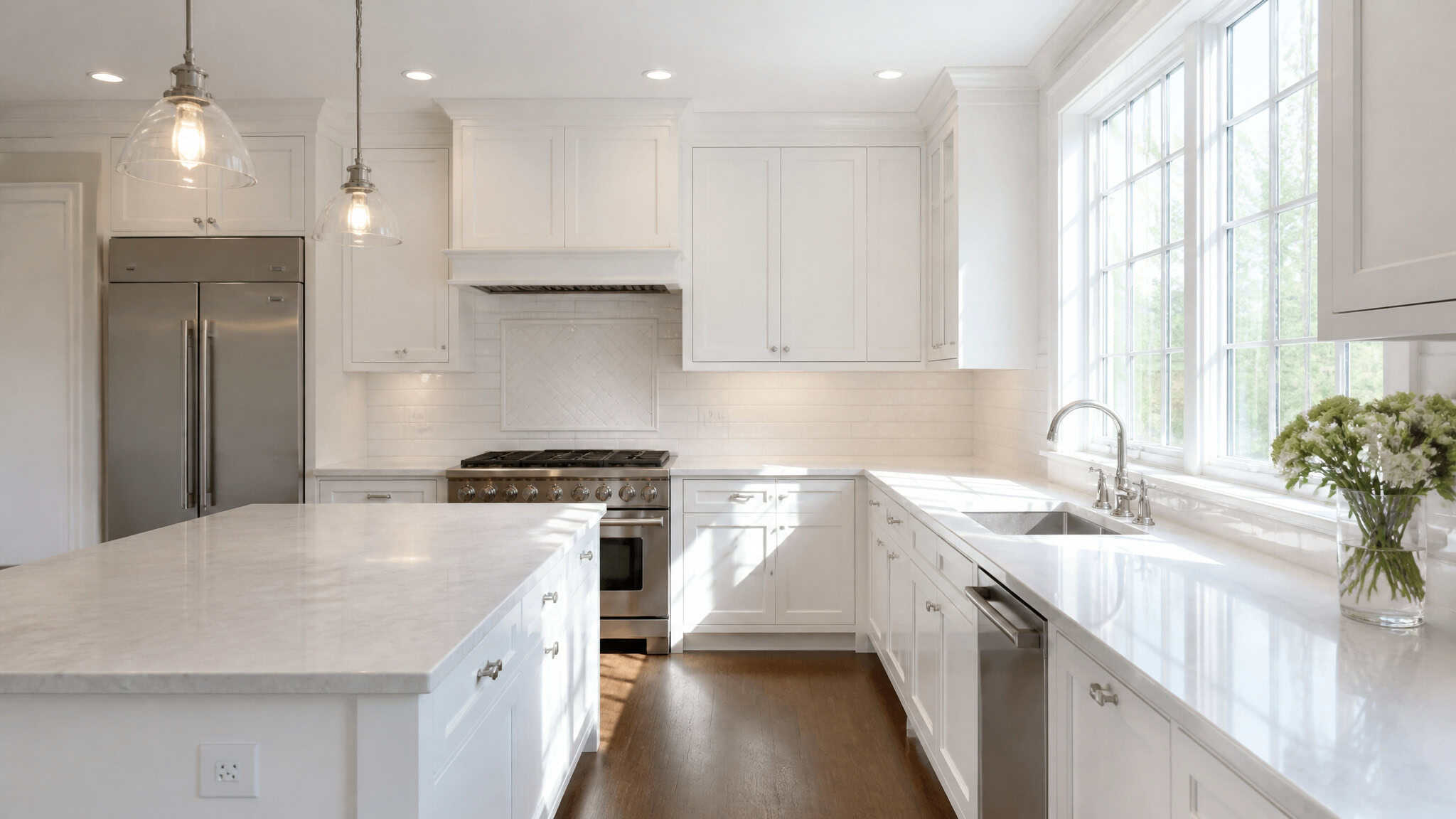
“Safe” and “white” stopped being synonyms somewhere in the last decade. Buyers respond to depth and a sense of care, and they’re not as afraid of mood as the old playbook suggested. By the time everyone’s doing a thing, it’s peaking. If you’re not painting for a sale, own the white, just know you’re building for you, not the buyer.
Marble floors: luxury that looks like a liability
Marble reads as class, but it reads as high-maintenance first. Zillow‘s data shows marble floors correlate with a nearly 2% decrease in sale price. Buyers see a material they’ll have to baby, and they price in the worry.
The stone looks that don’t make eyes twitch? Travertine carries a small positive bump of 1.2%, and terracotta tile draws 5% more daily views on Zillow. Same natural-stone family, very different reception. The lesson: expensive materials only help if buyers don’t see them as a future headache.
Walk-in closets carved from bedrooms
A walk-in closet seems like a top-tier amenity. Zillow‘s data says it’s neutral to slightly negative on its own, with walk-in closets showing up about 0.5% below expected sale price when listed as a feature.
The real trap is how you add it. Carve one out of a bedroom to build a “luxury primary suite” and you’ve just turned a 3-bedroom into a 2-bedroom in the eyes of appraisers and buyers alike. You’ve stripped flexibility out of the floor plan and made it a specialty listing that demands a narrow buyer. You paid for a giant closet and lost an entire room’s worth of resale appeal.
Garage-to-bedroom conversions: parking beats an extra room
Converting your garage is a bad idea for most people, unless you genuinely have nowhere else to put a shop. A garage-to-living-space conversion runs $6,002 to $27,705, according to Angi, and it rarely adds value. Zillow‘s data shows garages add a 0.9% sales premium. Buyers want the garage.
Alex Capozzolo of Brotherly Love Real Estate puts it plainly: buyers want to park their cars where they can see them. If you need more space, look at an ADU or a casita instead of eating the whole garage. Parking beats an extra room, almost every time.
Home offices: the flexible room trap
Just because you can turn a spare bedroom into a home office doesn’t mean you should. Zillow‘s data shows homes with a dedicated home office sell for 1.18% less than expected. Buyers want flexibility, a flex space they can call a nursery or a gym, not someone else’s corner office.
Stage a room, don’t marinate it in built-ins. If you’re working from home, set up a great desk and chair in a corner. Don’t build a load-bearing structure around your Zoom background.
In-ground pools: the $67,000 albatross
Here’s the heaviest number in this whole piece. An in-ground pool can cost $65,909 to $67,000 to install, per Angi and Thumbtack, plus about $6,000 for fencing and $3,000 to $5,000 a year in upkeep. Angi estimates it could add 5% to 56% to your home’s value.
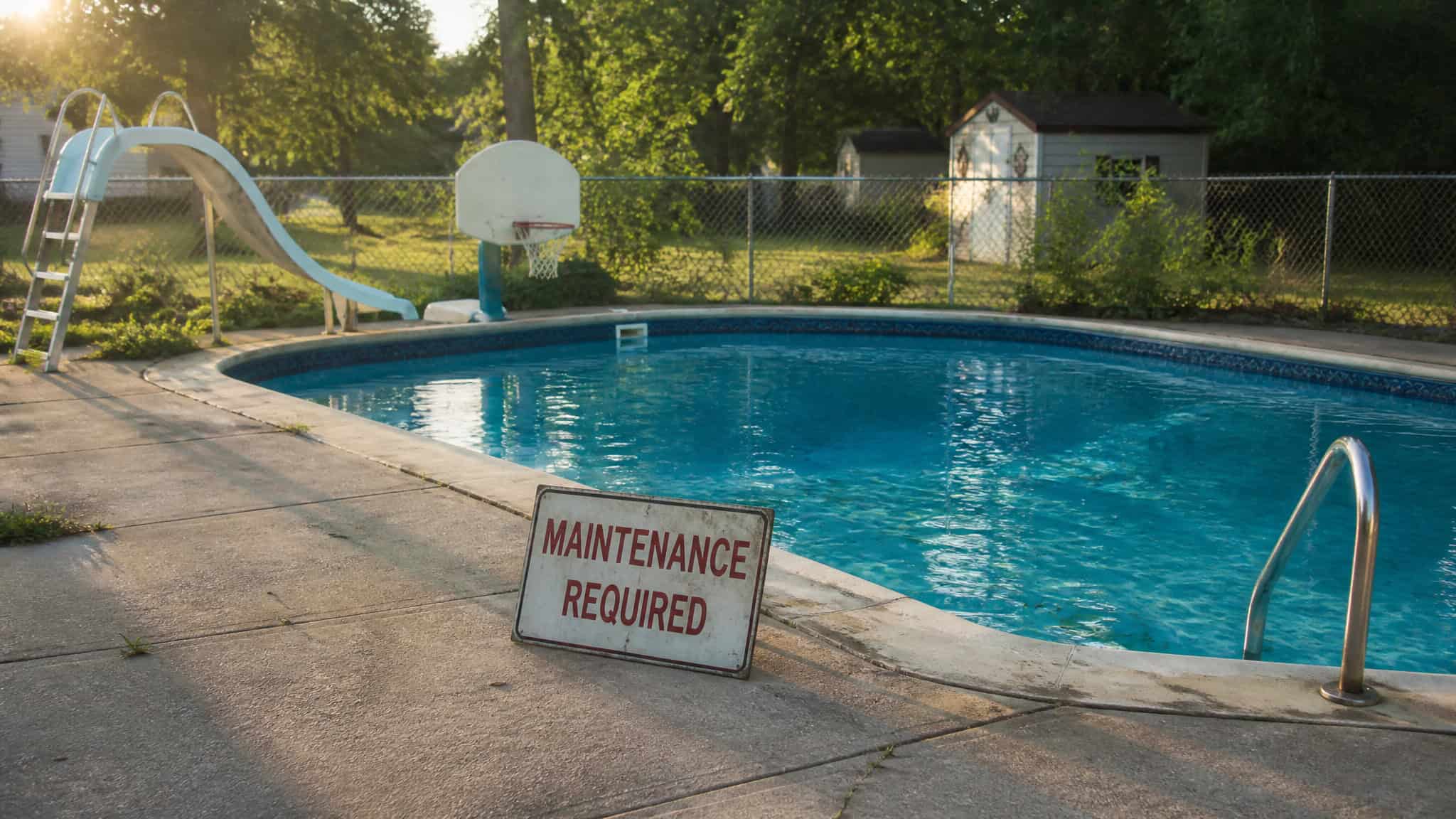
That range is enormous because it’s almost entirely market and climate dependent. In a scorching climate at a luxury price point, a pool is just expected. Most other places, it’s a safety hazard, an insurance headache, or a warm, expensive hole in the ground. Saltwater can add about 2% over chlorine for the buyers who care. Just remember: the best pool in a buyer’s eyes is one they didn’t pay to maintain.
Dedicated media rooms: a single-use money pit
Media rooms lose money because they’re single-purpose. Zillow‘s data shows their listings get far fewer daily views and saves. Buyers see a windowless tomb, not a spot for the Super Bowl.
But here’s the redirect: built-in sound systems show a 1.7% price uptick. They’re invisible, they don’t compromise the layout, and they read as a clear tech upgrade. Put your budget into the speakers, not the theater seating.
DIY done badly
Painting runs $966 to $3,087 to hire out, so the temptation to DIY is real. But a botched tiling job in the shower, a foundation-cracking retaining wall you built yourself, or a load-bearing wall you didn’t quite frame right, these are the red flags buyers notice. They signal hidden problems, and they get priced in as a discount, which is why keeping projects proportionate matters, a good benchmark being what is the 30% rule for renovations: don’t spend more than 30% of your home’s value on a single room.
Capozzolo’s framework is simple: quality of work is what buyers price. Don’t cut corners where it shows. If you’re great at drywall, have at it. If you’re not sure if you’re great, you’re not.
Laminate countertops: the dated shortcut
When buyers see quartz or granite, they subconsciously budget for the redo. Laminate reads as a step backward. Zillow‘s data shows laminate countertops correlate with a 2.5% drop in sale price, about $9,000 on a $360,000 home. That’s the opposite of what you want your surfaces to do. Cheap gets expensive when it’s the thing buyers can’t unsee.
High-end fixtures: paying for a name buyers never see
That $3,000 designer faucet and a $300 high-quality fixture perform the same function, and a buyer pricing out the house will treat them the same. Expensive kitchen hardware yields about 59.7% at resale. And designs change: what reads as luxury today, polished nickel, brass, can be dated in a few years. The property won’t price out your taste. Spend the money where it buys you something you’ll actually use, not a name on a handle.
Metal roofs: durability that doesn’t pay
Metal roofing lasts decades. That’s the problem. Will a buyer pay a premium for durability they’ll never use up? Zillow‘s data says no: metal roofs show 0.4% less than expected sale price.
Asphalt shingles run about $8,000 versus $26,000 for metal. Sure, the metal will outlast you, but you’re eating the premium, not the next owner. A roof is a roof to most buyers.
What actually pays back
After that gauntlet of don’ts, here’s where to actually put your money. These are the projects with the best return:
- Roof replacement. The single biggest ROI improvement. Buyers won’t touch a house with a dying roof.
- New front door. First impressions and security, curb appeal in one upgrade.
- Attic insulation. Invisible, but it saves money and screams “energy efficient” to the buyers who care.
- Fireplace. Especially energy-efficient models, a warmth provider that reads as cozy.
- Attic or basement bedroom conversion. Adds square footage and bedroom count without a foundation pour.
These are starter boxes, not plans to run past an architect. If you want the full ranked breakdown, top upgrades to increase home value has the complete list.
The additions that return half
If you’re selling, skip the sunroom, extra bath, primary bedroom addition, window replacement, or backyard patio. They all return roughly half their cost, at absolute best. That’s money you won’t get back at closing.
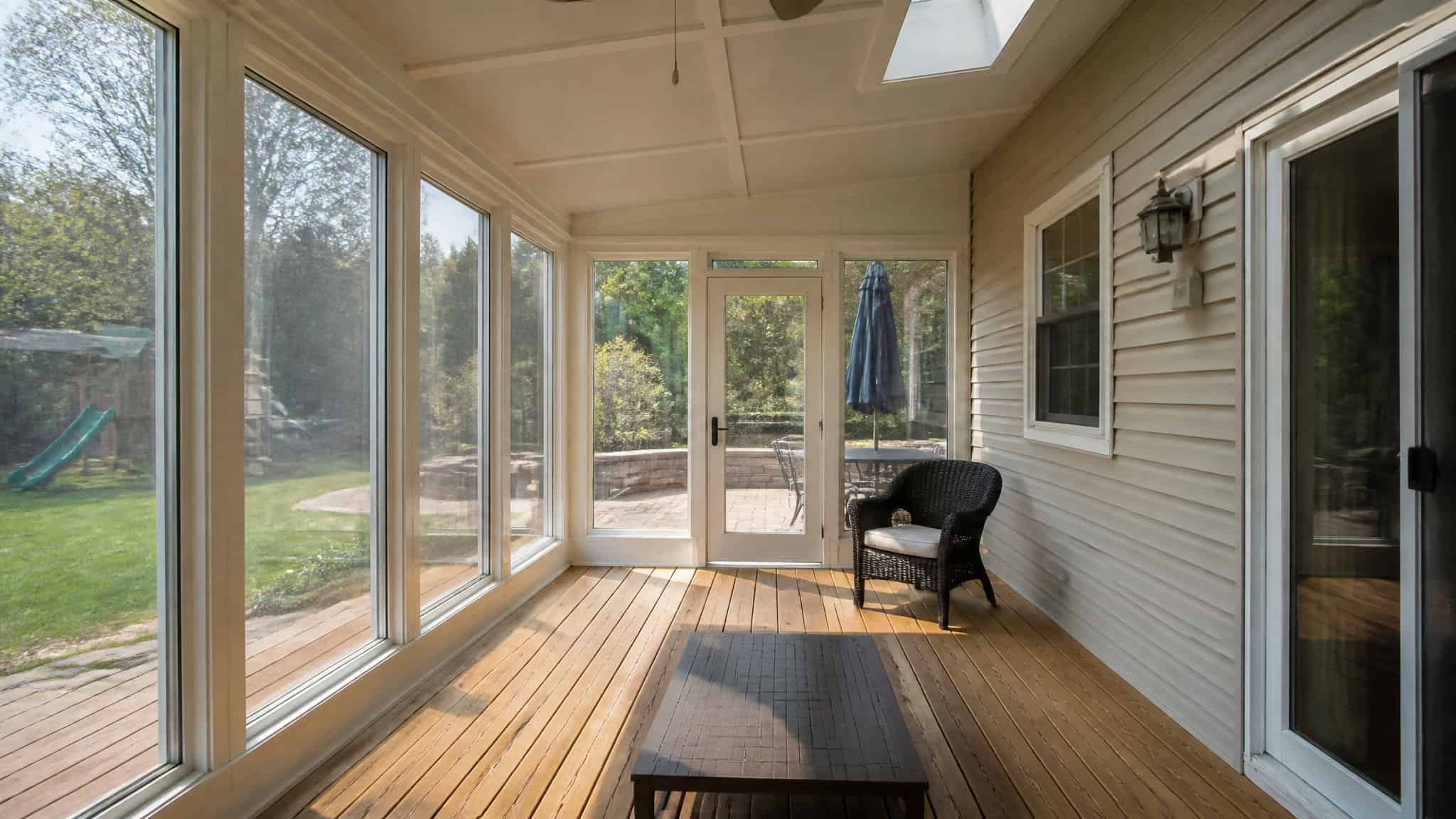
A sunroom runs about $75,700 to build and adds roughly $36,700 in value, in 2015 dollars. And critically, sunrooms often don’t count toward appraised square footage, which is what appraisers use to set value. An additional bathroom has an ROI of about 58%, and only if the house is dramatically under-bathroomed, think five bedrooms and one bath. A 2-bed, 1-bath doesn’t need it.
A primary bedroom addition is rarely worth it unless the original is a closet. Window replacement only pays off if it’s actually expanding light or fixing a structural crack.
Outdoor stuff follows the same math. A dry-stacked stone fire feature with a flagstone patio runs about $9,000 and recovers around 56%, per the National Association of Realtors. Outdoor LED lighting: $6,800 up front, about 59% back. Before you green-light any of these, run the 30% rule for renovations. Don’t sink more than 30% of your home’s value into a single room.
The personalization trap: wallpaper, bold paint, and built-ins
Buyers want a blank canvas. The easier you make it for them to picture their own lives, the smoother the sale. Wallpaper installation runs $800 to $1,200, and as Capozzolo points out, buyers are likely to just rip it out. Bold, nonneutral interior paints add near-zero value, the next owner is repainting anyway.
Built-in electronics age out fast, and even tasteful built-in bookshelves are a niche ask. Personal taste is a liability at resale. Keep the personality in your furniture, not the walls.
Dated details: the hidden premium
Here’s the flip side, and it’s the payoff of everything above. Zillow‘s data says turnkey homes sell for 2.9% more than expected. There’s a reason. A fresh coat of paint, pulling that old carpet, grout cleaning, these boring moves deliver a premium because buyers pay for “nothing left to do.”
Refinishing hardwood returns 147% of its cost, and new hardwood returns 118%, per the National Association of Realtors. Popcorn ceiling removal runs $934 to $3,073, and up to $5 to $20 per square foot if asbestos is involved. Skip the luxury addition. Clear the clutter instead.
Custom indulgences: wine cellars, gyms, and fish tanks
This is the most extreme version of the personalization trap: rooms with a buyer pool of one. Temperature-controlled wine cellars, especially with a cigar humidor, dedicated yoga studios, home gyms, and built-in tropical fish aquariums. These are indulgences for the owner, not features that move a sale.
They cost a fortune to build and are essentially dead money at closing. If you’re building one for yourself, fine, just price it as your hobby, not your house’s future sale.
When the smartest renovation is none at all
Sometimes the smartest renovation is none at all. Three considerations override any list.
First, market context. In a hot seller’s market, you’ll often net more by selling as-is and letting the buyer customize. They’ll pay for the blank canvas. Second, the neighborhood ceiling.
Don’t over-improve beyond what the comps support. A pocket of $300,000 homes shouldn’t have a $600,000 house sitting in it. Third, your time horizon. If you’re staying 10-plus years, enjoyment value is the return.
ROI stops being the right way to measure it. Capozzolo weighs the “quality of life payoff” alongside the financials, and that’s the honest way to think about it.
And no national number answers “what adds value in my area?” That’s what comps, your agent, and the season are for. If you’re renovating for daily comfort rather than resale, best home improvements for comfort covers the upgrades that pay you back in living, not listing.
The bottom line
Here’s the whole thing in one breath. Buyers pay for what they’d otherwise have to fix, and what they notice immediately. Prioritize the roof, the front door, the insulation, and the fresh, clean, fixed-broken-stuff over luxury that reads as a liability. For everything else, ask three questions: Does it help me sell in my market, on my timeline, in my neighborhood?
If it only benefits you personally, fine, just call it the purchase it is, not an investment. You’ll sleep better, and you’ll sell faster.
People Also Ask
What is the 30% rule in remodeling?
The 30% rule is a guideline that says don’t spend more than 30% of your home’s value on a single room. It’s a benchmark to keep renovation costs proportionate to the home’s overall worth, preventing you from over-improving beyond what the market will support.
Why do white kitchens hurt resale value?
White kitchens, once the safe default, now read as dated. Zillow’s data shows they can cost a seller more than $1,300 compared to homes with other tones. Buyers now respond to depth and mood, with charcoal kitchens adding about $1,373 and dark plum adding $867.
Is an in-ground pool worth the cost for resale?
An in-ground pool can cost up to $67,000 to install, plus thousands in upkeep, yet its value-add ranges wildly from 5% to 56% depending on your market. In a scorching climate at a luxury price point, it’s expected; elsewhere, it’s a safety hazard and a warm, expensive hole in the ground.
What’s the difference between a home office and a flex space for resale?
A dedicated home office can sell for 1.18% less than expected because buyers want flexibility. A flex space they can call a nursery or gym is more appealing than someone else’s built-in office. Stage a room with a desk and chair, but don’t build permanent structures around your Zoom background.