I keep getting the same question, usually with the same misunderstanding packed inside it. A guy tells me he’s planning a kitchen remodel and leaning on “the 30% rule,” and the bathroom gets the same treatment the next year. That reading is wrong, and it’s the expensive kind of wrong. The 30% rule is one total ceiling across every renovation project you’ll ever schedule, not a per-room allowance. Two separate 30% budgets, and you’ve quietly doubled your real number without anyone noticing.
The actual rule is simpler and stricter: total renovation costs shouldn’t exceed 30% of your home’s current market value. On a $400,000 home, that’s a $120,000 budget, all projects combined. It’s a guideline, not a law, but it’s a useful one, because it’s the difference between a renovation that protects your equity and one that buries it.
Key Takeaways
The 30% rule is one total cap on everything combined, not a per-room budget: on a $400,000 home it works out to $120,000 across all projects.
The calculation is current market value multiplied by 0.3, and most people’s mistake is anchoring on purchase price instead of today’s value.
The budget has to cover permits, labor, materials, and a 10% to 20% contingency, because leaving those out is how the rule quietly fails.
Table of Contents
What Is the 30% Rule for Renovations?
The 30% rule for renovations is a budgeting guideline: your total renovation costs shouldn’t exceed 30% of the home’s current market value. That’s the whole thing. No per-room math, no separate allowances. One number, one combined budget.
The purpose is straightforward. It keeps you from over-improving, pouring more into the house than it will ever be worth, and it forces you to decide which projects actually earn their place. You can’t do everything. The cap makes you pick.
That’s the common misreading, and it’s where this goes sideways. Homeowners hear “30%” and file it as a per-room allowance: 30% for the kitchen, 30% for the bathroom, 30% for the basement. That’s not the rule. It’s one ceiling covering every project, whether you schedule them together or years apart.
Plan a kitchen and a bathroom as two separate 30% allowances and you’ve built a 60% budget. The rule exists to stop that math.
Why the Rule Matters
The rule exists to prevent one specific failure: overcapitalization. When renovation costs exceed what the property is worth, you’ve overcapitalized, and you’re sitting on a home that’s effectively a drain. Sell it and you eat the loss. The equity you built disappears into cabinets and tile.
That’s the mechanism the 30% guideline guards against. It caps your exposure so you can’t spend past the home’s value. It’s the same question this site runs on gear, cars, and travel, applied to your biggest possession: is this actually worth the money, or just marketed that way?
The second benefit is discipline by force. Because the cap is total, you have to rank projects. You can’t splurge everywhere. That’s not a bug. Prioritization is the point.
How to Calculate the 30% Rule for Your Home
The math is one line: take your home’s current market value and multiply it by 0.3. That result is your total budget for every renovation project combined. A $450,000 home gives you $135,000 to work with. A $300,000 home gives you $90,000.

The number is only as good as the value you feed into it, and this is where most of the errors creep in. Never use your purchase price or your outstanding mortgage balance as the baseline. The rule is built on today’s market value, which can sit tens of thousands of dollars away from what you paid years ago. Anchor on the wrong number and you’re budgeting against a ghost.
Quick test: Can you state your home’s current market value without referencing what you paid for it? If not, that’s your first number to find.
Estimating Your Home’s Current Value
You’ve got three ways to pin down the value, and they trade accuracy for effort.
Online valuation tools like Redfin and Zillow are free, easy, and imprecise. They run algorithms over public data and comparable sales, and the estimates vary by platform. Treat them as a ballpark that points in the right direction, not a number to build a budget on.
A competitive market analysis from a real estate agent adds local knowledge and usually an in-person look at the property. It’s a real step up in accuracy. A professional appraisal is the most thorough option: a licensed appraiser walks the property inside and out and delivers a defensible number. It costs more and takes longer, but it’s the number you can rely on when the budget matters.
The sequence is simple. Determine the value, multiply by 0.3, set the budget. The discipline lives in the baseline, not the arithmetic.
What the 30% Budget Has to Cover
The rule fails on accounting more often than on ambition. The 30% has to cover everything: labor, materials, permits, disposal, and whatever hidden costs show up when walls open. Budget the visible quote and ignore the rest, and you’ve technically broken the rule before the first hammer swings.
That’s where the contingency comes in. Experts recommend setting aside 10% to 20% of the renovation budget for unexpected expenses. Things will go wrong. Plans change, materials run over the estimate, and someone always finds a surprise behind the drywall. The cushion is what keeps the plan honest.
A Realistic Budget for a $450,000 Home
A $450,000 home under the 30% rule gives you a $135,000 renovation budget. That’s a serious number, and it’s worth spreading across the projects that pay back rather than pouring into one glamour upgrade.
The ROI figures below come from the Journal of Light Construction Value Report, and they’re not universal or guaranteed. They’re a useful ranking of where money tends to land. One realistic allocation:
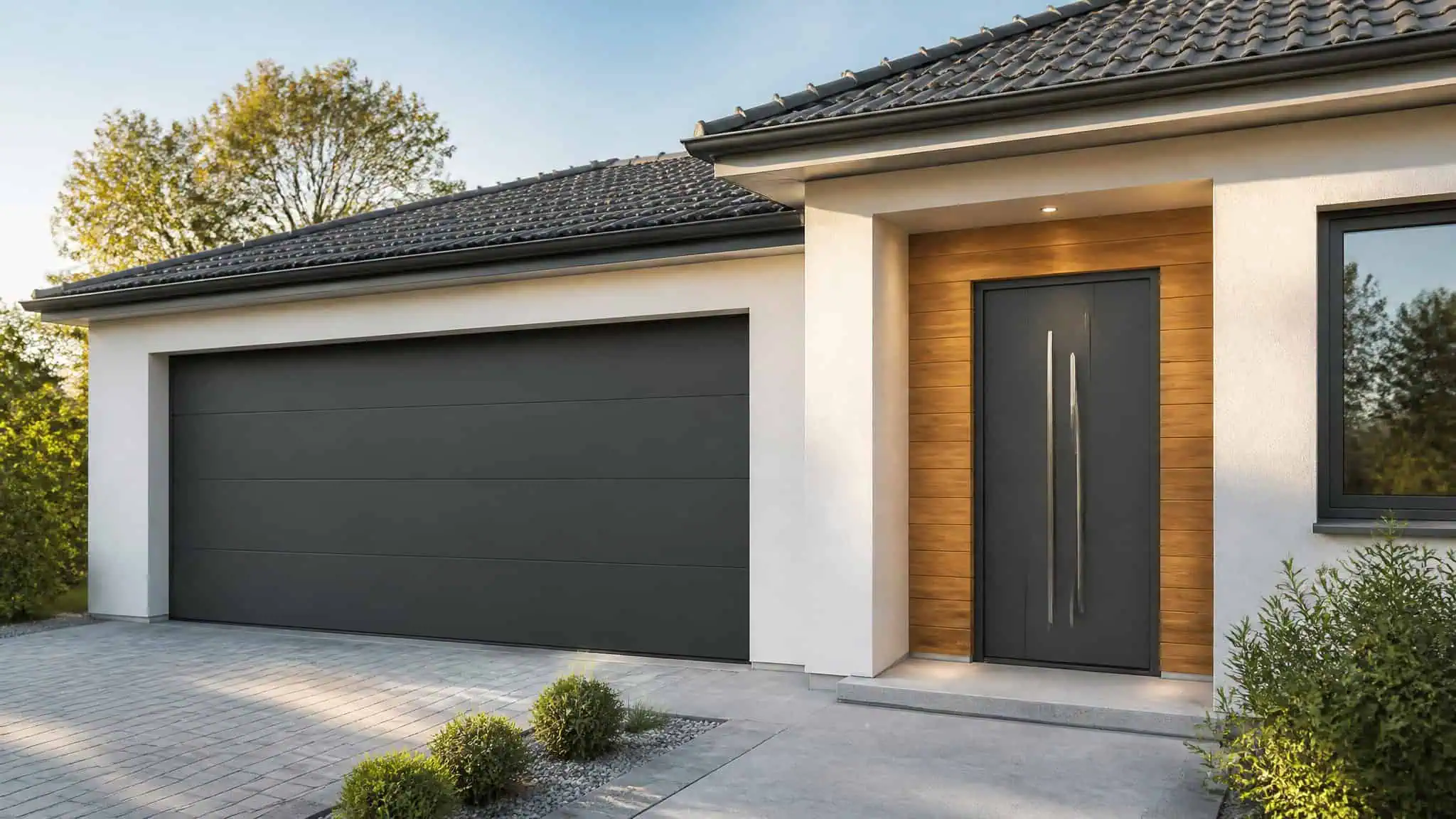
- Garage door replacement: $4,672, at a 268% return
- Steel entry door replacement: $2,435, at a 216% return
- Fiber-cement siding replacement: $21,485, at a 114% return
- Minor kitchen upgrades: $28,458, at a 113% return
- Wood deck addition: $18,263, at a 95% return
- Bathroom remodel: $26,138, at an 80% return
- Contingency at 20%: $27,000
Total allocated: $128,451.
See what this does. The cap gets distributed across six projects plus a cushion, rather than spent on one showpiece. It’s not the only valid plan, and it’s not a directive. It’s an illustration of how the discipline works: multiple high-return projects, a funded contingency, and room to spare under the ceiling.
Which Renovations Pay Back the Most
The direct answer: exteriors and minor upgrades beat the showy remodels. Look at the gap above. A garage door replacement returns 268 cents of value per dollar spent. A full bathroom remodel returns 80. The least glamorous work wins.
That’s the friction point worth naming. Most homeowners want the full kitchen gut first, and the data keeps pointing elsewhere. Minor upgrades and exterior work compound better. If you’re renovating to defend resale value, the highest-ROI upgrades are worth a look before you commit.
The double win worth banking: energy-efficient upgrades like new windows or insulation improve comfort and cut utility bills. That’s return you collect monthly, not just at closing.
Applying the Rule to a Kitchen or Bathroom Remodel
Bring back the core correction: the 30% is the total across all projects, not a per-room limit. But when you’re planning one room, you still allocate within that cap.
The data backs why people fixate on kitchens and baths. A 2024 University of South Alabama report found kitchens are the most-renovated room, followed by bathrooms, with median spend on those renovations up 60% since 2020. They’re where homeowners see the most return, but scope decides whether you stay under the cap.
A Kitchen Remodel Budget Under the Cap
Minor kitchen upgrades sit at $28,458 with a 113% return in the example above. The version that protects the cap is the cosmetic refresh: painted cabinetry, a new backsplash, updated hardware. It reshapes the room without touching structure or plumbing.
If you’re planning a bigger kitchen program, how to increase home value by $50,000 shows how a kitchen fits a total strategy. The share you allocate here comes out of the same combined cap as every other project.
A Bathroom Remodel Budget Under the Cap
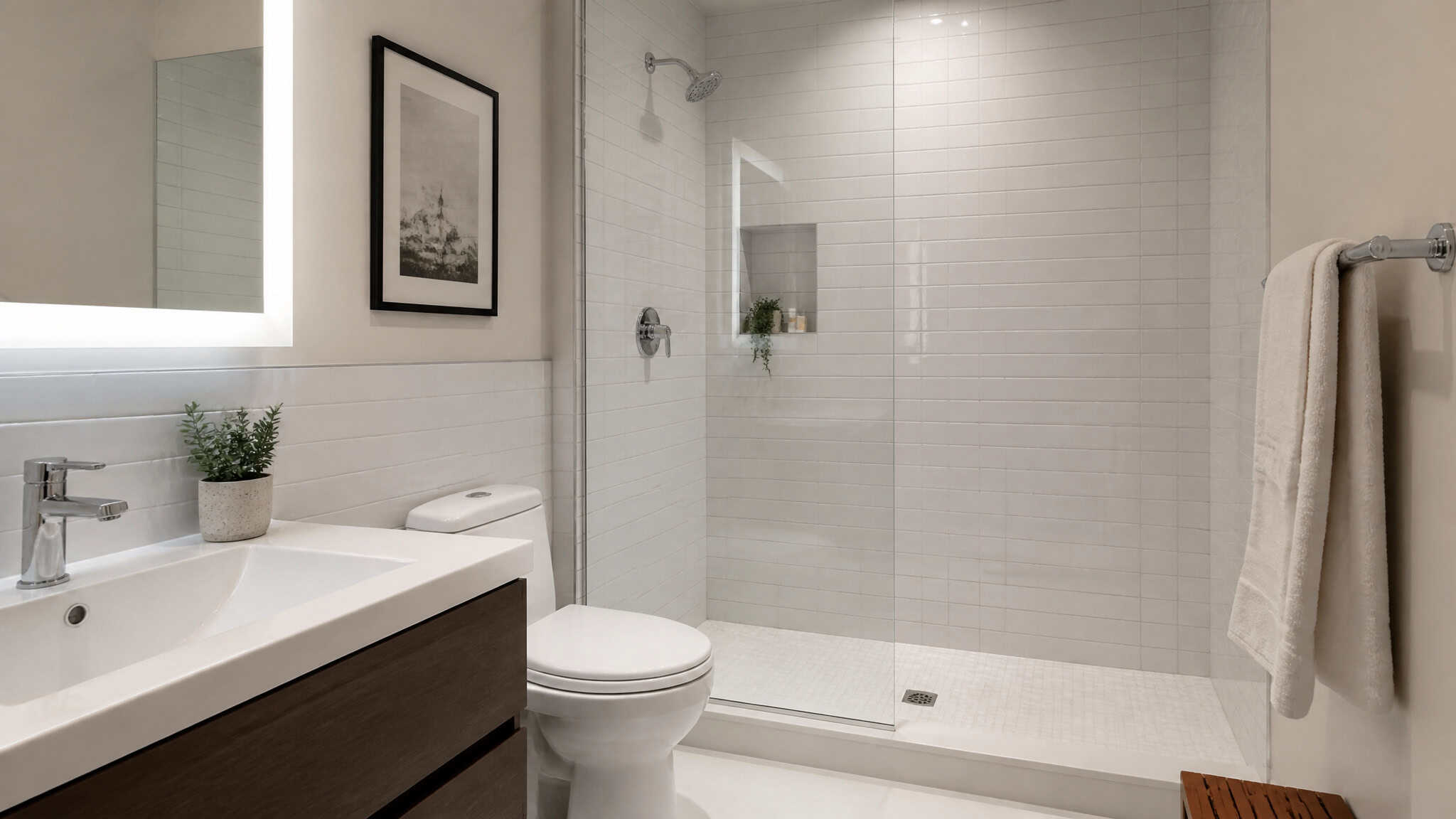
The bathroom is the trickier one. Its return is the weakest in the example: $26,138 at an 80% return. That’s the lowest number on the list, so scope matters most here.
A modest, well-chosen remodel beats a full gut. Think a careful refresh with mid-range fixtures rather than a demolition that rewires the space. Phased work helps too, spreading the job over time so it stays inside the total cap. Before committing to any upgrade, reviewing the worst ROI home improvements can keep you clear of value-draining mistakes. A clean, updated bathroom sells far better than a half-finished one.
When Breaking the Rule Makes Sense
It’s a guideline, not a hard cap. There’s no penalty for exceeding it, only risk. And there are situations where the risk is the smarter trade.
The strongest one comes from Kendall Meade, a CFP at Domain Money: “A common example I see is people renovating to stay in their current home to avoid giving up their 2-3% interest rates from 2020.” That reframes the whole decision. Paying today’s mortgage rates on a new house can cost far more in interest than a renovation ever will, so spending to make a starter home fit a growing family can beat buying at today’s rates and prices. Meade’s point is the renovate-versus-move math in one sentence.
The broader expert view is similar. The rule should flex with your situation, your market, and your goals. In a neighborhood that’s appreciating fast, putting more than 30% in can keep pace with rising values. Some experts argue the guideline is simply outdated, given how much home values have climbed and how preferences have shifted. It’s a judgment call, not a directive.
Bottom line: If you’re going to bust the 30% cap, make sure the reason appears on your budget sheet, not just in your wish list.
If You Exceed the Cap: Your Options
If you’re planning to go over 30%, you have three levers, and they work best in combination.
Reassess the scope. Scale the project back. It’s better to do less and do it right than to blow the total on a half-finished marathon.
Explore financing. Home equity loans, personal loans, and renovation-specific programs are the usual paths, and they deserve a real conversation with the numbers in front of you.
Prioritize the high-return work. If you’re going over budget anyway, lead with the projects that pay back, kitchens and bathrooms included, and let the low-return extras wait.
The honest version: going over isn’t a failure. But you should know, in dollars, what you’re trading.
Financing a Big Renovation Without Breaking It
Borrowing against home equity, via a home equity loan or HELOC, is among the cheapest ways to finance a large renovation. Here’s the logic: equity is your home’s value minus your outstanding mortgage, and rates on these products typically run lower than other borrowing.
Cheap for a reason, though. Your home is the collateral. Default and you’re looking at foreclosure. That’s the trade-off that makes the borrowing cheap, and it’s worth naming out loud.
Which brings the loop back to the rule. Financing should still respect the 30% cap, because borrowing against equity is cheap precisely because the house is on the line. The cap becomes a foreclosure-risk guardrail as much as a budget tool.
Finding a Contractor Who Respects the Budget
You want a contractor who’s transparent about where the money goes. That means an itemized estimate breaking down labor, materials, and permits, plus a clear answer on how unexpected expenses get handled. A contractor who quotes $50,000 for a kitchen remodel should be able to itemize the cabinets, countertops, labor, and permit fees. If they can’t, that’s a red flag.
Affordability and reliability are a balance, and low price alone guarantees nothing. The good affordable contractors run efficient workflows, get repeat business, and source smartly. Contractors partnered with local suppliers can pass along 10% to 15% savings on materials. Ask for references and project timelines. A reliable contractor keeps communication clear, timelines honest, and warranties in writing, which is how you avoid expensive rework.
How a Contractor Protects Your ROI
A good contractor is a return-on-investment navigator, not just labor attached to a quote. They know what’s selling in your area and can point you at the renovations that pay back locally.
They also know the material tricks. Mid-range finishes can achieve a premium appearance at a fraction of the cost, which is exactly how you protect a renovation budget. And they manage the project, keeping spend and schedule in line, coordinating suppliers, and flagging where money’s drifting. That’s the difference between a project that lands under the cap and one that quietly exceeds it.
Money-Saving Moves to Stay Under the Cap
Some of the cheapest upgrades deliver the most visible change. A modern vinyl backsplash or painted cabinetry often runs under $5,000 and transforms a room’s look without touching the structural budget. That’s the sub-five-thousand sweet spot worth banking on.
The bigger tactics work in sequence. Bundle your kitchen and bathroom work into one project, and contractors will often discount the combined job. Schedule phases over time so a large project stays inside the 30% threshold without a single massive hit. And don’t overlook the small efficiency wins: smart thermostats and similar upgrades improve how the house runs without blowing the budget.
One caution on the flip side: some upgrades are value traps no matter how good the deal looks. The ROI numbers tell you where the winning bets actually are.
The Other 30% Rule: Massachusetts Accessibility
Now the second act, and it’s a completely different animal. In Massachusetts, the 30% rule is a legal threshold, not a budgeting suggestion. Property owners who renovate can’t spend more than 30% of the property’s assessed value on improvements without triggering full accessibility requirements, and those requirements can cost several times the renovation itself. The Massachusetts Architectural Access Board subcommittee discussed the rule on December 11th.
This version isn’t a safeguard. It’s a gate. In high-value markets like Boston and Cambridge, the threshold usually works out fine. In Gateway Cities with lower property values, like Holyoke, Fitchburg, and Fall River, the reality is different: something as basic as installing new energy-efficient windows can push a project over the line.
That’s a serious barrier to reinvestment, and it hits public projects too. Municipalities like Worcester have struggled to advance large work, including schools, because of the same threshold.
The Gateway Cities Innovation Institute has weighed in, thanking the MAAB for the chance to comment, and hopes to return in January with specific recommendations after talking with local leaders.
To be clear, this is Massachusetts-specific. If you’re renovating there, the financial 30% rule and the regulatory one are both worth understanding. They’re two different rules wearing the same name.
What 2026 Renovations Actually Look Like
Given rising property values and shifting preferences, some experts argue the 30% rule is less relevant than it used to be. The guide isn’t dead, it needs adapting, and the 2026 renovation wave is exactly why. Smart, sustainable, wellness-focused, and multi-use renovations are quietly pushing budgets past the 30% mark, which is the push to treat the cap as a target you size to your goals rather than a number you obey.
The 2024 University of South Alabama report sets the baseline: kitchens first, bathrooms second, with median spend on those rooms up 60% since 2020. From there, the trends fan out.
Smart Home Integration
Lighting, video surveillance, HVAC, and thermostats all wire into one system for safety, control, and real savings. Motion-activated lighting can trigger video surveillance when someone or an animal approaches, and HVAC can run on a schedule without you touching it.
Sustainable Materials and Design
Recycled materials like bamboo composite, bio-based paint, and recycled steel are increasingly standard. Refurbishing still-usable cabinets beats replacing them, and hardwood floors can last up to a century while staying biodegradable and recyclable. Green certifications like EnergyStar are worth checking for.
Wellness Features
Natural light, plants, water softeners, and better air quality. Replacing an old HVAC with a ductless system cuts mold risk, and enclosing a patio gives you usable outdoor space year-round.
Flexible Multi-Use Spaces
Movable partition walls and modular furniture let one room shift between hybrid work, homeschooling, a gym, and guest space as the need changes.
Aging-in-Place Modifications
Handrails, enlarged doorways, ramps, and walk-in tubs are increasingly popular, especially among seniors who plan to stay put.
Open Floor Plans
Removing walls to create open, multifunctional spaces keeps ranking high as a way to make a home feel bigger and more connected.
Renovation vs. Remodeling: Know the Difference
They’re not the same thing, and the 30% rule applies to each differently. A renovation refreshes look and function without structural change: painting, new hardware, a backsplash. A remodeling changes the structure or purpose: knocking down a wall, reconfiguring a layout. Remodeling costs more, usually needs a pro, and can blow past the cap before you’ve touched a finish.

The practical translation: a cosmetic refresh rarely threatens the rule. A structural remodel can. Knowing which you’re planning changes the math before you sign anything.
That’s also where the correct order comes in. Home renovation runs in three phases. Prep covers design, budget, timeline, permits, clearing old fixtures, and any foundation or roof changes. Then systems and shell: roughing in plumbing and electrical, drywall, and insulation.
Finally the finishing: built-ins, trim, fixtures, appliances, backsplashes, landscaping, and exterior work. Do the prep and systems correctly, and the finish is pure polish.
Common Questions, Answered Straight
These are the questions homeowners actually ask when they hit the real numbers, and the answers cut through the mix-ups. The first one is the most common misunderstanding of all.
What the Rule Actually Means
In its simplest form, the 30% rule says don’t spend more than 30% of the home’s value on renovations, and ideally lean toward the projects that raise market value. That’s the whole guideline.
Is the Rule Still Relevant?
Yes, as a point of reference, but balance it against your finances and your goals. Rising costs make 30% hard to hit for fixer-uppers, and the sound principle remains: avoid spending more than you’d ever recoup.
What Happens If You Exceed It?
No penalty, because it’s a guideline. The actual risk is overspending, or sinking more into the house than it’s worth, which is the overcapitalization trap in its purest form.
The 30% Rule Is a Starting Point, Not a Ceiling
Put it all together and the process is simple to state, harder to do: compute the cap from current market value, account for every cost plus a 10% to 20% contingency, rank projects by return, and then judge rationally whether exceeding the cap serves your goals. Low-rate lock-in, an appreciating neighborhood, and personal plans are all legitimate reasons to push past 30%.
The rule has two lives, the financial guideline and the Massachusetts regulatory threshold, and they both reward the same discipline: know your numbers before you spend. On a $400,000 home the cap is $120,000. On a $450,000 home it’s $135,000. Those numbers are a floor for thought, not a ceiling on judgment. It’s a guide, not a law, and that’s exactly what makes it useful.
Frequently Asked Questions
How does the 30% rule work?
To calculate your renovation budget, multiply your home’s current market value by 0.3. For example, a $400,000 home gives you a $120,000 budget. This total must cover all renovation costs, including labor, materials, permits, and a 10-20% contingency for unexpected expenses.
What is the correct order to renovate a house?
Renovations follow three phases: prep (design, permits, demolition), systems and shell (plumbing, electrical, drywall), and finishing (trim, fixtures, paint). Following this order ensures you don’t waste money on finishes that could be damaged by later work.
When not to renovate a house?
Avoid renovating if you plan to sell within a year and the market won’t support a higher price, or if you’re doing it for emotional reasons rather than practical ones. Also, skip major remodels if you can’t afford the 10-20% contingency fund for unexpected costs.