
Biological aging speed matters a hell of a lot more than the year printed on your driver’s license. Two men can blow out 45 candles on the same Tuesday and sit biologically years apart in how fast their hearts, kidneys, muscles, and brains wear down. New Zealand’s Dunedin Study proved that gap across decades of tracking, and it shows up on a man’s face and in his grip strength long before old age officially starts.
“We talk about menopause in women, but men experience changes, too,” explains Ali Dabaja, M.D., a urologist and men’s health expert at Henry Ford Health. From youth into older adulthood, a man’s physical function and appearance shift noticeably, even if nobody talks about it over a beer. You can’t dodge getting older, so the practical play is accepting the clock while keeping your body and brain at the top of your game. We already covered the style side of going salt-and-pepper in our silver fox piece; this is the playbook for what’s under the hood.
Key Takeaways
New Zealand’s Dunedin Study tracked 1,037 people from birth to age 45 across 19 biomarkers. Fast-aging 45-year-olds already had older brains, weaker grip and motor function, older-looking faces, and everyday memory slips like unpaid bills and misplaced keys.
After age 50, men face a drop in testosterone that shifts fat to the gut and thins head hair, alongside a potential rise in estrogen and estradiol that drives muscle loss and breast tissue changes.
Starting late still pays off fast: adults aged 65 to 80 who did just two 5-minute low-intensity home workouts a day gained over 30% more activity capacity and bigger, stronger leg muscles in 28 days.
Table of Contents
What aging well means for men: healthspan
Aging well as a man means extending your healthspan: the period of life spent free of debilitating chronic disease while staying sharp and strong enough to live an independent, enjoyable life. You build that by pairing daily habits with stage-by-stage preventive medical care, even when men also consider cosmetic options such as blepharoplasty in Bangkok for upper or lower eyelid surgery. Across clinical medicine and nutrition science, the major health conditions that shorten men’s lives cluster into three main disease categories: metabolic and cardiovascular diseases (such as heart disease and type 2 diabetes), cancer, and neurodegenerative diseases (such as Alzheimer’s disease and dementia).
Keeping those three categories off your chart requires combining physical fitness, mental sharpness, and targeted medical screenings from your teens through your 50s and beyond. Guidance from Henry Ford Health’s life-stage framework and nutrition research from ZOE (by Paul Jones, drawing on work from the National Institute on Aging and the Harvard T.H. Chan School of Public Health) indicate that locking in four to five workouts a week, seven to nine hours of sleep, a Mediterranean-style diet, and decade-appropriate blood work and cancer checks is linked to lower odds of developing all three disease groups.
Living to 85 isn’t much of a win if the last 15 years are spent managing preventable organ failure or losing the ability to live on your own. The daily habits that extend healthy aging work because they attack the root drivers of those three chronic disease clusters at the same time. Exercise, whole foods, solid sleep, and real mental activity keep blood vessels clear, inflammation low, and brain tissue resilient.
Starting that routine in your 20s pays the biggest compound return over a lifetime. Still, the window never actually slams shut. Depending on the habit you fix, your body starts registering measurable upgrades in months, weeks, or even days.
Biological age vs chronological age
Your birthday counts how many trips you’ve taken around the sun, while your biological age measures how much wear your internal systems have actually taken. The New Zealand Dunedin Study tracked roughly 1,037 people (sometimes rounded to 1,100) from the 1972-1973 birth cohort for 45 years. Published in JAMA as Disparities in the pace of biologic aging among midlife adults of the same chronological age have implications for future frailty risk and policy, the research was also discussed on the High Intensity Health channel alongside related aging literature in Nature Communications and Perspectives on Psychological Science.
What the Dunedin Study measured
Researchers scored each person’s pace of biological aging using 19 biomarkers spanning the cardiovascular, metabolic, renal, immune, dental, and pulmonary systems. They paired those lab numbers with brain MRIs, body composition scans, sensory-motor testing, cognitive exams, and physical strength tests to see which physical and cognitive markers show you are aging well.
How faster agers differed at 45
By age 45, the fast-aging group showed advanced brain aging (including reduced cortical thickness and smaller brain surface area), weaker sensory-motor control, more pessimistic views on aging, and everyday mental slips like word-retrieval trouble, lost keys or wallets, unpaid bills, and forgetfulness noticed by friends. Facial appearance tracked internal decline directly: some 45-to-50-year-olds looked like they were in their early-to-mid 30s, while some mid-40s participants looked mid-50s and scored worse on strength, motor, and cognitive tests.
The conditions most tightly tied to fast aging were hypertension, chronic kidney disease, cardiovascular disease, obesity, and loss of physical strength, which drops off faster than muscle mass. Study scientists noted that midlife adults aging faster than their peers may prematurely need the kind of support to stay independent usually reserved for older adults.
Men in their teens: growth and what to do
The teen years are the body’s main construction phase, marked by rapid physical growth and development. Ali Dabaja, M.D., a urologist and men’s health expert at Henry Ford Health, notes that while most of a man’s physical growth lands in this window, some guys keep growing into their 20s, and genetics dictates the exact pace. One kid hits six feet at 14 and stalls out, while his buddy stays wiry until college and fills out late.
Because that timeline is wired into DNA, comparing progress in a high school locker room just breeds unnecessary anxiety. The most useful move here falls on parents: talk openly with your teen sons about what is happening so they understand and feel comfortable with their changing bodies. Giving a teenager a straight answer about normal growth rates keeps him from assuming something is broken just because his genetics run on a slower schedule.
Men in their 20s: brain maturity and baseline numbers
A man’s brain doesn’t reach full maturity until his mid-20s, which explains why young men in their teens and 20s are neurologically wired for riskier behavior like drinking and driving. At the same time, college exams, entry-level jobs, and a packed social calendar usually push late nights, fatty convenience food, and too much beer ahead of actual health routines.
Your 20s are the decade to override that impulse and lock in the daily habits you’ll carry into middle age. Commit to taking care of yourself: eat a healthy diet, get seven to nine hours of sleep, and work out four to five times each week. Stay on top of preventing substance abuse, accidents, and STDs. Just as important, use your 20s to get your first baseline bloodwork and doctor’s visit for blood pressure, diabetes, and thyroid disease so you and your doctor have a clean reference point when numbers start shifting later on.
Men in their 30s and 40s: metabolism and stress
Your 30s and 40s are where unchanged habits start billing you with interest.
What changes: the metabolism slowdown and the stress load
Weight creeps up in a man’s 30s and 40s because his metabolism slows down. “So, even if you’re eating the same amount of food, you’re likely to gain more weight,” Dr. Dabaja says. Men in these decades commonly burn the candle at both ends juggling work and family. They cut corners on sleep right as frequent stress damages cells, speeds up aging, and drives chronic inflammation and aging-related disease.
What to do: the self-care commitment
Counter that slide with a healthy diet, seven to nine hours of sleep, four to five workouts a week, active stress management (via exercise, diet, social connection, dropping bad habits, and breathing exercises), and regular screenings for diabetes, thyroid disease, cholesterol, and blood pressure.
Men in their 50s and beyond: hormones, heart, and independence
Knowing what physical changes are coming after 50 makes them far less alarming when they finally show up in the mirror.

What changes after 50: testosterone, estrogen, and sexual function
After 50, a man’s body undergoes a hormonal shift driven by declining testosterone and potentially rising estrogen and estradiol, which redistributes fat to the gut, thins head hair, trims muscle mass, and alters sexual function.
Dr. Dabaja adds a detail most guys never hear: while testosterone drops after 50, sending weight to the midsection, thinning scalp hair, and making nose and ear hair noticeably more ambitious, estrogen and estradiol levels can climb at the same time, causing breast tissue changes and accelerating muscle loss. Men commonly notice the belly fat and ear hair long before they connect them to hormones, and many stay quiet about dips in sexual desire and function because they assume that part of life is over.
What to do in your 50s and beyond
No, common health problems after age 50 are not an untreatable sentence, except when men ignore the warning signs and skip medical care. While hormonal shifts and the risks for heart disease, cancer, metabolic illness, and neurodegenerative decline all climb in this decade, many functional drops can be countered or treated when caught early. Dr. Dabaja emphasizes that if you notice changes in sexual desire or function, talking to a doctor opens up a range of effective treatments so you can enjoy a healthy sex life well into your golden years.
Your 50s-and-beyond checklist comes down to protecting your independence:
- Prioritize brain and heart health through daily movement and nutrition.
- Train specifically for strength and balance to prevent falls and home accidents.
- Get your eyes checked regularly.
- Stay on schedule for colon cancer and prostate cancer screenings.
- If you smoke, get screened for lung cancer and quit.
How much exercise men need as they age
Staying physically fit makes everyday chores easier, prevents falls, keeps you independent and socially active, lowers dementia risk, and improves symptoms of anxiety and depression.
The weekly targets: cardio, resistance, and balance
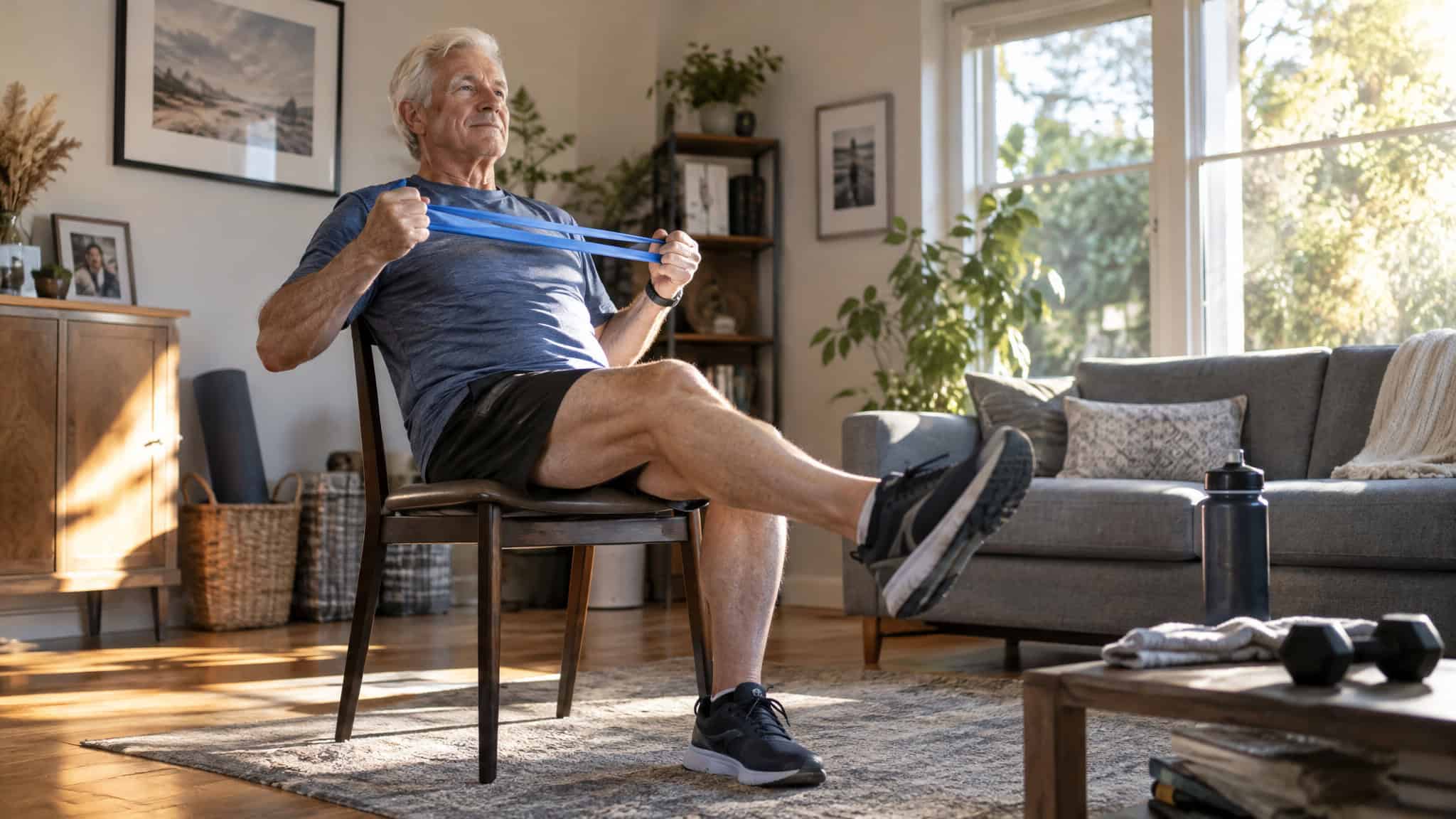
To stay healthy as they age, men need 150 to 300 minutes of moderate exercise or 75 to 150 minutes of vigorous exercise every week, split across four to five workouts that mix cardiovascular work, resistance training, and balance drills. Backed by the 2018 Physical Activity Guidelines for Americans and Dr. Dabaja’s four-to-five-workouts-a-week benchmark, this weekly routine prevents chronic disease, lowers dementia risk, reduces falls, and keeps daily tasks manageable. Because loss of physical strength tracks closely with accelerated biological aging, men should build their workload gradually and pair regular strength training with enough dietary protein to counter sarcopenia (age-related muscle loss).
Strength training vs cardio for preventing muscle loss
For men over 50 trying to prevent muscle loss, building strength and cardiovascular fitness after 40 requires lifting weights alongside enough dietary protein to stop sarcopenia (age-related muscle loss), whereas cardio primarily handles heart health, blood flow, and chronic disease management. Running or cycling keeps your lungs and arteries clean, but it won’t stop your frame from shrinking. Lifting weights with sufficient protein preserves muscle and grip, while aerobic work protects the pump that feeds them, meaning men over 50 need both in their week, not one or the other.
Fuel: the Mediterranean diet, alcohol limits, and quitting smoking
Daily fuel slows cellular wear or pours gas on it. Heavy drinking and smoking age your organs and your skin fast.

The Mediterranean-style eating pattern
Switching to a Mediterranean-style diet may improve focus, energy, and mood within days according to research linked by ZOE from the British Journal of Nutrition, while the full longevity return takes long-term commitment. Built around fruits, vegetables, legumes, whole grains, nuts, fish, and poultry, this eating pattern is linked to better aging, a longer lifespan, lower metabolic risk, and possible protection against dementia, Alzheimer’s disease, and Parkinson’s disease.
How much alcohol is safe for men
The Centers for Disease Control and Prevention (CDC) sets the moderate drinking limit for men at a maximum of 2 drinks per day, compared to 1 per day for women. It defines binge drinking as 5 or more drinks on a single occasion for men (4 or more for women), and notes that drinking less is always better for your health. Going past those lines contributes to heart disease, stroke, liver disease, several cancers, weakened immunity, and dementia. If your pours have crept up, track your weekly count, set alcohol-free days, and keep beer and liquor out of the house.
Quitting smoking at any age
Dropping cigarettes is one of the highest-impact ways to increase life expectancy at any age, cutting your risk of early death, cancer, heart attack, stroke, and lung disease while protecting people around you from secondhand smoke and restoring your circulation, taste, and smell. Map out your craving triggers, track the cash you save, lean on counseling, and use over-the-counter nicotine replacement products to make it stick.
Sleep duration and dementia risk
Men in their 50s and 60s who sleep 6 hours or less per night face a greater risk of developing dementia, making a consistent seven to nine hours of nightly sleep a critical target as you age. Across ZOE’s sleep guidance (which draws on NIH News in Health and CDC sleep resources), the cost of terrible rest keeps climbing later in life: adults over 65 who sleep poorly have higher mortality over the following 5 years.
Older men naturally sleep less deeply and wake up more often during the night. Letting that slide into chronic sleep debt wrecks concentration and problem-solving, drags down physical and mental health, saps physical ability, and raises your risk of falls.
Five practical adjustments clean up most sleep problems without turning your nightstand into a pharmacy:
- Lock in consistent sleep and wake times every day.
- Get more natural daylight exposure early in the day.
- Cut off caffeine and alcohol after lunch.
- Get out of bed if you’re lying awake staring at the ceiling.
- Keep your bedroom quiet, dark, and at a comfortable temperature.
Sun protection for aging skin
Sunlight helps your body produce vitamin D for strong bones, but ultraviolet (UV) overexposure breaks down skin elasticity, causes liver spots and visible aging, and is a major cause of skin cancer. Keeping sun protection for aging skin simple takes three habits: put on sunscreen (SPF), wear a hat when you’re working or hanging out outdoors, and stay out of direct sun during peak UV hours between noon and 2 p.m.
Brain and connection: skills over apps, friendship as medicine
Keeping your head sharp past midlife requires real friction and real people, not tapping coloured shapes on a phone screen.
Why brain-training apps fall short
To stay mentally sharp and protect cognitive health, men need to master demanding real-world skills, keep up regular hobbies, and socialize rather than playing commercial brain-training apps. Brain-training games show almost no evidence of benefit beyond making you better at the app itself, and some scientists say they offer zero value for wider thinking skills.
Hobbies and real skill mastery
In one study of adults over 60, people who learned a demanding hands-on skill, specifically digital photo editing or quilting, showed significant improvements in longer-term memory. Regular hobbies like writing, singing, learning an instrument, gardening, dancing, golf, reading, or owning a pet give the brain a genuine workout while keeping you around other people, and research including the Japan Gerontological Evaluation Study (JAGES) links hobbies to better cognitive function and a lower risk of dementia.
Loneliness is a medical risk factor
Yes, isolation and loneliness directly damage a man’s health as he ages, and the quality of your close bonds matters far more than the size of your contact list. Being isolated raises the risk of heart disease, obesity, weaker immunity, poor mental health, cognitive decline, and Alzheimer’s disease, whereas in Blue Zones, the longevity hotspots with the highest concentrations of 100-year-olds, older adults are surrounded by tight family and friend support systems. Most casual acquaintances drift out of your life on 2-, 3-, and 5-year horizons as marriages, kids, careers, and moves happen. To counter loneliness and stay connected, invest in a few close friends and family over shallow relationships, do enjoyable activities with others, call someone you’ve lost touch with, join a choir or an exercise or hobby group, or volunteer for a local charity.
Health screenings for men by decade
Men’s health screenings by decade start with baseline blood pressure, diabetes, thyroid, and STD checks in your 20s, continue with regular cardiovascular, cholesterol, blood sugar, and thyroid monitoring in your 30s and 40s, and add colon cancer, prostate cancer, eye exams, and smoker lung screenings in your 50s and beyond. Catching silent shifts in blood pressure, blood sugar, or tumor markers early is the consensus clinical strategy for preventing chronic disease before it damages organs. Locking in your personal numbers in your 20s makes 30s and 40s shifts obvious, and healthcare adherence afterward is non-negotiable: as highlighted under “Healthcare” in ZOE’s guidance, roughly 125,000 deaths per year in the United States result from medication non-adherence because patients don’t take their prescribed medications as directed.
| Decade | Core medical screenings and checks | Key habit and follow-through focus |
|---|---|---|
| 20s | Personal baselines for blood pressure, diabetes, thyroid disease, plus STD screenings | Lock in 7-9 hours of sleep, 4-5 weekly workouts, and dodge accidents and substance abuse |
| 30s and 40s | Regular checks for diabetes, thyroid disease, cholesterol, and blood pressure | Manage career and family stress, keep sleep at 7-9 hours, and adjust for a slower metabolism |
| 50s and beyond | Colon cancer, prostate cancer, regular eye exams, plus lung cancer screening for smokers | Take prescribed medications (skipping meds causes ~125,000 US deaths/year) and talk to a doctor about sexual function changes |
Is it too late to get healthy after 60?
Whether 60 counts as old for a man comes down to his biological aging speed across his organ systems rather than the birth year on his passport, making his 60s an active, trainable decade rather than a Victory Lap in a recliner. Getting healthy after 60 is well worth the effort for any man who has let his habits slide, because the human body still responds to exercise, better food, and quitting smoking within days to weeks. Older men often assume that getting back in shape requires months of punishing gym sessions before anything changes, yet clinical data in 65-to-80-year-olds shows that just 10 minutes a day of easy home movement builds measurable leg strength and stamina in four weeks.
The speed-of-benefit evidence
In a study of adults aged 65 to 80, doing just two 5-minute low-intensity home exercise sessions a day produced over 30% more activity capacity and bigger, stronger leg muscles after 28 days. Pair that with a Mediterranean-style diet that can lift focus, energy, and mood within days, plus the immediate circulation, taste, and smell recovery that comes from quitting smoking at any age, and the “too late” excuse falls apart fast.
Mindset: fix the self-talk anyway
Blaming “old man knees” or saying I can’t do that anymore because I’m over 40 or over 50 correlates with faster biological aging in the Dunedin commentary; whether pessimistic self-talk causes faster aging or just reflects it is still unsettled, so dropping the negative script is a free upgrade worth making anyway. When you’re choosing between a good or bad habit today, run the future-self test by asking how the version of you in 10, 20, or 30 years will feel about that call, and treat any midlife memory slips as a cue to audit your sleep, stress, and training. As Henry Ford Health puts it, staying well into your senior years is an act of balance, and taking these steps stage by stage can cancel out a lot of age-related change.
Frequently Asked Questions
How do I improve my health as a man?
Extending your healthspan comes down to pairing daily basics with decade-specific medical care to keep your arteries clear, inflammation low, and brain tissue resilient. Lock in four to five workouts a week, seven to nine hours of nightly sleep, and a Mediterranean-style diet built around whole foods like fish, legumes, fruits, vegetables, nuts, and whole grains. Back those habits up by quitting smoking, keeping alcohol within the CDC limit of two drinks a day max, staying socially connected, and actually taking your prescribed medications.
What are the top 3 men’s health issues?
Across clinical medicine and nutrition science, the major conditions that cut men’s lives short fall into three primary categories: metabolic and cardiovascular diseases (like heart disease and type 2 diabetes), cancer, and neurodegenerative diseases (including Alzheimer’s disease and dementia). The silver lining is that regular exercise, solid nutrition, proper sleep, and routine medical screenings attack the root drivers of all three groups at the same time.
What changes happen to a man’s body after 50?
Past 50, men hit a hormonal shift where testosterone drops while estrogen and estradiol can climb. That combination pushes fat toward your gut, thins out scalp hair while making nose and ear hair grow faster, shrinks muscle mass, and can even alter breast tissue. Many guys also run into dips in sexual desire or function alongside rising risks for heart, metabolic, and neurodegenerative issues, though catching these shifts early with a doctor opens up effective treatments.
How does sleep affect aging and dementia risk in men over 50?
Men in their 50s and 60s who get six hours of sleep or less per night face a higher risk of developing dementia, and poor sleep past age 65 is tied to higher mortality over the next five years. Because older men naturally sleep less deeply and wake up more often, aiming for a consistent seven to nine hours is vital to protect your problem-solving skills, mood, and physical balance. You can clean up your rest without pills by keeping fixed sleep-wake times, getting morning daylight, cutting off caffeine and alcohol after lunch, and keeping your bedroom dark and cool.