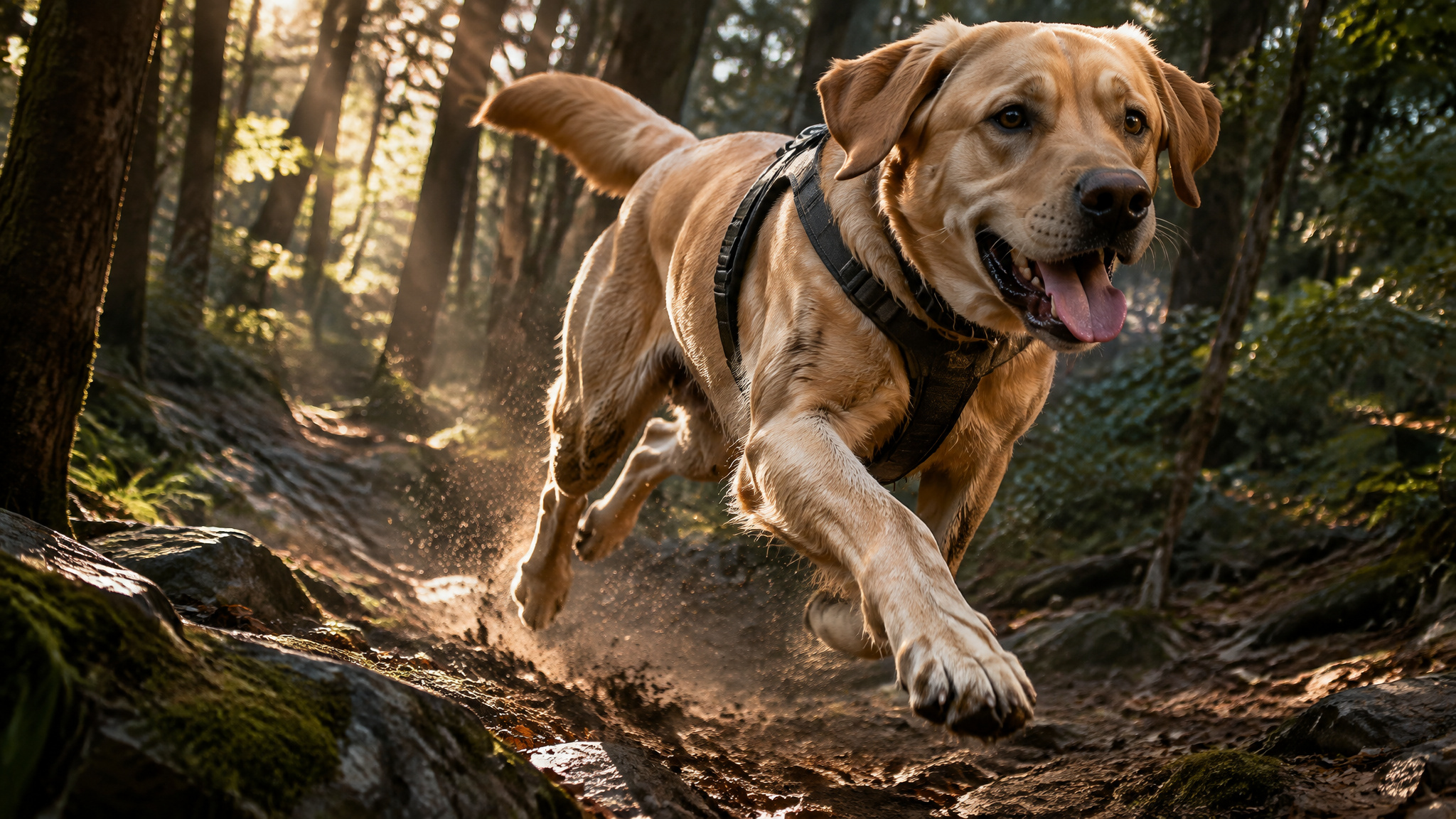
Picking a puppy for an active lifestyle is a purchase decision where the wrong breed leaves you with a dog that can’t hold the pace or costs too much time and money to maintain. A breed that looks athletic in the yard can quit ten minutes into a trail hike, while a high-maintenance giant can wreck your grocery budget and leave you wiping drool off the couch every night. Here at Unfinished Man, we treat buying a dog the same way we treat any multi-year commitment: look past the sales pitch and check the daily upkeep before you spend a dime.
You need a ranked shortlist of proven workout breeds with the exact reason each one earns its spot, plus the full ten-breed countdown showing which four popular family dogs fail as training partners. The rankings below adapt the four-part selection framework from the Will Atherton Canine Show YouTube video to filter specifically for endurance, off-leash control, and daily maintenance.
Key Takeaways
Six breeds from the ten-dog countdown work for active owners: the Golden Retriever (#1), Labrador Retriever (#2), Beagle (#4), Staffordshire Bull Terrier (#5), Irish Setter (#8), and Boxer (#10).
Four popular family breeds in the countdown fail the workout test: the Cavalier King Charles Spaniel (#3) was bred as a lap dog, while the English Mastiff (#6), Dogue de Bordeaux (#7), and Newfoundland (#9) are low-endurance giants with heavy feeding or drool costs.
Even the highest-stamina puppy can’t go straight into road miles, because long-distance and hard-surface running must wait until a puppy’s growth plates fully close.
Table of Contents
What makes a puppy a good workout companion
A workout-companion puppy is a sturdy, trainable dog breed built to handle sustained exercise and off-leash commands without burning out or losing control. The baseline rankings come from the Will Atherton Canine Show (K9 show), which evaluated family breeds using four criteria: sturdiness, energy levels, intelligence, and friendliness. Applied to a fitness partner, those four traits separate true trail dogs from backyard pets.
Sturdiness means physical resilience for rough, high-tempo activity. Miniature and toy breeds are ruled out right away because they’re too nervous and delicate to handle rough play and hard pulling. Energy level acts as a two-sided filter: a lazy breed can’t keep up with your routine, and forcing the wrong energy match leaves a dog irritated or exhausted. Intelligence translates directly into off-leash control, because a dog has to be smart enough to be trained to stop when asked if it gets too excitable near roads, trails, or other dogs. Friendliness ensures a steady temperament around strangers and animals when arousal is high.
The shortlist: top puppy breeds for fitness enthusiasts
The best puppy breeds for fitness enthusiasts are the Golden Retriever, Labrador Retriever, Irish Setter, Beagle, Staffordshire Bull Terrier, and Boxer. Active puppy breeds combine high stamina, agility, and a strong drive to move, though high-impact road running must wait until puppy growth plates close. Each of the six athletic picks satisfies its exercise drive through a distinct workout style and grooming load:
- #1 Golden Retriever (Gold Medal): High energy level and heavy daily exercise requirement met easily through retrieving games like frisbee and fetch, paired with twice-weekly coat brushing.
- #2 Labrador Retriever (Silver Medal): High energy level and heavy daily exercise requirement paired with a love of swimming and the lowest grooming load of the top two picks at one weekly combing.
- #8 Irish Setter: High energy level and a heavy daily exercise requirement built for runners with a yard and constant company.
- #4 Beagle: High energy level in a small-to-medium frame for active owners, carrying a stubborn hound streak like bassets.
- #5 Staffordshire Bull Terrier: Medium energy level and moderate daily exercise requirement, fairly easy to train as a controllable all-rounder.
- #10 Boxer: High energy level and a heavy daily exercise and playtime requirement alongside its owner.
While the Labrador Retriever and Irish Setter handle heavy endurance work through swimming and open running, the Golden Retriever burns through its high daily exercise requirement just as fast when the workout involves chasing a frisbee or ball.
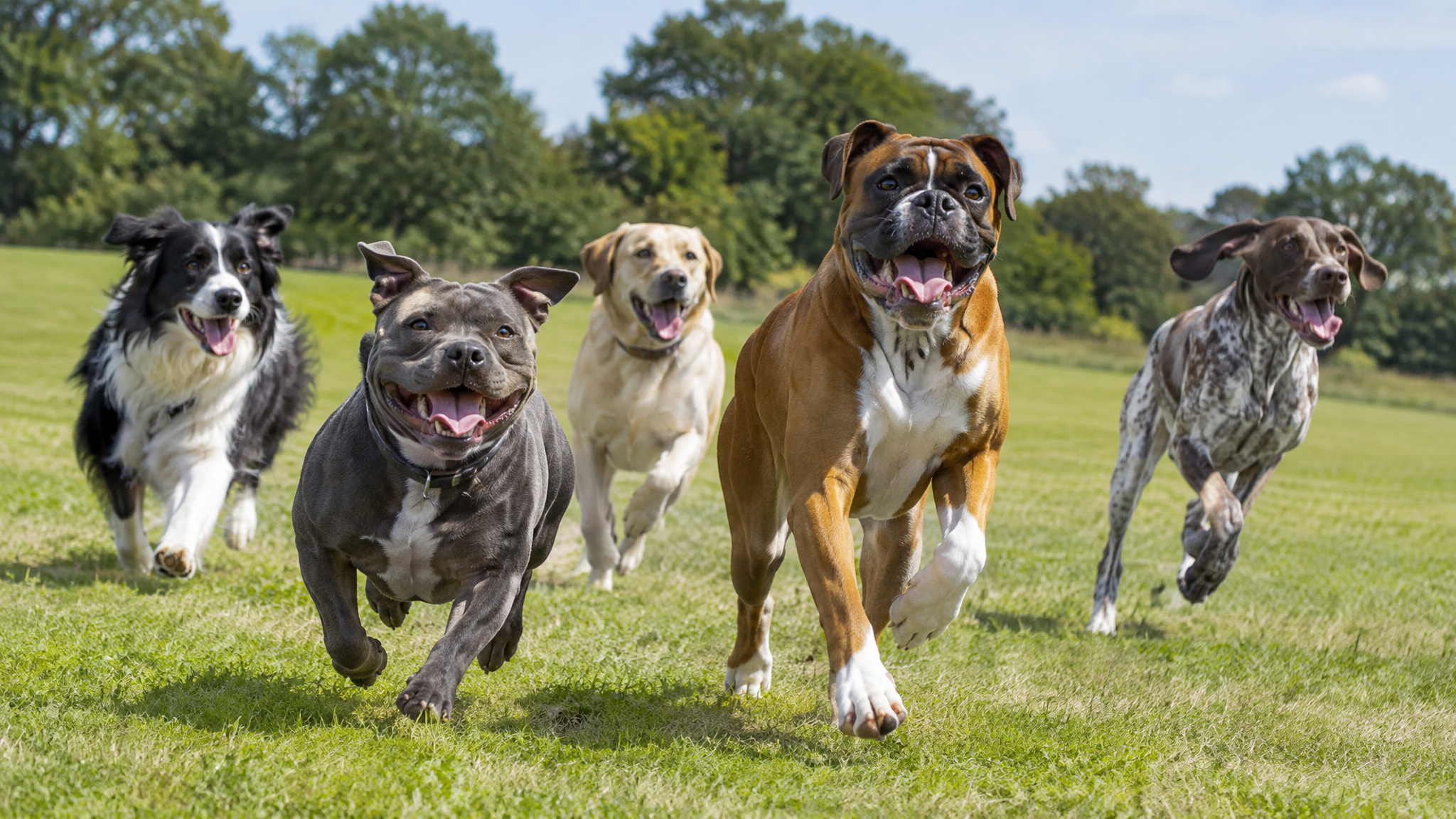
Those six athletes come from a wider ten-breed family countdown. From #10 down to #1, the full ranking runs: Boxer (#10), Newfoundland (#9), Irish Setter (#8), Dogue de Bordeaux (#7), English Mastiff (#6), Staffordshire Bull Terrier (#5), Beagle (#4), Cavalier King Charles Spaniel (#3, bronze medal), Labrador Retriever (#2, silver medal), and Golden Retriever (#1, gold medal). Four dogs on that list fail the workout filter. The Newfoundland, Dogue de Bordeaux, and English Mastiff are giant guardian and companion breeds weighed down by low running endurance, big food bills, or constant drool cleanup. The Cavalier King Charles Spaniel takes the bronze medal for families, but it was bred as a calm lap dog rather than a trail partner.
Boxer: the energetic people breed
Adult Boxers need plenty of daily exercise and playtime, while adult Irish Setters need lots of daily running. As puppies, both breeds have to stick to controlled play and short outings until their joints mature. Taking #10 on the countdown, the Boxer is a highly energetic athlete that wants to move.
The catch with a Boxer is that it’s a people-oriented breed. It doesn’t want to be turned loose in a yard by itself while you lift in the garage or head out to a track alone. A Boxer belongs with an owner who includes the dog directly in daily runs, drills, and active play alongside the family.
Newfoundland: the gentle giant that won’t keep pace
The Newfoundland (#9), sometimes spelled New Foundland, is a world-class family protector, not an endurance workout partner. Nicknamed “Nature’s babysitter” and often called the Mother Teresa of dogs, this breed is protective, gentle with children, and considered one of the most intelligent dogs in the world.
Don’t confuse brainpower or sheer size with trail stamina. A giant frame built for calm family guardianship won’t hold a running pace, making the Newfoundland a bad buy if your goal is logging miles.
Irish Setter: endurance pick for yard-based lifestyles
The Irish Setter is the standout endurance breed for long trail days, hiking, and high-output outdoor routines. The Irish Setter takes #8 on the countdown and is easy to spot by its red coat. It’s playful, energetic, smart, and trainable, as long as you have a yard and people around the house. Buying an Irish Setter works only when your household meets three strict conditions:
- Exercise volume: The dog requires lots of daily exercise to match a genuinely active lifestyle.
- Living space: The breed is suited specifically to owners who have a yard alongside their outdoor routine.
- Companionship: The dog hates being alone and stays on its best behavior only when surrounded by loved ones.
That third requirement is where busy buyers get burned. If you only evaluate the energy match, the Irish Setter looks like an ideal trail machine. In practice, an owner who runs before dawn and then commutes to an office for nine hours leaves a high-drive pack animal isolated in the house.
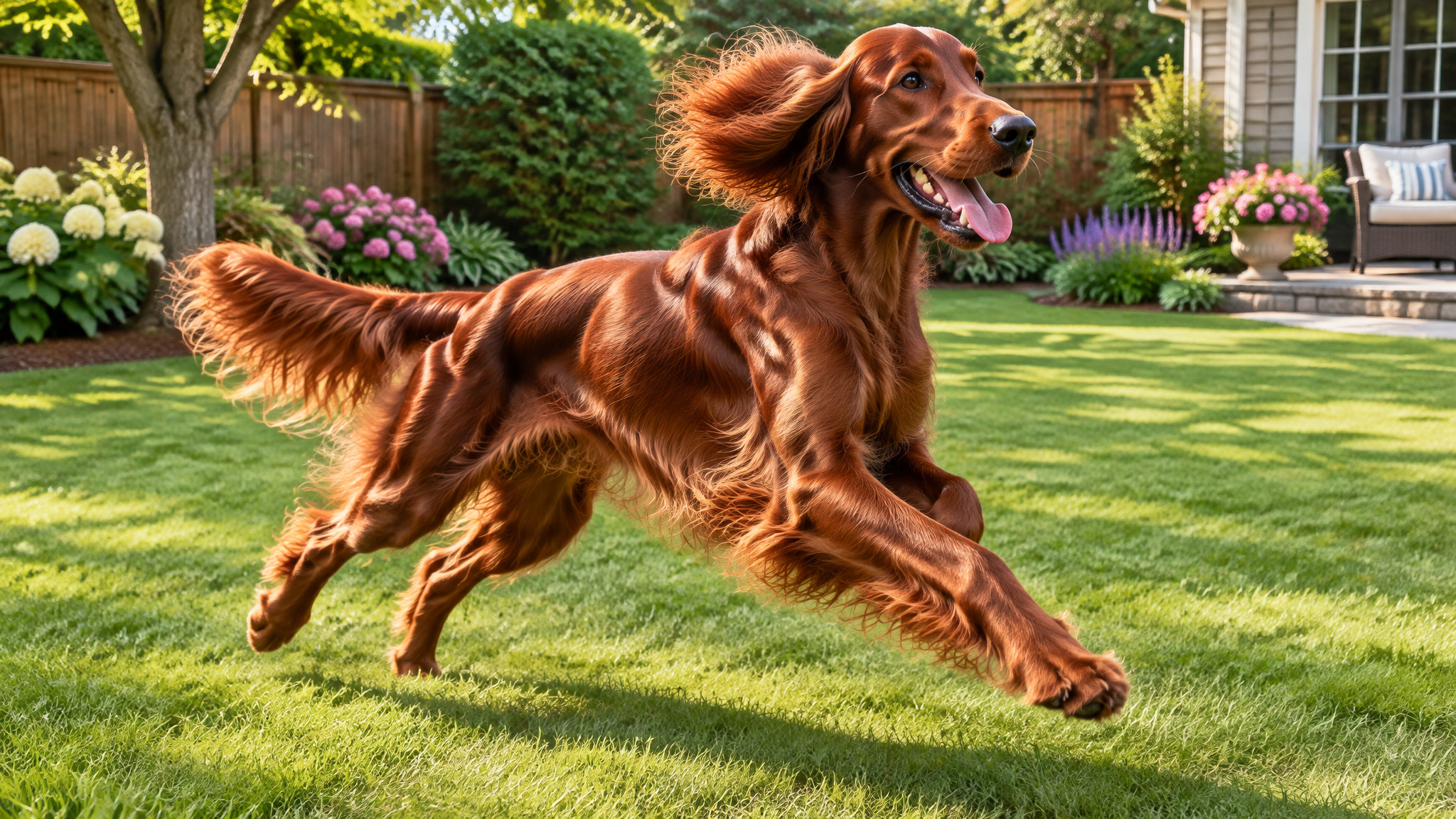
Buy the Irish Setter only if someone is home during the day and you have a fenced yard to back up your trail work.
Dogue de Bordeaux: loyal giant with heavy upkeep
The Dogue de Bordeaux (#7) is disqualified as a running companion by its giant frame and compounding daily upkeep. It’s an extremely loyal, affectionate dog that stays gentle with children and fiercely protective of its family pack.
The hidden price tag shows up at the feed store and on your furniture. Owning a Dogue de Bordeaux means paying high food costs and dealing with heavy drooling cleanup every day. Paying top dollar to feed a giant guard breed and wiping slobber off the walls makes zero sense when the dog can’t run with you anyway.
English Mastiff: gentle guard dog, expensive to feed
The English Mastiff (#6) is a stationary guard dog rather than a training partner. It’s a gentle giant that bonds instantly with its family and works as an effective home deterrent through sheer intimidation alone.
Maintaining that intimidating mass takes a serious bite out of your monthly budget. The volume of quality dog food required to keep an English Mastiff healthy makes the breed expensive to feed. Like the Newfoundland and Dogue de Bordeaux, it gives you presence and security at home with none of the endurance you need on a trail.
Staffordshire Bull Terrier: the medium-energy all-rounder
The Staffordshire Bull Terrier (#5) is the smart buy for an active owner who wants a controllable, moderate athlete rather than a frantic distance runner. Ranked right in the middle of the countdown, the Staffy is extremely loyal, gentle with children, and built as a true all-rounder.
It brings medium energy levels and is fairly easy to train. For a guy who lifts, hikes on weekends, and runs moderate routes, medium energy paired with reliable obedience beats raw, unmanageable speed every time. A dog that listens and stops on command is far easier to live with around busy paths and distractions than a hyperactive breed that blows through recall.
Beagle: the small-to-medium energetic option
For energetic owners looking for a smaller partner, the Beagle (#4) is the top small-to-medium high-energy option and the Staffordshire Bull Terrier (#5) covers the medium-energy slot, while miniature and toy breeds are excluded altogether for being too nervous and delicate for rough activity. Beagles are energetic, friendly, and true pack dogs that bond hard with their families.
The tradeoff with a Beagle shows up the moment you unclip the leash. Like Basset Hounds, Beagles have a well-earned reputation for being stubborn. They have the legs and lungs to outlast every giant breed on the countdown, but that independent hound streak makes off-leash trail control much tougher than it is with an eager-to-please retriever or terrier.
Cavalier King Charles Spaniel: lap dog, not running partner
If you want a dog that demands the least exercise on your rest days, the Cavalier King Charles Spaniel (#3) is the low-output counterweight to the high-drive runners on this list. It takes the bronze medal in the family countdown, which tricks plenty of active buyers into assuming it can handle a workout plan.
It can’t. The Cavalier King Charles Spaniel was bred specifically to be the lap dog of the spaniel world, thriving in homes where children give it constant physical attention. It’s easy to train and clears its daily exercise requirement through regular backyard play rather than grueling mileage. Skip it if you want a jogging partner, or pick it on purpose if you want an easy companion that stays happy on the couch during your recovery days.
Labrador Retriever: the runner’s swimming partner
The Labrador Retriever is the premier daily running and swimming partner for fitness enthusiasts who want maximum stamina with minimal coat maintenance. Labradors and Golden Retrievers both handle running and water work well once matched to their preferred routine. Taking the silver medal at #2, the Labrador is one of the most popular breeds in the world because it pairs a heavy exercise tank with reliable obedience once mature. Its daily performance comes down to four practical traits:
- Workout style: Requires a lot of daily exercise and loves swimming.
- Temperament and control: Playful, patient, protective, and highly trainable around distractions.
- Variety consistency: Black, chocolate, and yellow Labradors all share the exact same stamina, strength, and obedience, and get along well with other animals and people.
- Low coat upkeep: The short coat needs only a once-a-week combing.
While the Golden Retriever channels its athletic drive into chasing a frisbee or fetch ball on land, the Labrador Retriever is the natural pick if your training includes open water, dock jumping, or muddy trail runs where a short, once-a-week coat saves you hours of cleanup.
Golden Retriever: exercise as a game of fetch
Taking #1 and the gold medal, the Golden Retriever is confident, smart, kind, loyal, neither aggressive nor timid, and extremely patient with kids. That play drive makes its heavy daily exercise needs easy to handle on days you aren’t logging miles yourself, since a session of frisbee or fetch does the job. Though adapted to the outdoors, this isn’t a kennel dog: it prefers living indoors with its people on rest days, and its longer coat means committing to twice-weekly brushing.
Puppy exercise limits before road running
Pushing road miles too early will get a high-drive puppy hurt. Long-distance running and hard-surface jogging have to wait until a puppy’s growth plates fully close, a milestone that varies by breed and body size and needs a vet’s sign-off. Spend the early puppy months on mental stimulation, short hikes, and controlled play that lock in off-leash recall before the real mileage starts.
Upkeep costs and grooming tradeoffs
Feeding and maintaining a large dog gets expensive fast once you step up into giant guardian breeds like the Dogue de Bordeaux and English Mastiff. Both carry heavy food bills from the volume of quality food their frames demand, even if exact dollar totals shift by location and brand. At Unfinished Man, we always look at the recurring maintenance cost alongside the purchase price, and with dogs, coat type and body mass dictate what you spend between workouts.
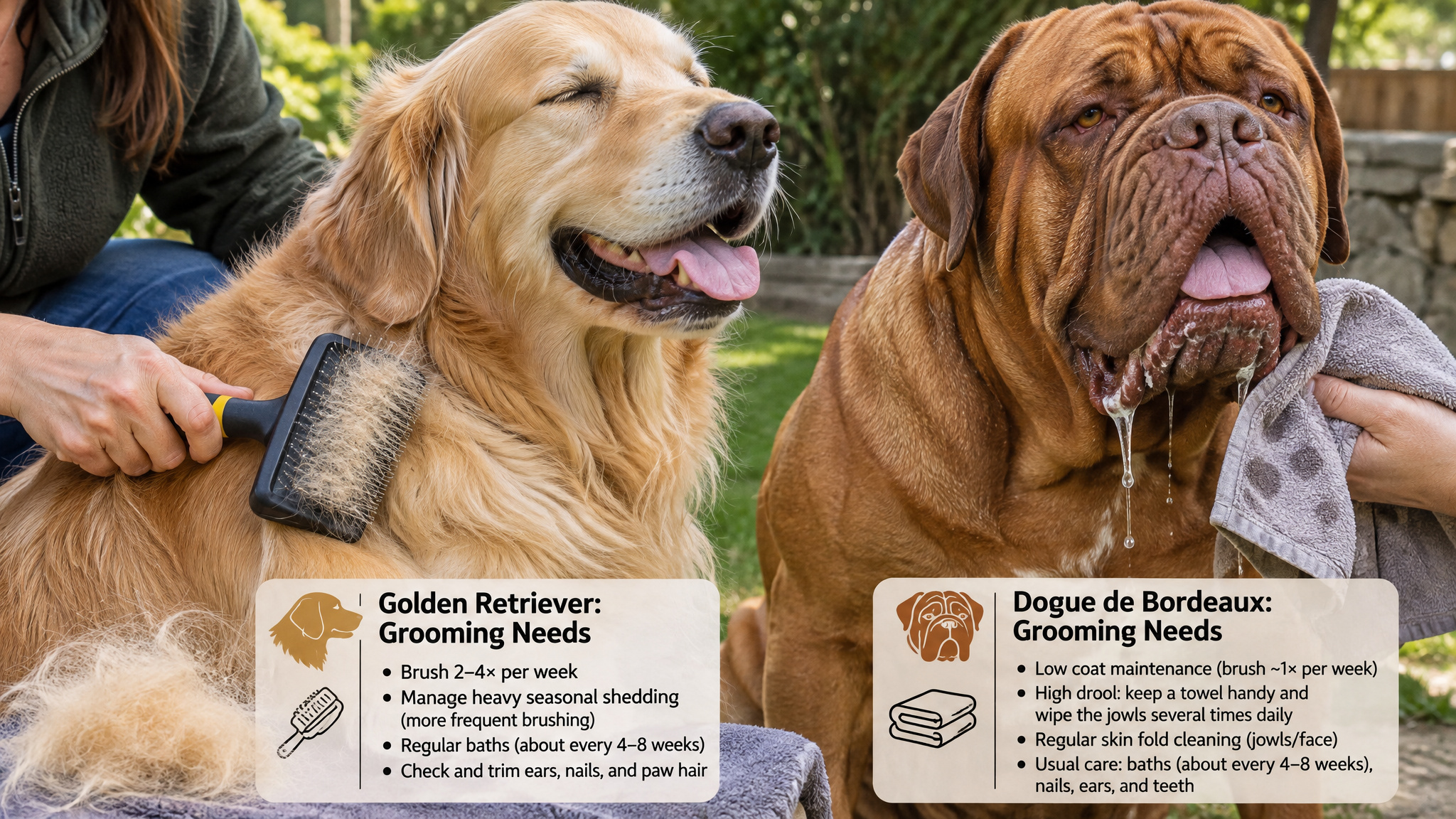
| Breed | Grooming / Cleanup Load | Feeding Cost Note |
|---|---|---|
| Labrador Retriever (#2) | Weekly combing | Not specified in ranking |
| Golden Retriever (#1) | Twice-weekly brushing | Not specified in ranking |
| Dogue de Bordeaux (#7) | Heavy drooling cleanup | High food cost |
| English Mastiff (#6) | Not specified in ranking | Expensive to feed (large volume of quality food) |
When a high-energy breed is the wrong choice
Yes, a high-energy breed is too much for a first-time owner when daily exercise or off-leash training slips, because under-stimulated athletic dogs develop behavior problems and stubborn hounds like the Beagle test inexperienced handlers. Skip a high-energy puppy if you don’t have a yard, which immediately rules out the Irish Setter. It’s also the wrong call when your job keeps you away from home all day, the Irish Setter hates being alone and the Boxer craves human company, or when your recovery days leave no margin for long outings.
Buy a dog for your average Tuesday, not your peak training week. If your baseline schedule can’t guarantee heavy daily output and constant companionship, pass on the top-tier runners and choose the medium-energy, fairly easy-to-train Staffordshire Bull Terrier (#5) or the play-satisfied Cavalier King Charles Spaniel (#3).
Frequently Asked Questions
Are high-energy dog breeds too much for a first-time owner?
They quickly become overwhelming if your daily exercise routine slips or you aren’t prepared to enforce strict off-leash recall. Inexperienced handlers often struggle with stubborn hounds like the Beagle, and high-drive dogs like the Irish Setter or Boxer will act out if left isolated during a long workday. If your average weekday doesn’t allow for heavy output and constant companionship, a moderate, trainable Staffordshire Bull Terrier is a much safer bet.
How much daily exercise does a Boxer or Irish Setter puppy need?
As full-grown adults, both breeds demand heavy daily workouts—Irish Setters need plenty of open running and Boxers thrive on intense exercise and interactive play alongside their people. As puppies, however, neither breed can handle forced road miles or hard-surface jogging until their growth plates close. During those early months, stick to short outings, mental stimulation, and controlled play to build their obedience without wrecking their developing joints.

