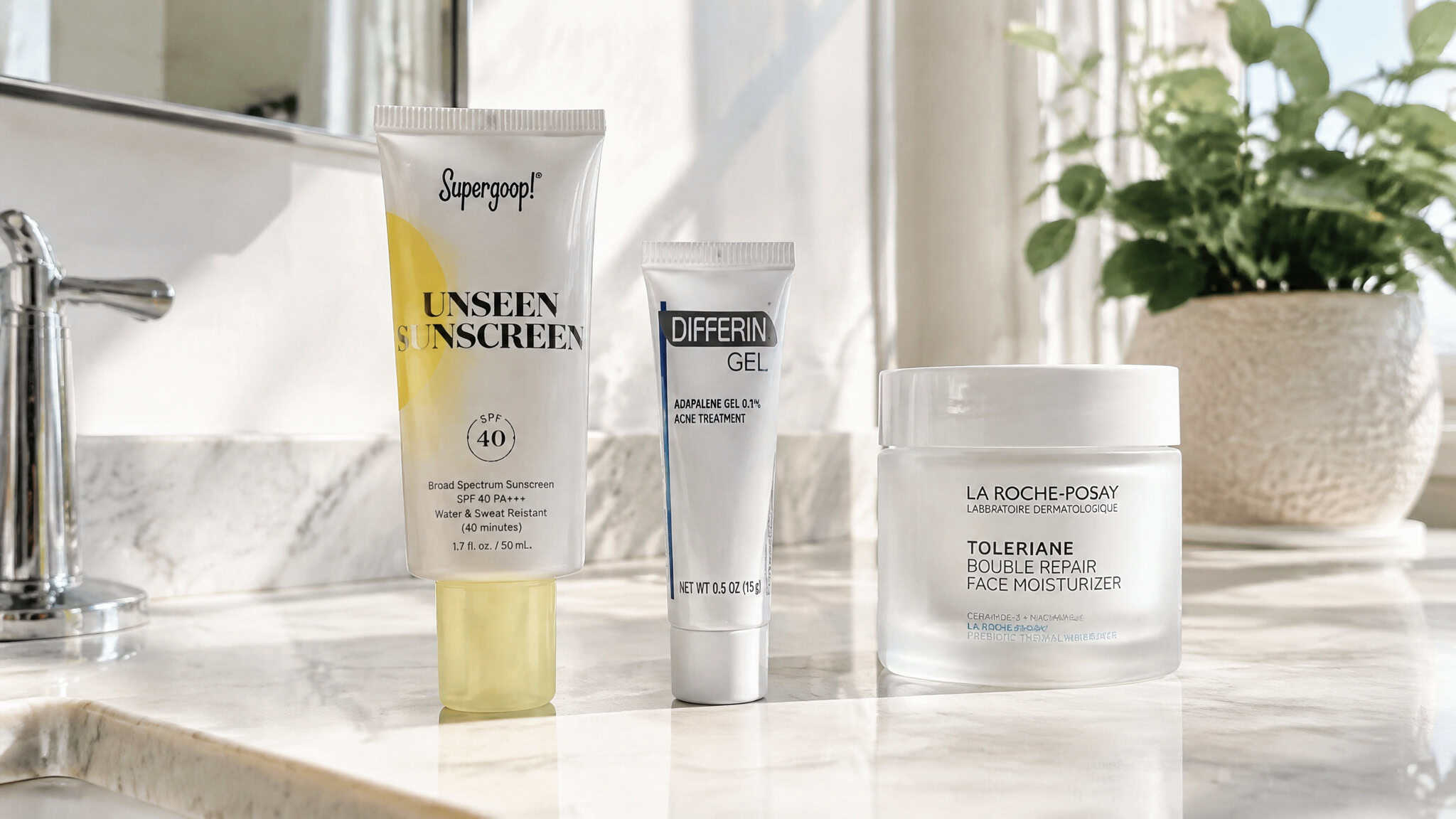
Walk into a pharmacy aisle with zero background in skincare and you’ll find a wall of $60 glass dropper bottles built for people who already have a ten-step nightly ritual. If you’re a guy who has washed his face with shower soap for thirty years and just wants to know how to age skin well without turning the bathroom counter into a chemistry lab, the whole market looks like a trap.
It doesn’t have to be. Around Unfinished Man, the goal is always cutting past the shelf clutter to figure out what’s actually worth buying. Dermatologists broadly agree that most of that aisle is noise, and the list of ingredients with real clinical backing is remarkably short. You need three core products, one daily habit, and a basic filter for spotting stable formulas. Everything else is optional.
Key Takeaways
Cumulative UV exposure drives up to 90% of visible skin aging, and because most people apply only 25% to 50% of the tested sunscreen dose, real-world protection drops to roughly 60% of the SPF number on the label.
The retinoid potency ladder steps up from over-the-counter retinol (0.01% to 2%) to retinal, then $20 over-the-counter adapalene (Differin), and finally prescription tretinoin, requiring 2 to 6 months of consistent use to remodel collagen.
Men’s skincare products use the same active ingredients as standard lines behind black packaging and heavy fragrance, and effective routines can stay under a $30 per-product cap with staples like Altruist SPF 50 (~$11) and CeraVe.
Table of Contents
Why skin ages: photoaging, not genetics
A face seems to age fast all of a sudden because decades of invisible ultraviolet damage finally cross a visible threshold, not because bad genetics kicked in overnight. Dr. Zainab Laftah of the British Skin Foundation, Guy’s and St Thomas’ Hospital, King’s College London, and Klira Pro notes that UV exposure causes up to 90% of visible skin damage. Dermatologist Dr. Danny Guo of the Doctorly channel, citing the American Academy of Dermatology and the Canadian Dermatology Association, points out that you don’t need a sunburn to take damage. Tanning alone degrades skin, driving photoaging (clinically called dermatoheliosis, meaning wrinkles and dark spots) while unrepaired DNA mutations build up into skin cancer risk.
The clearest proof appeared in the New England Journal of Medicine. A 69-year-old truck driver spent 28 years with sunlight hitting only the left side of his face through his cab window, leaving that sun-exposed side looking like the skin of an 86-year-old. Deeper down, Dr. Laftah notes, aging skin also loses collagen and its underlying fat pads shrink, causing volume loss and sagging that surface creams can’t fully reach.
Sunscreen: the highest-evidence anti-aging habit
- Sun Protection: Daily broad-spectrum sunscreen with an SPF of 30 or higher is the single best anti-aging habit according to dermatologists. Supriya Rastogi, MD, of the Schweiger Dermatology Group ranks daily broad-spectrum sunscreen starting as early as possible at the top because UV exposure is the leading cause of premature skin aging; apply two thick fingerfuls to your face every morning, even on cloudy days.
- Retinoids: Retinoids are the best-studied active treatment for repairing existing damage, and a review in Clinical Interventions in Aging backs them as the premier active ingredient.
- Regulated coverage: “Broad spectrum” started out as loose marketing language, and it took roughly 15 years for the US and Canada to regulate the label to guarantee both UVA and UVB protection.
- Filter choice: Physical versus chemical filters don’t matter nearly as much as the SPF number and daily sunscreen wearability.
- Daily dose: Apply two thick fingerfuls to your face as the final morning step every day, including cloudy days, and reapply every 2 hours.
For daily use, treat SPF 30 as the minimum floor and buy the highest SPF you can stand wearing, because SPF under-application cuts real-world protection to roughly 60% of the bottle’s label. In ideal lab testing, SPF 30 blocks 97% of UV rays and SPF 50 blocks 98%, a tiny one-point gap.
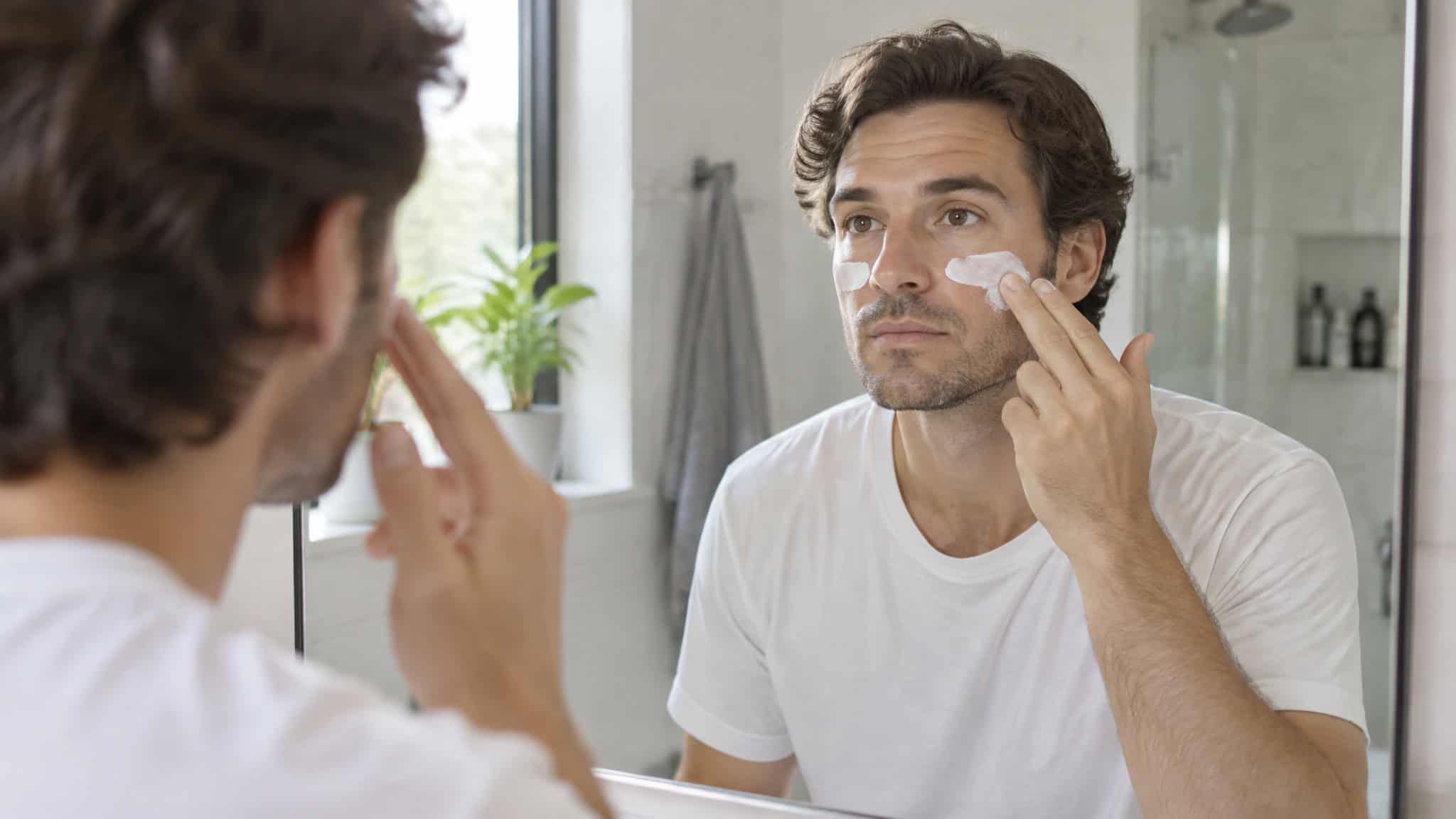
In real life, most people apply only 25% to 50% of the tested thickness, meaning SPF 30 delivers roughly SPF 7.5 to 15. Actual sun protection is lower than ideal: even with SPF 50 you’re only really likely to get SPF 30 or 20 or 15 levels of protection, and a lot of patients, men in particular, who tend to have more outdoor jobs, still don’t wear sunscreen at all.
Still, a comfortable SPF 30 worn every morning beats a greasy, white-cast SPF 50 abandoned in a bathroom drawer, and a good formula can double as your morning moisturizer. Lightweight options include La Roche-Posay UV Hydra, Haruharu Wonder, Korean sunscreens sold at Target and Ulta, the Consumer Reports-recommended RoC AM moisturizing SPF 30 combo, and Altruist Dermatologist Face Fluid SPF 50 (around $11 in the UK, while their standard Sun Cream SPF 50 runs about £4 to £5).
Retinoids: the potency ladder from $20 adapalene to prescription tretinoin
Originally developed in the 1970s as a vitamin A acne treatment before doctors noticed their anti-aging payoff, retinoids have what Dr. Laftah calls the strongest scientific evidence for stimulating collagen and elastin. Moving up the retinoid potency ladder toward tretinoin requires pairing the right strength with a slow retinoid onboarding schedule so you don’t quit two weeks in.
The ladder
Over-the-counter retinol or ~$20 adapalene gel is the smartest starting point for a beginner, because consistency beats raw potency every time. Stimulating collagen production and speeding up cell turnover softens fine lines, smooths texture, and fades dark spots, but a mild product you actually use outperforms a harsh tube sitting untouched. As Alexandra Bowles, DO, of Mona Dermatology puts it, “Consistency is far more important than using the strongest product available”: a mild retinoid applied daily beats strong retinaldehyde used once a month. Applying that consistency standard across the four-rung retinoid potency ladder shows how each step converts closer to active retinoic acid.
At the bottom sits over-the-counter retinol in concentrations from 0.01% to 2%, where beginners should start at the low end. One step closer to active retinoic acid is retinal (retinaldehyde), which works faster without a prescription. The third rung is adapalene, sold over the counter as Differin gel for about $20; it’s a stable third-generation retinoid that causes less irritation than older formulas.
At the top sits tretinoin, the most potent and best-studied option, which requires a doctor’s prescription. In the UK, online services like Dermatica let users submit skin photos for a doctor to review and ship monthly tubes; YouTuber Ali Abdaal used Dermatica to step up from 0.025% to 0.1% tretinoin over 7 to 8 months.
Onboarding without wrecking your skin
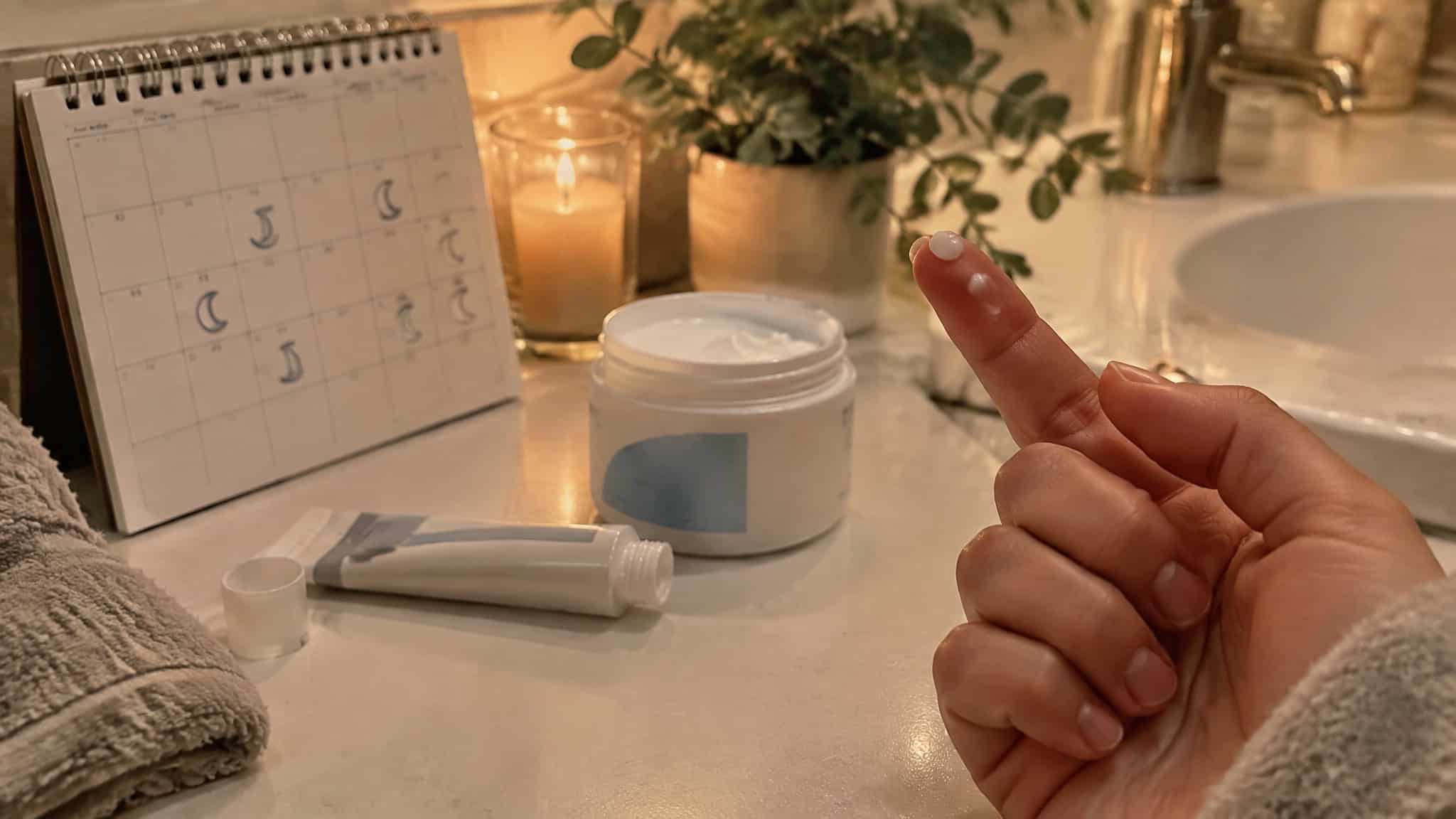
Starting a retinoid with a pea-sized amount one to two nights per week (or every other night) and buffering with plenty of moisturizer prevents you from wrecking your skin barrier. Gradual nighttime introduction lets your skin adapt while it ramps up cell turnover and collagen growth, whereas rushing the process triggers peeling and inflammation.
The standard first-timer mistake is buying a high-percentage retinol, slathering it on every night from day one, turning red and flaky within a week, and quitting under the assumption that his skin can’t handle retinoids. Instead, put a pea-sized drop on dry skin once or twice a week, follow it with a moisturizer packed with ceramides, glycerin, or allantoin to buffer irritation, and slowly add nights over several weeks until you reach nightly use. If you want to jump to prescription-strength tretinoin, talk to a doctor first.
Overuse risks and the sunscreen rule
Pushing frequency too fast compromises the outer barrier, causing stinging, flaking, and redness. Retinoids also make fresh skin cells more vulnerable to sunburn, making daily SPF 30+ non-negotiable. Patience is part of the deal: in research at the University of Michigan Medical School, participants using topical retinoic acid needed at least 6 months of steady use to show measurable improvements in photoaged skin and fresh collagen in the upper layers.
Buying a stable retinoid
Straight retinol breaks down quickly when exposed to light and air. Cosmetic chemist Ginger King advises checking the ingredient label for encapsulated retinol and buying only opaque, airtight packaging rather than clear jars or droppers. Tested options include Medik8 Retinol 3TR serum (£34), which Dr. Rebecca Rollett of the Royal College of Surgeons and The Yorkshire Aesthetics Clinic calls a reliable winner, and Murad Retinal ReSculpt (£105), IndyBest’s pick for mature skin after tester Helen Wilson-Beevers noted softer, hydrated skin.
Vitamin C: the optional morning antioxidant
Pairing vitamin C and retinol works best when you apply vitamin C in the morning and keep your retinoid for night, rather than layering them at the same time. Many dermatologists say a retinoid is the one serum they’d use for life, and the Doctorly dermatologists note that running morning vitamin C alongside an evening retinoid covers over 90% of what a serum routine can achieve. Vitamin C acts as an antioxidant that neutralizes free radicals from UV light and pollution, supports collagen synthesis, and fades dark spots by slowing melanin production and oxidation, though it never replaces sunscreen.
“The most researched form is L-ascorbic acid at a concentration of 10 to 20 percent, packaged in a dark, airtight bottle since the product can oxidize easily if exposed to air or light,” Dr. Rastogi explains. If your skin gets irritated easily, tetrahexyldecyl ascorbate (THD) and sodium ascorbyl phosphate (SAP) are gentler, more shelf-stable alternatives. Dr. Rollett recommends looking for L-ascorbic acid combined with ferulic acid (and often vitamin E) to stabilize the formula. Similar chemistry runs anywhere from $10 to $180. Timeless makes a budget vitamin C, E, and ferulic acid serum, and Dr. Rollett (who has no brand affiliation) points to SkinCeuticals at the high end.
Moisturizer and the barrier: what hydration actually does
Moisturizers don’t add water to your face; your bloodstream supplies all your skin’s water, while a moisturizer seals the outer skin barrier like mortar between brick-like skin cells.
Why moisturizer doesn’t add water
An impaired barrier leaves your face red and stinging even when you put on plain, acid-free creams. Keeping that outer seal intact is serious business: in newborns, twice-daily moisturizing from birth to 6 months cuts eczema risk by 50%.
The hydrator aisle decoded: HA, niacinamide
Hyaluronic acid (HA) temporarily plumps damp skin without building collagen when sealed under ceramides, glycerin, squalane, or dimethicone (large molecules sit like a “pool cover”; glycerin, polyglutamic acid, or saccharide isomerate also work). Niacinamide (5% ideal per King; tolerated to 10%) calms redness, shrinks pore appearance, blocks melanin transfer, and boosts elasticity (Dr. Ellie Rashid, British Skin Foundation).
Ceramides and peptides
Ceramides form 50% of outer lipids (declining with age, sun, and perimenopausal shifts) and work best alongside cholesterol and linoleic, palmitic, or stearic fatty acids. Expensive peptides signal collagen only in lab studies, working best beside retinoids and hydrators.
Men’s skin vs the men’s skincare aisle
Men do not need different anti-aging products because men’s skincare lines are a marketing play rather than a biological necessity, differing only in packaging and heavy fragrance while often lacking high-powered actives, so men should shop by active ingredient and skin concern rather than gender-coded bottles. While men on average have a thicker dermis, oilier skin, and higher skin cancer rates, Drs. Shah and Maxfield of Doctorly note that no skincare ingredient has ever been engineered specifically for a man’s thicker dermis, and only about a third of men use daily sunscreen or moisturizer.
- The packaging tax: Men’s lines use the same basic ingredients as standard bottles, but often strip out high-powered actives, load up on peppermint or menthol fragrance, and charge for black or gunmetal bottles.
- Biological averages: On average, men have a thicker dermis (where most collagen sits), oilier skin, larger pores, more terminal hair, more classic teenage acne, almost all cases of rhinophymatous rosacea, and higher skin cancer rates and melanoma mortality.
- Usage gap: Only about a third of men wear sunscreen daily, and only about a third use moisturizer daily.
Some guys argue that a dedicated men’s section at Target or a Cetaphil beer commercial helps hesitant men get started, and one brand founder even admitted buying black bottles so his family wouldn’t mock his counter. The trap is that a guy starting from zero often buys a gunmetal “men’s” kit packed with a harsh wash and gritty scrub, strips his barrier until basic lotion stings, and quits.
Shaving and beards are skincare too
Running a razor across your face every morning is aggressive physical exfoliation, and the way you manage facial hair directly affects skin irritation and flaking.
The razor as an exfoliation device
More blades and closer shaves cause more nicks and razor bumps (pseudofolliculitis barbae). Sufferers should switch to an electric trimmer. Dr. Maxfield uses guard 3 on his face and guard 2 on his lip, or shave damp skin (relaxing hair disulfide bonds) in short strokes with the grain.
The flaky-beard diagnosis
Dry, flaky skin under the beard along the nose is seborrheic dermatitis. Washing your face once a week with dandruff shampoo clears it, while scalp conditioners containing amodimethicone handle long beards better than facial washes.
Building the routine: sequence, weekly schedule, and patience
Putting products in the right order and keeping actives on a predictable weekly cadence prevents irritation before it starts.
The minimal core
A minimal anti-aging skincare routine built around a gentle cleanser, daily broad-spectrum SPF 30+, and a nighttime retinoid delivers roughly 90% of possible skincare results for a beginner starting from zero. Dermatologist Dr. Isama Sayyad, Ali Abdaal, and Doctorly all emphasize that sticking to three or four basic rules beats a complicated shelf. Dr. Rollett’s “ABCs of skincare” starter kit follows the same logic with vitamin A, broad-spectrum SPF, and vitamin C.
Cleanser surfactants can’t tell natural skin oil from dirt, so over-washing strips your barrier. Dry or sensitive skin only needs lukewarm water or micellar water in the morning, followed by micellar water or an oil cleanser at night. Oily skin does better with a gentle chemical-exfoliating wash, or a double cleanse using an exfoliating wash followed by a hydrating one since oily skin can still be sensitive. Match your twice-daily moisturizer to your skin type: thick balms or ointments for dry skin, light gels or lotions for oily skin. When you apply serum, don’t overthink the technique beyond keeping the dropper off your face.
Adding actives without conflicts
Daily sunscreen should start as early in life as possible, while anti-aging actives like retinoids and vitamin C belong in your routine starting in your mid-20s to early 30s, when natural collagen production begins to decline. When you add new actives, Dr. Rastogi advises introducing one product at a time and waiting 1 to 2 weeks so you can spot what caused any irritation.
Never layer chemical exfoliants like glycolic, mandelic, or lactic acid directly over a retinoid unless they’re formulated in the same bottle. Instead, run a 3-1-3-1 rotation: three nights of your retinoid, one night of an exfoliant. Glycolic acid sweeps away dead surface cells to fade dark spots and reverse photodamage, while azelaic acid calms inflammation and lightens pigmentation.
Timelines: what improves when
Surface hydrators plump up dry skin within days, whereas cellular actives like retinoids, vitamin C, and dark-spot treatments require 2 to 6 months of steady use because remodeling collagen and fading pigment takes multiple skin-turnover cycles. That window matches the 6-month minimum seen in the University of Michigan retinoic acid trials, making daily consistency matter far more than application technique.
What’s actually worth buying, and what to skip
Shopping smart means reading the bottle’s construction and ingredient stability before looking at the brand name or price tag.
Formulation beats price and potency
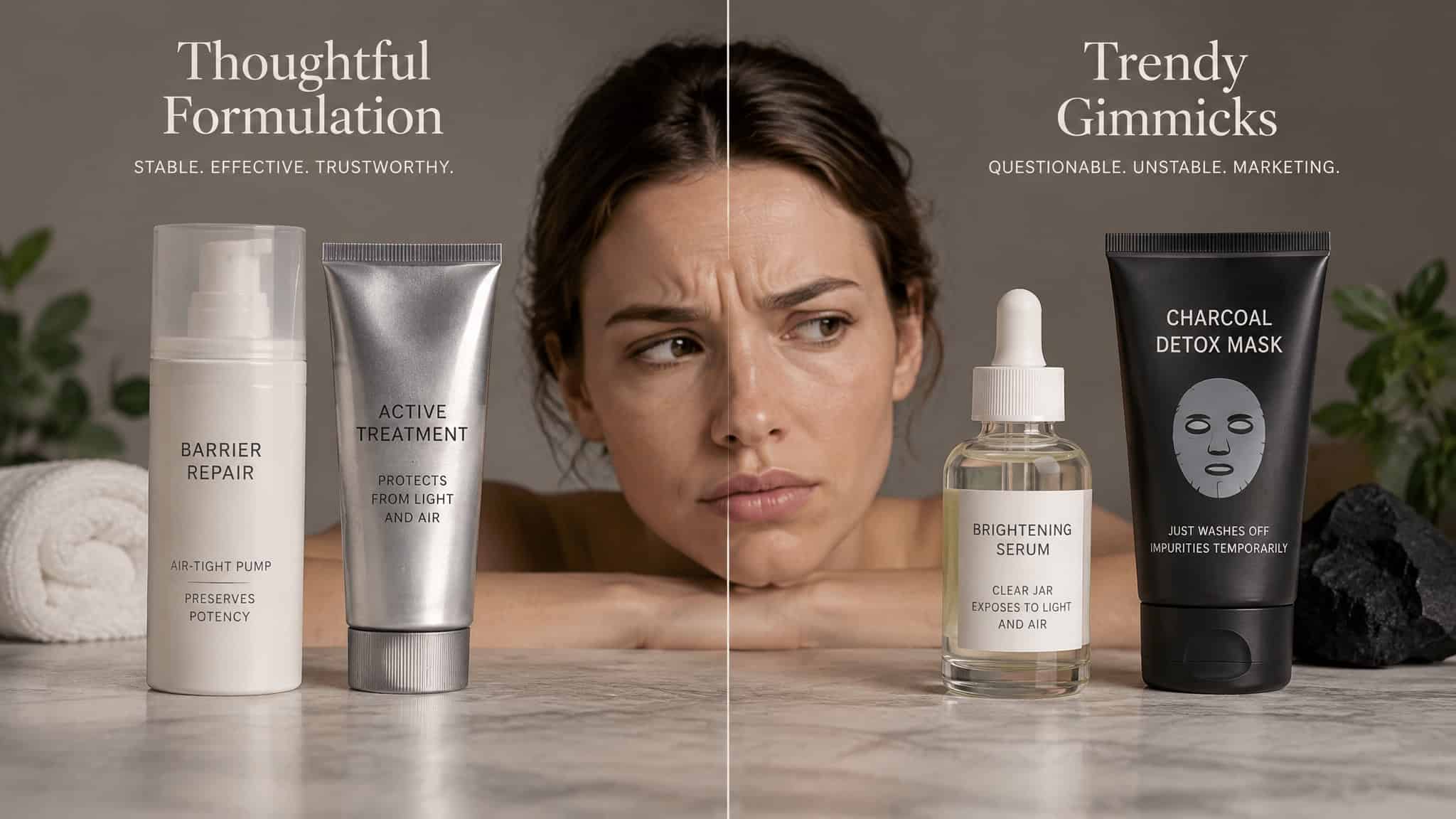
Skincare formulation stability and protective packaging matter far more than a luxury price tag or a sky-high percentage on the label. Skin biology hasn’t changed even as trends keep changing, and a higher percentage on the label isn’t a reliable way to judge how well a product works. As King puts it, “In most cases, yes, but beauty products can’t penetrate very deeply, so sometimes higher percentages of active ingredients are just a waste,” meaning a well-built $20 tube routinely beats an unstable $150 jar.
- Airtight, opaque containers: Straight retinol and 10% to 20% L-ascorbic acid degrade in light and air, so skip clear jars and open droppers in favor of opaque airless pumps or metal tubes.
- Encapsulation: Look for “encapsulated” retinol on the ingredient list to keep the active stable and slow down release into the skin.
- Allergen screening: Consumer Reports evaluates skin safety by scoring products up to 100 against 11 common allergens using clinical data from SkinSafe and the Mayo Clinic.
Just make sure you lock in serum hydration properly; as Dr. Bowles notes of hyaluronic acid, “Following it with a moisturizer helps lock in that hydration and reduces moisture loss.”
A budget that works
Budget skincare products under $30 cover every essential step of an anti-aging routine for men who want proven ingredients without luxury markups. Because core actives like adapalene, ceramides, and UV filters are off-patent staples, spending more rarely buys better biology. Ali Abdaal caps his own spending at $30 per bottle, running a daily lineup of CeraVe moisturizer, CeraVe PM at night, and Altruist Dermatologist Face Fluid SPF 50 in the morning. Retail prices vary by store and region, but tested options across price tiers show how far a small budget goes.
- Budget core (under $30): Altruist SPF 50 (~$11 in the UK, or ~£4 to £5 for the standard Sun Cream), Differin adapalene gel (~$20), CeraVe moisturizers, and The Ordinary Phytoceramide Moisturiser (£9.60, the lowest-priced pick in The Independent‘s IndyBest £9.60 to £147.99 test group).
- Mid-tier tested options: Sculpted By Aimee Hydraglo Serum (£27, combining niacinamide, hyaluronic acid, and ceramides, which gave an IndyBest tester noticeably more hydration after one use), Medik8 Retinol 3TR (£34), and StriVectin Anti-Wrinkle SD Advanced Plus (which immediately eased dryness and improved fine lines and elasticity over several weeks of testing).
- Premium splurges (£100+): Murad Retinal ReSculpt (£105), SkinCeuticals Phloretin CF or Silymarin CF (£147.99), and SkinCeuticals HA Intensifier (£109.99), whose “advanced formula contains a high concentration of 1.3 per cent pure hyaluronic acid, 12 per cent proxylane, and new post-biotic ferment to increase glycosaminoglycans, such as HA” for up to 48 hours of hydration.
The gimmick list
Skip kitchen DIY recipes and viral gadgets entirely, because daily broad-spectrum sunscreen and barrier-sealing moisturizers are the only non-prescription habits backed by real evidence for younger-looking skin. You can safely pass on avocado face masks, charcoal cleansers, at-home LED therapy masks, and snail slime creams.
What skincare can and cannot do
Topical skincare alone can’t firm up advanced sagging or reverse deep structural aging, making creams and serums a tool for surface texture, tone, and prevention rather than a substitute for clinical procedures. As Dr. Laftah explains, when aging skin loses deep collagen and its underlying fat pads shrink, the resulting volume loss, translucency, and laxity sit below the reach of any jar, and even pricey topical peptides only have lab signaling data rather than long-term human trials.
What two to six months of consistent topical care will measurably do is slow down new photoaging, smooth rough texture, fade blotchy pigment, and restore hydration and bounce within days. There’s also a quiet health payoff to paying attention to neglected baseline health by looking in the mirror every morning. About three years ago, a male viewer messaged the Doctorly dermatologists to say that after watching their videos, he actually looked closely at his own skin, spotted an abnormal mole, and had early skin cancer removed before it could cause serious harm.
Frequently Asked Questions
How can I age well with a simple routine if I’ve never used skincare before?
Stick to three basic steps: a gentle cleanser, a daily broad-spectrum SPF 30 or higher every morning, and a retinoid at night. That minimal lineup delivers roughly 90% of the results a skincare shelf can actually achieve. Pair those with a basic moisturizer matched to your skin type—gels or light lotions for oily skin, thicker balms for dry skin—and you can skip the multi-step bathroom chemistry lab entirely.
What is the single best anti-aging ingredient according to dermatologists?
For daily prevention, broad-spectrum sunscreen sits at the absolute top because ultraviolet rays cause up to 90% of visible skin aging. When it comes to repairing existing damage, vitamin A derivatives—known as retinoids—have the strongest clinical track record for rebuilding collagen, smoothing rough texture, and fading dark spots. If you add an optional morning antioxidant like 10% to 20% L-ascorbic acid (vitamin C) alongside an evening retinoid, you cover over 90% of what topical serums can do.
How do I start using a retinoid without wrecking my skin barrier?
Apply a pea-sized drop to dry skin just one or two nights a week (or every other night) and immediately follow it with a moisturizer containing ceramides, glycerin, or allantoin to buffer irritation. Going straight to nightly use with a strong formula is why most beginners end up red, peeling, and quitting within days. Build up your frequency slowly over several weeks, and wear SPF 30+ every morning since fresh skin cells burn more easily.
Why is my face aging so fast all of a sudden?
What looks like sudden overnight aging is usually decades of invisible UV exposure finally crossing a visible threshold, not bad genetics kicking in at once. Cumulative sun exposure—including casual tanning without ever burning—drives up to 90% of visible wrinkles and dark spots, while deeper collagen loss and shrinking facial fat pads gradually reduce structural volume.
Is expensive anti-aging skincare worth it or does formulation matter more than price?
Formulation stability and packaging matter far more than a luxury price tag or a massive active percentage. Because topical products only penetrate so deeply and ingredients like retinol and L-ascorbic acid degrade quickly in light and air, a $20 opaque, airtight tube routinely outperforms a $150 clear jar. You can build a complete, proven routine under $30 per bottle using off-patent staples like CeraVe, Differin, and Altruist SPF 50.
What home remedies to make your face look younger actually have evidence?
Kitchen DIY recipes like avocado masks, along with viral gimmicks like charcoal washes, snail slime, and at-home LED masks, lack real evidence and aren’t worth your time. The only non-prescription habits backed by solid proof for keeping skin looking younger at home are wearing two fingerfuls of broad-spectrum SPF 30+ every day and sealing your skin barrier with a good moisturizer.
Can old saggy skin be firmed up?
Topical creams and serums cannot lift advanced sagging or replace lost volume, because deep structural aging comes from shrinking fat pads and deep collagen loss below the reach of any jar. Consistent topical care over two to six months will measurably smooth surface texture, fade blotchy pigment, and boost hydration, while deep laxity requires clinical procedures.