
You work forty years to buy your freedom, and then the freedom starts quietly stripping the gears in your head. Retirement gets sold as the finish line, as pointed out by Reclaim 60, and the first few weeks of sleeping in and booking trips make it feel like a clean win. That easy stretch hides what’s actually slipping away. The post-retirement drop in memory and processing speed is real and measurable, but it tracks disengagement and lost daily inputs rather than the date you turn in your badge.
Here at Unfinished Man, we spend a lot of time looking at what actually keeps guys sharp and purposeful when aging through big midlife transitions. The longitudinal data is clear on why the brain stalls when work stops, and it gives us a concrete blueprint: a six-step protection framework, a one-sentence purpose move, a 90-day replacement protocol, seven daily exercises, and the exact weight-based dosing for creatine.
Key Takeaways
Verbal memory declines 38% faster after the retirement transition, though longitudinal data from the PATH Through Life project shows the drop tracks cognitive disengagement rather than stopping work itself.
Combining six habits from Mark A. Gluck’s framework at Harvard University can cut Alzheimer’s risk in half, while a strong sense of purpose slows cognitive decline by 2.4 times over seven years.
The first one to two years of retirement carry the sharpest risks for social isolation and hippocampal shrinkage, making a 90-day weekly group commitment, 15 minutes of daily coordinated skill practice, and 0.1 g/kg of creatine monohydrate practical countermeasures.
Table of Contents
Does retirement accelerate cognitive decline?
Yes, retirement accelerates cognitive decline when you stop challenging your brain, with verbal memory dropping 38% faster after the retirement transition. Mark A. Gluck at Harvard University reported that 38% figure, and a separate study tracking workers 14 years before and 14 years after quitting confirmed it even after accounting for baseline cognitive change. Dr. Troy Jackson of Authentic Health notes that as rates of Alzheimer’s disease and other dementias climbed over recent decades, retirement repeatedly showed up as a transition point: retiring early before age 65 speeds up decline, more years spent retired track with faster memory loss, and working later tracks with slower decline and lower dementia risk.

What the PATH Through Life study found
Ross Andel at the Australian National University, speaking at TEDxFulbrightCanberra, broke down the PATH Through Life project, which started around 2001 and checked in on hundreds of Greater Canberra volunteers in their early-to-mid 60s every four years until around 2015, at about age 77. On a recall test using random words from unrelated categories like tools, fruit, and kitchen utensils, average scores dropped from about 8 words to 6 over twelve years, which is normal aging. Accelerated memory loss and slower thinking speed hit retired participants almost exclusively, while continuing workers held steady and vocabulary and global cognition barely budged, even after controlling for education, mental and physical health, job type, and retirement reasons.
Why the association is correlational
Retirement itself doesn’t cause dementia; the link across studies is correlational rather than proven causal. Brain aging comes down to three forces: genetics, random bad luck like a head injury, and personal decisions, which is the only lever you actually control.
Mental retirement: engagement is the variable
Mental retirement is the decisive variable that makes staying engaged, whether by working longer or deliberately replacing your daily mental load after leaving a job, the real protection for your brain, so you can prevent cognitive decline without going back to work. Keeping your mind sharp comes from active daily habits and consistent cognitive stimulation rather than a paycheck. In the PATH Through Life data, continuing workers stayed cognitively stable and many engaged retirees who replaced their daily mental inputs showed zero accelerated decline, proving that how you approach retirement drives brain changes rather than employment status itself.
- Working longer: Delays the onset of clinical Alzheimer’s symptoms by building cognitive reserve, which buffers the brain even when underlying pathology is present.
- Retiring early (before age 65): Accelerates cognitive decline when paired with cognitive disengagement and a drop in daily problem-solving.
- Mental retirement: Cognitive disengagement that often starts a few years before a worker’s final day on the job and carries straight into retirement.
- Engaged retirement: Replaces workplace mental inputs with deliberate structure, allowing retirees to maintain stable memory and processing speed without staying employed.
The tension between the work-longer data and the retire-well data disappears once you separate the job title from the mental load. Working longer builds cognitive reserve because a job forces you to solve problems, deal with people, and keep a schedule, which pushes back clinical symptoms even if physical Alzheimer’s pathology is already developing in the brain.
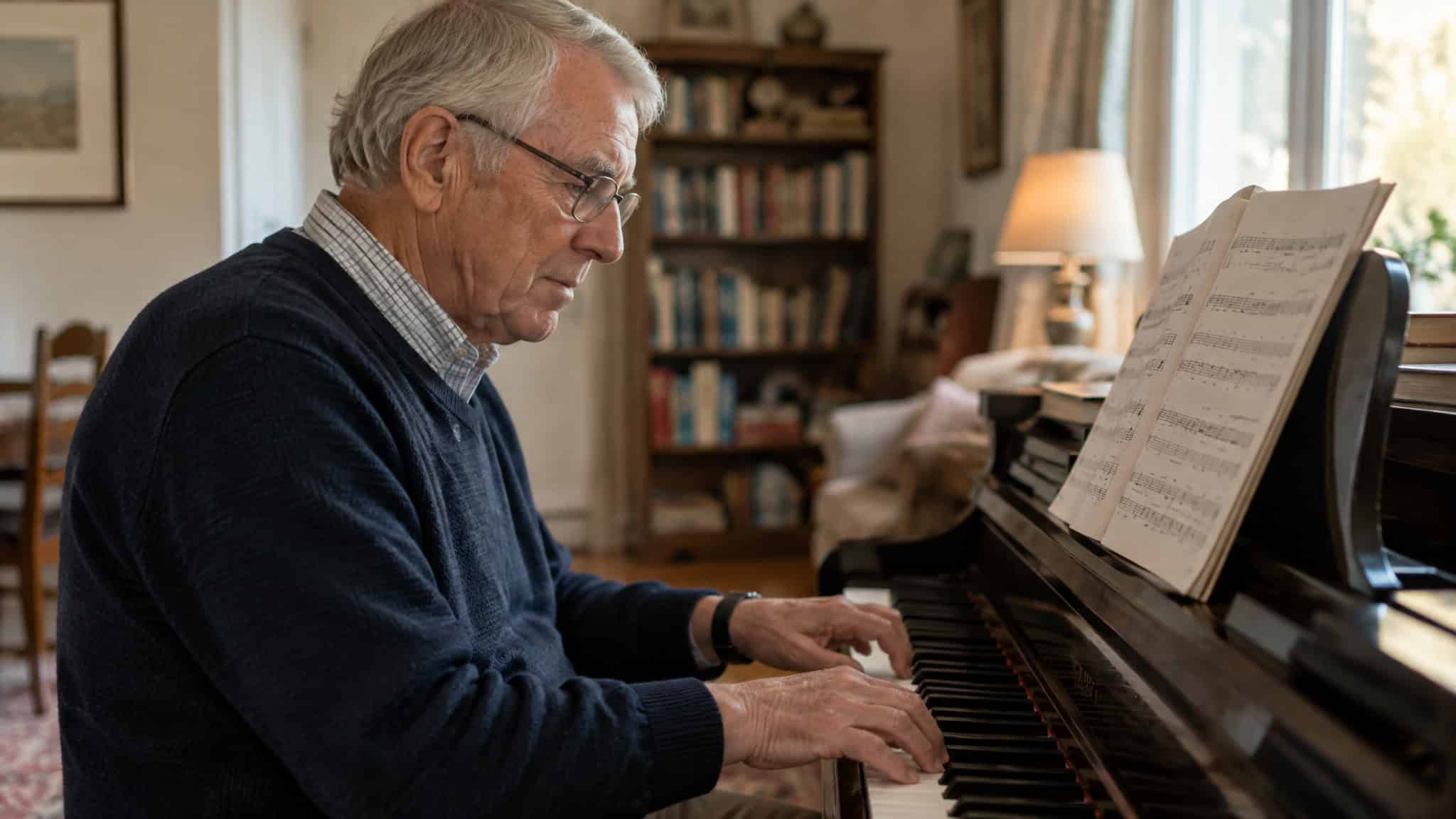
When researchers see steep post-retirement memory drops, they’re often looking at guys who checked out mentally two or three years before their farewell lunch and kept coasting afterward. If you’re weighing what turning 60 actually means for the decades ahead, keep in mind that all of these decline numbers are population averages rather than an individual sentence. Continuing to work isn’t always possible or necessary; if you replace the cognitive demand yourself, your brain doesn’t care whether you’re getting a W-2.
What work quietly provides the brain
Retirees often feel depressed and lose motivation when they fail to replace the structure of a job during their first year off the clock, a window where retirement raises the probability of clinical depression by 40% and a newly diagnosed physical health condition by 60%, according to the Institute of Economic Affairs. A job quietly supplies four daily inputs the brain leans on: purpose, cognitive challenge, social connection, and routine.
In the first few weeks after quitting, you travel and knock out deferred house projects. Then, as Reclaim 60 notes, the calendar clears out, conversations shrink to household logistics, and your sleep, meals, and daily movement drift out of sync with your natural circadian rhythm. That unstructured monotony is a dementia-promoting pattern where lost purpose gets filled with nothing.
Americans are wired from childhood chores, allowances, and career-track schooling to treat a job title as personal identity, a habit so deep that Dr. Jackson catches himself trying not to ask his own kids what they want to be when they grow up. Once people stop working, many run the risk of losing their sense of purpose and meaning, and social isolation in adults over 60 is associated with a 50% increased risk of developing dementia.
Superagers: what the sharpest 80-plus brains share
Superagers are adults aged 80 and over who maintain the cognitive capacity of someone 30 years younger, a cohort distinguished in Gluck’s research program by three shared habits: staying socially engaged across generations, waking up motivated by future goals, and putting their physical health first.
When you look at the benchmarks that show you’re aging well, the standout detail in Gluck’s superager cohort is who they hang out with. They don’t restrict their social circles to peers their own age; they actively spend time with younger people. They also structure their days, weeks, and months around forward-looking projects rather than sitting around replaying the past.
These three traits are common denominators observed across a study cohort rather than a guaranteed shield for every individual, but they show what high-performing brains over 80 actually do on a Tuesday morning.
Six steps to better memory and lower Alzheimer’s risk
The best ways to keep your brain sharp as you age are six daily habits that, practiced together, can cut your risk of developing Alzheimer’s disease in half. Longstanding medical consensus backs regular aerobic exercise like a 30-minute daily walk, learning new skills, staying socially connected, eating a brain-healthy diet, and managing sleep and stress, and Gluck’s framework shows that combining all six steps delivers that 50% risk reduction. Gluck even mails an 8-page large-font summary with a fridge magnet to anyone who reaches out, complete with a proposed Harvard Class of ’81 mnemonic for the crowd who jokes, “How can I remember all six if I have a memory disorder?”
- Exercise regularly: Walk at least 30 minutes a day and log 2.5 hours of total weekly movement.
- Challenge your brain: Tackle unfamiliar books, lectures, languages, or songs to force new synapse growth.
- Avoid unproductive stress: Keep stress brief and actionable so chronic cortisol doesn’t damage your memory center.
- Get good sleep: Log at least 7.5 hours nightly in a dark, screen-free room on a fixed schedule.
- Socialize with others: Use regular conversation to test and correct your working memory.
- Eat a healthy diet: Cut added sugar to protect brain insulin, dopamine signaling, and cell function.
Step 1: Exercise for 2.5 hours a week
Hit at least half an hour of walking every day to reach 2.5 hours of weekly exercise, a standard modeled by the East Orange Senior Center Silver Steppers, a dance group whose members range from age 80 to 92.

Step 2: Challenge your brain with unfamiliar skills
Read tough books on subjects you don’t know, attend lectures, or learn a language or skill. During his lecture, Gluck had the audience learn a song about rainy afternoons, garden tools, and prunes on the spot to demonstrate how novel learning grows new synapses.
Step 3: Cut unproductive stress before cortisol hits the hippocampus
Chronic stress and poor sleep directly erode aging memory by flooding the brain with hormones that are toxic to the hippocampus, where elevated cortisol stops the growth of new cells required for learning. Short-term stress is adaptive, sharpening your focus, alertness, and reaction speed the way our ancestors needed when escaping a saber-toothed tiger or mastodon. Unproductive, grinding stress does the opposite, and women are especially vulnerable to stress-related brain damage, a topic where Gluck points people to Sharon Malone for specifics.
Step 4: Lock in 7.5 hours of sleep
Getting less than 7.5 hours of sleep undercuts memory consolidation, so set a regular bedtime in a dark room, keep phones and computers out, and avoid alcohol and caffeine near bed.
Step 5: Socialize to test your recall
Even if you live alone, regular conversation keeps your mind active, like college roommates at a reunion arguing over and correcting each other’s memories of freshman year.
Step 6: Cut added sugar from your diet
Diet is the single most modifiable factor for brain health: added sugar over-fires dopamine to trigger addiction-like cravings, shuts off your “I’ve had enough” fullness circuit, scrambles brain insulin and blood sugar, and directly impairs memory and brain cell function.
Purpose as a measurable brain protector
Purpose is a measurable biological shield for the aging brain that you build after retirement by defining a concrete project or role you’re moving toward rather than coasting on what you left behind. Pursuing meaningful goals and daily direction keeps older adults engaged, and in a Rush Alzheimer’s Disease Center study of more than 1,300 older adults followed for up to 7 years, a strong sense of purpose tracked with 2.4 times slower cognitive decline, independent of age, education, physical activity, and social engagement. According to NIH research, retirees who failed to replace their purpose showed higher cortisol, higher inflammatory markers, and more depressive symptoms within their first year, while those who articulated a clear one-sentence purpose statement about what they were retiring to had markedly better cognitive outcomes.
The purpose statement: one sentence about direction
Most guys frame retirement as escaping alarms, bosses, and deadlines. Because the brain responds to direction rather than absence, retiring to something protects your head much better than retiring from work. Write a single sentence that names a project rather than a grand life philosophy, such as “I am learning the piano,” “I am building a woodworking workshop,” or I am becoming the person my grandchildren call when they need advice.
Social connection, isolation, and the men’s network gap
Social isolation increases dementia risk by 50% in adults over age 60 by triggering a cellular threat response in the brain, an effect that hits hardest during the first two years after a major life transition like retirement, according to a 2023 analysis in The Lancet. Even the Harvard Study of Adult Development found that relationship quality in retirement predicted cognitive health a decade later more accurately than cholesterol levels, blood pressure, or genetics.
Why men’s social networks collapse at retirement
Work is the main social hub for most men, who typically maintain thinner social networks than women. As Stoic & Soul points out, social interaction is arguably the single biggest lever for your brain, and it has to reach beyond your spouse to people with different thoughts and habits. Deliberately joining a scheduled group produces much better cognitive results than waiting around for friendships to form naturally, and you can start by initiating one conversation a week just to ask how someone’s day is going.
What loneliness does in the brain
Loneliness acts like a physical threat inside the skull, raising cortisol, driving up microglial activation, and stoking neuroinflammation that speeds up cognitive decline, which makes regular human contact neuroprotective at the cellular level.
Why crosswords aren’t enough: enriched learning
Leaving an unchallenged brain in retirement is like leaving a beautiful car parked in a garage and never turning the key, and University of Wisconsin researchers found that adults who retired without replacing their occupational mental load showed measurably faster hippocampal shrinkage within two years. Passive leisure like watching television, reading your usual book genres, and doing familiar games has some cognitive value, but it lacks the novel problem-solving demand that drives BDNF production and hippocampal neurogenesis.
The qualifying test: coordination plus memory plus attention
To match or beat the neuron-growing demand of a career, spend 15 minutes a day on an enriched learning skill that forces physical coordination, memory, and focused attention at the same time. Language learning, practicing a musical instrument, pottery, dancing, woodworking, and tai chi all pass that test and stimulate new hippocampal circuits.
The first-year retirement brain protocol
To protect your brain in the first year of retirement and avoid cognitive decline, you need to replace your purpose, social circle, and mental load immediately during the high-risk first one to two years and maintain those daily and weekly habits indefinitely. Plenty of guys assume social contact will just happen through family and old work buddies, only to realize twelve months later that their daily contact list has shrunk to their spouse and an occasional long-distance phone call.
Step 1: Write your one-sentence direction
Before or right as you leave work, write down a one-sentence retirement purpose statement aimed at a goal you’re moving toward rather than relaxing from your career.
Step 2: Join one weekly group within 90 days
Within your first 90 days off the job, join one group that meets at least weekly, such as a class, club, volunteer organization, religious community, or sports team. Across multiple studies, that single 90-day move tracks with lower loneliness, lower inflammatory markers, and stronger cognitive performance in adults over 60.
Step 3: Log 15 minutes of daily coordinated skill work
Put 15 minutes on the clock every day for a hands-on skill that combines physical coordination, memory, and focused attention.
Seven daily brain exercises after retirement
Seven daily brain exercises keep your mind sharp after retirement by pairing novel movement and memory recall with storytelling and threat-resetting habits. Your brain is a storyteller rather than a storage box, which is why emotionally loaded moments like a first dance, first job, wedding day, or holding your child for the first time stay vivid for decades while you walk into a room with your glasses on your head and think, “Okay, I came here for something important, but my brain decided to take a vacation.”
- Learn something new: Tackle unfamiliar material daily to keep your mind active and curious.
- Turn memory into a game: Notice five specific details on a walk, or study an old photo closely to recall the place, the people, and how it felt.
- Maintain conversations and meet people: Social interaction is probably the biggest thing for the brain, so set a weekly challenge to start one conversation with someone whose thoughts and behaviors differ from yours.
- Move your body with new movements: Learn steps or patterns; grandmothers who walk, garden, and laugh often have more daily energy than young guys with expensive gym memberships who sit at screens all day, and one retired man who took up dancing told his friends he did it because he finally had time to enjoy his life.
- Read, write, and tell your story: Carl Jung argued that life is about growing deeper rather than just older; because age doesn’t stop inner growth, writing and self-understanding can bring out a hidden inner musician, artist, writer, or language learner.
- Keep purpose alive: Give your retired days a concrete reason to get out of bed so your mind stays active, curious, and young.
- Practice gratitude: Because human ancestors evolved scanning for unfriendly animals, suspicious bushes, and strange sounds rather than emails, your brain defaults to hunting for problems; daily gratitude training changes how you see life and keeps the spirit young.
Identity beyond career: the house of rooms
Building an identity beyond your career prevents an identity vacuum by treating your life as a house of rooms for career, family, health, hobby, and friendship, a framework from Brad Stolberg’s book The Way of Excellence.
The 1,440-minute time bank and the retirement trap
Every morning deposits 1,440 minutes into a “Bank of TEDx” account that expires at midnight, and avoiding the retirement trap of a permanent vacation means reinvesting the roughly 500 workday minutes retirement hands back into hobbies, family, and volunteering to keep the Friday afternoon feeling.
Re-evaluating the rooms once or twice a year
When a career takes over the entire first floor and shrinks your other rooms to closets, sometimes wrecking your health before you even retire, you fix it by practicing hobbies once or twice a week and re-evaluating your room sizes once or twice a year, just as Dr. Jackson expanded his family room when he had two kids and ratcheted his health and friendship rooms back open as they grew.
Creatine and the aging brain: what the evidence shows
Yes, creatine monohydrate supports memory and cognition in older adults alongside a low-sugar diet, though brain uptake requires higher daily dosing than gym maintenance and clinical trials for mild cognitive impairment are still underway. Speaking on the Broadcast Retirement Network, Professor Kreider noted that across roughly 35 years of Texas A&M research and over 800 safety and efficacy studies testing up to 30 g/day, creatine improves muscle, performance, and cognition even in middle-aged non-lifters, making it a practical pillar of how to age well as a man. Phosphocreatine works like a cellular energy gas tank or carbohydrate loading, topping off a reserve your body normally keeps about 60% full so your brain has fuel under stress.
How creatine dosing differs for the brain
Diet supplies 2 to 3 g/day if you eat one to two pounds of meat or fish daily, and muscle maintenance takes 3 to 5 g/day (about a teaspoon morning and evening, optionally after a one-week loading phase of 20 g/day split into four 5 g doses). Because only about 20% of creatine crosses into the brain, brain-targeted maintenance is 0.1 g per kg of body weight: about 5 g/day for a 110 lb (50 kg) woman and 10 g/day for a 220 lb (100 kg) man, a dose studied for 12+ weeks in older adults and well tolerated.
Trial status and what is not yet established
Early cognition studies gave 20 to 30 g single doses and measured benefits 30 to 36 hours later after sleep deprivation, while neurological conditions like muscular dystrophy have used 10 to 20 g/day for years. Clinical trials giving 10 to 20 g/day to adults with early mild cognitive impairment are currently running, so preventive results for MCI aren’t established yet. Active aging research funded by the WoodMaxx Foundation, makers of Broku, found in a 12-week training study that stacking 1 to 2 g/day of the creatine precursor GAA (guanidinoacetic acid, which crosses into the brain better than creatine) with creatine may work slightly better than either alone, and researchers are developing a stack with fish oil for antioxidant support, curcumin for inflammation, and citicoline as a choline precursor.
Sourcing: purity, form, and what to avoid
Buy German creatine monohydrate powder labeled Creapure or Creavitalis, which is 99.9% pure and used in 95% of clinical trials, skip liquids and unverified gummies because creatine degrades in liquid, and talk to your doctor before changing your supplement routine.
Retirement as the starting line
Retirement is the starting line of a new chapter rather than the finish line, much like a candle whose warmth people appreciate more the longer it burns. Adults who deliberately replace purpose, social connection, and cognitive challenge during their first year off the job set themselves on a cognitive aging trajectory that looks fundamentally different from those who simply drift.
Frequently Asked Questions
How do I find purpose and meaning after retirement?
Stop framing retirement as an escape from bosses and alarms, and start defining what you are moving toward. In a Rush Alzheimer’s Disease Center study of over 1,300 older adults, a clear sense of direction slowed cognitive decline by 2.4 times over seven years. Write a single sentence naming a concrete project—like learning the piano or building a woodworking shop—and reinvest the roughly 500 minutes a workday used to take into hobbies, family, and friendship.
How does social isolation increase dementia risk in older adults?
According to a 2023 analysis in The Lancet, isolation in adults over 60 raises dementia risk by 50%, hitting hardest during the first two years after a major transition like leaving work. Loneliness acts like a physical threat inside the skull, spiking cortisol, activating microglia, and driving up brain inflammation. Because men often rely on work as their main social hub, deliberately joining a scheduled weekly group is critical to keeping those cellular threat responses in check.
What are the best ways to keep your brain sharp as you age?
Combining six daily habits from Mark A. Gluck’s framework can cut your risk of developing Alzheimer’s disease in half. That means logging 30 minutes of daily walking (2.5 hours weekly), tackling unfamiliar skills to grow new synapses, keeping stress brief so cortisol does not damage your hippocampus, getting 7.5 hours of sleep in a dark room, socializing regularly, and cutting added sugar. You can also support brain energy with 0.1 g of creatine monohydrate per kilogram of body weight daily.
What is a superager and what habits do superagers have in common?
Superagers are adults aged 80 and older whose brains still perform like someone 30 years younger. In Gluck’s research cohort, these sharp octogenarians shared three distinct habits: they put their physical health first, wake up driven by forward-looking goals rather than replaying the past, and socialize across generations instead of only hanging out with peers their own age.