
No, 60 is not old for a man; by modern actuarial and physiological data, it marks the transition into late middle age or early older adulthood. With average US male life expectancy sitting around 75 years according to HealthinAging.org, the guy quietly asking whether 60 is old for a man is really looking at three separate measurements: administrative cutoffs, biological wear, and daily function. The calendar clears none of them on its own, and behavior determines how those remaining decades actually play out.
Key Takeaways
A 60-year-old American man has already outlived the early-mortality years that pull the at-birth male life expectancy average down to roughly 75, and Dr. Gianni Baratto estimates that 70% of human longevity comes down to daily habits rather than genetics.
Biological age tracks cellular wear and predicts heart disease, diabetes, cancer, and dementia far better than a birthday count, while most physical complaints at 60 trace to reversible conditions like sarcopenia (1% annual muscle loss starting around 40) and sleep apnea rather than a broken metabolism.
Social isolation raises premature death risk by roughly 30% in a peer-reviewed study of 2.3 million adults, and low-cost blue-zone habits like eating beans add about four years to lifespan without spending $2 million a year on experimental anti-aging regimens.
Table of Contents
What age is considered old for a man?
Old age for a man is a moving boundary split across administrative rules, physiological wear, and daily function rather than a single birthday, which means a 60-year-old man is not elderly. While government programs, community services, and senior discounts often start between 60 and 65, physiological and functional old age has shifted later than in past generations thanks to better healthcare, nutrition, and physical and cognitive fitness. World Health Organization projections show adults 60 and older making up one-sixth of the global population by 2030 (as reported by Il Sole 24 Ore), shifting medicine’s focus from anti-aging to healthy aging in your sixties and beyond.
Three distinct yardsticks separate the label from the reality:
- Administrative: Paperwork cutoffs for benefits and discounts at 60 to 65.
- Physiological: How well your organs, muscles, and cells hold up under the hood.
- Functional: Whether you can still move, think, and live independently.
Whether a 70-year-old man is considered old depends on that exact same functional and physiological boundary rather than a fixed stage chart.
Life expectancy for a 60-year-old man
The life expectancy of a man in the United States is roughly 75 years at birth, which leaves a 60-year-old man with well over 15 years of statistical runway. That at-birth figure is an overall cohort average rather than a personal countdown, and women in the US average past 80. Dr. Gianni Baratto of Unifarco and GenAge estimates that genetics accounts for only about 30% of human longevity, while daily lifestyle accounts for the remaining 70%.
- US male life expectancy at birth: ~75 years
- US female life expectancy at birth: 80+ years
- Longevity drivers: ~30% genetics, ~70% lifestyle (diet, sleep, exercise, stress management, daily habits)
The at-birth average vs. your actual odds
The 75-year at-birth average is dragged down by deaths earlier in life. A man who has already reached chronological age 60 has survived those early-mortality decades, so his remaining life expectancy tracked in Social Security Administration actuarial life tables beats a naive 15-year subtraction and puts him closer to his adult midpoint than the finish line.
Genetics vs. lifestyle at 60
Life expectancy calculators only offer probabilities, not guarantees, and historical gains come from healthcare, sanitation, and lower early-life mortality. Still, Baratto’s 70% lifestyle share means diet, sleep, exercise, and stress management carry more weight after 60 than your family tree.
Why men die younger: the longevity gap
Modifiable behavior rather than fixed biology makes 60 look closer to old age for a man than for a woman, driving most of the five-year longevity gap between the roughly 75-year US male average and the 80-plus-year average for women. When you hold men to the same health and self-care standards as women, you can see why American men still trail American women, even though men are living longer than ever. Research points to poorer self-care as a leading driver: men are less likely than women to have a regular healthcare provider or see one within a year, and men are more likely to smoke and drink heavily.
Men also tend to wait out symptoms instead of getting checked. In one survey, 40% of men said they would delay seeking care for a few days when sick, and 17% said they would wait at least a week, even when prompt care is the difference between living and dying. Biology adds one unexplained wrinkle: male mortality exceeds female mortality even in infancy, as boys face lower survival odds than girls for reasons researchers can’t fully explain. Still, quitting smoking at any age stops life-shortening damage and extends lifespan, according to the Cleveland Clinic, with free support through a doctor, 1-800-QUIT-NOW, or Healthfinder.gov.
Biological age vs chronological age
Biological age measures the accumulated cellular damage inside a man’s body as shaped by his genes, daily habits, and environment, whereas chronological age simply tracks the calendar years since birth. First introduced in a 1969 paper by British physician Alex Comfort, biological age predicts overall health far better than chronological age, giving real scientific backing to the old saying that you’re only as old as you feel. Researchers estimate biological age using epigenetic clocks that track DNA methylation, where methyl compounds attach to DNA without altering its sequence, or algorithms combining routine clinical numbers like blood pressure, blood sugar, cholesterol, heart rate, height, and weight.
According to Dr. Saadia Hussain at the Cleveland Clinic, an older biological age tracks directly with earlier onset of cancer, Alzheimer’s disease and other dementias, diabetes, and heart disease, meaning two 60-year-old men can easily sit a decade apart inside their own bodies. Sorting out which metrics actually matter is the exact kind of math Unfinished Man readers do when figuring out where to put their effort in the decades ahead.
How biological age is measured
The concept isn’t a new wellness industry invention. British physician Alex Comfort introduced biological age in a 1969 paper, and researchers first published DNA methylation as an aging marker in 2013. In DNA methylation, tiny methyl compounds attach to your DNA without altering the underlying sequence, and labs use those methylation levels to calculate an epigenetic clock. You don’t necessarily need a genetics lab to estimate where you stand, either.
Blood-based biological age algorithms estimate your biological age by combining routine clinical numbers you already get at a physical: blood pressure, blood sugar, cholesterol, heart rate, weight, and height. Checking those clinical measurements alongside everyday physical and cognitive benchmarks of aging well tells you far more about your health than the chronological age on your driver’s license.
Are biological age tests worth the money?
Commercial biological age tests are only worth the money for a man who needs a concrete score on a page to shock him into changing his daily habits. Direct-to-consumer kits cost several hundred dollars, aren’t part of routine medical care, and have unclear reliability. Worse, every single habit change you’d make after opening the results is something you can do today for free.
The U.S. Food and Drug Administration hasn’t approved any medications for anti-aging use, though some promising drugs are in development. As Dr. Hussain warns, the longevity market is packed with misinformation and people looking to take your money, so skip the “anti-aging” supplements and put your cash toward decent food and a gym membership.
What changes in a man’s body at 60
Most physical changes in a man’s body at 60 are gradual, treatable conditions rather than an inevitable biological cliff. While men around 60 routinely blame afternoon energy dips, waking up at 3 a.m., slow workout recovery, and belt-notch creep on getting old, clinical research shows those complaints usually trace to specific midlife shifts in muscle, sleep, and stress. Even basal metabolic rate stays relatively stable right up to roughly age 60, according to Stanford Lifestyle Medicine, meaning most of what feels like aging is actually fixable.

Muscle and bone: the 1% decline that reverses
Starting around age 40, men lose roughly 1% of their muscle mass per year, a gradual decline called sarcopenia that accelerates in the 50s and hits strength, balance, metabolism, and independence. Research by Abby King, PhD, at the Stanford Prevention Research Center shows that ability-appropriate strength training slows or even reverses that loss. “We have a number of different studies showing that even people who were very inactive were able to gain function by doing some strength training that fits their abilities,” King noted.
Bone density drops alongside muscle, and osteoporosis isn’t just a woman’s disease; in Italy alone, osteopenia and osteoporosis affect roughly 5 million people, including older men. Countering bone loss takes 1,500 mg of calcium daily, provider-guided vitamin D, weight-bearing work like walking or jogging, strength training, and local balance and flexibility programs if you’ve fallen before.
The metabolism myth
Your furnace isn’t broken at 55. Because basal metabolic rate holds steady until roughly 60, midlife weight gain comes down to sitting more, moving less, small daily calorie surpluses, and hormonal shifts.
Sleep apnea and 3 a.m. waking
One study linked poor sleep patterns to nearly 8% of deaths, and getting too little or too much sleep in midlife ties to faster cognitive decline, heart risk, obesity, and diabetes. The consensus target is at least 7 hours a night (within the standard 7-to-9-hour window).
Obstructive sleep apnea affects nearly 1 billion adults worldwide and peaks between ages 40 and 60, while maintenance insomnia hits up to 22% of adults in their 40s and 50s, according to Clete Kushida, MD, PhD, at Stanford Medicine’s Division of Sleep Medicine. Both are treatable, so persistent daytime sleepiness despite enough hours in bed calls for a sleep specialist. For garden-variety restlessness, stick to a consistent wake time, get morning light, cut screens and alcohol before bed, and try Kushida’s habit of keeping a notebook by the pillow to dump racing thoughts.
What chronic stress does after 40
Leave midlife stress unchecked and it beats up your cardiovascular system, speeds up cognitive decline, and weakens your immune system. Meditation, yoga, mindfulness, and deep breathing all help, as does self-hypnosis: research by David Spiegel, MD, at the Stanford Center on Stress and Health (who developed the Reveri app) found that people who learned self-hypnosis had significantly less pain and stress, with benefits lasting years.
Exercise and diet that still work at 60
Yes, a man in his 60s can still build muscle and stay strong through twice-weekly near-fatigue resistance training, daily movement, and regular cardio, as Abby King, PhD, at the Stanford Prevention Research Center emphasizes that it’s never too late to start. To build new muscle rather than just maintain what you have, Michael Fredericson, MD, advises pushing exercises like squats, lunges, pushups, and bicep curls until you have only one or two reps left in the tank. While heart disease, diabetes, and cancer develop silently in your 40s and 50s, pairing that strength work with the 2018 Physical Activity Guidelines for Americans target of 150 minutes of weekly brisk walking or 75 minutes of running or cycling lowers your risk of cardiovascular disease, stroke, and cognitive decline in your 60s, 70s, and beyond.

Strength training close to fatigue
The U.S. Department of Health and Human Services (in its 2018 Physical Activity Guidelines for Americans) recommends muscle-strengthening work at least twice a week. Michael Fredericson, MD, points out that building new muscle requires training close to fatigue, stopping when you can do only one or two more reps of squats, bicep curls, lunges, or pushups, since easier sets only maintain what you have.
Cardio: 150 minutes and the 10-minute rule
National guidelines call for 150 minutes a week of moderate cardio like brisk walking or 75 minutes of vigorous work like running or cycling, and Fredericson advises daily movement over occasional weekend warrior sessions. A 2025 study found that walking in spans of at least 10 minutes lowered mortality and cardiovascular disease more than short incidental bouts, though large-scale studies confirm total accumulated steps still pay off. Regular exercise also sharpens the brain and eases depression, especially when you train with others (the CDC offers tailored tips).
Mediterranean diet, protein, and fiber
Fredericson, King, and the American Heart Association back the Mediterranean diet, a flexible, mostly plant-based pattern ranked No. 1 for weight loss and overall health that fights the chronic inflammation tied to heart disease and Alzheimer’s without banning favorite foods. Less active midlife men need fewer calories (USDA Choose My Plate and a dietitian can help) but more protein after 40: 1.0 to 1.2 g per kg of body weight daily (up from 0.8 g/kg), or 75 to 90 g split across three 20-to-30 g meals (three eggs, a can of tuna, 3 to 4 oz of chicken breast, 5 oz of tofu, or a cup of cottage cheese or Greek yogurt) and a 15-to-20 g snack (nuts, seeds, turkey slices, a protein smoothie, or hummus and veggies). Aim for 25 to 31 g of fiber daily from vegetables, fruit, whole grains, and legumes (broccoli, carrots, corn, Brussels sprouts, berries, apples, oranges, half an avocado, chia seeds, quinoa, beans, edamame, lentils, oatmeal), and cap alcohol at 3 drinks a day and 7 a week (12 oz beer, 5 oz wine, or 1.5 oz liquor), or less with meds or health conditions.
Why 60 can feel old: isolation and retirement
Psychologically, feeling old at 60 hits men hardest during the transition into retirement, when leaving a job strips away the built-in daily contact work quietly provided. A guy’s calendar can go from packed on Friday to blank on Monday, and men routinely brush off the resulting loneliness as simple tiredness or disinterest. Strong social ties track with longer life, sharper thinking, and less depression and anxiety, while a peer-reviewed study of 2.3 million adults found that social isolation raises premature death risk by roughly 30%, an effect researchers compare to smoking 15 cigarettes a day. Commentary on older men’s isolation, such as the Vital After 50 video channel, notes that depression, cognitive decline, and cardiovascular events spike in the first two years after retirement because of that lost routine structure.
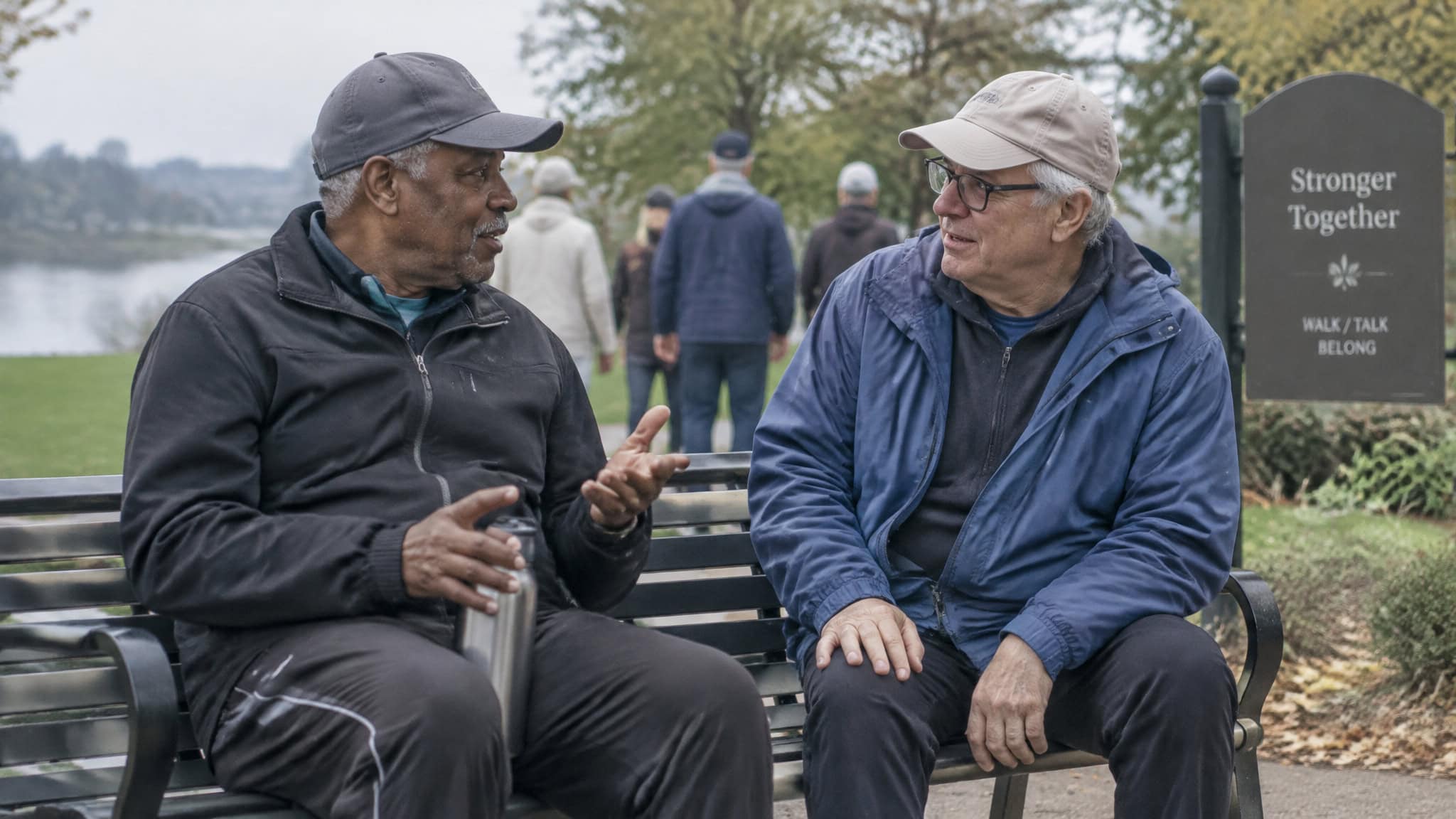
The isolation self-audit: count your weekly male interactions
Look at your week the way you’d check a bank statement. Count your face-to-face, non-transactional conversations with other men, leaving out customers, patients, or an audience. Zero or one is a red flag that needs fixing.
Male scaffolding: crews, mentoring, deep conversation
Rebuilding that structure takes deliberate scheduling: join a weekly physical crew like a purposeful walking group or a build-and-repair workshop, take on an intergenerational teaching or mentoring role, and lock in a weekly deep conversation with an old friend. Volunteering, spending time with people of all ages, and keeping your brain sharp and purposeful after retirement by playing against the clock in book clubs, new puzzles, or free older-adult classes at a library or community college keep the gears turning.
$2 million protocols vs blue-zone beans
Everyday low-cost habits beat extreme wealth and genetics in determining how long a man lives, with blue-zone residents below the US poverty line outliving average Americans by roughly 10 years and bean eaters outliving non-bean eaters by about four years, according to Dan Buettner via ABC News. Tech entrepreneur Bryan Johnson, 46, spends an estimated $2 million a year with 30 doctors on his Blueprint protocol (alphabetized supplements, multispectral skin imaging, and experimental plasma infusions from his son) chasing an 18-year-old’s biological age, while clinics like Clinique La Prairie run 300-plus-biomarker assessments across eight tests with a patented 10-year cardiovascular check (advising health spending at 35 to 40 and supplements only as add-ons). Yet Johnson’s claimed five-year reversal is self-reported, no definitive research proves any drug or device reverses aging, and Buettner notes he’d rather see people eating cheap beans than injecting other people’s blood; Johnson’s best advice is his free “stop-doing” rule of quitting bad habits like late bedtimes and skipped workouts.
Health screenings for men at 60
What health screenings a man should get at 60 depends first on his expected years remaining, because geriatric medicine ties cancer screening decisions to a 10-year life-expectancy threshold rather than a birthday. Clinical medicine is the one place where age is calculated rigorously, and the goal is catching silent midlife issues early without running unnecessary procedure risks.
Checkups, medications, and vaccines
Every man at 60 should see a healthcare provider at least once a year even when feeling fine, and go in promptly when sick. Bring all prescription bottles, over-the-counter drugs, vitamins, herbs, and supplements (or a full dosing list) to keep stacked medications from interacting, and check with your doctor or pharmacist before starting anything new. Keep your shots current: a yearly flu shot in September or October, a tetanus/diphtheria booster every 10 years, a pneumonia vaccine once after 65 (with possible boosters every 6 to 7 years), and a one-time shingles vaccine starting at age 50 under current CDC-aligned guidance, which lowered the threshold from an older HealthinAging.org guideline of 60 and up.
The screening list, and where it stops
U.S. Preventive Services Task Force and geriatric baselines cover blood pressure yearly, cholesterol per your doctor, Type 2 diabetes at least once (and every 3 years with high blood pressure, high cholesterol, or family history), yearly hearing, vision, and depression checks, periodic bone-health checks, a colonoscopy starting at 45, prostate screening discussions from 55 (earlier for African-American men or those with family history, while women start biennial mammograms at 40), and a one-time abdominal aortic aneurysm ultrasound between 65 and 75 if you’ve ever smoked. Wear sunscreen and a hat year-round, see the dentist yearly for oral cancer and fit checks, get STI testing if non-monogamous, and flag erectile dysfunction to your doctor, since a June 2019 clinical update notes it often signals underlying cardiovascular and arterial disease early on. However, geriatrics experts recommend stopping routine prostate and colorectal cancer screenings once a man’s life expectancy drops under 10 years, when short-term procedure risks outweigh the benefits.
Frequently Asked Questions
Is a 70 year old male considered old?
Whether a man is considered old at 70 comes down to his physiological wear and daily physical function rather than a fixed stage on a calendar. Two men at the exact same age can sit a decade apart inside their own bodies depending on how well they have maintained their muscle mass, cardiovascular health, and independence.
How much does lifestyle versus genetics determine how long a man lives?
Daily habits do the heavy lifting: Dr. Gianni Baratto estimates that roughly 70% of human longevity comes down to lifestyle, leaving only about 30% to genetics. How you eat, sleep, train, and manage stress after 60 carries far more weight for your remaining decades than your family tree.
What is the difference between biological age and chronological age?
Chronological age simply counts how many birthdays you have celebrated, while biological age measures the actual cellular wear and tissue damage accumulated from your habits, environment, and genes. Because cellular aging varies wildly from guy to guy, biological age is a much sharper predictor of when conditions like heart disease, diabetes, cancer, or dementia might show up.
What is life at 60 like for a man psychologically?
The biggest psychological trap around 60 is the sudden loss of built-in daily social contact during the transition into retirement, which men often misread as simple tiredness or disinterest. A study of 2.3 million adults linked social isolation to a roughly 30% jump in premature death risk—comparable to smoking 15 cigarettes a day—making deliberate weekly face-to-face routines with other men essential.