
Men checking how they’re holding up usually pick the worst possible baseline. You compare your knees and recovery speed to the body you had at 40, or you measure yourself against some viral story about a 94-year-old running a marathon. Either way, normal changes for your decade start looking like a personal failure. A population-based study of Danish centenarians found there’s actually no such thing as a strictly disease-free, “healthy” centenarian, though plenty of them live autonomously.
Instead of doom-scrolling symptom lists, it makes more sense to check positive, real-world benchmarks tied to actual gerontology research. You can test them right now: how fast you get off the floor, how well you function the day after a rough night’s sleep, and whether memory slips actually interfere with your independence. Researchers also look at whether your friendships run both ways and whether your house and neighborhood will let you stay put by choice.
Key Takeaways
Jumping ability and how fast you can get up off the floor are among the most predictive markers of biological aging because they test your brain-to-muscle connection directly.
Daily habits beat genetics: 20 minutes of brisk daily walking lowers Alzheimer’s risk and grows new brain-cell branches, while 10 minutes of daily meditation rewires brain regions and improves telomere measures.
Aging well doesn’t require zero diagnoses: the dividing line for cognitive trouble is whether memory slips interfere with daily independence, and researchers track whether you remain autonomous and engaged even with chronic conditions.
Table of Contents
What aging well means, according to research
In gerontology, successful aging means adding years to life and life to years. Researcher Harry R. Moody noted in 2005 that it’s also called vital aging or active aging, and after 50 years of study, researchers still treat it as a process and an outcome with no single rulebook. A University of California, San Diego (UCSD) review found 28 studies using 29 different definitions of successful aging against thousands of studies on aging diseases, with the most common threshold simply being no physical disability.

How researchers defined aging well since 1961
Robert Havighurst set the early anchor in 1961 (p. 8), defining it as the conditions of individual and social life where a person gets maximum satisfaction and happiness while society keeps balance across generations. He wanted an “…operational definition of successful aging and a method of measuring the degree to which people fit this definition” to settle the fight between activity theory (keeping up middle-aged habits) and disengagement theory (gradually stepping back). That era’s Life Satisfaction Index scored five psychological traits: zest versus apathy, resolution and fortitude, goodness of fit between desired and achieved goals, positive self-concept, and mood tone.
The three-component model behind most sign lists
When progress stalled in the mid-1980s, the MacArthur Network on Successful Aging tracked 1,000 older adults over seven years. Researchers John Rowe and Robert Kahn (1987, 1998) split “usual” aging from “successful” aging across three overlapping, hierarchical criteria, defining it as “…including three main components: low probability of disease and disease-related disability, high cognitive and physical functional capacity, and active engagement with life.” Some older adults showed minimal physiological loss compared to younger people, proving age alone is a lousy predictor as peers diverge. US life expectancy sits at 75 for men and 81 for women (up from 45 a century ago), while health expectancy runs 67 for men and 72 for women.
Signs of aging well, at a glance
- Physical function and freedom from disability: Rising easily from a chair or the floor, keeping a firm grip, and maintaining daily mobility show high physical functional capacity and low probability of disease-related disability.
- Mental sharpness and mastery: Staying mentally sharp, learning, and continuing personal growth reflect high cognitive functional capacity and Moody’s mastery and growth benchmark.
- Positive adaptation and life satisfaction: Recovering well from stress and keeping a positive outlook align with life satisfaction and positive adaptation in gerontology reviews.
- Active engagement with life: Maintaining give-and-take friendships and community ties fulfills a core requirement of successful aging.
- Independence and aging in place: High independent functioning and home stability mean remaining in your own home and community despite later-life changes, a standard measured by the Stanford Center on Longevity and the University of Michigan.

All of those constructs are relative and somewhat hierarchical, and they go well past simply avoiding a hospital bed. If you want to see how physical, mental, and lifestyle pillars of aging well show up in a regular week, you can map the habits you already notice to the specific constructs researchers measure.
- Physical function (freedom from disability and high physical capacity): You can get up off the floor or out of a chair quickly, jump, keep a firm grip, and walk briskly for 20 minutes without your body fighting you the next day.
- Cognitive health (high cognitive capacity, mastery, and growth): You keep learning new skills, maintain a steady mood, and rely on stable everyday reasoning and memory rather than constant workarounds to get through the day.
- Sleep and stress recovery (physiological resilience and anti-inflammatory recovery): You function well during the day, bounce back after hard weeks, and keep stress and cortisol managed through movement or relaxation so inflammation doesn’t build up.
- Social relationships (active engagement with life): You maintain friendships that run on mutual give-and-take and regular conversation, rather than counting how many acquaintances are still in your phone.
- Home and community (independence and aging in place): You live in a house and neighborhood where you can remain by choice even as later-life finances or health shift, supported by local community infrastructure.
Treat these five areas as practical self-check proxies that gerontologists track across populations. They give you a clean read on your trajectory, but they aren’t a clinical diagnostic test and don’t replace a doctor’s exam.
Physical signs: strength, mobility, and trajectory
Physical benchmarks only make sense when you test the right mechanics and grade them on an age-adjusted curve.
The most predictive markers: jumping and getting off the floor
How high you can jump and how fast you can stand up and get off the floor are among the most predictive markers of biological aging. Both moves test the brain-to-muscle connection directly, right alongside firm grip strength, which reflects nervous system function and muscle mass. When Depp and Jeste reviewed the gerontology literature in 2006, physical functioning and freedom from disability showed up as the single most common component across definitions, followed by cognitive functioning. Even so, the share of people counted as “successful agers” swung wildly from 0.4% to 95% across studies.
As Depp and Jeste noted, “One source is the definitions … Another source of variability was the sampling and measurement of successful aging. A final cause of variability may be a bias toward studying negative outcomes.” In research terms, freedom from disability tracks functional independence, meaning whether you can still rise, walk, and recover on your own, not whether your medical chart is completely blank.
Your decade, not your younger self
Checking your body against how you felt at 30 or 40 is a rigged game that makes normal mileage look like breakdown. Normal signs of aging at 60 and 65 are maintaining independent daily function and steady physical recovery while deliberately adapting your habits as differences between peers of the same age start to widen. Because physiological capability, firm grip strength, and ease of rising from a chair reflect underlying muscle and nervous system vitality, Rowe and Kahn’s MacArthur findings show that age alone explains very little in your 60s compared to behavioral choices shaped by psychosocial factors.
Normal signs of aging at 70 are defined by your functional trajectory and ability to live independently rather than matching midlife speed, right as men cross the 67-year US health-expectancy mark and women approach 72. Rising from the floor and keeping muscle and nervous system vitality still govern physical independence in your 70s.
For a woman at 70 checking her muscle power, mobility, and bone and joint resilience, the benchmark is practical: can she still get up off the floor, walk briskly for 20 minutes, and handle daily life on her own terms? By 80 and into the oldest-old stages at 90 and beyond, variation between individuals is at its widest, and the benchmark shifts to autonomous daily living and developmental adaptation, just like the autonomous Danish centenarians.
Memory and thinking: normal aging or warning signs
Normal cognitive aging is occasional, stable forgetfulness driven by distraction that never stops you from running your own life, whereas concerning cognitive decline disrupts your daily independence. Brain health covers memory, thinking, reasoning, and steady mood, and a healthy brain is what lets you keep making sound daily lifestyle decisions. With the National Council on Aging projecting that adults 65 and older will make up 22% of the US population by 2040, telling normal cognitive shifts apart from clinical trouble is a basic life skill.
Normal aging, mild cognitive impairment, and dementia
Signs you’re aging poorly are cognitive or physical declines that disrupt independent daily functioning, mood stability, or reasoning, rather than stable age-related slowing. Researchers split brain aging into three stages: normal aging (joking about lost keys or forgotten names while staying stable over time), mild cognitive impairment or MCI (needing extra time and workarounds to compensate), and dementia (decline severe enough to interfere with independence). Anyone noticing memory shifts that require constant workarounds or threaten independence should talk to a doctor. While Alzheimer’s is the most common cause of dementia, depression, medication side effects, and other reversible conditions can mimic it, and treatments can temporarily stabilize symptoms.
Why you forget: distraction, not decay
Most everyday forgetting comes from distraction, not brain decay. Because the brain is hard-wired for visual memory, the three-step Look, Snap, Connect memory method fixes everyday slips with names, faces, or where you parked: Look to focus attention, Snap to make a mental snapshot, and Connect to link those snapshots meaningfully.
Daily habits that measurably move the markers
Key signs and drivers that your body is going through rapid aging include excess brain inflammation, age-related oxidative stress, obesity, impaired memory from chronic distraction, and high intake of refined sugars and processed foods that raise diabetes and dementia risk, though daily lifestyle habits outweigh genetics in determining how fast you age. When an aging brain runs inflamed, immune cells attack healthy brain cells, but anti-inflammatory habits like sleep, physical exercise, losing excess weight, eating omega-3 fats from fish and nuts, and eating fruits and vegetables directly fight that decline. Psychiatrist Gary Small’s four-part formula, physical activity, mental exercise, stress management, and a healthy diet, counters those accelerated aging markers and proves that daily choices move the needle far more than the genes you inherited. If you’ve let those basics slide for years, rebuilding your health from scratch with baseline bloodwork and a 90-day plan is the cleanest way to reset the trajectory.
Movement: 20 minutes of brisk walking
Twenty minutes of brisk daily walking lowers Alzheimer’s risk and boosts mood-stabilizing endorphins. That modest daily dose also triggers proteins that make brain cells sprout new branches and physically increases brain size.
Food: omega-3s, produce, and the alcohol caveat
Obesity raises dementia risk, while losing weight improves memory for years in obese adults. To fight brain inflammation and age-related oxidative stress, eat fish and nuts for omega-3s alongside plenty of fruits and vegetables. Cut back on refined sugar too, since diabetes is tied to higher dementia risk. Moderate alcohol intake is also linked to lower dementia risk, possibly through stress reduction or resveratrol; while resveratrol shows anti-aging properties in lab studies, nobody knows whether resveratrol extract capsules actually reach the human brain.
Mental exercise and existence proofs
Challenging your head with chess, mah-jongg, sudoku, community college classes, and socializing builds cognitive reserve, and college education correlates with lower Alzheimer’s risk. Keeping up mental sharpness and purpose through new learning works because, as researchers describe it, “When you learn something new, your memory center is lighting up like a Christmas light. You’re stimulating it and creating a loop of new information, and that stimulation is like a workout for the hippocampus.”
An MRI study of internet-naive older adults showed upsurges in neural activity right after they learned to search online. Real-world proof shows up in Blue Zones like Sardinia in Italy, Okinawa in Japan, and Loma Linda in California, where clusters of residents share these habits and live past 100. Look at Madame Jeanne Calment of the South of France (born 1875, died 1997 at 122). She was an astute businesswoman who ate a Mediterranean diet, stayed active, and died mentally sharp with the brain of a healthy 80-year-old.
Stress, sleep, and recovery as readouts
Twenty minutes of brisk daily walking, 10 minutes of daily meditation, and restful, anti-inflammatory sleep, judged by daytime function and recovery speed rather than a strict clock-hour target, all point to healthy aging. How you sleep and handle pressure are live readouts of whether your system is recovering or running hot.
What chronic stress does to the brain
Chronic stress is a direct marker of accelerated aging because it physically shrinks the brain’s memory centers. In lab settings, injected cortisol causes temporary memory impairment on the spot. Relaxation practices such as tai chi, yoga, and meditation reverse that stress damage, steady your mood and memory, and aid digestion. Just 10 minutes of daily meditation rewires brain regions and improves telomere measures, which predicts a longer life expectancy.
Sleep: watch daytime function, not the clock
Waking up earlier in your 60s or 70s doesn’t mean your sleep is broken; judge your rest by daytime function and recovery speed, not an arbitrary hour count on a smartwatch. If you want to stack three protective markers into one move, take a walk with a friend: the physical exercise fights brain inflammation, the conversation works your neural circuits, and talking through whatever’s bugging you cuts your stress load.
Social connection and personality: quality over headcount
How you connect with other people and how you react to setbacks predict your trajectory far better than the size of your contact list.
Why researchers count your friendships
“Active engagement with life” is one of Rowe and Kahn’s three core pillars of successful aging, building on Havighurst’s 1961 point that individual satisfaction ties directly to balance across generations. Men often notice their social circle shrinking with age and mistake a smaller headcount for isolation. What researchers actually count is whether your remaining relationships have mutual reciprocity and active give-and-take. Proactive aging models by Kahana and Kahana add the practical mechanics that classic models miss: helping others, planning ahead, and marshaling support when you need it.
Personality: the pivotal predictor, and it can change
In 1972, researcher Bernice Neugarten concluded that personality is the pivotal predictor of who ages well because coping style, past adaptability, life expectations, income, health, social ties, freedoms, and constraints all converge inside it. That isn’t a fixed life sentence. Neuroscientist Daniel Levitin’s COACH principle (Curiosity, Openness, Associations, Conscientiousness, and Healthy practices) shows you can deliberately shift your personality and habits later in life.
As the research notes, “Conscientious people live longer, have a reduced risk of dementia, tend to be healthier and wealthier and feel better about themselves internally,” and you can build that trait simply by putting events on a calendar and staying diligent about small details. Paul and Margret Baltes’s model of selective optimization with compensation explains the day-to-day adjustment: you age well despite losses by selecting priorities, optimizing your skills, and compensating with smart workarounds across multiple subjective and objective criteria.
Aging in place: the sign nobody covers
Staying in your own home and community by choice is a core part of aging well. It takes personal social ties and real local infrastructure, especially if you’re frail, dealing with declining health, or working with limited money. In a 2012 indicator project, the Stanford Center on Longevity and the University of Michigan School of Social Work defined “aging in place” as staying in your home and neighborhood by choice despite later-life changes.
The Stanford and Michigan team reviewed the research literature and interviewed experts on which community strategies held up best. From there, they set four rules for community aging-in-place indicators: each one must be backed by empirical evidence, deliver multiple benefits, be measurable over time, and be easy to pull from existing Census or administrative data. The goal was a scalable, affordable, adaptable, and sustainable indicator system that any US town could use to see whether its infrastructure actually keeps vulnerable residents from facing forced relocation.
Aging well with a chronic condition
Aging well happens even under adverse health conditions and chronic illness, as researchers Poon, Gueldner, and Sprouse (2003) pointed out, despite the common assumption that any medical diagnosis disqualifies you. Very few older adults score high on all three MacArthur criteria at once, and critics like Edward Masoro (2001), alongside researchers pointing to lifelong poverty or disability limits, argued the strict model downplays genetics and species-determined decline while crowning a “fortunate elite” (though Robert Kahn countered that the MacArthur studies included heritability data and aimed to encourage healthy habits).
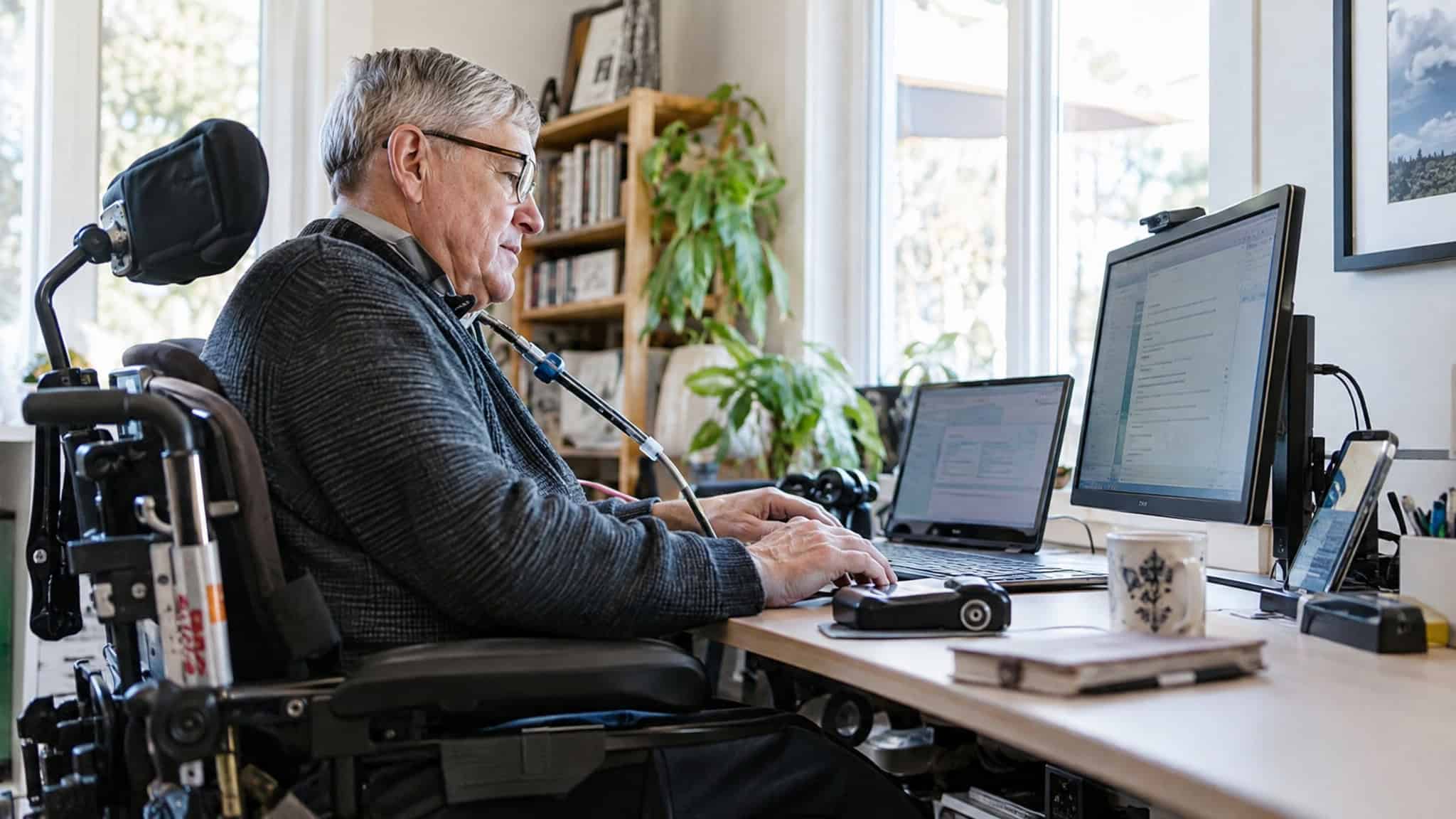
Physical disability never stopped Franklin Roosevelt from leading from a wheelchair after polio or Stephen Hawking from working as a top thinker with ALS using computer tech, whereas running a marathon at 94 or skydiving at 89 is “ideal aging” nobody needs to match. In a UCSD Stein Institute survey of roughly 3,000 independent-living San Diego seniors (mostly ages 60 to 99, with the Women’s Health Initiative), participants rated their own successful aging from 1 to 10 without any preset rules. Their answers showed that your own assessment still counts, even when clinical checklists and internalized ageism stigma say otherwise.
A self-check to repeat each year
Drawing on Daniel Levitin’s review of more than 4,000 peer-reviewed studies, aging is a distinct developmental stage like infancy or adolescence shaped by two streams (childhood factors and current habit and environmental responses), which means you can benchmark that modifiable second stream once a year the same way we treat any practical upgrade at Unfinished Man.
- Physical: Can I still get up off the floor quickly, walk briskly for 20 minutes, and recover well for my decade?
- Sleep and stress: Do I function well during the day and use habits like 10-minute meditation so cortisol isn’t shrinking memory centers?
- Cognition: Are memory slips just distraction fixed by Look, Snap, Connect, or are they interfering with daily independence (the clear line to see a doctor)?
- Social: Do my friendships still run on mutual reciprocity and active engagement?
- Place: Could I stay in my home and community by choice if my health or finances shifted?
Frequently Asked Questions
What are the signs you are aging well physically, mentally, and socially?
Physical vitality shows up in practical mechanics: keeping a firm grip, jumping, rising quickly from the floor or a chair, and walking briskly for 20 minutes without paying for it the next day. Mentally, it means holding onto a steady mood, learning new skills, and managing daily life through normal reasoning rather than constant memory workarounds. On the social side, researchers look for mutual, give-and-take friendships and living in a home and neighborhood where you can stay by choice even if your health or finances change.
What does successful aging mean according to gerontology research?
Gerontologists sum it up as adding both years to your life and life to your years, though the field still treats it as an ongoing process rather than a single checklist. A UCSD review found 29 different definitions across 28 studies, with freedom from physical disability being the most common bar. The foundational MacArthur model narrows it down to three connected pillars: low risk of disease and disability, strong mental and physical capacity, and staying actively engaged with life.
What are normal signs of aging at 60 and 65?
In your 60s, aging well is about maintaining everyday independence and reliable physical recovery while adjusting your routines as the gap between you and your peers starts to widen. Key readouts include a firm grip and getting out of a chair easily, both of which point to healthy muscle mass and nervous system function. As the MacArthur research showed, chronological age explains very little in this decade compared to your daily habits and psychosocial choices.
What are normal signs of aging at 70?
At 70, the benchmark is your overall functional trajectory and living on your own terms, not whether you can still match the speed you had at 40. This is right around the US health-expectancy mark of 67 for men and 72 for women, so preserving muscle power, joint resilience, and the brain-to-muscle coordination to get up off the floor is what keeps you independent. Waking up earlier is also common in your 60s and 70s, which is fine as long as your daytime energy and recovery hold steady.
What to expect when turning 80?
By 80 and into the 90-plus stages, differences from one person to the next are wider than at any other point in life. The goal shifts away from having a blank medical chart toward autonomous daily living and smart adaptation—selecting your priorities, optimizing what you do well, and using practical workarounds for the rest. Even among Danish centenarians, researchers found no strictly disease-free individuals, yet many still lived independently.
What are the signs you are aging poorly instead of aging well?
The real warning sign isn’t gradual age-related slowing, but physical or mental decline that actually gets in the way of living independently. On the cognitive side, researchers separate normal, distraction-driven forgetfulness from mild cognitive impairment—where you need constant workarounds to get by—and dementia, which disrupts your autonomy, mood stability, and everyday reasoning. If memory slips start threatening your independence, it is time to see a doctor to rule out reversible triggers like depression or medication side effects.
What are the signs your body is going through rapid aging?
Accelerated aging is largely driven by chronic brain inflammation, oxidative stress, obesity, high refined sugar intake, and unrepentant stress. When an older brain stays inflamed, immune cells start attacking healthy tissue, while high cortisol from chronic stress physically shrinks the brain’s memory centers. The upside is that daily lifestyle habits carry much more weight than genetics, meaning diet, movement, and stress control can slow those drivers down.
How do social connections and staying in your community affect aging well?
Researchers care about mutual give-and-take in your friendships rather than a massive contact list, because active engagement, helping others, and marshaling support keep you resilient. Those personal ties pair directly with local community infrastructure to make aging in place possible—meaning you can stay in your own house and neighborhood by choice instead of facing forced relocation when your health or finances shift.