Let’s get the simple answer out of the way first: DIY plumbing is any repair or installation you do without a licensed professional. That’s the dictionary version. The real question isn’t can you do it — it’s should you. Because once you start cutting into pipes or messing with pressurized water, the line between saving a few bucks and causing thousands in damage gets real thin, real fast.
I’ve seen enough guys — confident, handy guys, turn a $10 job into a $2,000 insurance headache. The trick isn’t learning how to solder copper. It’s learning which jobs to touch and which ones to hand off before you make things worse.
Key Takeaways
A faulty toilet flapper — a $10 part that takes ten minutes to swap, can quietly add $70–$200 to your monthly water bill if you ignore it, while a plumber will charge around $200 for the same fix.
Mixing copper and galvanized steel pipes without a dielectric fitting causes corrosion that leads to leaks and contaminated water — a chemistry problem, not a plumbing one.
Insurance companies routinely deny claims for water damage from unlicensed work, meaning one DIY mistake can leave you footing the full cost of repair yourself.
Table of Contents
DIY Plumbing Meaning: What It Really Covers (and What It Doesn’t)
Here’s the honest definition: DIY plumbing covers everything from swapping a showerhead to repiping your whole house — just without a license. The problem is that scope matters. Tightening a loose connection under the sink is a five-minute job. Cutting into a live water line behind drywall is a roll of the dice.
What makes this tricky is that most plumbing systems in a house operate under pressure — from the water supply, gas, or waste lines. Low-pressure stuff like a faucet aerator is forgiving. High-pressure stuff like a water heater or a gas line is not. And between those two extremes lies a whole spectrum of tasks where the risk depends on three things: the material you’re working with, your local code requirements, and whether you actually know what’s behind that wall.
The real meaning of DIY plumbing isn’t “do it yourself” — it’s do the ones you’ve got a reasonable shot at doing right, and leave the rest to someone who carries liability insurance.
Bottom line: The risk of any DIY job comes down to pressure, location, and whether you know what’s behind the wall. If all three are low, you’re probably fine.
The Hidden Risks Most Homeowners Don’t See Coming
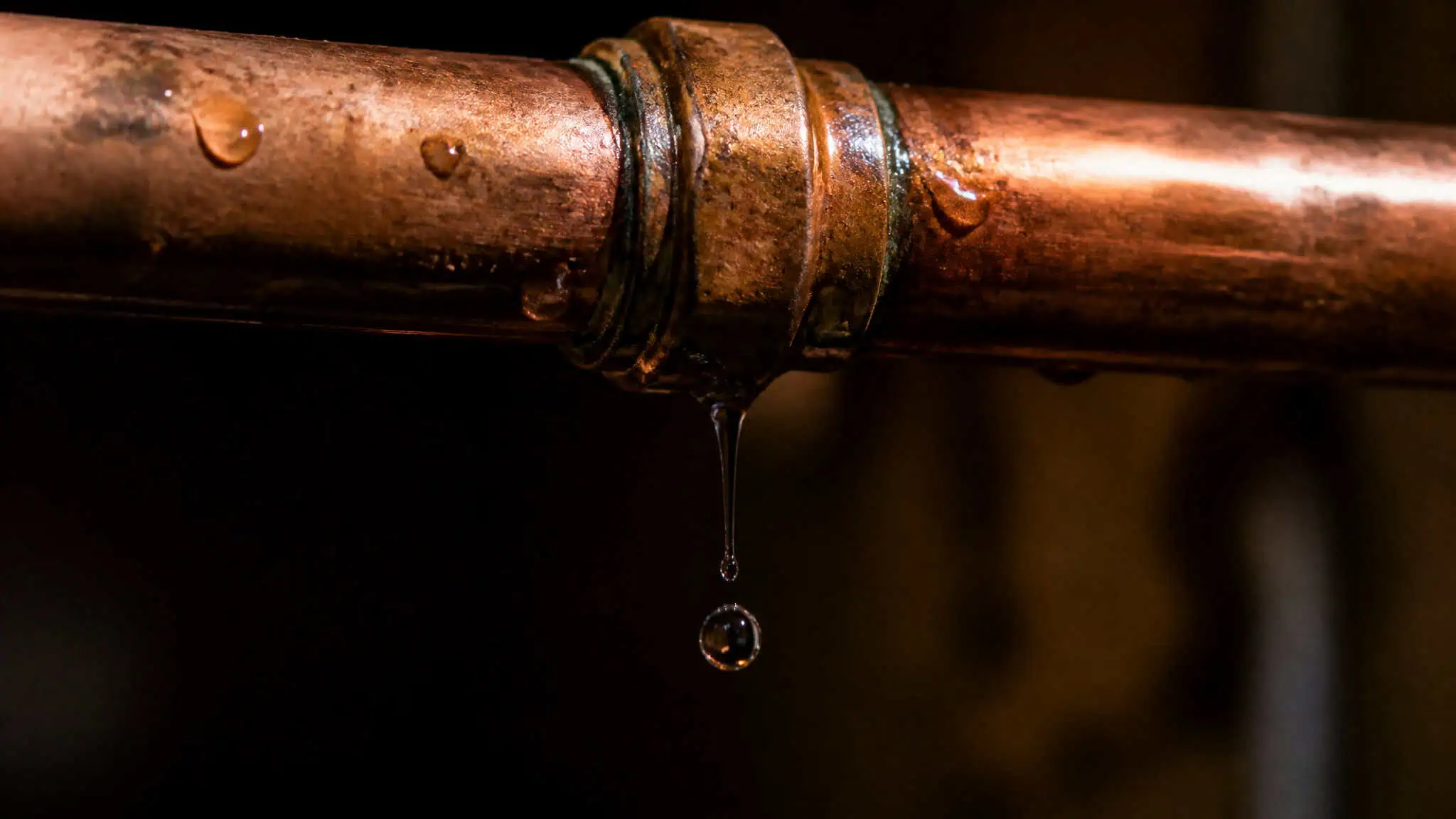
The scary part isn’t a pipe bursting in your face. It’s the slow, silent drip you don’t notice for three weeks.
The leak you’ll never see until it’s too late
A poorly sealed joint or an overtightened fitting can create a drip so small it evaporates before it hits the floor. But that drip keeps going — into your subfloor, behind your cabinets, into the wall cavity. By the time you see a water stain on the ceiling or smell mustiness in the crawl space, you’ve already got warped flooring, rotted wood, and possibly mold growing where you can’t get to it without demolition.
One small mistake can turn into a flooded basement. And the worst part? You won’t even know you made a mistake until the damage is done.
Your insurance might not cover it
Here’s the kicker most homeowners miss: insurance companies often refuse claims for damage caused by unlicensed work. That means if you try to replace a water heater yourself, mess up a connection, and it leaks overnight, you’re paying for the new water heater and the water damage out of pocket. Park Plumbing makes this point explicitly — and they’re not trying to scare you. They’ve seen the denial letters.
Same goes for manufacturer warranties. Some fixtures and appliances require professional installation to keep the warranty valid. Install it yourself, and you’ve just voided the one safety net you had if the thing fails.
Gas, contamination, and code violations
Beyond water damage, bad DIY plumbing can contaminate your drinking water, cause sewage backups, or create fire hazards if you’re messing with gas lines. And if you ever sell the house, unpermitted or non-compliant work can delay the sale or lower the offer price. Buyers’ inspectors catch this stuff. It’s a red flag that says “there’s probably more hidden problems.”
Common DIY Mistakes and Why They Fail
These are the five mistakes I see again and again — sometimes from guys who are otherwise handy. They’re easy to make, and each one has a simple fix once you know it exists.
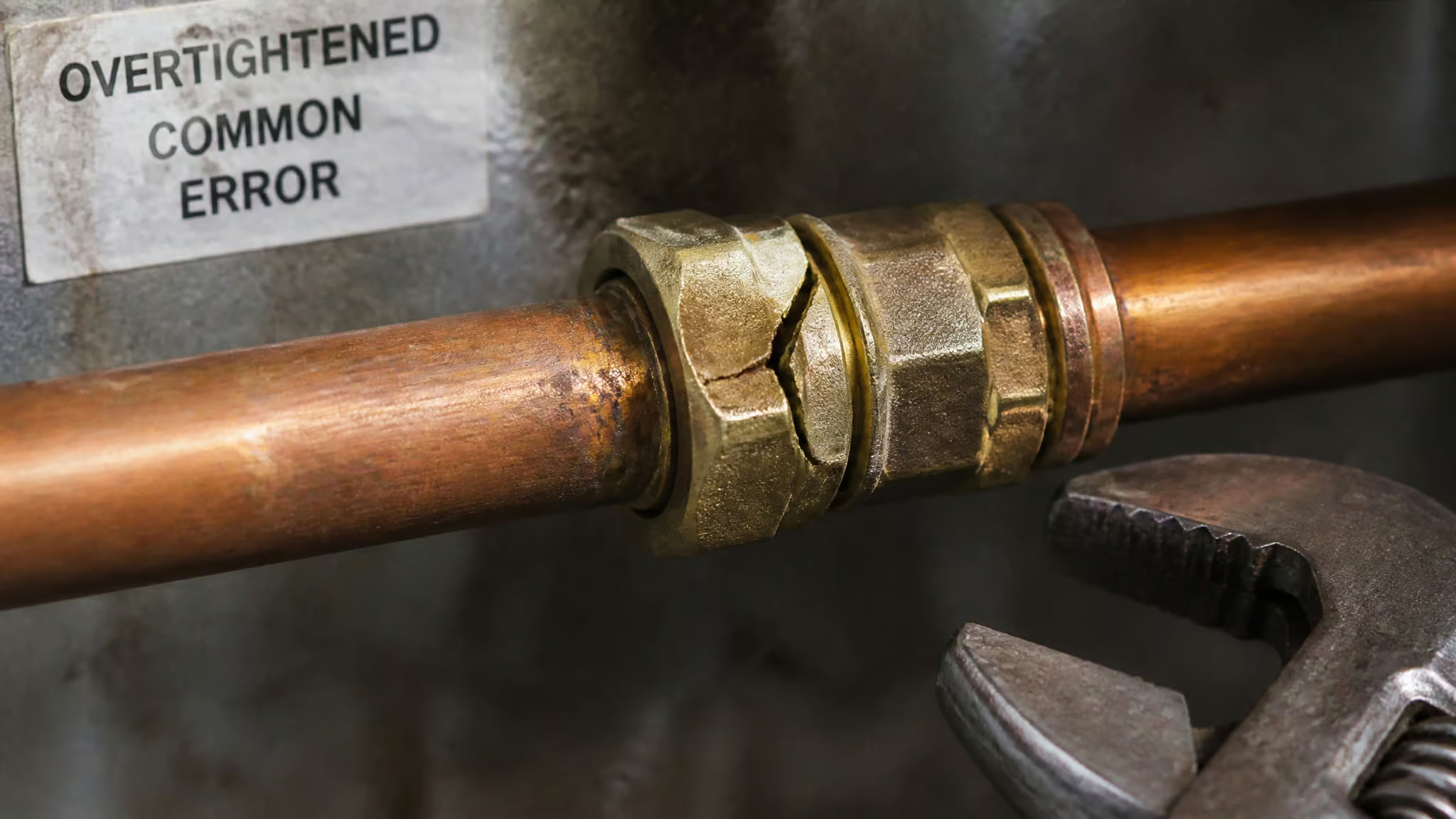
Overtightening
More force isn’t better. Cranking down on a supply line or a compression fitting can crack the seal, strip the threads, or deform the washer. The result is a leak that shows up hours or days later. Hand-tight plus a quarter turn is usually enough. If it leaks, back it off and try again — don’t just crank harder.
Mixing incompatible materials
Copper and galvanized steel don’t get along. Without a dielectric fitting between them, you get galvanic corrosion — basically a battery reaction that eats through the pipe over time. That means leaks, reduced water flow, and possibly contaminated water. It’s a chemistry problem, not a plumbing one, and it’s easy to avoid by using the right connector.
High water pressure
A strong shower feels great, but if your water pressure is above 80 PSI, it’s putting constant strain on every joint, valve, and fixture in your house. That leads to premature failures — pinhole leaks in copper pipes, dripping faucets, and short-lived water heaters. A pressure regulator costs maybe $50 and takes a plumber 20 minutes to install. It’s cheap insurance.
Forgetting to shut off the water
This one is almost comedic — until it’s your bathroom that looks like a small waterfall. It happens to everyone at least once. The fix is simple: before you touch anything, find your main water shut-off valve and know how it works. Spin it closed. Then start the job.
Using the wrong tools
Household tools — adjustable wrenches, slip-joint pliers, channel locks from the tool drawer, can strip threads, crack fixtures, or overtighten connections. Plumbing tools are designed differently: basin wrenches, pipe wrenches, and proper compression sleeve tools grip without damaging the finish. Spend the $20 on the right tool; a plumbing work video can walk you through everything from basic repairs to full installations, saving you a trip to the hardware store and a frustrated call to a plumber.
The True Cost of DIY Plumbing vs. Hiring a Professional
The “DIY always saves money” myth falls apart when you look at the numbers on a single example.
The toilet flapper — a $10 lesson
A standard toilet flapper costs under $10. Replacing it takes about ten minutes. If it’s faulty, it can quietly add $70 to $200 to your monthly water bill because water runs constantly down the drain. A plumber will charge around $200 to swap that same flapper.
So if you do it yourself, you save $190 — and you stop the water waste immediately. That’s a clear win.
The hidden cost of getting it wrong
Now flip the scenario. You try to replace a toilet supply line without the right tool, cross-thread it, and it starts leaking behind the toilet where you don’t see it for a week. By the time you notice, the water has soaked into the subfloor, rotted the baseboard, and dripped into the ceiling of the room below.
That $20 mistake now costs you $2,000 in repairs, plus the plumber fee to fix the original problem. The math flips hard.
The real cost of DIY plumbing isn’t the part — it’s the risk. When it works, it’s cheaper. When it doesn’t, it’s far more expensive than just calling a pro in the first place. The trick is knowing which of those two outcomes is more likely for the specific job in front of you, and that’s why it helps to read a guide on can you diy plumbing before jumping in.
Regulatory and Compatibility Pitfalls: When a Part Is Illegal in Your Area
You’d think plumbing standards are universal. They’re not.
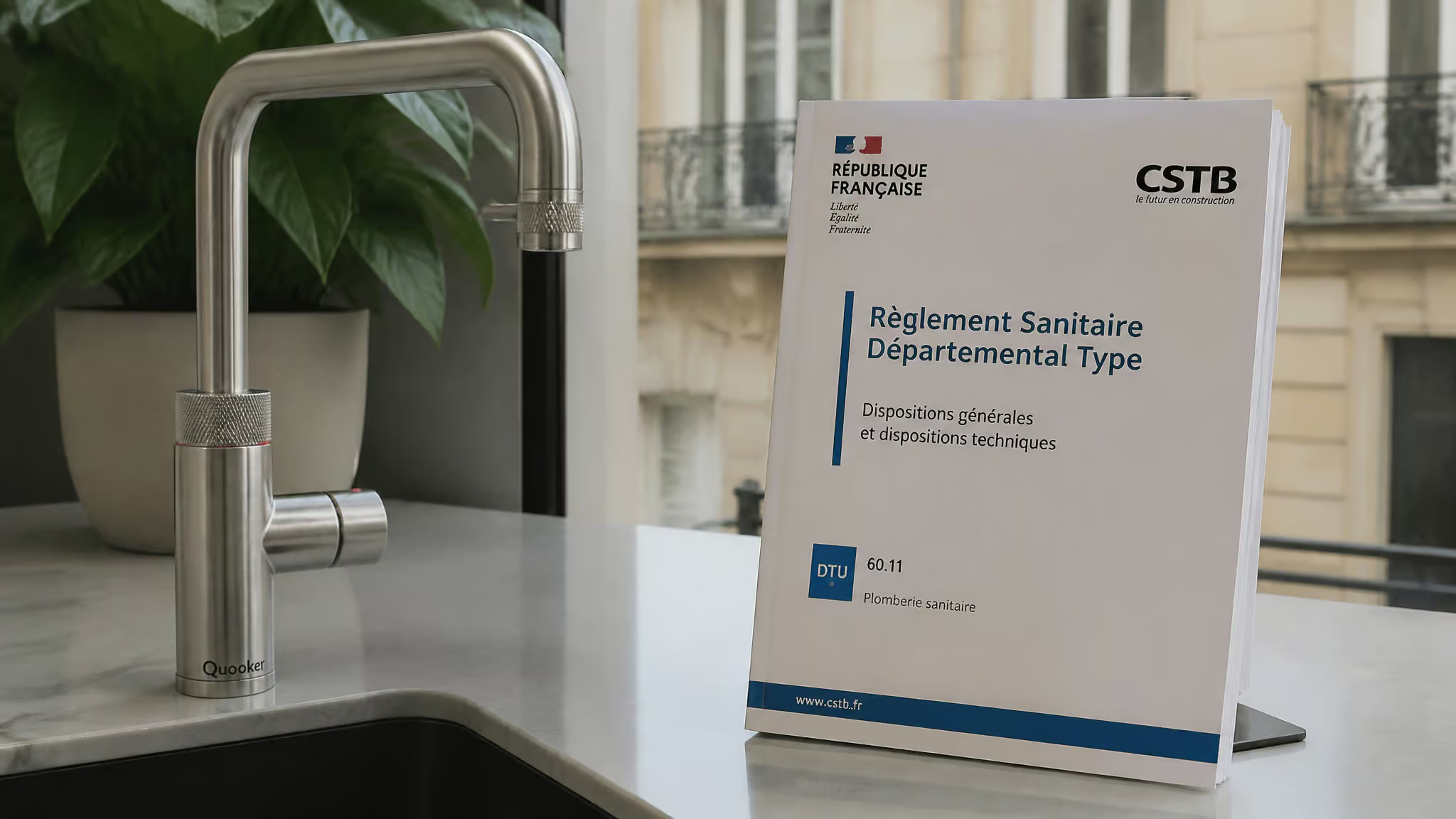
Take this real example from The Connexion: A homeowner in France bought a Quooker tap that dispenses boiling water at 100°C. In France, the maximum allowed temperature from a tap is 60°C to prevent scalding. That tap? Illegal — and the 60°C limit exists because water above that temperature can cause third-degree burns in just a few seconds of contact.
It can’t be installed. You’d never guess that from watching a YouTube video filmed in the UK. The 100°C boiling water is a scalding hazard that local codes are designed to prevent.
Same goes for electrical work that crosses borders. English-style fuses aren’t accepted in France. And most brass fittings around the world use BSP threads (British Standard Pipe), but if you’re importing something from the US or Asia, the threads might be different.
The point isn’t to scare you into never touching a pipe. It’s that local codes exist for safety — not red tape. Before you start any plumbing project, check your local building department or ask a local plumber what the rules are, especially if you want to know can you diy plumbing in texas. A quick phone call can save you from installing something that has to be ripped out later.
Quick test: Before buying any fixture, search your local plumbing code for maximum temperature and allowable materials. If you can’t find it, call the building department — it takes five minutes.
When to Call a Professional: The Decision Framework
I’ve developed a simple mental checklist over the years. If any of these apply, put down the wrench and call a licensed plumber.
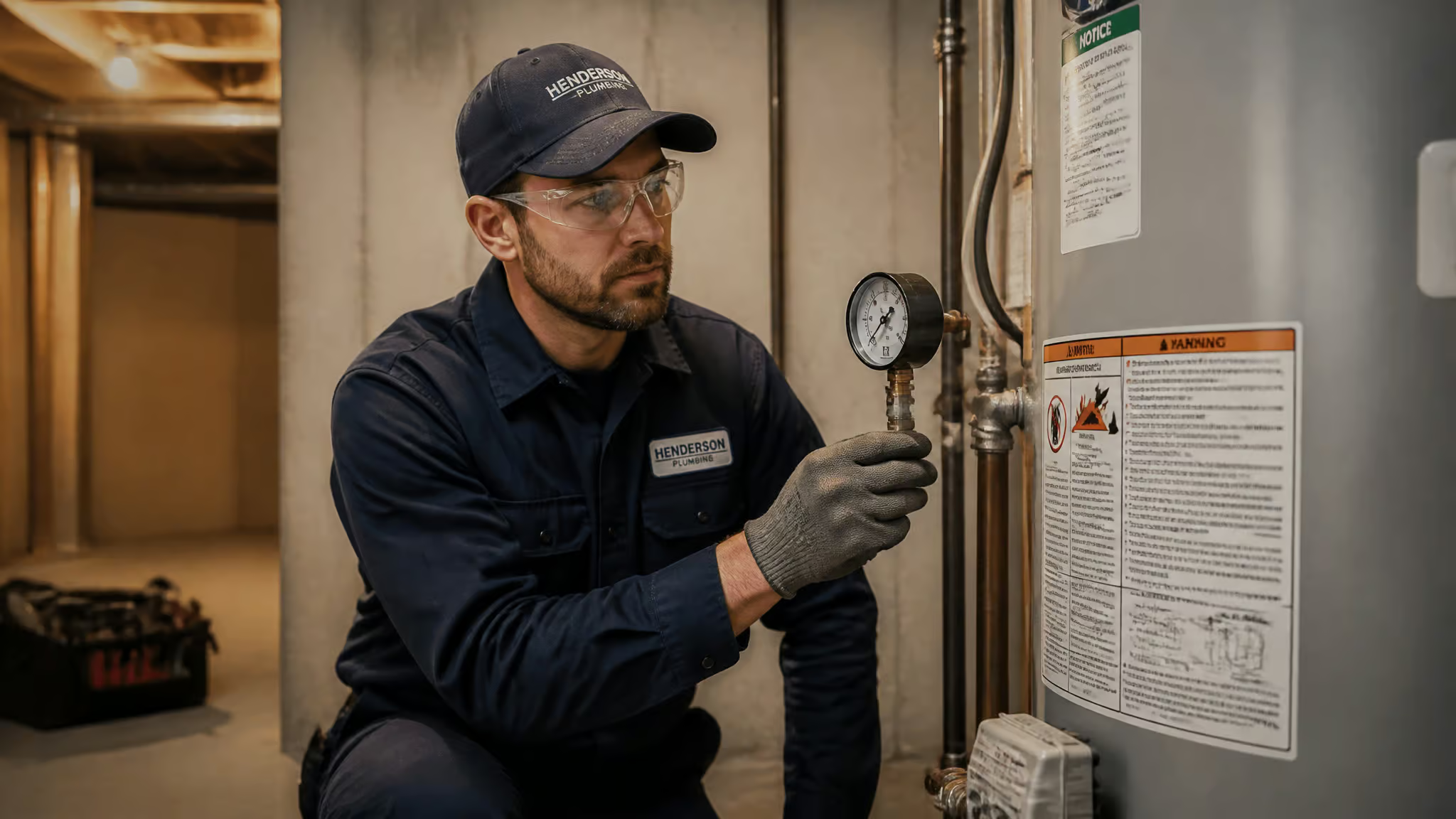
The signs that mean “stop”
- Recurring clogs or backups (same drain keeps clogging)
- Unusual pipe noises (banging, whistling, gurgling)
- Unexplained water bill spikes
- Inconsistent water pressure (weak one minute, strong the next)
- Leaks that are behind a wall, under a slab, or otherwise inaccessible
The hard no’s — non-negotiable pro territory
- Gas lines (leaks can cause fires, explosions, or carbon monoxide poisoning)
- Water heater installation or repair (pressurized, high temp, and code-heavy)
- Sewer line issues (including video inspection for tree roots)
- Major pipe repairs (anything that involves cutting into pipes inside walls)
- Bathroom remodels where you’re moving fixtures (permit and inspection required)
- Live water lines — any repair while water is running is a risk that’s not worth taking
Why a pro is actually better than you
A good plumber doesn’t just fix the symptom — they find the root cause. That dripping faucet might be a worn washer, or it might be high water pressure that’s going to kill your new washer in six months. Professionals identify underlying issues that DIY fixes often overlook. A pro diagnoses the system, not just the part. They also know local codes, have the right insurance, and will guarantee the work.
It’s not about ego. It’s about lasting solutions versus temporary patches. Professionals can identify underlying issues that DIY fixes often overlook, which is why many service FAQs emphasize calling a pro for recurring problems.
Safe DIY Tasks and Preventive Maintenance You Can Handle
Now for the good news — there’s plenty you can do yourself. These are the jobs that are low-risk, low-pressure, and don’t require a license.
Do an annual plumbing inspection
Robert Miller, a general manager at Mr. Rooter Plumbing in Seattle with 15 years in the business, suggests checking these once a year: faucet aerators (clean or replace), crawl spaces (look for moisture), drains (flush with hot water), water heater (check for corrosion), and water pressure (test with a gauge). It takes an afternoon and catches problems early.
Know where your main shut-off is
This is the single most important thing you can do. If a pipe bursts or you have a freeze, that valve is your emergency brake. Show everyone in your house where it is and how to turn it off.
Clear a clogged drain the right way
Start with a plunger (about 20 seconds of steady plunging) and then a drain snake. Those two tools solve most clogs. If that doesn’t work, try the baking soda and vinegar trick: ½ cup baking soda, 1 cup vinegar, let it sit for 15 minutes, then flush with hot water. It’s gentle on pipes and works for minor buildup. If a clog cannot be cleared, professional help should be sought.
Avoid chemical drain cleaners — they’re harsh on pipes and can cause long-term damage. If a clog cannot be cleared, professional help should be sought rather than resorting to harsh chemicals that can damage your plumbing.
Use the right cleaner for the job
Kitchen clogs are usually grease and fat. Use a cleaner formulated for that. Bathroom clogs are soap scum and hair. Use a cleaner made for that. Don’t treat all drains the same.
Simple replacements
- Showerhead: Easy swap. Use thread sealant tape (PTFE) wrapped clockwise a few turns around the threads.
- Toilet flapper: $10, ten minutes, huge water savings.
- Kitchen sink sprayer: On older models, you can often replace just the head without swapping the whole hose.
Toilet flange repair with the Oatey Fix-it Ring
If your toilet is wobbly or leaking at the base, you might have a cracked flange. The Oatey Fix-it Repair Ring lets you repair a broken flange without replacing the whole thing — it has 10 mounting holes and four slotted tabs to attach over the old flange. It’s a clever workaround that’s within reach of a careful DIYer.
Conclusion: The Real Meaning of DIY Plumbing
Here’s the bottom line: DIY plumbing isn’t a badge of honor or a way to prove you’re handy. It’s a decision-making skill. The real meaning is knowing when to pick up the tools and when to pick up the phone.
Simple, low-pressure maintenance — swapping a flapper, cleaning an aerator, plunging a drain, is fine for an experienced homeowner. Anything involving pressure, gas, hidden pipes, or local code requirements is for a licensed pro. The most dangerous mistake isn’t the one you see happen; it’s the slow, quiet leak that you don’t find until it’s already cost you thousands.
The best DIYers know their limits. The rest learn them the hard way — with a wet basement and an insurance denial letter.
If you’re still deciding whether a specific job is worth attempting yourself, check our guide on what you can legally and safely do as a DIY plumber for a more detailed breakdown. And if you’re in Texas, the rules are different — see our state-specific guide before you start.
Frequently Asked Questions
Is DIY plumbing a good idea?
It depends on the job. Simple, low-pressure tasks like swapping a toilet flapper or cleaning a faucet aerator are fine for a careful homeowner. But anything involving gas lines, water heaters, or hidden pipes behind walls is best left to a licensed pro — one mistake can lead to thousands in water damage and an insurance denial.
What does “plumbing” mean in slang?
In slang, “plumbing” can refer to the internal workings or systems of something, like the plumbing of a building or even a metaphor for the hidden infrastructure of an organization. But in the context of DIY, it’s about the actual pipes, fixtures, and fittings that carry water and waste in your home.
What does DIY mean in construction?
DIY stands for “do it yourself” — any repair, installation, or project you do without hiring a licensed professional. In construction, it covers everything from painting a room to building a deck, but the risks go up fast when you’re dealing with pressurized water, gas, or structural changes.
Is it possible to DIY plumbing?
Yes, but only for certain jobs. You can safely replace a showerhead, fix a running toilet, or clear a clogged drain with a plunger and snake. But cutting into live water lines, installing a water heater, or touching gas pipes requires a license and insurance — and doing it yourself can void warranties and get insurance claims denied.
What’s the difference between DIY plumbing and hiring a pro?
DIY saves money on simple fixes — a $10 toilet flapper swap saves you a $200 plumber call. But a pro brings liability insurance, knowledge of local codes, and the ability to diagnose root causes like high water pressure that a DIY fix might miss. One mistake can turn a $20 job into $2,000 in repairs.
What are the most common DIY plumbing mistakes?
Overtightening fittings, mixing copper and galvanized steel without a dielectric fitting, forgetting to shut off the water, and using the wrong tools are the top mistakes. Each can cause slow leaks, corrosion, or sudden bursts that lead to hidden water damage and costly repairs.