My dad was a brilliant Army surgeon. He could crack a chest or reconstruct a face without breaking a sweat. But he drove with the oil light on for three weeks, his garage was a graveyard of broken lawn equipment, and the only tool he owned was a hammer he didn’t know how to swing. I grew up assuming that anything mechanical was magic.
That changed about fifteen years ago when a TV in my house exploded. Not metaphorically — the color wheel shattered somewhere inside the chassis and it sounded like a small animal got caught in the fan. A new TV would have set me back about $1,000. The replacement part cost a few hundred bucks and arrived the next day.
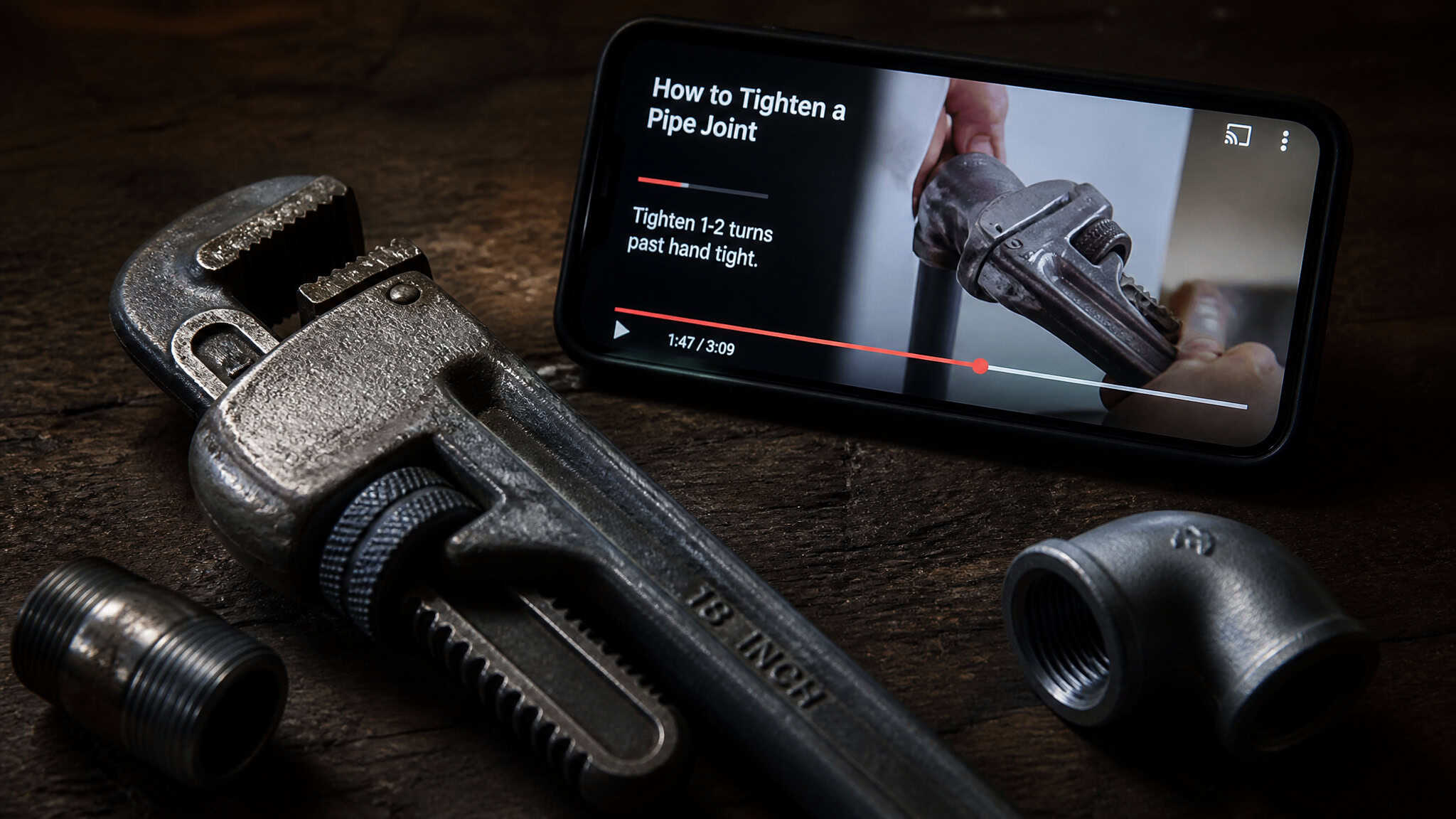
YouTube videos totaling maybe 45 minutes of runtime guided me through a repair that took six hours. Six hours of pausing, rewinding, cussing, and learning that “universal” on the packaging doesn’t mean it’ll fit your machine. Take a photo of the broken part and measure it before you order. I learned that the hard way.
That experience taught me something a book never could: video captures the recovery moments. It shows you what happens when a fitting slips, when water surges, when the part you ordered doesn’t match. Text instructions gloss over those moments. A good plumbing video lingers on them.
That’s the reason a Knoxville-area company called Tennessee Standard Plumbing built a YouTube channel with 242 instructional videos. Text guides leave most homeowners unsure whether they can handle a job or need to call a pro. So they filmed real repairs, walked through the tools, and — this is the important part, told people when to stop. The channel exists to help homeowners make a decision, not to turn everyone into a plumber.
With homeownership costs climbing, the demand for reliable repair video is growing.
Key Takeaways
Drain pipes need a 1/4-inch slope per foot; check it with a 4-foot level and a 1-inch block hot-glued to one end
A full bathtub draining 40 gallons can create a vacuum strong enough to pull water out of every trap in the house — that’s why venting is code, not optional
The single best DIY decision rule: If the tool you need costs more than hiring someone who already owns it, hire the person.
Table of Contents
How to Spot a Quality Plumbing Work Video (Before You Follow It)
Here are four things to look for in the first minute before you commit to following someone’s instructions with your actual plumbing.
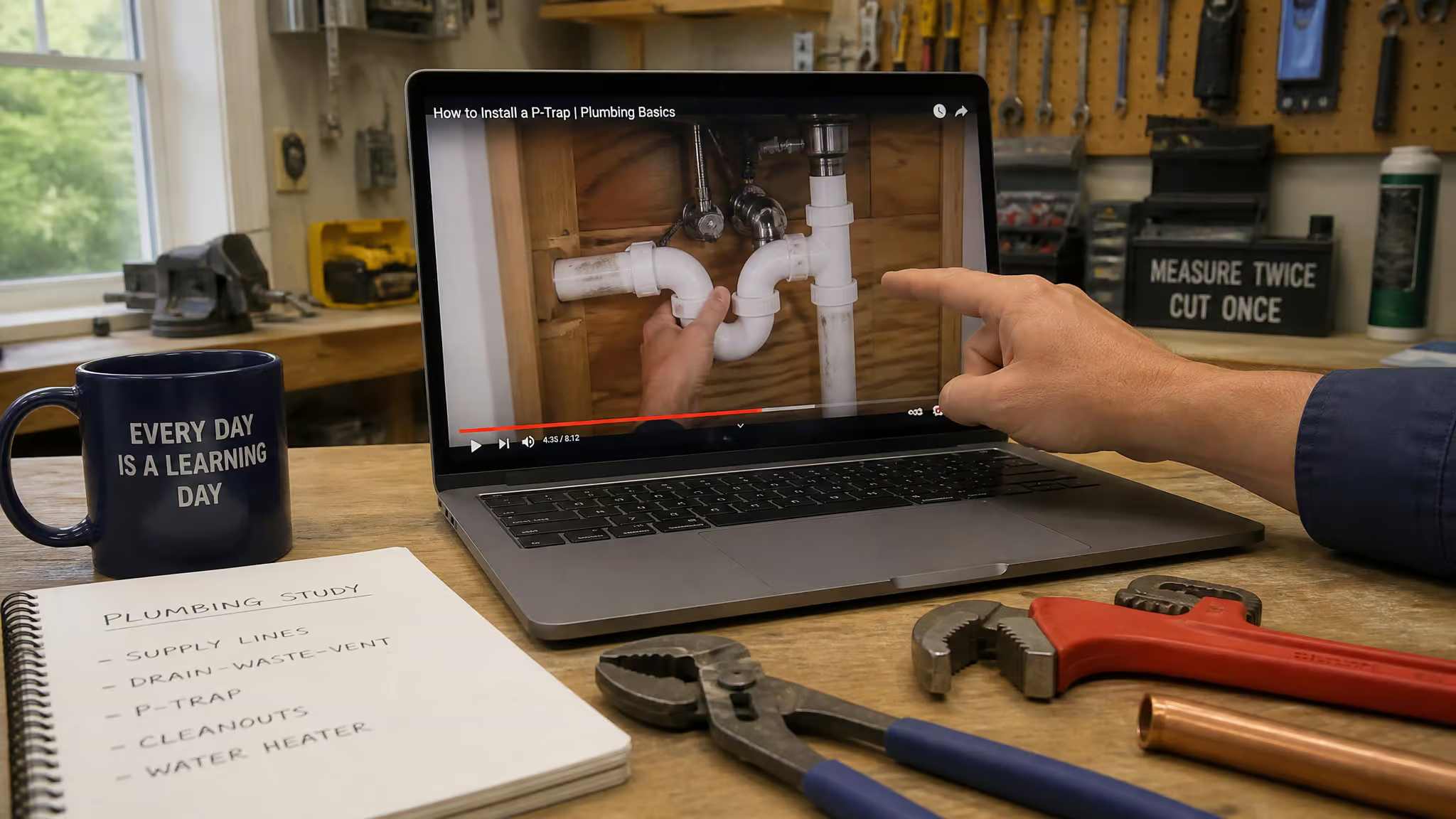
Tools and materials listed upfront. A quality video shows you everything you’ll need before you start. It doesn’t bury the tool list in the description or expect you to pause on a five-second shot of a wrench. If the video opens with “here’s what you’ll need” and shows each item clearly, that’s a green light.
Tennessee Standard’s channel does this for every repair — they walk through the tools and the skill level required so you know before you click whether you’re in over your head. While watching, use your phone to record the disassembly process for reassembly reference, it’s the most important tool a DIY plumber can have.
Close-up shots of the critical connections. Plumbing is about joints, fittings, and transitions. A video that stays wide-angle the whole time is hiding details. Good videos zoom in on the connection points, show you how the parts seat together, and demonstrate the angle of attack. You should be able to see the gap between a pipe and a fitting before they’re joined.
Safety warnings that aren’t afterthoughts. The video should tell you to shut off the water supply. It should mention testing pressure afterward. It should show you wearing gloves or eye protection if the job calls for it.
And it should explicitly identify moments where the repair exceeds DIY scope. Tennessee Standard’s videos flag gas lines, sewer systems, and pressurized tanks as professional-only territory. A video that never says “stop here and call a plumber” is a video that doesn’t have your best interest in mind.
Clear scope boundaries. The best videos tell you exactly what the repair covers and what it doesn’t. They don’t pretend that changing a toilet flapper qualifies you to repipe your basement. They draw a line and say this is the DIY part; if the problem is beyond this, hire someone.
There’s a rule I picked up from a plumbing video that’s stuck with me: if the tool you need for the repair costs more than hiring the person who already owns that tool, hire the person. It’s a check that saves you from buying a $200 drain snake for a clog you could have had cleared for $150.
Tennessee Standard’s channel is a good example of this approach. The company recently hit its sixth anniversary with a 50-person team — they’re established, not a content farm. Their videos are categorized by tools and skill level, so the difficulty is clear before you watch. That’s the structure you want from any channel you trust with your home’s plumbing.
Plumbing Basics Every DIYer Needs Before Watching a Repair Video
You need to understand three separate systems that work together inside your walls. If you know how they connect, you’ll spot half the mistakes in bad videos and understand why good ones emphasize certain steps.
Here’s the image that made it click for me. Richard Trethewey, the plumbing expert from This Old House, describes a bathtub full of 40 gallons of water. Pull the plug, and all that water rushes down the drain at once. That much water moving that fast creates a vacuum that can pull the water out of every trap in your house.
Every toilet, sink, and floor drain. Once the traps are empty, sewer gas flows in. Your house smells like a sewer because the system can’t breathe.
That’s why vents exist. They let air into the drain system so water can flow out. No vents means slow drains, gurgling toilets, and sewer gas in your home. The best plumbing work videos show you this relationship because it explains why slope, pipe size, and vent placement matter.
The goal of good plumbing is that you never think about it. If you’re noticing it, something’s wrong. That’s the standard Trethewey holds every repair to, and it’s the right one.
The Supply Line Network: Where Water Comes From
Pressurized clean water comes from either a municipal supply or a private well. It travels through pipes under pressure and arrives at your fixtures ready to come out of the faucet. That’s the supply system — the simplest of the three.
The important thing to know here is the shutoff valves. There’s a main shutoff valve that kills water to the entire house — you should know where it is before you start any repair. But there are also individual fixture shutoffs under sinks and behind toilets. Those let you fix a leaky faucet without turning off water to the whole house.
A good video will show you both valves before the repair starts.
The Drainage System: Gravity Does the Work
Drains don’t push; they rely entirely on gravity. That’s why slope is everything. If your drain pipe is flat, sagging, or sloping uphill, water just sits there and clogs. If it slopes too much, the solids outrun the water and leave deposits that eventually cause blockages.
The magic number is 1/4 inch of drop per foot of pipe for pipes 3 inches and larger. That’s the rule for toilets and main drains. Smaller pipes might need different slope, but for the big stuff, 1/4 inch per foot is your benchmark.
Norm Abram has a trick for checking this that costs almost nothing. Take a 4-foot level and hot-glue a 1-inch block to one end. Put the block on the lower end of the pipe you’re checking. Adjust the pipe until the bubble reads level, and you’ve got your 1/4 inch per foot. Simple and it works.
The Venting System: The Part Most DIYers Ignore (Until It Fails)
This is where most homeowner confusion lives. People snake a drain repeatedly, wondering why it keeps clogging, without realizing the real problem is an improperly vented system. The drain isn’t blocked — it can’t breathe. Every fixture needs a properly sized vent, and plumbing codes dictate how close the vent needs to be to the drain. Those codes exist for a reason and should not be ignored.
A slow drain or a gurgling toilet is often a vent problem, not a clog. Snaking the drain won’t fix it because the pipe is clear. The vacuum is preventing the water from flowing. This is the kind of thing a good plumbing work video will explain before you start cutting into pipes.
Pipe sizing in plumbing uses interior diameter, not exterior. Trethewey puts it simply: We only care about one thing in plumbing: the inside of the pipe. The outside is just packaging. A toilet gets a 3-inch pipe, a shower gets 2-inch, kitchen sinks and bathroom lavatories get 1.5-inch. Those measurements are the standard for a reason — they handle the expected volume without backing up.
Pipe Materials: What the Best Video Tutorials Show You (and What They Often Leave Out)
A common leak point in home plumbing isn’t a bad pipe — it’s a bad transition between two different materials. That’s the detail that many DIY videos gloss over, and it’s the one that will cost you.
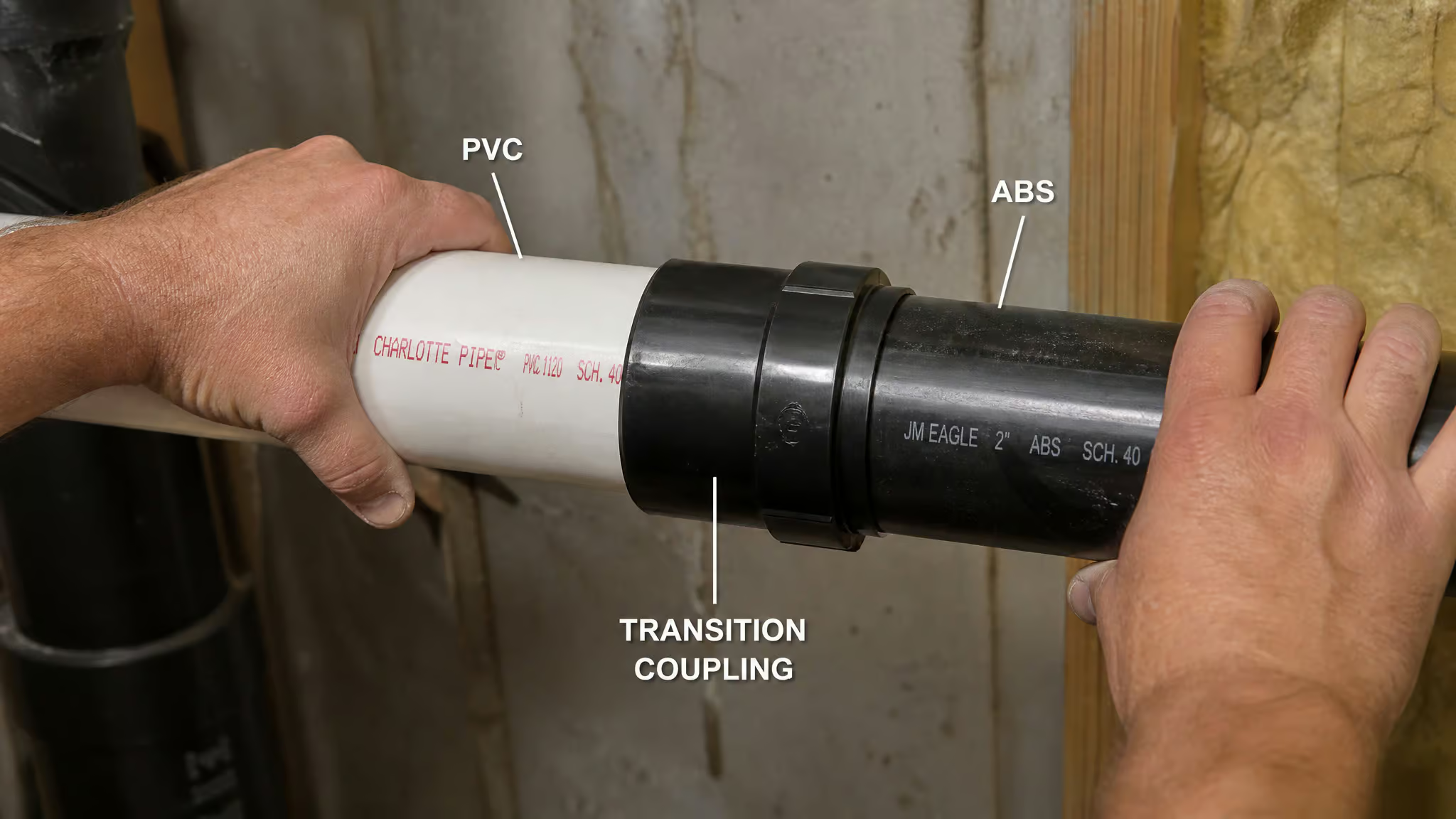
When you watch a replacement video, pay attention to what kind of pipe is coming out and what’s going in. If they’re different materials, the video needs to show you the correct transition fitting. If it doesn’t, find another video.
PVC vs. ABS for Drain Pipes
PVC is more flexible, ABS is more impact-resistant, and both work well in residential drains. Local code and plumber preference usually decide which one you’ll find in your walls.
Here’s the mistake homeowners make: they buy PVC for a repair without checking whether the existing drain is ABS. Then they’re stuck with a connection problem because the two materials aren’t interchangeable without a proper transition coupling. Take a photo of the existing pipe before you go to the hardware store. Measure the interior diameter. Get the right material.
Copper vs. PEX for Supply Lines
Copper is the traditional choice. It has natural antimicrobial properties, it’s durable, and it looks clean. PEX is newer, flexible enough to snake through walls without a ton of fittings, freeze-resistant, and usually less expensive. Fewer fittings means fewer potential leak points. That’s a real advantage.
They’re both good. The choice depends on your local codes, your budget, and whether you’re comfortable with the tools required for each. Copper needs soldering. PEX needs a crimping tool. A good video will tell you what tools are required before you start.
Cast Iron: When Noise Matters
Cast iron is heavy, expensive, and a pain to work with. But it’s quiet. If you’re running a drain pipe above a living room — say, an upstairs bathroom above the space where you watch TV, cast iron is worth the extra cost. You won’t hear every flush. That’s the tradeoff. Videos that show cast iron installation should acknowledge why you’d choose it over PVC or ABS, not just show you how to cut it.
Know Your Limits: DIY-Friendly Repairs vs. Jobs for a Licensed Plumber
The channel that recommends against doing the job yourself is the channel you should trust for the jobs you can do.
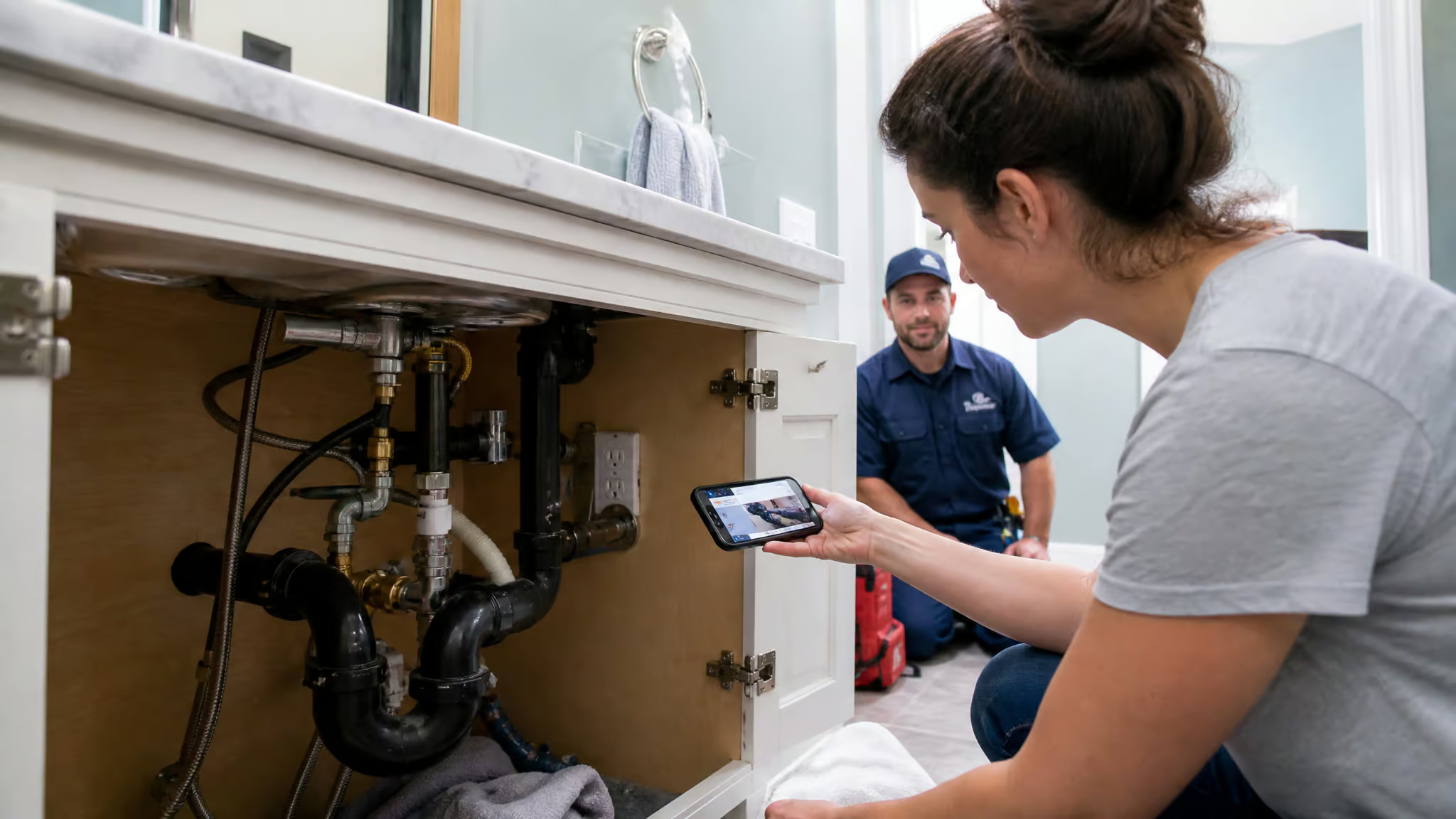
Here’s what’s safely in DIY territory: unclogging drains with a plunger or a snake, replacing a toilet flapper, cleaning faucet aerators, fixing a running toilet, replacing an electric water heater element. These are straightforward tasks that require basic tools, minimal risk, and clear video instructions.
Here’s what’s not: gas lines, main sewer lines, gas water heaters, pressurized tanks, backflow prevention, anything that requires a permit. Electricity kills. Natural gas kills. Water can do as much damage to your home as fire. A small leak turns into a big problem faster than you think.
The tool-cost rule applies here with extra force. If the tool you need costs more than hiring someone who already owns it, hire the person. A specialized drain snake or pipe threading tool sits in your garage for years after a single use. That’s not a good investment.
Before you start any plumbing work, turn off the water. Turn it back on slowly after the repair and check for drips. It sounds obvious, but it’s easy to forget in the moment. I’ve painted baseboards for four hours only to spend two more scraping paint off the new hardwood floor underneath.
I used blue tape. Still got paint on the floor. The lesson applies across all home repair: prep work is not optional.
Keep records of every plumbing job — permits, inspections, receipts. It saves time and money later, especially when you sell the house. A good video will mention this as a closing step. If it doesn’t, that’s a small red flag.
Common Plumbing Mistakes That Videos Can Reveal (and Help You Avoid)
A good video trains you to spot bad practice. Here are the four most common DIY plumbing mistakes and how to catch them in a video before you repeat them in your own home.
Improper drain slope. Too little and water pools. Too much and solids outrun the water. The 1/4-inch-per-foot number is your check.
Norm Abram’s level trick is how you verify it. If a video shows someone installing a drain pipe without checking the slope, don’t follow their example.
Mixing pipe materials without proper transition fittings. This is the leak point that videos undersell. Copper to PEX needs a brass fitting. PVC to ABS needs a transition coupling. If the person in the video doesn’t show you the transition, find a video that does.
Inadequate venting. A slow drain or gurgling toilet is often a vent problem, not a clog. If a video shows someone snaking a drain without checking for vent issues, they’re addressing symptoms, not the root cause. The real fix might be adding a vent or clearing an existing one.
Unanchored supply pipes. Supply pipes need to be anchored every six feet. If they’re not, they rattle and thump every time you turn off a faucet. It’s annoying but easy to fix. A video that doesn’t mention this is skipping a basic good practice.
Chemical drain cleaners. Treat any video that recommends chemical drain cleaners with skepticism. They’re harsh on pipes, bad for the environment, and often don’t solve the actual problem. The natural alternative — baking soda and vinegar followed by hot water, is cheap, works for minor clogs, and won’t damage your pipes.
Preventive Maintenance You Can Learn from a Short Video
The best plumbing work videos don’t just show you how to fix things; they show you early warning signs so you can catch problems before they turn into floods.
A useful test I’ve found in a video is the water-meter leak check. Turn off every water-using appliance in your house. Go look at your water meter. If it’s still moving, you have a hidden leak somewhere.
That’s the early warning that prevents expensive water damage. Water stains, mold growth, or an unexplained increase in your water bill are the signs to look for in your home.
Clean your faucet aerators once a year. Mineral buildup kills water pressure, and this is the simplest fix. Unscrew the aerator, soak it in vinegar, brush it clean, and screw it back on. A short video can show you the whole process in under two minutes.
For natural drain cleaning, skip the chemicals. Dump baking soda down the drain, follow with vinegar, let it fizz for a few minutes, then flush with hot water. It works for minor clogs and won’t damage your pipes.
If you live in cold weather, insulate pipes in unheated spaces, seal any leaks that let cold air in, and let faucets drip during a freeze. The drip costs pennies. A burst pipe costs thousands.
Low water pressure is often the easiest thing to check. Make sure the main shutoff valve is fully open before you start troubleshooting anything else. Many people call a plumber for low pressure caused by a partially closed valve.
How to Find the Right Plumbing Work Video for Your Specific Project
Search “replace toilet flapper,” not “toilet repair.” Search “unclog kitchen sink,” not “drain cleaning.” The more specific your search, the more likely you’ll find a video that matches your exact situation.
Is the channel run by licensed plumbers or an established home-improvement brand? This Old House is one obvious example. Tennessee Standard Plumbing’s channel is another — 242 videos, categorized by tools and skill level, with new content added regularly including seasonal reminders and answers to common questions.
They also run a segment called the Nehemiah Initiative that highlights local community members, which signals that the company treats the channel as community education rather than lead generation.
Kelton Balka, the company spokesperson, puts it this way: the platform exists to share plumbing expertise with homeowners who want to understand their systems and make informed decisions. A good channel supplements professional service — it doesn’t try to replace it.
The best channels tell you when to call a plumber, not just how to DIY. If a video never says “stop here and call a pro,” the creator either doesn’t know the risks or doesn’t care. Neither is a good sign.
Frequently Asked Questions
How to plumb for beginners?
Start by understanding the three systems in your walls: supply (pressurized water in), drainage (gravity-fed water out), and venting (air that lets drains flow). Watch videos that list tools upfront, show close-ups of connections, and clearly mark where DIY ends and a pro should take over.
Is plumbing a difficult job?
Basic repairs like replacing a toilet flapper or unclogging a drain are straightforward with a good video. But gas lines, main sewer lines, and anything requiring a permit are not DIY territory — those jobs demand a licensed plumber because the risks of water, gas, and code violations are real.
What are common plumbing mistakes to avoid?
The big four are improper drain slope (needs 1/4 inch per foot), mixing pipe materials without the right transition fitting, ignoring venting issues when a drain is slow, and using chemical drain cleaners instead of a natural baking soda and vinegar flush. Also, always anchor supply pipes every six feet to stop rattling.
Why does my toilet gurgle when I flush the sink?
That gurgling is a venting problem, not a clog. When a drain can’t breathe, the vacuum pulls water out of nearby traps, letting sewer gas in. Snaking the drain won’t fix it — the real fix is clearing or adding a vent so air can enter the system.
How do I check for a hidden water leak in my house?
Turn off every water-using appliance, then go look at your water meter. If the meter is still moving, you have a hidden leak somewhere. That simple check can save you from thousand-dollar water damage before you ever see a stain or mold spot.