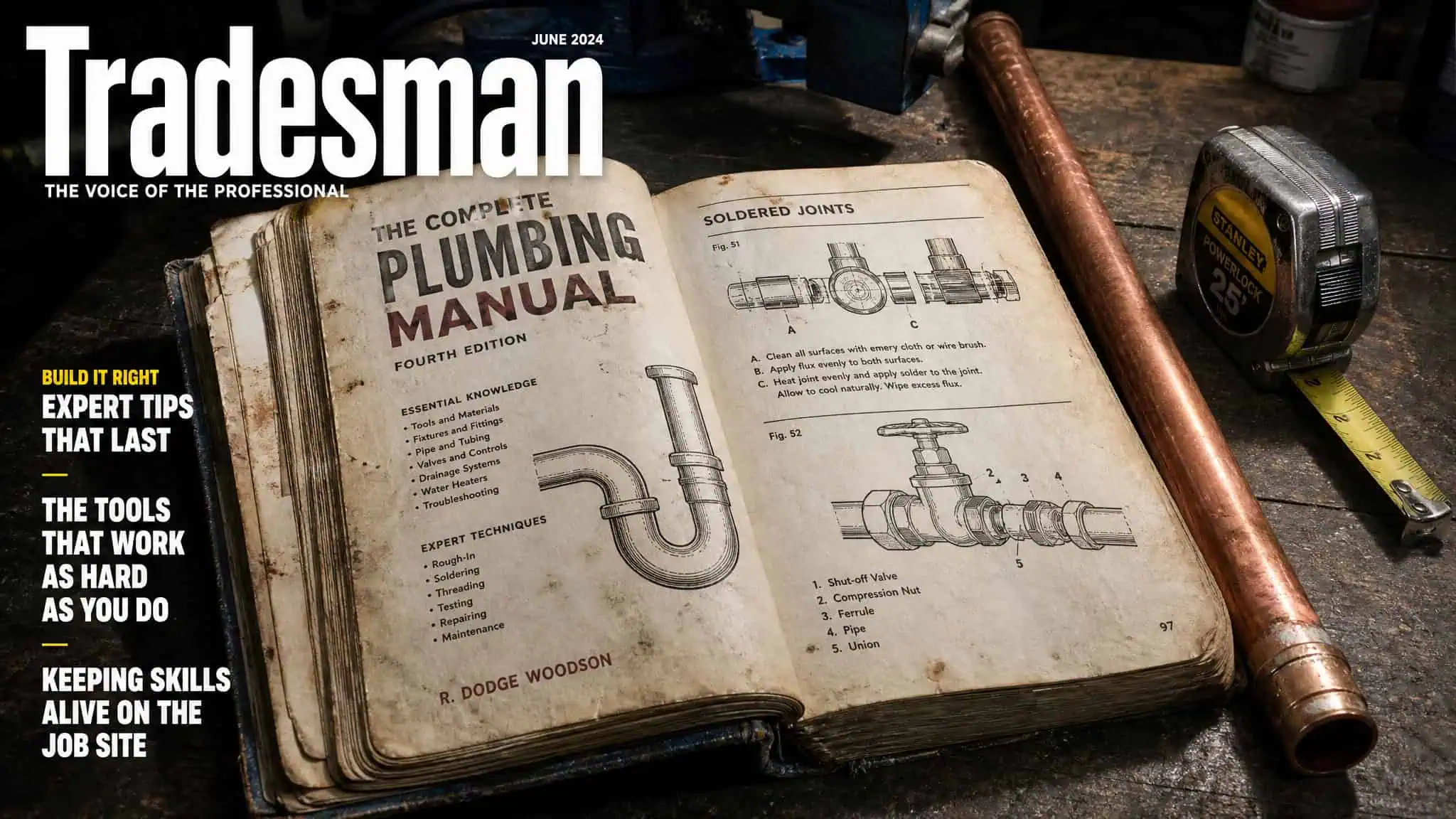
Most guys start looking for a plumbing book the wrong way. They check Amazon ratings. They find the 4.6-star option. They buy it.
Then they fail inspection because the reviews are from a 2015 edition and their local code has changed. I’ve seen this happen more times than I can count from running a DIY community. The book itself isn’t bad—it’s just the wrong tool for the job.
The real filter isn’t star ratings. It’s edition year and your local jurisdiction. Codes update every three years for IPC and UPC. The 2024 editions are current as of 2026. 2027 editions will start appearing late next year. And state amendments—California Plumbing Code, Massachusetts regs—can rewrite what you actually need to follow. Always check your local Authority Having Jurisdiction (AHJ) before you buy any code book.
Key Takeaways
A book’s edition year matters more than its star rating: a 3-star 2024 edition is worth more to a permit-holding homeowner than a 4.5-star 2015 edition
Used books are fine for technique (soldering, pipe fitting, threading) but never for code compliance—codes change every three years, and a 2015 IPC is useless for a 2026 project
The best beginner books are largely interchangeable except for two things: edition year and how clearly they tell you when a job is beyond you
Table of Contents
The best DIY plumbing book starts with one decision most people ignore
You don’t need the “best” book. You need the right book for your project and your local rules. The guy who buys a 4.6-star book from 2015 and fails inspection because his county adopted a 2024 amendment learns this the hard way. I’ve seen that exact post in our forum: “I did everything the book said, inspector failed me on venting.” He had the wrong edition.
So first question: what are you doing? Fixing a toilet? Replacing a faucet? Roughing in a basement bathroom?
That decides the book depth. Second question: do you need to pass an inspection? If yes, the book’s code references must match your jurisdiction. Third question: do you want to learn the trade or just fix this one thing?
How to choose the right plumbing book and where to buy it
Choosing the right plumbing book starts with matching it to your skill level, project type, and code needs. The sections below break down what to look for, whether to buy new or used, and where to find the best options.
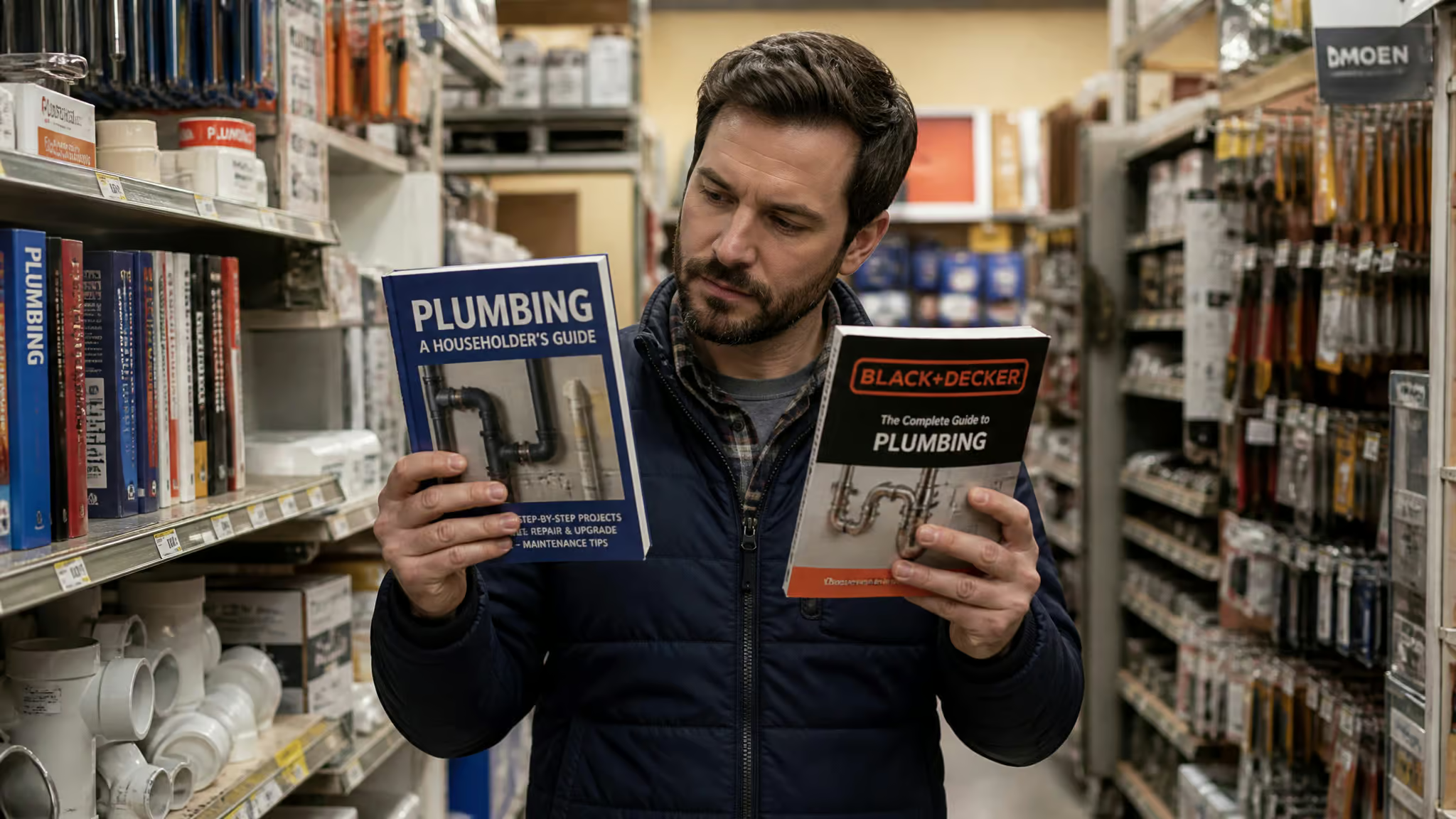
What to look for: skill level, project type, and code needs
Beginners need photo-driven books that cover 40 to 90 common tasks. The best ones show you step-by-step and also tell you when to call a pro. If you’re remodeling, you need rough-in and venting specifics—more depth than a toilet swap book. Pros need current IPC or UPC code books.
Apprentices need the NCCER or PHCC series, which are curriculum-based. And if you’re running a business, you want profitability guides and software, not another how-to.
A 2015 book can still teach you how to solder or thread pipe—those techniques haven’t changed. But don’t use it for code compliance on a permitted job. That distinction is everything.
Bottom line: Technique knowledge lasts decades; code knowledge expires every three years. Don’t confuse the two when buying used.
New vs. used: when to save money and when to pay full price
Used books are fine for general how-to references. Grab a used copy of How Your House Works or Flushed for context. But never buy a used code book. IPC and UPC change every three years.
A 2015 IPC is a paperweight if you’re pulling a 2026 permit. Spend full price on the current edition—it’s cheaper than a failed inspection.
Where to buy: Amazon, local bookstores, and trade sites
Amazon has the biggest selection and fastest shipping. Just check third-party listings to avoid overpriced shipping. Local bookstores let you flip through pages and compare—smaller selection, sometimes higher prices, but you support a real store. Many can special-order.
Trade sites like PHCC carry technical titles with extras (digital access, instructor materials). Go there for serious pro books.
Digital access and supplementary learning resources
ICC offers digital subscriptions through codes.iccsafe.org. IAPMO sells ePubs. YouTube is a solid supplement—watch someone sweat a joint while you read the steps. Books still beat video for depth and reference, but video helps the visual learners.
Best DIY plumbing books for homeowners and beginners
The beginner books are largely interchangeable except for two things: edition year and how they handle the “call a pro” threshold. The best DIY plumbing book tells you clearly when you’re over your head. These entries aren’t in a strict ranking—think of them as options for different situations.
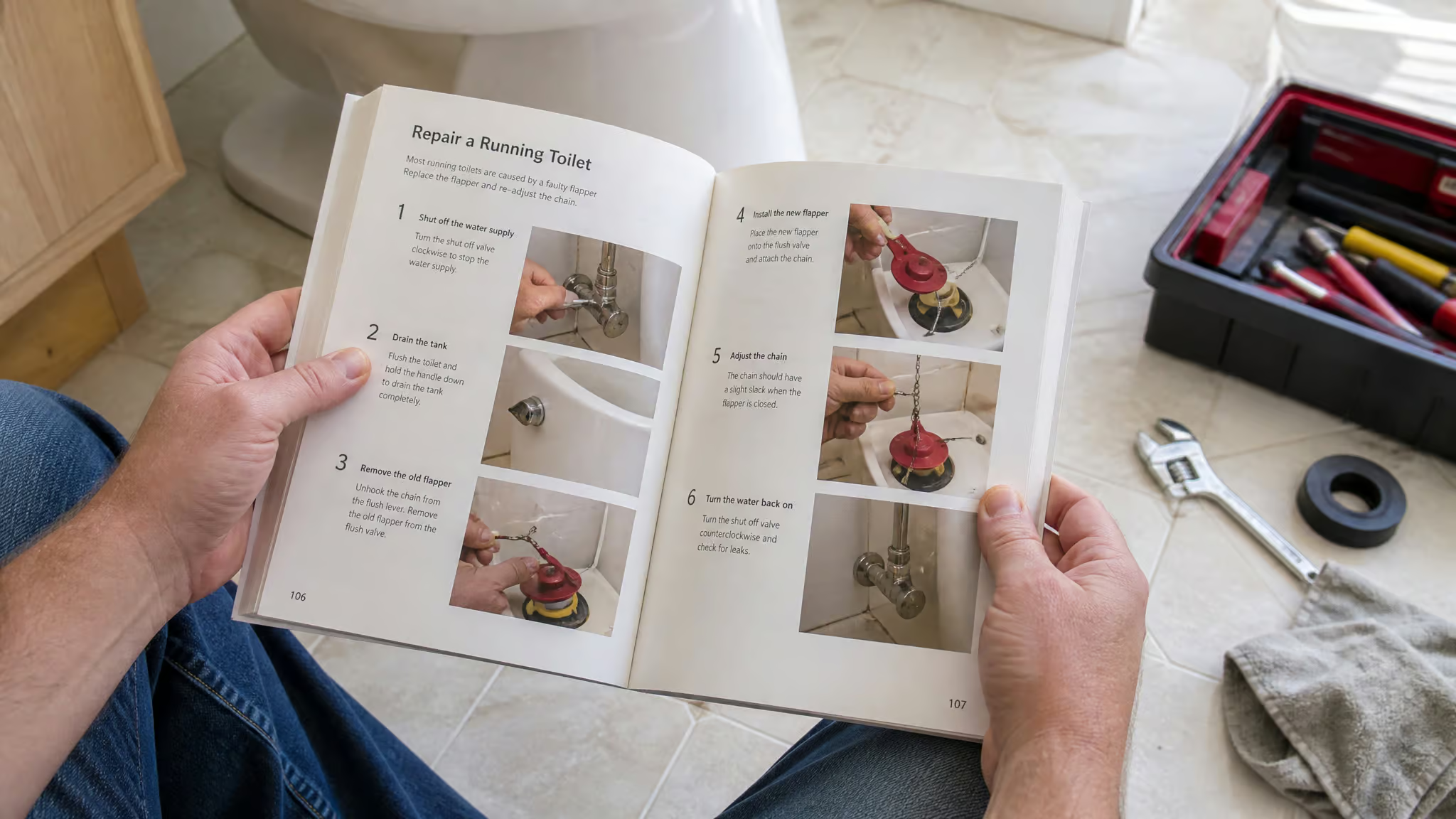
The Complete Guide to Home Plumbing (Black & Decker)
8th edition, 2023, about 230 pages. 4.6 stars from 156 reviews. Priced $14.99 to $29.99. This is the default choice for a reason. It’s photo-driven, step-by-step, covers about 90 projects reviewed by pros.
If you want one book to handle most household repairs, this is it. Caveat: it’s broad, not deep. You won’t find advanced venting layouts.
Ultimate Guide: Plumbing (Creative Homeowner)
6th edition, 2024, with over 800 projects. Also 4.6 stars, but from over 1,000 reviews. This is the comprehensive alternative. Updated to 2024 National Plumbing Code standards.
Has detailed diagrams and “Green Solutions” sections. If you’re doing a full remodel and want one book that covers everything, this beats Black & Decker for depth. But the sheer page count can overwhelm a guy just trying to fix a leaky faucet.
Plumbing For Dummies
170 pages, covers 40 common tasks. Illustrations and a tools section for absolute beginners. Written by Donald R. Prestly. You can get through this in a weekend. Good entry point if you’re intimidated, but you’ll outgrow it fast.
Plumbing 1-2-3 (Home Depot)
224 pages, 90+ projects. 4.5 stars from 178 reviews. Under $25 hardcover. This is Home Depot’s own—designed for weekend warriors. Approachable, clear photos. Less technical than the Black & Decker, but if you’re comfortable with a pipe wrench, you’ll find it a bit basic.
Plumbing Complete (Rex Cauldwell)
256 pages, 4.4 stars. Cauldwell is a master plumber. This one’s written for both DIYers and pros—the DIYer gets steps, the pro gets shortcuts. It’s the book you grab when you need to know how to do it right, not just get it done.
Caveat: from 2009, so code references are outdated. Core technique is solid.
Plumbing For Beginners (Handy Andrew)
130 pages, 2021. Self-published or small press. Covers basic and intermediate techniques for common household problems. Quick read. Lower production quality than the big publishers, but the advice is sound if you’re at rock-bottom beginner level.
Plumbing 101 For Homeowners (Billy L. Winner)
2022 edition. Focuses on household problems, tools, bathroom repairs, PVC piping, and common mistakes. Practical advice for the average homeowner. Nothing revolutionary, but it’s recent and covers the basics well.
Home Plumbing Manual (Andy Blackwell)
Written in plain language. Covers everything from a dripping faucet to a burst pipe. If you hate technical jargon, this is your pick. Not as visually detailed as photo-driven books, but the explanations are clear.
Popular Mechanics How to Fix Anything
192 pages, broad home repair book. The plumbing section is one chapter. Good if you want a general home repair reference that includes plumbing, but it’s not dedicated—you won’t get deep coverage.
Complete Plumbing (Stanley Complete)
288 pages, but published 2008. This one’s old. Core techniques haven’t changed, but code and materials have. Only buy if you’re getting it for a few dollars used and don’t care about modern code.
How Your House Works (Charlie Wing)
240 pages, first 45 pages on plumbing. 4.7 stars from over 1,300 reviews. This book explains your whole house: electrical, HVAC, structure. The plumbing section is a good overview, not a deep dive, but it emphasizes that plumbing, electrical, and HVAC systems should all be upgraded before you install any insulation or drywall—a key point from In What Order Should Home Renovations Be Done?. Buy it for the big picture, not for repair steps.
Professional training books and trade references for plumbers
These are for the guy who wants to go pro or is doing a serious renovation that needs pro-level knowledge. A homeowner doing a bathroom remodel will find Plumbing a House more useful than a Level 4 trainee guide, but first they should pick up the DIY plumbing tools to handle the job.
Plumbing Trainee Guide, Level 4 (NCCER)
This is the official NCCER curriculum. Thick, expensive, no reviews yet—so you’re flying blind. It covers everything from a house to a high-rise. But it’s a commitment, not a quick reference. Only buy if you’re in an apprenticeship program or dead serious about licensing.
Residential Construction Academy: Plumbing
640 pages, from the Home Builders Institute with NAHB endorsement. Written by two experienced instructors. Covers pipework, drainage, water systems, plus health and safety. 2011 edition—check if a newer one exists. Good for classroom-style learning.
PHCC Educational Foundation’s Plumbing Series
Four-volume set, starts with Plumbing 101. Perfect score from only 4 reviews—basically meaningless. Over $125 per volume. For serious trade students. If you’re not in the PHCC system, skip it.
Plumbing a House (For Pros by Pros)
Written by Peter Hemp, master plumber, this 205-page focused guide answers the practical question can you diy plumbing? It covers rough-in, venting, and real-world field-tested methods. A serious DIYer can handle this. First published 1994, republished 2021. Around $30.
Plumbing (For Pros By Pros) by Rex Cauldwell
Third-generation master plumber. 2007, so code references are dated, but core techniques for fitting pipes, well pumps, rural plumbing are timeless. 4.5 stars from 186 reviews. For the guy who wants the trade wisdom, the practical question is can you diy plumbing in texas? State-specific rules and inspection requirements matter even when the wrench work is straightforward.
Planning Drain, Waste & Vent Systems (Howard C. Massey)
Specialized—all about DWV. Not for quick fixes. If you’re designing or installing a drain-waste-vent system, this is the book. Covers codes, traps, vents, materials, plan drawings. Overkill for a sink swap, essential for a full rough-in.
SPE Plumbing Engineering Design Handbook (ASPE)
Four-volume bible for plumbing engineers. Commercial design-build reference. Way overkill for a homeowner. Only mention because someone will ask.
Plumbing (generic textbook)
Textbook from Cengage Learning. 2011, so check for a newer edition. Focuses on structured learning with exercises and quizzes. Useful in a classroom, less so on a job site.
Plumbing code books: which one you need and how to stay compliant
Code books are compliance artifacts, not learning tools. A homeowner pulling a permit is better served by a guidebook with embedded code callouts. That gives you 90% of the legal signal at 25% of the confusion.
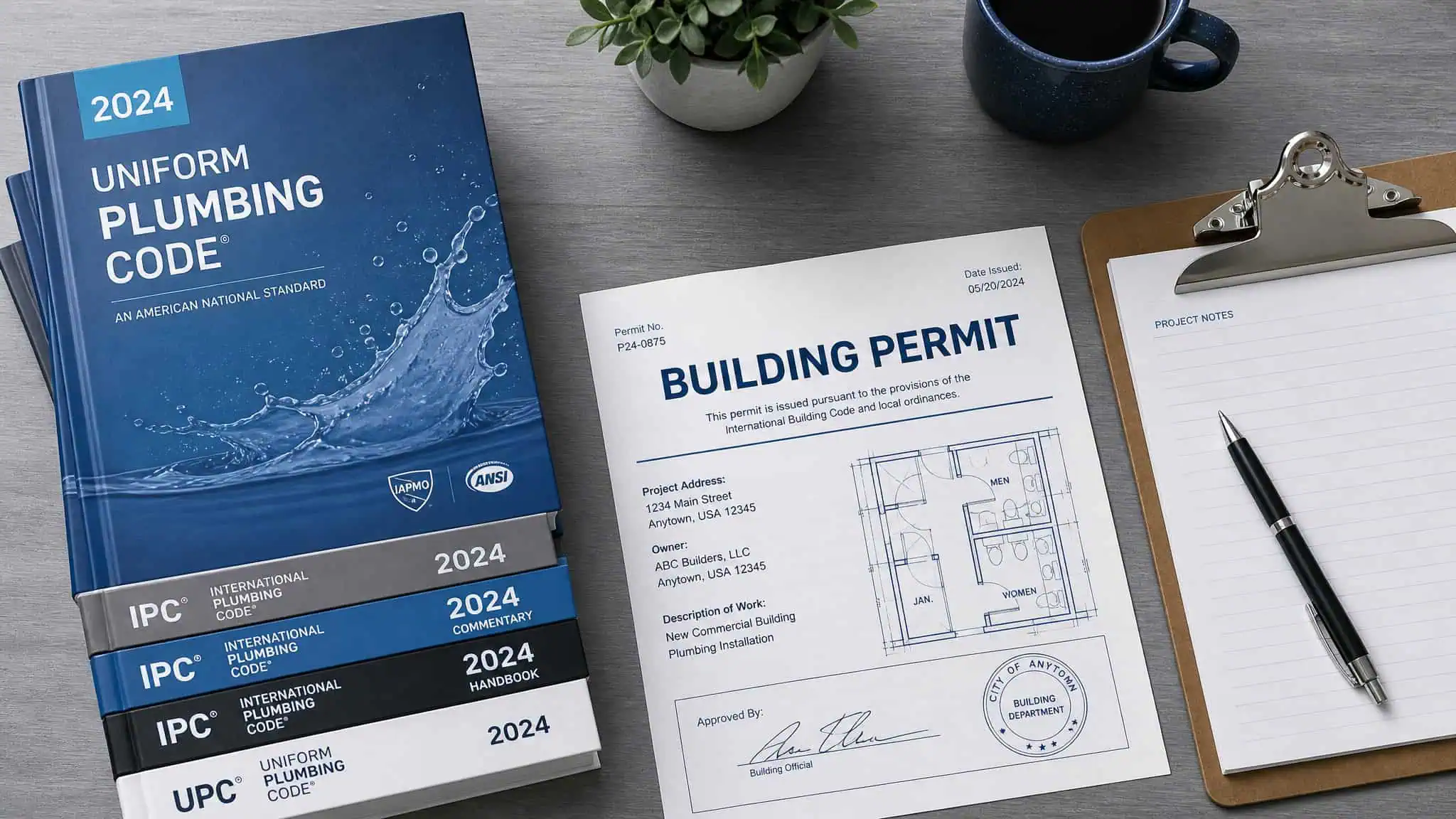
Cost check: A full IPC or UPC code book runs $80–$150. A quick-reference cheat sheet like Code Check Plumbing is under $20 and covers most inspection pitfalls for homeowners.
International Plumbing Code (2024 IPC)
560 pages of dense code. The standard for much of the US. 4.7 stars from a decent number of reviews. Expensive, but necessary if you’re pulling permits and need the full code. Set the minimum bar for safety.
Uniform Plumbing Code (UPC)
Published by IAPMO, the West Coast equivalent of IPC. ANSI-vetted. Which one you need depends on where you live—check with your AHJ.
Code Check Plumbing & Mechanical
32 pages, spiral-bound, 6th edition 2023. A quick-reference cheat sheet for inspections. Covers 2021 IRC and IMC, highlights common violations. This is often enough for a homeowner pulling a permit. Not a replacement for the full code book, but a practical tool.
Code Checklist Complete
Illustrated guidebook with checklists and common violations. Covers codes by IRC, UPS, UMC, NEC. Written by Redwood Kardon, a well-known code expert. Good for making sure you don’t miss anything.
ICC A117.1 Accessibility Standard
Required if you’re doing commercial work—incorporated into the 2024 IPC. Skip it for residential.
State-specific codes: California, Massachusetts, and others
California Plumbing Code and Massachusetts regs have their own amendments. Don’t buy the IPC if you’re in CA. Check your state’s code body.
Quick-reference and troubleshooting guides for the field
These are judged by index speed, not prose quality. You want the book that gets you to the answer in 10 seconds.
The Plumber’s Troubleshooting Guide
Organized by problem type: fixtures, drains, pumps, heaters. Symptom-based. Written by an experienced contractor. No-nonsense, perfect for on-the-job reference.
Plumbing Instant Answers
Quick-reference manual with a troubleshooting section for piping, water heaters, pumps. For technicians who need fast solutions.
The Pipe Fitters Field Book
Pocket-sized. Charts, formulas, pipe specs, rigging info. Classic field reference. Small enough to throw in your tool bag.
Business books and software to grow your plumbing company
If you start a side gig and it grows, you’ll need to learn the business side.
Profitable Plumbing (Matthew Gregg)
2004—dated specifics, but the core business advice (customer service, upselling, inventory) still applies.
Ellen Rohr’s Where Did the Money Go?
Widely recommended in the trades. About managing cash flow for a plumbing business.
ServiceTitan
The big dog in plumbing software. Scheduling, billing, dispatching. Live mapping, in-platform messaging. Over 100,000 contractors use it.
Housecall Pro and Smart Service
Alternatives. Housecall Pro users see a 35% average increase in monthly revenue after the first year, and the platform offers a 14-day free trial to test its features. Smart Service integrates with QuickBooks Desktop, while QuickBooks Online is a popular cloud-based option for managing finances. For fleet tracking, iFleet helps you monitor your vehicles in real time.
Understanding your home’s systems and the history of plumbing
These won’t teach you to solder, but they’ll make you a better storyteller and help you understand why things work.
How Your House Works (cross-listed above)
Best overview of your whole home. The first 45 pages on plumbing are a great primer.
Flushed: How the Plumber Saved Civilization
History book, not a how-to. Written by a journalist. Entertaining read about sanitation history. From 2006, but the history hasn’t changed. Cheap paperback.
The PVC Pipe Book
Niche book about building projects with PVC pipe—shelves, planters, not drain lines. Fun for a rainy afternoon, not a plumbing reference.
Head-to-head comparison: Black & Decker vs. Ultimate Guide
This is the comparison people actually search for. Black & Decker covers about 90 projects. Ultimate Guide covers 800+. Black & Decker is photo-driven. Ultimate Guide is more comprehensive and updated to 2024 code.
Here’s my take: if you want to fix a few things and don’t plan to do a full remodel, get Black & Decker. It’s cheaper, more focused, and you’ll actually read it. If you’re doing a basement bathroom or a whole-house repipe, get Ultimate Guide. The extra 700 projects will pay off.
The best-selling book isn’t always the best buy for a serious homeowner. A master plumber’s single-author book (Plumbing Complete by Cauldwell, Plumbing a House by Hemp) often carries more real trade wisdom per page. But for most guys, Black & Decker or Ultimate Guide is the right starting point.
What to do with older editions you already own
Don’t throw them away. Know what they can and can’t do.
When to trust technique (always: for basic pipe work)
Soldering, threading, pipe fitting—those skills haven’t changed in decades. A 2015 book teaches them fine.
When to replace for code (always: for new work, permits, inspections)
Codes change every three years. 2024 IPC is current. 2027 is coming. If you’re pulling a permit, you need the current edition. A 2015 book’s code section is dangerously wrong.
How to identify a keep vs. toss book
Check the copyright page. If it’s more than six years old and claims to be a code reference, replace it. If it’s a technique book, keep it. If it’s a general how-to with no code callouts, it’s fine for non-permitted work.
Final word: check the copyright page, check your local code, and pick the book that matches your project. That’s the only way to win.
Frequently Asked Questions
What is the best plumbing book for a beginner?
The best beginner book depends on your project, but photo-driven guides like Black & Decker’s or Creative Homeowner’s Ultimate Guide are solid starting points. The real filter isn’t star ratings—it’s the edition year and whether the book matches your local code. A 2024 edition with clear step-by-step photos will serve you better than a highly-rated 2015 book.
Can you self teach yourself plumbing?
Yes, you can teach yourself basic plumbing with the right book and some practice. Technique skills like soldering and pipe fitting haven’t changed in decades, so a used book works fine for those. But if you’re pulling a permit, you need a current code edition—codes update every three years, and a 2015 book will get you failed on inspection.
What’s the hardest thing to do in plumbing?
For most DIYers, the hardest part is designing and installing a proper drain-waste-vent (DWV) system. It requires understanding venting layouts, slope, and local code amendments that vary by jurisdiction. That’s where a specialized book like Planning Drain, Waste & Vent Systems becomes more useful than a general home repair guide.