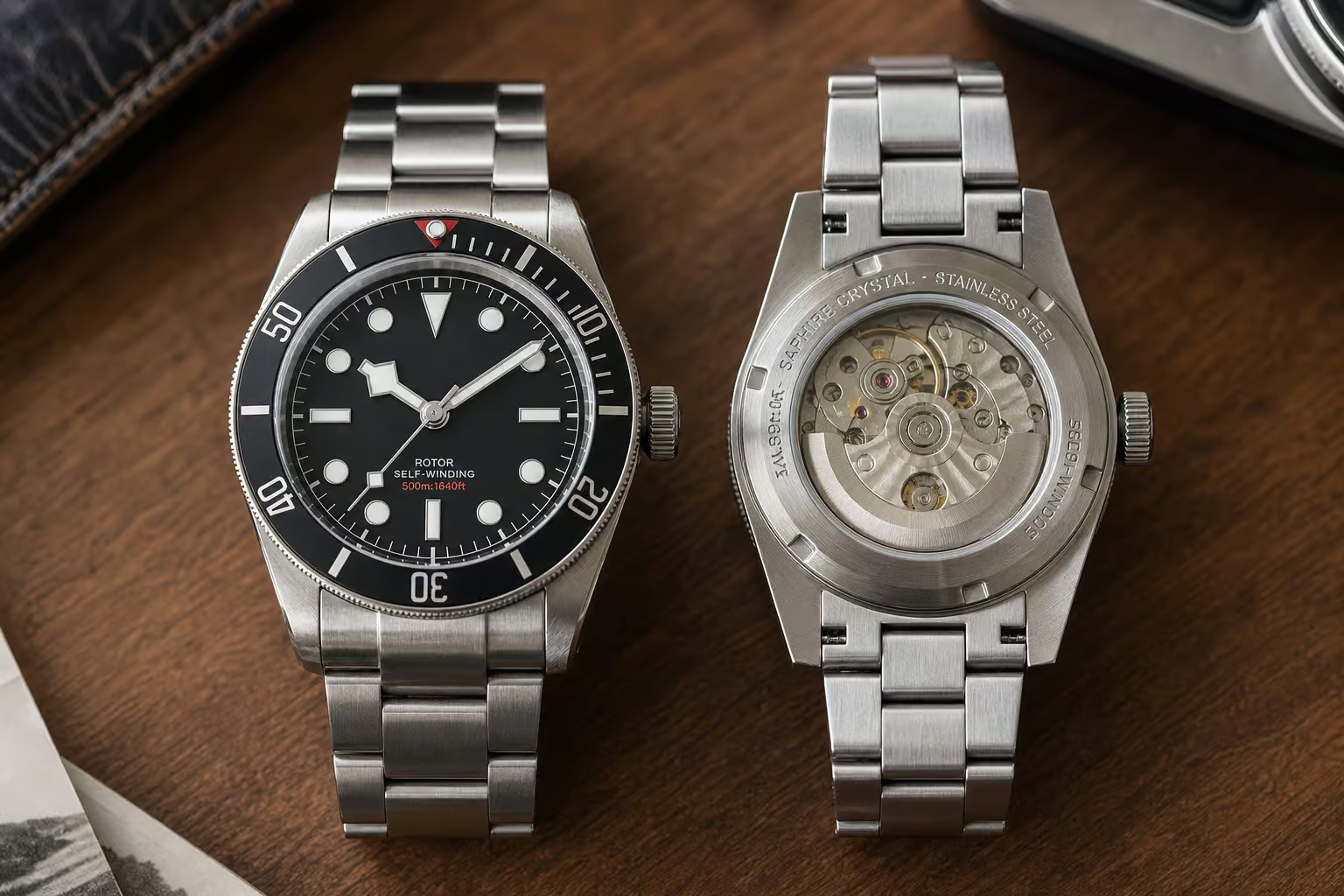
You’re staring at two watches on a screen. They look nearly identical—black dial, stainless steel case, dive bezel, automatic movement. One costs $150. The other costs $250. Which is the better value?
If you said “the cheaper one,” you’ve already fallen into the trap most buyers stumble into. Value in watches isn’t just the price tag. It’s a three-dimensional ratio: movement quality, materials, and long-term ownership cost. Two watches can look the same and perform completely differently where it matters—inside the case.
Let’s define the variables you actually need to check:
- Movement accuracy – A workhorse automatic like the Seiko 4R36 runs somewhere between -10 and +30 seconds per day. A basic quartz like the Casio F-91W holds ±30 seconds per month. A Rolex Superlative Chronometer is guaranteed -2/+2 seconds per day. The gap between cheap and expensive exists, but it’s not always where you think.
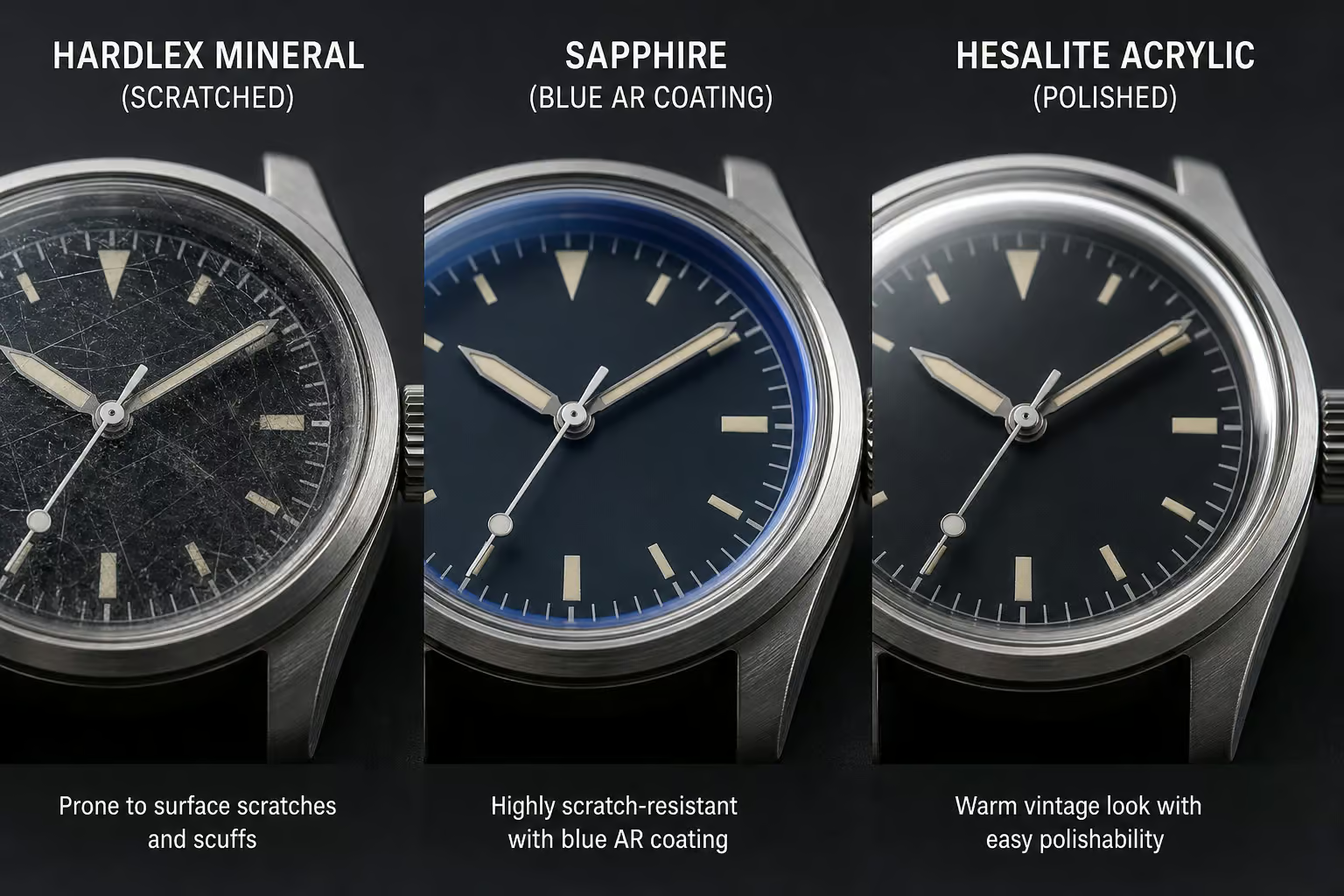
- Materials – Hardlex (Seiko’s mineral crystal) scratches easier than sapphire, but it’s cheaper to replace. Sapphire with anti-reflective coating is a premium you’ll feel every time you glance at the dial. Hesalite acrylic is vintage-soft and can be polished out.
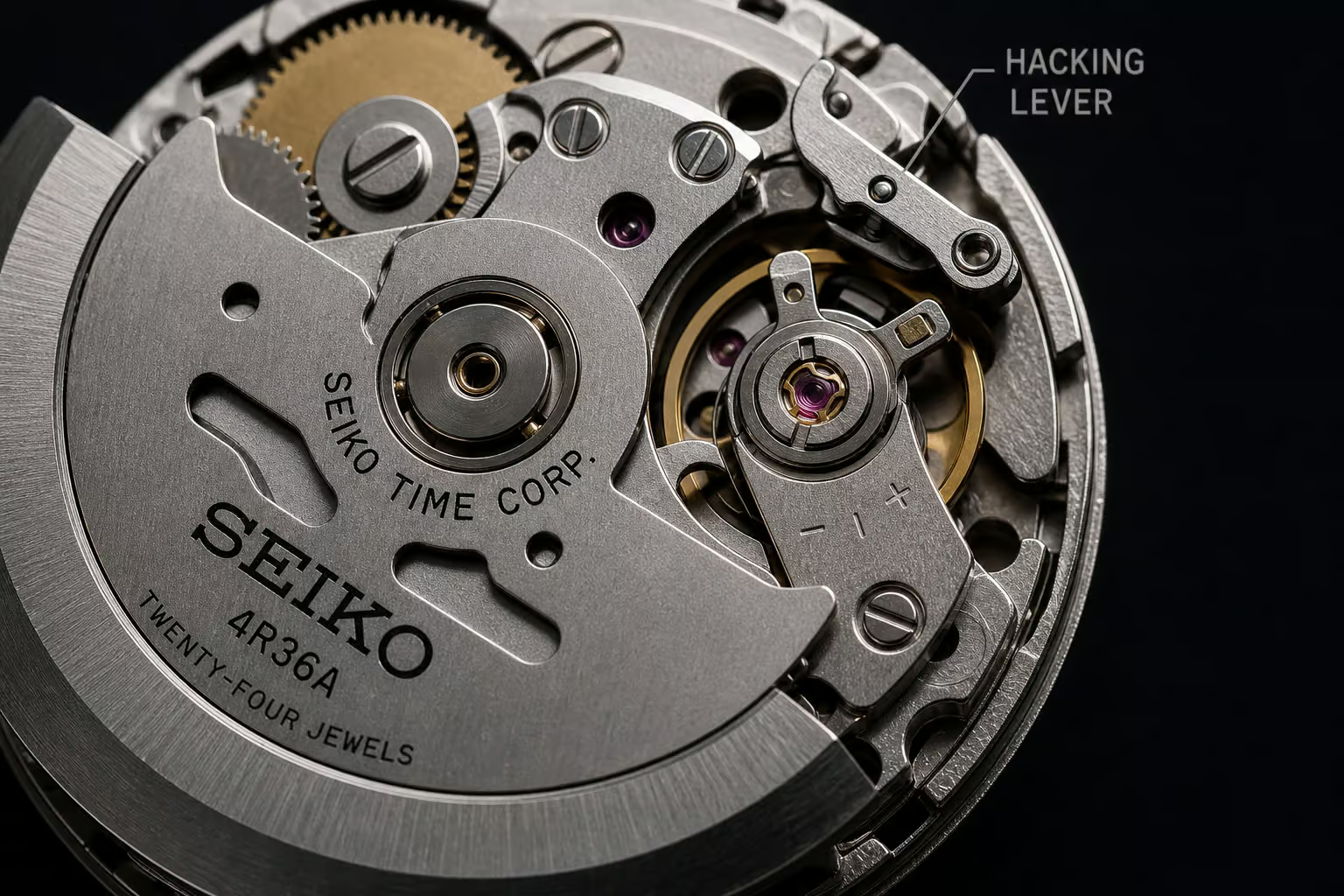
- Features that differentiate – Does the movement hack (stop the seconds hand for precise setting)? Does it hand-wind? What’s the water resistance? What’s the power reserve? These aren’t marketing fluff; they’re the difference between a watch that works for you and one that frustrates you.
Servicing matters too. An automatic needs maintenance every three to seven years, and that costs money. A quartz runs on a battery that lasts two to five years, and the replacement is a few bucks at a kiosk.
The point: you can’t judge value by the price alone. You need the full spec sheet.
Key Takeaways
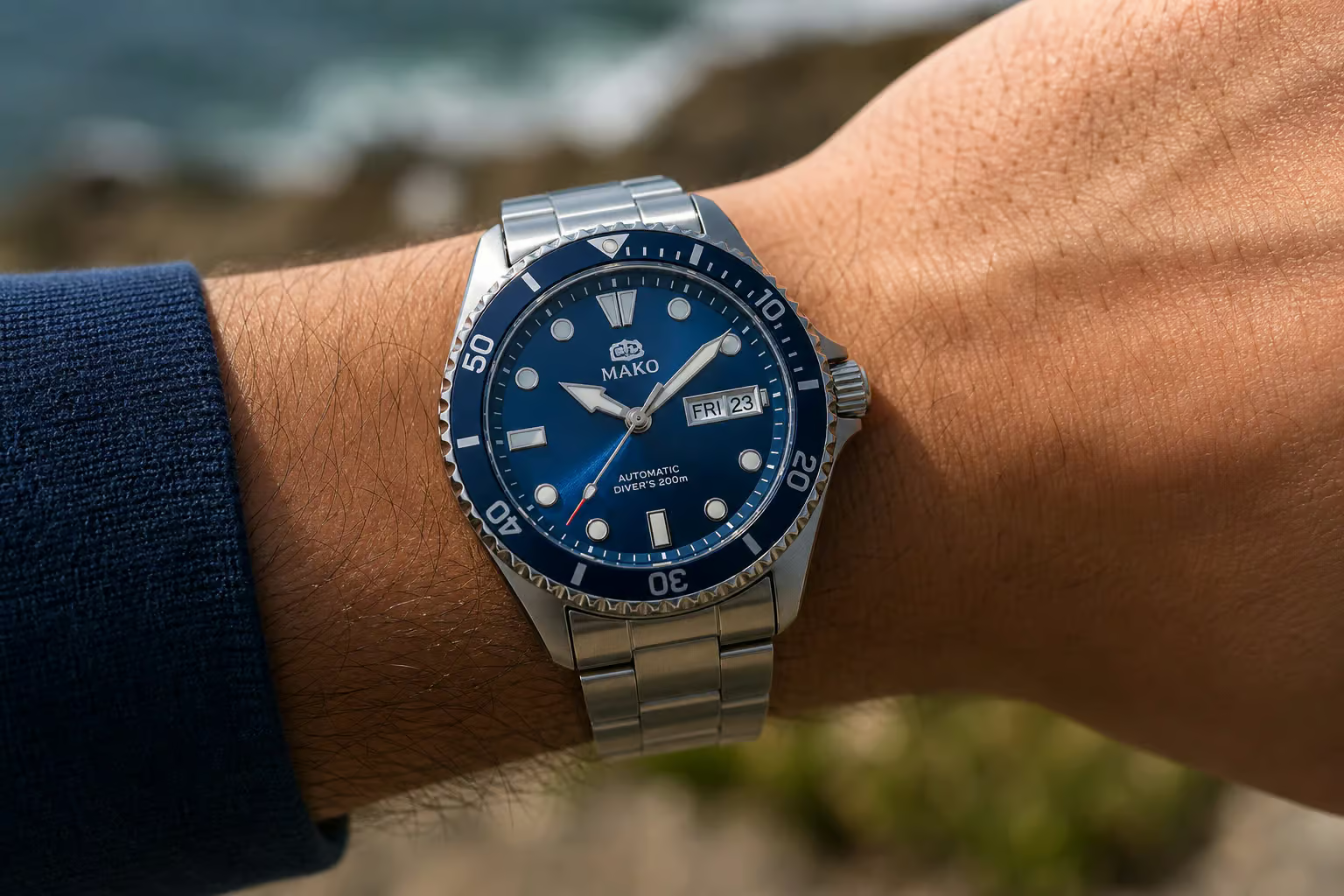
The Orient Mako II at $160–$220 has an in-house F6922 movement that hacks and hand-winds—features that cost three times as much from Swiss brands—but trades sapphire crystal for mineral.
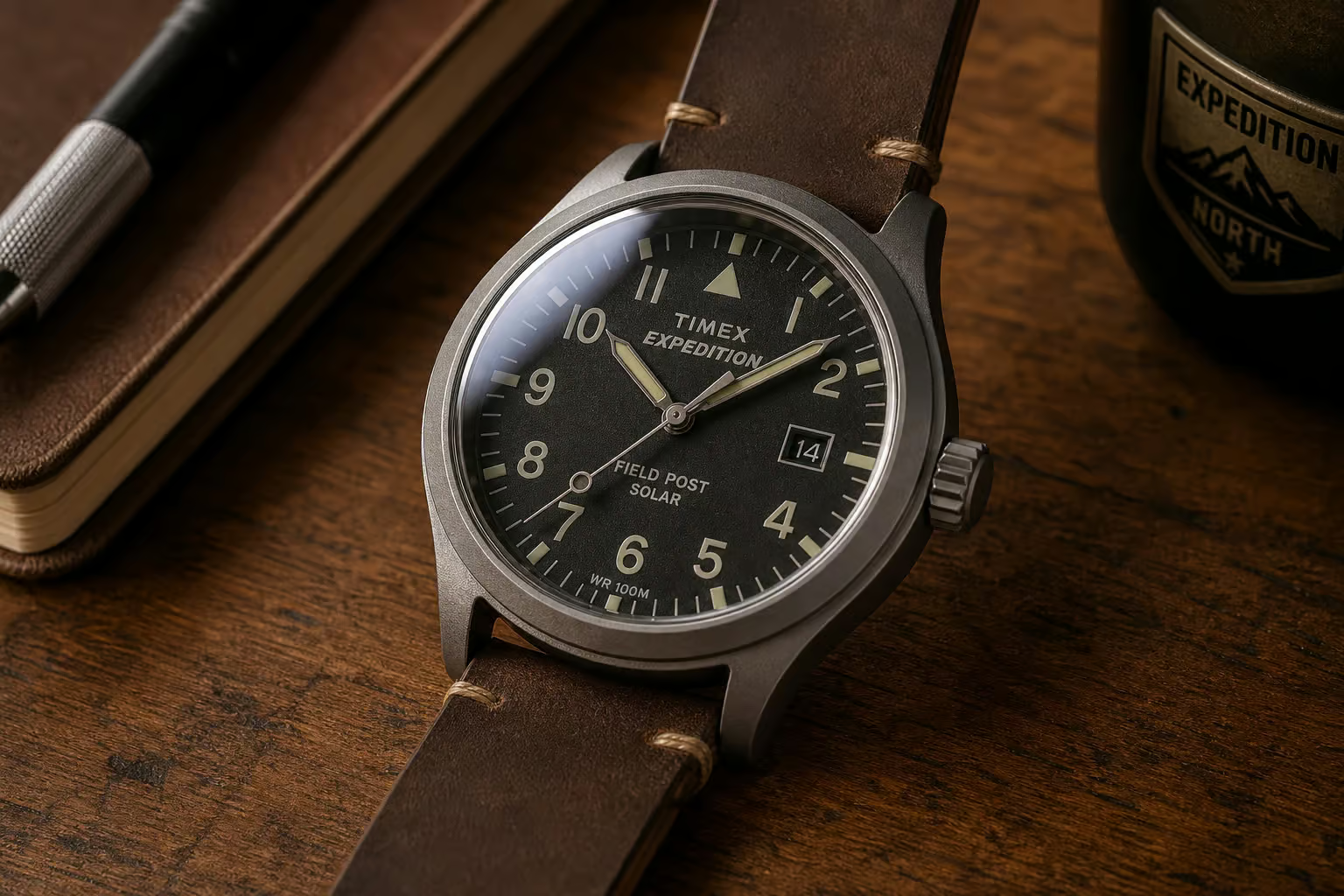
The Timex Expedition Field Post Solar packs domed sapphire with AR coating at $199, a feature usually reserved for watches three times its price, but its lume fades fast and the stock strap is too thick for the case.
The Casio F-91W at $15–$20 delivers ±30 seconds per month accuracy and a multi-year battery in a 34mm package that’s sold over a million units—the ultimate cost-per-accuracy ratio that no automatic can touch.
Table of Contents
Budget Champions Under $300 – Japanese Workhorses and Quartz Icons
If you’re spending under $300, the best odds are in two camps: Japanese automatics (Seiko, Orient) and quartz royalty (Casio, Timex). A few microbrand outliers like Scurfa and Zelos sneak in with specs that would cost double from a Swiss name.
A key difference many buyers overlook: not all sub-$300 automatics have the same movement. A watch with a non-hacking Miyota 82S7 (like the Bulova 97A121) won’t let you stop the seconds hand to set the time precisely. That’s frustrating within weeks. A Seiko 4R36 or Orient F6922 does hack and hand-winds. The difference becomes obvious the first time you try to sync your watch with an atomic clock.
Here’s where your money goes furthest.
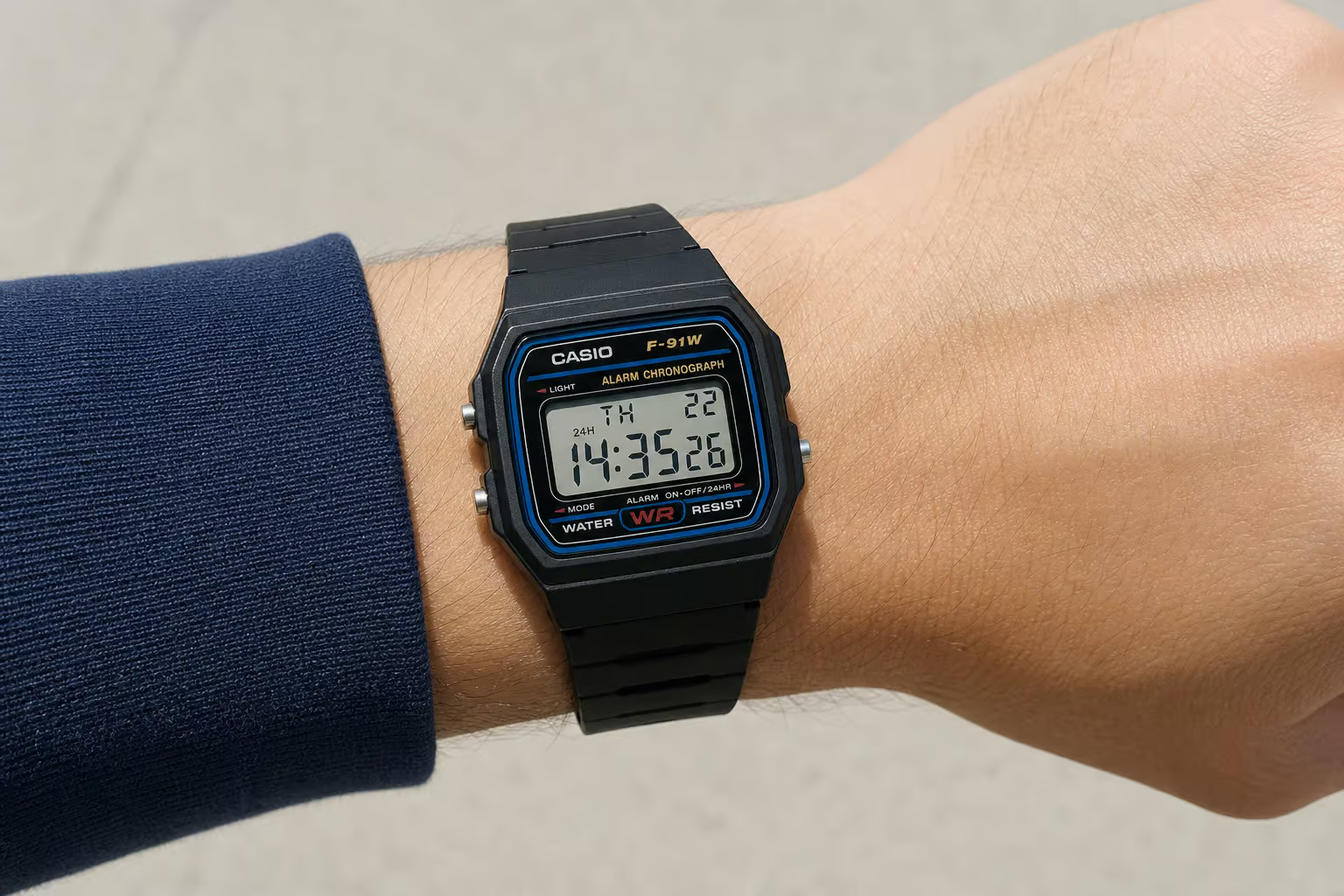
Casio F-91W LCD ($15–$20)
The legend. 34mm case, ±30 seconds per month, a CR2016 battery that lasts years, and an integrated strap that’s surprisingly comfortable. It’s the watch you buy when you need to tell time and nothing else. Millions sold. The weakness: it’s small, hard to read in low light, and you can’t swap the strap. But at this price, those are features, not bugs.
Casio G-Shock DW9052-1V ($45)
200 meters of water resistance, a urethane bumper that survives drops that would shatter most watches, an electro-luminescent backlight, and ±15 seconds per month accuracy. It’s 47mm and chunky—not for small wrists—but it’s the watch you wear when you don’t want to worry about your watch. The decorative metal pins on the strap can loosen over time, but that’s a minor quibble for $45.
Orient Mako II ($160–$220)
This is the automatic dive watch that rewrites the rules at this price. The in-house Caliber F6922 hacks, hand-winds, and runs at 21,600 bph. It also has a 200m water resistance and a sunburst dial with applied markers that look more expensive than they are. The weaknesses: mineral crystal instead of sapphire, hollow end links on the bracelet, and the bezel edge can be tricky to grip. But the movement alone justifies the price.
Orient Bambino Version 4 (~$200)
An in-house F6724 automatic in an elegant dress watch with a domed mineral crystal. Owned by Seiko Epson, Orient makes all its movements in-house—vertical integration at a budget price. The Bambino’s dial is clean and versatile. The catch: 30m water resistance means you can’t even swim with it. It’s a desk-and-dinner watch, not a daily beater.
Seiko 5 Sports ($200–$300)
The collection relaunched in 2019, and it’s become the entry-level automatic champion for good reason. The 4R36 movement hacks and hand-winds, water resistance is 100m, and the variety of models—divers, field watches, dress watches—means there’s something for almost everyone. The downside: Hardlex crystal scratches easier than sapphire. But at this price, you’re getting a mechanical watch that’s been proven across decades.
Seiko 5 Sports Midfield 36mm SRPJ81K1 ($295)
This revived the SNK 800 field watch line with a 36.37mm case, 4R36 movement, and a bicolor bezel. Vintage proportions that fit most wrists well. Same Hardlex caveat.
Timex Expedition Field Post Solar ($199)
Solar quartz with a four-month power reserve, 36mm case, bead-blasted finish, screw-down crown, and domed sapphire with anti-reflective coating—at $199, that crystal is a feature you’d expect on watches three times the price. The weakness: the lume fades quickly, and the stock leather strap is too thick for the case. Over time, what stands out is how naturally it fits into everyday routines. No battery changes, no winding, just wear it.
Timex Navi XL Automatic ($259)
Gunmetal finish, 41mm case, 100m water resistance, automatic movement. A solid entry-level option from a brand you can find anywhere. The movement is likely a basic Seiko or Miyota, and the mineral crystal is expected at this price. It’s the definition of “adequate” for someone who wants an automatic but isn’t chasing specs.
Scurfa Diver One ($250–$399)
Titanium case, 500m water resistance, helium escape valve, ETA F06 quartz with a five-year battery, BGW9 lume—this is a pro-level dive watch for peanuts. The brand recognition is low, and the rubber strap is basic, but the specs are undeniable for the price.
Bulova 97A121 (~$275)
Gold-tone skeleton with a Miyota 82S7. Movement accuracy is -20 to +40 seconds per day, it doesn’t hack, and water resistance is only 30m. This is entry-level mechanical eye candy—fine if you just want to see the gears move, but you’re giving up practical performance.
Zelos Hammerhead 2 1000M Bronze ($449)
44mm bronze case, 1000m water resistance, Seiko NH35 with a 31-hour power reserve, domed acrylic crystal, helium release valve. Overbuilt monster. The bronze will develop a patina; the acrylic scratches easily but can be polished. Only for those who want a big, unique tool watch.
Hz Watches HZ02 (~$250)
37mm titanium case, Japanese meca-quartz, exhibition caseback (rare on quartz). A microbrand curiosity from Australia. Limited availability.
Erebus Ascent HAQ (limited)
Swiss ETA high-accuracy quartz, sold out in minutes. Cool but nearly impossible to buy now.
Other notable mentions at this price range (quick reference)
- Seiko Turtles – Classic cushion-case divers with 200m WR and 4R36 movements
- Orient Kamasu – Similar to Mako II but with sapphire crystal
- Vostok Amphibia – Russian quirks, 200m WR, dirt cheap
- Citizen Promaster Dive Automatic – Solid 200m diver with Miyota movement
- Dan Henry 1970 – Vintage-inspired quartz chronograph, great value
Each of these has a tradeoff—sapphire vs. mineral, hacking vs. not, serviceability vs. novelty. The trick is to pick the tradeoff you’re okay with.
Mid-Range $300–$1,000 – Microbrands vs. Swiss Entry Points
This is the price range where things get interesting. You have two paths: microbrands that pack high specs per dollar (regulated movements, titanium cases, unique designs) and Swiss brands like Hamilton and Tissot that offer heritage, global service networks, and better resale value. If you want exact specs, real prices, and honest tradeoffs, find the best luxury men’s watches under $1000 to see how both paths compare.
The central tension: a microbrand like the Nodus Sector Deep at $599 gives you in-house regulation to ±10 seconds per day and 500m water resistance—accuracy control usually seen in watches costing $2,000. But if the movement fails, you’re reliant on a small workshop in California. A Tissot Seastar 1000 at $700 has a Powermatic 80 movement, 300m water resistance, and ceramic bezel—and you can get it serviced at any Swatch Group authorized dealer worldwide, while counterfeit discounts on budget watches reveal that even under $50, inflated markups are everywhere.
Neither is “better.” They’re different tools for different priorities.
Hamilton Khaki Field Automatic ($500–$700)
38mm or 42mm, sapphire crystal, H-10 movement with 80-hour power reserve. This is the field watch benchmark—descended from WWII military watches, rugged and legible. You can take it off on Friday and it’s still running Monday morning. The weakness: basic regulation out of the box; some find the dial plain compared to essential watch types like dive or chronograph models.
Tissot PRS 516 Powermatic 80 ($600–$800)
38mm, 100m water resistance, sapphire, motorsport-inspired design. The 80-hour power reserve is the same movement family as the Tissot Le Locle. Solid sports-dress hybrid.
Tissot Seastar 1000 (~$700)
The 43mm case, 300m water resistance, ceramic bezel, and Powermatic 80 movement make this the best Swiss budget diver. However, before you commit, you should buy a men’s watch without regret by learning about size; 43mm is simply too large for some wrists.
Tissot Le Locle Powermatic 80 (~$400)
40mm, sapphire, 80-hour power reserve at 21,600 vph. Stunning value for a Swiss automatic dress watch. The 30m water resistance limits it to desk duty.
Hamilton Jazzmaster Open Heart (~$575)
40mm, ETA 2824-2 with 38-hour power reserve, open-heart display showing the balance wheel. A stylish dress watch with a proven workhorse movement.
Baltic MR01 ($635)
36mm, sand-textured dial, Breguet numerals, Hesalite crystal, Hangzhou 5000a movement with polished bridges. A dress watch with real finishing at a microbrand price. The 30m water resistance and Hesalite (scratches easily) are the tradeoffs. The Chinese movement may give some collectors pause, but the execution exceeds expectations.
Baltic Aquascaphe ($650–$750)
39mm, Miyota 9039 (28,800 vph), hybrid sandwich dial, beads-of-rice bracelet, 200m water resistance. A vintage diver done right. No date window, predominantly brushed case—some find it too restrained.
Formex Field Automatic ($795–$945)
Grade 2 titanium with hardened surface, Sellita SW200-1, 150m water resistance. Light and tough. The stamped numerals look unconventional up close, and the Old Radium lume isn’t the brightest.
Halios Seaforth ($965)
Titanium case, double-domed sapphire, 12-hour bezel option, ceramic markers, C3 X1 lume. Near-perfect everyday diver. Titanium picks up scratches, and availability is limited.
Nodus Sector Deep ($599)
38mm, left-side crown, DLC bezel with dual scale, NH35 regulated in-house to ±10 seconds per day, 500m water resistance. A compact dive tool from a microbrand that takes regulation seriously. The exhibition caseback adds little visually, and the clasp exposes hardware at full extension.
Nodus Sector GMT ($475)
38mm, NH34 regulated in-house, 41-hour power reserve, sector dial. Affordable GMT with real regulation.
Raymond Weil Freelancer Chronograph (~$1,200)
RW Caliber 500 (Valjoux 7750 base) tested at +0.8 seconds per day. Great chronograph value. Heavy, and it overlaps with the next tier.
Tissot T-Complication Squelette & Chemin Des Tourelles Squelette (~$1,250)
43mm or 42mm, hand-wind ETA 6497 with 46-hour power reserve, sapphire front and back. Swiss open-worked mechanical. Hand-wind only, 50m water resistance.
Upper Mid-Range $1,000–$3,000 – Swiss and Japanese Precision
At this price, COSC certification, tight in-house regulation, and real bracelet quality enter the picture. You’re paying for precision and finish, not just features.
Monta Atlas ($1,950)
38.5mm, Sellita SW330 regulated to -5/+5 seconds per day, 150m water resistance, bracelet with tight tolerances. Best GMT value under $2,000. The exhibition caseback is unnecessary—an honest critique.
Longines Spirit ($2,000–$2,500)
40/42mm, L888.4 COSC with 72-hour power reserve, antimagnetic silicon balance spring. Modern pilot watch with genuine aviation heritage—links to Amelia Earhart and Charles Lindbergh. Some find the design generic.
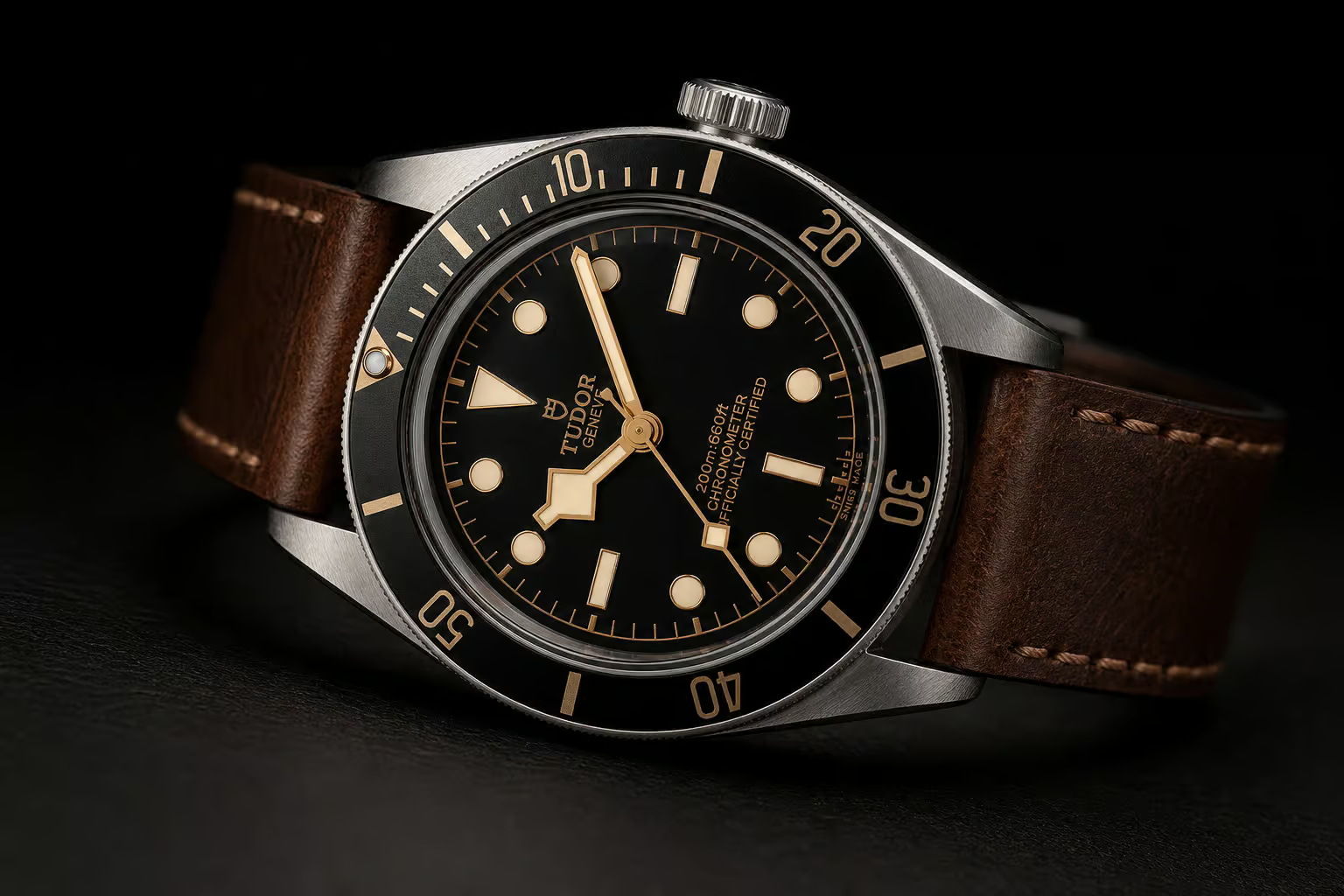
Tudor Black Bay 58 ($3,000–$3,500)
39mm, Calibre MT5402 COSC with 70-hour power reserve, 200m water resistance, snowflake hands. Often described as offering 90% of the Submariner’s prestige for a fraction of the cost. It runs large for 39mm (47mm lug-to-lug), but the vintage proportions are a sweet spot for many wrists.
Oris Aquis Date (~$2,000)
41.5mm, Oris 733 (Sellita SW200-1 base), 300m water resistance, ceramic bezel, excellent lume. Oris is an independent Swiss manufacturer—not owned by a big group. The movement isn’t in-house, and the bracelet lacks micro-adjust.
Luxury Tier $3,000+ – In-House Movements and Master Chronometer
Even at luxury prices, real value differences exist. Some watches deliver tested accuracy that outperforms watches costing twice as much. Others make tradeoffs that matter at this tier.
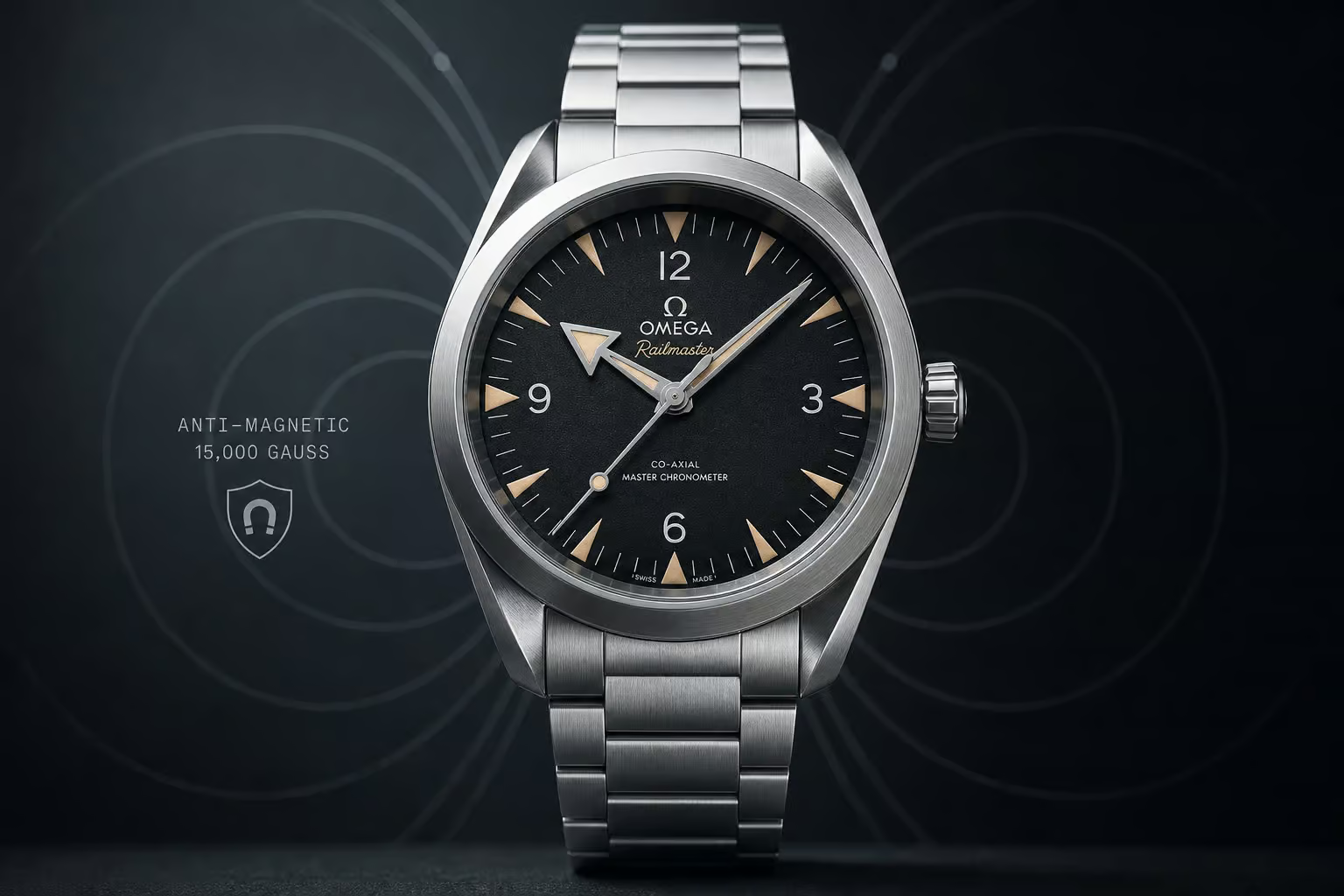
Omega Railmaster ($6,400)
40mm, 8806 Master Chronometer tested at +1 second per day—better than Rolex’s -2/+2 standard. Brushed case with polished chamfers, antimagnetic to 15,000 gauss. The catch: no micro-adjust on the bracelet. At this price, that’s a genuine oversight.
Grand Seiko SBGA211 “Snowflake” ($5,000–$6,000)
41mm, Spring Drive Calibre 9R65 with ±1 second per day accuracy. Titanium case, Zaratsu polishing for distortion-free mirror finishes, dial inspired by snow on the Hotaka Mountains. The finishing is unmatched at this price. Some prefer mechanical over Spring Drive, but the accuracy speaks for itself.
Omega Seamaster Diver 300M (~$5,500)
42mm, Master Chronometer Calibre 8800, 300m water resistance, 15,000 gauss antimagnetic protection, wave dial. Direct competitor to the Submariner, often cheaper. James Bond connection is fun but irrelevant to value.
Glashütte Original SeaQ ($10,200)
39.5mm, Calibre 39-11 with 28,800 vph and swan-neck regulator, 200m water resistance, tool-less quick-adjust clasp. German craftsmanship with real movement decoration. The bracelet-to-case transition lacks cohesion—a criticism at this price.
Rolex Submariner ($9,000+)
41mm, Calibre 3230/3235, -2/+2 seconds per day, ceramic bezel, Oystersteel. The benchmark everyone compares to but not a value pick—it’s the thing you measure other watches against.
Other luxury options
- IWC Pilot’s Watch Le Petit Prince (~$6,000) – Calibre 52111, antimagnetic inner case, midnight blue dial
- Tag Heuer Monaco Calibre 11 (~$6,000) – Square case, Steve McQueen heritage, iconic but niche
- Cartier Santos de Cartier (~$6,000) – QuickSwitch bracelet, first pilot’s watch, jewelry heritage
- Jaeger-LeCoultre Reverso Duetto (~$8,000) – Calibre 968, reversible case, Art Deco icon, dress-only
Quartz Value – The Case for Battery Power
The assumption that automatic is always better is wrong. Quartz is the smart choice for accuracy and low maintenance—especially high-accuracy quartz (HAQ) that outperforms any automatic under $5,000.
Consider: the Longines Conquest VHP, now discontinued, held ±9 seconds per year with shock protection, perpetual calendar, and battery-saving memory. That accuracy beats every automatic under $5,000, including Rolex. Used examples are plentiful online.
A common mistake: a buyer chooses an automatic for prestige, then finds themselves frustrated by -10 to +30 seconds per day drift and the need to reset it after a weekend in the drawer. A quartz with a multi-year battery keeps running and holds better time.
Longines Conquest VHP (discontinued, ~$500 used)
±9 seconds per year, shock protection reboot, perpetual calendar, battery-saving memory. The HAQ benchmark. Hard to find new.
Citizen Eco-Drive Promaster Tough ($300–$500)
Solar, titanium, rugged field watch. No battery changes ever. Limited dial variety.
Bulova Lunar Pilot ($400–$500)
44mm, 262kHz high-beat quartz with a sweeping sub-dial—the Speedmaster alternative with a unique movement. 44mm wears large.
Hz Watches HZ02 (~$250)
37mm titanium, meca-quartz with exhibition caseback. Rare combo from an Australian startup.
Erebus Ascent HAQ (limited)
Swiss ETA HAQ, sold out quickly. Cool but near impossible to find.
Casio F-91W ($15–$20)
Already covered as the ultimate value quartz reference. Accuracy per dollar is unbeatable.
Movement Tradeoffs – Automatic vs. Quartz Deep Dive
Understanding movements is the technical foundation for evaluating value. Here’s what matters:
Japanese workhorses
- Seiko 4R36 / NH35 – Hacks, hand-winds, -10/+30 seconds per day. The baseline for budget automatics.
- Miyota 9015 – No hack, -10/+30 seconds per day. Thin and reliable.
- Miyota 82S7 – Hand-winds only, no hack, -20/+40 seconds per day. Significantly less accurate. Found in watches like the Bulova 97A121.
Swiss workhorses
- ETA 2824-2 – Hacks, hand-winds, 38-hour power reserve. The classic workhorse.
- Sellita SW200-1 – Equivalent to ETA 2824. Used by many microbrands.
- Powermatic 80 – 80-hour power reserve at 21,600 vph. Found in Tissot and Hamilton. Good reserve but lower beat rate.
Luxury in-house
- Rolex 3230/3235 – -2/+2 seconds per day, 70-hour reserve.
- Omega 8806 – Master Chronometer, 15,000 gauss resistance, co-axial escapement.
- Grand Seiko 9R65 Spring Drive – ±1 second per day, hybrid mechanical-quartz.
- Tudor MT5402 – COSC, 70-hour reserve.
Other notable movements
- ETA 6497 – Hand-wind, 46-hour reserve. Used in skeleton watches like Tissot T-Complication.
- Seiko 4R34 / NH34 – GMT version of the 4R36.
- Sellita SW330 – GMT workhorse, used by Monta.
The key takeaway: check if the movement hacks and hand-winds, check its accuracy rating, check the power reserve. Those three specs tell you most of what you need to know.
Decision Framework – How to Choose Your Best Value Brand
No single brand wins across all tiers. The best value depends on which dimension you prioritize.
- If you prioritize movement features → Orient Mako II (in-house hacking/hand-winding at $160–$220) or a Seiko 5 Sports with 4R36.
- If you prioritize accuracy → Omega Railmaster (+1 second per day tested) or a Longines Conquest VHP quartz (±9 seconds per year).
- If you prioritize materials → Timex Expedition Field Post Solar (sapphire AR at $199) or a titanium microbrand like Formex Field.
- If you prioritize serviceability → Tissot Seastar 1000 (Swiss, worldwide service through Swatch Group).
- If you want the most watch for the least money → Casio F-91W at $15. It’s the baseline against which all other value proposals should be measured.
- If you want a GMT without breaking the bank → Nodus Sector GMT at $475 or Seiko 5 Sports GMT at $475.
- If you want a luxury dive watch that isn’t a Submariner → Tudor Black Bay 58 or Omega Seamaster Diver 300M.
- If you want unique finishing → Grand Seiko Snowflake or Baltic MR01.
- If you want a quartz that out-accuracies automatics → Citizen Promaster Tough or a used Longines Conquest VHP.
Next time you see two watches at the same price, you’ll know to ask: Does the movement hack? What’s the crystal? How often will I need to service it? The answer to those questions is the real price.