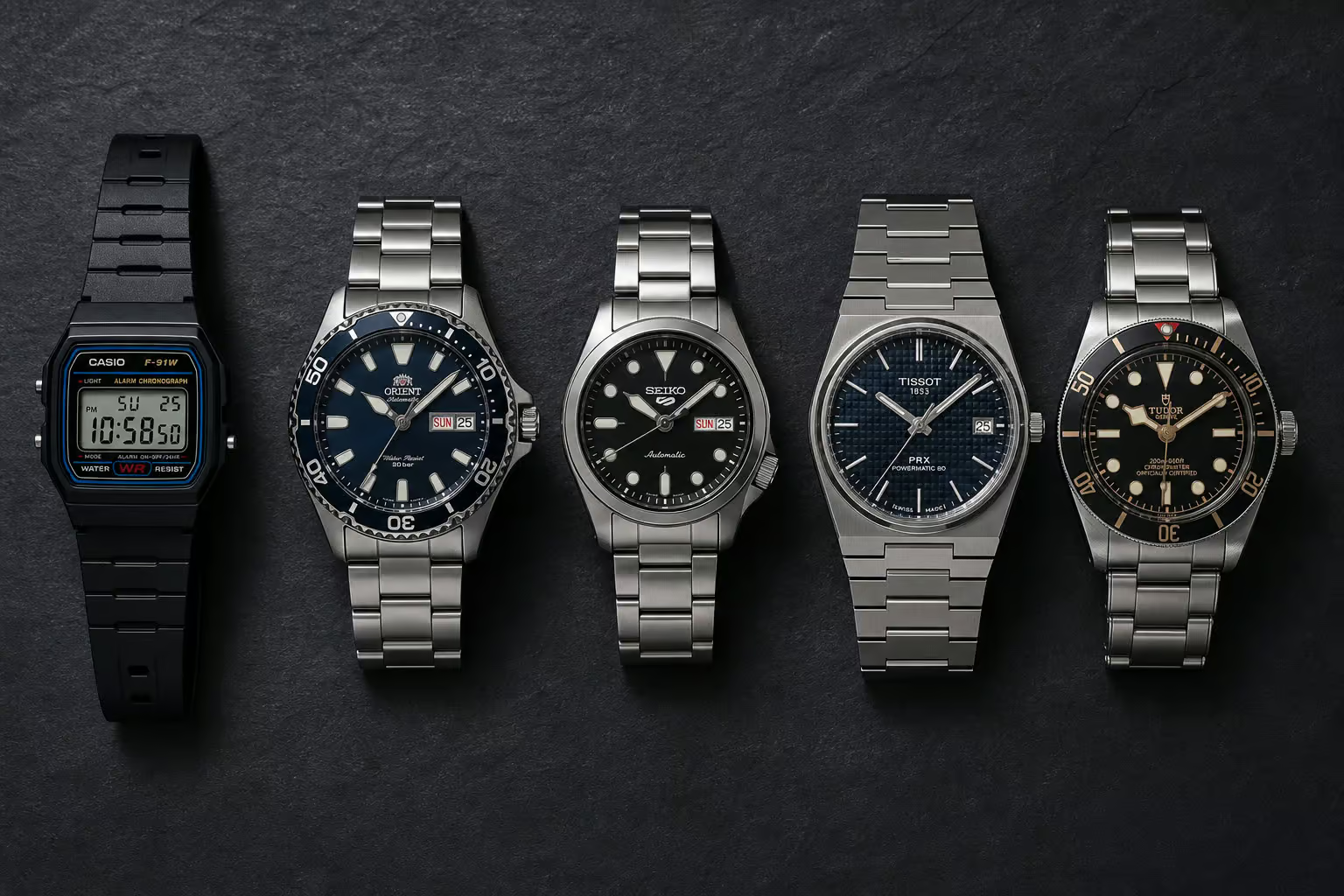
So you’ve got $200 and you keep hearing conflicting things: get a Seiko 5, no get an Orient Kamasu, no wait Citizen Promaster. Meanwhile your buddy says buy a Casio and be done with it. He’s not wrong, but he’s not entirely right either.
The tension is real. You want a “real” watch — something mechanical with a sweeping seconds hand, a rotor you can feel moving, no battery to replace. But you also want something accurate, durable, and not a pain to maintain. That’s the divide the quartz crisis of the 1970s created back when Seiko’s Astron quartz watch nearly killed the Swiss mechanical industry. Mechanical watches survived, but they became enthusiast objects, less about telling time and more about craft, heritage, and connection to a machine on your wrist. That shift changed what “value” means in watches forever.
This article is a brand-by-brand, tier-by-tier comparison using concrete examples, not generalities. We’re looking at five major brands — Seiko, Citizen, Orient, Timex, and Casio, plus a few Swiss names and microbrands where they genuinely compete on value. The question at every price point: which brand offers the most horology for your dollar? Not the cheapest option, but the best combination of movement quality, build, durability, brand heritage, and price.
First, a quick vocabulary primer. An automatic watch uses a weighted rotor that spins with your wrist motion to wind a mainspring. No battery, but if you don’t wear it for a day or two, it stops. A quartz watch runs on a battery and a tiny crystal oscillator — far more accurate, far less maintenance.
A manual-wind watch is like an automatic but you have to wind it by hand every day. Each has tradeoffs, and we’ll cover which gives you the best value at each price level.
Key Takeaways
The Casio F-91W at under £20 is the most successful watch ever sold — it’s more accurate than any automatic under $500 and requires almost zero maintenance.
At $200–$300, the Orient Kamasu offers the best specs package on paper: an in-house movement, sapphire crystal, and 200m water resistance, beating Seiko and Citizen on value for money.
The Tudor Black Bay 58 delivers roughly 90% of the Rolex Submariner’s prestige and build quality for about a third of the price, with an in-house COSC-certified movement and a 39mm vintage-inspired case.
Table of Contents
How We Define Value — What Actually Matters When You’re Comparing Watches
Before we start throwing model names around, you need a framework. Otherwise you’re comparing apples to oranges and ending up with a Seiko 5 GMT next to a Citizen Eco-Drive and wondering why one costs double.
The single most overlooked value differentiator at budget and mid-range is whether a movement hacks and hand-winds. Hacking means the seconds hand stops when you pull out the crown — you can set the time to the exact second. Hand-winding means you can wind it manually from a dead stop instead of shaking it to life. The Seiko 4R36 (and its NH35 sibling used by many microbrands) offers both.
Some competitors — like the Miyota 82S7 found in cheaper skeletons, hand-wind but don’t hack. That’s a real difference when you’re setting your watch for a meeting or syncing with an atomic clock.
Crystal hierarchy is another easy spot. Sapphire crystal (used in most watches above $200) is extremely scratch-resistant — it ranks 9 on the Mohs scale, just below diamond. Hardlex is Seiko’s own hardened mineral crystal, more shatter-resistant than standard mineral but less scratch-resistant than sapphire. Standard mineral crystal is cheapest and scratches easily but can be polished or replaced cheaply.
Water resistance gets abused in marketing. 100m means fine for swimming and light snorkeling. 200m is legitimate for recreational diving. 300m+ is serious dive-watch territory. For most people, 100m is sufficient unless you actually dive.
Movement accuracy varies wildly. A typical automatic runs at -10 to +30 seconds per day. A standard quartz watch is accurate to about ±15 seconds per month. High-accuracy quartz (HAQ) like the Grand Seiko 9F or Longines Conquest VHP can hit ±10 seconds per year or better.
And a $20 Casio F-91W is more accurate than a $10,000 Rolex Submariner. That’s a fact that should inform every buying decision.
Other practical considerations: automatic watches need servicing every 3–7 years; quartz watches need a battery change every 2–5 years. Case size and lug-to-lug measurement matter more than diameter — a 44mm diver with short lugs can wear smaller than a 42mm field watch with long lugs. I’ll call out specific dimensions where they’re relevant.
Budget Tier (Under $100) — Casio, Timex, and the Honest Truth About Cheap Automatics
Let’s get this out of the way: there are no good automatic watches under $100. The cheapest new automatic you can buy from a reputable brand is the Seiko 5 Sports SRPE53 at around $150, and even that stretches the definition of “budget.” If you’re shopping under $100, you’re buying quartz, and that’s fine — it’s the rational choice.
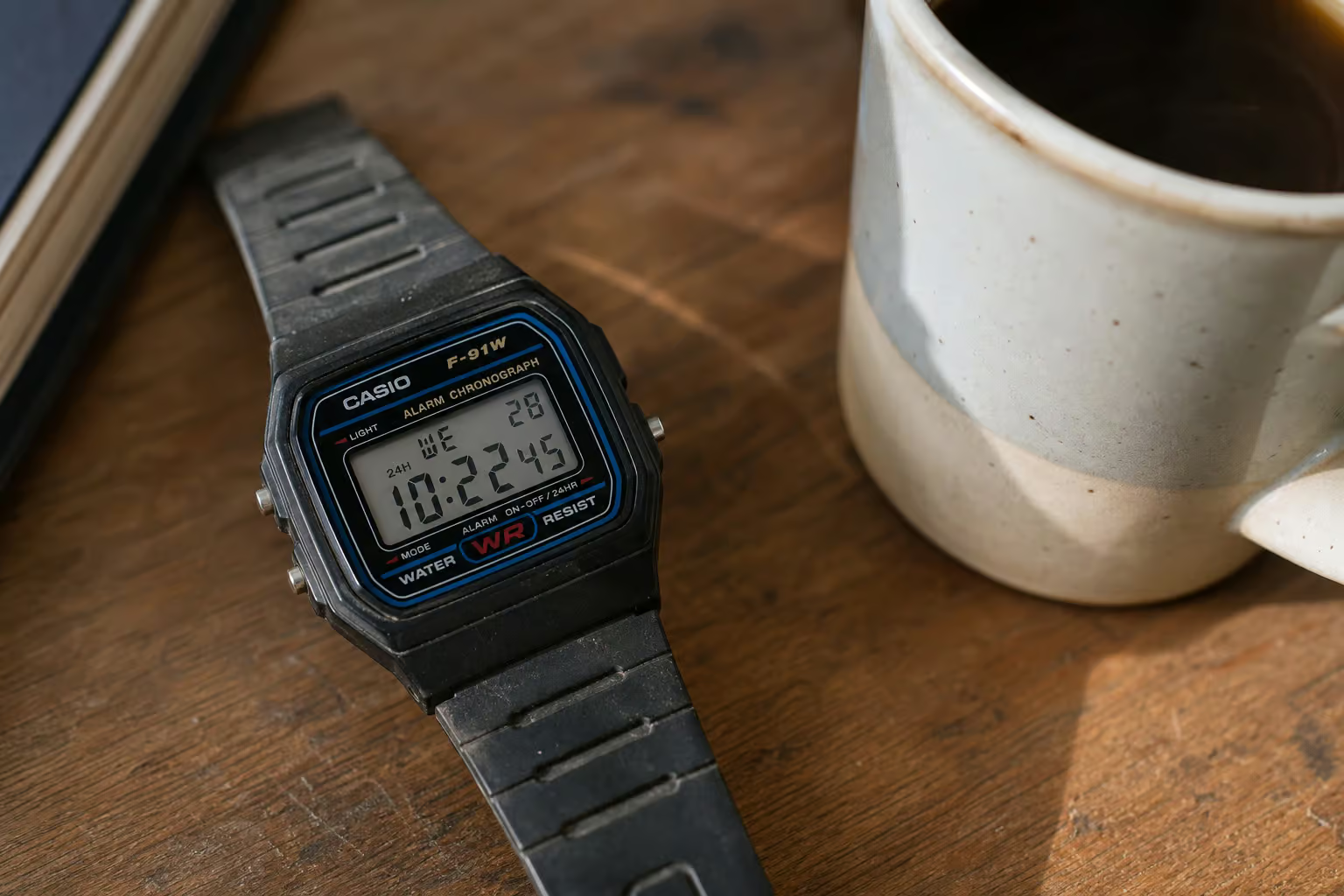
Casio F-91W — the Undisputed King
The Casio F-91W debuted in 1989 and you can still buy it new for under £20. It’s the most successful watch ever sold — millions produced, and for good reason. It’s durable (the resin case takes a beating), accurate to ±15 seconds per month, and the battery lasts years. It’s the watch that got me through a decade of abuse. If value means “how much function per dollar,” nothing else comes close.
Timex and the Quartz Alternatives
Timex offers several models under $100, like the classic Weekender or the Expedition line. They’re reliable, use Indiglo backlighting, and cost $30–$60. The crystal is mineral, the cases are brass or steel, and the straps are fine. They’re not exciting, but they work.
The One Automatic Exception: Vostok Amphibia
If you really want an automatic under $100, the Vostok Amphibia is the only game worth mentioning. It’s a Russian dive watch with 200m water resistance, a cult following, and a design so quirky it looks like a prop from a 1970s Soviet submarine movie. The movements are crude, the bezels are loose, and the finishing is rough. But it’s a mechanical watch that can take a beating, and you can find them for $60–$90 on eBay. It’s not for everyone, but it’s a fun entry into automatics without breaking the bank.
The Bottom Line on Budget
Don’t apologize for buying quartz at this price. The Casio F-91W is the best value watch ever made. If you want a mechanical, save up to $150 for a Seiko 5.
Mid-Range ($100–$300) — The Sweet Spot: Seiko vs. Orient vs. Citizen vs. Timex
This is where the real comparison starts. You have $100–$300 and you want an automatic watch that looks good, lasts, and doesn’t require a watchmaker friend to service. These four brands dominate this tier, and each has a different value proposition.
Seiko 5 Sports
Seiko relaunched the 5 Sports line in 2019, and it’s the entry-level automatic that punches above its weight. The key movement is the 4R36: it hacks, it hand-winds, it has a day-date complication. The crystal is Hardlex — not sapphire, but Seiko’s hardened mineral is tough enough for daily wear. Water resistance varies by model, but most are 100m, fine for swimming but not diving.
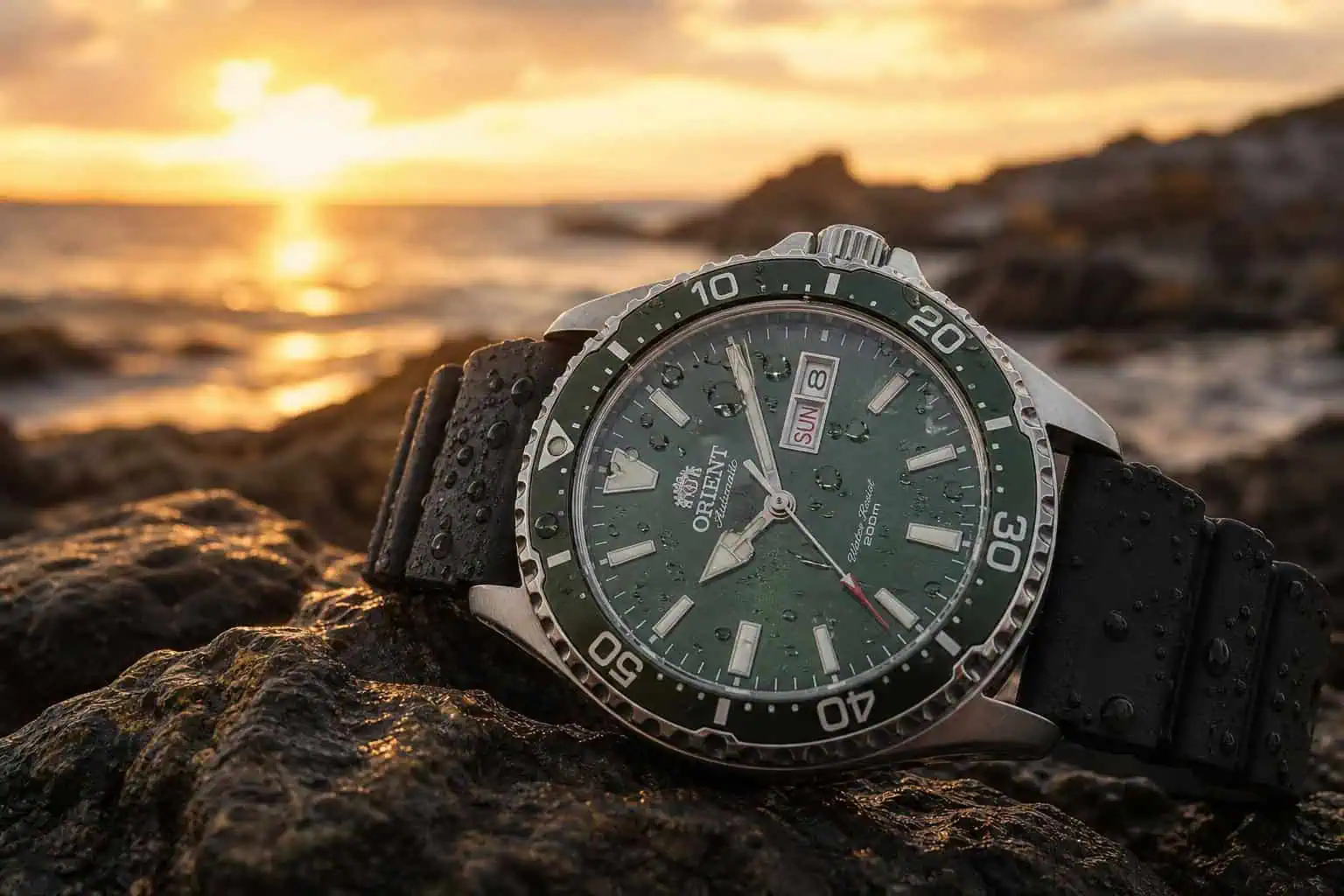
The variety is the selling point. You want a diver? The Seiko 5 Sports “Turtle” or “Samurai” family. A field watch?
The Seiko 5 Sports Field series. A GMT? The Seiko 5 Sports GMT SSK003, introduced in 2022, is the first GMT complication in the 5 Sports line and costs around $300. No other brand offers a mechanical GMT at that price. Models like the SRPE53 (a dressy diver) run about $150–$200.
The tradeoffs: Hardlex scratches more easily than sapphire, and the 100m water resistance means you can swim but not dive. But for the price, the Seiko 5 offers endless style options and a solid workhorse movement.
Orient Kamasu — The Specs Leader
If you want the best technical specs at $200–$300, the Orient Kamasu is the winner. The Calibre F6724 is an in-house movement (Orient is owned by Seiko Epson, so it’s part of the same family but operates independently). The crystal is sapphire — that’s rare at this price. Water resistance is 200m, a proper dive watch. And the movement hacks and hand-winds.
The Kamasu comes in several dial colors (green, red, blue, black) and has a sapphire crystal that’s a significant upgrade over Seiko’s Hardlex. The bezel is aluminum rather than ceramic, but that’s a minor concession. At around $280 on the grey market, it beats the Seiko 5 on specs.
But there’s a catch: Orient’s brand recognition is lower, and the Kamasu’s design is less varied than Seiko’s. If you want a dive watch and you value sapphire crystal and 200m WR, get the Kamasu. If you want variety — a field watch, a GMT, a dressier option. Seiko still wins.
Citizen Promaster Dive Automatic
Citizen’s Promaster line includes a dive automatic powered by the Miyota 9015 movement. The Miyota 9015 is a thin, reliable workhorse — it hacks, hand-winds, and runs at 28,800 bph. The Promaster Dive Automatic has 200m water resistance, a mineral crystal (not sapphire), and a solid build. It’s a no-nonsense tool watch.
The advantage over Orient and Seiko? Citizen’s Eco-Drive solar quartz line is also in this price range. The Promaster Dive Eco-Drive eliminates battery changes entirely — it charges from any light source and runs for years. If you want a set-and-forget watch for diving and daily wear, the Eco-Drive is an alternative to automatic. The automatic version is great, but the solar version gives better value for non-enthusiasts.
Timex Navi XL Automatic
Timex’s Navi XL Automatic is a pilot-style watch at $259. It has a 41mm case, 100m water resistance, and a mineral crystal. The movement is an automatic (likely a Seiko NH35 or similar), and it’s a solid entry-level mechanical from a brand you can trust. But the mineral crystal is a downgrade from the Kamasu’s sapphire, and the water resistance is lower. It’s an option if you want a specific pilot look, but compared to the Orient or Seiko, it’s weaker on specs.
The Headline Claim
At $200–$300, the Orient Kamasu offers the best specs package — in-house movement, sapphire crystal, and 200m water resistance, beating Seiko and Citizen on value. But sealed are the variety king, especially with the GMT option, and Citizen has the Eco-Drive alternative that removes battery anxiety. Your choice depends on what you value: spec sheet superiority or brand diversity.
Upper Mid-Range ($300–$500) — Swiss Movements and Extended Power Reserves
Step up to $300–$500, and you start getting Swiss movements, longer power reserves, and better finishing. This tier introduces Powermatic 80 and H-10 movements — both based on ETA or Sellita calibers but with 80-hour power reserves. That means you can take the watch off on Friday evening and it’ll still be running on Monday morning. That’s a quality-of-life upgrade.
Tissot PRX Powermatic 80
The Tissot PRX Powermatic 80, released in 2021, has been a sensation. At around $425 on the grey market, you get an 80-hour power reserve, a distinctive integrated bracelet (straight out of the 1970s), and a Swiss movement from the Swatch Group (which means ETA inside). The case is 40mm, water resistance is 100m, and the crystal is sapphire. The finishing is impressive for the price — brushed and polished surfaces that look more expensive than it is, and for those wanting both comfort and style, the SMAEL Men’s Sports Analog Quartz offers impressive features as well.
The anchor claim: this is the best power reserve you can get under $500, combined with a design that stands out from the usual diver/field watch crowd. If you want something that feels premium and has horological substance, the PRX is it.
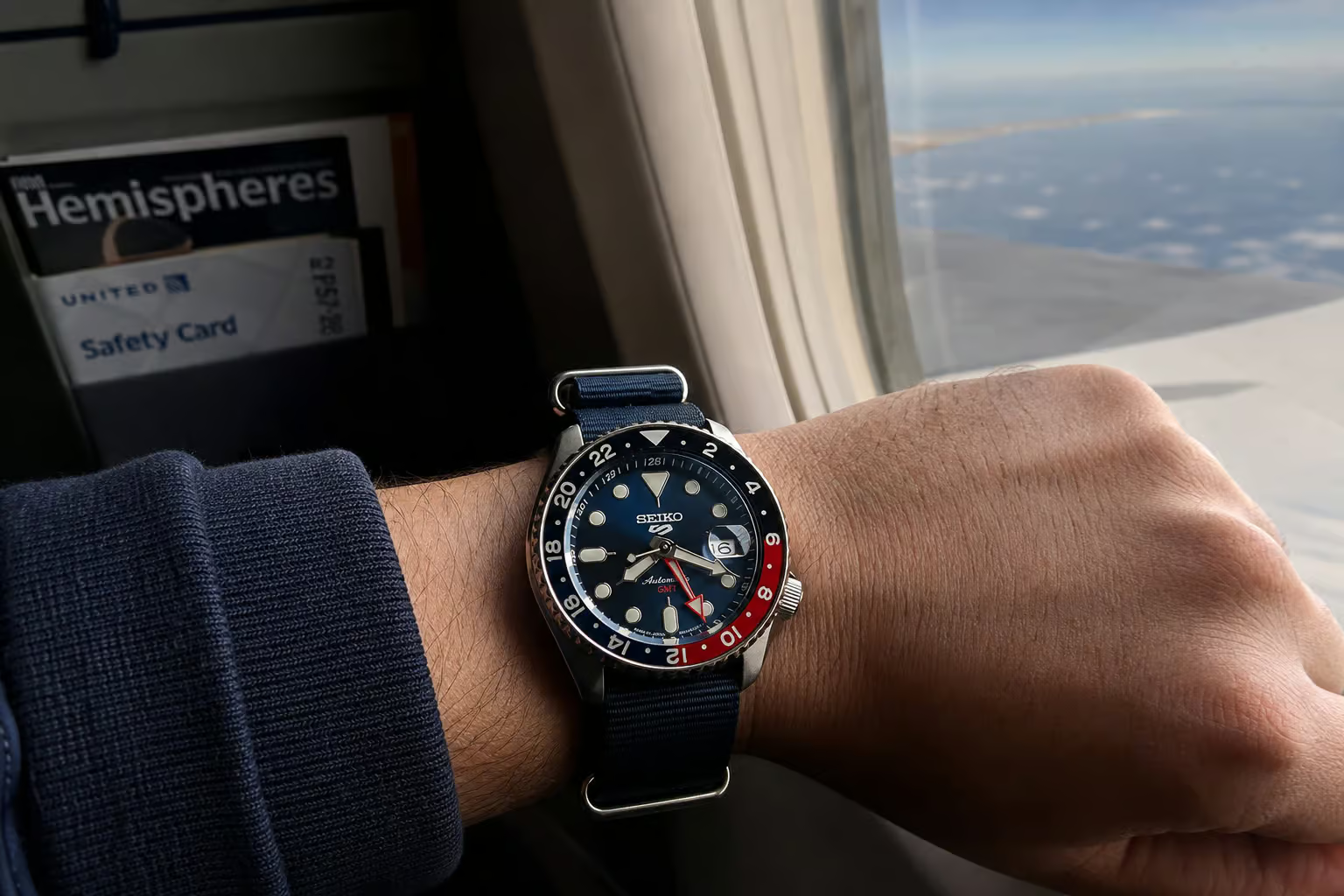
Tissot Seastar 1000 Powermatic 80
If you want a dive watch with the same movement, the Seastar 1000 has 300m water resistance, a ceramic bezel, and a 43mm case. It’s a lot of watch for the money — typically $450–$500. The ceramic bezel is a welcome feature at this price, and the 80-hour power reserve means you can wear it on rotation without resetting it every time.
Hamilton Khaki Field Automatic (H-10)
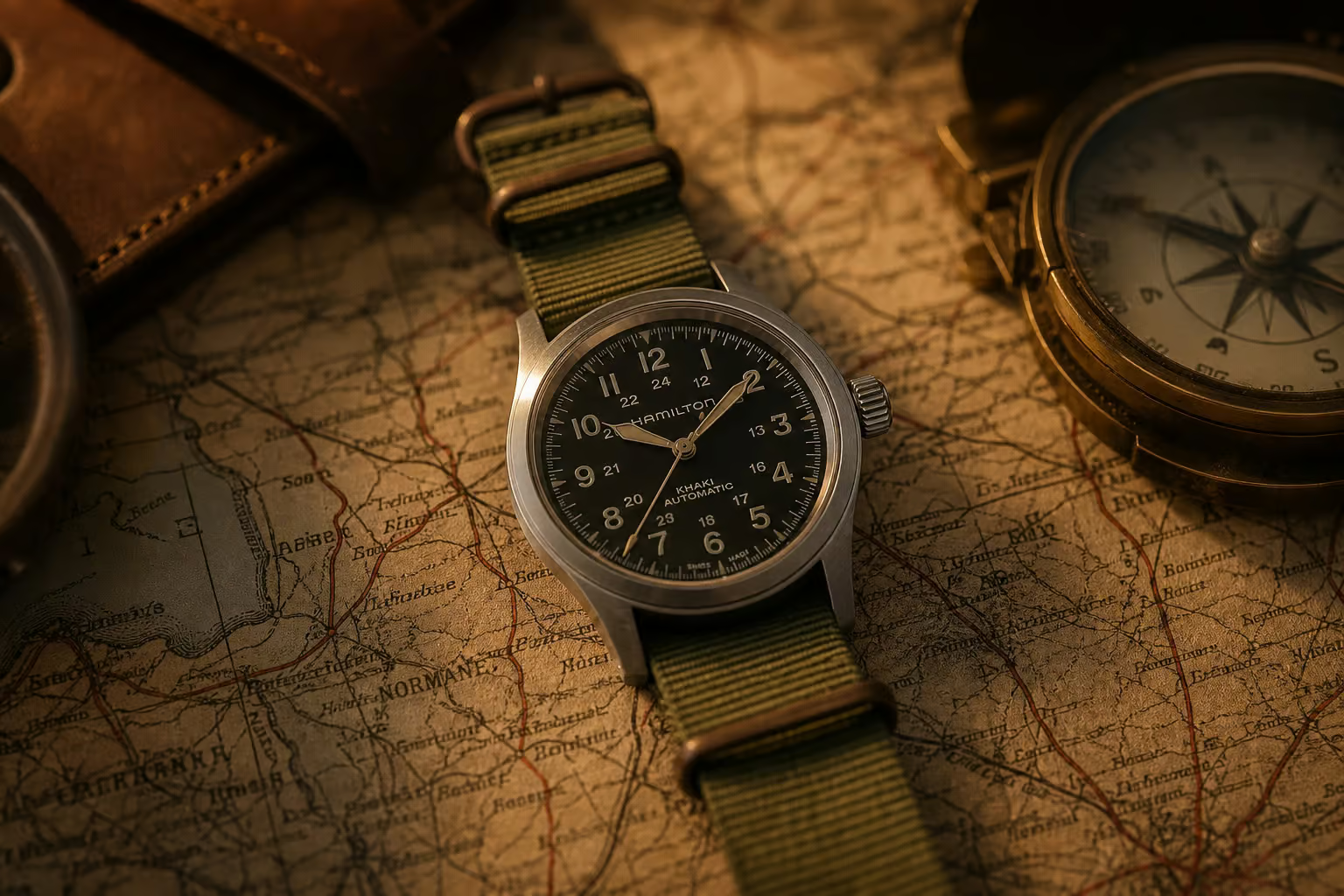
Hamilton’s Khaki Field is the go-to field watch with military heritage — direct descendant of WWII military watches. The H-10 movement has 80-hour power reserve, and the case comes in 38mm or 42mm options. At around $400–$450, it’s a no-nonsense tool watch that looks great on a NATO strap. The crystal is sapphire, water resistance is 100m, and the dial is instantly legible with big Arabic numerals.
The Khaki Field doesn’t have the visual flair of the PRX, but it’s a heritage piece. If you want a watch that says “I know what I’m doing” without shouting, this is it.
Seiko Presage Cocktail Time
Seiko’s Presage line brings Japanese craftsmanship to dress watches. The Cocktail Time series (like the SRPB41) has a dial inspired by cocktails — textured wavy patterns in blues and greens. The movement is the 4R35 (hacks, hand-winds) in newer versions, or the 6R15 in the original SARB065. The crystal is Hardlex, not sapphire, and water resistance is only 50m. But the dial is special, it looks like it belongs on a watch costing twice as much.
At around $400–$500, you’re paying for the dial and finishing rather than water resistance or crystal hardness. That’s a tradeoff if you want a dress watch for the office or evenings out.
Seiko SARB017 Alpinist (Discontinued)
The Alpinist is a cult favorite — 38.5mm case, green sunburst dial, gold accents, 200m water resistance, and sapphire crystal. The 6R15 movement has 50-hour power reserve. It was discontinued a few years ago, but you can find it on the secondary market for around $500–$600. It’s an all-around field/dress watch that punches well above its price in finishing. The caveat: prices have risen since discontinuation, but it’s good value compared to similar Swiss options.
Bulova Lunar Pilot (262Hz HAQ)
If you want a quartz alternative with heritage, the Bulova Lunar Pilot is the watch. It has a 262kHz high-accuracy quartz movement that sweeps smoothly (not ticking like a standard quartz), and it’s the watch that went to the moon alongside the Omega Speedmaster — Bulova’s prototype was worn on Apollo 15. The case is 45mm, water resistance is 50m, and the crystal is sapphire. At around $350–$400, it’s an alternative to the Speedmaster for a fraction of the cost, especially if you value accuracy over mechanical purity.
Premium ($500–$1,000) — COSC Certification, In-House Movements, and High-Horology Quartz
At this tier, you’re getting Swiss or high-end Japanese movements with certifications and finishing that justify the price. Value now includes brand heritage and craftsmanship, not just specs.
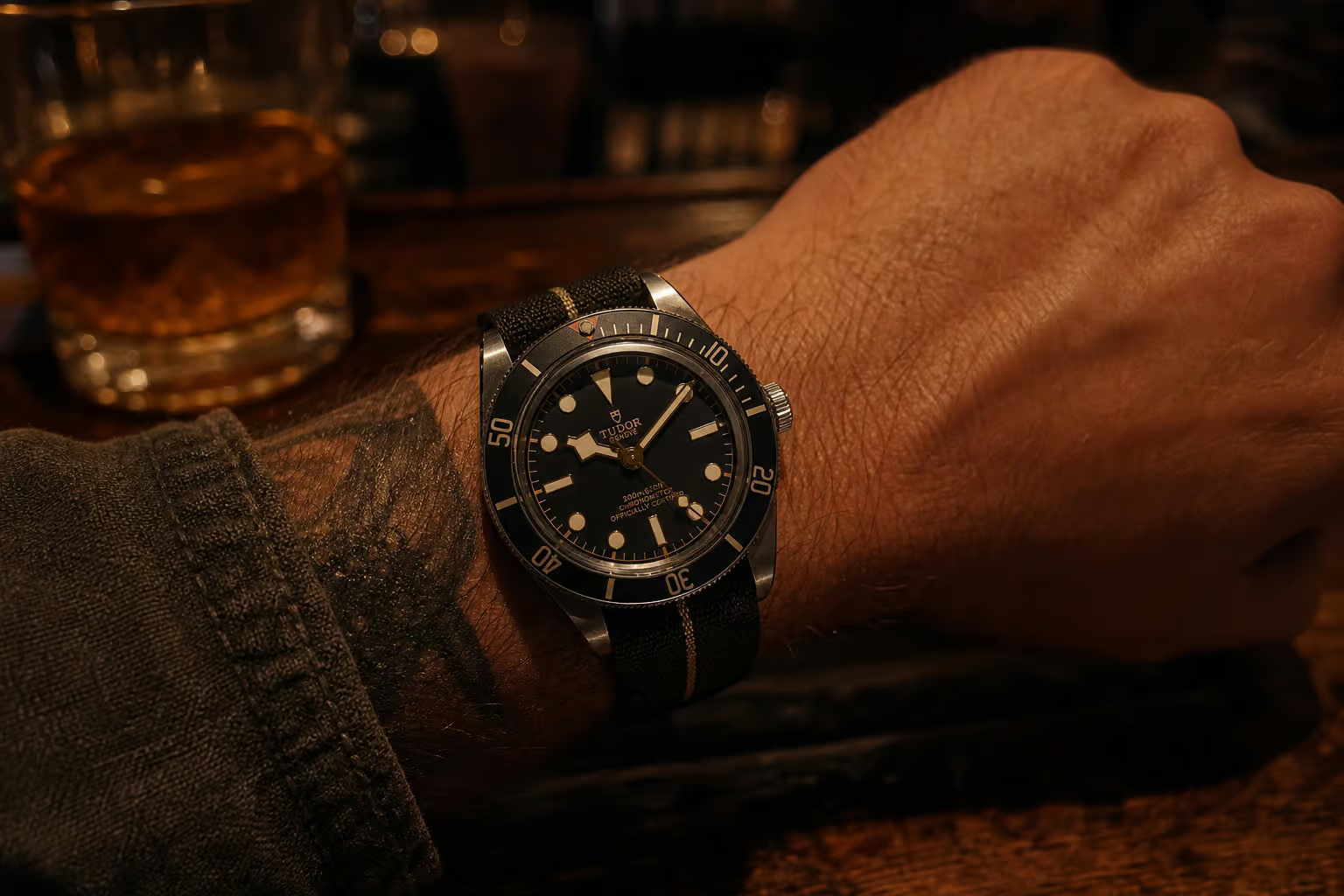
Tudor Black Bay 58
The anchor claim of this tier: the Tudor Black Bay 58 offers roughly 90% of the Rolex Submariner’s prestige and build quality for about a third of the price. The case is 39mm (a sweet spot for vintage-inspired sizing), water resistance is 200m, and the movement is the in-house Calibre MT5402, COSC-certified and accurate to -2/+4 seconds per day. The design is directly based on Tudor’s 1954 dive watch (the name “58” refers to 1958, when Tudor made its first 200m dive watch).
On the grey market, you can find a Black Bay 58 for around $3,000–$3,500. That’s a premium over the $500 tier, but it’s a watch that could last a lifetime and hold its value. For the money, you get Submariner-level prestige with a distinct Tudor personality.
Longines Spirit
Longines Spirit is a pilot’s watch with aviation heritage — links to Amelia Earhart and Charles Lindbergh. The L888.4 movement is COSC-certified, antimagnetic (silicon balance spring), and has 72-hour power reserve. At around $900 on the grey market, it’s one of the most affordable COSC-certified watches available. The case sizes are 40mm or 42mm, water resistance is 100m, and the crystal is sapphire.
If you want a Swiss watch with guaranteed accuracy and a long power reserve, the Spirit is hard to beat for the money. The antimagnetic protection is a bonus for anyone who works around electronics.
Oris Aquis Date
Oris is an independent Swiss manufacturer — not owned by Swatch Group or Richemont. The Aquis Date uses the Oris 733 movement (based on Sellita SW200-1), a workhorse. The case is 41.5mm, water resistance is 300m, and the bezel is ceramic. At around $900–$1,000, it’s a dive watch with a distinctive design and the cachet of an independent brand.
The tradeoff: service network is narrower than Tissot or Seiko, and resale value is lower than Tudor. But if you want something different from the mainstream and you value transparent sourcing (Oris is very open about their movements), this is a choice.
Grand Seiko SBGA211 “Snowflake”
The Grand Seiko Snowflake is a luxury watch with a dial inspired by snow on the Hotaka Mountains. It uses Spring Drive — a hybrid movement that combines a mechanical mainspring with a quartz regulator for accuracy of ±1 second per day. The case is titanium (light and durable), and the Zaratsu polishing creates a distortion-free mirror finish.
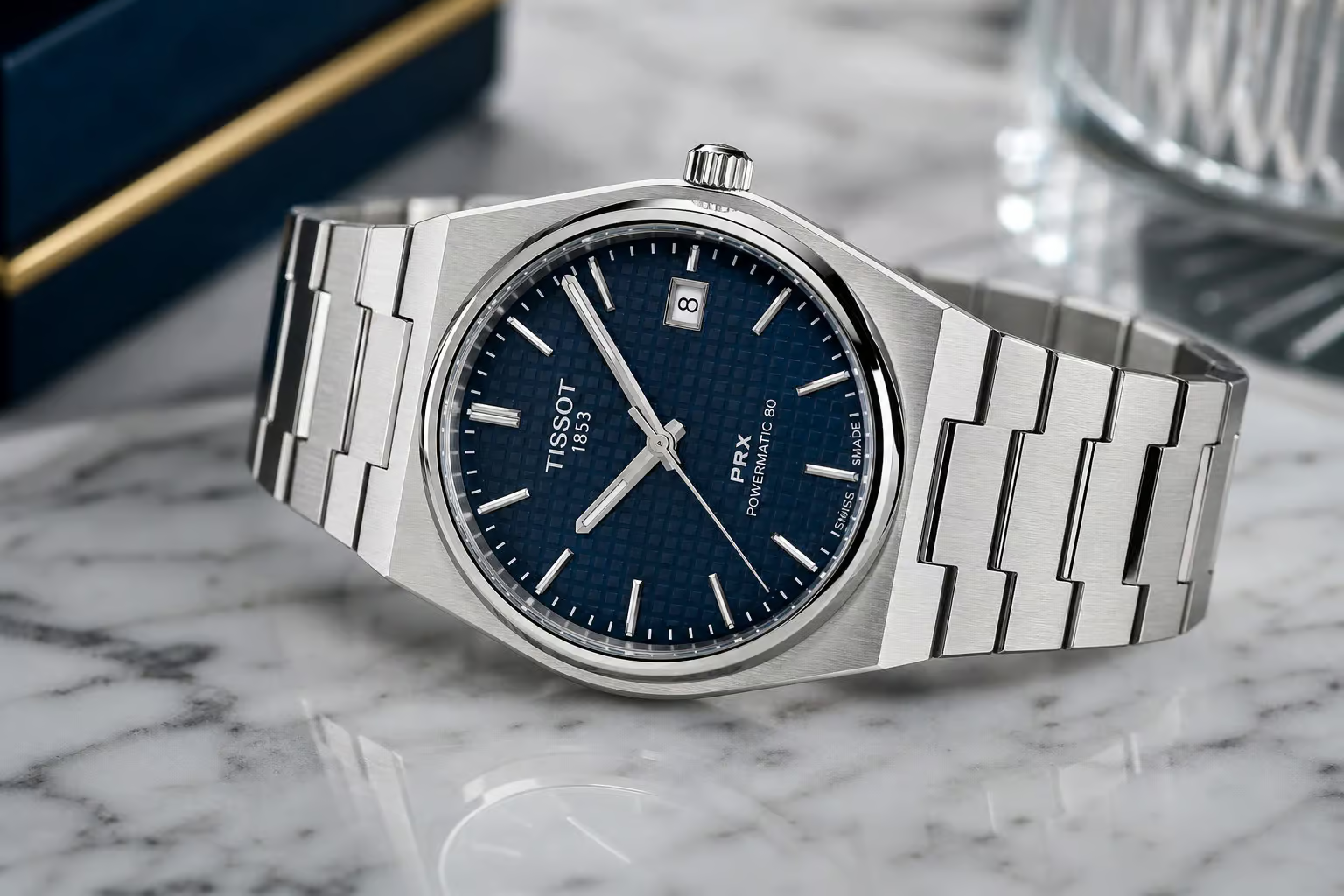
At around $5,000–$6,000, it’s not in the best luxury watches under $1,000 tier, but it’s included here because it represents a different value philosophy: Japanese high-horizon quartz with mechanical soul. The Snowflake is often recommended as the best-value luxury watch because you get Rolex-level finishing and better accuracy. It’s a watch for people who appreciate craftsmanship over brand flash.
Luxury ($1,000+) — Resale Value, Heritage, and Collectibility
Above $1,000, the definition of value changes. Specs are assumed to be excellent. Now you’re paying for design heritage, brand prestige, innovation, and resale value. Here’s how five iconic brands stack up.
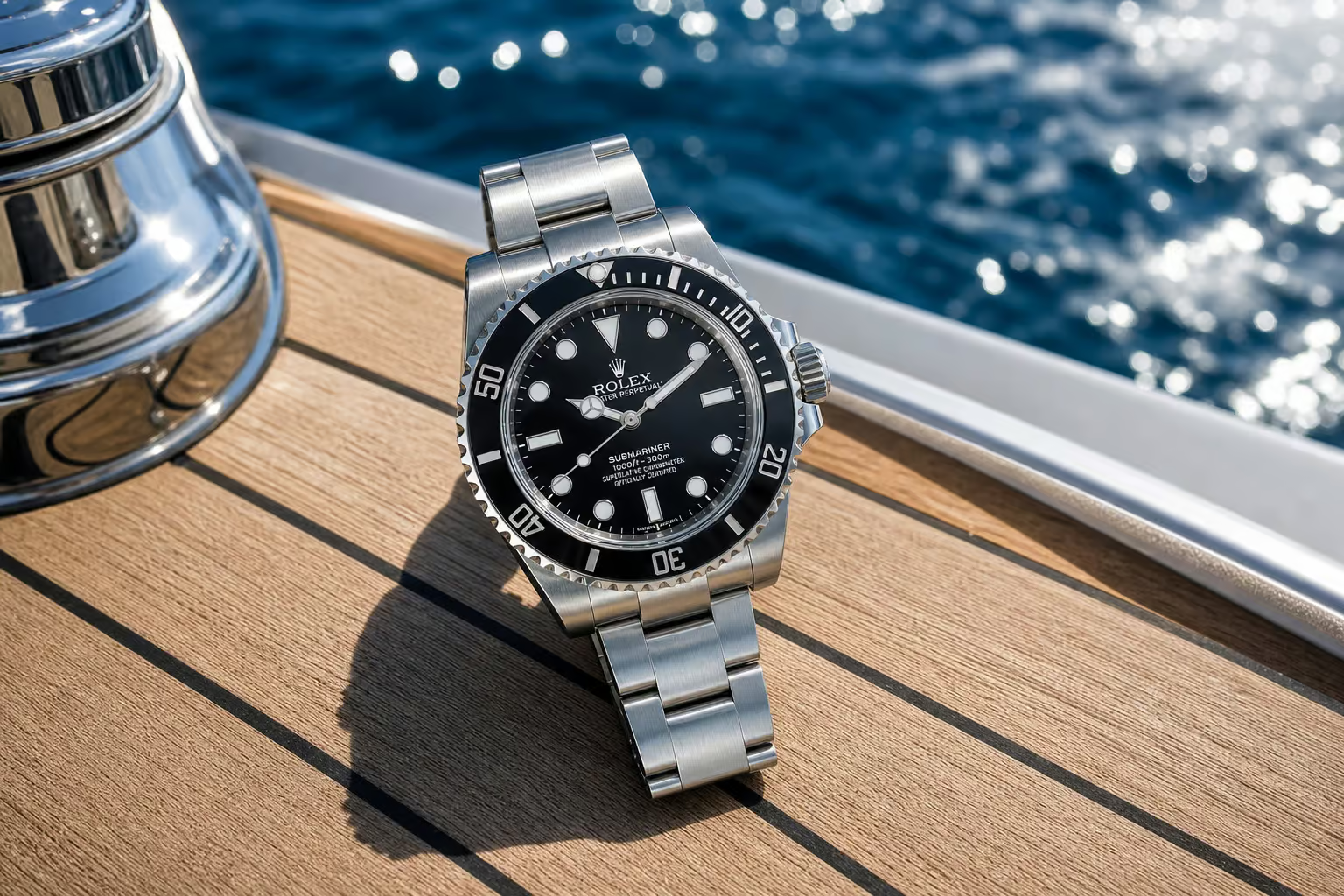
Rolex Submariner
The Rolex Submariner has been the benchmark dive watch since 1953 — one of the essential watch types every collector needs. The current model uses Calibre 3230 or 3235, COSC-certified to -2/+2 seconds per day, with 300m water resistance, ceramic bezel, and sapphire crystal. It’s also arguably the best long-term value in luxury watches: some pre-owned Submariners sell for more than their original retail price. This isn’t investment advice — it’s an industry pattern. Rolex production is capped, demand is high, and the brand has maintained its position as the most recognizable luxury watch.
The Submariner isn’t the best specs-for-dollar watch, but if you want a watch that holds value and has universal recognition, it’s the smartest buy. That said, you’ll pay a premium for the name, and you may have to wait years to get one from an authorized dealer—or you could stop falling for fake markdowns on men’s watches under $50 instead.
Omega Seamaster Diver 300M
Omega’s direct competitor to the Submariner. The Co-Axial Master Chronometer Calibre 8800 is METAS-certified for precision and magnetic resistance up to 15,000 gauss. The case is 42mm, water resistance is 300m, and the helium escape valve is a nod to saturation diving. James Bond wears it. At around $5,500 retail, it’s often cheaper than a Submariner on the grey market, and you get a technically superior movement (the Co-Axial reduces friction and extends service intervals).
If you want a dive watch with modern engineering and a bit of Bond cool, the Seamaster offers better value on paper. The resale market is softer than Rolex, but it’s strong.
Cartier Santos
Designed in 1904 for aviator Alberto Santos-Dumont, the Santos is one of the first pilot watches. The square case with exposed screws and integrated bracelet is iconic. The current model uses Calibre 1847 MC (in-house) and has a QuickSwitch bracelet system that lets you change straps without tools. Water resistance is 100m — adequate for a daily wearer.
The Santos is a luxury watch that prioritizes design heritage over dive specs. It’s a piece of history on your wrist, and it works as a dress or everyday watch. Value here is in the design and the story, not the tech sheet.
Jaeger-LeCoultre Reverso
Born in 1931 for polo players — they needed a watch that wouldn’t shatter when hit by a mallet, so the case flips over to protect the crystal. The Reverso is Art Deco elegance in a rectangular case (40mm x 24.4mm) with an in-house Calibre 968. It’s available in steel or gold, and the reversible case allows for customization (engraving, a second dial, etc.).
The Reverso is a collector’s piece with historical significance. Resale values hold well for limited editions. It’s not a tool watch — it’s a statement of refined taste.
Tag Heuer Monaco
The Monaco is a square automatic chronograph introduced in 1969 as one of the first automatic chronographs ever (along with the Zenith El Primero and Seiko 6139). Steve McQueen wore it in Le Mans (1971), cementing its cool factor. The Calibre 11 is an automatic chronograph movement, and the blue dial version is the most iconic.
At around $5,000–$6,000, the Monaco is a hobbyist’s watch — distinctive, historically important, and wearable. Value comes from the story, not the specs.
IWC Pilot’s Watch Le Petit Prince
IWC’s pilot’s watch with a midnight blue dial inspired by Antoine de Saint-Exupéry’s Little Prince. The Calibre 52111 is in-house, with a soft-iron inner case for antimagnetic protection. The case is 40mm, and the power reserve is 168 hours (7 days). At around $6,000–$7,000, it’s a luxury pilot watch with a literary tie-in that adds emotional resonance.
The takeaway: at luxury prices, each brand offers a different value. Rolex gives you resale and prestige. Omega gives you advanced engineering. Cartier and JLC give you design heritage.
Tag Heuer gives you racing cool. IWC gives you storytelling. The “best value” depends on which of these matters to you.
Microbrands and Hidden Gems — Higher Specs, Lower Recognition
Microbrands are small companies that offer better specs than established brands at similar prices. But the tradeoffs are real: weaker service networks, lower resale value, and less brand recognition. Here are a few worth knowing, with honest caveats.
Zelos Hammerhead 2 1000M Bronze
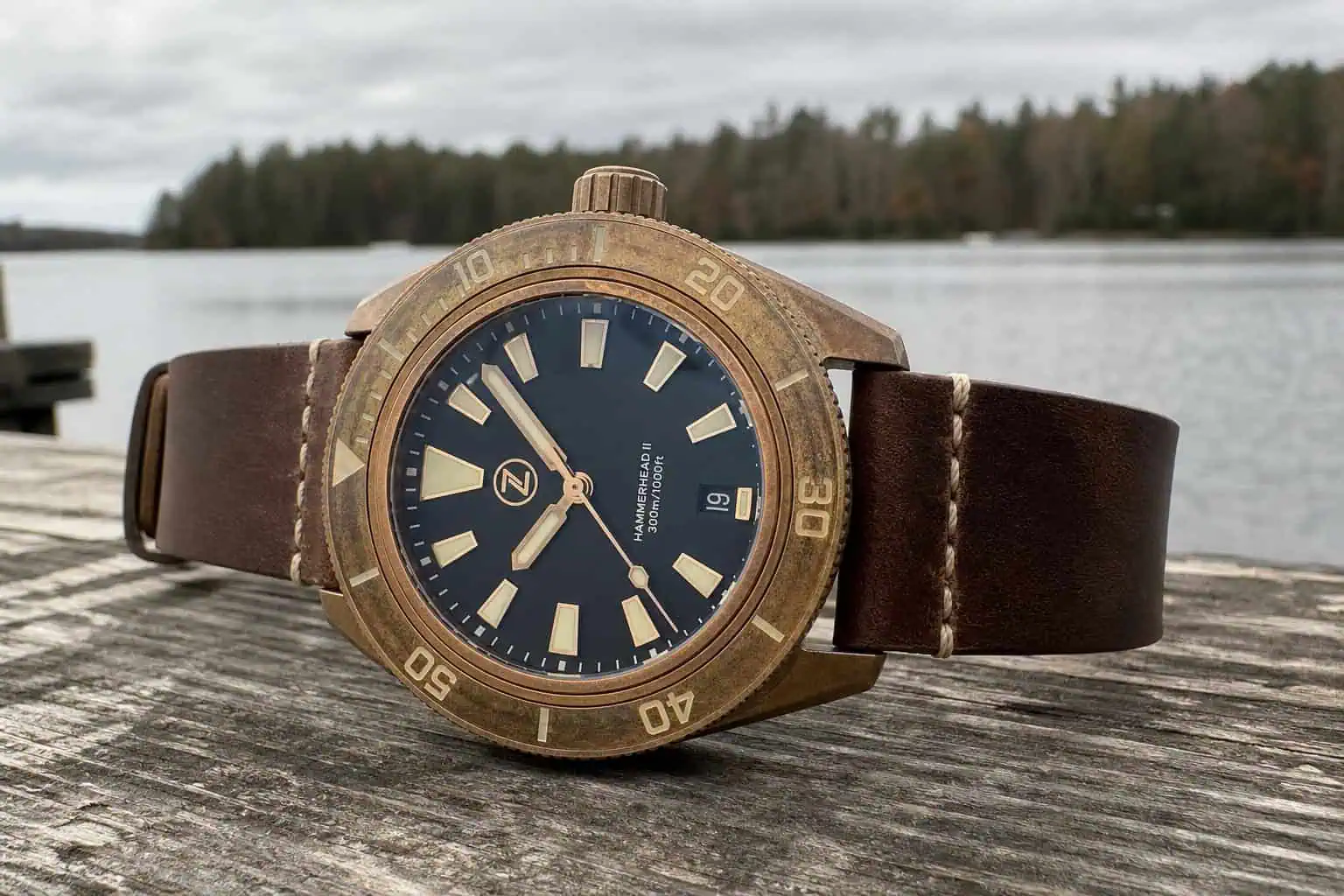
The Zelos Hammerhead 2 at $449 delivers 1000m water resistance, a helium release valve, a bronze case, and the Seiko NH35 movement. Those specs would cost $3,000+ from a Swiss brand. The case is 44mm with 17mm thickness — it’s a chunky tool watch. Bronze develops a patina over time, which some people love and others hate.
The tradeoff: if you need warranty service, you’re dealing with a small company in Singapore (Zelos ships from Singapore). Resale value is poor compared to Seiko or Tissot. You’re buying the specs, not the brand.
Nodus Sector GMT
Nodus builds watches in Irvine, California. The Sector GMT is 38mm, 12.25mm thick, with sapphire crystal, 100m water resistance, and the Seiko NH34 GMT movement. At $475, it’s a compact, well-designed traveler’s GMT. Nodus is known for good customer service and solid build quality.
Dan Henry 1970
Dan Henry watches are homage-style designs at aggressive prices. The 1970 is a vintage-inspired chronograph with a Seiko meca-quartz movement (sweeping chronograph hand, quartz base) for around $250. It looks like a Heuer Autavia from the 1970s. The catch: mineral crystal, 50m water resistance, and no date. It’s a fun, affordable way to get the aesthetic without the vintage watch headaches.
Glycine Combat Sub
Glycine is a Swiss brand with a long history (founded 1914). The Combat Sub is an automatic dive watch with 200m water resistance, available for $350 on the grey market. It uses an ETA or Sellita movement. Glycine is often considered a “value Swiss” because you get Swiss heritage and a reliable movement at a price lower than Tissot or Hamilton. But service and warranty support can be inconsistent.
The Verdict on Microbrands
If you want maximum specs for your dollar and you don’t care about brand name or resale, microbrands can be excellent. If you want peace of mind, easy service, and a watch that holds its value, stick with the mainstream brands above. Neither is wrong — it’s a tradeoff you make consciously.
Quartz vs. Automatic — Which Actually Gives Better Value?
Let’s step back and ask the contrarian question: for most people on a budget, isn’t quartz the better value? The numbers don’t lie.
A $20 Casio F-91W is accurate to ±15 seconds per month. A $10,000 Rolex Submariner is accurate to -2/+2 seconds per day. The Casio is 30 times more accurate and costs 500 times less. It requires a battery change every 2–5 years.
The Rolex needs servicing every 3–7 years, which costs hundreds of dollars. For pure accuracy and low cost of ownership, quartz always wins.
But value isn’t just accuracy. Mechanical watches have a charm that quartz can’t replicate: the smooth sweep of the second hand, the feel of the rotor winding, the connection to centuries of craft. That intangible value is real for many people, including me.
If you want the best of both worlds, look at high-accuracy quartz (HAQ). The Longines Conquest VHP is accurate to ±9 seconds per year and costs around $1,000. The Bulova Lunar Pilot’s 262kHz movement sweeps smoothly and runs at ±10 seconds per year. The Grand Seiko 9F quartz is a masterpiece of finishing and accuracy at ±10 seconds per year. And if you want no battery at all, Citizen’s Eco-Drive solar quartz is the ultimate set-and-forget solution — light charges it, it runs for months in darkness.
The honest take: for pure functionality, buy quartz. For the love of the machine, buy automatic. Both are valid, but don’t pretend the automatic is “better” — it’s different.
How to Choose — A Practical Framework
You’ve seen the landscape. Here’s how to make a decision based on your own priorities.
- Under $100: Buy a Casio F-91W or a Timex Weekender. Don’t overthink it. If you must have an automatic, get a Vostok Amphibia for the novelty.
- $100–$300: Get the Orient Kamasu for the best specs (sapphire, 200m, in-house movement). Get a Seiko 5 Sports if you want variety (diver, field, GMT). Get a Citizen Promaster Eco-Drive if you want zero maintenance.
- $300–$500: The Tissot PRX Powermatic 80 is the standout for power reserve and design. For a field watch, the Hamilton Khaki Field is a timeless choice.
- $500–$1,000: The Tudor Black Bay 58 is the best value in Swiss luxury if you can stretch to $3,000. For under $1,000, the Longines Spirit offers COSC certification and great build.
- $1,000+: Rolex Submariner for resale and prestige. Omega Seamaster for superior movement technology. Cartier or JLC for design heritage.
- Microbrands: Go for it if you want maximum specs and don’t care about resale or service ease. The Zelos Hammerhead 2 and Nodus Sector GMT are standouts.
The final concrete takeaway: for maximum perceived value at minimum cost, get an Orient Bambino (around $200). It’s a classic dress watch with an in-house automatic movement, a domed mineral crystal that looks vintage, and a design that looks like it costs $500. Put it on a quality leather strap, and you’ll get more compliments than any microbrand or budget diver can muster.
The best value watch is the one you’ll wear. Choose the tier that fits your life, and buy the model that makes you look forward to putting it on every morning.