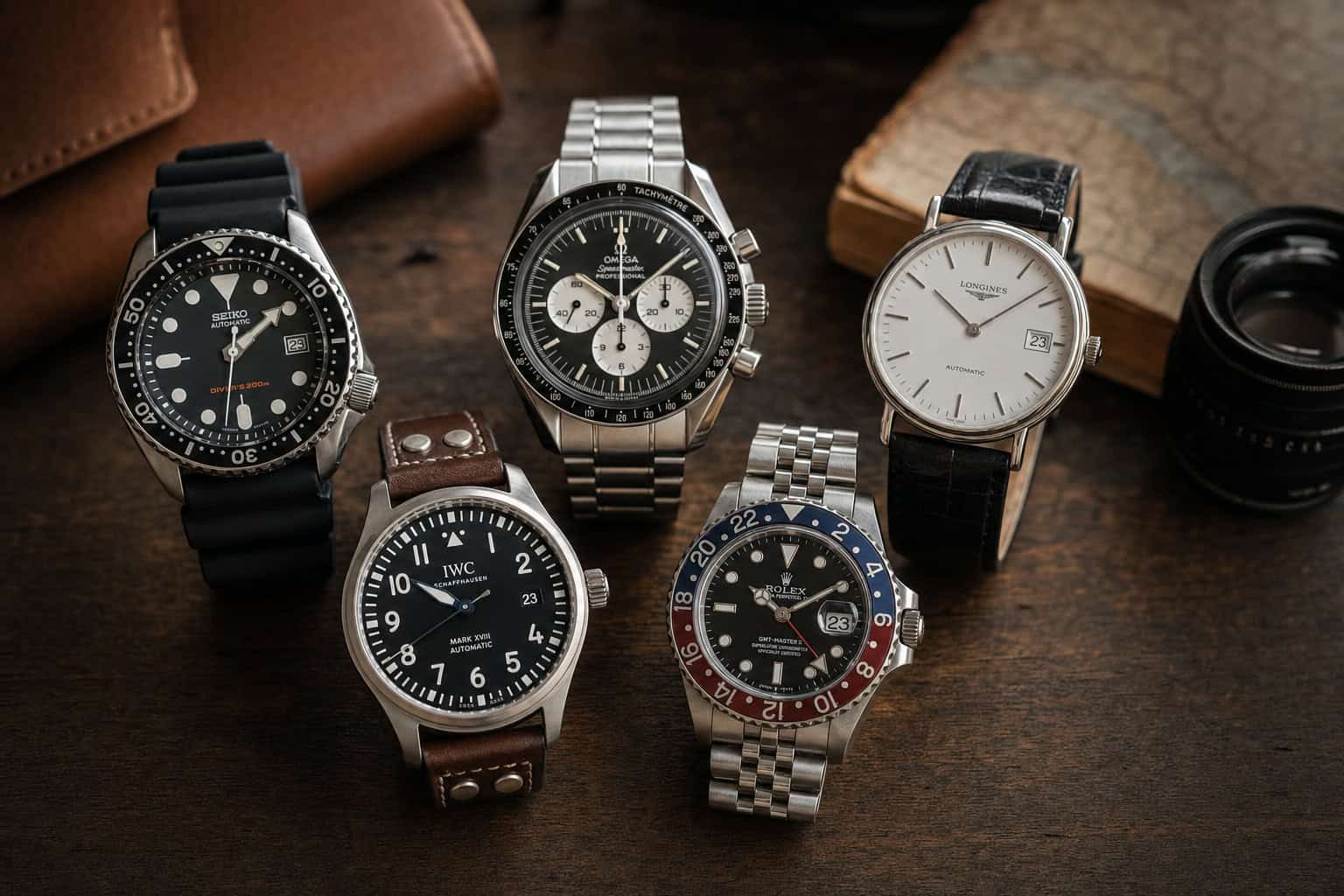
Here’s a strange thing about watches: the first men’s wristwatch ever made was a pilot’s watch, though its appearance resembles what we’d call a dress watch today. That was the Cartier Santos in 1904, built for Brazilian aviator Alberto Santos-Dumont so he could time his flights without fumbling for a pocket watch. Square case, Roman numerals, leather strap — elegant enough for a dinner party. The Santos is proof that watch categories are fluid, not rigid. They were invented to solve problems: depth, speed, navigation, formality, travel.
That’s the framework I want you to hold in your head. A thoughtful collection isn’t about buying the five most hyped models. It’s about understanding what each type was built for, then choosing the one that matches how you live. Below are the categories that matter, the history behind them, and the concrete numbers to help you decide where to spend.
Key Takeaways
Dive watches originated in the early 1950s after Jacques Cousteau’s Aqualung, with the Blancpain Fifty Fathoms, Rolex Submariner, and Zodiac Sea Wolf as the three pioneer models.
A chronograph is a stopwatch operated by pushers; Breitling invented the two-button design in 1923, and the Omega Speedmaster was the first watch to put a tachymeter scale on the bezel.
The Cartier Santos (1904) is the first pilot’s watch, yet it resembles a dress watch — categories are defined by purpose, not appearance.
Table of Contents
Dive Watch: The Tool That Became a Style Essential
Go back to the early 1950s. Recreational SCUBA diving has just become possible thanks to Jacques Cousteau’s Aqualung. Suddenly, people are underwater for extended periods, and they need a reliable way to track time without killing themselves. Enter the dive watch.
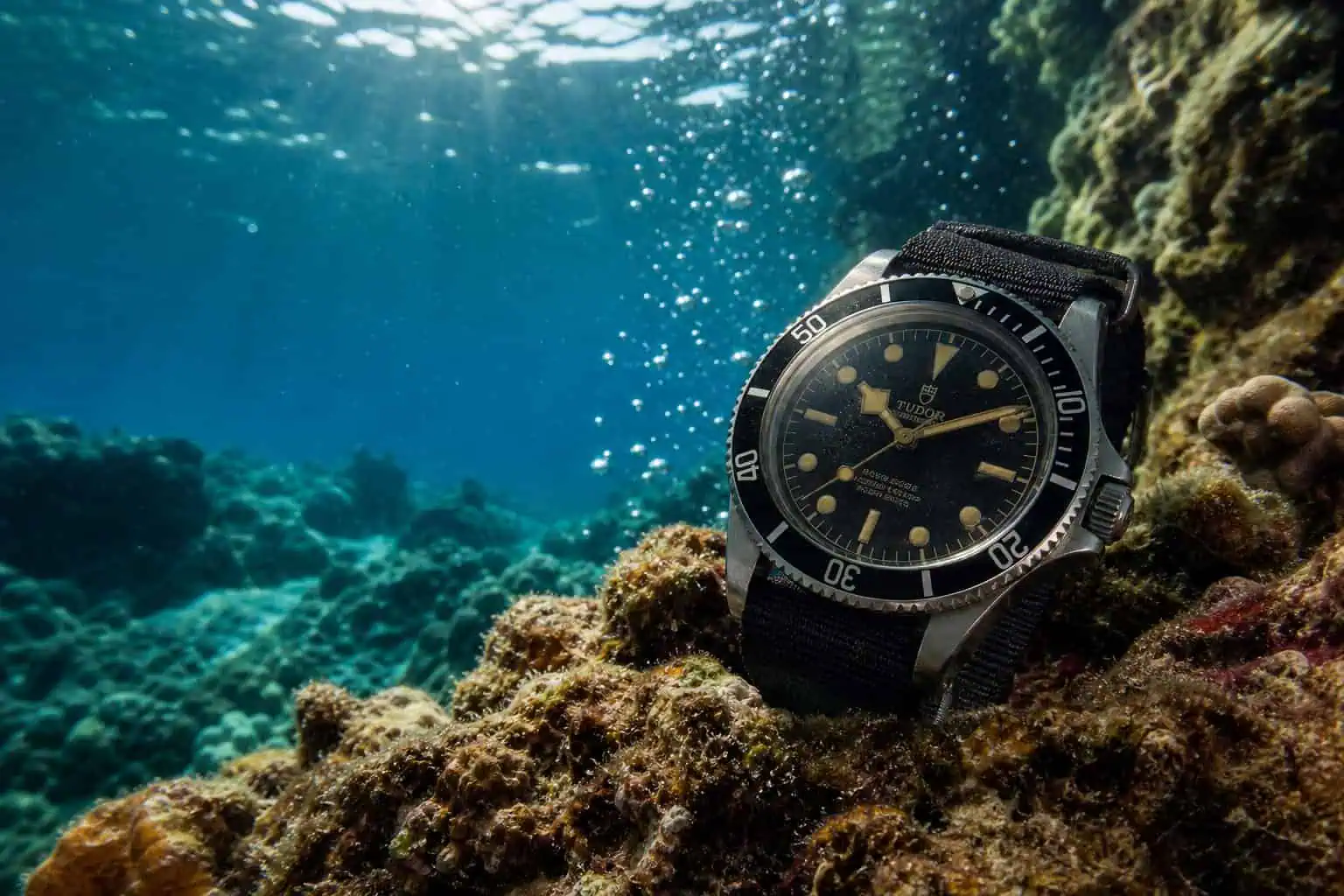
Three brands got there first, all within a few years of each other: the Blancpain Fifty Fathoms, the Rolex Submariner, and the Zodiac Sea Wolf. These weren’t fashion statements. They were tools with a specific job: survive pressure, stay readable in the dark, and let you know when it’s time to surface. The features that seem standard today were born from that brief — a water-resistant steel or titanium case, a screw-down crown, a unidirectional rotating bezel that can’t accidentally be knocked forward (which would extend your dive time and risk decompression sickness), and luminous hands and indices.
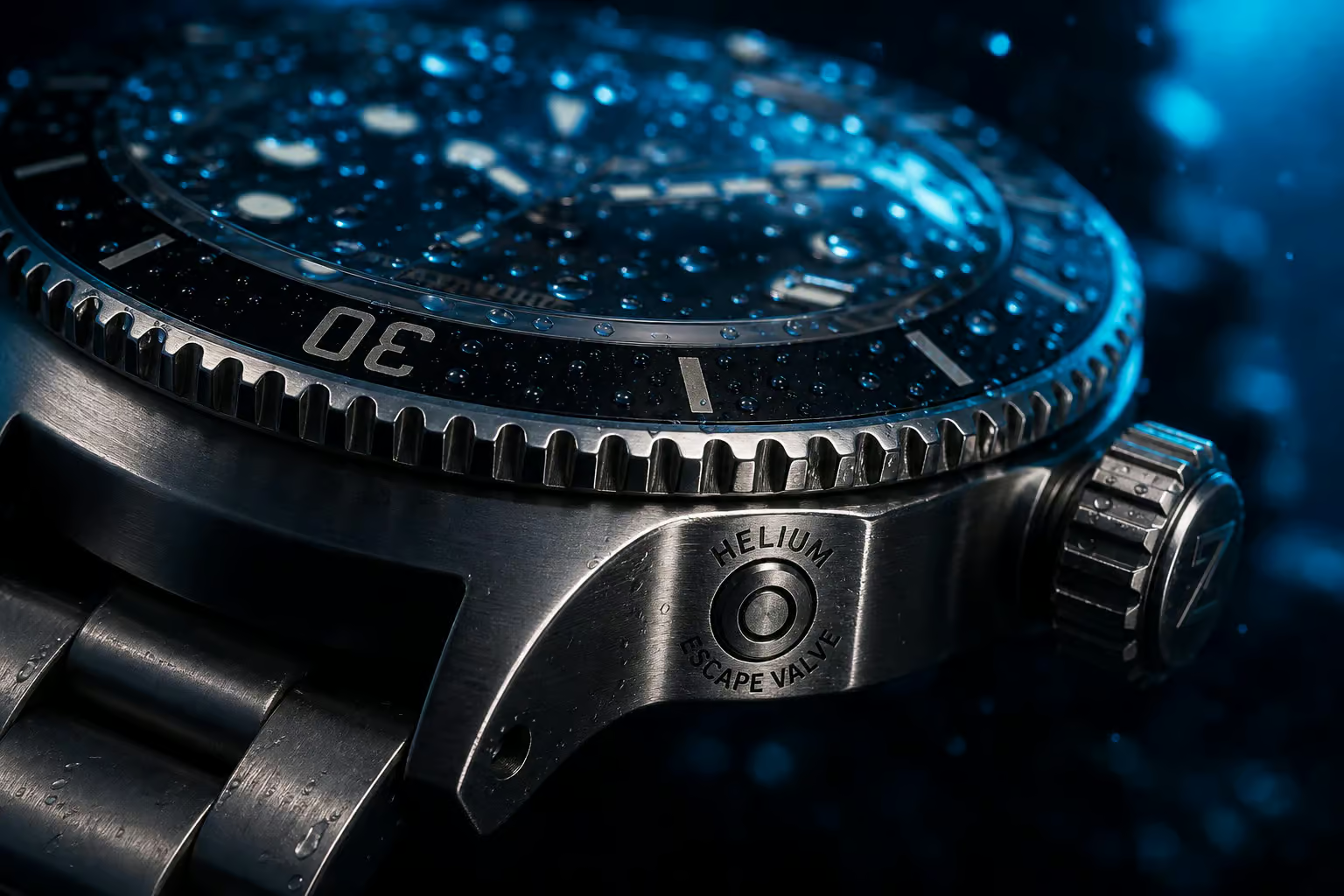
Most dive watches offer at least 100 meters of water resistance. Professional divers look for 200 meters or more. Some go thousands of meters deep, which is overkill for anyone who isn’t piloting a submersible, but it’s interesting to know the engineering exists. The helium escape valve found on models like the Omega Seamaster Diver and Rolex Sea-Dweller?
That’s a niche feature for saturation divers who live in pressurized habitats for days. Unless you have a commercial diving career, you won’t use it. It’s a conversation starter, nothing more.
There’s also the compressor case, an alternative dive design patented in 1956 by Ervin Piquerez. Instead of a screw-down crown, the case itself compresses under pressure to create a tighter seal. Longines uses it on the Legend Diver — a different look, same purpose.
What to look for
- Water resistance: at least 10 ATM (100 meters). 20 ATM (200 meters) is the professional standard.
- Bezel: unidirectional, rotating. Count elapsed minutes.
- Crown: screw-down.
- Materials: steel or titanium. Both tough; titanium is lighter.
- Sizing: 40–42mm is the sweet spot for most wrists. Lug-to-lug under 50mm helps it sit flat. The current Submariner is 41mm (pre-2020 models were 40mm). The Tudor Black Bay 58 is 39mm and wears beautifully.
Price ladder: From entry-level to icon
- Longines HydroConquest — $1,700, 41mm, 72-hour power reserve. Solid entry point.
- Tudor Pelagos — $4,725, 42mm, titanium case, COSC-certified. A modern classic.
- Rolex Submariner — $8,950, 41mm, COSC, Chromalight lume. The benchmark.
Chronograph: The Art of Timing
A chronograph functions as a stopwatch built into a watch. You operate it with pushers on the side of the case — one starts and stops, the other resets. Simple concept, but it took a while to get the design right. Early chronographs had a single pusher that did everything, which was fiddly. In 1923, Breitling figured out the two-button system we still use today.
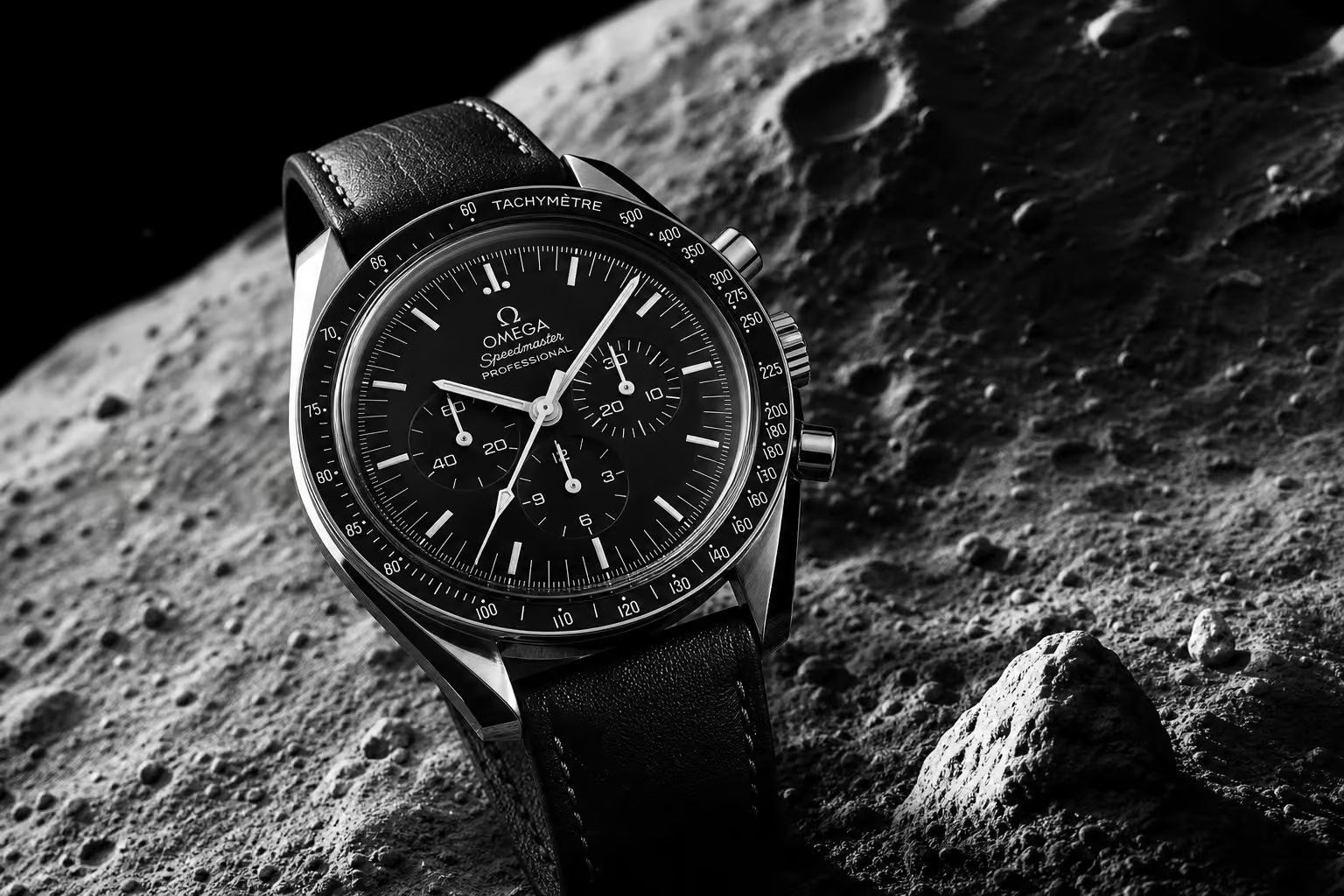
The chronograph’s biggest cultural moment came in 1969, when the Omega Speedmaster became the first watch worn on the moon during the Apollo 11 mission. But even before that, the Speedmaster had made history: it was the first watch to place a tachymeter scale (a bezel that measures speed over a fixed distance) directly on the bezel. Suddenly, timing laps, calculating average speed, or boiling pasta became wrist-based activities.
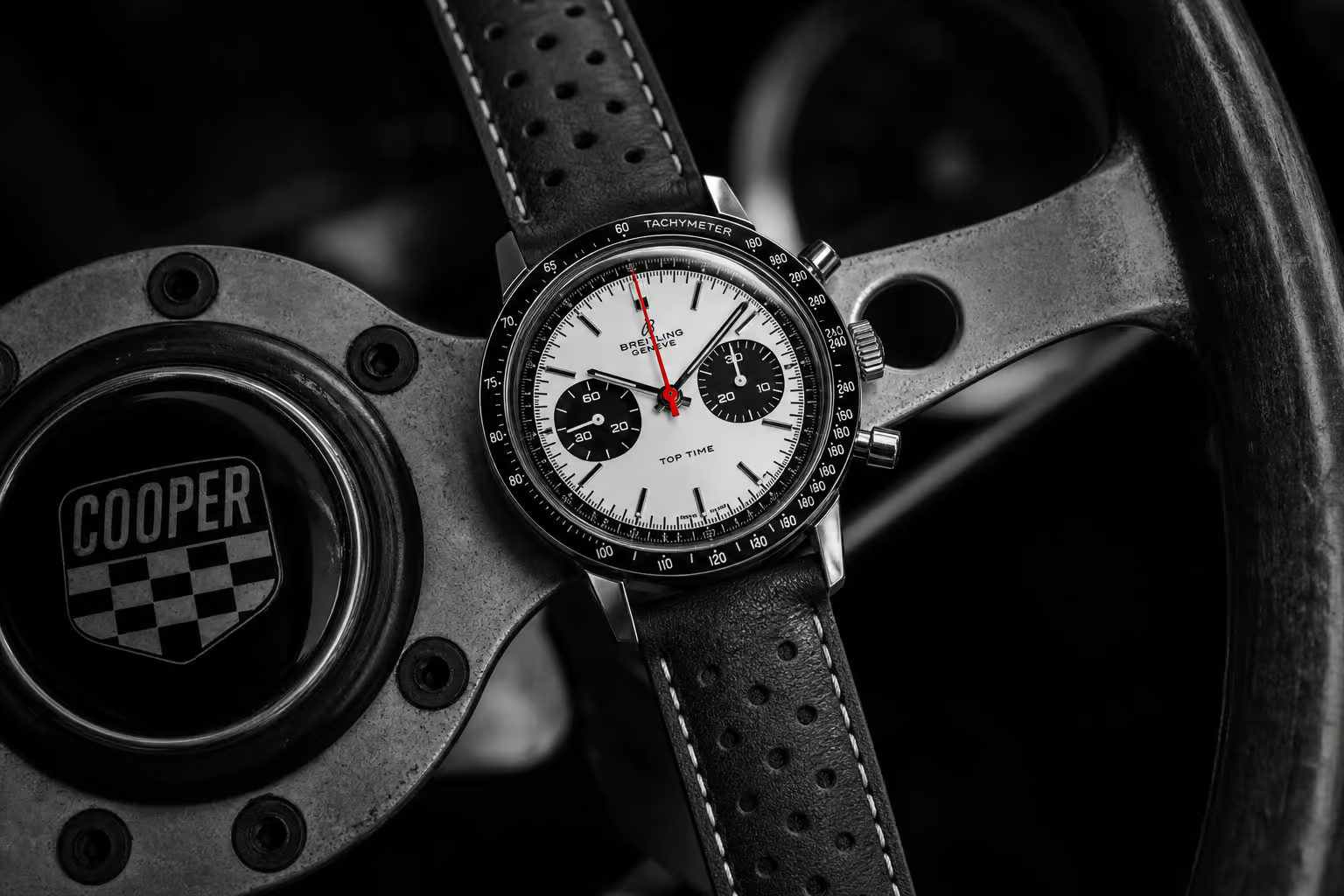
Chronographs come in two main dial layouts. Bicompax has two subdials — usually running seconds and a 30-minute counter. Tricompax adds a third subdial, often for 12 hours. Bicompax is cleaner and easier to read at a glance. If you plan to wear the watch daily, that matters.
Beyond the stopwatch function, there are specialized variations. A flyback stops, resets, and restarts with one push — useful for pilots timing consecutive waypoints. A rattrapante (split-seconds) has two elapsed-seconds hands, letting you time two events that start together but end separately. A tachymeter measures speed.
A pulsimeter records heartbeats per minute. A telemeter calculates distance from lightning to thunder. Most of these are niche, but they’re a testament to how versatile the chronograph platform is.
What to look for
- Pushers: two-button design is the standard. One-button is vintage.
- Dial layout: bicompax for legibility, tricompax for full functionality.
- Movement: automatic or hand-wound. Hand-wound chronographs let you see the mechanism without a rotor blocking the view.
- Style cue: racing chronographs borrow from motorsport — high-contrast subdials, perforated leather straps, tachymeter bezel.
Price ladder
- Seiko Prospex SSC813P1 — $890+, 39mm, solar-powered (six-month charge), panda dial. A fantastic value.
- Tag Heuer Carrera Automatic Chronograph — $4,650+, 41mm, Swiss automatic. The classic racing chronograph.
- Omega Speedmaster Moonwatch Professional — $7,200, 42mm, NASA-qualified, hand-wound. The one that went to the moon.
Pilot’s Watch: A Category of Contrasts
The first pilot’s watch was the Cartier Santos, but it looks nothing like what most people picture when they hear “aviator watch.” That’s because the category is broad. You have elegant squares from Cartier, massive fliegers from IWC, and slide-rule calculators from Breitling. They all share one thing: legibility above all.
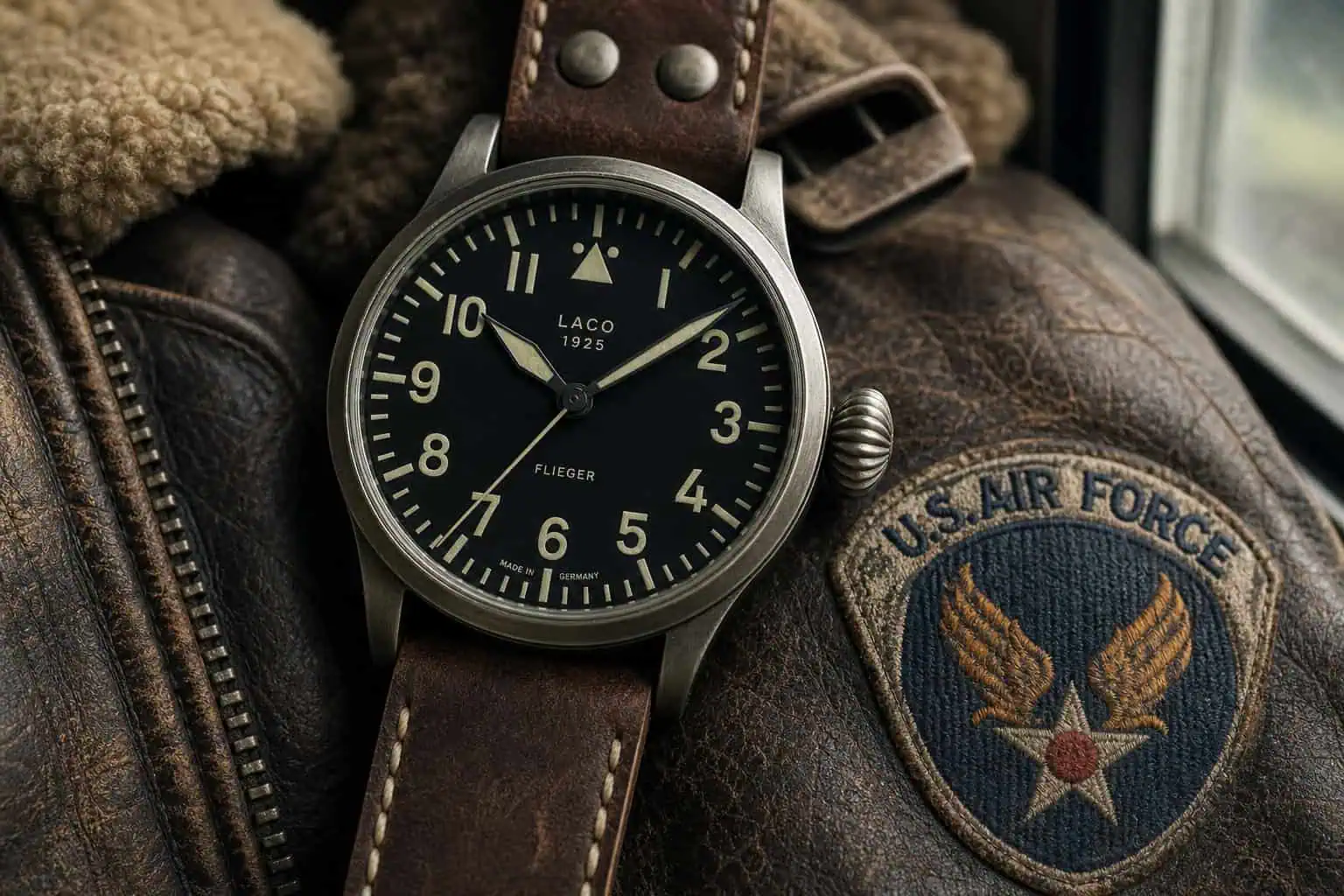
The most iconic pilot watch design comes from the B-Uhren (Beobachtungs-Uhren, meaning navigator’s watches) used by the German Luftwaffe in World War II. These flieger watches have a large matte case, a black dial with oversized luminous numerals, a triangle with two dots at 12 o’clock, a diamond-shaped crown, and a thick leather strap. Purpose-built for reading in a dark cockpit with gloves on.
IWC’s Big Pilot is the modern embodiment. It comes in two sizes: 43mm and 46mm. That 3mm difference might sound small, but on the wrist it’s the gap between “noticeable” and “statement piece.” Most people will prefer the 43.
Then there’s the Breitling Navitimer, launched in 1954, which adds a chronograph and a slide-rule bezel for in-flight calculations like fuel consumption and true airspeed. It’s the official watch of the Aircraft Owners and Pilots Association — a real tool for real pilots.
What to look for
- Dial: high contrast, large numerals, minimal clutter.
- Crown: diamond or onion-shaped for easy grip with gloves.
- Crystal: often convex sapphire for durability and distortion-free reading.
- Wear: pilot watches are casual tool watches. They don’t go with suits.
Price ladder
- Hamilton Khaki Pilot Pioneer — $2,045, 40mm, antimagnetic. A modern recreation of a military pilot’s watch.
- IWC Mark XVIII — $4,500, 40mm, convex sapphire crystal. Clean, understated, and well-proportioned.
- Breitling B01 Navitimer — $9,100, 43mm, 70-hour power reserve, 47 jewels, AOPA officially endorsed.
Dress Watch: Restraint as Design Philosophy
A dress watch is defined by what it leaves out. Thin case (aim for under 10mm), simple dial, leather strap, often hand-wound because that eliminates the thickness of an automatic rotor. Max 40mm, but many classics sit at 36–38mm. The point is to be discreet — historically, checking your watch at a formal event was deemed rude, so dress watches were designed to slip under the cuff unnoticed.
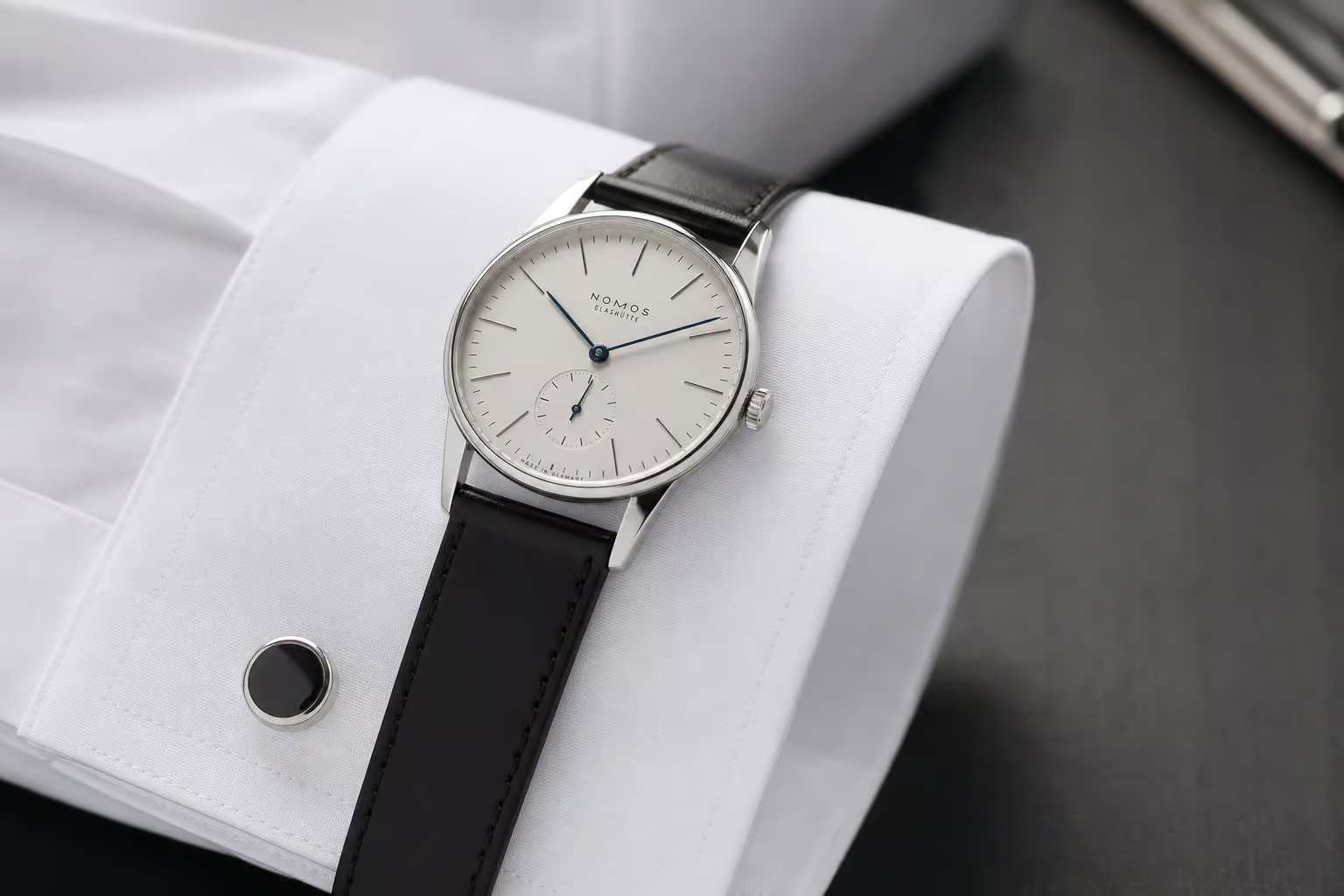
The icons of the category are the Cartier Tank (1919) with its rectangular case, the Patek Philippe Calatrava (1932) with its pure circular dial, and the Jaeger-LeCoultre Reverso (1931) whose case flips over to protect the dial during polo. Each one is a masterclass in subtraction.
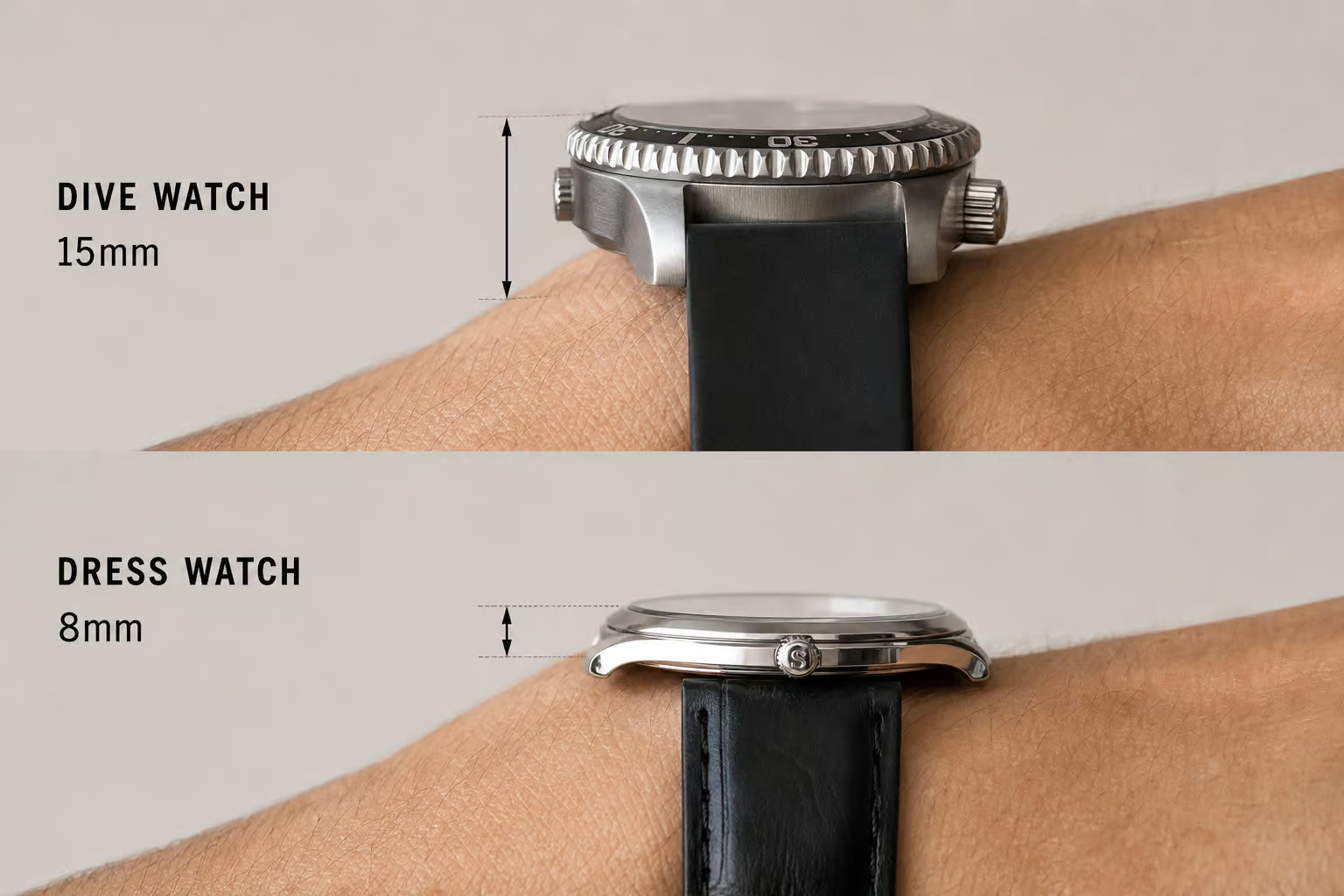
One common mistake I’ve seen beginners make is buying a dress watch with excessive thickness. Anything above 10mm won’t slide under a shirt cuff comfortably. Hand-wound movements are thinner, which is why you see so many dress watches using them. If you want to wear a dress watch daily with suits, thickness is the most important spec.
There’s also a crossover category called the luxury sports watch — the Audemars Piguet Royal Oak and the Patek Philippe Nautilus, both designed by Gérald Genta in the early 1970s. They’re dressy enough for a suit but rugged enough for daily wear, with integrated bracelets and higher water resistance. They blur the line on purpose.
What to look for
- Thickness: under 10mm. Under 9mm is even better.
- Case size: 34–40mm. Smaller is more traditional.
- Strap: leather or fine mesh. No metal bracelets for true dress formality.
- Movement: hand-wound for slimness. Automatic allowed if thin enough.
Price ladder
- Seiko Presage SRPE45 — $425, 38.5mm, guilloché dial. A stunning entry-level dress watch.
- Grand Seiko SBGA211 “Snowflake” — $6,200, 41mm, titanium case, Spring Drive movement accurate to ±1 second per month. Dial texture inspired by Japan’s Shinshi mountains.
- Patek Philippe Calatrava — $39,030+, 39mm, precious metal. The archetype.
GMT / Travel Watch: Mastering Time Zones
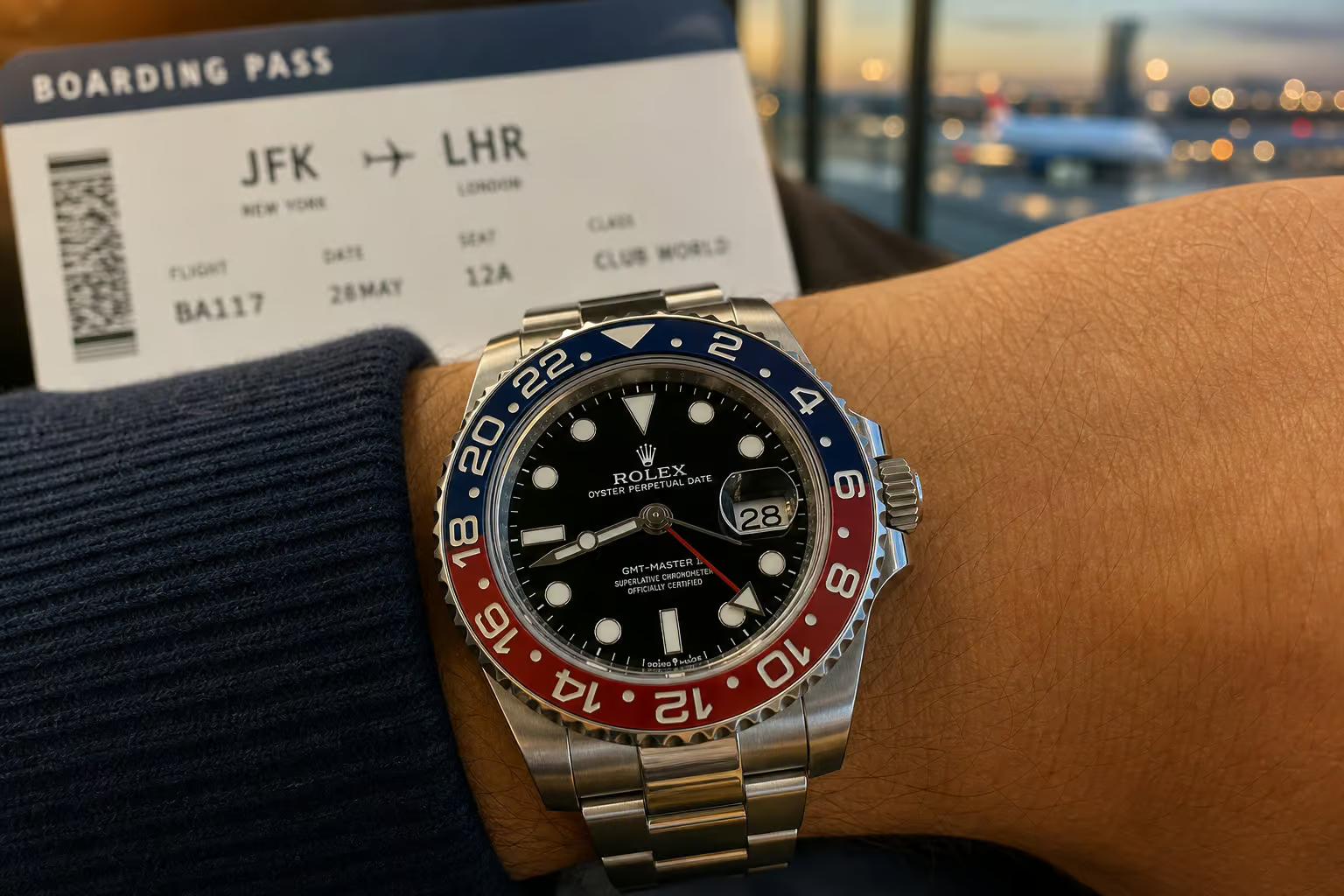
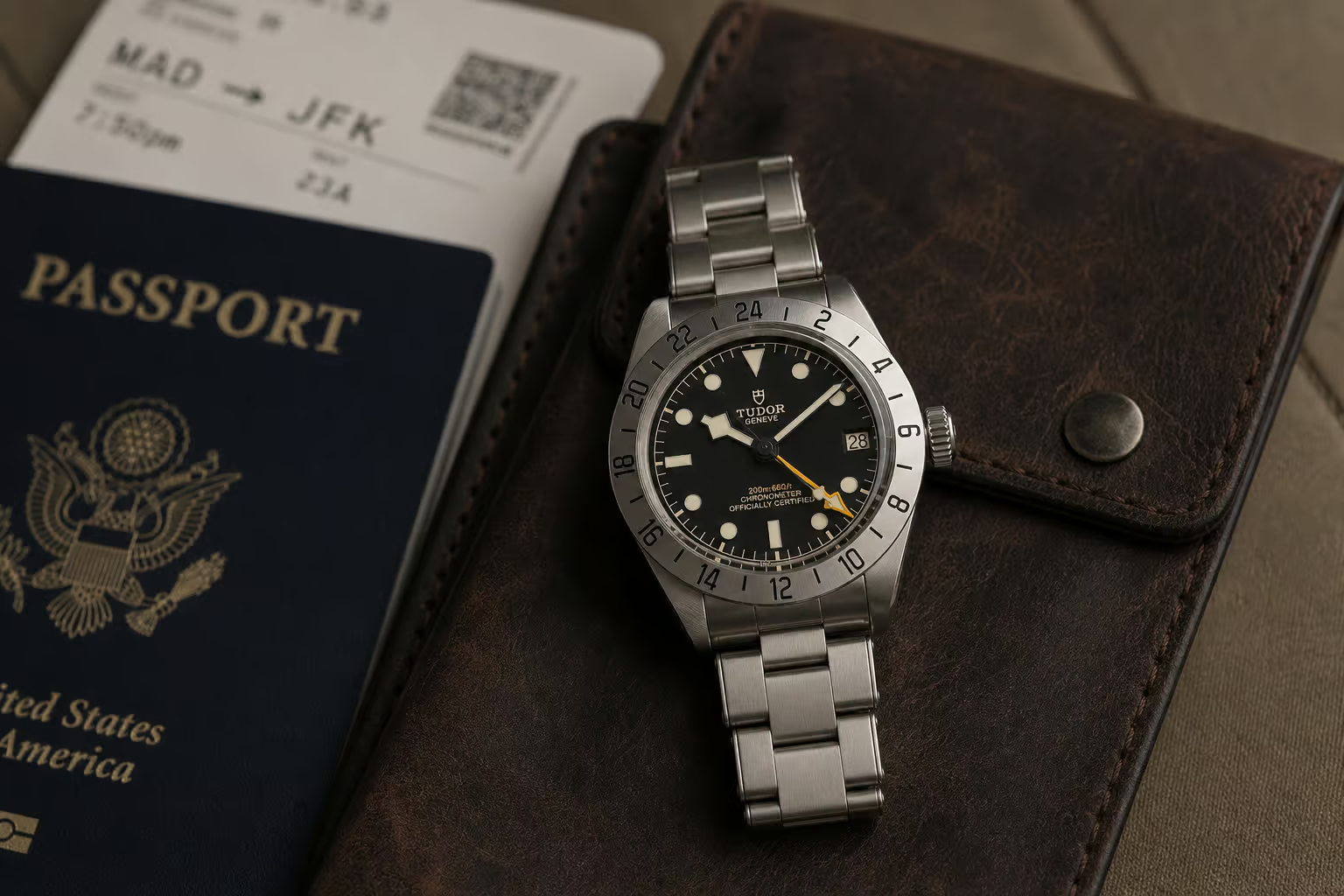
The GMT complication solves a problem: you’re in Tokyo, and you need to know what time it is back home in New York without doing mental math. It does this with an extra hand that completes one rotation every 24 hours, paired with a 24-hour scale engraved on the bezel or dial.
Rolex introduced the GMT-Master in 1954, developed in collaboration with TWA pilots who needed to track multiple time zones on long-haul flights. The original had a two-tone bezel — red and blue, nicknamed “Pepsi”, so you could quickly tell day from night in the reference time zone.
There are two main types. A caller GMT lets you set the 24-hour hand independently — useful if you’re at home and want to track another time zone. A flyer GMT lets you adjust the main hour hand in one-hour jumps while the 24-hour hand stays fixed. That’s better when you’re traveling, because you can set your local time without upsetting your home time reference.
If you really want to flex, a world time watch shows all 24 time zones at once. It’s the ultimate traveler’s piece — one glance and you know if it’s morning in Singapore or midnight in London.
What to look for
- Movement: flyer GMT if you travel frequently. Caller GMT is fine for tracking family abroad.
- Bezel: 24-hour marked, often two-tone. Ceramic is scratch-resistant.
- Water resistance: most GMT watches are at least 100m, good for everyday wear.
Price ladder
- Vaer G7 Meridian GMT — $1,199, 39mm, Swiss automatic, 200m water resistance. A surprising amount of watch for the money.
- Tudor Black Bay Pro — $4,000, 39mm, fixed steel bezel (no traditional 24-hour rotating bezel), COSC. A modern take on the explorer-style GMT.
- Rolex GMT Master II — $10,550, 40mm, Cerachrom bezel, 70-hour power reserve. The original, still the reference.
Field Watch: Military Utility and Simplicity (The Bonus Essential)
Field watches started as trench watches in World War I — soldiers needed something robust and readable in muddy conditions. They evolved into the “Dirty Dozen” watches of World War II, when the British MOD commissioned twelve Swiss manufacturers (Jaeger-LeCoultre, Longines, IWC, Omega, and others) to produce identical spec watches for the army.
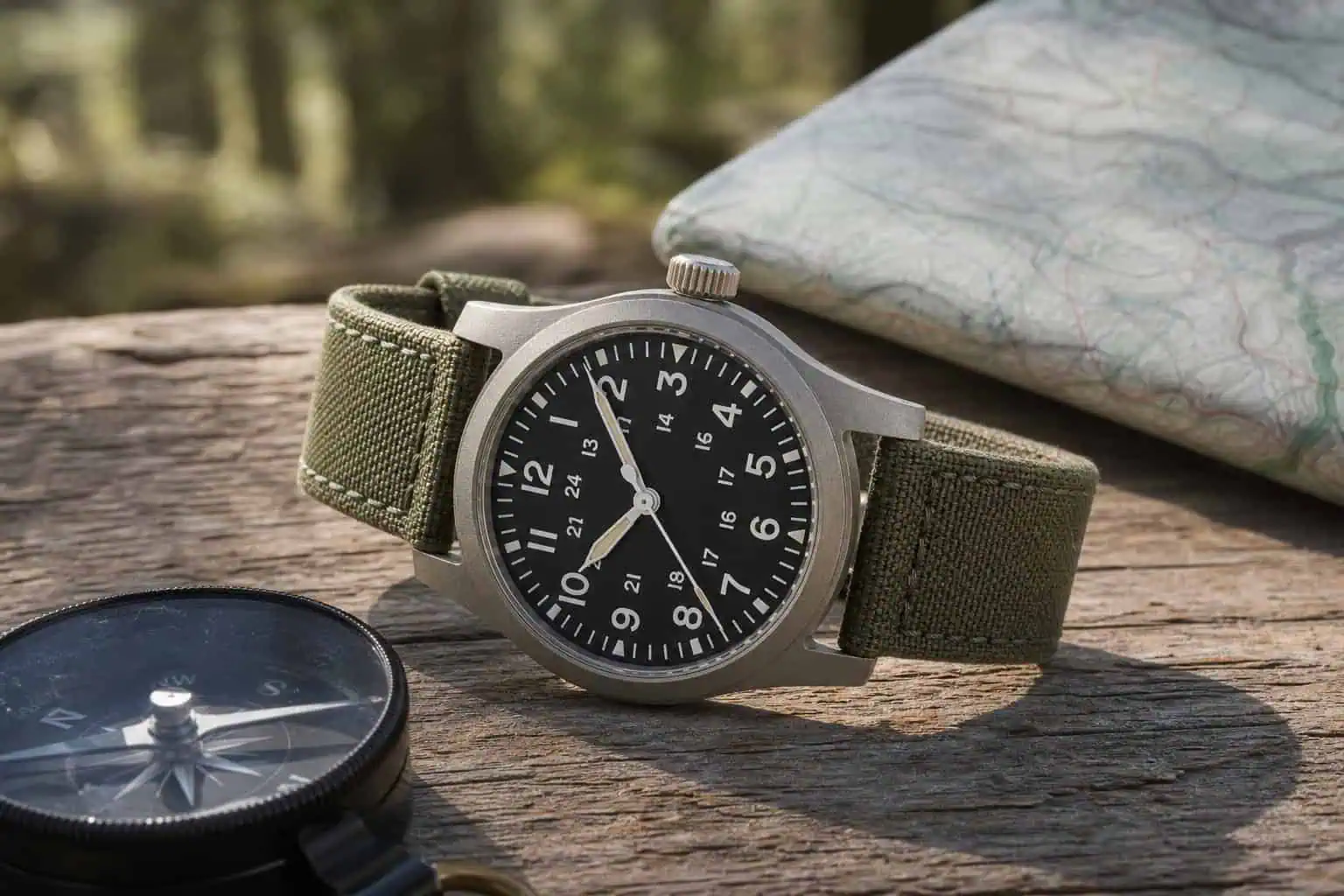
The appeal today is humility. Small cases (36–40mm), clear black dials with big white numerals, and hacking seconds so soldiers could synchronize watches before an operation. They’re lightweight, go-anywhere pieces that don’t draw attention.
If you want one no-nonsense watch that works with everything from jeans to a blazer, a field watch is a strong candidate.
Price ladder
- Hamilton Khaki Field Mechanical — $495, 38mm, hand-wound, 80-hour power reserve. A recreation of a 1960s military design.
- Weiss Standard Issue Field Watch — $1,450, hand-assembled in Los Angeles, naval brass dial, oxide-treated hands. Independent craftsmanship.
The Daily Beater: The Watch That Takes a Beating
Every collection needs a watch you can wear without worry. A daily beater is intentionally affordable, tough, and scratch-resistant. You wear it for odd jobs, sports, camping — anything where you’d stress about damaging your nicer pieces.
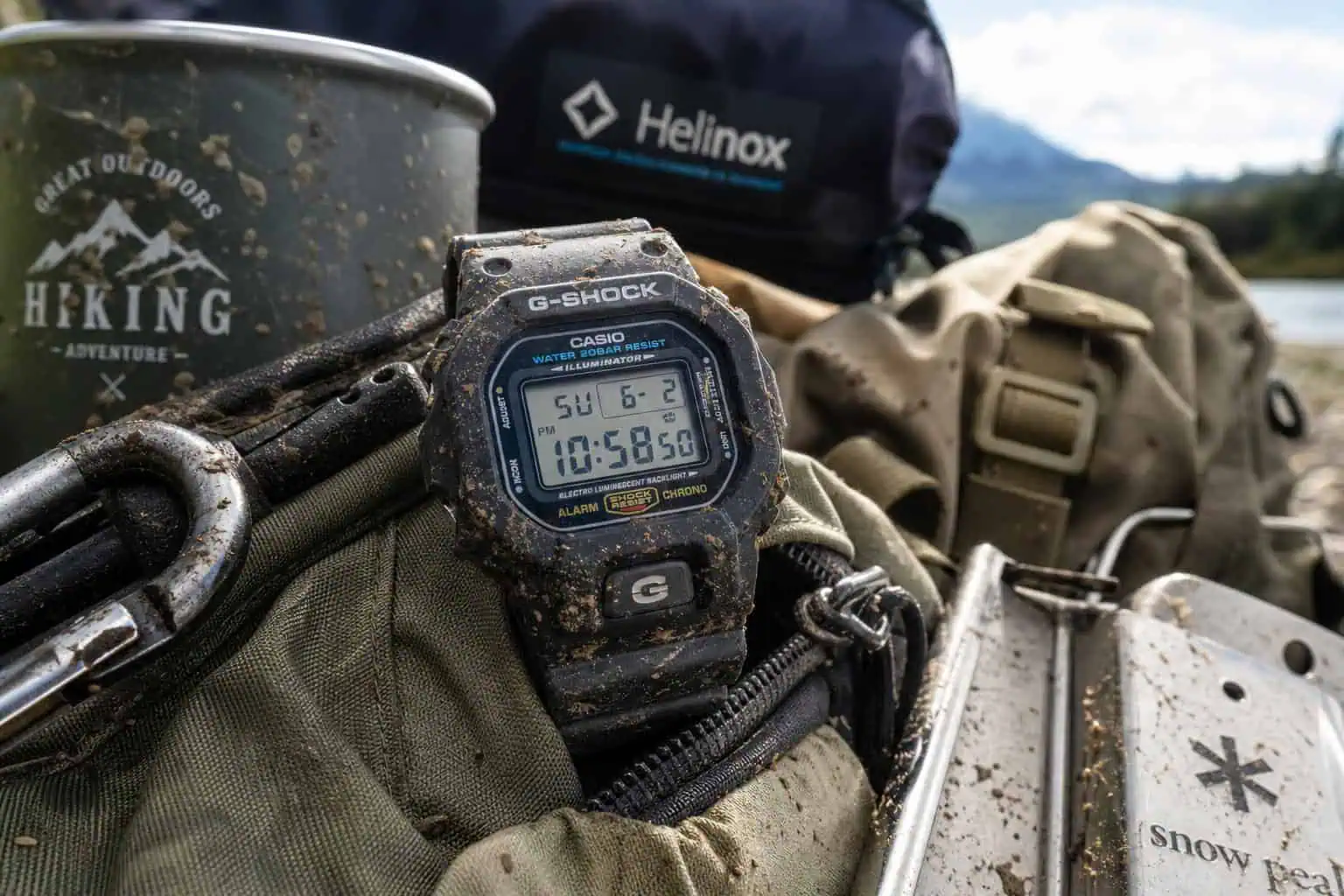
The classic examples are the G-Shock (virtually indestructible, often under $100), Swatch (fun, colorful, cheap to replace), and Lorus (no-nonsense quartz). The point isn’t prestige; it’s freedom. Buy one early and you’ll stop agonizing over when to wear your diver.
Conclusion: Building a Thoughtful Collection
A watch collection finds meaning through intention, not accumulation. The five types here — dive, chronograph, pilot, dress, and GMT, are a starting point, not a rigid checklist. Start with the one that matches your most common activity. If you spend your days in an office, a dress watch or field watch makes more sense than a 3000-meter diver. If you travel monthly, a GMT pays for itself in mental convenience.
Remember that boundaries blur. A dive watch with a suit is fine for business casual; just don’t wear it to a black-tie event. A chronograph works with jeans and a leather jacket. The categories are tools, not prison cells.
And yes, buy a daily beater early on. It’s the cheapest insurance you’ll ever buy for your nicer watches.
People Also Ask
What are the main categories of watches?
The main categories covered are dive watches, chronographs, pilot’s watches, dress watches, and GMT/travel watches, with field watches and daily beaters as bonus additions. Each category was invented to solve a specific problem — depth, timing, navigation, formality, or tracking multiple time zones.
What type of watch should every man have?
There’s no single must-have, but starting with the type that matches your lifestyle makes the most sense. If you travel frequently, a GMT is practical; if you work in an office, a dress watch or field watch fits better. A daily beater is also recommended early on so you stop worrying about damaging your nicer pieces.
How much should I spend on a good dive watch?
Entry-level dive watches like the Longines HydroConquest start around $1,700, while the Tudor Pelagos is about $4,725 and the Rolex Submariner is $8,950. The key specs to look for are at least 100 meters of water resistance, a unidirectional rotating bezel, and a screw-down crown.