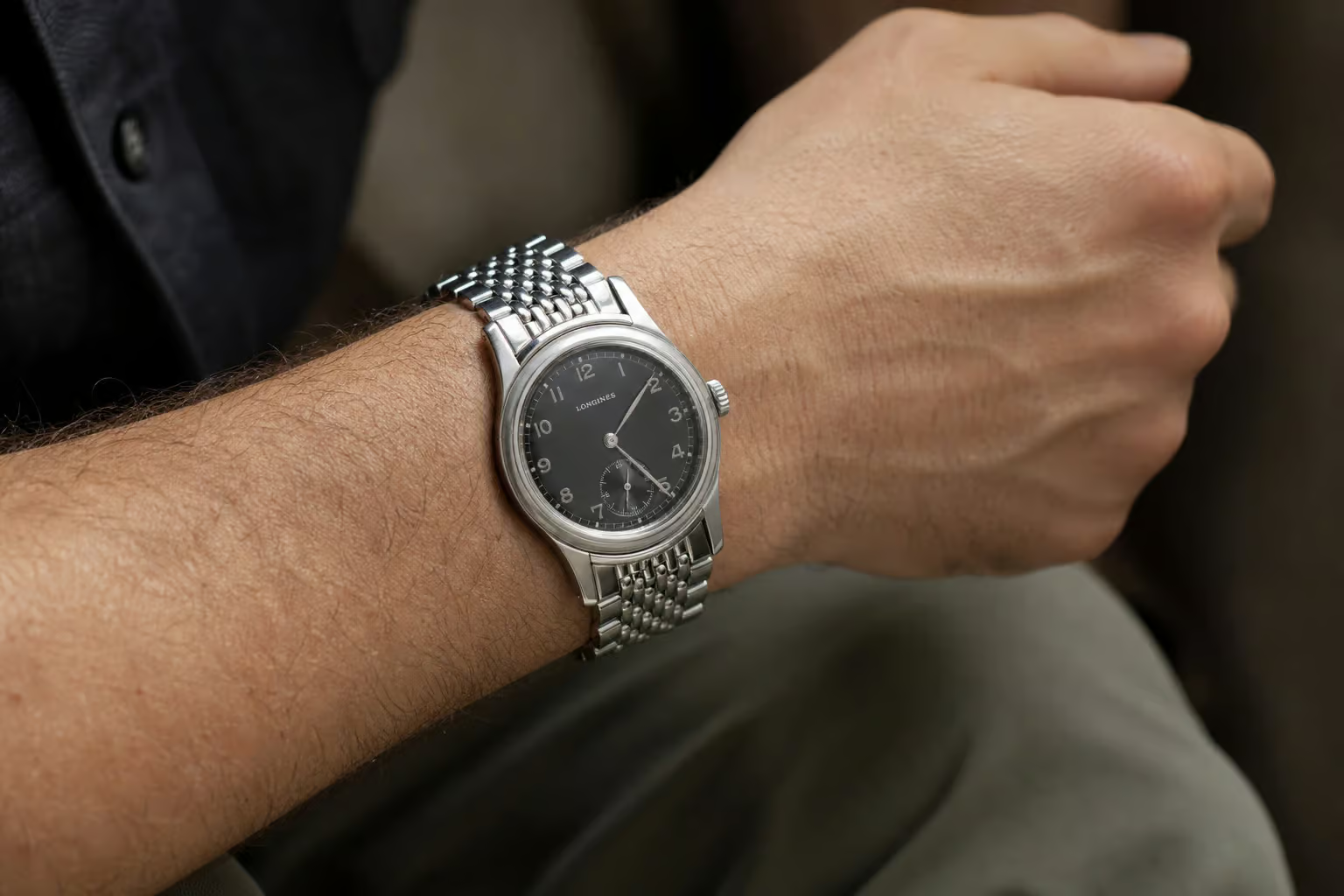
You measure your wrist, see that the average is 7 inches, and buy a 42mm dive watch. Standard move. Then it arrives, you put it on, and the lugs overhang your wrist like a dinner plate balanced on a chopstick. The watch that looked proportional on every model in the product photos now looks comically oversized. What happened?
The marketing photos lied. Those models have perfect wrists — or they’re shot at angles that flatten perspective. The rest of us, roughly 99.8% of the population, as far as I can tell, don’t have model-perfect wrists. Generic recommendations like “42mm is standard” don’t work because your wrist isn’t generic.
This guide replaces guesswork with a system. You’ll learn three dimensions that actually matter (case diameter, lug-to-lug, case thickness), a simple measurement trick most guides skip, and two percentage rules that turn a vague “try it on” into a math-based decision. By the end, you’ll know your numbers and what to ask for in any store.
Key Takeaways
Your flat wrist width (circumference in mm ÷ 3) is the number to use, not your raw circumference — most sizing advice skips this conversion, which changes everything.
Case diameter should be 60–75% of your flat wrist width, and lug-to-lug distance should be 75–95% — both rules together prevent the common mistake of buying a watch that visually fits but physically overhangs.
Optical factors like the hour markers circle, bezel size, dial color, and crown/pusher design can make two watches with the exact same case diameter look completely different on your wrist.
Table of Contents
Why Watch Size Matters
You pick a watch by case diameter because that’s the headline number in every product description. 40mm. 42mm. 44mm. Easy to compare. The trouble is that case diameter tells you almost nothing about how the watch will actually sit on your wrist.
Here’s what happens: you find a 42mm Seiko diver you love. It’s within the “standard” range for a 7-inch wrist (the average for men). You order it. It arrives.
The lugs — those little prongs that hold the strap, extend past your wrist bone. The watch feels top-heavy. It catches on your sleeve. You wonder if you bought the wrong size.
You didn’t. You just used the wrong measuring stick.
Three dimensions determine fit: case diameter (the one you already know), lug-to-lug (the total span from lug tip to lug tip), and case thickness (how tall the watch sits). Most people ignore the second two. That’s why a 40mm watch can feel perfect on one wrist and clumsy on another — it’s not the same watch once you add the lug-to-lug measurement.
This guide gives you two concrete rules. Write them down:
- Case diameter should be 60–75% of your flat wrist width.
- Lug-to-lug should be 75–95% of your wrist width.
The rest is detail. Let’s get your numbers.
Step 1: Measure Your Wrist
Here’s how most people mess this up: they wrap a measuring tape loosely around their wrist, read the number, and move on. Too loose, and the flat-width calculation is off by several millimeters. Too tight, and you’re sizing for a tourniquet.
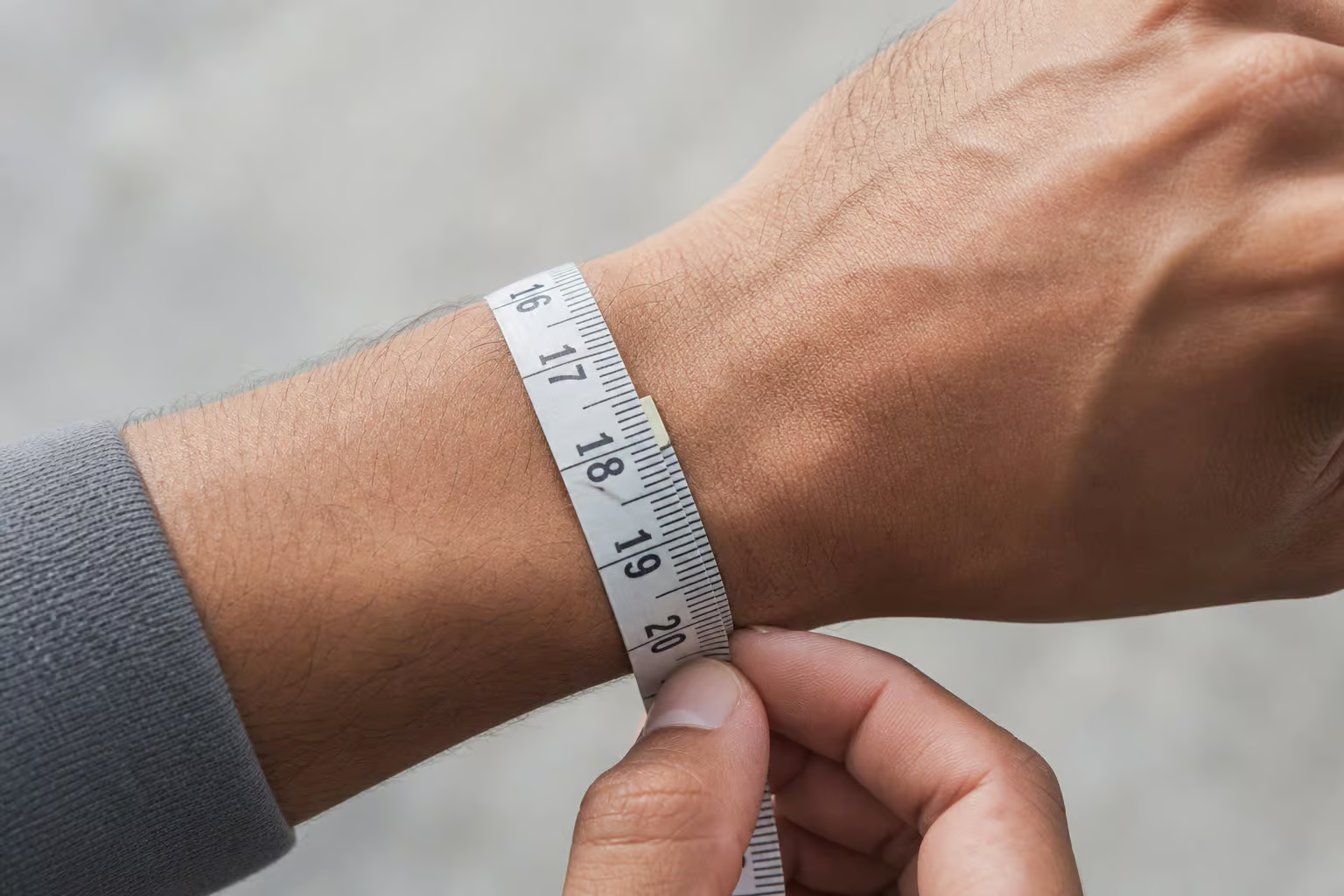
Do this instead. Use a flexible measuring tape on your non-dominant hand — that’s the hand the watch will live on. Wrap it snugly but not tight, right where you’d normally wear a watch: just below the wrist bone. Think of a comfortable handshake.
If the tape leaves a mark, you’ve gone too far. Read where the end meets the rest of the tape.
No tape? No problem. Use a string or paper strip. Wrap it at the same spot, mark the overlap with a pen, then lay it flat and measure with a ruler. It’s less accurate than a tape, but close enough to put you in the ballpark.
Now the key formula nobody tells you about: divide your wrist circumference in millimeters by 3 to find your flat wrist width.
Example: 180mm wrist ÷ 3 = 60mm flat width.
That 60mm is the actual surface area your watch will sit on — the real estate you’re working with. Most of the generic online size charts skip this conversion and give you numbers for raw circumference, which is why they feel vague and never quite work for your specific wrist.
Write your flat wrist width down. It’s the key to everything that follows.
Step 2: Understand Watch Case Dimensions
You’ve been looking at the wrong number.
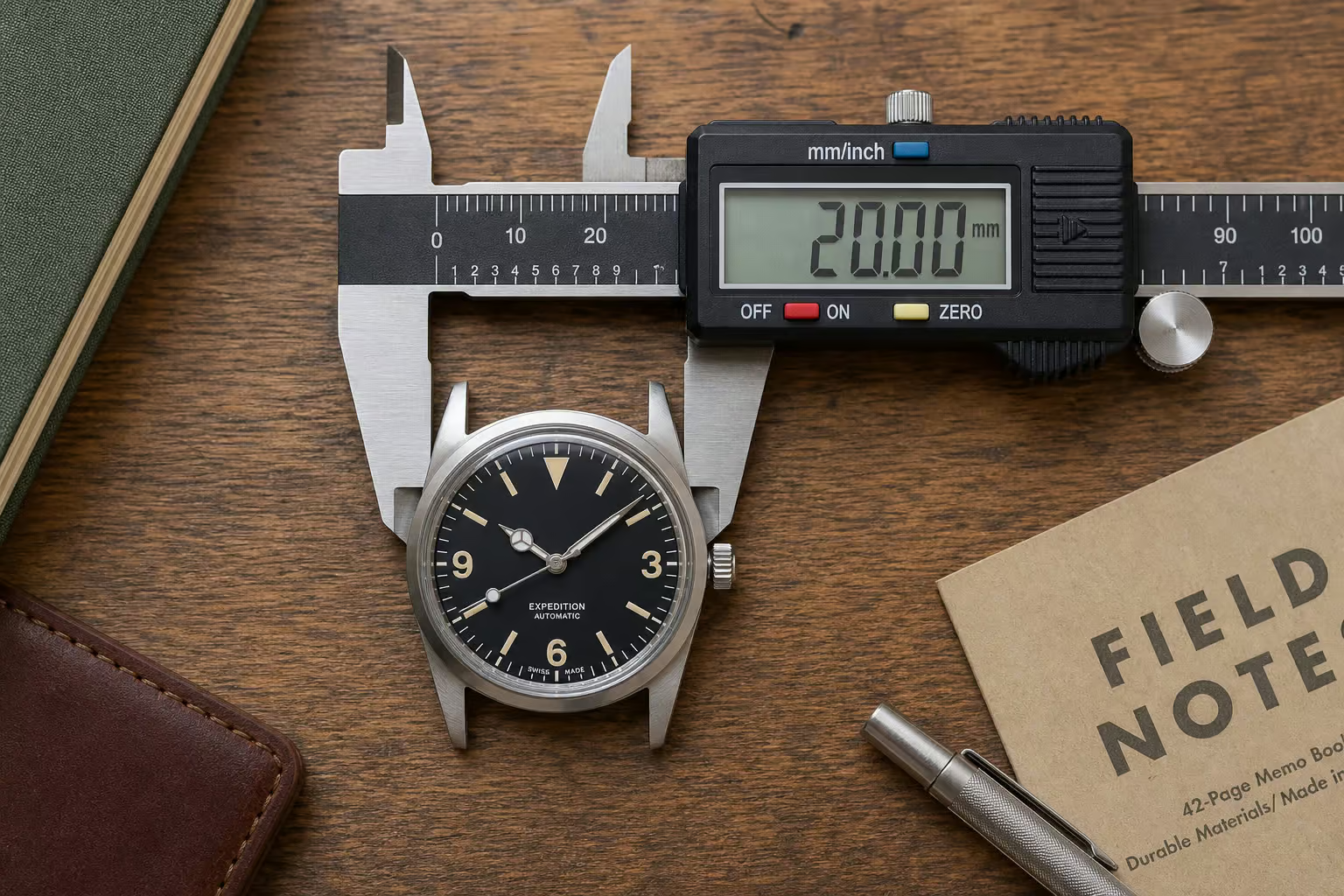
Case diameter is the headline number: measure across the watch face from 8 to 2 o’clock, excluding the crown. Use calipers if you have them (plastic-jaw digital calipers won’t scratch the case). But even without calipers, you can look up the spec on any watch listing. Just know that this number alone is misleading.
Lug-to-lug distance is the real fit test. Measure from the outermost tip of one lug to the outermost tip of the other. This measurement determines how the watch actually lays across your wrist — not just how it looks in a product photo. Lug-to-lug is typically 4–8mm larger than the case diameter. A watch with a 40mm case but a 48mm lug-to-lug will overhang a narrow wrist even though the case diameter seems fine.
If you can’t measure lug-to-lug in person, look for the spec in product descriptions or reviews. Also note that a flat wrist can handle a wider lug-to-lug than a round wrist of the same circumference.
Case thickness matters too. Measure from the bottom of the case to the top, excluding the crystal (the glass or sapphire covering the dial). Most men’s watches fall between 8mm and 14mm thick. Under 8mm is slim and dressy; 8–14mm is the everyday range; over 14mm is chunky and sporty, as seen in a watch like the Ball Engineer Master II Slide Chronograph, which sits at 15.5mm thick.
Lug width — the distance between the inner edges of the lugs, determines what strap size fits. Common sizes are 18mm, 20mm, 22mm. Important if you like swapping straps later.
For oddly shaped cases: cushion cases measure across the narrowest part. Tonneau or rectangular cases (like a Cartier Tank) need both width and length — one number won’t cut it. These shapes wear differently than round cases, so always try them on if you can.
Step 3: Apply the 60-75% and 75-95% Fit Rules
Here’s the math that replaces guesswork.
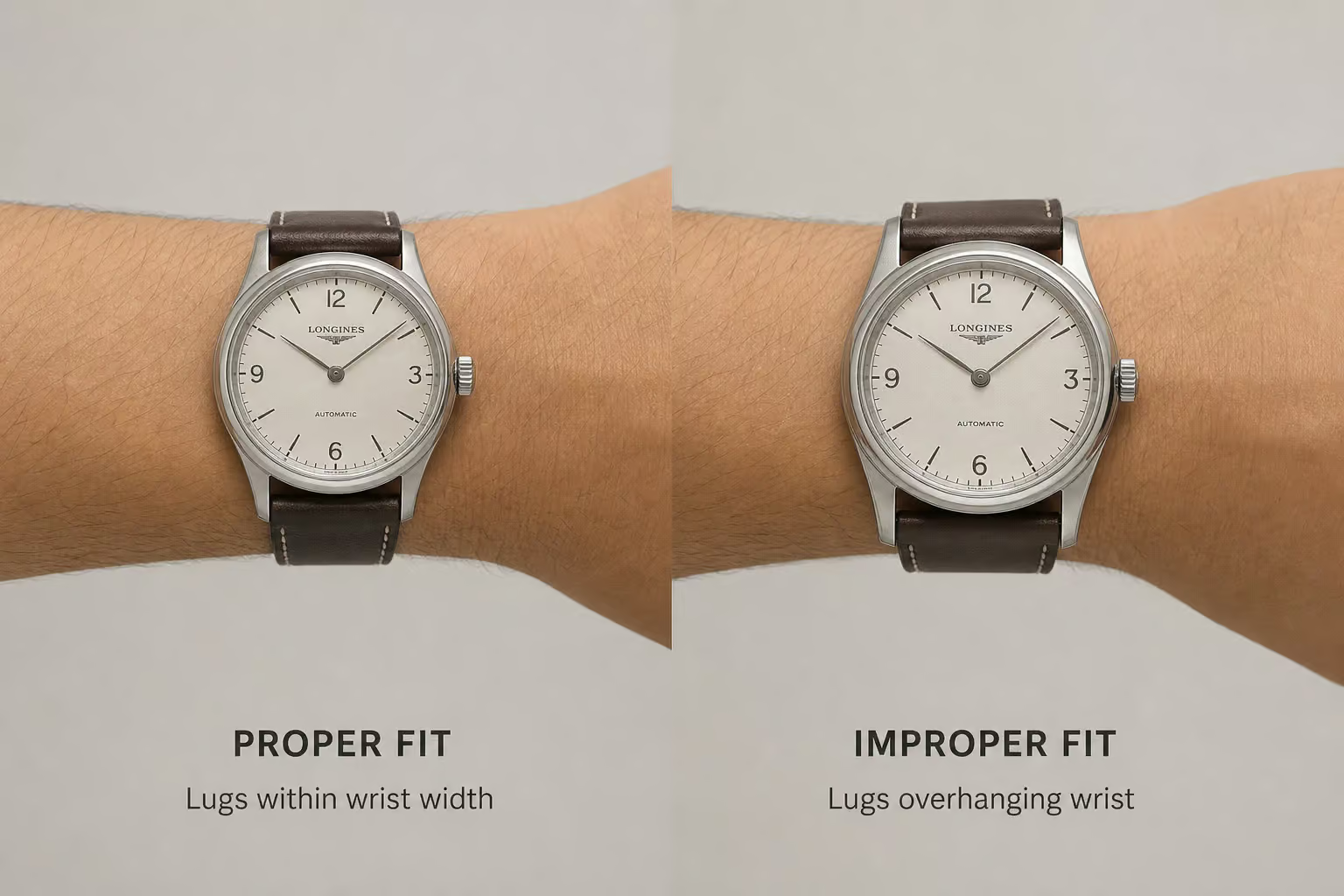
Rule 1: Case diameter should be 60–75% of your flat wrist width.
Rule 2: Lug-to-lug distance should be 75–95% of your wrist width.
Let’s run the numbers on a 7-inch wrist (178mm). Divide by 3 → 59mm flat wrist width.
- Case diameter range: 60% of 59mm = 35.4mm, 75% = 44.3mm. So 36–44mm.
- Lug-to-lug range: 75% of 59mm = 44.3mm, 95% = 56.1mm. So 44–56mm.
That’s the sweet spot. A 42mm diver with a 48mm lug-to-lug fits. A 44mm diver with a 52mm lug-to-lug might still work. But a 42mm watch with a 50mm lug-to-lug on a 6-inch wrist (flat width ~51mm) would push the lugs past the wrist bone — uncomfortable and awkward-looking.
The tell is when the lugs extend past the wrist bone. That’s a common oversight that turns a good-looking watch into an uncomfortable one. That’s why the lug-to-lug rule matters as much as the case diameter rule.
A simple visual check: the watch should occupy about two-thirds of your wrist width. But the math is more precise, and once you’ve done it once, you can eyeball it from there.
Also consider whether the lugs are flat or curved. Curved lugs hug the wrist better; flat lugs can feel wider and more prone to overhang.

Step 4: Account for Optical Illusions
Two 40mm watches can appear completely different on your wrist. Here’s why.
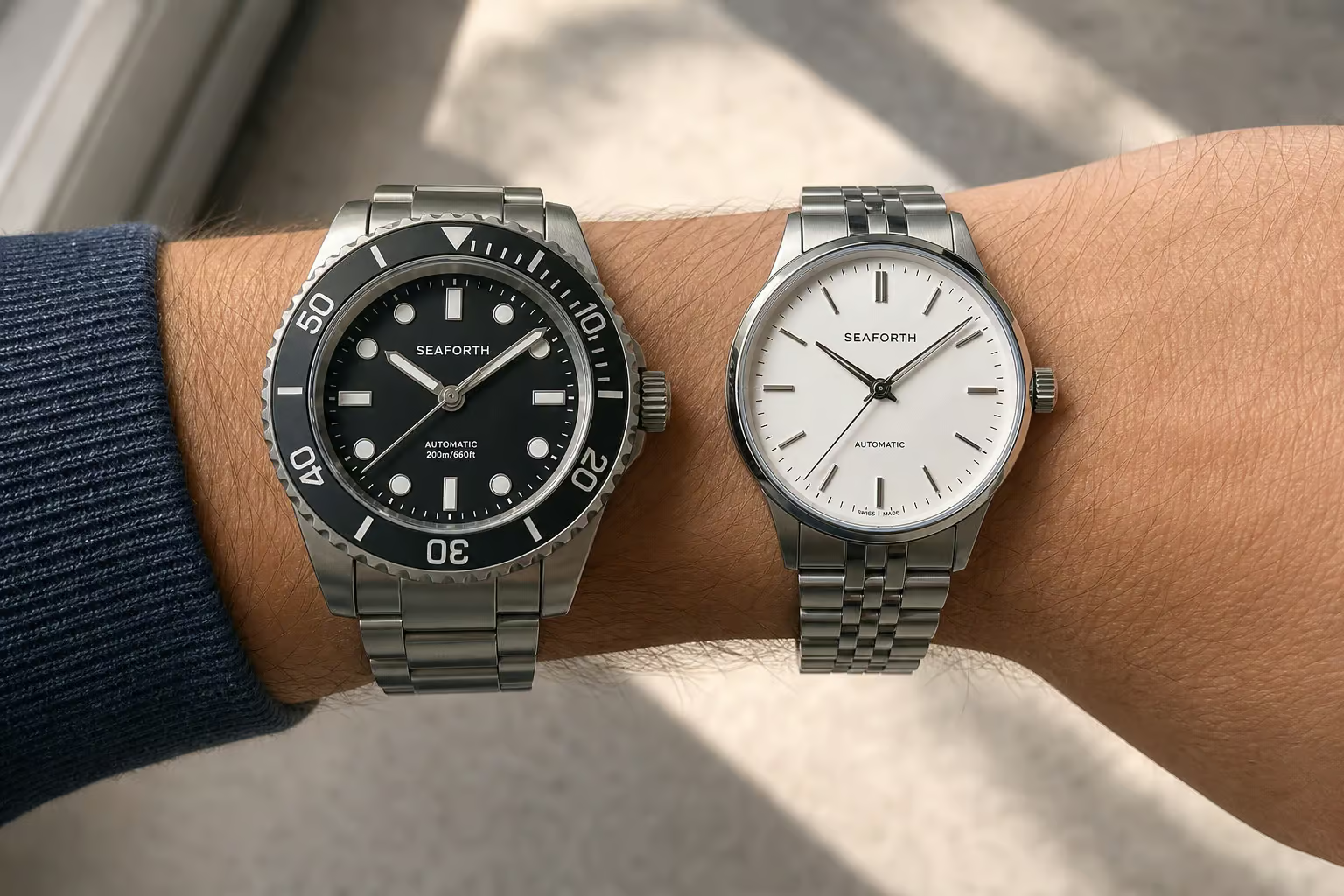
The hour-marker ring. This is the actual ring where the hands and hour markers live. A smaller ring makes the watch look smaller; a larger one makes it look bigger — even if the case is identical. Your brain judges size by the dial, not the case edge.
The bezel. The ring that holds the crystal. A larger bezel shrinks the hour-marker ring, which makes the whole watch seem smaller. That’s why dive watches with thick bezels often look more compact than dress watches of the same case diameter — the bezel eats up visual real estate.
Dial color. Dark dials appear smaller than light dials of the same size. A black 40mm diver looks more understated than a white 40mm pilot’s watch, even though the case is the same, and this particular 40mm Orient 60th anniversary watch is a perfect example of a dress watch that doesn’t need to be massive.
Chapter rings. Those inner hash lines under the crystal. A large chapter ring has the same effect as a large bezel — it makes the dial look smaller.
Case thickness has a minor effect compared to all of the above. Don’t overthink it.
So when you’re looking at product photos, know that the camera lies. A watch with a large bezel and dark dial will photograph smaller than it wears. A watch with a thin bezel and light dial will photograph bigger. Factor that in before you buy.
Step 5: Consider Strap, Bracelet, and Crown Effects
This is where things get interesting. A 41mm Royal Oak can feel bigger than a 40mm Submariner. The bracelet is why.
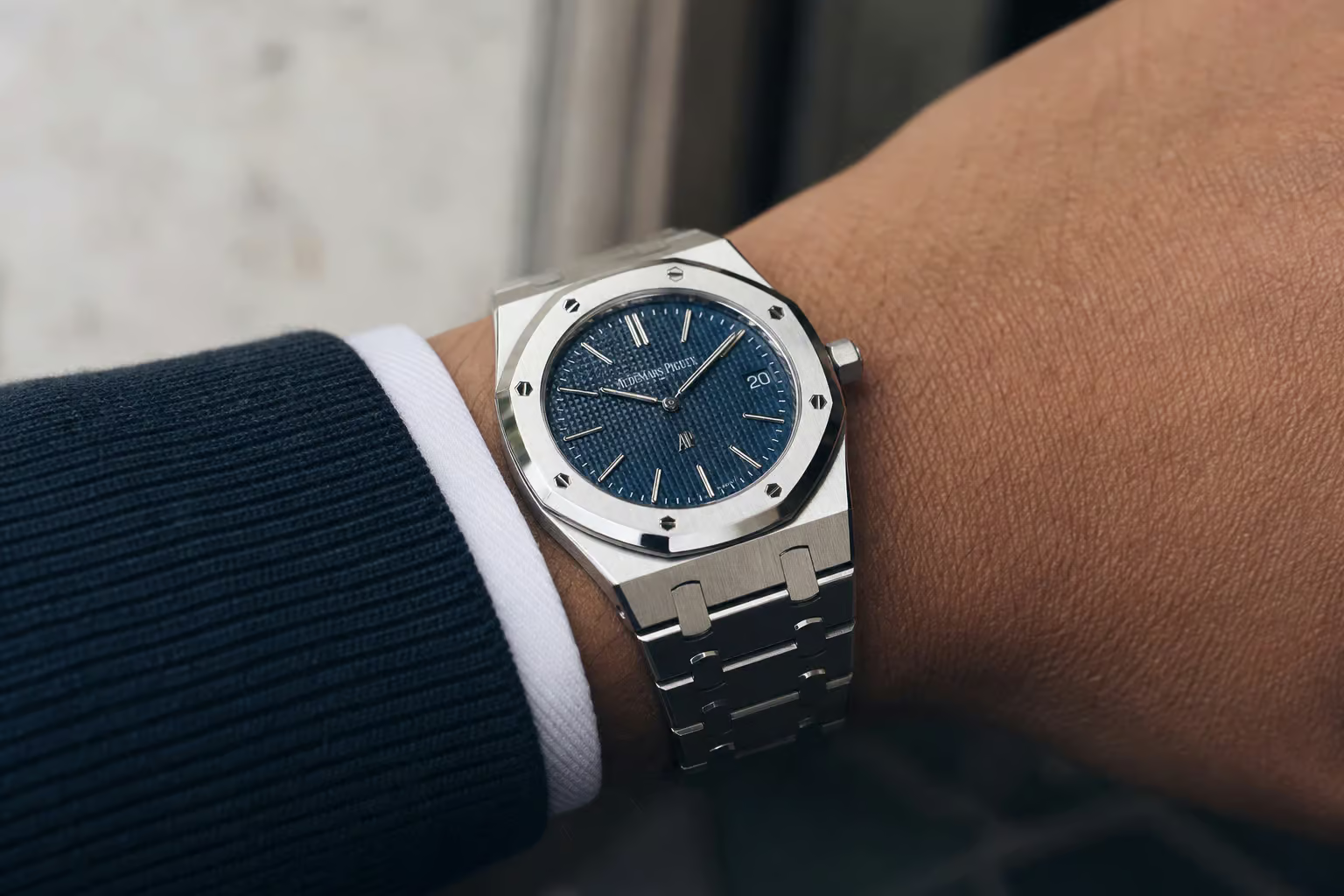
Leather straps wear smaller — they conform to the wrist and add less visual bulk. Metal bracelets add visual weight and a wider appearance. A 26mm steel strap appears larger than a 26mm leather strap. Metal bracelets also add visual heft and weight, making the watch feel more substantial on the wrist. NATO or fabric straps add bulk under the watch, making it sit taller on the wrist.
Integrated bracelets (like the Royal Oak or Nautilus) are the real curveball. The bracelet flared links out from the case, so the watch doesn’t end at the lugs — it keeps going. That’s why a 41mm Royal Oak can feel bigger than a 40mm Submariner even though the numbers say otherwise.
Crowns, pushers, and crown guards also add to perceived size. A 42mm chronograph with large pushers and a substantial crown can feel like a 44mm watch. The extra bits add real estate you didn’t account for.
Common surprise: you buy a 42mm chronograph, and it arrives feeling closer to 44mm. The pushers and crown are the reason.
Step 6: Use the Size Charts
Now for the quick reference. Your wrist falls into one of three categories:
- Small: below 6.3 inches (~16cm)
- Medium: 6.3 to 7 inches (16–17.8cm)
- Large: above 7 inches (~17.8cm)
Within each category, you have three options depending on your style preference: slim/low-key, balanced, or bold/sporty.
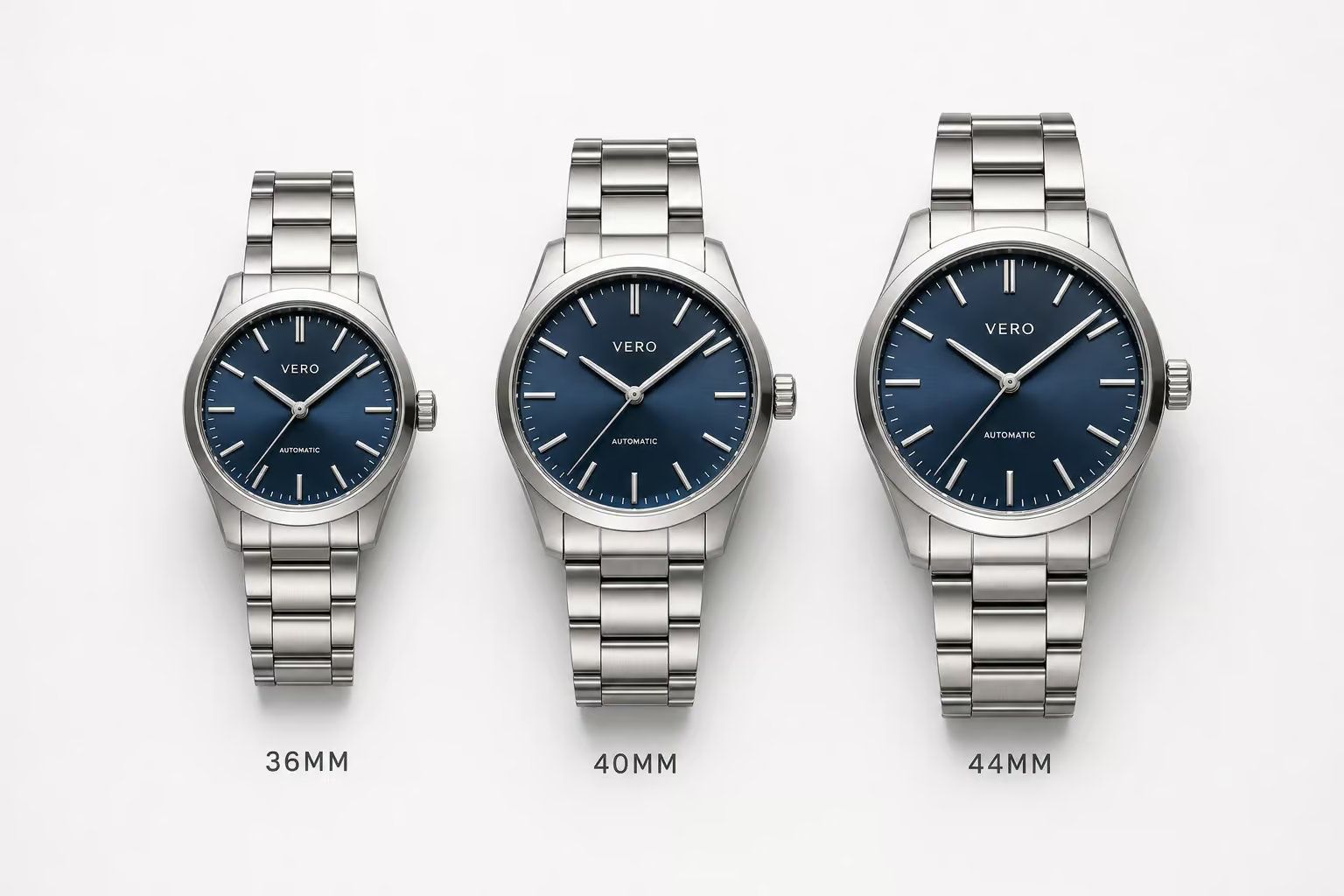
Small wrists (<6.3 in):
- Case diameter: 32–36mm (slim), 34–38mm (balanced), 36–40mm (bold)
- Strap width: 16–18mm
- Case thickness: 7–9mm
- Dial style: minimalist, simple, clean
Medium wrists (6.3–7 in):
- Case diameter: 36–40mm (slim), 38–42mm (balanced), 40–44mm (bold)
- Strap width: 18–20mm
- Case thickness: 9–12mm
- Dial style: balanced complexity, versatile
Large wrists (>7 in):
- Case diameter: 40–44mm (slim), 42–46mm (balanced), 44–48mm (bold)
- Strap width: 20–24mm
- Case thickness: 12–15mm
- Dial style: multifunctional, bold, complex (chronographs, dual-time zones)
If your wrist is 7 inches exactly (the average), the sweet spot is 38–42mm. For a sleek dressy vibe, go 1–2mm smaller within your range. For sporty or chunky, go 1–2mm larger. Your personal style picks the exact spot on the chart.
Step 7: Match Size to Watch Type
Not all watches should fit the same way. A 38mm dress watch looks appropriate and elegant. A 38mm diver looks undersized and toy-like. The same case diameter, entirely different expectations.
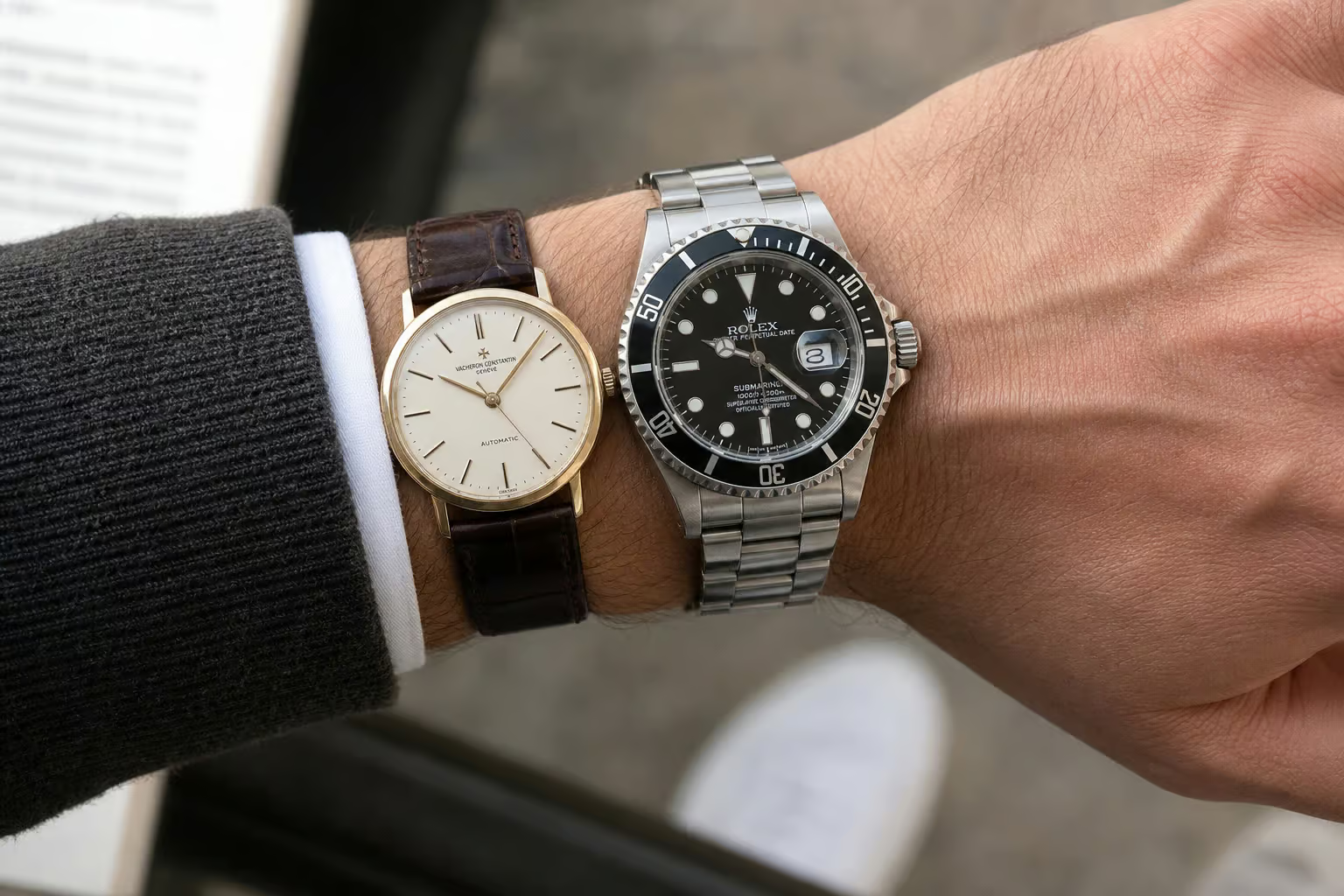
Minimum-size watches — dress, vintage, field, are designed to be subtle. They usually run smaller and work best at the lower end of your size range. A 36mm field watch on a 7-inch wrist looks right. A 36mm diver would look weird. Field watches are explicitly listed in this minimum-size group alongside dress and vintage.
Maximum-size watches — pilot, diver, digital/tactical, are designed to be noticed. They tend to run larger, and the upper end of your size range works here. A 42mm diver is standard. A 42mm dress watch is a statement.
Style overrides strict rules. Trends and personal preference matter. If you love a chunky pilot’s watch and your wrist is on the smaller side, you can still pull it off — just be aware that it will wear at the high end of your range. Conversely, if you want a dress watch for daily wear, lean toward the slimmer options.
Know what kind of watch you’re buying, and size accordingly.
Common Mistakes and Pro Tips
Mistake 1: Buying based on case diameter alone. You already know the other numbers. Use them.
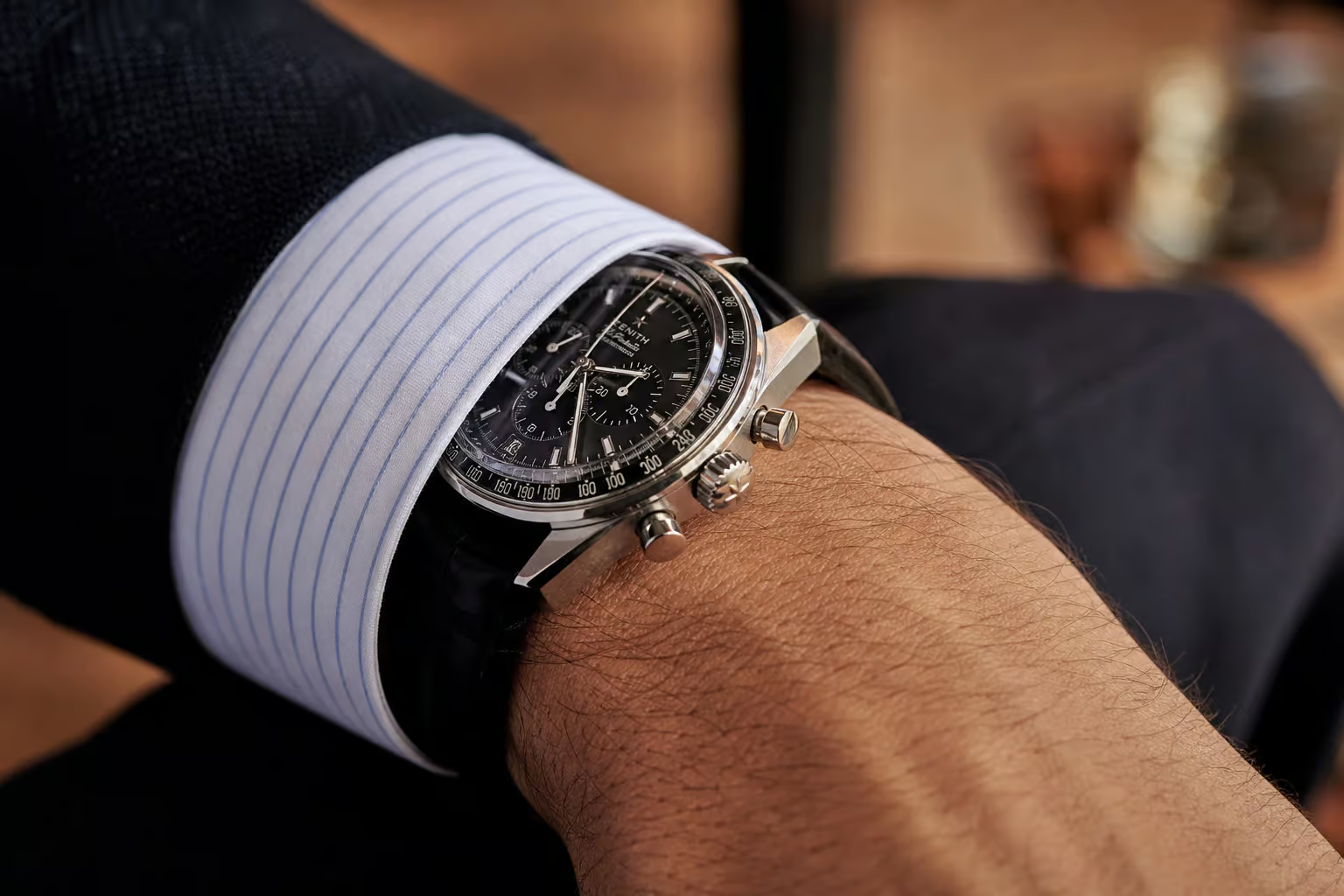
Mistake 2: Ignoring case thickness. A 42mm watch that’s 15mm thick feels very different from one that’s 9mm. Thickness affects how it feels under a shirt cuff and how it balances on the wrist.
Mistake 3: Choosing oversized because “bigger is better.” Bigger isn’t better if the lugs overhang. The lug-to-lug rule exists for a reason.
Mistake 4: Neglecting strap adjustment. A well-fitted strap makes all the difference. Even the right case size feels wrong if the bracelet is loose or the leather strap is too tight.
Mistake 5: Forgetting crown and pusher size. A 42mm chronograph can feel like 44mm. Account for it.
Pro tip: For a sleek dressy vibe, go 1–2mm smaller within your range. For sporty or chunky, go 1–2mm larger.
For skinny wrists (under 6.3 inches): Stick to 32–36mm cases, 16–18mm straps, and slimmer cases (7–9mm). Avoid thick dive bezels and NATO straps — both add bulk you don’t want.
Final Cheat Sheet and Try-On Advice
Here’s what to write on your phone before you walk into a watch shop:
- Flat wrist width = circumference (mm) ÷ 3
- Case diameter = 60–75% of flat width
- Lug-to-lug = 75–95% of flat width
- Watch should occupy about 2/3 of wrist width visually
But even with perfect math, nothing beats trying it on in person. A photo can’t show you how a watch sits on your wrist, how the lugs curve, or how the bracelet feels. Go to a store. Put it on. Look at it from arm’s length in a mirror — that’s how everyone else will see it.
These rules are starting points, not absolutes. Trends, personal taste, and that forgotten thing means you might prefer a 38mm dress watch even though your wrist could technically handle a 42mm.
Now you know your numbers. You can walk into any store and know exactly what to ask for. That alone beats hours of scrolling through size charts and hoping for the best.
People Also Ask
Is a 7 inch wrist considered big?
A 7-inch wrist is the statistical average for men, which puts it in the medium category. It falls between 6.3 and 7 inches, so it’s not considered big — it’s the baseline. With a 7-inch wrist, your sweet spot for case diameter is 38–42mm, depending on whether you prefer a slim or bold look.
Is a 35mm watch too small for men?
Not necessarily — 35mm falls at the lower end of the range for smaller wrists. If your wrist circumference is under 6.3 inches (flat width under 53mm), 35mm can be a proportional choice, especially for dress or vintage-style watches. For average or larger wrists, 35mm will likely look undersized, though personal style and optical factors like a thick bezel can change how it reads.
Is a 40mm watch too big for a man?
No, 40mm is widely considered a versatile and balanced size that works for most men. For a 7-inch wrist, 40mm sits in the middle of the ideal range, and it can be styled as either sleek or sporty depending on the watch type. The key is pairing it with a reasonable lug-to-lug distance — anything under 50mm lug-to-lug on a 40mm case should fit most wrists without overhang.
How do I measure my wrist for a watch correctly?
Use a flexible measuring tape on your non-dominant hand, wrapping it snugly just below the wrist bone — tight enough for a comfortable handshake but not so tight it leaves a mark. Divide that circumference in millimeters by 3 to get your flat wrist width, which is the actual surface area the watch sits on and the number you should use for sizing calculations.
What is lug-to-lug distance and why does it matter?
Lug-to-lug distance is the total span from the tip of one lug to the tip of the other, and it determines how the watch physically sits across your wrist. Case diameter alone can be misleading because a 40mm watch with a 48mm lug-to-lug will overhang a narrow wrist even though the diameter seems fine. The rule is that lug-to-lug should be 75–95% of your flat wrist width.
What’s the difference between a dive watch and a dress watch in terms of sizing?
They wear completely differently even at the same case diameter. Dive watches have thick bezels that optically shrink the dial and often come with larger crowns, making them feel more compact than the numbers suggest — a 42mm diver is standard. Dress watches have thin bezels and light dials that make them read larger, so a 42mm dress watch can feel oversized; 36–40mm is more typical for a classic dressier look.