You can spend under a grand and get a watch that feels like it costs twice that — but only if you know which specs actually matter and where to look. Most buying guides are vague: “great value,” “solid build,” “classic design.” That’s not helpful. This one gives you exact dimensions, named movements with real accuracy specs, and the honest tradeoffs that come with each choice.
the same watch with a $695 retail price can be found for under $500 on Amazon. That’s a $200 swing toward a better watch. The Bulova Lunar Pilot retails for $695; you’ll find it under $500 online. The Seiko Turtle lists at $495; it’s $350–$400 on Amazon. Your real budget is wider than you think if you know where to look.
Every watch in this guide includes diameter and lug-to-lug measurements — because diameter alone tells you nothing about how a watch sits on your wrist. Every movement is named with real accuracy numbers. And every entry has a pro and a con, because nothing at this price is perfect.
Key Takeaways
The same watch can cost $100–$200 less on Amazon than official retail — the Seiko Turtle ($495 official, $350–$400 Amazon), Bulova Lunar Pilot ($695 official, under $500 Amazon), and Citizen Promaster ($375 official, $200–$300 Amazon) all show this gap
Quartz accuracy at this price (Bulova 262kHz at +/-10 seconds per year) beats every automatic under $1,000 by roughly 3,000x — choose automatic for mechanical character, not technical superiority
Lug-to-lug length matters more than diameter for fit: the Baltic Aquascaphe (39mm, 47mm lug-to-lug) fits a 6.5-inch wrist perfectly; the Seiko Sumo (45mm, 52.6mm lug-to-lug) will overhang anything under 7 inches
Table of Contents
What Makes a Watch “Luxury” Under $1,000
At this price, “luxury” isn’t about hand-finishing or exotic materials. It’s about measurable specs that genuinely improve your experience: sapphire crystal that won’t scratch, a reliable automatic or high-precision quartz movement, a stainless steel case that’ll hold up for years, and real water resistance that matches your life.
No single watch has it all. The Tissot PRX gives you sharp case finishing and sapphire for $395, but its integrated bracelet limits fit options. The Hamilton Khaki Field Mechanical gives you a Swiss hand-wound movement with an 80-hour reserve, but only 50 meters of water resistance. You pick your priorities.
Sapphire Crystal vs. Mineral: The Scratch-Protection Decision
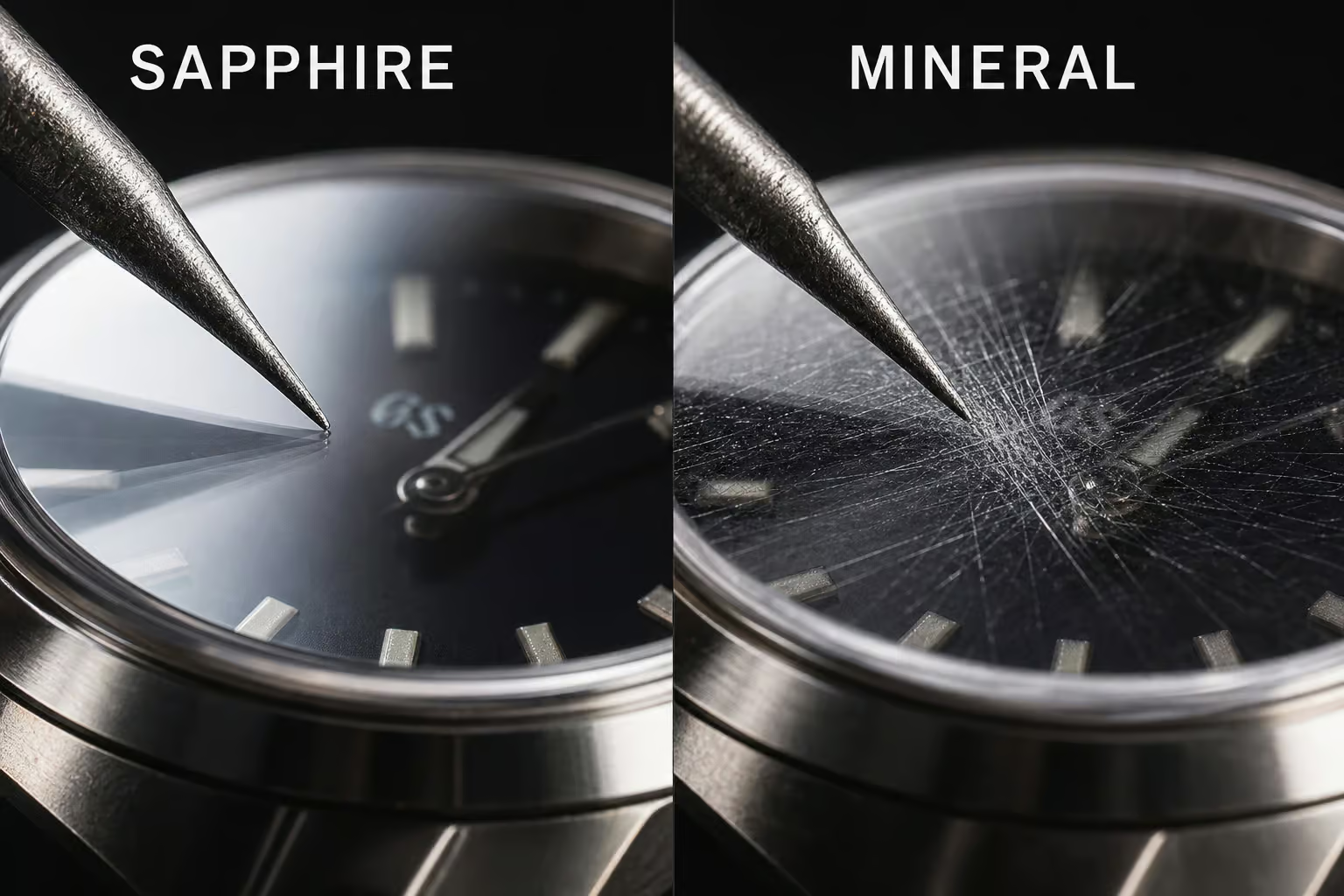
Sapphire crystal is highly scratch-resistant — you’ll probably never damage it. Mineral glass (including Seiko’s Hardlex) scratches more easily but can be polished and keeps the watch cheaper by $100 or more.
The Baltic Aquascaphe ($540–$585) uses sapphire. The Seiko 5 GMT ($350–$475) uses Hardlex. The Tissot PRX ($395) uses sapphire. If scratches bother you, pay for sapphire. If you’d rather save the money and don’t mind a polish down the road, mineral is fine — millions of watches use it without issue.
Automatic vs. Quartz: Movement Type as a Luxury Marker
someone buys an automatic out of principle, then gets frustrated when it’s dead Monday morning after sitting all weekend, or annoyed at +45 seconds per day drift.
The quartz movements at this price are technically superior to automatics. The Bulova 262kHz movement is accurate to +/-10 seconds per year. The Tissot PRX’s ETA F06.115 is accurate to -0.3/+0.5 seconds per day. Compare that to a Seiko 4R36 automatic at +45/-35 seconds per day — that’s roughly a 3,000x difference in accuracy.
But automatics offer something quartz cannot replicate: mechanical character. The feel of a rotor spinning on your wrist, the sentimental attachment to something that runs on gears and springs, the ritual of winding. If that matters to you, automatic is the right choice — just know you’re choosing romance over precision.
The bridge between them is the 80-hour power reserve movement. The Hamilton H-50 and Powermatic 80 both survive weekends. Wind one Friday, it’s still running Monday. That makes automatic practical for daily wear.
Water Resistance and Case Material: Durability That Matches Your Life
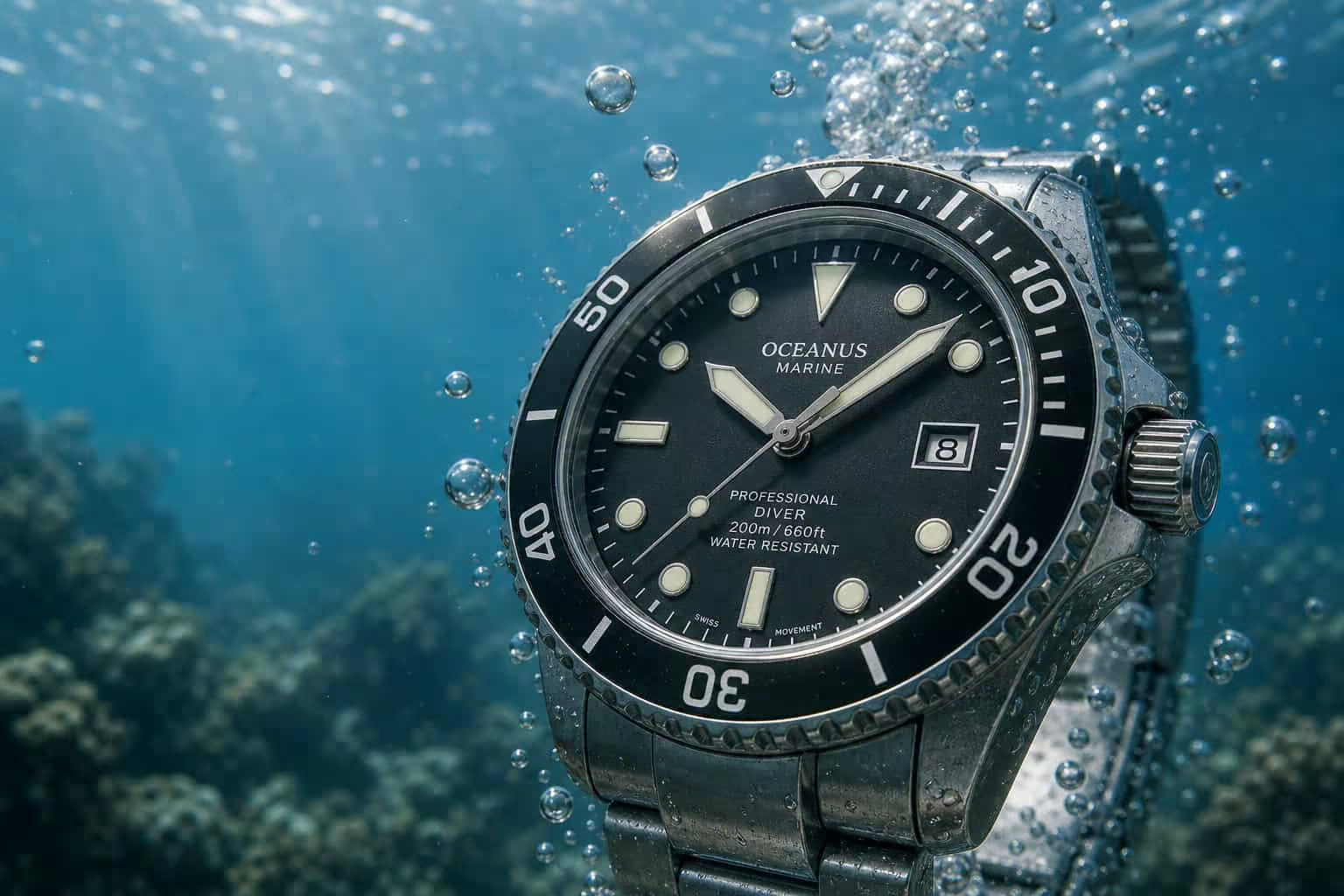
200 meters means a serious dive watch. 100 meters means swimming. 50 meters is splash-resistant — rain, hand washing, but no swimming. Don’t pay for 500 meters if you never swim, and don’t buy a 50-meter watch if you snorkel.
Stainless steel dominates at this price. The Scurfa Diver One runs titanium — lighter, more expensive, premium feel. It’s an upgrade if you notice weight on a bracelet.
The 12 Best Luxury Men’s Watches Under $1,000: Full Specs and Buying Notes
The watches below are ranked by price from lowest to highest, with full specs and honest tradeoffs for each.
Timex Expedition Atlantis T5K463 ($50)
40mm x 45mm x 10.5mm. Resin case, 30 grams. Timex quartz module — nothing fancy, but reliable and cheap to replace. 100 meters water resistance. Indiglo backlight.
Pro: Stopwatch, countdown timer, alarms, second time zone, and 100m water resistance at a price that makes it almost disposable.
Con: It feels like a toy. Resin case, light weight, not a luxury feel — but that’s not the aim. This is a tool, not a statement piece.
Orient Mako II ($220)
41.5mm x 47mm x 13mm. Mineral crystal. Orient’s in-house F6922 mechanical movement — that’s unusual at this price. Most brands use off-the-shelf movements.
Orient makes their own, which means better quality control and easier service. Hacking and manual winding both present. 40-hour power reserve. +25/-15 seconds per day accuracy.
Pro: Cheapest watch with both hacking and manual wind from an in-house mechanical movement. That’s a lot of watch for $220.
Con: Mineral crystal scratches. Hollow endlinks feel cheap. The bracelet is the weakest part.
Scurfa Diver One Titanium ($300–$400)
40mm x 47mm x 14mm (contoured sides reduce visual thickness). ETA F06.402 quartz movement — Swiss-made, 64-month battery, +/-10 seconds per year accuracy. 500 meters water resistance. Titanium case.
Scurfa is a UK-based microbrand started by a professional diver. The Diver One is built for actual diving, not fashion. The contoured sides make the 14mm thickness wear thinner than it measures.
Pro: Highest water resistance per dollar in this guide. 500 meters at $300–$400 is unmatched.
Con: Microbrand — limited service network. You have to sign up for notifications when they restock.
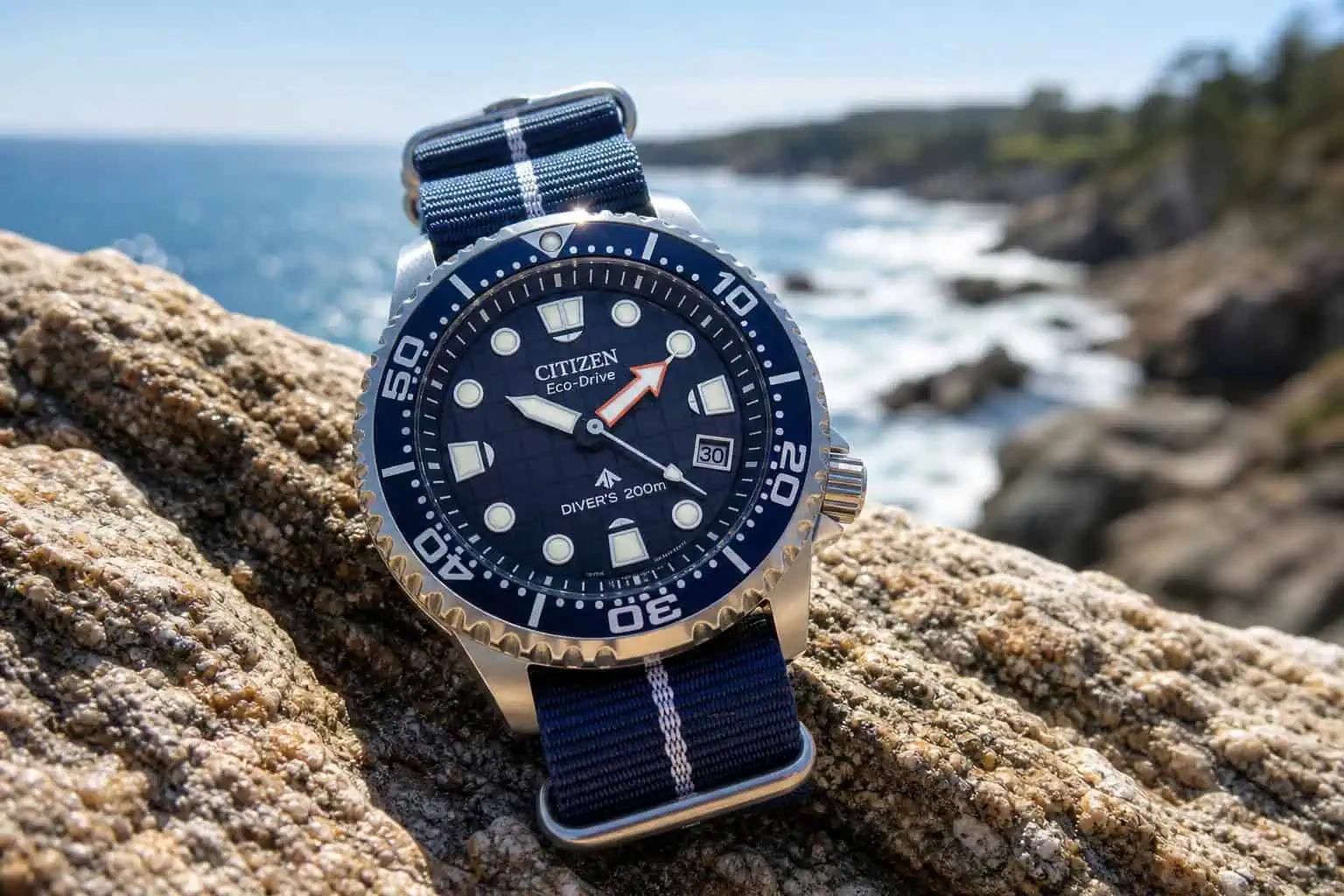
Citizen Promaster Dive Eco-Drive BN0151-09L ($375 official, $200–$300 Amazon)
43mm x 44mm x 12mm. Short lug-to-lug means it wears smaller than the 43mm diameter suggests. Citizen’s Eco-Drive E168 solar quartz movement — light powers it, any light, never needs a battery. 6-month power reserve when fully charged. +/-15 seconds per month. 200m ISO-rated dive watch. BGW9 lume. 60-click bezel.
Pro: Never needs a battery. Grab-and-go convenience that no automatic can match.
Con: The stock polyurethane strap can be uncomfortable. Plan to swap it for a NATO strap.
Seiko 5 GMT ($350–$475)
42.5mm x 46mm x 13.6mm. Hardlex crystal. Seiko 4R34 in-house mechanical GMT movement. 40-hour power reserve. +45/-35 seconds per day accuracy — that’s the wide end of Seiko’s tolerance. Some run better, some worse. It’s a lottery.
Pro: Cheapest mechanical GMT from a major brand. If you want a travel watch with a fourth hand for a second time zone, this is the budget entry point.
Con: No screw-down crown. The bracelet is low quality. Accuracy is a gamble. The 4R34 is a workhorse, but don’t expect chronometer performance.
Tissot PRX 40mm Quartz ($395)
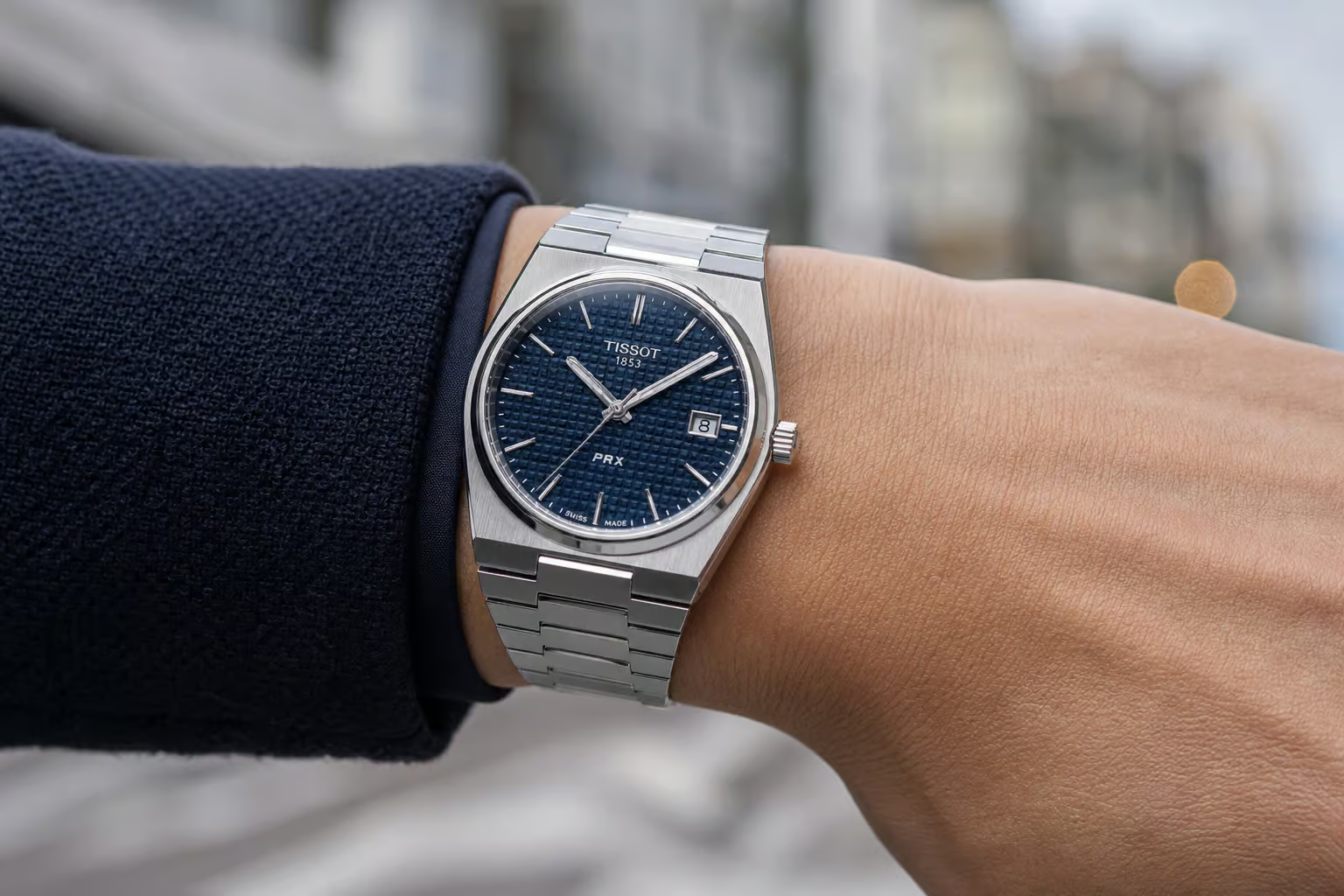
40mm x 44.6mm x 10.4mm. Sapphire crystal. ETA F06.115 quartz movement — Swiss-made, 24-month battery, -0.3/+0.5 seconds per day accuracy. Integrated bracelet creates a 51.5mm effective lug-to-lug length.
Pro: Sharpest case finishing under $500. The integrated bracelet, the brushed-to-polished transitions, the way it catches light — it looks like a watch that costs twice as much.
Con: The integrated bracelet lacks micro-adjustments. Half-links exist but are finicky. The effective 51.5mm lug-to-lug can feel large on smaller wrists.
Seiko Turtle ($495 official, $350–$400 Amazon)
44.3mm x 48mm x 14mm. Seiko 4R36 mechanical movement — hacking, hand-winding, 40-hour reserve, +45/-35 seconds per day. 200m water resistance.
The Turtle modernizes the 1970s 6309 diver design with modern manufacturing. It’s a big watch — the cushion case shape makes it wear even larger than the measurements suggest.
Pro: Heritage diver with modern build quality at a real-world discount price. This is the watch that generations of divers trusted.
Con: The cushion case is big. Not for small wrists. Accuracy drift is typical for the 4R36 movement.
Baltic Aquascaphe ($540–$585)
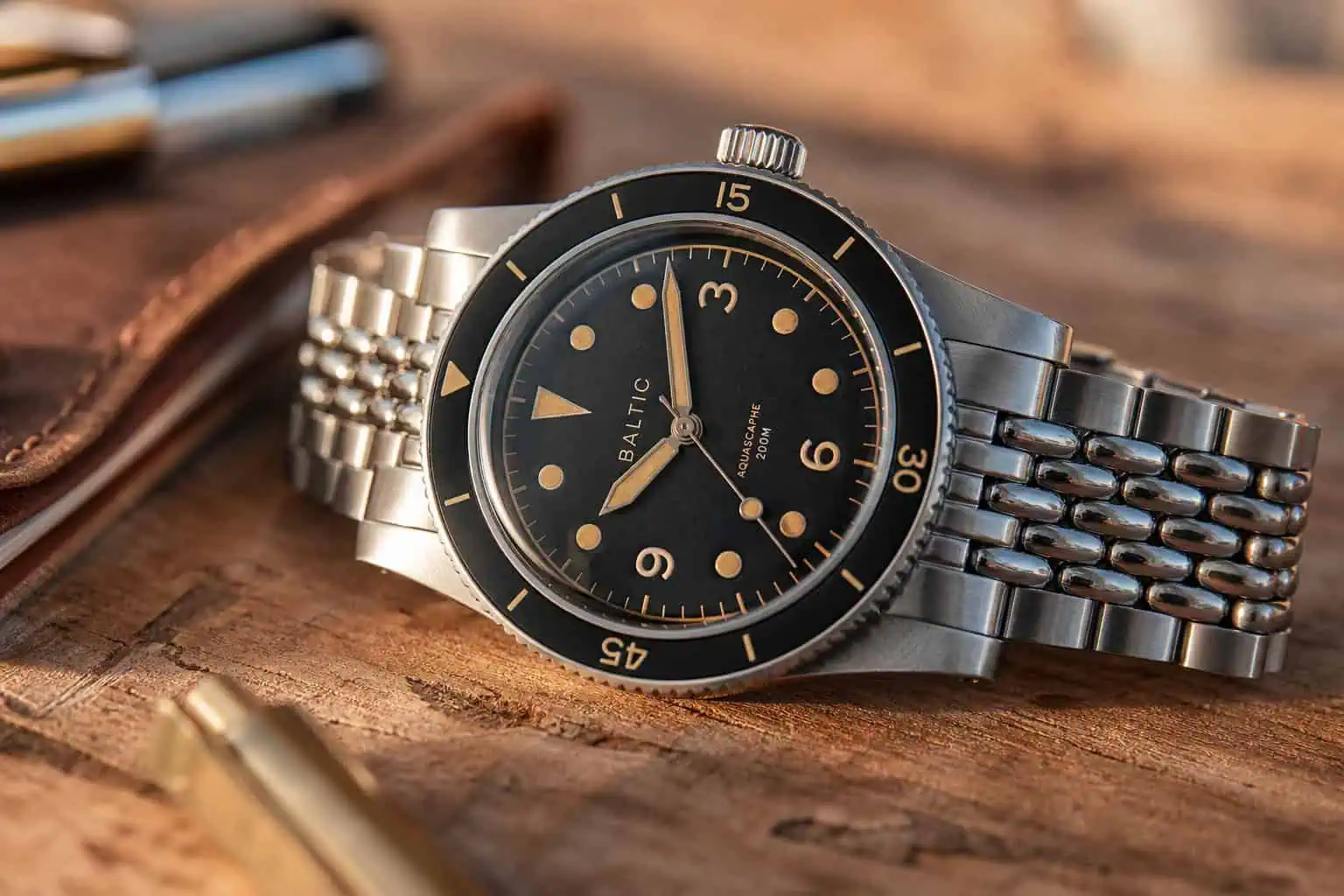
39mm x 47mm x 12mm. Sapphire crystal. 200m water resistance. Miyota 9039 movement — 42-hour power reserve. Beads-of-rice bracelet.
Baltic is a French microbrand that captured the spirit of 1960s skin divers without copying any one model. The beads-of-rice bracelet is genuine — comfortable, attractive, and unusual at this price.
Pro: Best vintage-inspired diver under $600. The sapphire crystal, 200m water resistance, 39mm size, and bracelet quality make a compelling package.
Con: Microbrand — limited service network, must wait for restocks. The 12 o’clock position on the bezel lacks lume differentiation.
Hamilton Khaki Field Mechanical ($595)
38mm x 47mm x 9.5mm. 50m water resistance. Hamilton Caliber H-50 hand-wound movement — based on ETA 2801 with modifications for 80-hour power reserve, an impressive figure for a hand-wound movement. Wind it Monday, it runs through Thursday.
The Khaki Field Mechanical is the watch that soldiers wore. It is simple, robust, and disappears on the wrist. At 9.5mm thick, it slides under any cuff.
Pro: Swiss-made hand-wound with 80-hour reserve. Survives weekends without rewinding. One of the most reliable field watches you can buy.
Con: Only 50 meters water resistance — splash-proof, not swim-proof. No 12 o’clock lume differentiation. The NATO strap may irritate sensitive skin.
Bulova Lunar Pilot ($695 official, under $500 Amazon)
Two sizes: 43.5mm and 45mm. The 45mm version has a 52mm lug-to-lug — it’s huge. The 43.5mm version is more wearable. Bulova NP20 262kHz high-precision quartz movement, accurate to +/-10 seconds per year.
Here is the story: astronaut David Scott used the Bulova Lunar Pilot as a backup timer on Apollo 15 after his Speedmaster broke. It saved the mission. That is space heritage — not marketing.
Pro: Apollo 15 mission history + accuracy 3,000x better than a typical automatic. You get a watch with a real moon story and chronometer-level precision for under $500 on Amazon.
Con: Huge. The 45mm version overhangs most wrists. Try before you buy.
Seiko Sumo ($800–$900)
45mm x 52.6mm lug-to-lug x 13.5mm. 200m water resistance. Seiko 6R35 movement — 70-hour power reserve, an impressive figure for a mechanical. Take it off Friday, it’s still running Monday.
The Sumo is the only non-vintage-reboot Seiko diver in the current lineup. It is a modern, chunky design that is meant to be seen. Not subtle.
Pro: 70-hour power reserve beats every other automatic at this price. Unique design in a catalog full of reissues.
Con: Massive 52.6mm lug-to-lug — will overhang on anything under a 7-inch wrist. Try before you buy.
Nodus TrailTrekker GMT ($895)
39.5mm x 46.6mm x 11.8mm. Miyota 9075 flyer GMT movement — 42-hour power reserve. NodeX clasp featuring tool-free micro-adjustment.
The TrailTrekker is a design between two microbrands: Raven and Nodus. The Miyota 9075 is the gold standard for budget GMTs — it’s a true traveler’s GMT with an independent hour hand.
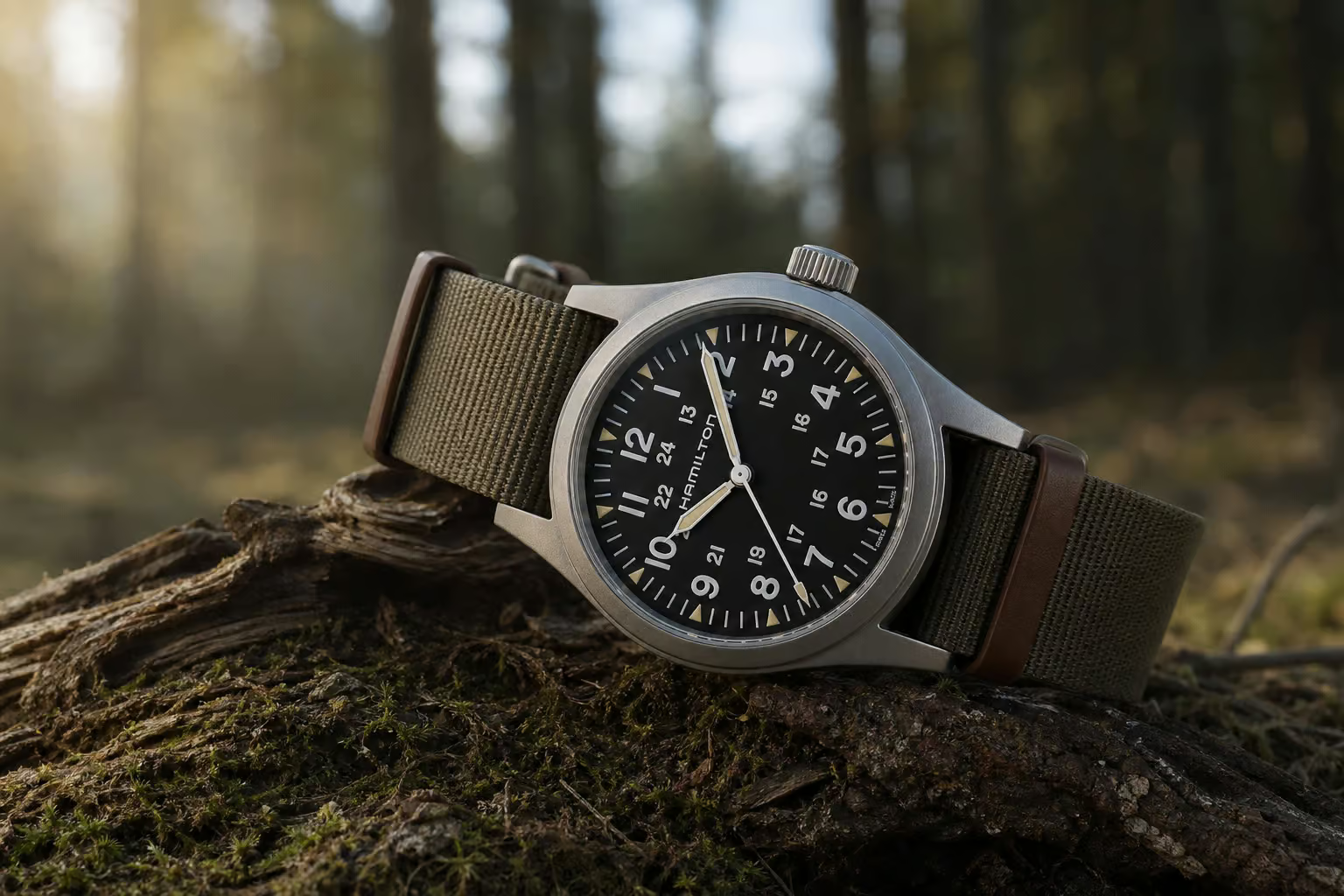
Pro: True flyer GMT movement under $1,000 with tool-free micro-adjust clasp. That is a feature usually found on watches twice the price.
Con: DLC tactical aesthetic is polarizing. You either love the blacked-out look or you don’t. And $895 is the ceiling of this guide.
Additional Standout Models
These watches don’t get full spec breakdowns, but they’re legitimate contenders worth knowing about.
Junghans Max Bill — A Bauhaus design icon. The dials are striking, the case is minimal, and it works with suits and jeans. Understated elegance from a German brand with design history.
Certina DS Action Driver Powermatic 80 — A slim diver from a Swiss brand that doesn’t get enough attention. The Powermatic 80 movement gives you 80 hours of reserve in a package that’s sporty enough for the beach but clean enough for the office.
Longines Conquest — Intricate dial patterns, heritage Swiss brand, available in automatic or quartz. This is a step up in brand prestige. Longines is a true Swiss luxury manufacturer with 190 years of history.
Orient Star Classic Automatic — Orient’s premium line. Better finishing, more attention to detail, and a fraction of the price of comparable Swiss dress watches. If you want a traditional automatic dress watch and don’t care about the name on the dial, this review of a Szanto Heritage Aviator is worth a look.
Seiko Presage Cocktail Time — Striking cocktail-inspired dials with patterns meant to evoke the look of a cocktail glass. A reliable automatic movement in a package that’s a strong gift pick. The dial alone justifies the price.
Citizen Series 8 Mechanical — Citizen’s answer to the integrated-bracelet sports watch trend. Modern design, comfortable on the wrist, Japanese build quality. For more on men’s watch styles, see Unfinished Man’s watch coverage, where this is a contemporary alternative to the Tissot PRX.
Quartz vs. Automatic: The Real Tradeoffs at This Price Point
Let’s get specific with the numbers from this guide.
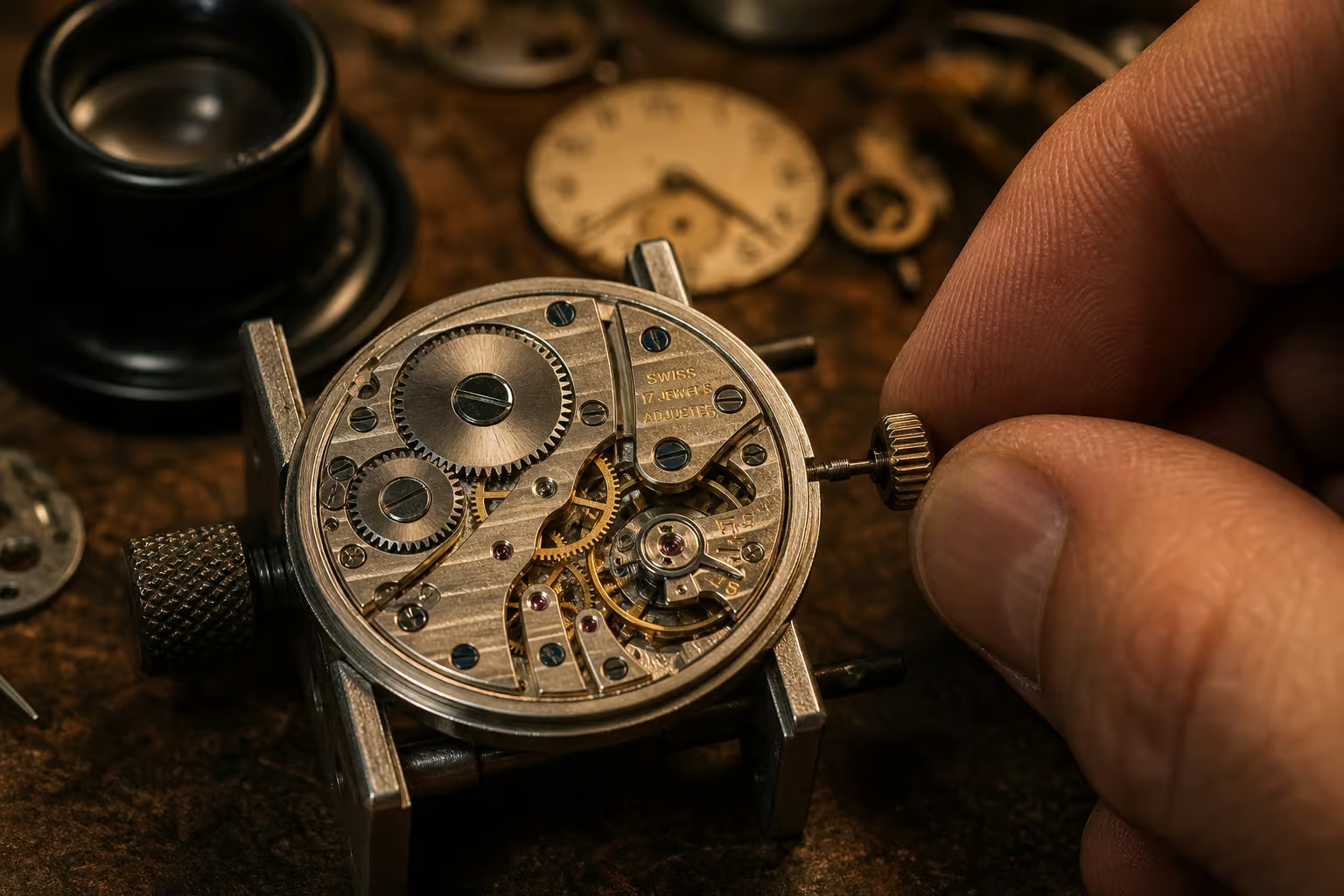
The Bulova Lunar Pilot runs at +/-10 seconds per year. The Seiko Turtle runs at +45/-35 seconds per day. That is a difference of 3,000x in accuracy. The Bulova is more accurate than any automatic under $1,000 by orders of magnitude.
But the Bulova does not have a sweeping seconds hand. It does not have a rotor that spins when you move your wrist. It does not have the mechanical character that makes watch enthusiasts spend hours staring at their wrist. That’s the tradeoff.
When Automatic Makes Sense: The 80-Hour Reserve Solution
Most automatics at this price have 40-hour reserves. The Seiko 4R36, the Orient F6922, the Miyota 9039 — all standard 40-hour movements. Take the watch off Friday night, it’s dead by Sunday morning. That is frustrating.
The solution is the 80-hour movement. The Hamilton H-50 in the Khaki Field Mechanical, the Powermatic 80 in the Certina and Tissot models — these bridge the gap. Wind them Friday, they’re still running Monday. At this price point, 80-hour reserve is the feature that makes automatic practical for daily wear.
When Quartz Wins: Accuracy and Grab-and-Go Convenience
High-precision quartz like the Bulova 262kHz beats every automatic under $1,000 on accuracy. Solar quartz like the Citizen Eco-Drive eliminates battery changes — any light powers it, and it runs for six months on a full charge. Standard quartz from ETA offers 2-5 years of battery life with accuracy.
Choose quartz if you want a tool that works every time you pick it up. Choose automatic if you want a mechanical object with character — even if it is less accurate.
Dive Watches: Highest Water Resistance per Dollar
Dive watches dominate the sub-$1,000 category because they are the most spec-dense. You get more engineering per dollar than any other style.
Scurfa Diver One Titanium offers 500 meters water resistance at $300–$400. That’s unmatched. Titanium case, contoured sides, form-follows-function design from a founder who is a professional diver.
Baltic Aquascaphe gives you 39mm, sapphire crystal, 200m water resistance, and a genuine beads-of-rice bracelet at $540–$585. It is the best vintage-inspired diver under $600 — not a copy of any specific watch, but its own design.
Seiko Turtle and Citizen Promaster are the heritage choices. The Turtle ($350–$400 on Amazon) gives you a mechanical diver with modern build quality and legacy. The Promaster ($200–$300 on Amazon) gives you solar grab-and-go with 200m ISO rating. Both have service networks and proven reliability.
The key comparison: Scurfa offers highest specs per dollar (500m, $300–$400). Baltic offers best design-to-spec ratio (sapphire, 200m, beads-of-rice bracelet, $540–$585). Heritage brands offer peace of mind at a discount (Seiko $350–$400, Citizen $200–$300). There is no wrong choice — it depends on your priorities.
Field, Pilot, and GMT: Versatility for Daily Wear
These are the watches you can wear to work, on weekends, and while traveling — the ones that earn their spot in a one-watch collection.
Hamilton Khaki Field Mechanical: 80-Hour Hand-Wound Champion
38mm x 47mm x 9.5mm. 80-hour power reserve. Hand-wound. This is the watch that soldiers wore, and it earned that reputation. It is reliable, comfortable, and does not feel like a costume piece.
The quirk: no 12 o’clock lume differentiation, so orienting it in the dark takes a second. The NATO strap can irritate skin — many owners swap it for a leather or perlon strap. But the movement and the heritage are genuine.
Bulova Lunar Pilot: Pilot Watch with Apollo Credentials
Direct Apollo 15 mission history — astronaut David Scott used it as a backup timer after his Speedmaster broke. The 262kHz quartz movement delivers accuracy that beats every mechanical in this guide.
The tradeoff: size. The 45mm version has a 52mm lug-to-lug. It will overhang on most wrists. The 43.5mm version is more wearable, but both are big watches.
Seiko 5 GMT and Nodus TrailTrekker GMT: Two Paths to Affordable Travel
The Seiko 5 GMT ($350–$475) is the cheapest mechanical GMT from a major brand. It is also compromised — no screw-down crown, low-quality bracelet, accuracy that is a lottery. But if you want a mechanical GMT at this price, it is the only option from a heritage brand.
The Nodus TrailTrekker GMT ($895) is the enthusiast pick. The Miyota 9075 is a flyer GMT movement — you can adjust the hour hand independently without stopping the watch. The NodeX clasp gives you tool-free micro-adjustment, a feature. But the DLC tactical aesthetic is love-it-or-hate-it, and you are paying the top of the budget.
The $400+ difference between them buys you a better movement and a better clasp. Whether that matters depends on how you will use the watch.
Fit Matters: Lug-to-Lug, Thickness, and Case Design
Most guides only list diameter. That is not enough. Two watches with the same 40mm diameter can fit differently depending on lug-to-lug length and case shape.
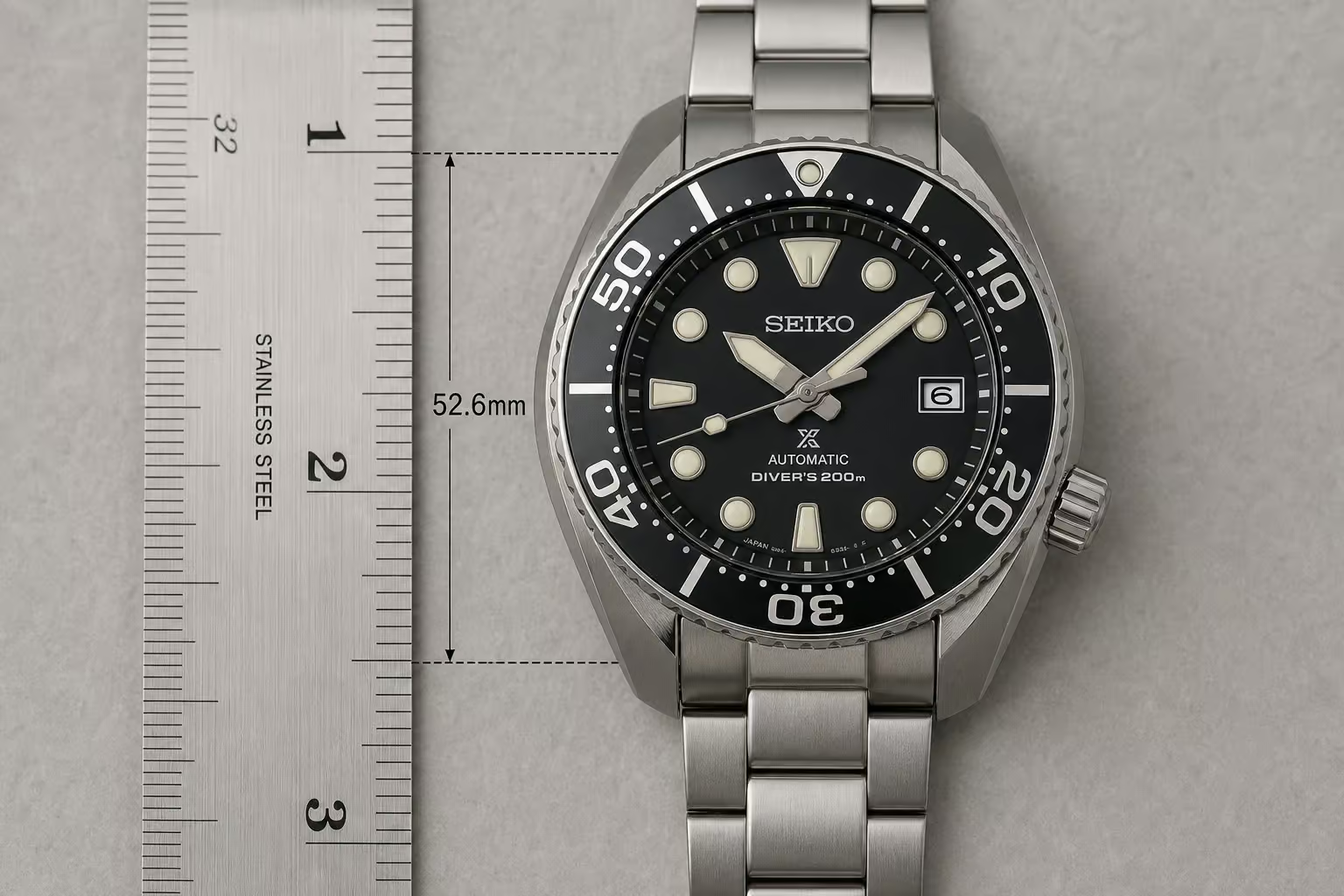
Here are the sizes in this guide, from smallest to largest:
- Timex Expedition Atlantis: 40mm x 45mm
- Tissot PRX: 40mm x 44.6mm (effective 51.5mm due to integrated bracelet)
- Baltic Aquascaphe: 39mm x 47mm
- Hamilton Khaki Field Mechanical: 38mm x 47mm
- Orient Mako II: 41.5mm x 47mm
- Scurfa Diver One: 40mm x 47mm
- Seiko 5 GMT: 42.5mm x 46mm
- Seiko Turtle: 44.3mm x 48mm
- Bulova Lunar Pilot 45mm: 45mm x 52mm
- Seiko Sumo: 45mm x 52.6mm
Key insight: lug-to-lug matters more than diameter. A 39mm watch with 52mm lug-to-lug would overhang — you would feel the lugs extending past your wrist bone. A 45mm watch with 47mm lug-to-lug would fit well if the lugs curve down.
The Tissot PRX demonstrates why integrated bracelets complicate things. The case itself is 40mm with a 44.6mm lug-to-lug, but the first link extends that length to 51.5mm. On a 6.5-inch wrist, that is at the limit.
Contoured sides help. The Scurfa Diver One is 14mm thick, but the sides curve inward so it wears thinner than the measurement suggests. The Baltic Aquascaphe at 47mm lug-to-lug fits a 6.5-inch wrist. The Seiko Sumo at 52.6mm lug-to-lug will overhang anything under 7 inches.
For a 6.5-inch wrist, avoid watches with lug-to-lug over 50mm unless you can try them on.
Price Channel Arbitrage: How to Save $100–$200 on the Same Watch
the same watch can cost less depending on where you buy it.
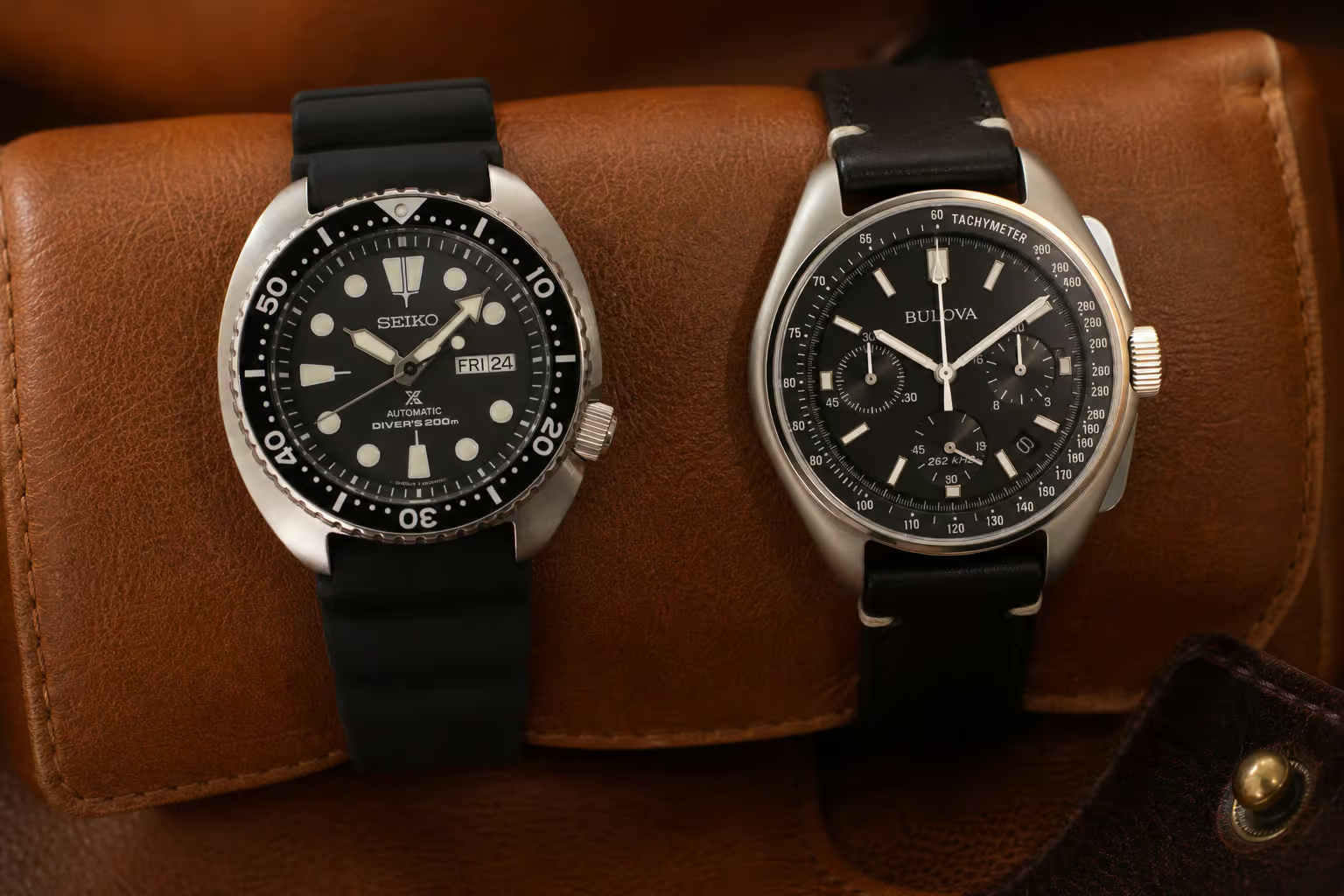
Concrete savings documented in this guide:
- Seiko Turtle: $495 official → $350–$400 on Amazon. Save $95–$145.
- Bulova Lunar Pilot: $695 official → under $500 on Amazon. Save $195+.
- Citizen Promaster Dive Eco-Drive: $375 official → $200–$300 on Amazon. Save $75–$175.
The tradeoff: official sites give you manufacturer warranty, full return windows, and peace of mind. Amazon and other gray-market sellers give you $100–$200 savings but shorter warranties and a risk of counterfeits (rare but real).
If warranty and service matter to you, buy official. If you want the lowest price on a specific model, check Amazon first. Most of the watches in this guide are available on both channels.
Where to Buy and What to Watch For
Official manufacturer sites: Bulova, Seiko, Citizen, Hamilton, Tissot, Orient USA, Baltic, Scurfa, Nodus. These give you the best warranty and return policy.
Amazon: Seiko, Bulova, and Citizen models at discounts. Check the price history before buying — sales are common.
Microbrands: Baltic, Scurfa, and Nodus require signing up for notifications. They produce in small batches and sell out. If you want one, get on the list and be ready to buy when the email arrives.
Retailers like Rogers & Hollands offer a 60-day return policy — that is buyer-friendly. They also offer financing, warranties, and trade-in options if you want to spread the cost or upgrade later.
Your Under-$1,000 Watch Can Last a Lifetime
A well-maintained automatic at this price — a Seiko Turtle, a Hamilton Khaki Field Mechanical, can go 5–7 years between services. Quartz watches need battery changes every 2–5 years, but the movements can last decades.
Service costs for the movements in this guide are affordable. A Seiko 4R36, an ETA F06, a Miyota 9039 — full service runs $100–200. Parts are available. These are not orphaned movements that will become impossible to maintain.
a good watch at this price can last for decades and become something meaningful. A gift from a milestone. A daily companion that develops scratches and stories. Eventually, a family object.
A $50 Timex Expedition will get you five years of service. A $595 Hamilton Khaki Field Mechanical can still be running when you hand it to your kid.
The watches in this guide are not compromises. They are legitimate, well-engineered objects that deliver quality at prices that do not require a second mortgage. Pick the one that fits your wrist and your life. Wear it every day.
Don’t baby it. It’ll outlast you.
People Also Ask
What does lug-to-lug mean and why does it matter for watch fit?
Lug-to-lug is the distance from the top lug to the bottom lug — it determines how a watch sits on your wrist, and it matters more than diameter alone. A 39mm watch with 52mm lug-to-lug will overhang a small wrist, while a 45mm watch with curved 47mm lugs can fit well. For a 6.5-inch wrist, avoid anything over 50mm lug-to-lug unless you can try it on first.
How long does an automatic watch last under $1,000?
A well-maintained automatic like the Seiko Turtle or Hamilton Khaki Field Mechanical can go 5–7 years between services and last decades with proper care. Service costs for movements like the Seiko 4R36 or Miyota 9039 run $100–200, and parts are widely available. These aren’t orphaned movements — they can still be running when you hand them to your kid.
Is the Bulova Lunar Pilot worth buying under $500?
Yes — it’s one of the best values in this guide. It has real Apollo 15 mission history (astronaut David Scott used it as a backup timer after his Speedmaster broke), and its 262kHz quartz movement is accurate to +/-10 seconds per year, beating every automatic under $1,000 by orders of magnitude. The catch is size: the 45mm version has a 52mm lug-to-lug and will overhang most wrists, so try the 43.5mm version if possible.