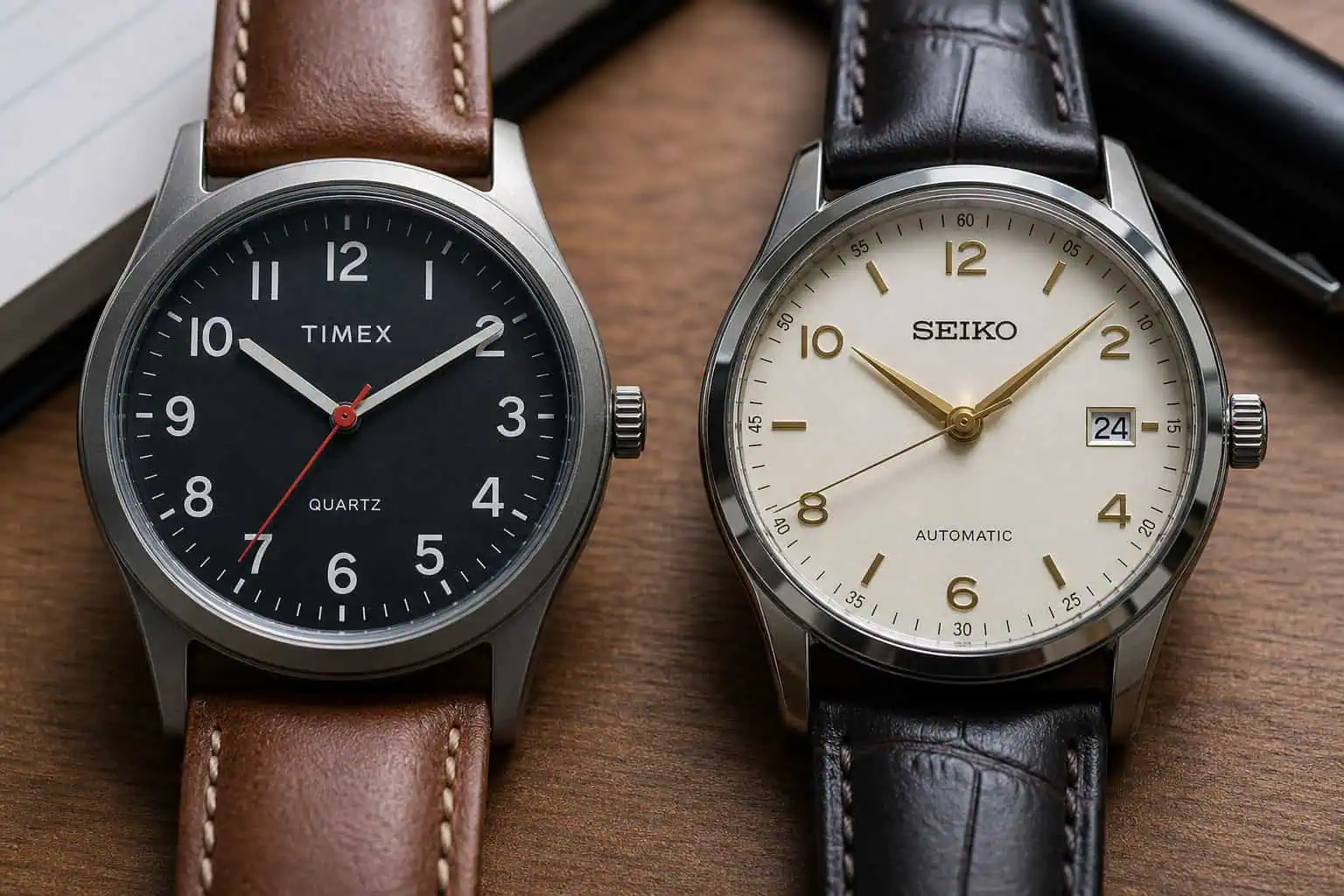
Nobody tells you when you start shopping for a watch: a $10 quartz timekeeper will embarrass a $2,000 automatic on the one job a watch is supposed to do — telling time accurately.
Most buyers walk in assuming that a higher price tag means better precision. The choice isn’t about accuracy at all. It’s about what you value: grab-and-go convenience and atomic-clock reliability, or the craftsmanship, heritage, and mechanical companionship of a self-winding machine.
I keep a quartz beater in my travel bag and an automatic on my desk. The rotation taught me that the decision comes down to how much you’re willing to babysit your wristwear — and whether that babysitting feels like a chore or a ritual. Let’s break it down.
Key Takeaways
A basic quartz watch is accurate to within half a second per day; a standard automatic drifts 10–20 seconds per day — that’s the difference between being on time for every meeting and losing a full minute by the end of the month.
Battery replacement on a quartz costs $10–20 every few years; automatic servicing runs $80+ every 3–5 years — but automatic watches can theoretically run for over a century with a skilled watchmaker, while quartz is bricked if the IC chip is discontinued.
Solar-powered quartz models like the Citizen Eco-Drive and Momentum Eclipse eliminate battery changes entirely — a few hours in sunlight gives up to six months of dark storage, though the rechargeable cells will eventually need replacement.
Table of Contents
How quartz watches work
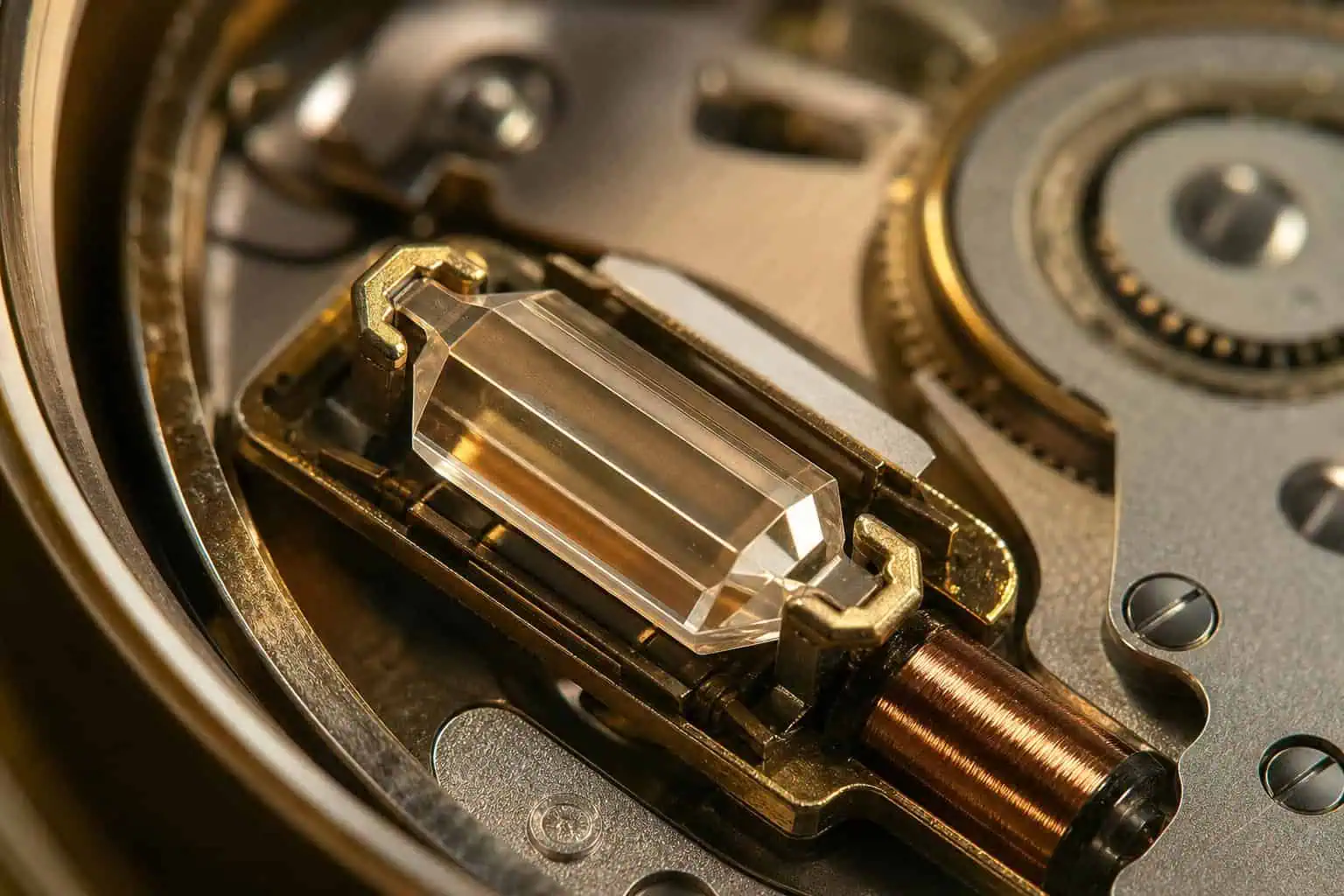
Inside that ticking case is a tiny engineering marvel built around a crystal. Here’s what’s happening: a battery sends a current through a quartz crystal, causing it to vibrate at exactly 32,768 times per second. An integrated circuit (IC) chip counts those oscillations and converts them into precise time increments. That signal drives a stepping motor, which moves the hands one tick at a time.
That high frequency — 32,768 Hz, is why quartz is so accurate. It’s like measuring a mile with a ruler marked in millimeters instead of feet. The IC chip never gets tired, never slows down as the battery drains, and never varies with your wrist angle or the temperature.
Battery life ranges from one to five years depending on the movement. The second hand moves in crisp one-second jumps. And there’s a useful hidden feature: when the battery is dying, many quartz watches start stuttering — the second hand jumps two or three seconds at a time. It’s a visual “hey, I need juice” warning that still keeps accurate time until you swap it.
A solar-powered alternative that skips battery changes
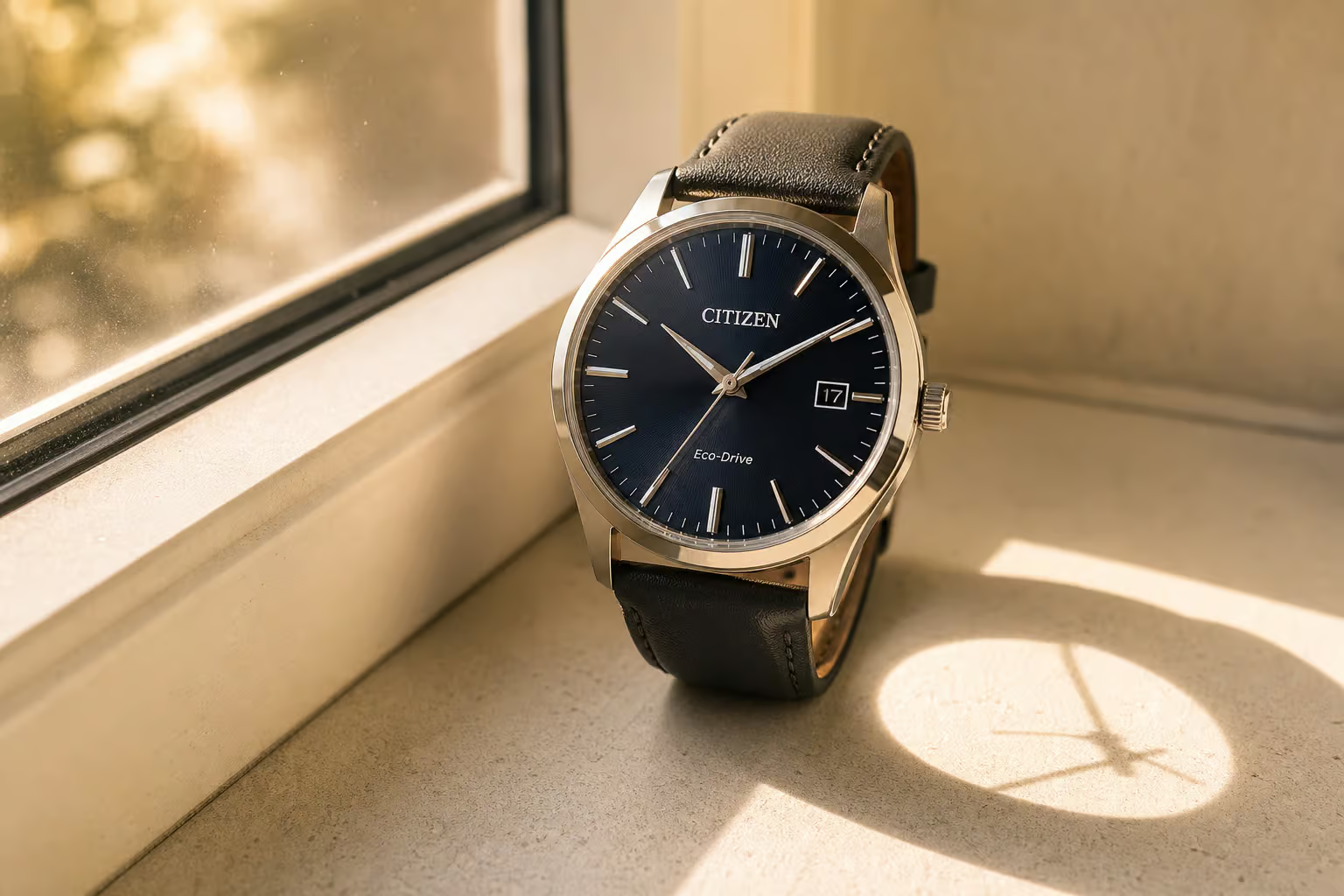
If you like the convenience of quartz but hate the idea of hunting down a watchmaker every few years for a $10 battery swap, solar quartz is a legitimate middle ground. The Citizen Eco-Drive and Momentum Eclipse use rechargeable cells charged by light — any light, not just direct sun. A few hours of exposure can keep the watch running for up to six months in total darkness.
The honest downside: those rechargeable cells aren’t immortal. They eventually need replacement, so it’s not truly maintenance-free. But for most people, it’s close enough.
How automatic watches work
No battery. No chip. Just springs, gears, and your wrist.
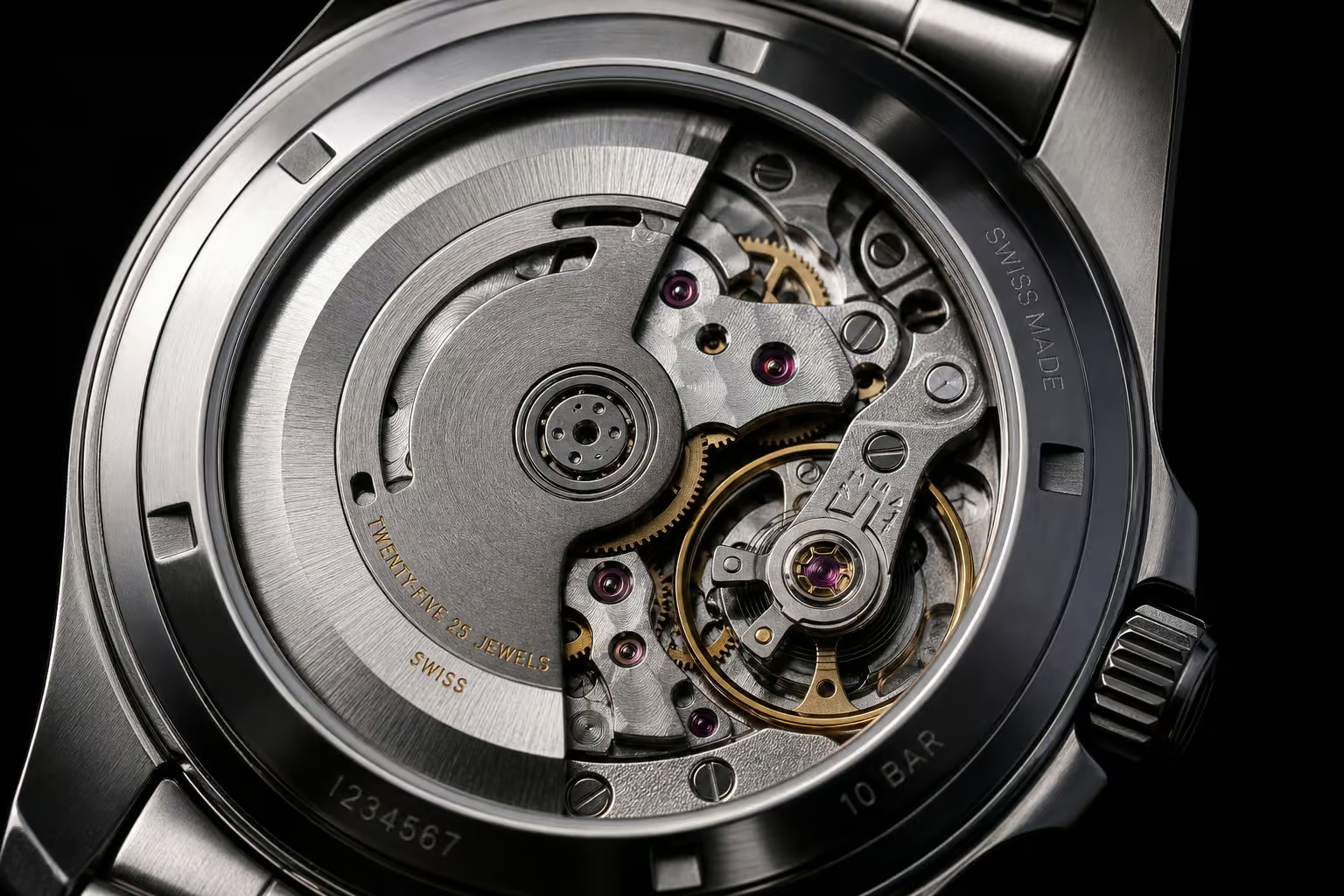
The heart of an automatic is the rotor — a weighted metal plate that spins freely as you move your arm. That rotation winds the mainspring, which stores energy. The mainspring releases that energy through an escapement mechanism, which parcels it out in controlled impulses to the balance wheel. The balance wheel oscillates at a set rate—typically 28,800 beats per hour (bph) in modern movements, and that oscillation drives the wheel train that moves the hands.
Because the balance wheel beats 28,800 times per hour (eight times per second), the second hand moves in a smooth, continuous sweep rather than the discrete tick of quartz. That sweeping motion is one of the most visually compelling reasons people choose automatic watches, though for those who prioritize accuracy, high-precision quartz watches offer a precision that beats every automatic under $1,000. It looks alive in a way a ticking hand doesn’t.
Power reserves vary. A typical movement like the ETA 2824 stores about 38 hours of energy; the Valjoux 7750 holds about 40 hours. Higher-end calibers can stretch to 70 or 80 hours. That means if you take your automatic off on Friday evening, it’ll probably stop sometime Sunday morning. You’ll need to wind it and reset the time before wearing it again Monday.
A brief history of automatic watchmaking
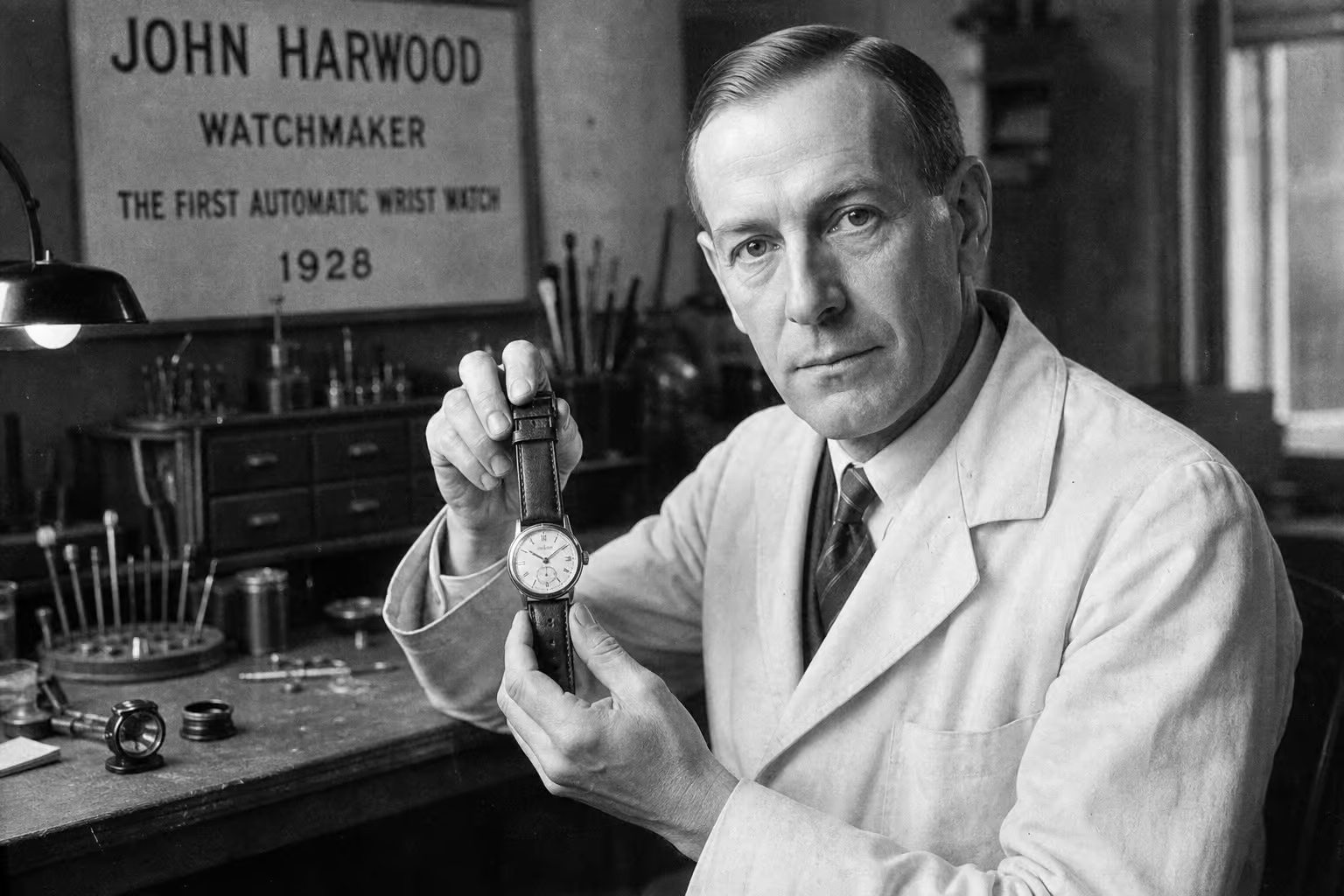
Automatic wristwatches aren’t new. John Harwood started producing them in Switzerland in 1928. Early versions had power reserves as low as 12 hours — barely enough to get through a workday. Modern movements are dramatically refined, but the core principle hasn’t changed.
Accuracy showdown: Which movement tells better time?
Let’s settle this with numbers.
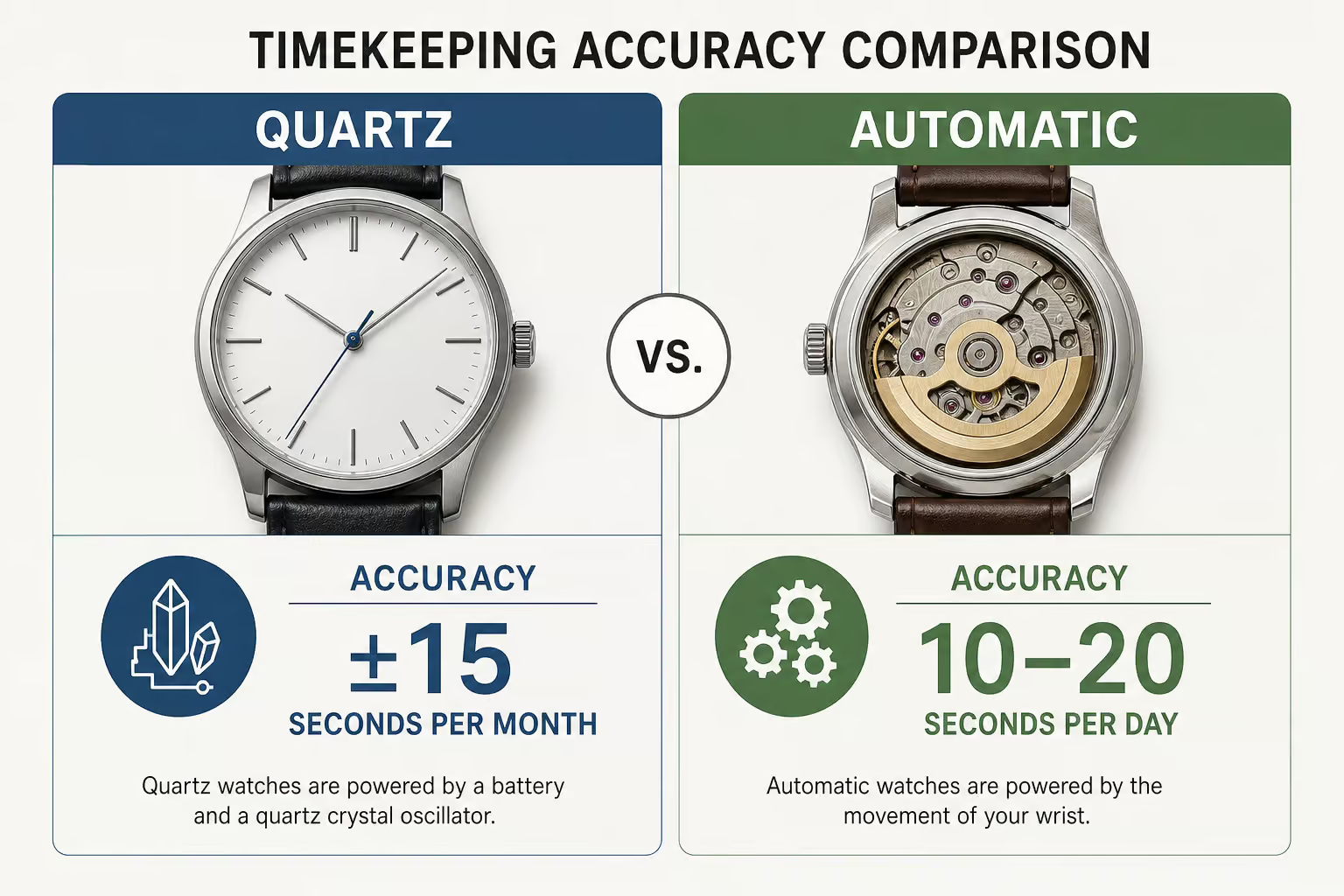
- Quartz (standard): ±15 seconds per month — roughly half a second per day.
- Breitling SuperQuartz: ±15 seconds per year — ten times more accurate than standard quartz.
- Automatic (standard): 10–20 seconds per day. That’s 300–600 seconds per month.
- Automatic (chronometer grade): 4–6 seconds per day. Better, but still an order of magnitude worse than basic quartz.
The gap is large. A standard quartz loses about 0.5 seconds per day; a standard automatic loses 10–20 seconds. That’s the difference between showing up on the dot for a meeting and being two minutes off by the end of the month.
And the factors that affect automatic accuracy are numerous: winding state, lubrication freshness, position (crown up, crown down, dial up), temperature. Even a chronometer-certified automatic — tested by COSC to within 4–6 seconds daily, can drift more in a single day than a cheap quartz does in a month, though how to identify if a watch is high quality often involves looking past such movement stereotypes to the reputation of the maker.
Maintenance, longevity, and repairability
This is where the cost-of-ownership picture gets nuanced.
Quartz: Battery replacement every 1–5 years, $10–20 at a local shop. Low burden. But there’s a hidden risk: quartz movements are built around an IC chip that’s mass-produced for a specific model. If that chip is discontinued — and watch manufacturers refresh their quartz calibers regularly, the watch cannot be repaired when the electronics fail. It becomes a display piece, which is why a watch with a quartz movement uses a battery as its power source to drive the motor for precise hand movements.
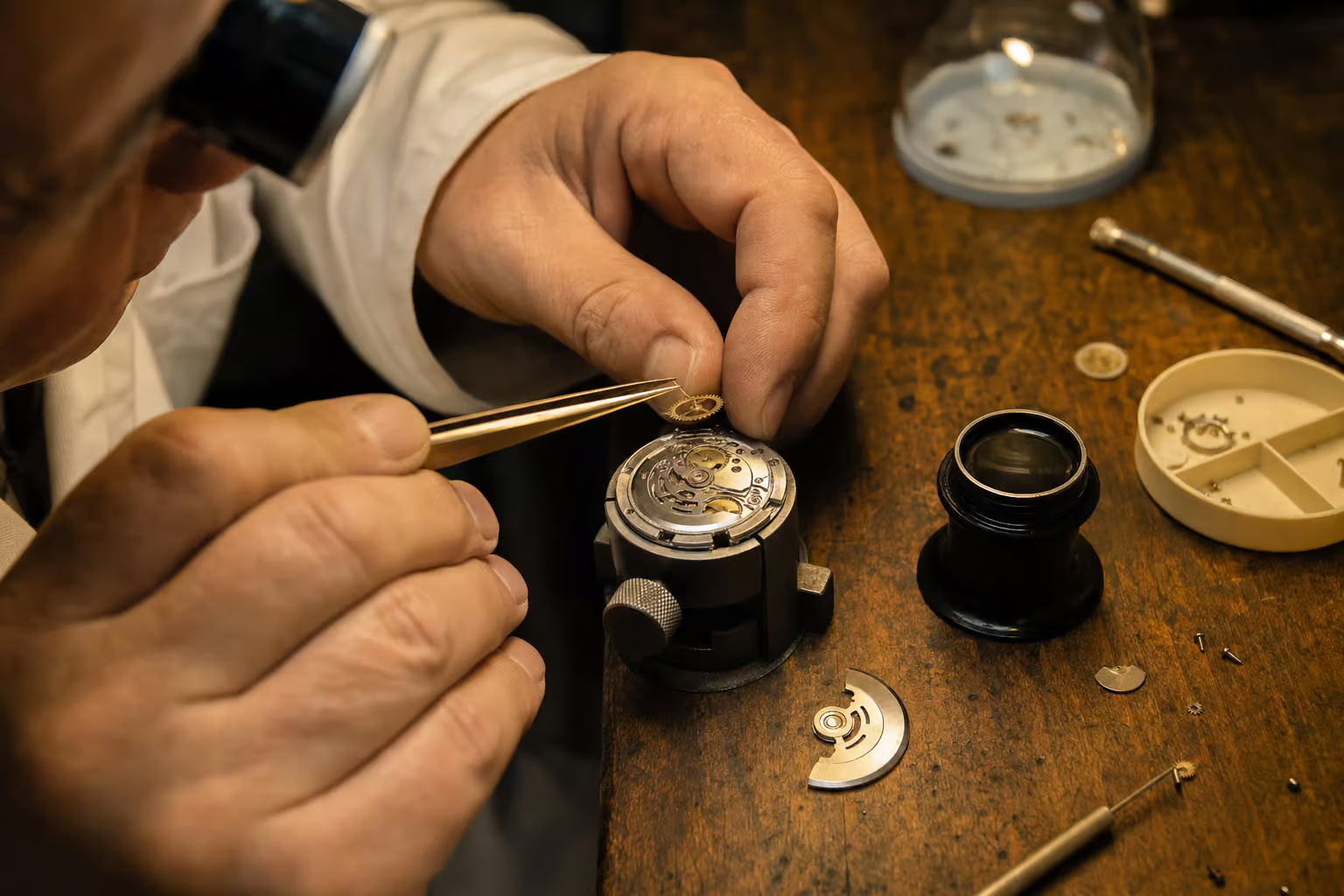
Automatic: Professional servicing every 3–5 years, starting around $80 and climbing with the watch’s complexity. Oils dry out, gaskets harden. But because the movement is purely mechanical, a skilled watchmaker can often manufacture a replacement part — even a single pinion or wheel, if the original movement is discontinued. The watch can theoretically run forever.
Longevity comparison: A quartz can last decades with battery changes, but its lifespan is capped by electronic parts availability. An automatic, with regular service, can exceed 100 years. Longines maintains a heritage workshop that can repair watches over a century old. That’s a concrete example of the mechanical advantage.
Price, value, and collectability
You can buy a quartz watch for about $10. The cheapest automatic is around $50 — and won’t be accurate. That gap persists at every price tier.
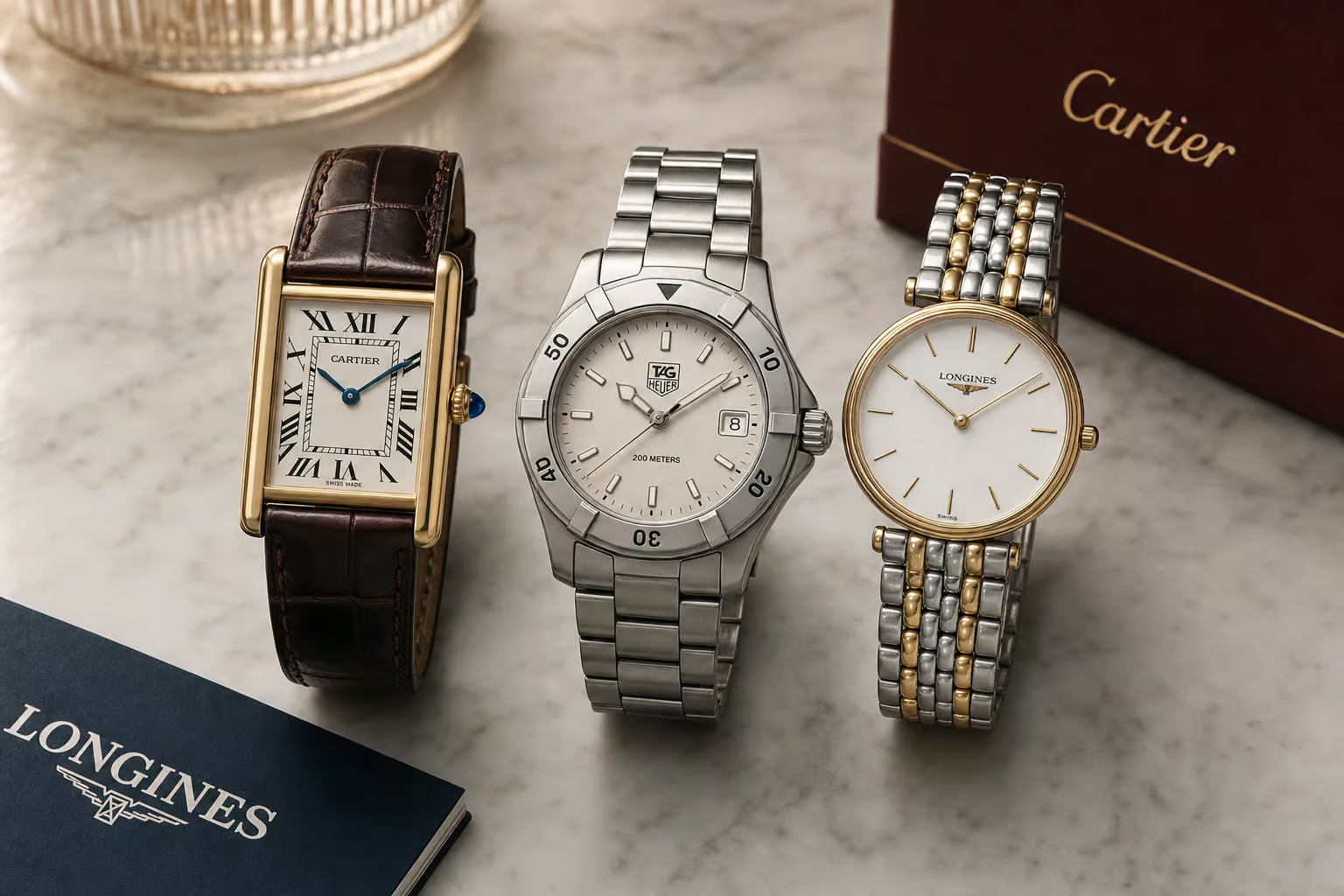
- Quartz: More affordable because movements are mass-produced cheaply. This also means you can buy into luxury brands at a lower entry point. The Cartier Tank Louis comes in a quartz version for well under the automatic’s price. Tag Heuer Formula 1, Gucci G-Timeless, Raymond Weil Maestro, Longines Conquest — all offer quartz models that let you wear a prestigious name without paying for a mechanical movement you might not want.
- Automatic: Generally more expensive due to hand assembly and multiple quality-control checks. Brands like Nivada Grenchen, Montblanc, Tag Heuer Carrera, Grand Seiko Heritage, Oris Big Crown, and Doxa sub 300 build their reputations around automatic movements.
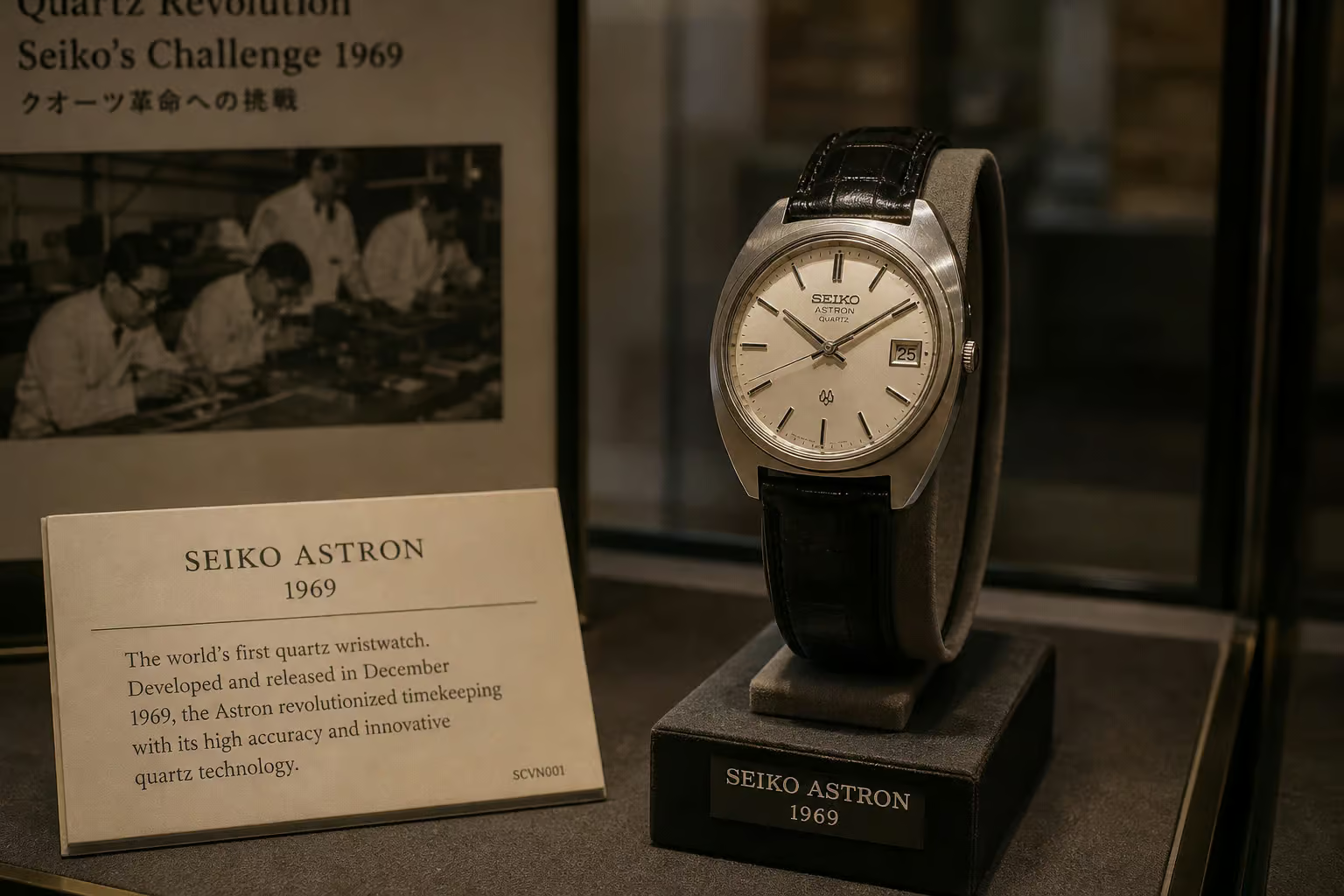
Collectability: Most quartz watches aren’t collector items. The movement is an appliance. Automatics, by contrast, are sought after for their craftsmanship, heritage, and the fact that someone assembled them by hand. There are exceptions — early Seiko Astons, certain limited quartz editions, but as a rule, collectors chase mechanical.
Power source, daily use, and aesthetic differences
The weekend problem: you take off your automatic Friday evening. By Sunday morning, it’s dead. Your quartz? Still ticking, still accurate, still ready to grab and go.
Power reserve commitment: Quartz runs continuously for 1–5 years. It doesn’t care if you wear it every day or leave it in a drawer for a month. Set it once and forget it. Automatics need motion.
If you rotate watches or skip weekends, you’ll be resetting the time every time you put it on. That’s either a charming ritual or a mild annoyance, depending on your temperament.
Setting and resetting: Quartz is set-it-and-forget-it. The low-battery indicator (stuttering second hand) gives you weeks of warning. Automatics require resetting if left unwound. And because they’re less accurate, you’ll need to adjust the time more frequently anyway.
Second-hand movement: The tick vs. sweep is the most visible difference. Quartz ticks once per second. Automatics sweep smoothly — eight ticks per second, though it looks continuous. That sweeping motion is a key aesthetic differentiator that draws many enthusiasts to mechanical watches.
Neither is better. They’re just different signatures. Many automatics, like the Grand Seiko Heritage, feature a transparent caseback to show the movement in action, adding visual appeal that quartz watches rarely offer.
Physical feel: Quartz watches tend to be lighter and thinner because the movement has fewer and smaller parts. Automatics are heavier and thicker — you feel the weight of the rotor, the gears, the mainspring. Some people love that heft; others find it fatiguing. Modern automatic calibers are very shock-resistant, but quartz still holds the edge in durability because it has fewer moving parts to break.
Summary verdict: Which movement should you choose?
The decision comes down to one question: do you want a tool or a companion?
Choose quartz if you value accuracy, convenience, and value. You need precise timekeeping for work — medical, aviation, anything where two minutes off matters. You travel frequently and rotate watches. You’re on a budget but still want a luxury brand name. You want something you can set and forget for years.
Choose automatic if you value craftsmanship, heritage, and the mechanical experience. You appreciate intricate engineering with visible moving parts. You enjoy the ritual of winding and resetting. You want a watch that can be serviced and passed down. You’re buying for the story and the feel, not the absolute precision.
The solar-powered middle ground exists. Citizen Eco-Drive and Momentum Eclipse give you quartz accuracy without battery changes. They’re environmentally friendly and practical. Know that the rechargeable cells eventually need replacement — it’s not a forever solution, but it’s a good compromise for most people.
A brief history: The Quartz Crisis and what it means today
In 1969, Seiko released the Astron — the first quartz wristwatch. Within a decade, it nearly destroyed the Swiss watch industry.
Quartz movements were cheaper, faster to produce, and infinitely more accurate than mechanical ones. Swiss manufacturers, who had dominated the world with their mechanical calibers, couldn’t compete on price or precision. The industry formed the Centre Electronique Horloger (CEH) and developed the Beta 21 caliber — used by Rolex in a prototype Oysterquartz reference 5100, but it wasn’t enough to stem the tide.
The “Quartz Crisis” of the 1970s forced Swiss brands into a strategic pivot: reposition mechanical watches as luxury items, emphasizing craftsmanship and heritage over cold accuracy. It worked. That pivot is why automatic watches carry a premium today. It’s not because they’re better timekeepers. It’s because they survived.
People Also Ask
What is the downside of an automatic watch?
The biggest downside is accuracy — a standard automatic loses 10–20 seconds per day, so you’ll be resetting it frequently. It also stops running if you don’t wear it for a day or two, and professional servicing every 3–5 years costs $80 or more.
What are the disadvantages of a quartz watch?
Quartz watches have a hidden lifespan limit — the integrated circuit chip can become obsolete, and if it’s discontinued, the watch can’t be repaired when the electronics fail. They also lack the craftsmanship and smooth sweeping second hand that many watch enthusiasts value.
How accurate is a quartz watch compared to an automatic?
A standard quartz watch is accurate to within about half a second per day, or 15 seconds per month. A standard automatic drifts 10–20 seconds per day — that’s 300–600 seconds per month. Even a chronometer-grade automatic, tested to within 4–6 seconds daily, is still an order of magnitude less accurate than basic quartz.
Can a quartz watch last as long as an automatic?
Not typically. A quartz watch can last decades with battery changes, but its lifespan is capped by the availability of its integrated circuit chip — once that’s discontinued, a dead movement can’t be repaired. An automatic can theoretically run for over a century with regular servicing because a skilled watchmaker can manufacture replacement parts.
What is a solar quartz watch and is it worth it?
A solar quartz watch uses rechargeable cells charged by any light source, eliminating battery changes for years. Models like the Citizen Eco-Drive can run for up to six months in total darkness after a few hours of light exposure. It’s worth it if you want quartz accuracy without battery swaps, but the rechargeable cells will eventually need replacement.