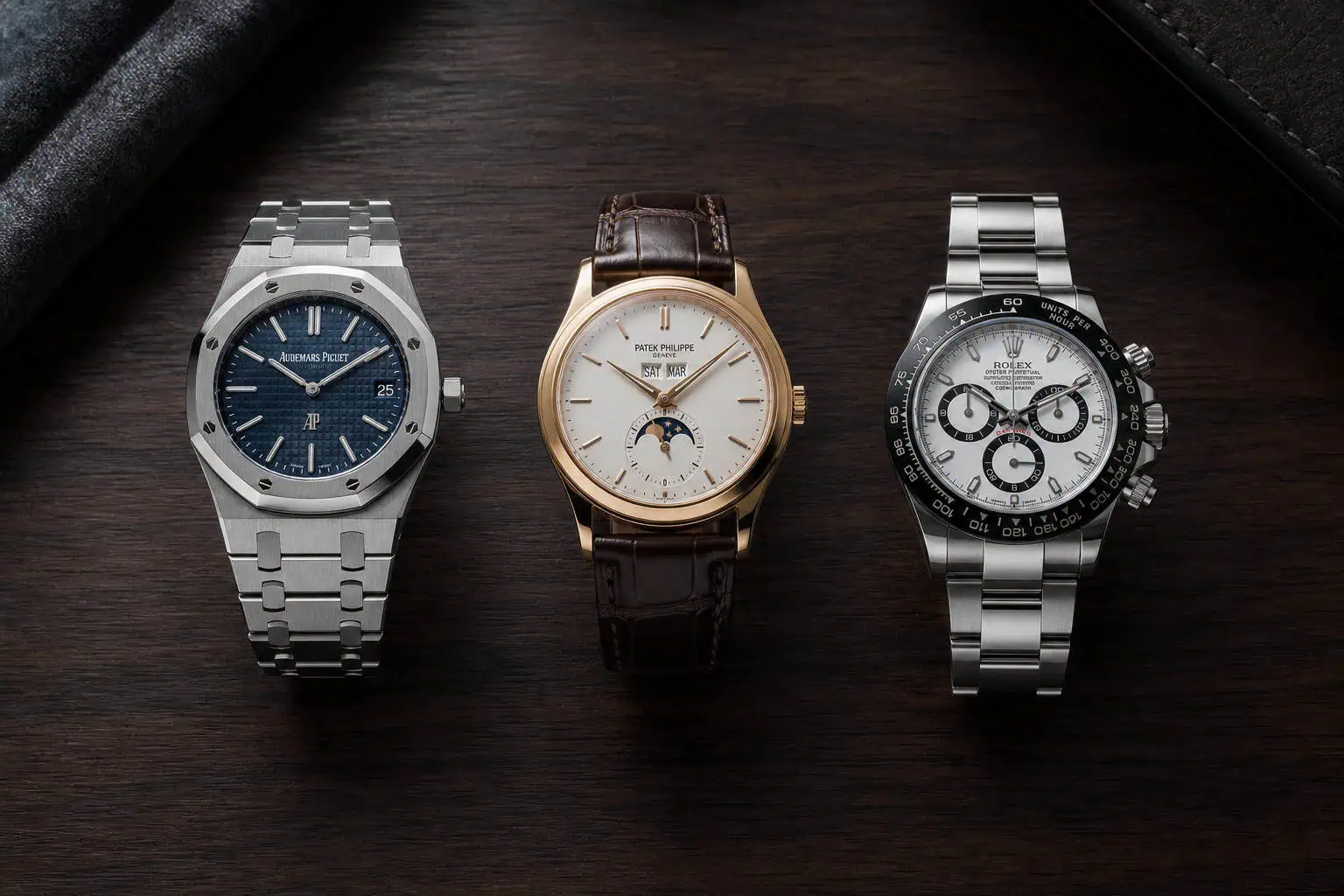
You finally have enough money — or enough credit, to buy a second nice watch. Maybe a third. Then you open Instagram and see someone’s collection of fifteen and feel like you’re doing it wrong. Or you open a drawer and realize you’ve accumulated six watches you barely wear and can’t remember why you bought.
The 3 watch rule is the antidote to that spiral. It’s a community-born idea, not an industry standard — you won’t find it in any manufacturer’s manual. It says: keep your collection to three pieces. Typically a diver, a dress watch, and an everyday watch.
Fratello called it “an exercise in self-discipline” and “a distillation of the rainbow” of your taste. The point isn’t the number. The point is that each watch has to earn its spot.
Key Takeaways
The 3 watch rule is a deliberate constraint, not a law: it forces you to choose a daily workhorse, a sports/statement piece, and a dress watch — and makes every purchase intentional.
You can build a solid three-watch collection for under $5,000 using pre-owned models like the Tudor Black Bay 41 (~$2,700), Longines Hydroconquest ($1,775 MSRP), and Frederique Constant Classics Index Automatic ($995 MSRP).
Even experts struggle to stick to three — the Fratello author admits he can’t do it, and WatchCrunch user TOwguy regretted his 1980s three-watch set (Rolex Cosmograph, Cartier Santos, Breitling Chronomat), proving the rule is aspirational, not a judgment.
Table of Contents
Why Limit Yourself to Three?
The 3 watch rule isn’t about owning less for the sake of it. It’s about removing the mental burden of daily choice. When you have three watches, you don’t pack for a trip; you grab a single watch roll. You don’t agonize over which one to wear to a wedding or a work meeting. The hard work happened when you curated the collection.

Each watch fills a clear role: one that handles everything you throw at it, one that makes a statement, and one that disappears under a cuff.
The Fratello writer admitted he can’t achieve three himself — sentimental attachments and watches he doesn’t yet own keep him from it.
The Three Classic Categories
Most people interpret the three-watch rule through a standard framework: a daily watch, a sports watch, and a dress watch. But the categories are flexible — some collectors swap “sports” for “field,” or “dress” for “vintage,” and to stay informed on the latest trends and connect with other enthusiasts they might turn to the best watch blogs.
The daily watch (workhorse)
This is the one on your wrist 70% of the time. It should be comfortable, durable, and versatile enough to dress up or down. You’ll invest the largest chunk of your budget here.
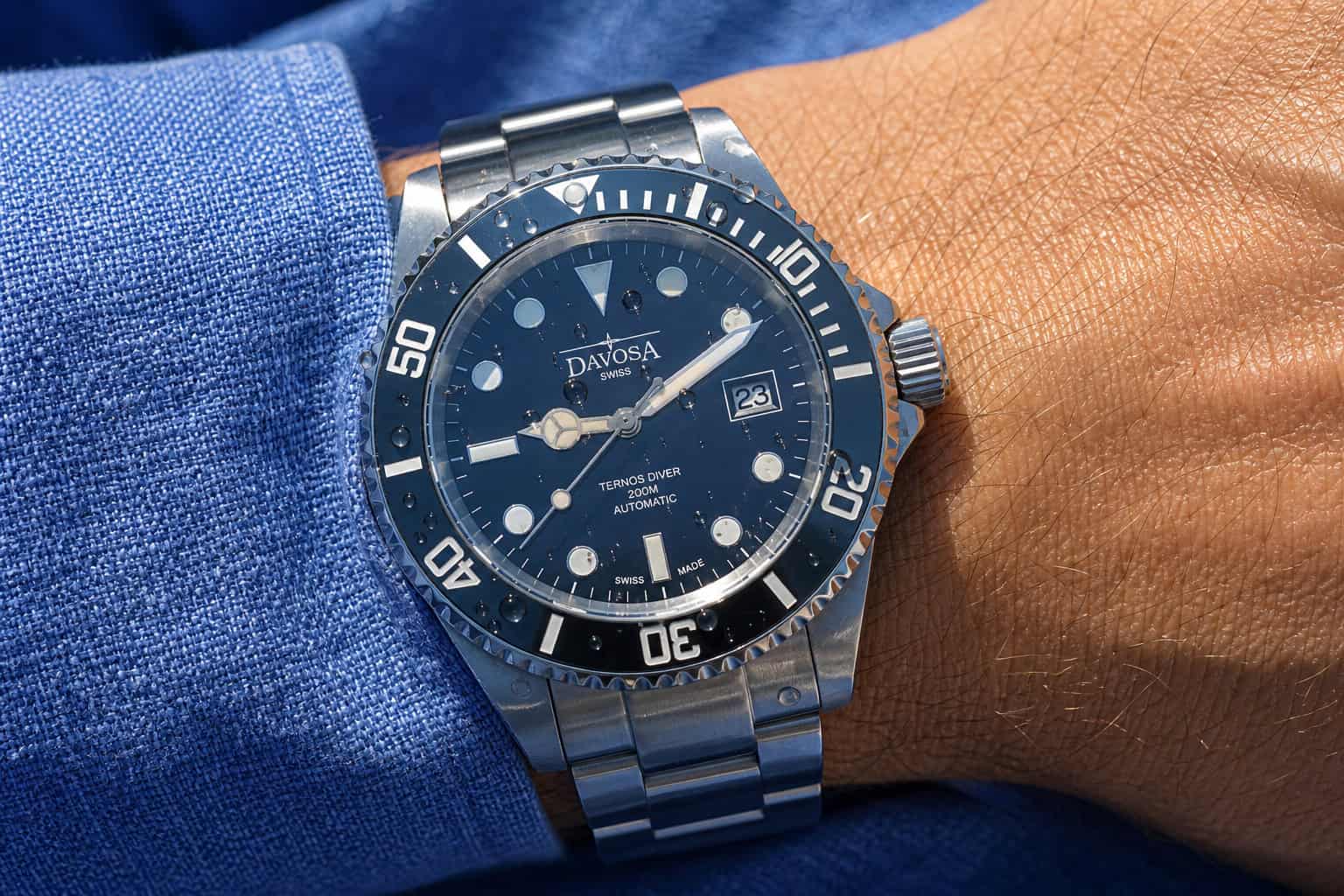
Examples from the source: Rolex Oyster Perpetual, Datejust, Explorer; Omega Constellation, Aqua Terra; Cartier Ballon Bleu, Santos, Tank; Tudor Black Bay 32/36/41; Patek Philippe Aquanaut, Twenty‑4; Audemars Piguet Royal Oak.
The sports watch (weekend warrior)
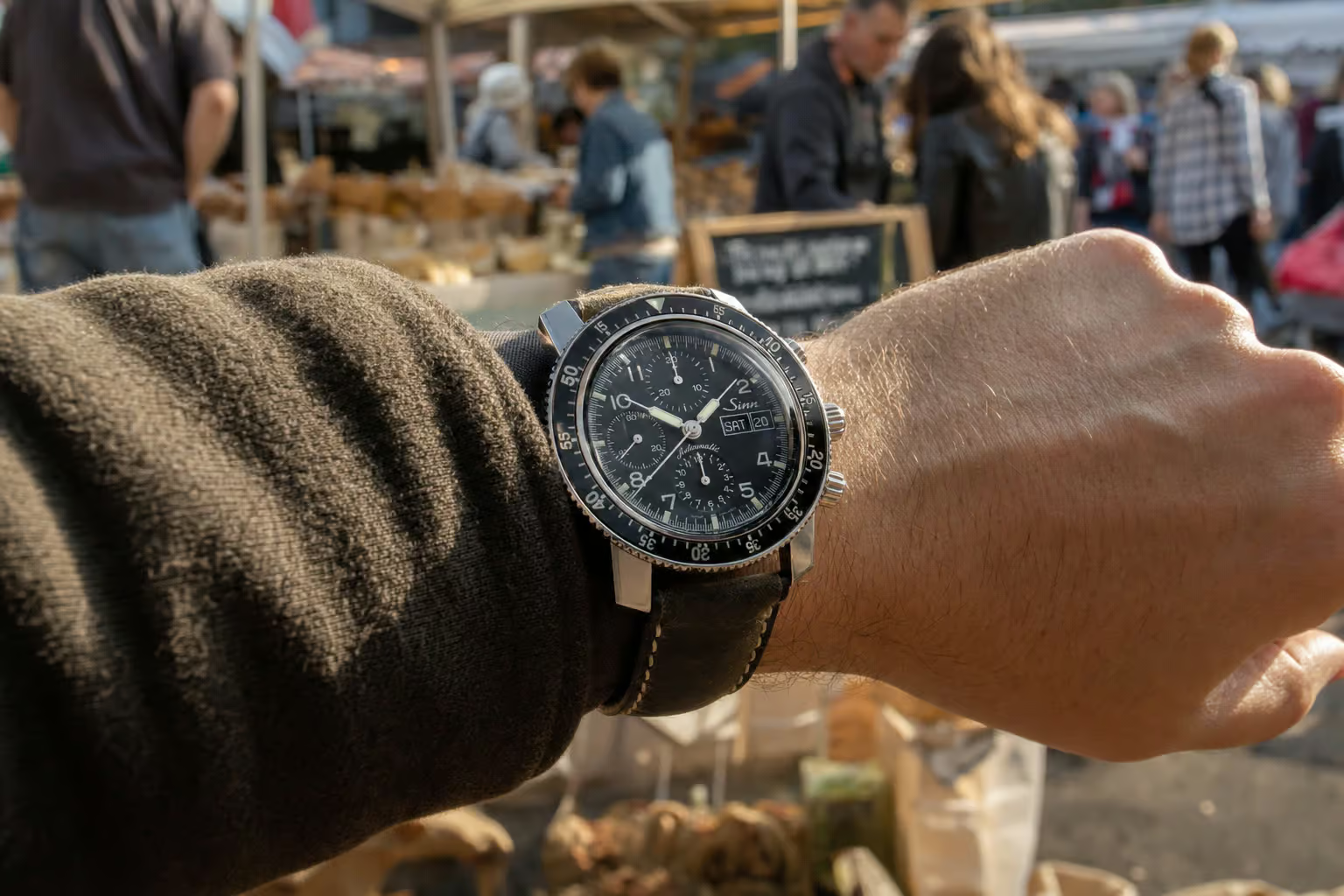
Beefier case. Added functionality — a dive bezel, a GMT hand, a chronograph. This is your statement piece. More color, more visual impact, more occasion to wear it on the weekend or on vacation.
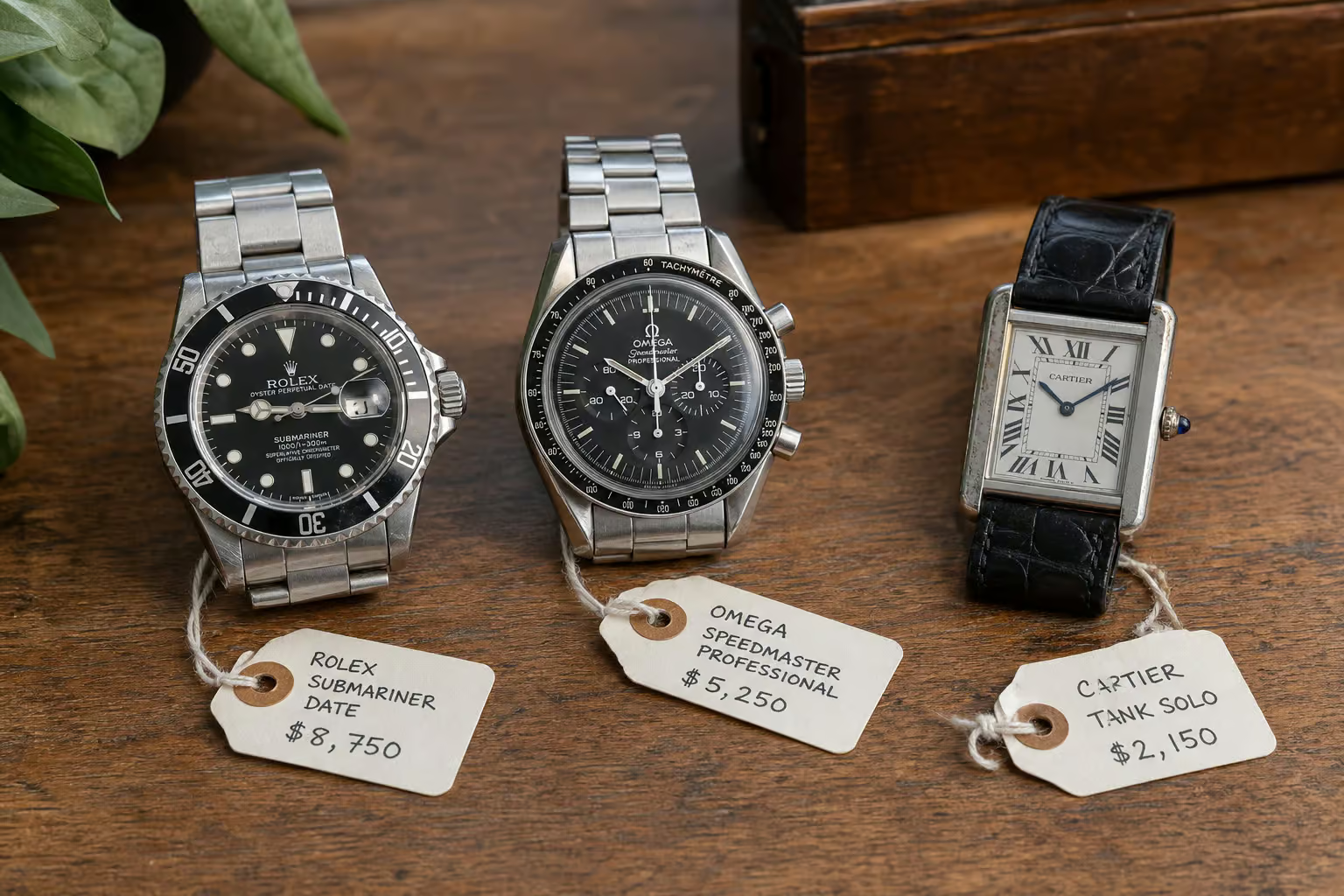
Popular picks: Rolex Submariner, GMT‑Master, Daytona; Omega Seamaster Diver 300M, Planet Ocean, Speedmaster; Tudor Black Bay, Pelagos; Patek Philippe Nautilus; AP Royal Oak Offshore.
The dress watch (special occasion)
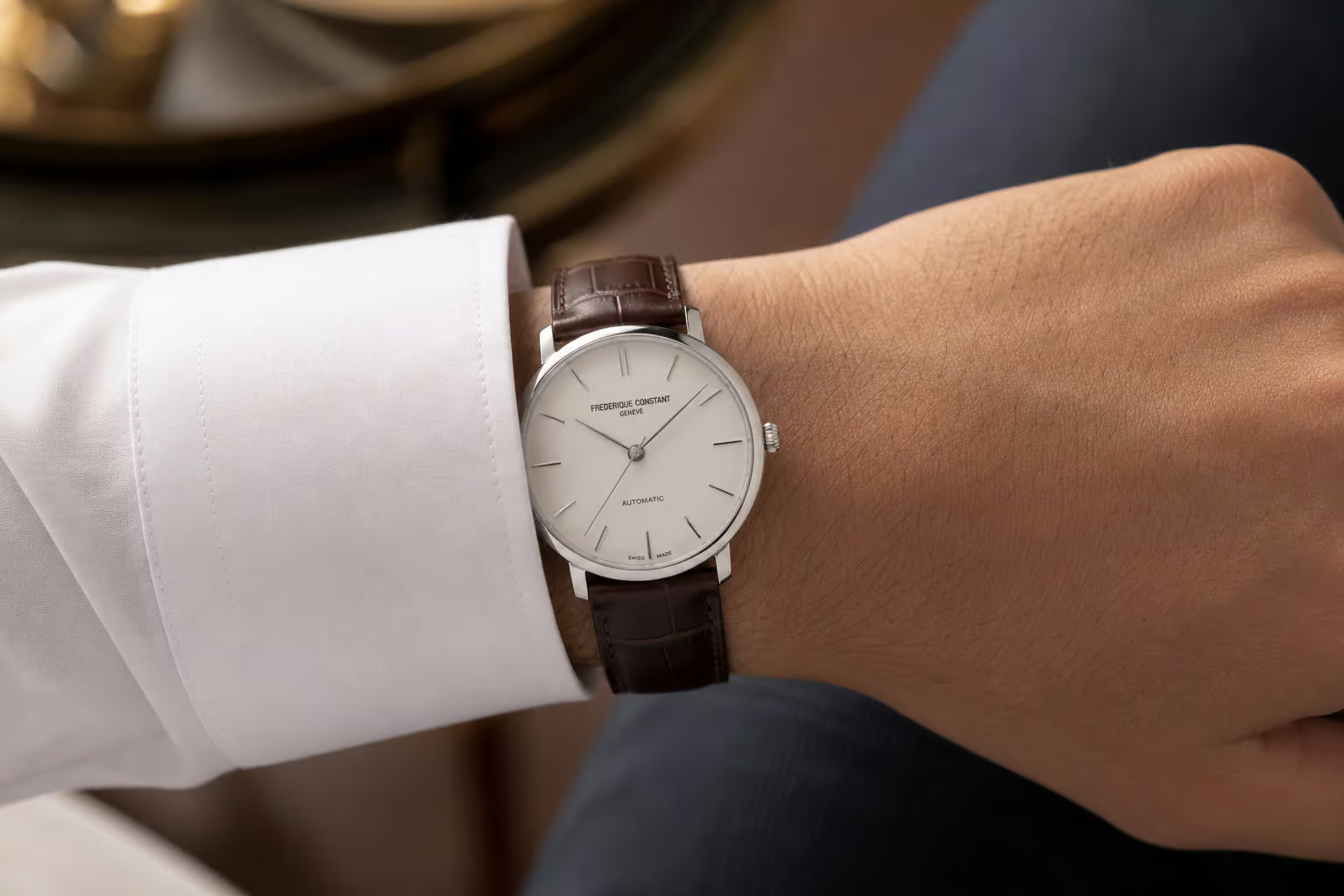
Restraint is the virtue here. Thin case, understated dial, leather strap. Classic design. You’ll wear it least, so allocate the smallest budget — and vintage is a strong option.
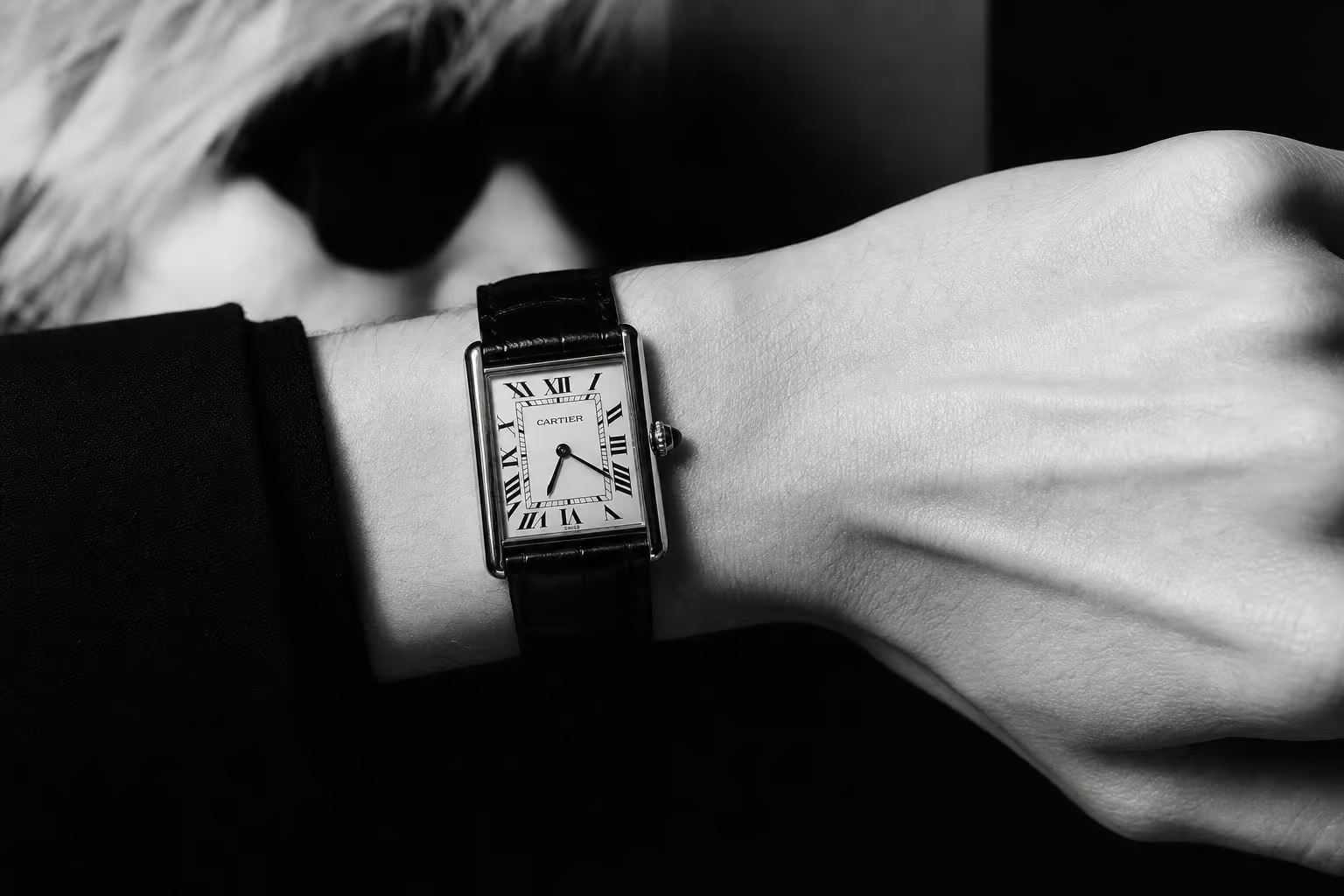
The contenders for a serious dress watch include the Rolex Day‑Date, Cellini, and 1908; the Omega De Ville; Cartier Tank and Panthère; Patek Philippe Calatrava and Gondolo; Vacheron Patrimony; and JLC Reverso. If you are unsure of your choice, this men’s watch buying guide can help you avoid costly mistakes.
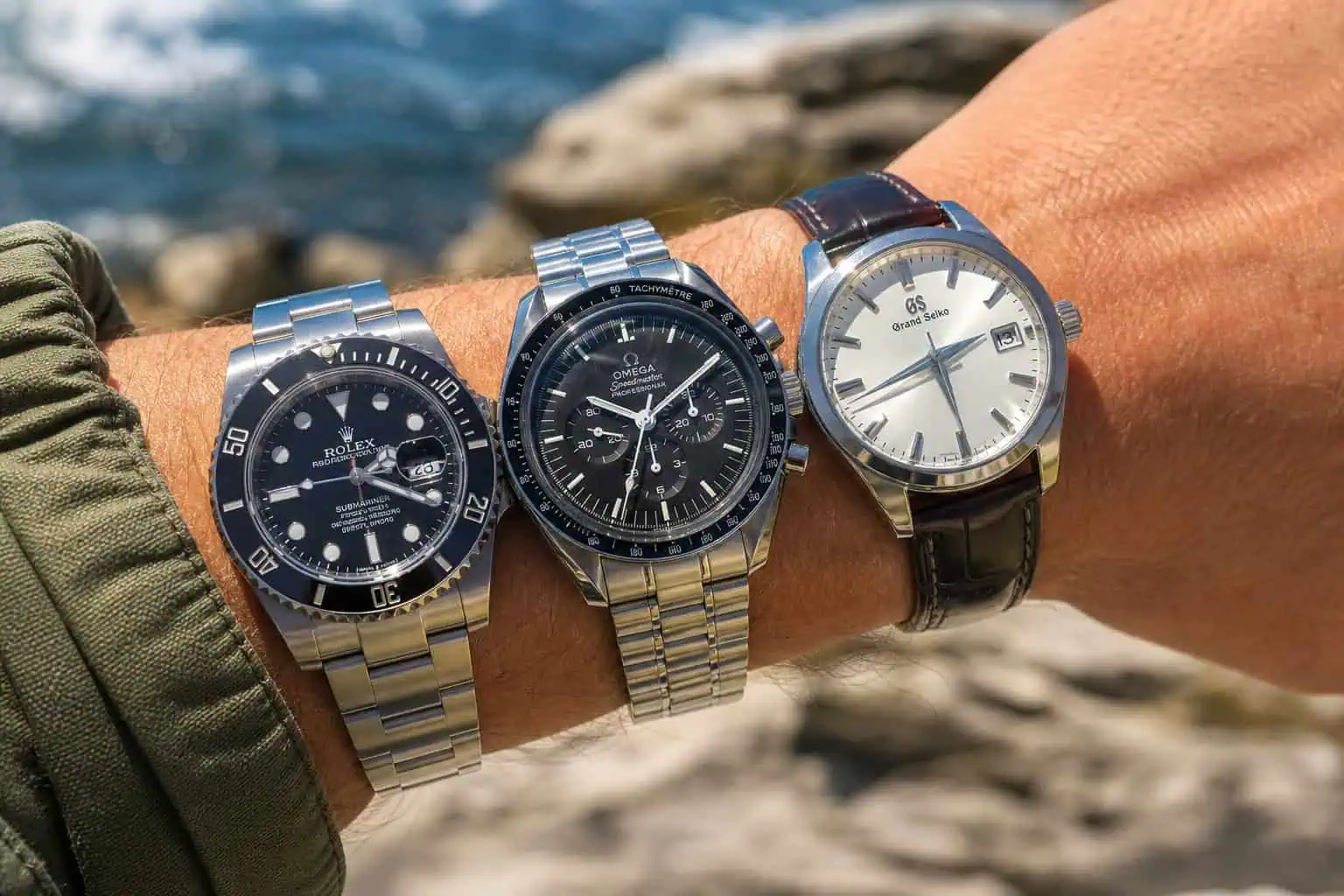
The WatchCrunch user Steveiemc runs a practical alternative: a dive watch for everyday, a Speedmaster as his special piece, and a Grand Seiko quartz for travel — land, air, sea. Another user, Hodonkee, favors a GADA (Go Anywhere, Do Anything) watch without a rotating bezel, a GMT or dressy diver, and a chronograph. As you can start a watch collection with just $500, the categories are a starting point, not a cage.
Budget Tiers and Specific Model Recommendations
These are pre-owned market prices — the secondary market is where most smart buyers start.
Under $5,000
- Daily: Tudor Black Bay 41 — around $2,700 pre-owned.
- Sports: Longines Hydroconquest — $1,775 MSRP.
- Dress: Frederique Constant Classics Index Automatic — $995 MSRP.
- Total: roughly $5,470. That’s less than a single entry-level luxury watch.
Under $10,000
- Daily: Omega Aqua Terra — $3,500 to $4,000 pre-owned.
- Sports: TAG Heuer Aquaracer GMT — $2,500 to $3,000 pre-owned.
- Dress: Cartier Tank Solo XL — $3,000 to $4,000 pre-owned.
- Total: $9,000 to $11,000.
Under $20,000
- Daily: Rolex Datejust 41 — around $11,000.
- Sports: Tudor Black Bay Chrono — around $5,500.
- Dress: Omega De Ville Prestige — around $3,000 pre-owned.
- Total: roughly $19,500.
Under $50,000
- Daily: Cartier Santos — around $7,000 pre-owned.
- Sports: Rolex GMT‑Master II “Pepsi” — around $20,000 on the secondary market.
- Dress: Patek Philippe Annual Calendar — around $23,000 pre-owned.
- Total: about $50,000.
Under $100,000
- Daily: Vacheron Constantin Overseas — around $30,000 pre-owned.
- Sports: Audemars Piguet Royal Oak Offshore “Bumble Bee” — around $25,000 pre-owned.
- Dress: Patek Philippe Annual Calendar Regulator — around $43,500 pre-owned.
- Total: roughly $98,500.
The dress watch gets the smallest allocation, yet it’s often the hardest slot to fill because it must be both classic and rarely worn. Older references and discontinued models stretch the budget.
What Real Collectors and Experts Choose
Here’s how actual watch people fill their three slots.
Zach Blass (TIME+TIDE): Tudor Black Bay 54 (37mm, 200m water resistance, 70‑hour power reserve), Parmigiani Fleurier Tonda PF Rattrapante GMT, and the Credor Eichi II as his grail dress watch — an excellent range across the five essential watch types.
Adrian Barker: Vacheron Constantin Historiques American 1921 (unconventional case shape as his daily), Rolex GMT‑Master II “Pepsi” ref. 126710BLRO, and A. Lange & Söhne 1815 Rattrapante.
Andrew McUtchen: Rolex Submariner Date “Red” ref. 1680 (vintage), A. Lange & Söhne Zeitwerk, and F.P. Journe Elegante 48.
George Bamford: Zenith Chronomaster Sport in rose gold on matching bracelet, Trilobe One Folle Journée, and Audemars Piguet Royal Oak Offshore.

And from the WatchCrunch community:
- Steveiemc: dive watch for everyday, Speedmaster for special occasions, Grand Seiko quartz for travel.
- TOwguy: a cautionary tale — he regretted his 1980s three-watch collection of Rolex Cosmograph, Cartier Santos, and Breitling Chronomat. The watches didn’t hold up to modern tastes.
- Leo_Meng: Sinn U15, Longines Legend Diver 39mm, Zenith A384.
Even experts struggle. Some picks are aspirational — watches they don’t yet own.
The Challenge of Sticking to Three
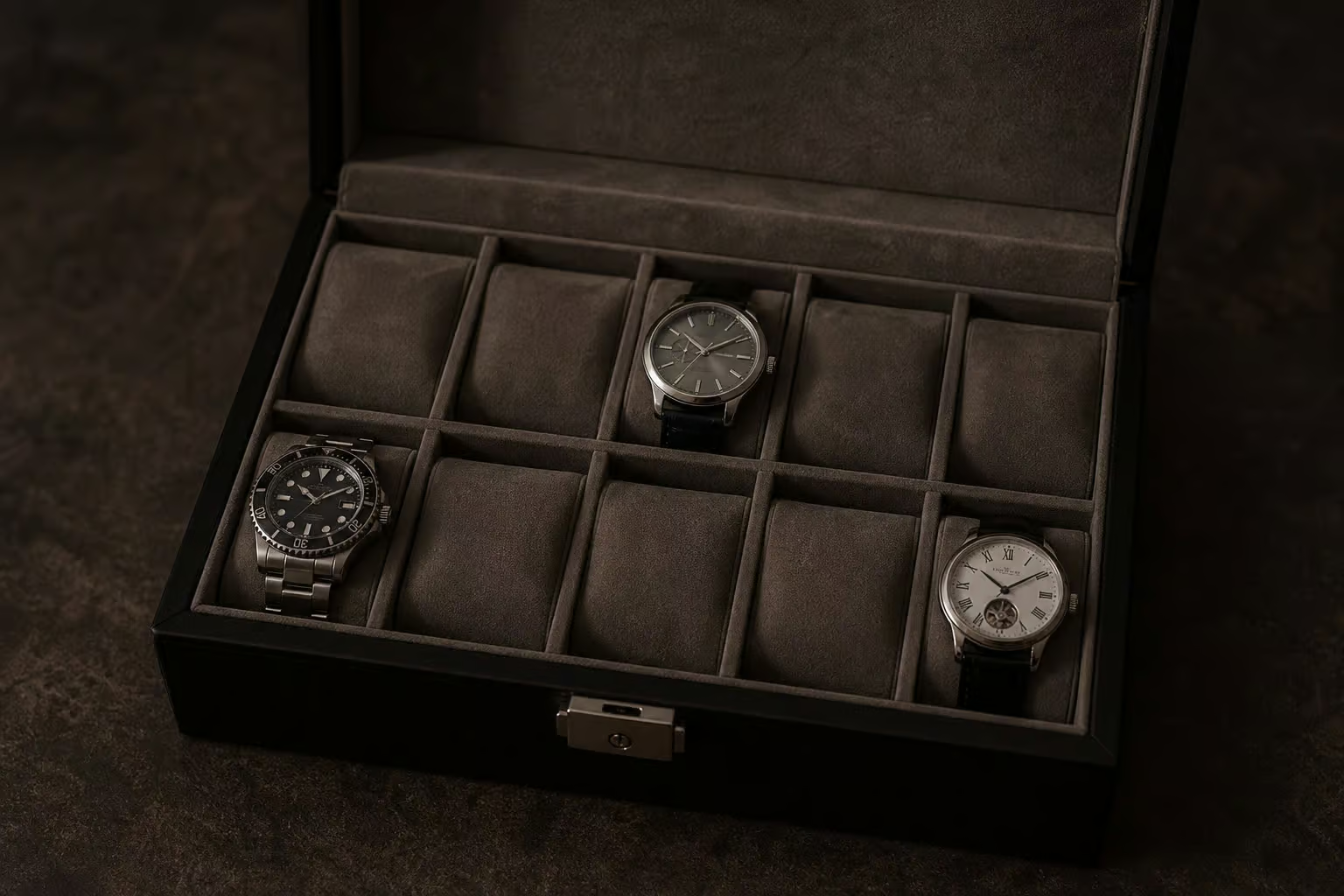
The watch box trap. A friend was gifted a watch box larger than his collection — twelve slots, three watches. He felt compelled to fill the empty spaces. The box itself became a trigger.
With a three-watch collection, storage becomes simpler: you no longer need a large box with empty slots that tempt you to fill them. A single watch roll or a compact three-slot case is enough, and a single watch winder may suffice if you own an automatic that you don’t wear daily.
The N = N + 1 urge. It’s a joke among collectors: you always need one more. WatchCrunch user doc8404 called it said that the insatiable urge as illogical as the math. Another user, WatchN2.0, posted his “3 watch (for now)” — a Rolex Datejust, Cartier Santos, and Omega Seamaster, and immediately added two more to make a “perfect 5.”
Even the experts can’t do it. The Fratello writer freely admits he cannot pare down to three due to sentimental attachments and watches he dreams of owning. Letting go of a watch can feel like losing a piece of your history — each one carries memories of where you bought it, who you were with, or what milestone it marked. That emotional weight makes downsizing genuinely difficult, even when you know the logic of the three-watch rule makes sense.
One, Six, or Unlimited: How Three Compares
- One‑watch collection: extreme self-awareness. Andy Warhol famously wore an unwound Cartier Tank — he didn’t care about the time. One watch works if you’ve found the single piece that does everything, but most enthusiasts find it too restrictive.
- Six‑watch collection: Fratello uses the US legal “reasonable person” standard — six watches can cover a range of styles and get adequate rotation. It’s a midpoint between minimalism and maximalism. A guilt-free alternative.
- Unlimited / maximalist: no curation, no rules. You buy what you like. The risk is ending up with a drawer of impulse purchases you don’t wear.
Grail-Level Three-Watch Collections: The Credor Eichi II
I visited the Micro‑Artist Studio in Shiojiri a while back. I saw the team hand‑painting dial indices — each one done by eye with a brush. The Credor Eichi II is the result of that patience. It ties with the Philippe Dufour Simplicity as my personal grail dress watch.
Specs: 39mm by 10.3mm by 45mm, 30m water resistance, 60‑hour power reserve. The hand‑wound Spring Drive calibre 7R14 gives you that smooth glide seconds — a hybrid mechanical‑quartz movement unique to Seiko’s high‑end division. The porcelain dial comes in blue or white. Price: US$42,000 for rose gold, US$57,000 for platinum.
Philippe Dufour himself visited the studio and approved the team. So this isn’t just a theoretical grail — Zach Blass picked it as his dress watch in his real three‑watch collection. The rule scales to any budget because the constraint forces you to choose what actually matters to you.
How to Start Building Your Own Three-Watch Collection
- Define your three roles. Diver, dress, everyday is the classic trio, but you can substitute field, GMT, or chronograph. The categories are yours.
- Set your total budget. Then allocate roughly 60% to the daily watch, 25% to the sports watch, and 15% to the dress watch. The dress watch gets worn least; don’t overspend there.
- Buy pre‑owned where possible. The secondary market stretches your dollar — and you can find discontinued references that hold their character.
- Accept that your three will evolve. The rule is a snapshot. Six months from now your taste may shift. That’s fine. The exercise of choosing three sharpens your eye.
The 3 Watch Rule as a Tool, Not a Law
If you’re a maximalist, don’t feel guilty. The “complete” collection is a myth anyway. Tastes change, opportunities arise, and that perfect fourth watch might show up at a dealer’s case.
But the exercise of trying to get down to three — of asking yourself “which of these actually earns its spot?”, is valuable even if you never get there.