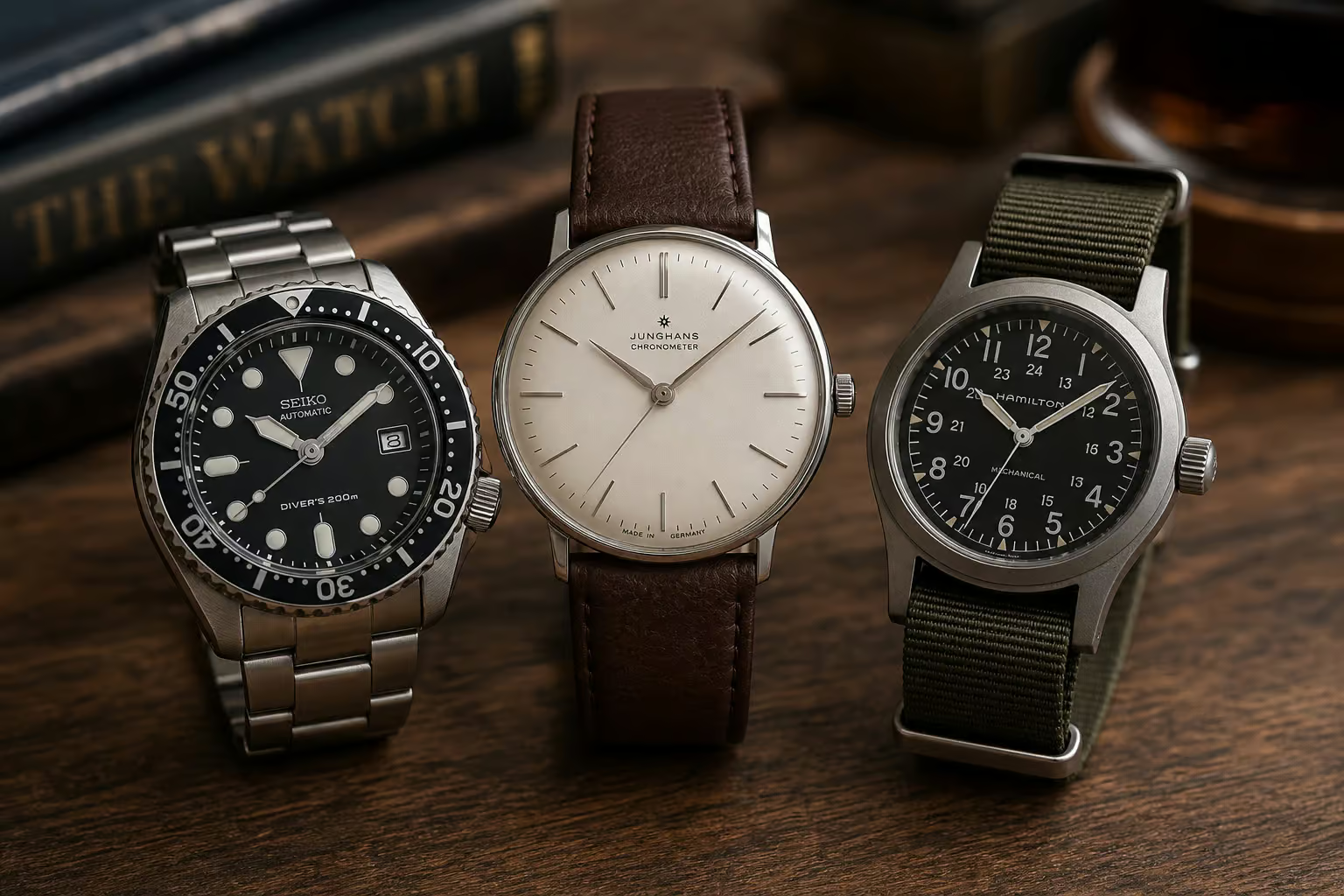
You’ve seen the phrase pop up on Reddit, WatchCrunch, or maybe a Fratello article: the “3 watch rule.” It sounds like a commandment from the horology gods, but it’s just a minimalist framework that’s been kicking around watch forums for years, propelled by Fratello’s €5,000 three-watch challenge. The basic idea: you own three core watches that cover everything you actually do — daily wear, outdoor activity, and formal occasions. A diver, a dress watch, and a field watch (or sometimes a chronograph). You choose them carefully once, then stop agonizing over what to put on each morning.
Collecting tendencies fall on a spectrum between maximalism and minimalism, and within that spectrum lies a curatorial impulse — we arrange our collections and purchasing goals in ways that are personally meaningful. The rule gained traction after Fratello’s €5,000 “three watch challenge,” which dared collectors to build a capable trio for that budget. They also offered a counterpoint: the “reasonable person” standard of six watches. The three-watch rule isn’t a universal truth, it’s an exercise in self-discipline, a way of saying I’m going to make deliberate choices instead of accumulating.
Key Takeaways
The classic three-watch combination is a diver, a dress watch, and a field watch — not a chronograph, as demonstrated in the Fratello €5,000 challenge. Field watches offer military heritage, rugged simplicity, and a price point that keeps the total collection under $5,000.
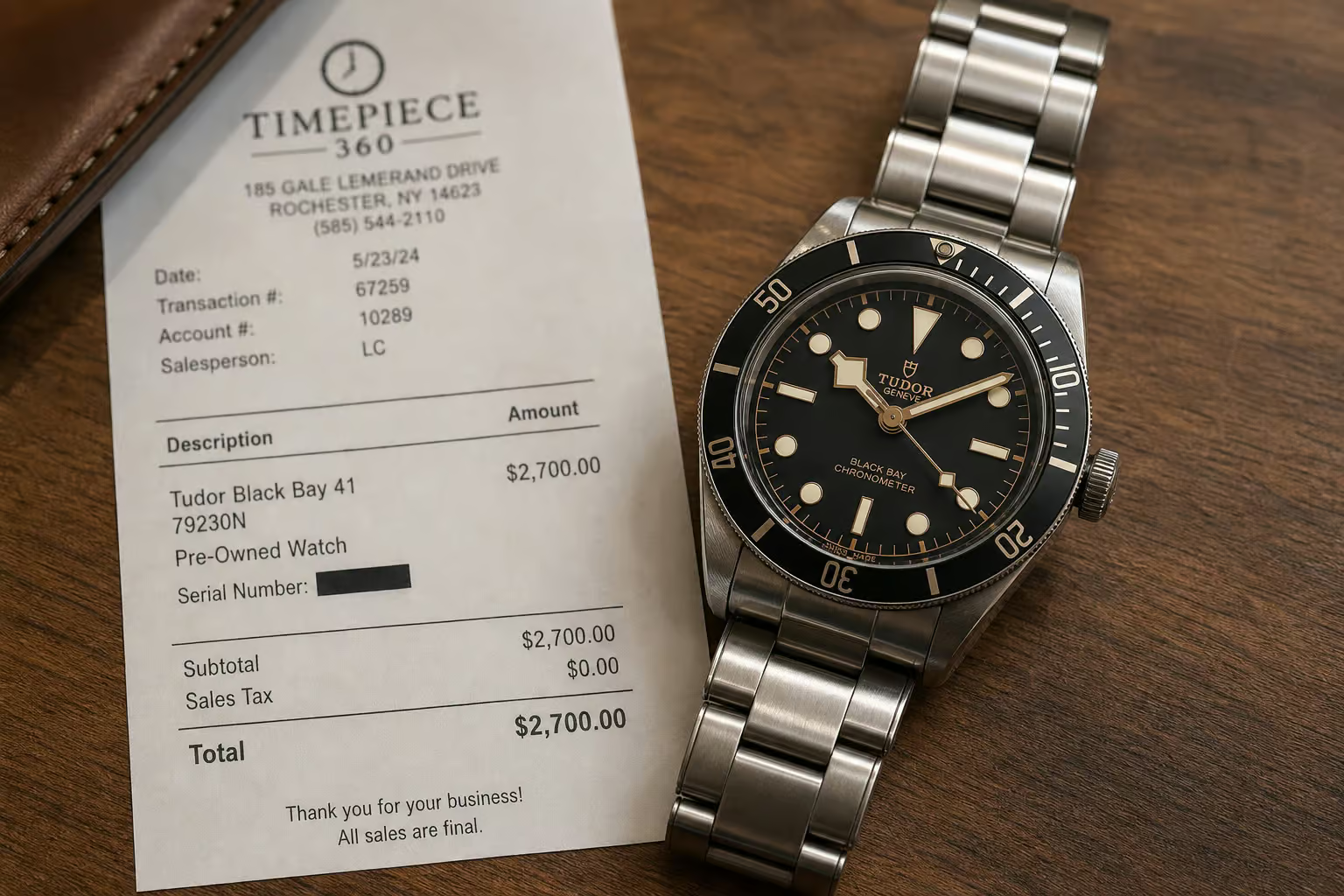
Fratello’s €5,000 challenge demonstrated that a decent three-watch collection is achievable with specific models: a Tudor Black Bay 41 pre-owned around $2,700, a Longines Hydroconquest at $1,775 MSRP, and a Frederique Constant Classics Index Automatic at $995 MSRP.
The rule is a tool for self-discipline, not a universal truth. The “reasonable person” standard suggests six watches as a more natural collection size, and many collectors find three too few.
Table of Contents
Why a Three-Watch Collection Works: Simplicity, Efficiency, Capability
The appeal isn’t abstract minimalism — it’s concrete daily convenience. With three watches, you stop making packing decisions for trips, all three go in the watch roll, no agonizing over which color matches. All three go in the roll. You stop wondering if this watch works with that shirt, because you did the work upfront to choose carefully, so you don’t have to worry about which watch to wear every day. You did the work upfront, and now you’re done.
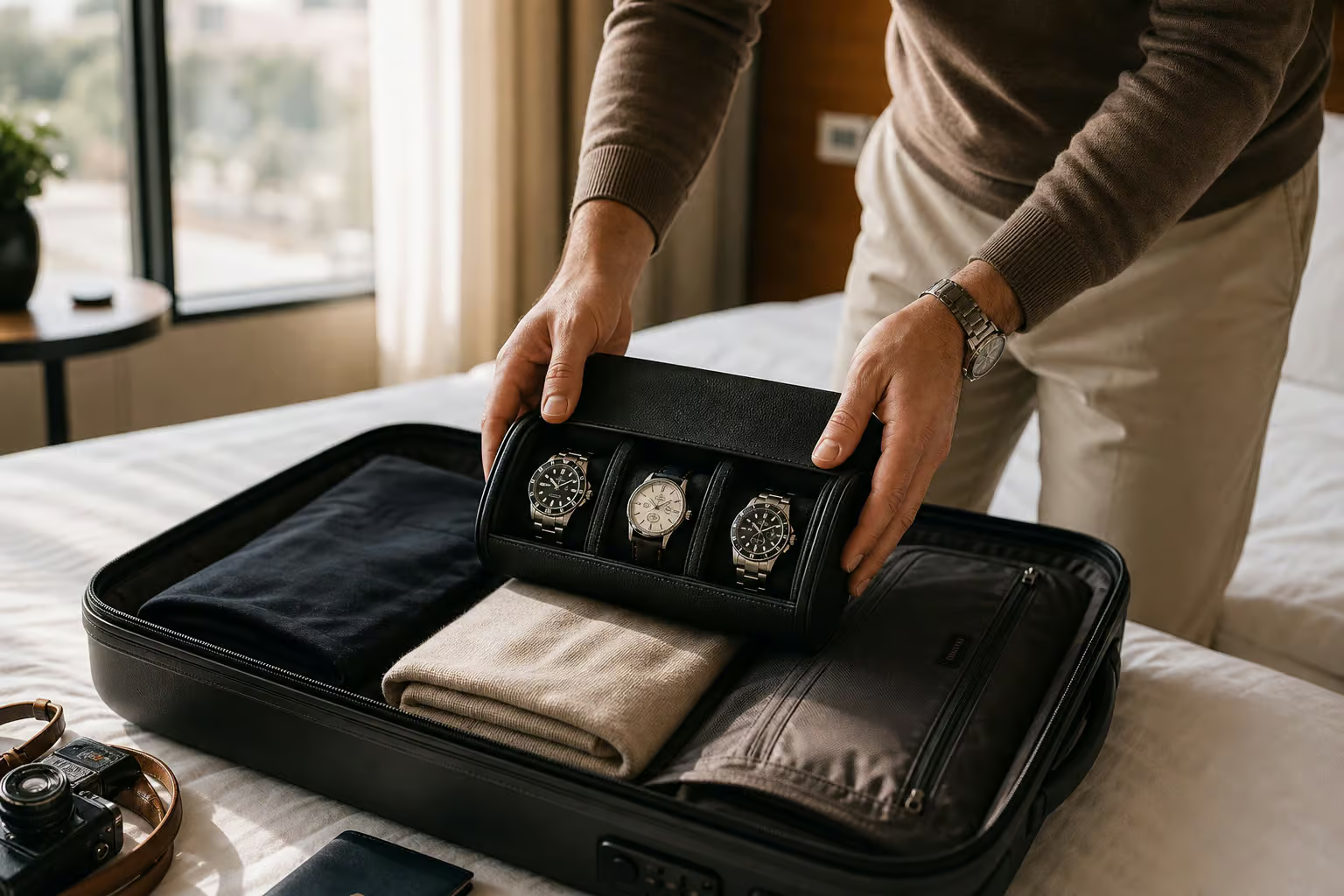
The GADA (Go Anywhere, Do Anything) concept is seductive — one watch that handles the ocean, a wedding, and a hike. But it rarely works in reality. A dive watch that’s thin enough for a dress shirt usually lacks the water resistance you want at the beach. A field watch that’s legible and light often looks out of place under cufflinks. Three watches working together can do what one “perfect” watch can’t.
A thoughtful collection works best when each watch fulfills a distinct role. Intention over accumulation. That’s the philosophy, and it’s why the rule keeps coming up in forum discussions.
The Three Archetypes: Diver, Dress, and Field
These three categories form the classic foundation of a versatile collection, each designed for a specific purpose and setting.
The Diver
Defined by water resistance, legible dials, and a rotating bezel. Originally professional instruments for saturation divers. Today their appeal lies in versatility — the ability to transition from demanding environments to everyday wear. Dive watches appeal to collectors because they convey security, grounding, and completeness. Sean Connery’s Rolex Submariner 6538 (38mm) in the early Bond films cemented that cultural weight.
The Dress Watch
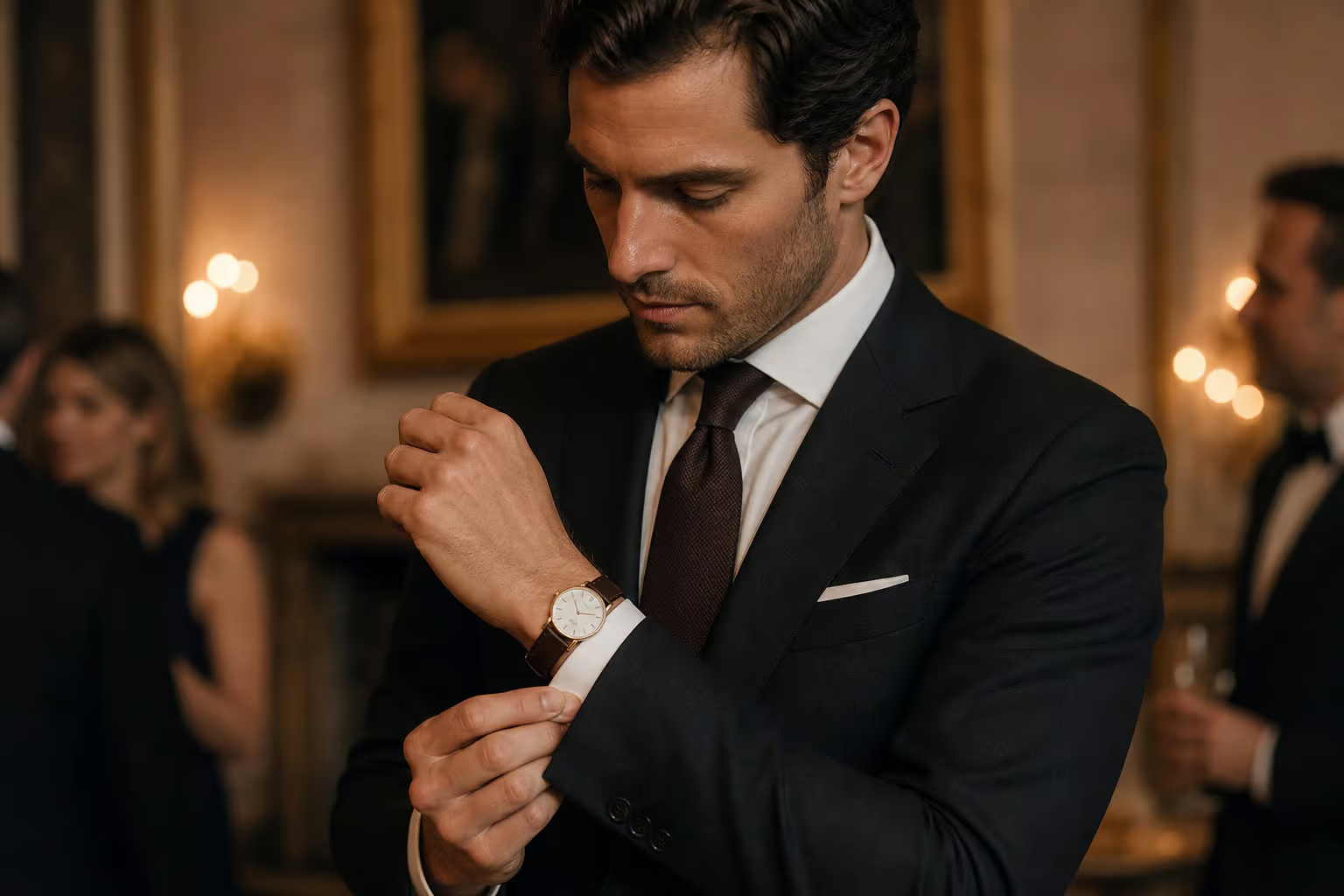
Thin cases, refined dials, leather straps, understated elegance. Prioritizes classic design over robust durability. The ideal dress watch has a design that won’t go out of style — think Patek Philippe Calatrava or Jaeger-LeCoultre Reverso. You’ll wear it less frequently, so it should be the most restrained piece in the box.
The Field Watch
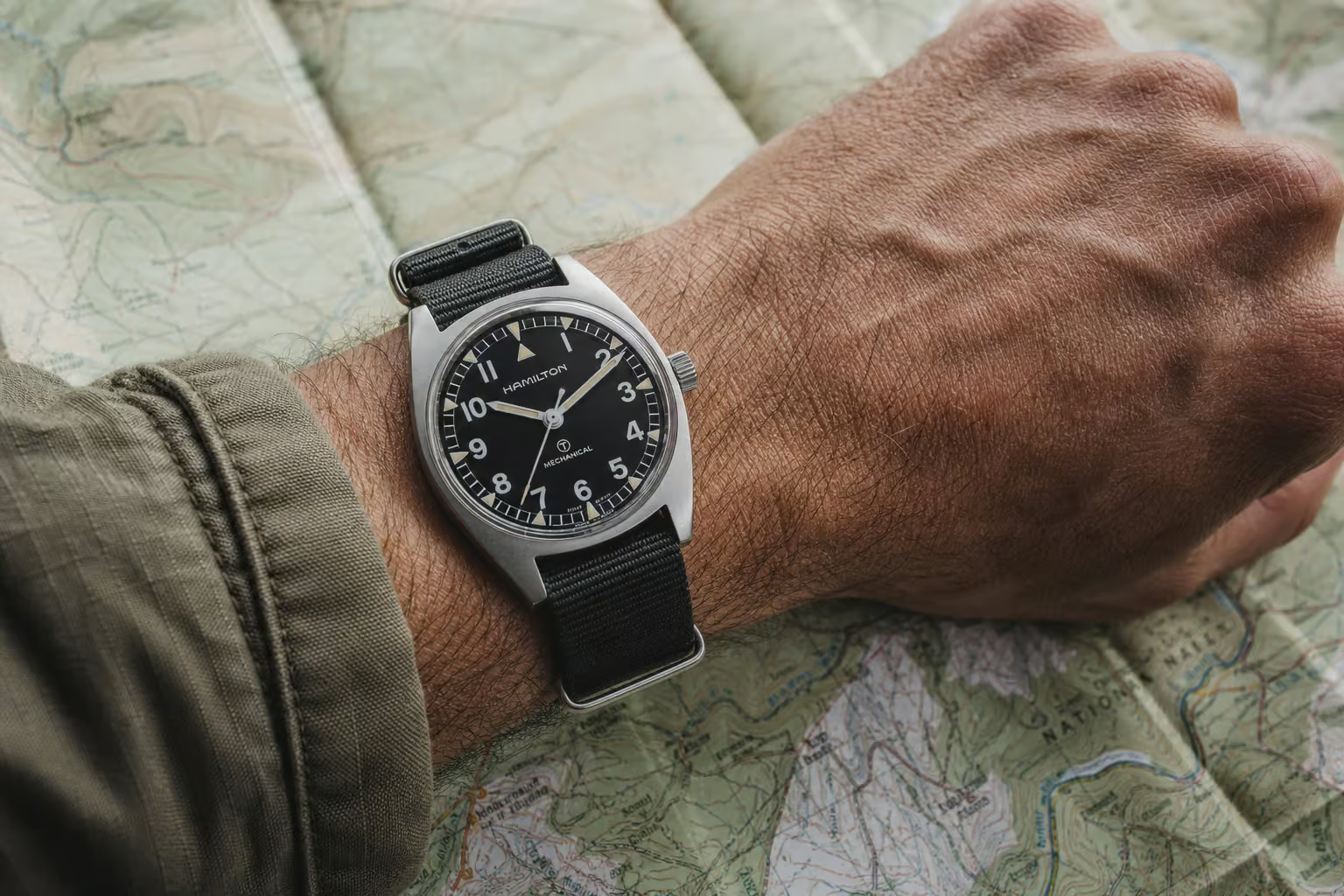
Traces its lineage to military service: straightforward dials, dependable movements, smaller cases. The appeal today lies in humility. Field watches are designed to blend into daily life. Many collectors find themselves reaching for a field watch more than expected — it’s the one you grab for a weekend hike, a trip to the hardware store, or just because it’s comfortable. The VAER DS5 Meridian, Seiko Alpinist, and Hamilton Khaki Field all fit this slot under $1,000.
Why Field Beats Chronograph
The classic advice often recommends a chronograph as the third slot among essential watch types: a Speedmaster or a Heuer Monaco, originally designed for aviation and motorsports. But chronographs start at higher price points — the Speedmaster Professional is over $6,000 new, and they see less daily use. A field watch offers similar heritage (military instead of motorsport), greater versatility, and a much lower entry cost. For most budget-conscious collectors building a three-watch collection under $5,000, the field watch makes more sense. It’s a tool watch you’ll actually use, not a statement piece you save for weekends.
Budget Strategies: How Much Does a Three-Watch Collection Cost?
The Fratello €5,000 challenge is the natural starting point. Can you build a capable trio for that? Yes, with careful choices. A general rule: invest more in the daily watch (most worn), least in the dress watch (occasional use). Pre-owned and grey market are your friends, especially for discontinued models, and you can start a collection on a budget with just $500, building up to 10 cool timepieces over two years.
Under $5,000
- Daily: Tudor Black Bay 41 ref. 79540 — approximately $2,700 pre-owned
- Sports: Longines Hydroconquest — $1,775 MSRP
- Dress: Frederique Constant Classics Index Automatic — $995 MSRP
That’s roughly $5,470 if you buy the Longines at retail and the Tudor used. With some negotiation or a grey-market discount on the Longines, you can squeeze under five grand.
Under $10,000
- Daily: Omega Aqua Terra 41.5mm — around $3,500–$4,000 pre-owned
- Sports: TAG Heuer Aquaracer Calibre 7 GMT — around $2,500–$3,000 pre-owned
- Dress: Cartier Tank Solo XL — around $3,000–$4,000 pre-owned
This trio covers a wider range (explored further on best watch blogs): the Aqua Terra is dressy enough for the office, the Aquaracer handles travel with a GMT function, and the Tank is a legitimate dress watch.
Under $20,000
- Daily: Rolex Datejust 41 ref. 126300 — around $11,000
- Sports: Tudor Black Bay Chrono ref. 79360N — around $5,500
- Dress: Omega De Ville Prestige — around $3,000 pre-owned
At this tier, you’re getting into entry-level luxury. The Datejust is a workhorse that can be dressed up or down, the Tudor Chrono adds a motorsport vibe, and the De Ville keeps things elegant for formal events.
Higher tiers ($50,000 and $100,000) exist — Cartier Santos, Patek Philippe Annual Calendar, Vacheron Constantin Overseas, but for most readers, the under $10K range is where the rule actually lives.
How to Choose Three Watches for a Versatile Collection
Building a three-watch collection that truly covers your life requires thinking about each watch’s role and how they complement one another.
The Daily Watch
This is the workhorse, worn most of the time. It should complement the majority of your wardrobe — jeans and a blazer, chinos and a polo, even a suit if it’s slim enough. Comfort and durability are key. A dive watch on a bracelet works here, as does an Omega Aqua Terra or a Rolex Datejust. Look for something that can be dressed up or down with a strap swap. NATO straps, popularized by Bond in Goldfinger and Thunderball, are an easy way to dress down a diver, but before you buy, check out this men’s watch buying guide to avoid common mistakes.
The Sports Watch
This is where you add heft and functionality. Typically a beefier case, a bezel (dive, GMT, or chronograph), and often more color. It’s the watch you grab for travel, outdoor activities, or when you want something that grabs attention. Dive watches, GMTs, and chronographs all fit here.
The Longines Hydroconquest or TAG Heuer Aquaracer are solid options. If your daily is a diver, consider a GMT for the sports slot for added functionality such as tracking a second time zone.
The Dress Watch
Restraint and subtlety. An ultra-slim case that sits low on the wrist. An understated dial — no date, no numerals if you can avoid it. A leather strap. Consider vintage: older timepieces often have the understated designs and restrained proportions of the ideal dress watch, and they can be found for reasonable prices. The design should be classic enough that it won’t look dated in twenty years.
The Pitfalls: When the Three-Watch Rule Fails
The rule sounds neat, but reality is messier. Here’s where it breaks down.
Three may be too few. Forum users say it plainly: “3 is too few for me,” as reflected in the ‘reasonable person’ standard of six watches. The “reasonable person” standard from Fratello suggests six watches — enough for rotation and adequate wrist time. Commenters note: ‘There is nothing perfect about being limited to three watches.’
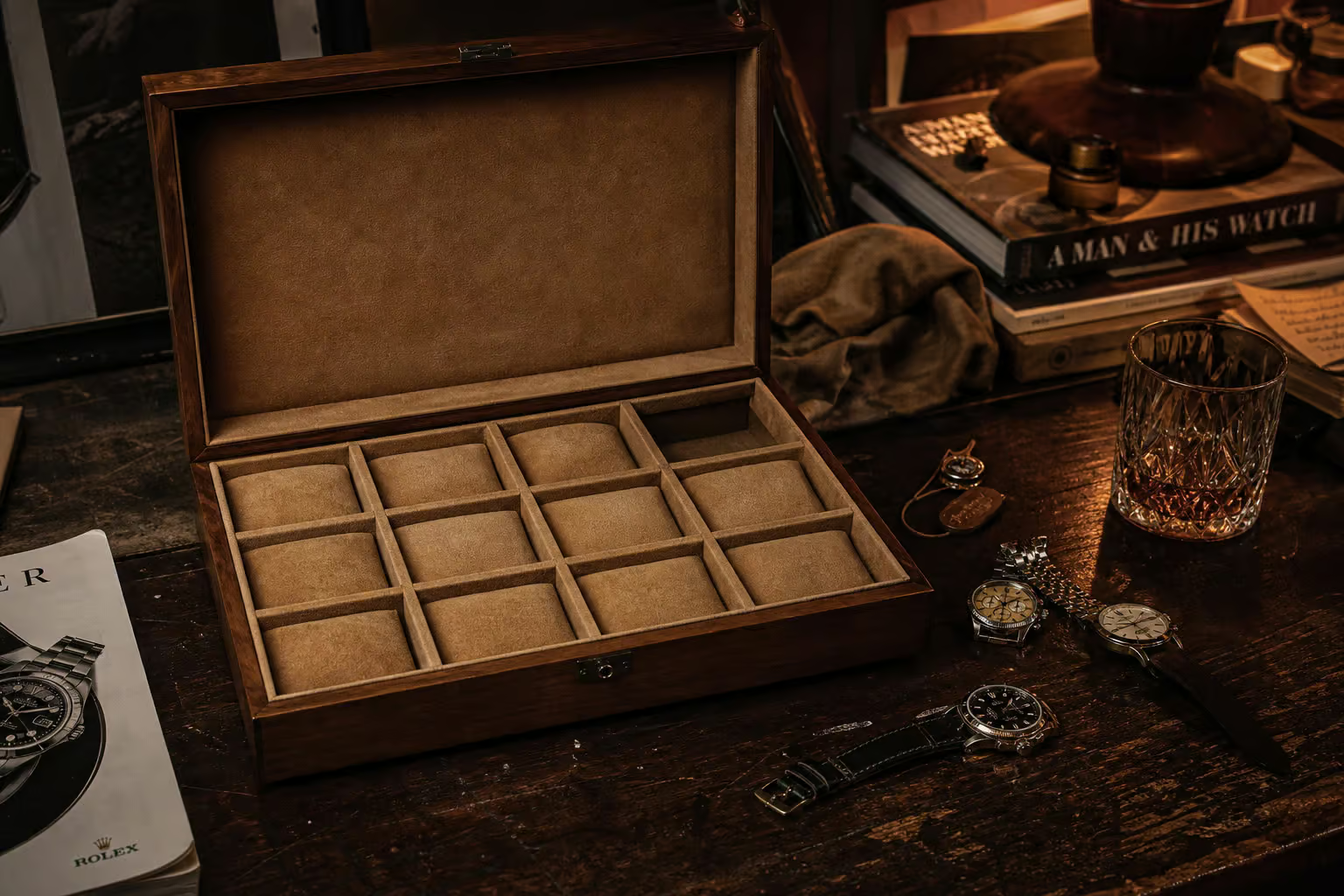
The watch box trap. Fratello tells a story about a friend who received a watch box that could hold far more watches than his existing collection, which he’d been trying to downsize. The box prompted him to buy more watches. External constraints can defeat minimalism. If you buy a twelve-slot box, you’ll fill it.
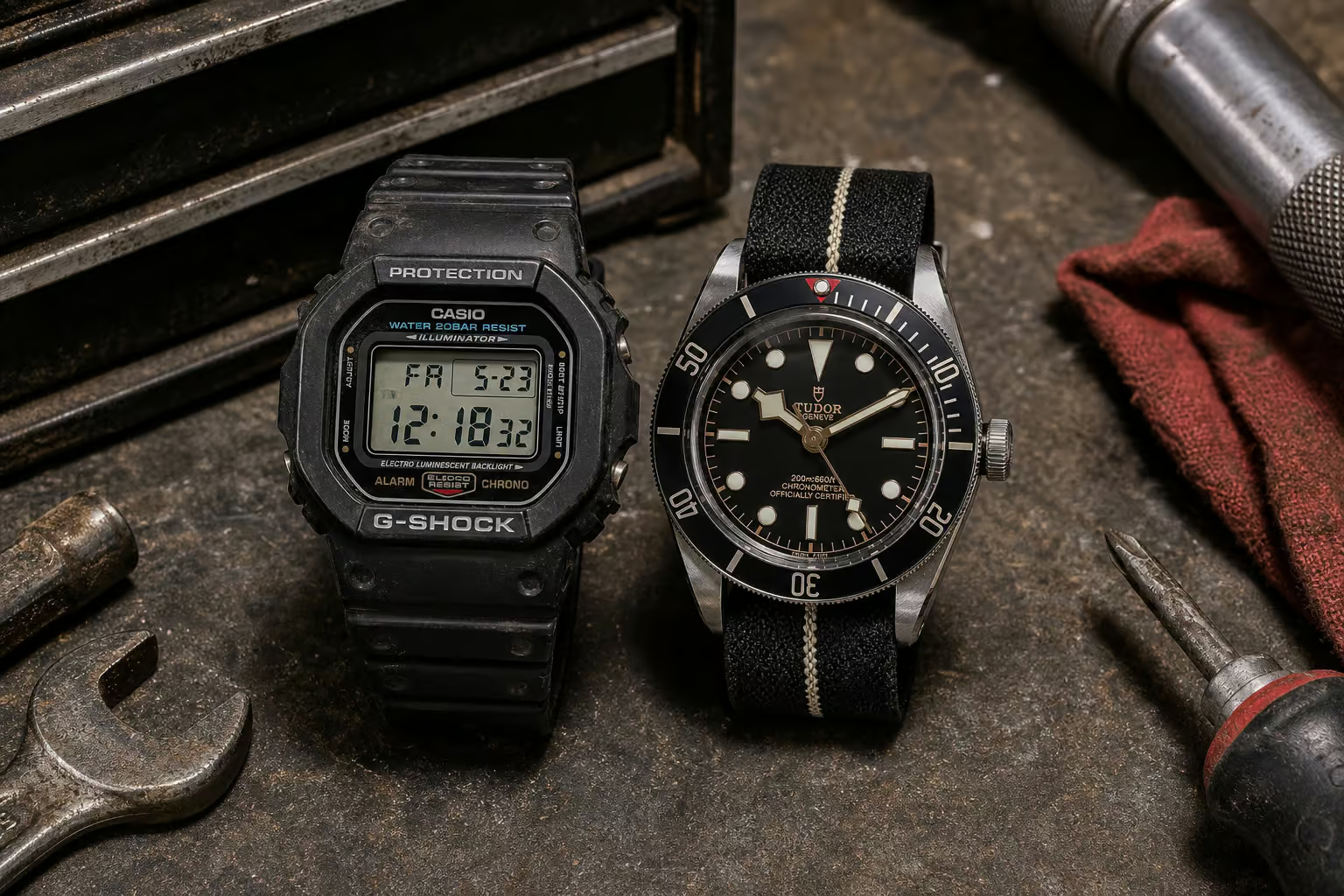
You might need a beater. A G-Shock Square or a similar tough quartz watch is hard to replace with your “perfect three.” If you’re doing yard work or surfing, you don’t want your Tudor Black Bay taking the hits. The three-watch collection may need an unofficial fourth.
The exit watch fantasy. Many collectors set a grail watch they think will end their collecting — a Rolex Submariner, a Patek Calatrava. Even with the grail, could you wear only that for the rest of your life? Most people can’t. The itch returns.
None of this means the rule is bad — it was never a universal truth, only an exercise in self-discipline. It means it’s a tool, not a commandment.
Community Variations: Other Ways to Build Three Watches
Real collectors adapt the rule to their lives. Here are a few actual examples from WatchCrunch and forum threads:
- Steveiemc: dive watch for everyday, Speedmaster as something special, Grand Seiko quartz for travel.
- TOwguy: regretted selling his late 80s collection — a Rolex Cosmograph, a gold and steel Cartier Santos, and a Breitling Chronomat.
- bbt.watches: Seiko Tank (dress), Omega Aqua Terra (daily), VAER DS5 Meridian (tool).
- LangTime formula: dress / beater / GADA.
- rafa_quintas: field / diver / GADA.
- Amusa82: dress / dive / field.
- Psanchez: diver / everyday-dress / complication.
The common thread: people pick categories that match their actual life, not a theoretical ideal. If you never wear a suit, swap the dress watch for a chronograph. If you travel constantly, make the sports watch a GMT. The rule is a starting point, not a prison — the point is intention over accumulation.

Is the Three-Watch Rule Right for You?
Here’s the honest answer: it depends on your lifestyle, your budget, and your desire for variety. The rule is a tool for self-discipline — a way to stop buying impulsively and start choosing deliberately. It works best for people who want to feel done, not people who enjoy the hunt.
Watch cases have cycled from 32–34mm in the 1950s to 42–45mm+ in the 2010s, and now we’re seeing a return to 36–40mm in the 2020s. Your taste will evolve. What works for you now may not work in ten years. That’s okay. The three-watch collection isn’t a permanent contract — it’s a conscious tradeoff you make today.
The three-watch rule asks you to do something harder than buying more: decide what you actually need. If that sounds freeing, try the exercise. If it sounds restrictive, maybe the “reasonable person” six is more your speed. The point is intention over accumulation. That holds true no matter how many watches you own.
People Also Ask
What is the three watch rule?
The three watch rule is a minimalist collecting framework that suggests owning just three core watches — typically a diver, a dress watch, and a field watch — to cover daily wear, outdoor activity, and formal occasions. It’s not a universal commandment but an exercise in self-discipline, popularized by Fratello’s €5,000 three-watch challenge, designed to help you make deliberate choices instead of accumulating.
What watches make up the classic three-watch collection?
The classic combination is a diver, a dress watch, and a field watch. The diver handles water and daily wear with a rotating bezel, the dress watch offers thin-case elegance for formal events, and the field watch provides rugged simplicity for outdoor use. This trio covers everything from a business meeting to a weekend hike without the compromises of a single GADA watch.
When does the three-watch rule fail?
The rule fails when your lifestyle needs more than three roles — for example, if you need a beater watch for yard work or surfing, a G-Shock becomes an essential unofficial fourth. Many collectors also find three too few, with forum users citing six as a more ‘reasonable person’ standard. The rule is a tool for self-discipline, not a permanent contract, and it breaks if you buy a twelve-slot watch box that tempts you to fill it.