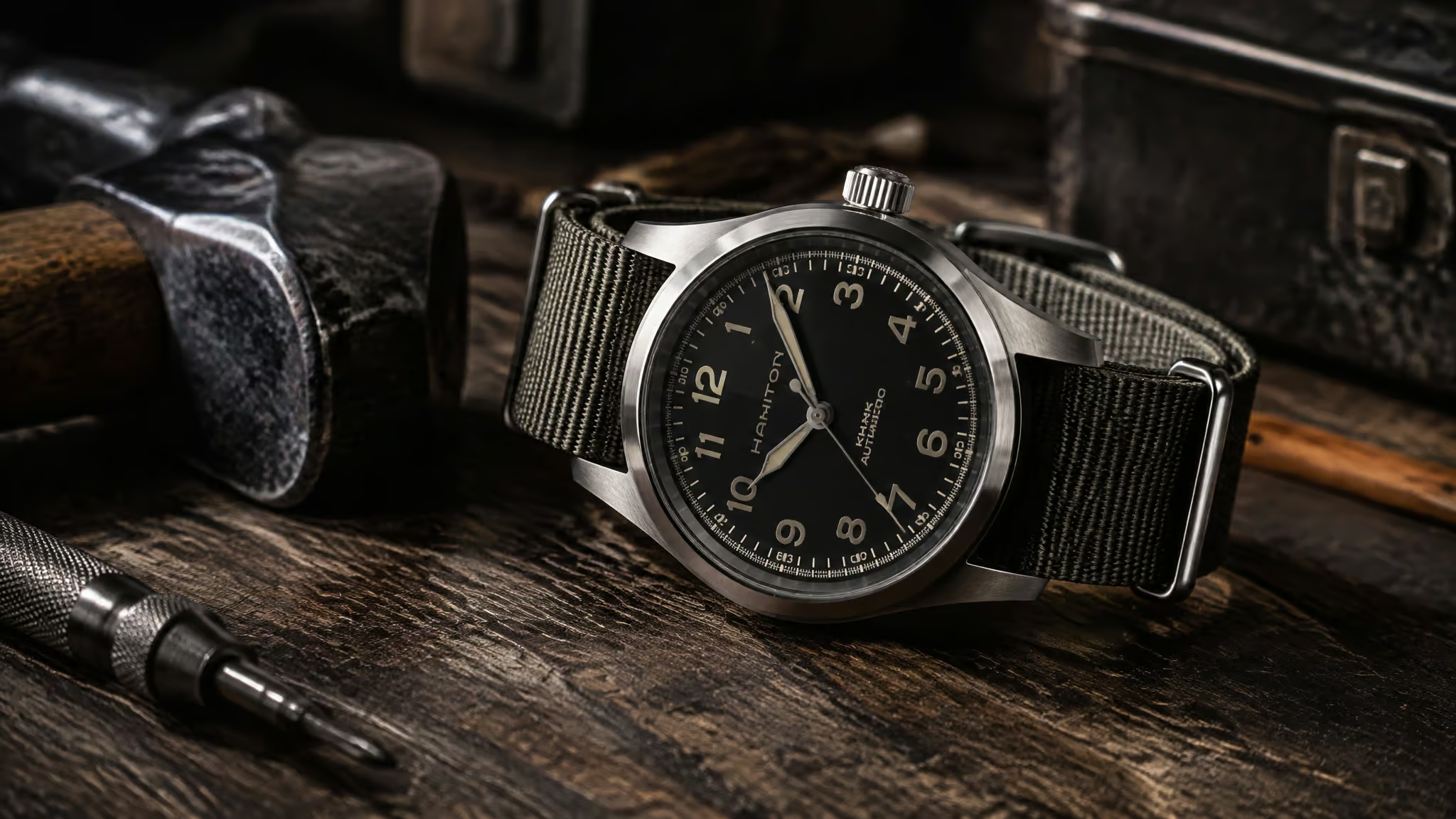
Yes, stainless steel watches are good. Not “good for the price.” Good, full stop, and the market has been voting that way for decades: steel has been the most in-demand Rolex metal for over 25 years, the steel Daytona has been nearly impossible to buy since the early 1990s, and even with titanium, ceramic, and carbon all surging, steel remains the industry standard. The best part is that the durability isn’t skin deep. It’s baked into the metal itself, not the polish on top of it.
So the question isn’t really whether steel is good. It’s which steel watch fits your wrist, your wallet, and your skin. That’s what this article is for: what the metal actually is, how it won the industry, the downsides nobody puts in the ad copy, how it stacks up against titanium and bronze and the rest, and the honest money truth. Real performance gains run from about $100 to about $1,500. Past that, you’re mostly buying finishing and names.
And the cheap option deserves a reframe. The $60 Timex isn’t the consolation version of a steel watch. It’s the same material, doing the same job, at a price where “why not” is the only analysis required.
Key Takeaways
Steel watches are the everyday gold standard: steel has been the most popular Rolex metal for over 25 years, and the steel Daytona has been scarce since the early ’90s.
Real performance gains run from about $100 to $1,500. Past that you’re buying in-house movements, finishing, and brand names, and a $60 quartz Timex will likely keep better time than a $7,900 Rolex Explorer.
The honest downsides are weight, nickel allergy risk with 904L, and over-polishing that can permanently alter a case’s shape; 316L contains less nickel, and titanium is the most hypoallergenic escape hatch.
Table of Contents
Why steel won: the history behind the everyday standard
Steel entered watchmaking in the 1910s and never looked back, but the real takeover came after the 1929 Wall Street crash, as buyers moved away from gold and silver toward cheaper metals. Steel won on economics, not technique, and it never gave the crown back. There’s a wrinkle worth knowing: early steel was so hard it was a genuine headache to machine until makers figured it out. Recessions make steel cool, apparently.
What stainless steel actually is: chromium, 316L, and 904L
The short answer to the grade question: neither 316L nor 904L is flatly better, and that’s the honest read. Stainless steel is iron plus carbon plus chromium, with extras like nickel, molybdenum, and manganese thrown in to tweak the mix for specific jobs. Chromium is the quiet MVP. It forms a self-repairing barrier on the surface that basically rustproofs the metal, which is why your watch doesn’t pit after a sweaty summer. Strong, rust-resistant, takes a polish. Three wins, one metal.
316L vs 904L: the tradeoff nobody advertises
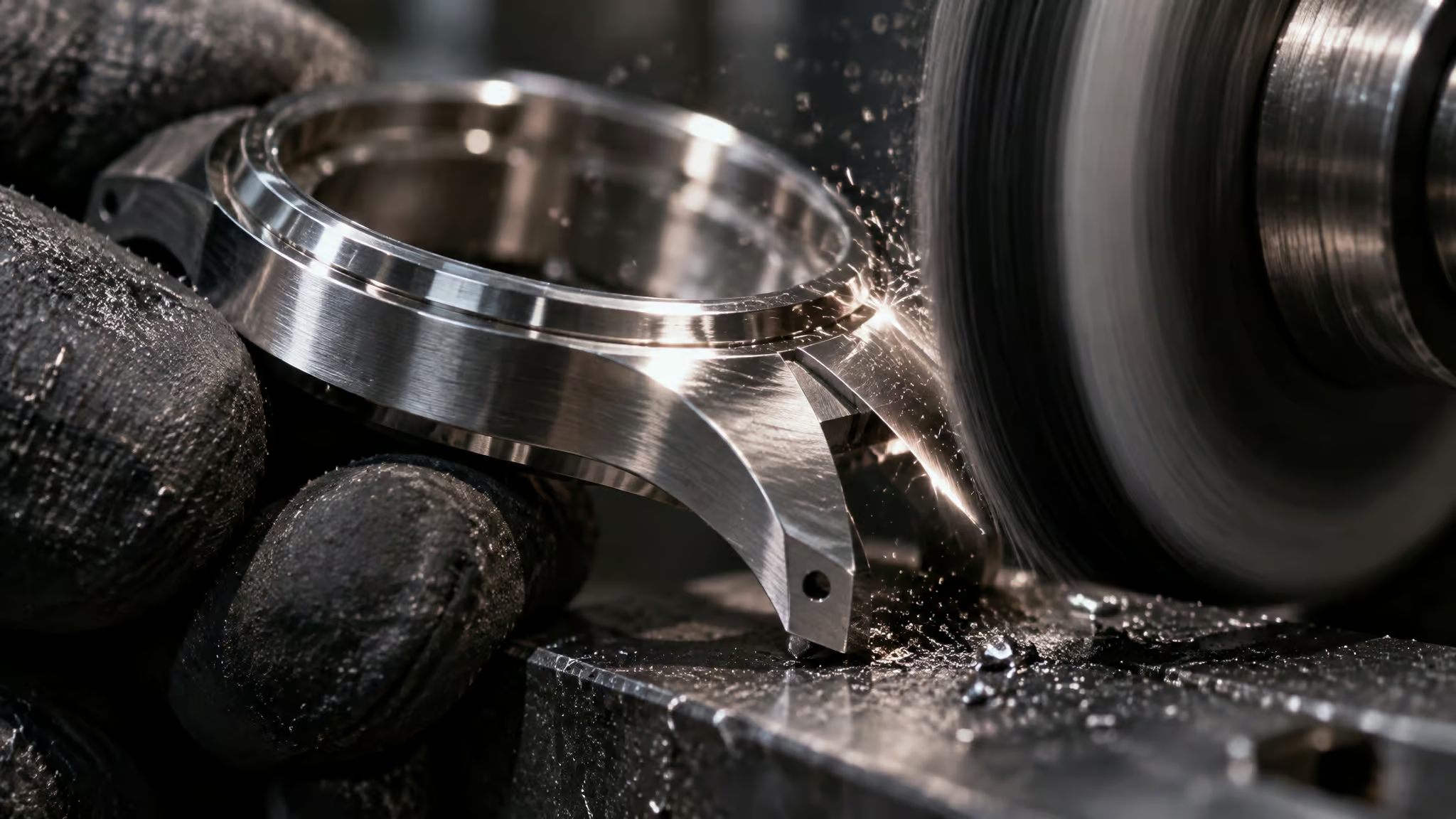
Both are austenitic steels, same family, same basic structure. 904L packs more nickel, chromium, and copper, so it resists corrosion and acid better and polishes up brighter. But 316L comes out harder than 904L. So the “premium” grade is a tradeoff, not an upgrade: more shine, softer metal.
Rolex was among the first brands to actually use 904L, then rebranded it Oystersteel. The campaign line, “At Rolex, steel is a precious metal,” is a pitch, but it’s also a tell for how seriously the industry takes steel. Just know that 904L costs meaningfully more to make, and that’s part of what you’re paying for.
The honest disadvantages of stainless steel watches
The main downsides are weight, nickel allergy risk, and over-polishing, and all three are real. Jorg Weppelink makes the fair point that plenty of guys like the heft, but for some wrists the weight is a dealbreaker, especially at bigger sizes. Nickel is the other sleeper: 904L has enough of it to trigger reactions in some guys, while 316L has significantly less, so it suits more wrists. If steel bothers your skin, titanium is the most hypoallergenic option and your clean escape hatch.
Then there’s over-polishing. The “polish it back to new” promise can permanently round off a case’s original shape. Too many trips to the polishing wheel and it’s not the watch it was. Scratch that, in fact: scratches aren’t always the enemy. More on that below.
Stainless steel vs titanium, bronze, ceramic, and other materials
The decisive comparison is steel vs titanium, and it comes down to three philosophies of aging. Steel hides wear in its finish, titanium shows it, and bronze celebrates it.
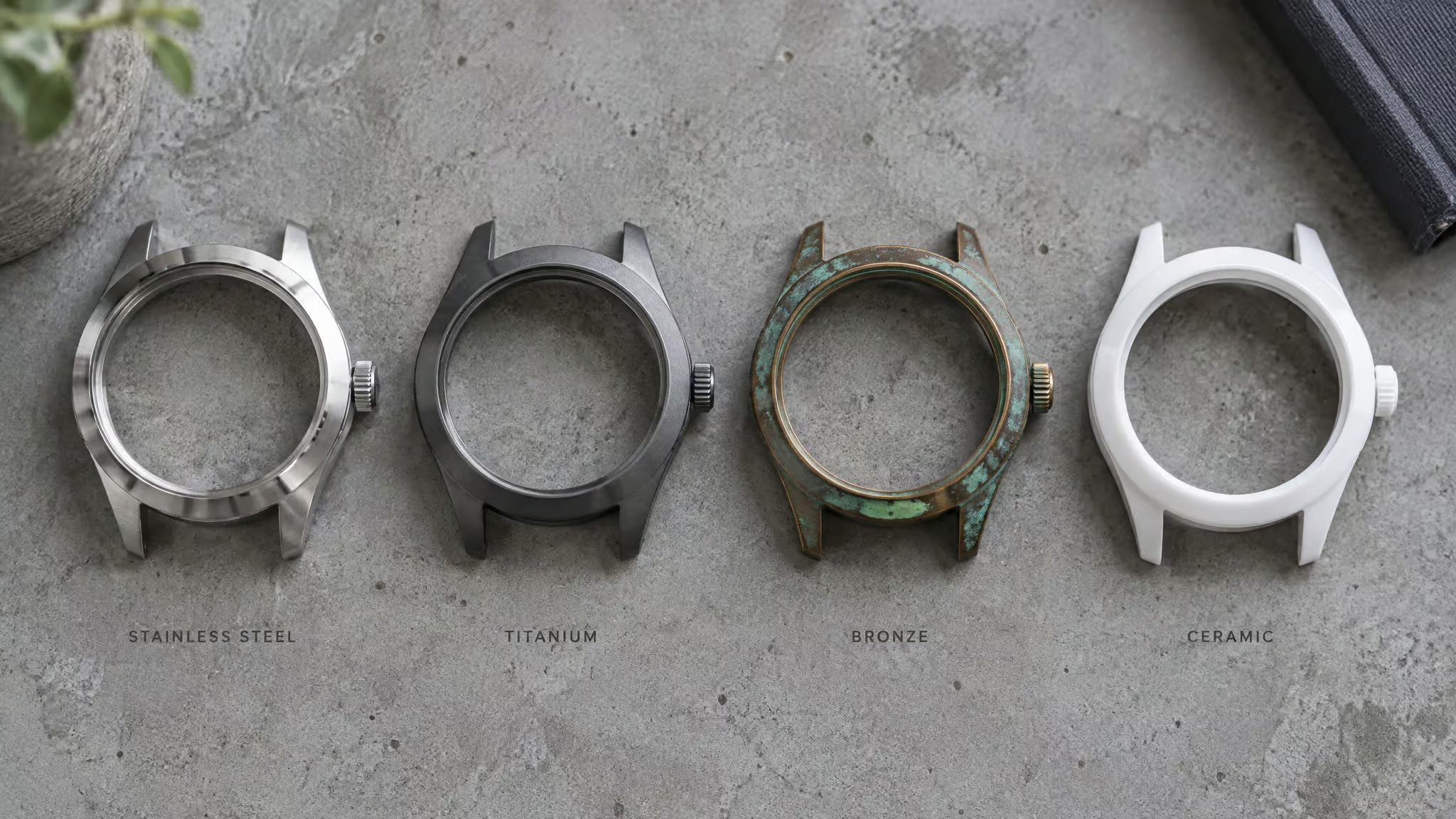
Steel is the better default for most buyers, it’s harder, heftier, and wins on the balance of longevity, appearance, and resilience. Titanium wins if weight or a nickel allergy is your priority: it’s lighter and the most hypoallergenic metal in the game, but it costs more to produce and shows scratches more readily. Traditionalists genuinely prefer steel’s heft, which Weppelink’s camp considers reassurance, not a flaw. It’s scratch-hiding vs scratch-resisting, plus whatever the upcharge means to you.
| Material | Durable daily wear | Handles water | Skin-friendly | Wear over time | Verdict |
|---|---|---|---|---|---|
| Stainless steel | Yes (hard, hides scratches) | Yes (chromium barrier) | Partial (316L better than 904L) | Yes (keeps shape for years) | The default for a reason |
| Titanium | Partial (softer, shows scratches) | Yes | Yes (most hypoallergenic) | Yes | Worth the upcharge for lightness |
| Bronze | Partial (patinas fast) | Partial (corrodes by design) | Partial | Partial (charm or drawback) | Buy it because you want the patina |
| Ceramic | Yes (scratch-resistant) | Yes | Yes | Partial (can crack on hard hits) | Great case, brittleness is the tradeoff |
| Leather | No (dies faster when wet) | No | Yes | No | Looks great, high maintenance |
| Wood | No (needs babying) | No | Yes | No | Nice second watch, risky only watch |
| Resin | Partial (fine beater) | Yes | Yes | Partial | Reads casual, great for abuse |
Leather looks great and feels traditional, but anyone who’s had a strap crack knows moisture shortens its life. Wood is warm-looking and genuinely cool, but you have to handle it gently. Resin is cheap and cheerful and reads exactly as casual as it is: fine beater, not an office watch. Ceramic and carbon keep rising, and steel is still the standard. That’s the honest state of play.
If you want a middle path, Treehut blends stainless steel with wood in men’s watches, with engraved messages and handcrafted designs. Their pitch is strength plus meaning, but steel has its disadvantages too, nickel allergies, weight, scratching, and the same “material matters” logic applies to straps, where swapping a bracelet for something like Cartier watch straps can change a watch’s whole feel. Fair enough as one brand’s take. It’s a gift-watch angle, not a verdict.
One broader point that answers itself here: as a jewelry metal, steel is genuinely good quality compared to most alternatives, it’s the same logic behind any planned stainless steel watch vs other watch metals comparison, where steel holds shape, holds shine, and shrugs off the everyday abuse that wrecks leather, wood, and resin.
Field-tested proof: 11 steel and steel-adjacent watches across price tiers
The best steel watch for daily abuse is the one that’s actually been abused, so the testing here belongs to GearJunkie and writer Sean McCoy, not to me. Their picks align with the wider field of best stainless steel watches, but GearJunkie put roughly 25 field watches through five years of hiking, hunting, an hour underwater, freezer tests, riding along inside game animals during meat processing, and freezing rivers while placing duck decoys. They scored on legibility, durability, water resistance, and style, with overall scores reflecting market-relative value. GearJunkie has been reviewing gear since 2001, over 15,000 products. Prices may vary by retailer and moment, so treat every number below as a moving target.

Field watches are the proving ground for steel because they’re built to be used hard. The category started in WWI when pocket watches proved useless in a trench, got standardized in WWII by Hamilton, Waltham, and Elgin building to military specs, and came home with veterans who kept buying watches that survive work, and a proper strap helps, whether that’s a canvas NATO or, for dive-watch owners, a Rolex Submariner rubber strap cut to fit the case. A field watch just has to keep time, sit under a sleeve, and stay readable day or night. Simple job, and these 11 do it across four orders of magnitude of price.
Hamilton Khaki Field Expedition Auto: best overall
About $1,125 to $1,200. The H-10 movement carries an 80-hour power reserve, a spec worth knowing, which means it’s still running after a weekend in the drawer. Super-LumiNova on the hands and markers, screw-down crown, 100m water resistance, 41mm, which is the sweet spot for most wrists. Hamilton’s heritage line goes back to 1892, built for railroad workers, and the company turned out over a million timepieces for the war effort between 1942 and 1945. And this isn’t armchair spec-sheet ranking. GearJunkie tested roughly 25 field watches over five years, including freezer tests, one-hour water submersions, and watches worn inside game animals during meat processing. The honest knock: it’s a lot of money for a watch meant to get beaten up.
Timex Expedition Scout: best under $100
Around $60 to $75, with some models closer to $30. Quartz movement, Indiglo lighting, 40mm case, 50m water resistance. At this price the question isn’t “is it good,” it’s “why wouldn’t you own one.” Timex coined “takes a licking and keeps on ticking” in the ’60s, and it earned the line.
McCoy wore one daily in mid-90s Central America, which is about as real a durability review as you can get. Cons: battery swaps eventually, and it looks like what it costs.
Bertucci A-2T Super Classic: most durable
$185 for a titanium 40mm case, 100m water resistance, and a screw-down crown at 4 o’clock so it doesn’t dig into your wrist. The lume still read after more than five years of abuse, checked at 4 a.m. on camping trips. The strap wears a patina of dirt, blood, and muck. That’s not a flaw. That’s the resume.
Vaer C4 Tactical Field Solar DLC
About $500 to $540 for a 41.5mm case with a genuinely absurd 200m water resistance for a field watch, which is kind of the point. The unidirectional bezel doubles as a compass or time-zone tracker. Inside is an Epson VS-42 solar movement, accurate to about ±20 seconds a month, with six months of runtime from six hours of light. It went elk hunting and came back with no visible wear. Vaer’s C5 sits under $350 if you want the same idea cheaper.
Citizen Garrison
$250 to $325 for the set-it-and-forget-it pick. Eco-Drive solar charging means you’ll replace the watch before you replace anything on it. The 37mm steel case suits guys who don’t want a dinner plate on the wrist, and 100m water resistance covers everything short of scuba. Real warranty territory, not impulse-buy money.
TUUL Filthy 13
$900 to $1,100 for a Brooklyn father-and-son reinterpretation of the original Dirty Dozen watches. 38mm, Sellita SW261-1, 41-hour reserve. It stayed within 30 seconds a month of testing that included sandboarding over three weeks, which is the kind of specific claim you can actually trust. The lume could be brighter. That’s the whole complaint.
Seiko Prospex Alpinist SPB507
$900 as the 2026 update, which is $175 over the outgoing SPB121, so if the older reference is still around, chase it. Inside is the 24-jewel Caliber 6R55 with a 72-hour reserve: take it off Friday, put it on Monday, still running. 39.5mm, 200m water resistance, and the inner compass bezel that’s either genuinely useful or just charming depending on the guy. Both answers are fine.
Luminox Atacama Field Automatic
$1,027 to $1,375 for a 44mm Swiss automatic with the Sellita SW220-1 and the strong lume Luminox is known for. This is the pick for guys who want to read the time across the room. The straight con: it’s too big for smaller wrists. Not a knock, just a fact.
NORQAIN Neverest Glacier
$4,300 to $4,790 for a 40mm case in 316L, the same steel from the chemistry section, with an NN20/1 movement and a 70-hour reserve. At that money you should know the cons without apology: no numerals, and limited brand recognition. It’s an “if money’s no object” option, not the sensible default.
Rolex Explorer
$7,900 to $9,000, 40mm, caliber 3230, chronometer-certified to ±2 seconds a day, 100m water resistance. The story is the point: the Explorer is built around the 1953 ascent of Everest by Hillary and Norgay. It’s Rolex’s only true field watch and one of the brand’s cheapest models, with “cheapest” doing a lot of work in that sentence. McCoy deemed it unsuitable for genuine rugged use.
That doesn’t make it a bad watch. It makes it the tool-versus-jewelry tension in physical form.
Christopher Ward C65 Sandhurst
$1,275 to $1,615 for a 38mm bronze case with a COSC-certified Sellita SW200-1, 38-hour reserve, 150m water resistance, and good lume. The patina question is the whole bronze conversation: the weathering is charm to some guys and a drawback to others. Know which one you are before you buy.
Buyer rule: Price tiers above $1,500 mostly buy finishing and the name on the dial, not better timekeeping.
How much should you spend? The $1,500 performance ceiling
Real performance gains run from about $100 to about $1,500. Inside that window more money buys more watch: accuracy, finishing, durability. Past $1,500, you’re paying for in-house movements, finishing, and the name on the dial. That’s not a scam. Just know what you’re buying.
Here’s the part worth a screenshot. A roughly $60 quartz Timex runs off a 32,768 Hz crystal and stays accurate to about a dozen seconds a month. That’s likely better timekeeping than the $7,900 to $9,000 Rolex Explorer, certified to ±2 seconds a day, manages. The quartz wins on accuracy, the mechanical wins on charm. No fight needed.
The honest signposts: around $100 gets you entry, $200 to $500 buys better quartz, $500 to $1,000 gets you an automatic, $1,000 and up brings COSC certification and finishing, and $2,000 and up is in-house movements and brand. Seiko is the standing proof that value is real, mostly because the company barely spends on marketing, the Seiko 5 Sports SRPD55 sits squarely in that value zone, an automatic you can get for a fraction of what the finishing-tier brands charge. You’re paying for the watch, not the ads. As of March 2026, the second-hand market had strong availability below retail: the Presage Cocktail Time SRPE19J1 at £209 to £270 against a £400 retail, the SPB451J1 1965 Diver reissue at £709 to £850 against £1,200, and the Prospex Speedtimer SSC961P1 at £390 to £490 against £640.
Do stainless steel watches rust? Care, water, and honest limits
No. Under normal wear, stainless steel doesn’t rust, because the chromium in the alloy keeps a protective barrier between the metal and the sweat, moisture, and salt it meets every day. But the resistance is conditional, not absolute. Harsh chemicals can dull the shine, and a rinse after any chemical contact keeps things right.
The routine is small. Weekly wipe with a microfiber cloth, and that’s genuinely the whole habit. Mild soap and water for the deeper clean. Skip the harsh chemicals. Soft pouch or box when it’s off your wrist, and get the links sized snug but not tight, because fit is the difference between wearing a watch and tolerating one.
Expect fine desk-diving scratches on the clasp and lugs over the years while the finish itself holds. Most owners stop noticing within weeks. Low-maintenance, not no-maintenance.
Who stainless steel suits, and when it’s the wrong choice
Steel is the right default for one-watch guys who need boardroom-to-trail versatility, for heft-lovers, and for value buyers staying under $1,500. One steel watch covers the suit and the Saturday jeans, and that versatility is a money argument as much as a style one.
It’s the wrong call in three specific cases. Nickel-allergic wrists should look at 316L or titanium, since 904L’s higher nickel content can trigger reactions. If you genuinely prefer ultralight, titanium is the better answer. And if you love patina, bronze is your metal, because steel’s whole deal is that it doesn’t change much.
Then there’s the range argument, maybe steel’s best answer: the same material covers both the $60 Timex and the grail-tier Audemars Piguet Royal Oak, which went from shelf-warmer to most-wanted. The Patek Nautilus and Omega Speedmaster sit in that same company, and steel Rolexes have been the ones everyone wants for over 25 years, partly because Paul Newman, Daniel Craig, Sean Connery, Brad Pitt, and Clint Eastwood wore them. That’s visibility, not destiny, but the demand is real either way.
On smaller wrists, including women’s fit: the sources don’t go deep here, and I won’t pretend they do. Case size matters most, and the smaller field options worth a look are the 37mm Citizen Garrison and the 38mm TUUL Filthy 13.
The verdict
Yes, steel is good, and the arc proves it: chemistry built the durability, history built the standard, and a decade of real testing built the trust. The same metal covers the working man’s $60 Timex and the grail Royal Oak, and a vintage Rolex GMT-Master ref. 1675 whose faded bezel is prized for the way it looks lived-in, is where a steel watch wants to end up. Pick the tier that matches how you actually live and let steel handle the rest.
Frequently Asked Questions
What are the disadvantages of stainless steel?
The three honest downsides are weight, nickel allergy risk, and over-polishing. The heft is a dealbreaker on some wrists, especially at bigger case sizes, and 904L steel has enough nickel to trigger skin reactions in some wearers. Too many polishing sessions can also permanently round off a case’s original shape.
Which is better, a stainless steel watch or a metal watch?
It depends on which metal and what you want the watch to do. Steel is the industry default because it’s hard, rust-resistant, takes a polish, and holds its shape for years. Titanium wins on weight and hypoallergenic properties, bronze wins if you want a patina, and ceramic is scratch-resistant but can crack on hard hits.
Is 316L or 904L stainless steel better for a watch case?
Neither is flatly better — the premium grade is a tradeoff, not an upgrade. 904L packs more nickel, chromium, and copper, so it resists corrosion and acid better and polishes up brighter, but 316L is actually the harder metal. If you have sensitive skin, 316L contains significantly less nickel and suits more wrists.
Is stainless steel jewelry good quality compared to other metals?
Genuinely yes, compared to most alternatives. Steel holds its shape, holds its shine, and shrugs off the everyday abuse that wrecks leather, wood, and resin. Chromium keeps it rust-resistant, and unlike bronze it doesn’t patina — its whole deal is that it doesn’t change much.