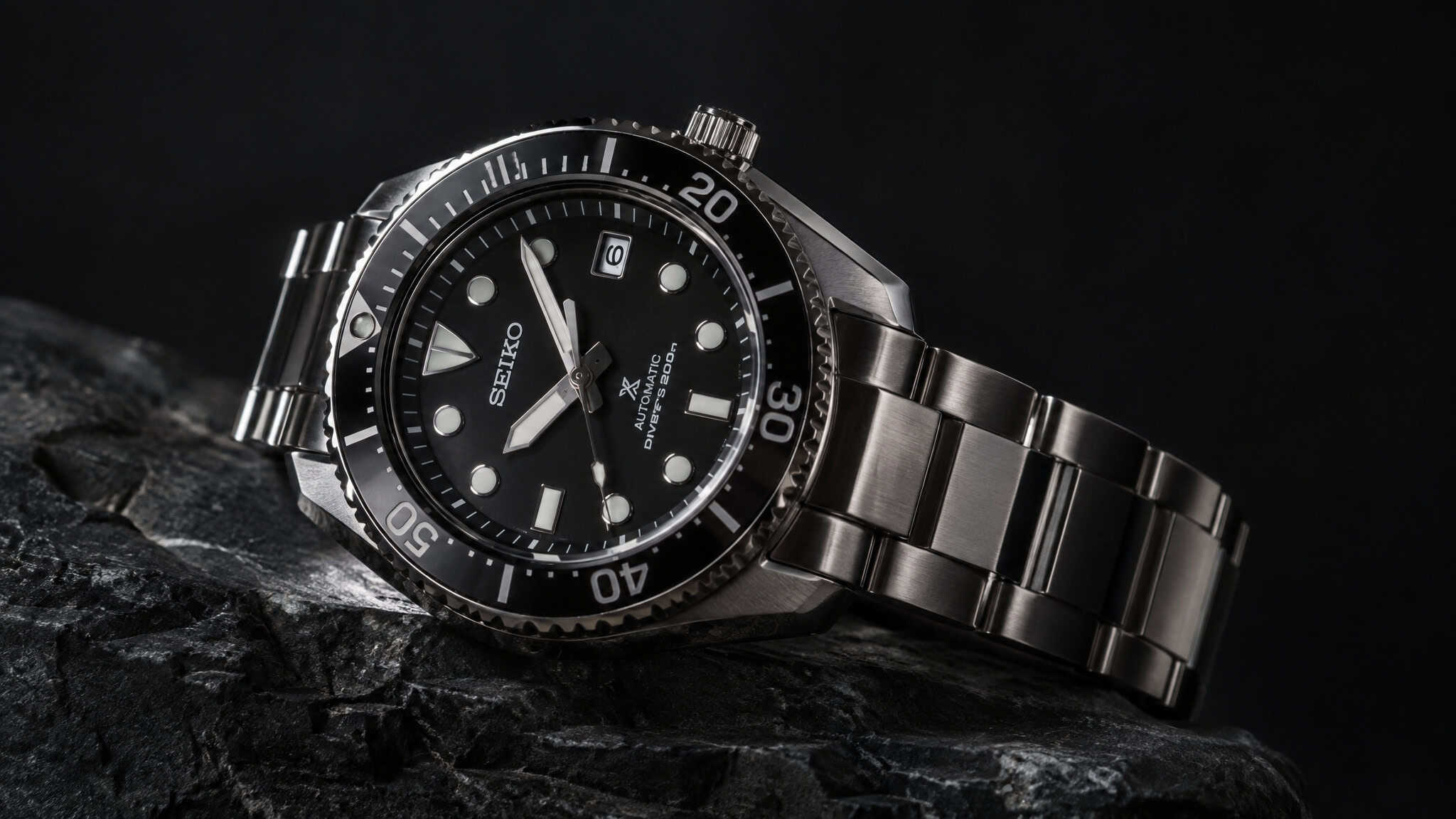
The steel watch on the shelf always feels like a grown-up decision. Solid, heavy, the kind of thing you pass down. Then a guy wears one for a week and his wrist is itchy, or the bracelet feels like an anchor by lunch. The disadvantages of stainless steel watches are real, but almost nobody explains them with actual numbers. So here they are: what the metal weighs, what it scratches, and what dermatologists actually measured when they soaked steel in fake sweat and asked nickel-allergic patients what happened.
The short version: the two real downsides are weight and skin reaction risk, and both are more manageable than the internet makes them sound. There’s also the 2002 euro coin research, because it’s the best intro to the whole problem. Scientists found 1 and 2 euro coins released nickel way past the legal limits, thanks to a galvanic reaction between the two metals in the coin. Money in your pocket leaks the same metal that’s on your wrist. The earring industry already went low-nickel over exactly this. Watches are the same conversation, and the numbers decide it, not the adjectives.
Key Takeaways
Nickel content isn’t the risk, nickel release is: clean low-sulfur grades like 304 and 316L released under 0.03 µg/cm²/week in sweat tests without a single reaction among sensitized patients, while nickel-plated steel released around 100 and flared 96% of them.
Titanium weighs about half of stainless steel and is 3-4x stronger, which is why even Seiko tells nickel-allergic customers to go titanium.
The popular home DMG nickel test can’t clear a watch: every steel grade gave the same negative result, safe ones included.
Table of Contents
Steel watches can genuinely get too heavy, and the shop won’t tell you
Yes, a steel watch on a full bracelet can be too much for a smaller wrist, and you won’t learn that during a two-minute try-on. In the store, a steel watch feels substantial in the best way. By 3pm it feels like a paperweight strapped to your arm. Nobody at the counter warns you, because the charm is the point and the fatigue shows up later.
The honest benchmark is titanium, and the numbers are easy to remember: roughly half the weight of stainless steel, and 3 to 4 times stronger. It’s also biocompatible, which is materials-speak for your skin doesn’t fight it. It shrugs off sweat and corrosion, it’s antimagnetic, and it’s effectively nickel-free. Grade 5 titanium adds aluminum and vanadium to the mix, but the allergy risk from those is negligible.
There’s a trade-off, because there always is. Pure titanium scratches easier than steel, which is why most titanium watches get scratch-resistant coatings. So titanium isn’t a strict upgrade; it’s a different set of compromises, and for a lot of guys with smaller wrists or desk jobs, those compromises land better. If you want the full side-by-side, we’ve got a dedicated steel vs titanium watch breakdown.
Nickel allergy: what the research actually shows
Here’s the number that scares people: stainless steel contains 8 to 10% nickel, and some watch case backs have been cited at up to 28%. That’s the metal sitting on your skin all day. Sounds like a guaranteed rash. It isn’t, and the reason is the most useful thing in this entire article.
Does stainless steel have nickel?
Yes. Nickel earns its spot in the alloy: it fights rust and helps the steel hold its shape at heat. Give the metal some credit before the caveats.
But you’ve probably read a buyer guide claiming surgical steel is free of allergy-causing metals. That claim doesn’t survive contact with the actual nickel content. Even 316L, the “surgical steel” everyone markets, contains nickel. The Nickel Institute, an industry body with zero incentive to say otherwise, confirms it.
The other common take, “contains nickel, so avoid it,” is equally wrong. Both consensus answers miss the point.
Which grades are actually safe
The question was settled by two peer-reviewed studies in the journal Contact Dermatitis, one from 1994 and one from 1997, out of the Ugine Research Centre in France. The researchers soaked steel samples in an acid artificial sweat, basically a lab stand-in for a sweaty wrist, and measured how much nickel came out. Then they patch-tested nickel-sensitized patients against the samples.
The spread was three orders of magnitude. Clean, low-sulfur grades, AISI 304, 304L, 316L, and 430, with sulfur at or under 0.007 to 0.03%, released under 0.03 µg/cm²/week, with zero reactions among the sensitized patients. Not one. These grades contain nickel, and it still didn’t matter, 316L in particular is the same stainless steel Omega uses for daily wear, chosen for exactly this kind of inertness.
The high-sulfur AISI 303, the inexpensive free-machining grade, released around 1.5 and caused reactions in 14% of patients in 1994 and 4% in the 1997 patch tests. Different test groups and methods, different numbers; the point is a small minority, not everyone. Nickel-plated steel released around 100 and flared 96% of sensitized patients. Plating on the cheap is the real villain here.
Buyer rule: Sulfur content, not nickel content, predicts whether a steel grade will flare your skin. Check the grade, not the marketing.
Why does sulfur matter? It drags down the steel’s corrosion resistance in sweaty, salty conditions, and that’s what lets nickel escape. Quality steel holds its nickel tight. The 1997 study put a rough dividing line at 0.5 µg/cm²/week: clean grades came in under it with no dermatitis, the sulfur-heavy stuff didn’t. That’s the buying tip, stated as plainly as I can.
Why the home nickel test can’t clear your watch
The popular dimethylglyoxime swipe kit, the one allergy forums recommend, went negative on every single grade in that research. Safe and reactive alike. Which just means the test is blunt. Only the nitric acid spot test actually flagged the cheap 303 grade.
So a negative home test proves nothing for a steel watch. If you’ve got a known nickel allergy, you’re better off knowing your grades, switching your strap, or getting a dermatologist patch test.
Scratches, coatings, and the “hypoallergenic” trap
Steel scratches are real, but they’re cosmetic. You’ll get hairline marks on polished finishes over time, and those buff out. Brushed finishes hide them better than polished ones, which is general material knowledge rather than lab data, but it’s true and it’s why tool watches wear brushed. Pure titanium actually scratches easier, which is why most titanium watches come with PVD or DLC scratch coatings. So do stainless steel watches scratch easily compared to titanium: no, steel generally holds up better on that front, and the titanium fix is a coating. Worth knowing before you buy, though: those coatings can contain allergenic metals, so the scratch fix isn’t automatically the skin-friendly one.
Now the part almost nobody covers. The fix creates its own risk.
PVD, DLC, rhodium, and tungsten carbide coatings may themselves contain allergenic metals. A worn coating can change what actually touches your skin, so that pretty black case finish isn’t automatically safe just because the steel under it is fine. One counterpoint worth knowing: rhodium plating on old white gold actually blocked nickel exposure, so coatings can help or hurt depending on what’s in them. And tungsten carbide, like the other metal watch options beyond plain stainless steel, carries trace nickel, but bound to tungsten it behaves and is effectively hypoallergenic.
While we’re at it: “hypoallergenic” has no legal or medical definition. Best case, it means “less likely to cause a reaction.” It’s not a promise, it’s marketing with a lab coat on.
So the smart buyer checks two things: the alloy and the coating. That’s it. It’s fifteen minutes of research on stainless steel vs titanium watches that saves you a wrist full of regret.
The strap and bracelet layer most articles ignore
If your rash flares under a metal bracelet but calms down on a leather strap, the culprit is probably the bracelet rather than the watch case. Aftermarket bracelets can use steel that’s different from the case’s steel, which nobody mentions at the point of sale.
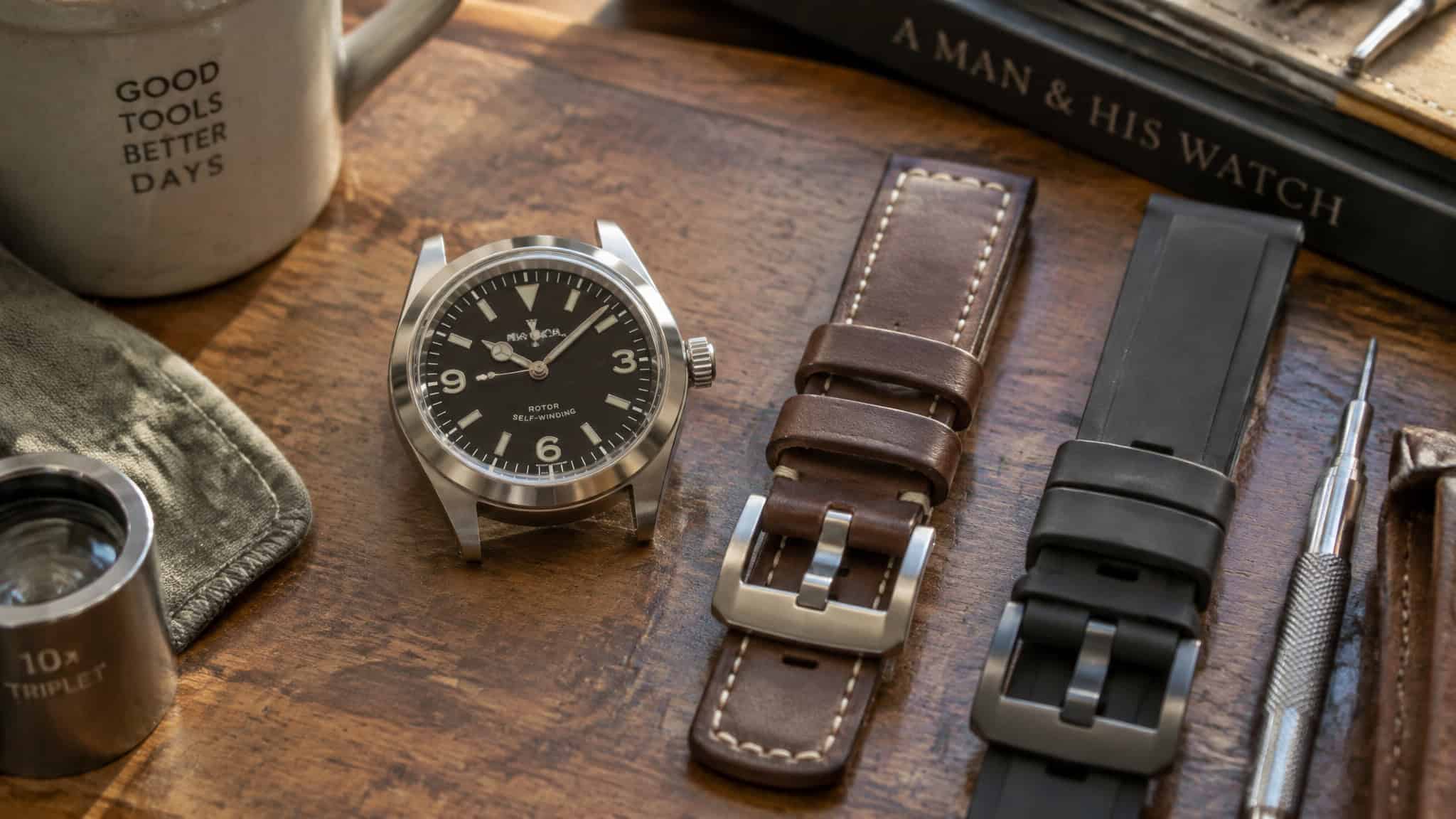
Yes, a stainless steel watch can cause a skin rash, when sweat pulls nickel, cobalt, and chrome ions out of the metal and onto your skin. The best documented example comes from a WatchUseek thread: an IWC owner’s rash flared on the aftermarket bracelet but not with leather straps on the same watch. Dr. Kate, a regular on the forum, weighed in and walked through the logic. Crowd-sourced troubleshooting, not a clinical study, but the pattern holds. Seiko’s own care guidance explains the mechanism: perspiration extracts nickel, cobalt, and chrome ions from metal parts, and chrome used in leather tanning can trigger reactions too.
Most guys blame the buckle. The strap is a suspect. Vegetable-tanned leather, rubber, and vegan straps skip the chrome-tanning problem entirely.
Is a stainless steel watch rash dangerous?
Figuring out what’s actually causing it
Plain troubleshooting. Swap wrists. Swap the bracelet for a leather strap. If the rash follows the bracelet and not the watch, you’ve found your culprit’s neighborhood.
If the rash shows up on both wrists no matter which one you wear it on, that points to something internal, an allergy rather than the watch. And metal allergies can appear or fade as your immune system shifts, with diet, meds, life in general. Weird but apparently true. If it looks worse than a typical nickel rash, take the watch off and see a dermatologist. Seiko’s own guidance says the same.
How bad is it really
No, a nickel rash from a watch isn’t dangerous, it’s an itchy nuisance, not an emergency. Roughly 10 to 15% of people have some degree of metal hypersensitivity, so decent odds it’s you or a buddy. The reassuring part: it isn’t life-threatening, there’s no anaphylaxis risk, and it typically clears within days of taking the watch off. You’re not born with it either. You earn it through exposure, which is the unsettling part.
Both things are true about legal limits: nickel in skin-contact items is capped by law, and severe sufferers still react to amounts inside those limits. So take the most sensitive guys seriously. Broad context, once: roughly 1 in 3 Germans has some kind of allergy, and that number’s climbing.
When stainless steel is the wrong choice
Known or suspected nickel sensitivity means titanium: biocompatible, effectively nickel-free, half the weight. Even Seiko tells nickel-allergic customers to go titanium. Since 2023, nearly all BOTTA watches, including the UNO and UNO24 one-hand models, use nickel-free tri-titanium three-part cases, each part in the right alloy; the limited stainless-steel UNO anniversary editions are the exception, so don’t grab one by accident. pOrtahl’s Peacemaker pairs a grade 5 titanium case, bracelet, and clasp with a titanium-and-tungsten-carbide DLC coating, built for hypersensitive skin. Plastic is safe but looks cheap; sterling silver may hide nickel, verify; gold works at 14 karat minimum, but white gold is often alloyed with problematic metals; gold and platinum sit past most watch budgets, and platinum is usually alloyed with copper or cobalt anyway.
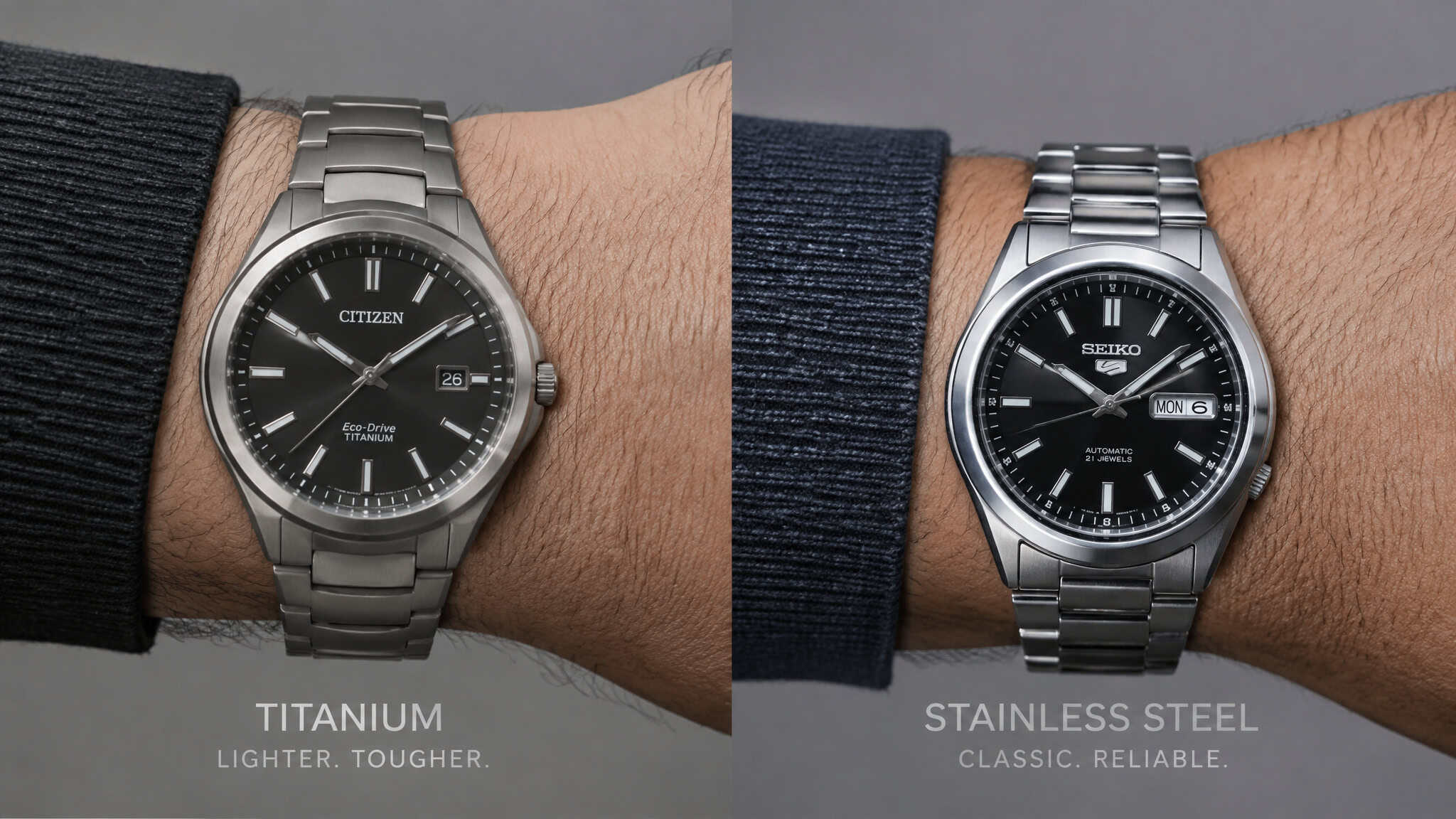
The buying checklist, short version: avoid resulfurized grades and nickel plating, verify what’s in the coating, pick straps by tanning method. Quality steel for most buyers, titanium for sensitive skin or anyone who hates the heft.
The honest verdict
Yes, a stainless steel watch is worth it for most guys, the disadvantages are real but bounded. Weight is a wear-pattern issue, scratches are cosmetic, and allergy risk depends on the grade: roughly 10-15% of people report some kind of metal hypersensitivity, but the rash typically resolves days after removing the offending object, and most sensitized wearers are fine in quality steel. My rule: buy the good steel, wear it a full week, and go titanium the moment your wrist files a complaint.
Frequently Asked Questions
What is the 3 watch rule?
It’s a collector’s guideline that says you really only need three watches: a versatile everyday watch, a dressier piece for formal occasions, and a rugged or sport watch for rough duty. It’s a minimalist framing to stop overbuying rather than a technical standard. The material choice for each slot — steel, titanium, or something else — matters more for daily comfort than the count itself.
Why does my watch rash flare on the metal bracelet but not on a leather strap?
The bracelet is probably the culprit, not the watch case. Aftermarket bracelets can use steel that’s different from the case’s steel, and Seiko’s care guidance explains that perspiration extracts nickel, cobalt, and chrome ions from metal parts. Swap the bracelet for leather, rubber, or vegetable-tanned leather (which skips chrome tanning) and see if the rash follows.