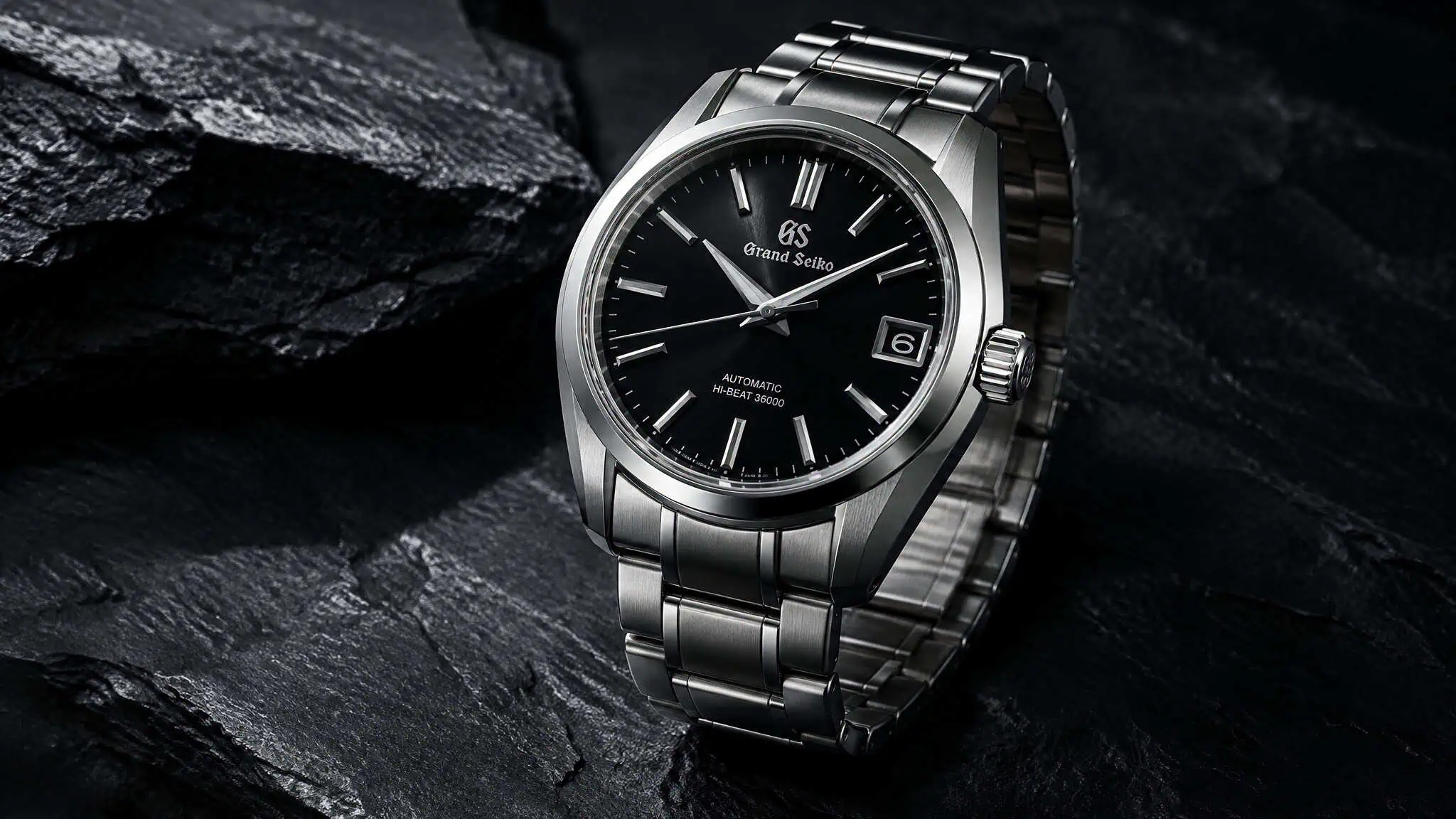
Steel is the baseline. Everything else on a wrist has to beat it first: durable, rust-free thanks to a chromium oxide layer, finishable any way you want, affordable, and overwhelmingly what watches are actually made of. Roughly 615,000 steel watches got exported in one recent month, against about 30,000 in precious metals. That’s not the “cheap option.” That’s the market.
Paying beyond steel buys specific, knowable tradeoffs: gold buys corrosion-proof prestige and intrinsic metal value, titanium buys weight savings with a scratch catch, ceramic buys a case that won’t scratch but can shatter. Every material is in this piece, including the ones most comparisons skip, like PVD-coated steel and resin. And because you came for a decision, not a survey, the article ends with a ranked verdict.
Key Takeaways
Last August, roughly 615,000 steel watches were exported versus about 30,000 in precious metals, so steel isn’t the budget alternative, it’s the industry.
Titanium is 40% lighter than steel and hypoallergenic. It also scratches easily, though Citizen’s Duratect treatment pushes Grade 5 hardness from about 400 to over 1,000 Vickers, so brands have largely engineered the problem away.
High-tech ceramic is the best overall value versus steel, titanium is a close second, and sapphire ranks last on cost: Richard Mille’s all-sapphire RM 56-01 ran about $1.65 million.
Table of Contents
| Exact model | Observed price (Sep 18, 2026) | Decisive documented advantage |
|---|---|---|
| Platinum | Not published | Dissolved by almost no reagent except hot aqua regia, and its extreme heaviness gives smaller watches a pleasant heft. |
| Tantalum | Not published | Lustrous deep blue color that persists thanks to very high hardness. |
| Bronze | £1,330 | Patina is copper oxide evolving to copper carbonate, unique per wearer and reversible by cleaning in days to weeks. |
| Carbon fiber and forged carbon composites | Not published | Five times stronger than steel and twice as stiff at a fraction of the weight, plus corrosion-resistant and antimagnetic. |
Prices are observed prices on the linked pages as of Sep 18, 2026 and change with promotions; the linked product page is always the current source.
Why stainless steel is the default watch metal
Watches come from a short list of case materials: steel, gold, platinum, tantalum, titanium, bronze, ceramic, carbon composite, silver, and sapphire. Steel dominates all of them, and it isn’t close.
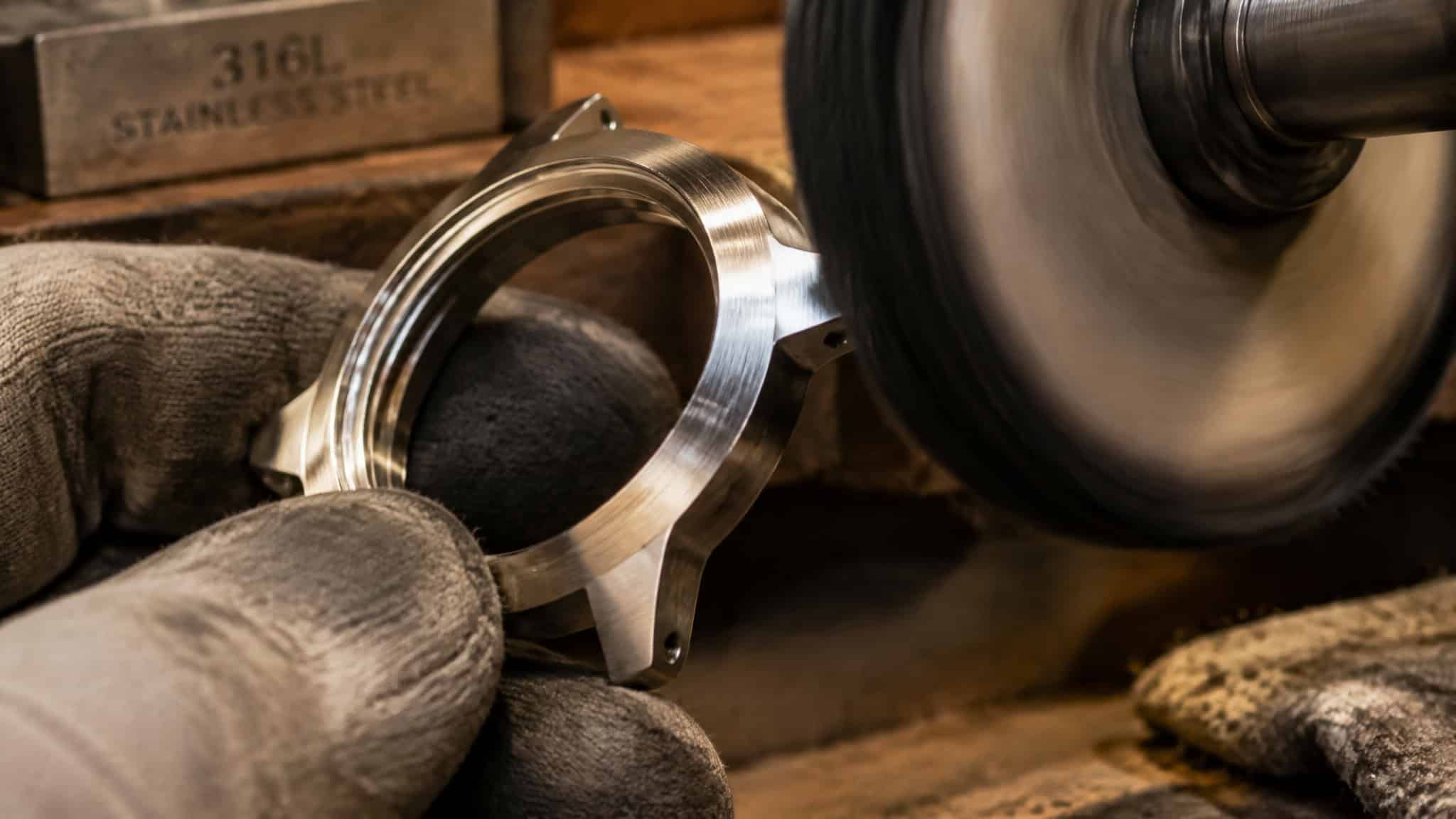
The reasons are boring in the best way. Watch steel is typically 316L or 904L, and the chromium in the alloy builds a protective oxide layer that keeps rust away. It hits the middle of every tradeoff: tough, cheap, corrosion-resistant, and you can finish it any way you like, from mirror polish to bead blast. The downsides are real but honest: untreated steel picks up desk-diving marks from a keyboard, and the nickel in the alloy can irritate sensitive skin. We’ve covered those more fully in our guide to the disadvantages of stainless steel watches.
The history is quicker than you’d think. Harry Brearley created the first modern stainless steel in 1912, and chromium-iron alloys had already been doing arms-industry work since the mid-1800s. The watch trade picked it up after the war under trade names like Staybrite, which tells you brands were branding alloys a century ago too. Before steel, your affordable option was gold-plated brass that wore through to the base metal, so steel genuinely felt like an upgrade.
Today the export numbers make the point better than any argument: roughly 615,000 steel watches exported in one month against about 30,000 in precious metals. Every alternative below is an exception, not a rival.
Gold vs stainless steel: the alloying paradox
Gold’s premium doesn’t buy durability. An 18k case is softer than steel and more likely to react with your skin, so what you’re actually paying for is corrosion-proof prestige and the metal’s own value. If that’s the trade you want, fine. Just don’t tell yourself gold is tougher.
Here’s the paradox. Pure 24k gold is too soft to hold up on a wrist, so watchmakers alloy it down to 18k, and that alloying is what makes the watch wearable. But the copper that hardens the gold is the same copper that reduces its corrosion resistance and raises the odds your wrist reacts to it. The expensive metal has to be diluted to work, and the dilution creates the two problems steel doesn’t have.
A related wrinkle for vintage hunters: 14k and 9k were common in older watches and gradually disappeared as the divide between luxury and affordable watches widened. Platinum gets alloyed for jewelry too, though less aggressively, with Pt950 the usual watchmaking mix.
Gold’s genuine wins deserve the credit. It basically doesn’t corrode, so barring actual damage a gold case will last forever. It’s easy for watchmakers to work into detailed shapes, which is why ornate vintage gold cases exist. And it’s the only naturally warm-colored metal, which is why it has read as “the fancy one” for centuries. That’s physics plus history, not marketing.
Against steel, though, the scorecard is lopsided: heavier, less durable, costlier to repair, and the price gap reflects material cost and brand, not toughness. For most of watch history gold was simply what a nice watch was made of, and steel taking over was the revolution. If you want the full buyer’s-eye view of the default material, our stainless steel watch buyer’s guide covers it.
Platinum: heavy, near-indestructible, and priced by the machine shop
Platinum’s drawbacks versus gold and steel come down to three things: extreme weight, brutal machining, and a price premium over gold even though the raw metal costs less per ounce.
Start with the chemistry, because it’s the easy part. Platinum dissolves in almost nothing except hot aqua regia, a mix of nitric and hydrochloric acid. Your wrist sweat isn’t touching it. The weight is where opinions split.
Tim Mosso described a platinum IWC Big Pilot’s Watch as one of the heaviest watches he had ever encountered on the channel, and a guy who handles everything saying a watch is a brick tells you something. In a smaller watch, that density feels like quality. On a big pilot’s case, it’s a problem.
Then there’s the machining. Watchmakers call platinum “sticky” because it clings to cutting tools and wrecks them fast, which is a big chunk of why platinum cases cost what they cost. You’re paying for rarity and shop-floor pain, not raw metal value. That’s the whole platinum deal in one sentence.
Tantalum: the deep-blue metal machinists love to hate
Tantalum watches are rare and expensive because the metal is dangerous and miserable to machine. It’s sticky, it seizes, it tears, it galls, and it has to be lubricated and kept cool or it can ignite. Yes, the watch metal can catch fire during production. One machinist described it as like machining copper with the hardness of titanium, which explains the material in seven words.
The payoff is a look nothing else on the rack has: a lustrous deep blue-gray that stays lustrous, because it’s genuinely hard. Collectors know it mainly from F.P. Journe, which made limited tantalum editions plus the series-produced Chronomètre Bleu. That last part matters if you’re pricing one in your head: rare, but not mythical. What you’re buying is exclusivity by difficulty, not just by price tag.
Titanium vs stainless steel: lightness with engineering catches
Titanium is better than steel if weight and hypoallergenic properties matter to you. Steel wins on scratch resistance and price. Surface treatment decides which side of that trade you actually land on.
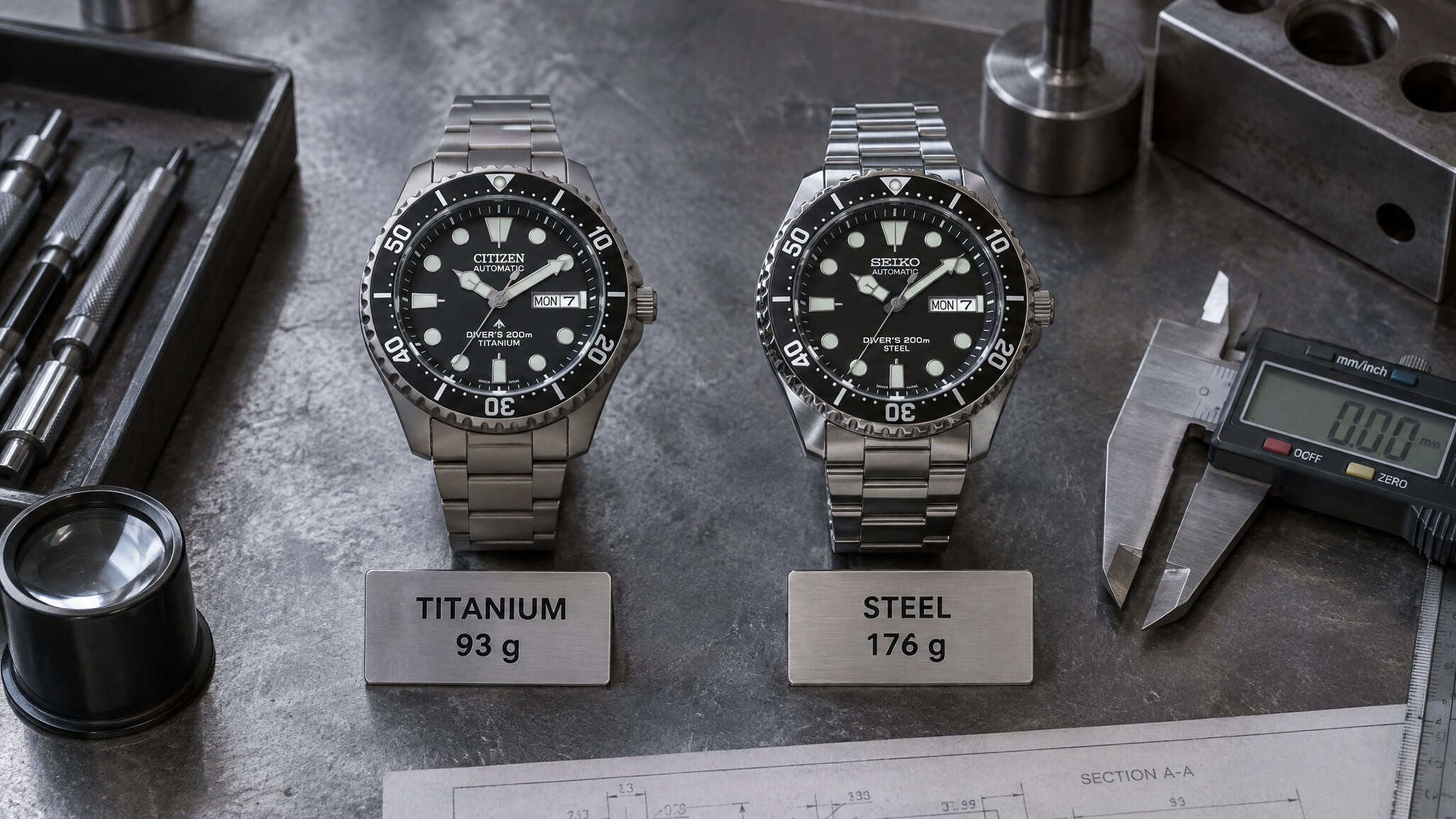
Is titanium actually better than steel for everyday wear?
Titanium is 40% lighter than steel and stronger by weight, it’s hypoallergenic, it’s antimagnetic, and it resists corrosion through its own oxide layer, the same trick steel’s chromium does. The small thing you notice after a week: it conducts heat poorly, so it feels cool on the wrist even on a hot day.
The catch is the surface. That same oxide layer scratches easily, though the marks fade as the layer rebuilds, and titanium threads gall, meaning they seize up when screwed together. The common first reaction is the same every time: a guy picks one up expecting fragility from how light it is, then discovers the scratch-prone finish is the real tradeoff. It’s heavier-feeling engineering than the weight suggests, just in a different way.
The history backs up how young this metal is in a world of watches made out exotic materials like titanium. Omega prototyped titanium for NASA’s Alaska Project, Citizen’s X-8 Chronometer became the first commercial titanium watch in 1970, and Citizen’s 1300M diver followed in 1982. Those early watches wore a matte finish, partly a look and partly because the metal was too soft to polish well, which is where the “titanium looks dull” reputation started.
Grade 2 vs Grade 5
Grade 2 titanium is commercially pure and cheaper, and it’s what you’ll find at lower price points. Grade 5, which is 6% aluminium and 4% vanadium, is harder and stronger but costs more. Check which one you’re buying before you assume all titanium is equal.
The pedigree is real, for what it’s worth: the Lockheed SR-71 Blackbird flew Mach 3 on an all-titanium airframe that heated to 480°C from air friction alone. On the wrist, the entry point is something like the Hamilton Khaki Field Titanium 36mm in Grade 2, and at the top end Horage puts Grade 5 titanium on the Autark Tourbillon’s case and bracelet.
How brands fix titanium’s weaknesses
Here’s the detail that tells you how far brands will go: Tudor puts a stainless steel caseback and crown tubes inside its titanium Pelagos specifically to dodge thread galling. Steel parts inside a titanium watch, and it’s the same material question Rolex buyers run into with whether a real Rolex says stainless steel, given the brand’s switch to 904L “Oystersteel.” Rather than live with the metal’s flaws, brands hybridize around them.
Surface hardening does the same for scratches. Citizen’s Duratect treatment takes Grade 5 from roughly 400 Vickers to over 1,000. Scratch magnet becomes daily wearer. Grand Seiko’s High Intensity Titanium is the same idea under another name, and De Bethune heat-tempers titanium into deep cornflower blue, proof the metal isn’t stuck being gray and matte. “Titanium scratches” is a partly solved problem now, not a verdict.
Bronze: not one metal, and patina is not rust
Yes, bronze patinas, usually visibly within days to weeks of regular wear, that’s copper oxide slowly turning to copper carbonate, not rust, and it wipes off if you change your mind. No, it doesn’t rust. And yes, it can irritate sensitive skin, which is why most bronze watches wear steel casebacks. One care rule worth following: if you swim in it, rinse the case in freshwater and dry it afterward, since salt water plus oxygen speeds up corrosion.
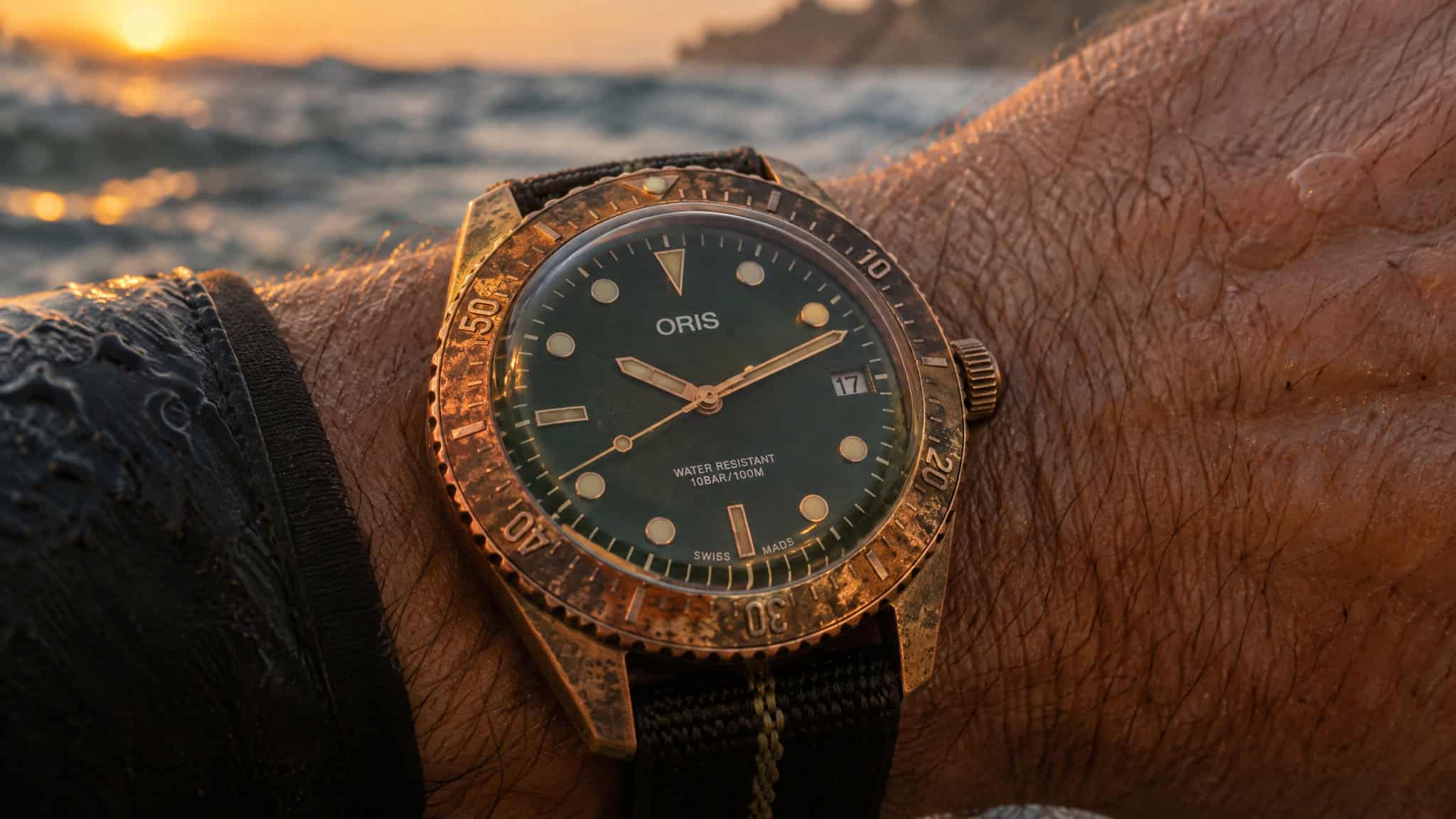
What patina actually is
Patina is copper oxide slowly evolving into copper carbonate, and it’s unique to how you wear the thing: wrist contact darkens faster than the exposed bezel, so new owners expecting a gradual, even darkening over years commonly get blotchy unevenness within weeks instead. It wipes off if you decide you liked it shiny. You’re not stuck with anything.
Bronze itself is ancient, with the Bronze Age dating to around 3300 BC and earliest use around 4500 BC in Serbia. It’s softer and heavier than steel and has a faint penny smell. Really. That’s also why the alloy choice matters.
Phosphor vs marine aluminium bronze
Phosphor bronze darkens brown. Marine aluminium bronze is more golden, harder, and more corrosion-resistant. Same word on the spec sheet, completely different watch as it ages. Take the Christopher Ward C60 Trident Biscay, a 1960s skin-diver-inspired piece where bronze runs through everything: warm-toned hands, markers, numerals, bezel, with rose-gold plating and aged-radium-style lume tying it together.
The alloy is CuAl10Ni5Fe4, about 10% aluminium, 5% nickel, 4% iron, and the aluminium bezels are hardened to 250 HV, a claimed 67% increase that answers the usual “aluminium bezel scratches” complaint. Specs: 39mm×11mm or 42mm×12mm, 200m water resistance, 20mm lugs, £1,330/US$1,870 to £1,495/US$2,095, Sellita SW300-1 or SW330-2 GMT with a 56-hour reserve, COSC-certified to -4/+6 seconds a day, Super-LumiNova Grade X1 lume, and an iLink tool-free bracelet sizing system that’s a small quality-of-life win.
One caution: some brands, Tudor and Baltic among them, use slow-aging alloys that deliberately delay the patina buyers are paying to watch. Check which alloy you’re getting.
The brand arc is short but real: Gérald Genta’s Gefica in the late 1980s, Panerai’s Bronzo kicking off the modern wave in the early 2010s, Tudor’s Black Bay Bronze, Oris going as far as bronze bracelets, and Bremont’s Terra Nova arriving in 2025. A full bronze bracelet used to be unheard of.
After a swim in the ocean
Here’s what I’d do: after saltwater swims, give the watch a freshwater rinse and dry it off, since salt plus oxygen speeds up corrosion. Thirty seconds of effort, that’s the whole routine.
Ceramic: scratch-proof but brittle, and not pottery
Ceramic is essentially scratch-proof where steel scratches, but it fails by cracking or shattering on hard impact where steel merely dents. That distinction is the entire material in one sentence: scratch-proof isn’t indestructible.
First, the misconception. Watch ceramic is usually zirconium oxide, sometimes aluminium oxide, powder pressed into a mould and sintered at extreme heat. Nothing to do with fired clay. The color is in the material itself, so it can’t scratch off. It’s also hypoallergenic, antimagnetic, lightweight, and fade-proof, and it shows up in jet engine turbines, which tells you what tier of material this is.
The history is older than people think, with a pedantic footnote. Rado billed its 1962 DiaStar as the first scratch-proof watch, though it was technically tungsten carbide, a sintered hybrid rather than true ceramic. Omega’s limited Cermet Seamaster from the early 1980s was another stepping stone. IWC’s Da Vinci Perpetual Calendar in black zirconium oxide was announced in 1985, with the ref. 3755 production model widely dated 1986, and it’s widely cited as the first true ceramic watch, though watch history stays contested.
Seiko’s 1000M Professional Diver got a ceramic shroud in 1986. Picasso, asked late in life why he made ceramic sculptures, said
Darkly funny, given ceramic watches crack rather than scratch.
Carbon composites: stronger than steel, impossible to polish
Carbon outperforms steel on both strength and stiffness, by roughly five times and two times, respectively, at a fraction of the weight. It also chips, scratches through the resin, and can’t be polished or refinished, so damage is permanent. That’s the trade.
The modern stuff comes from PAN polymer spun into filaments, heat-stabilised, then carbonised at 1,000-3,000°C with no oxygen around, before getting woven and resin-coated. Joseph Swan made the first carbon fibers in 1860 for lightbulbs; Roger Bacon carbonised rayon strands in 1958 and Richard Millington patented a high-purity process in 1960. In watches, two flavors matter: woven carbon, the fabric pattern you see on dials, and forged carbon, short strands plus resin molded into shape, which suits cases better. Richard Mille fitted the RM 004 V2 with a carbon fiber movement plate back in 2005, and Audemars Piguet’s forged carbon Royal Oak Offshore made the material famous in 2007.
The money insight is the price spread: sub-$1,000 G-Shocks and Victorinox at one end, roughly $20,000 Panerai Carbotech and Zenith Defy at the other, same material family. Brand drives that gap, not material. The feel-it-in-hand honesty: the plastic-like lightness divides opinion, and the grain look is love-it-or-hate-it.
Why aren’t watches made of silver?
Because sterling tarnishes, and steel gives the same look without the weakness. Steel is silver’s industrial replacement, not just its cheaper cousin.
Sterling is 92.5% silver plus 7.5% copper or other metals, hence the “925” stamp, and pure silver is too soft for a case, same problem as 24k gold. Silver was common in the 18th and 19th century pocket watch era, then steel displaced it, and brands wanting precious metal went white gold or platinum instead. Silver got squeezed out of the middle. Modern exceptions exist: Tudor’s Black Bay Fifty-Eight 925, which uses an anti-tarnish blend they won’t fully describe because the concern is real, Halcyon’s Origin collection, and some Tiffany women’s models.
One piece of trivia worth keeping: German silver contains no silver. It’s copper, nickel, and zinc, also called argentan or maillechort. The name is a lie.
Sapphire cases: the aesthetic-only extreme
Sapphire is the only case material with no engineering case for itself: it’s pure aesthetics, letting you see the movement through the case. It’s gem-quality aluminium oxide, chemically identical to ruby, grown by the flame-fusion process Auguste Verneuil invented, 9 on Mohs where diamond is 10, and it shatters rather than bends. The economics tell the story: Richard Mille’s RM 56-01 cost $1.65 million, needed over 1,000 hours of machining, with a run of about 10 pieces. Hublot’s Big Bang Automatic Tourbillon Purple Sapphire pushes the same idea further, with the color living in the sapphire itself.
PVD-coated steel and resin: the skipped middle tier
A PVD watch is steel with an altered surface, not a different metal. Once the coating wears through, the case behaves like the base steel, which is exactly the failure mode gold-plated brass had a century ago. Resin, G-Shock territory, trades all-metal properties for impact resistance and low cost. For most buyers, the real comparison is “steel with a surface treatment” versus “steel.”
Skin reactions and hypoallergenic watch metals
Titanium and ceramic are hypoallergenic. Steel can trigger rashes in nickel-allergic wearers, and copper-rich 18k gold and bronze are common irritants for sensitive skin. If your wrist flares up, the alloy is the usual suspect, not the brand.
There’s an inversion here worth noticing: the kindest metals to skin are the softest ones. Skin compatibility maps onto alloy purity, which flips the usual durability-first framing on its head. It’s also why bronze watches get steel casebacks, and why a watch that behaves on most wrists can still wreck yours.
Which watch metal should you buy? The ranked verdict
Our ranking: high-tech ceramic is the best overall value versus steel, titanium is a close second, and sapphire ranks last on cost despite looking the best. That’s a practical-buyer judgment about what’s worth paying for at each budget, not a lab result. And no material wins at everything; the right pick depends on the specific watch and how you’ll use it. When steel still makes more sense, it’s because you want durability plus polishability, easy repair, tolerance of weight, or the lowest price, and honestly a lot of guys land there. One skeptical note: the list of proprietary in-house alloy names grows every year. Some of it’s real metallurgy. Some of it’s marketing.
| Material | Weight vs steel | Scratch behavior | Failure mode | Cost vs steel | Best for |
|---|---|---|---|---|---|
| Gold | Heavier | Scratches easily | Bends/wears | Far higher | Corrosion-proof prestige, intrinsic value |
| Platinum | Much heavier | Scratches | Bends/wears | Higher than gold | Rarity without flash |
| Titanium | 40% lighter | Scratches easily (fixable) | Galls at threads | Higher | Lightness, sensitive skin |
| Bronze | Heavier | Patinas, doesn’t scratch-proof | Surface change only | Higher | Patina character |
| Ceramic | Lighter | Essentially scratch-proof | Cracks/shatters | Higher | Value pick that stays fresh |
| Carbon | Fraction of the weight | Resin scratches, chips | Chips, unpolishable | Varies, brand-driven | Lightweight tool-watch look |
| Sapphire | Lighter | Only diamond scratches it | Shatters | ~$1.65M territory | Pure aesthetics |
Launch prices as announced September 2026; prices may vary. The modern price tier runs the same hierarchy at every budget: Apple Watch Series 12 starts at $399 in aluminum, $699 in titanium, and $899 in ceramic, with the Ultra 4 titanium at $799. The material math doesn’t change from $399 to $1.65 million.
Frequently Asked Questions
Is a titanium watch better than stainless steel for everyday wear?
Better depends on what you value. Titanium is 40% lighter, hypoallergenic, antimagnetic, and corrosion-resistant, but it scratches more easily and its threads can gall. Surface treatments like Citizen’s Duratect, which pushes Grade 5 titanium from about 400 to over 1,000 Vickers, have largely engineered the scratch problem away, so treated titanium is now a genuinely practical daily wearer.
Is a gold watch worth the price premium over stainless steel?
Only if you want what gold actually buys: corrosion-proof prestige and intrinsic metal value. It doesn’t buy durability — an 18k case is softer than steel, and the copper used to harden it reduces corrosion resistance and raises the odds of a skin reaction. Against steel, gold is heavier, less durable, and costlier to repair.
Why aren’t watches made of silver?
Sterling silver tarnishes, and pure silver is too soft for a case — the same problem 24k gold has. Steel gives the same look without the weakness, which is why it displaced silver after the pocket watch era, with brands wanting a precious white metal moving to white gold or platinum instead. Modern exceptions exist, like Tudor’s Black Bay Fifty-Eight 925, which uses an anti-tarnish blend.
Does a bronze watch patina, and does it rust or irritate skin?
Yes, bronze patinas — usually visibly within days to weeks of regular wear — but it doesn’t rust. Patina is copper oxide evolving into copper carbonate, and it’s unique to how you wear the watch, often turning blotchy rather than even. It can also irritate sensitive skin because of the copper content, which is why most bronze watches use steel casebacks. Patina wipes off if you prefer the shiny look.
What are watches made out of?
The short list is steel, gold, platinum, tantalum, titanium, bronze, ceramic, carbon composite, silver, and sapphire, plus the skipped middle tier of PVD-coated steel and resin. Steel dominates overwhelmingly — roughly 615,000 steel watches were exported in one recent month versus about 30,000 in precious metals. Every other material is an exception, not a rival.
Is a stainless steel watch better than watches made of other metals?
Steel wins the all-around scorecard: tough, corrosion-resistant via its chromium oxide layer, finishable from mirror polish to bead blast, easy to repair, and the cheapest option. It loses only on specific axes — titanium is lighter, ceramic is more scratch-resistant, gold is more prestigious. That’s why the ranking for practical value puts high-tech ceramic first, titanium second, and steel still very much in the game.