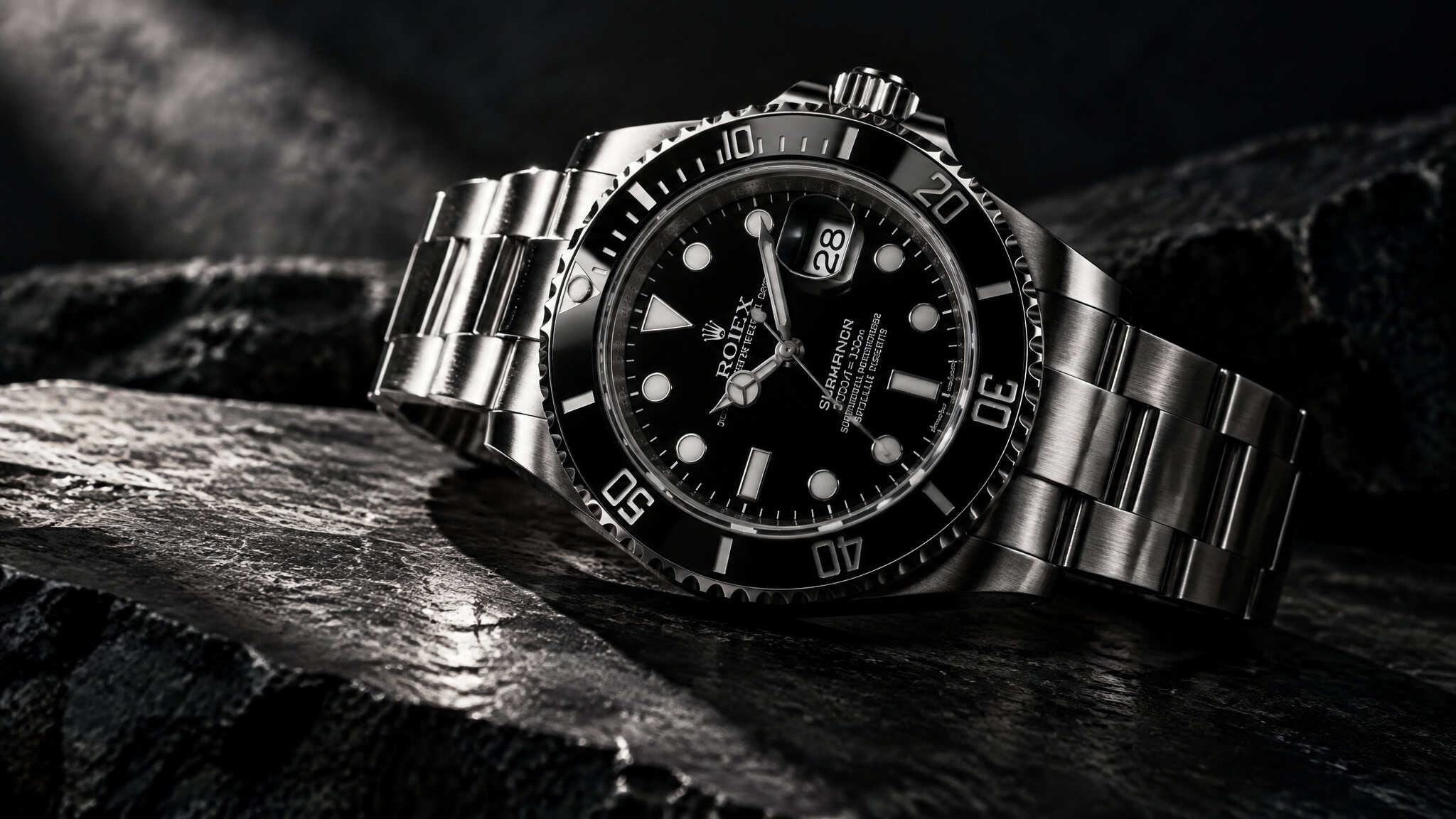
Most Rolex watches are stainless steel, that’s the short answer. Not just any stainless steel, though: Rolex uses 904L, an alloy it brands as Oystersteel, across every steel model in the catalog, a transition the company completed by the early 2000s. And here’s the twist most first-time buyers don’t see coming: a genuine modern Rolex almost never has the words “stainless steel” printed or engraved anywhere on it, and the cheapest metal in the lineup is often the most valuable one on the used market.
Key Takeaways
904L stainless steel is the alloy Rolex sells under the Oystersteel name, one with 19% chromium, 23% nickel, 4% molybdenum, and about 1.5% copper, while Omega, TAG Heuer, and Breitling all use industry-standard 316L.
A modern Rolex generally does not say “stainless steel” anywhere on the watch, so a smooth, blank caseback is the good sign; authentication lives in the rehaut engraving, serial number, and laser-etched crystal crown instead.
Steel Rolexes run from about $3,750 (Oyster Perpetual) to $120,000+ (a loaded Daytona on the secondary market), and steel models routinely out-resell gold ones because scarcity, not material cost, drives value.
Table of Contents
Yes, most Rolex watches are stainless steel
Steel is one of exactly three core materials Rolex works in: 904L stainless steel, 18k gold (including Everose, the brand’s own rose gold with platinum mixed in), or 950 platinum, which is 95% pure. If you see steel and gold together, that’s Rolesor; platinum and steel is Rolesium. One useful quirk: the fluted bezel is only ever solid gold or platinum, never steel. Every steel model in the lineup moved to 904L by the early 2000s.
What steel does Rolex use: Oystersteel vs 316L
904L stainless steel is what Rolex has chosen to call Oystersteel. It’s a real, chemically defined alloy, not some secret wonder metal; the name is a label on an existing steel, and almost every other watchmaker, from Omega to TAG Heuer to Breitling, runs the industry-standard alternative, 316L. And honestly? For most owners who aren’t diving a Submariner, that 316L would have held up fine for decades. Rolex’s premium buys extra corrosion headroom and a brighter polish, not a different category of steel.
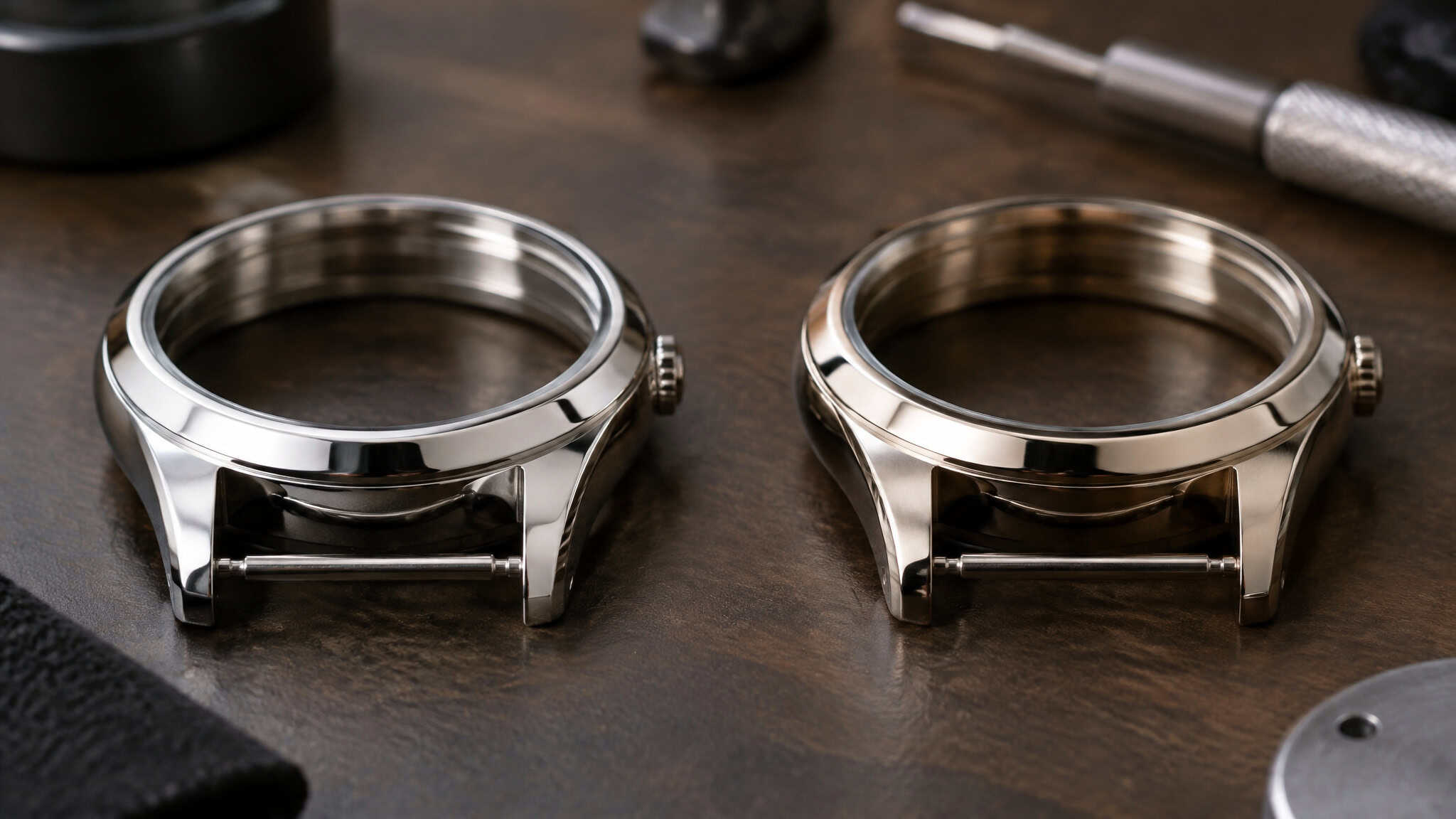
The composition comparison
904L packs 19% chromium, 23% nickel, 4% molybdenum, and about 1.5% copper. 316L carries 16-18% chromium, 10-14% nickel, and 2-3% molybdenum. Both are austenitic, which in plain terms means they’re the same family of steel: non-magnetic and tough. The extra chromium, nickel, and molybdenum in 904L are what make it fight off corrosion and acids better, and the copper is part of why it polishes up so nicely. Before Rolex picked it up, 904L was mostly an alloy of the chemical and aerospace industries.
Rolex’s own promotional material notes the alloy was so difficult to machine that the company had to build special equipment just to work it. That’s Rolex’s framing, mind you, but the machining pain is real, and it explains why nobody else bothered.
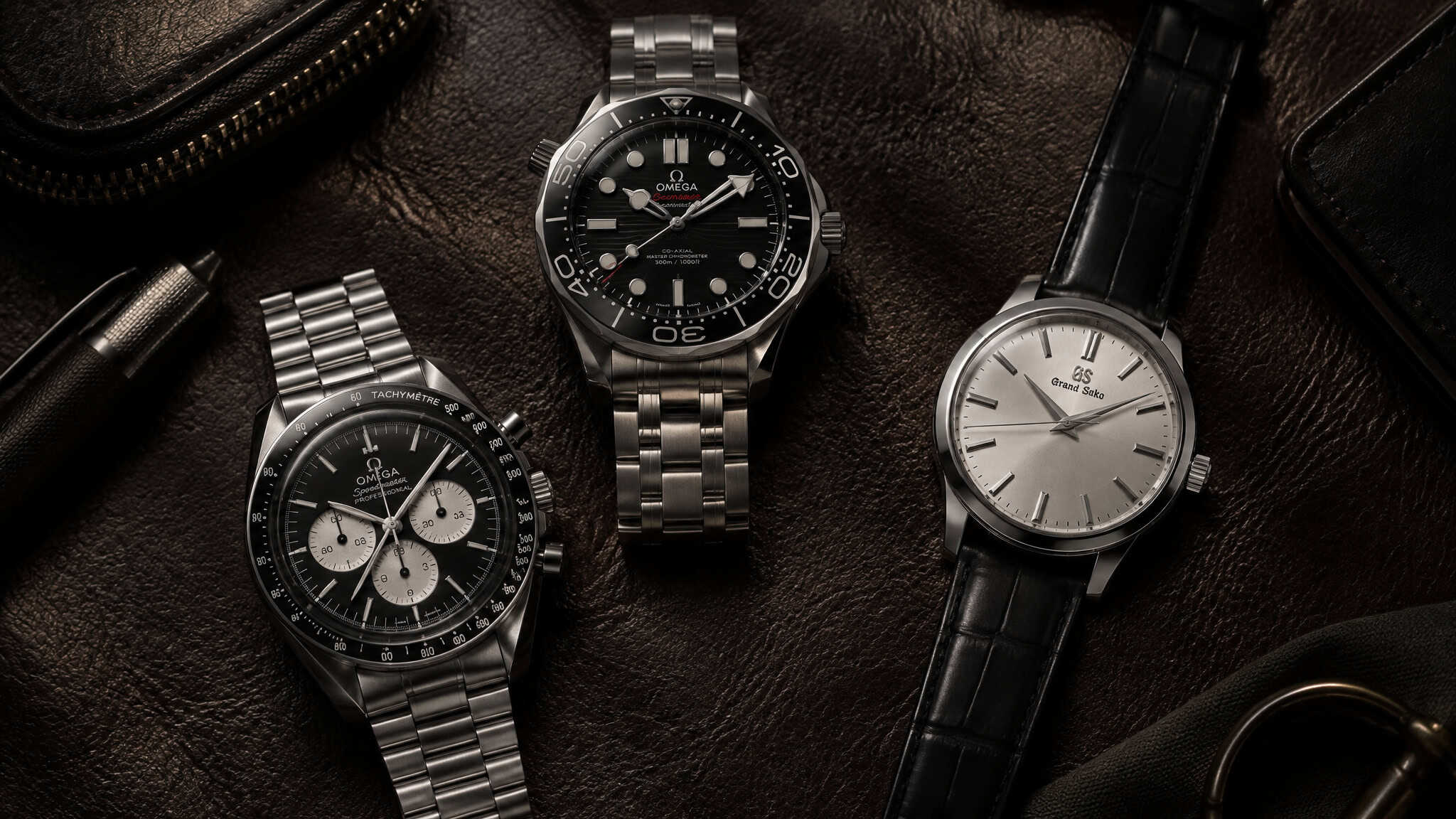
Which brands use which steel
To be fair to 316L: it’s surgical steel. Marine-grade. Corrosion-resistant, durable, and much easier to form and machine, which is exactly why the entire industry uses it. 316L is more ductile, so it’s cheaper to work with. Rolex accepted the harder manufacturing road for two payoffs: better resistance to the sweat, salt water, and general nastiness a wristwatch actually encounters, and a visibly brighter, whiter polish with a jewel-like sparkle. That last part is the one you can see across a room.
Why Rolex switched to 904L: the corrosion failure story
Rolex didn’t switch to 904L for marketing. It switched because 316L was failing in the field. Through the 1970s and 1980s, dive watches kept arriving at Rolex service centers with pitting corrosion in the case threads and case backs, the result of seawater salt and sweat slowly chewing through 316L.
Rolex put 904L in dive watches before any other watchmaker did, in 1985, starting with the Submariner and Sea-Dweller. The alloy spread through the lineup during the 1990s, and by the early 2000s the entire steel range had switched. The corrosion problem got fixed, and a bonus emerged: 904L takes a polish so well that a scratched 20-year-old Submariner can come back from service looking brand new.
Which Rolex models come in stainless steel?
Rolex makes the Submariner, Daytona, Datejust, GMT-Master II, and Oyster Perpetual in stainless steel, and steel is the most versatile material in the catalog. Whatever look you’re after, there’s a steel version of it.
Submariner 126610LN
This is the watch most guys picture when they hear “Rolex.” 41mm Oyster case in Oystersteel, Cerachrom ceramic bezel, water resistance to 300 meters. It’s the reference-point dive watch for a reason. The catch: you essentially can’t walk into a dealer and buy one new. Pre-owned steel Subs trade faster than any other Rolex on the market, which means if you ever need to sell, it moves fastest.
Cosmograph Daytona 126500LN
The grail-tier steel Rolex. White or black Cerachrom bezel, in-house Calibre 4131 chronograph, tachymetric scale on the bezel. Dealer waitlists run in years, and on the secondary market these routinely clear $35,000. That’s what you’d actually pay, not what the tag says.
Datejust 36/41
The sensible one. Available in 36mm and 41mm, your choice of Oyster or Jubilee bracelet, and forum users call Rolex bracelets significantly better, plus it’s the one steel Rolex a normal guy can actually buy without a soap opera. This is the real entry door.
GMT-Master II
Batman, Pepsi, Sprite. The nicknames are how everyone knows these watches, so use them. Bidirectional 24-hour bezel for tracking a second time zone, in-house Calibre 3285, and among the most heavily traded watches on the secondary market.
Oyster Perpetual 36/41
The no-drama option. Time-only, no date, no complications, clean monochrome dials. For guys who want a watch, not an instrument panel.
Worth knowing the counter-cases: the Day-Date and the Cellini never come in steel, ever. And the full steel range runs from about $3,750 to well past $120,000. That’s not one tier of the catalog. That’s the whole thing.
How much does a stainless steel Rolex cost?
A stainless steel Rolex costs between roughly $3,750 and $120,000+. Steel is the cheapest way into the brand, but “cheapest” still means real money, and the spread within one metal is enormous. If you’re weighing stainless steel against other watch metals, gold, bronze, PVD-coated alloys, or resin, the durability and value trade-offs are worth understanding before you commit.
The tiers, roughly:
- Oyster Perpetual 36/41: $3,750 to $7,000. That’s the honest entry floor, the least you’ll spend on a real Rolex, and it still costs as much as a used motorcycle.
- Datejust 36/41: $6,000 to $12,000, with the bracelet choice (Oyster versus Jubilee) moving the number.
- Submariner Date 126610LN: $10,000 to $15,000 at retail. Keep in mind retail is theoretical when you can’t actually get one.
- GMT-Master II in steel: $13,000 to $20,000, depending on which bezel nickname you’re chasing.
- Daytona 126500LN: $25,000 retail, with the secondary market spreading past $120,000. Let that gap between sticker and street sink in for a second.
Prices vary with the specific reference, production year, and demand, so treat all of these as bands rather than quotes. The point isn’t any single number. It’s that stainless steel watches cover everything from a clean time-only Rolex to a chronograph that costs more than most cars.
What is a used steel Rolex worth? The steel-beats-gold paradox
Steel Rolexes routinely outperform the gold ones on the secondary market. Read that again, because it makes no intuitive sense: the least precious material in the catalog often commands the biggest premiums. The steel Daytona, Submariner, and GMT-Master II consistently trade above the gold models because production is scarce and demand is enormous. Simple economics, in one breath. A steel Daytona routinely clears $35,000 on the used market, which is more than plenty of gold Rolexes cost new.
There’s a dry joke in there somewhere about the “cheap” watch being the valuable one. Value on any individual piece depends on the reference, the production year, and especially the polish history, not just the model name. This is a recurring pattern in the pre-owned market, not a guarantee that any given watch will appreciate.
Does a real Rolex say “stainless steel” on it?
No. A modern Rolex generally does not engrave “stainless steel” on the dial or the caseback. If you’re checking a caseback for those words and finding nothing, the blank surface is actually the authenticity signal, not a problem. Verification lives elsewhere: the rehaut (the ring between dial and crystal) carries “ROLEX ROLEX ROLEX” engraved around it with the serial number at 6 o’clock; the serial itself sits between the lugs on older models and moved to the rehaut from the mid-2000s; and since 2002, most models carry a tiny laser-etched coronet in the crystal at 6 o’clock. Steel Rolexes carry “Oyster Perpetual”-style dial text instead of a material stamp.
The classic first-timer mistake goes like this: he checks the caseback for a “stainless steel” engraving, finds a smooth, solid, unengraved surface, and walks away convinced the watch is fake. Wrong direction. Boring casebacks are the point. A transparent exhibition caseback on a “Rolex” is a near-certain fake indicator.
The rare exception, stated precisely: vintage ladies’ Datejust references 6917, 69173, and 69174 do carry “Stainless Steel” and “Registered Design” engravings on the caseback. Those specific references are the checkable fact here. Outside of them (plus personal owner engravings), assume blank means genuine.
How to tell if a stainless steel Rolex is real or fake
You can tell a lot by checking the weight and feel, the quality of the dial print, the Cyclops lens, the engraving work, the seconds-hand sweep, and the caseback. Here’s the honest part up front: no single one of those tests settles anything anymore. Work them as layers.
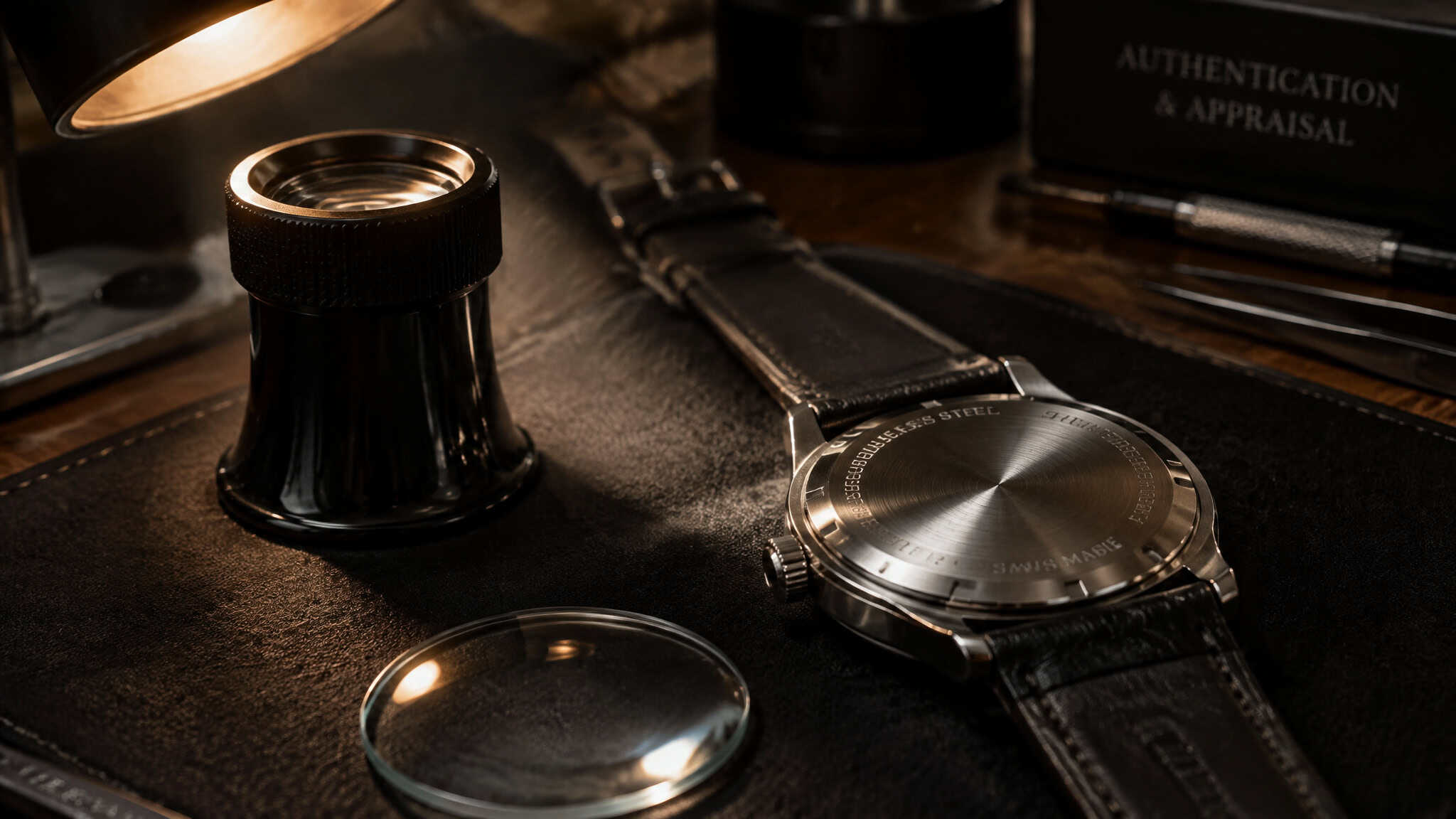
Quick test: No single check proves a Rolex is real. Run the feel test, dial, Cyclops, engravings, and sweep together — then get a professional inspection.
The free ten-second feel test
Start with your hands. A genuine steel Rolex feels heavy and solid, with solid end links that don’t rattle. Fakes run light: hollow bracelets, thinner cases, cheap alloys. The crown should wind smooth and firm, never gritty, never loose.
Rough case edges, unfiled burrs, patchy finishing, or a clasp that feels flimsy are all bad signs. Costs nothing, takes ten seconds, and heavy is what you want.
Dial, Cyclops, and crystal
Genuine dial printing is crisp, opaque, slightly raised, and perfectly spaced. Smudged text, misspellings, crooked markers, or bubbled paint mean walk away. The Cyclops lens over the date magnifies exactly 2.5x on a real one; most fakes manage about 1.5x or skip the lens entirely. Two exceptions so you don’t condemn a real watch: the Deepsea is the lone current date model lacking a Cyclops, and the Sea-Dweller didn’t get its lens at Baselworld 2017.
Then there’s the micro-etched coronet in the crystal at 6 o’clock, present on most models since 2002. A loupe with light raked across the crystal is the way to spot it. The Milgauss and Deepsea skip it. On a post-2002 watch, a missing, oversized, or crude etching is a bad sign.
Engravings, sweep, and caseback
Real serial engravings are deep with clean edges that catch the light. Fake engravings tend to look stippled, soft-edged, and shallow, acid-etched work often leaves a grainy, sand-like finish. One honest caveat: counterfeiters reuse serial numbers, so a serial that “matches” proves nothing on its own. The seconds hand is another quick tell.
A mechanical Rolex sweeps in roughly eight micro-ticks per second; if yours ticks once per second, that’s quartz, and on a Rolex that almost always means fake. The exceptions: the Oysterquartz, discontinued in the early 2000s, and the Cellini quartz, which lasted until the late 2010s. The deepest check is under the caseback, where a genuine movement is beautifully finished and engraved with the Rolex name. Clone movements can’t match that finishing.
That check belongs to a professional, not your kitchen table. And the caseback rule, with its full exception list: solid, smooth, and unengraved is normal, while a see-through exhibition back is a near-certain fake. Legitimate exceptions include the vintage ladies’ Datejusts (6917/69173/69174), commemorative models, the Sea-Dweller, Deepsea, Milgauss, some 1930s vintage pieces, the 60th-anniversary platinum Daytona, and personal engravings.
Why no single test is conclusive
Here’s where it gets uncomfortable. Superfakes are made with optical scanning and 3D printing, and they copy case dimensions, bracelet construction, even cloned movements, well enough to pass the weight, Cyclops, and rehaut checks individually. What they can’t do is everything at once: the movement finishing, the regulation, the dial printing, the lume, the micro-etched coronet, the serials matching production records. The whole is harder to copy than the parts.
The real defense is an expert in-person inspection with the caseback opened. One more myth to kill while we’re here: Oystersteel is not scratch-proof or maintenance-free. Owners still pick up micro-scratches, and a watch’s polish history directly affects what it’s worth.
Oyster case engineering: why steel and water resistance go together
Yes, steel Rolexes hold up to saltwater and daily wear. That’s the whole reason the alloy was chosen. 904L came in after seawater and sweat corroded the 316L in case threads, and every modern Oyster case is sealed by a screw-down caseback and crown and rated to at least 330 feet, with the Submariner at 300 meters. Leave the pressure testing to professionals; a DIY water test can ruin the watch.
Where to buy a steel Rolex safely
eBay and Craigslist carry the highest counterfeit risk, because those platforms just connect buyers and sellers. Nobody in that transaction is authenticating anything. “Just check it yourself” fails structurally on those platforms, not just practically: peer-to-peer means all the verification work lands on you, the buyer, and as we covered, superfakes can beat any single home check.
Professional authentication adds things you can’t do at home: reference and serial verified against production records, bracelet stretch and link integrity checked, movement caliber and timing confirmed, Cerachrom bezel function and water-resistance seals tested, polish history examined, and the watch serviced before it ships. The better path is an authorized dealer or a trusted specialist with written authenticity guarantees, return policies, in-house watchmakers, and a track record you can verify. For context, Bob’s Watches cites more than 35 years of experience authenticating pre-owned Rolexes. And even then, verify the serial independently yourself rather than taking anyone’s word for it.
What steel really means when you’re buying a Rolex
For a first Rolex, steel is the sensible default: the cheapest entry point, the most liquid resale, and the most versatile material the brand makes. Gold and Rolesor buy you prestige and heft at higher prices with less liquidity when it’s time to sell. If you want the single most common dealer recommendation, it’s the steel Submariner Date 126610LN, chosen for being the most versatile, most liquid, and most recognizable first steel Rolex you can buy.
Close the loop on the two threads this article started with. The missing “stainless steel” engraving is normal, not a red flag; the real defense is layered checks plus expert verification. And remember that in this market, value follows scarcity, not material cost. The cheapest metal in the case is often the most valuable one on the wrist.
Frequently Asked Questions
What steel does Rolex use — Oystersteel vs 316L stainless steel?
Rolex uses 904L stainless steel, which it sells under the Oystersteel name, while Omega, TAG Heuer, Breitling, and most of the industry use the standard 316L. 904L carries 19% chromium, 23% nickel, 4% molybdenum, and about 1.5% copper, versus 316L’s 16-18% chromium, 10-14% nickel, and 2-3% molybdenum. The richer mix resists corrosion better and takes a noticeably brighter, whiter polish, but it’s also harder to machine — Rolex had to build special equipment just to work it.
Is Oystersteel real stainless steel or just a Rolex marketing name?
It’s real, chemically defined stainless steel — specifically 904L — not a secret wonder metal. Oystersteel is simply Rolex’s brand label for an existing alloy that was mostly used in the chemical and aerospace industries before Rolex adopted it in 1985. The marketing name is a label, but the underlying steel is genuine.
Why did Rolex switch to 904L steel if 316L works fine for other watch brands?
Because 316L was actually failing in the field. Through the 1970s and 1980s, dive watches kept arriving at Rolex service centers with pitting corrosion in the case threads and case backs, chewed up by seawater salt and sweat. Rolex put 904L in dive watches starting in 1985 with the Submariner and Sea-Dweller, spread it through the lineup in the 1990s, and completed the switch across the steel range by the early 2000s. The upgrade also paid off in a visibly brighter polish.
How to tell if it’s a real Rolex?
No single test settles it anymore, so run the checks in layers: the weight and feel test (solid end links, smooth-firm crown, no rattles), crisp dial printing, a Cyclops lens that magnifies exactly 2.5x, deep serial engravings with clean edges, a seconds hand sweeping in roughly eight micro-ticks per second, and a smooth, unengraved caseback. Since 2002, most models also carry a tiny laser-etched coronet in the crystal at 6 o’clock. Counterfeiters reuse serial numbers and superfakes can pass any single check, so the real defense is a professional in-person inspection with the caseback opened.
What is the value of a stainless steel Rolex?
On the secondary market, steel Rolexes routinely outperform the gold ones — the least precious material in the catalog often commands the biggest premiums. A steel Daytona routinely clears $35,000 used, more than plenty of gold Rolexes cost new, because production is scarce and demand is enormous. Value on any individual piece depends on the reference, production year, and especially polish history, and this is a recurring market pattern, not a guarantee any given watch will appreciate.
Why do steel Rolexes cost more than gold ones on the secondary market?
Scarcity, not material cost, drives value. Steel models like the Daytona, Submariner, and GMT-Master II are produced in volumes that can’t meet demand, and dealer waitlists run in years, so buyers pay premiums on the pre-owned market. Simple economics: the “cheap” metal ends up the valuable one, while gold models trade with less liquidity despite the prestige.