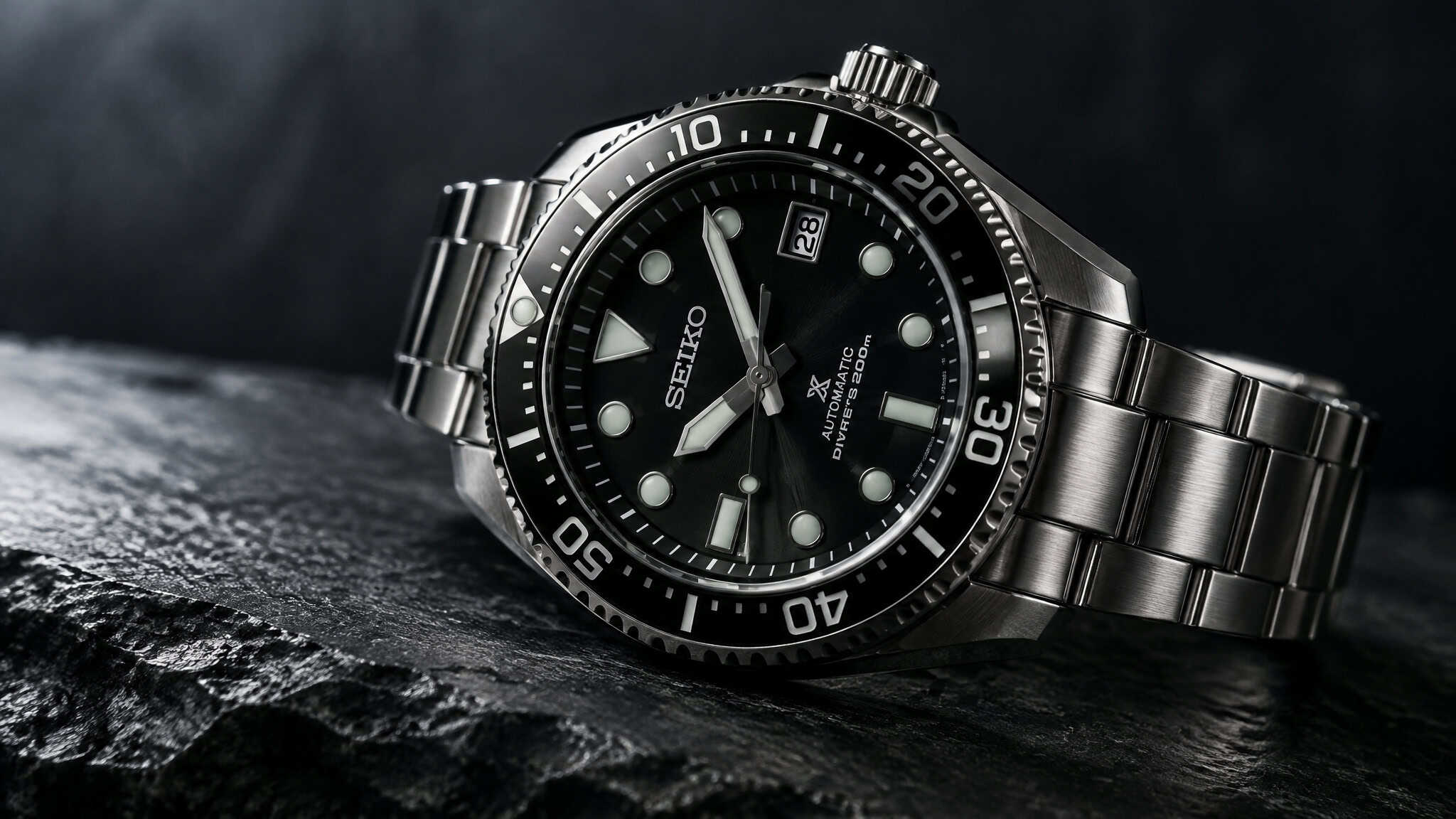
You want one steel watch. One watch that handles the office on Tuesday, the lake on Saturday, and doesn’t make you feel like an idiot for what you paid. That’s the whole assignment here, and the price range is absurd: I’ve rounded up picks from $155 to $135,000, organized by category and running from cheapest to most expensive, so you can find your tier instead of drooling at the top. First question worth settling before anything else: whether Rolex’s 904L steel actually matters against the 316L everything else uses.
Short answer coming right up. This list came together the way good roundups should, by the team nominating watches worth arguing about, and it gets updated regularly. Prices move around, so treat every number here as a starting point rather than a quote.
Table of Contents
904L vs 316L: does Rolex’s steel actually matter?
Honestly? Not enough to swing a purchase. Rolex calls its steel Oystersteel, and it’s 904L, while nearly every other watch in this guide, Seiko, Tissot, Omega’s mid-tier pieces, Tudor, uses 316L. The 904L story is about corrosion resistance and how well it takes a polish. What there isn’t is lab data showing it’s categorically better for the guy wearing it.
Put the $11,900 Oystersteel Submariner next to 316L watches costing a tenth as much and you’re mostly looking at a movement, a brand, and a bezel, not a metallurgical gap. Steel grade is one input among fit, movement, and price. It’s not a quality verdict, and if someone tells you otherwise, they’re selling something. (We break down the steel question further in are stainless steel watches good.)
Classic steel chronographs, $750 to $16,900
Yes, quartz chronographs like the Bulova Lunar Pilot are legitimately good alternatives to automatics for most guys. If you want accuracy and a story without winding rituals, quartz wins. If you want the mechanical heartbeat and don’t mind setting it Monday, automatics earn their premium. What actually explains the spread from $750 to $135,000 isn’t logos.
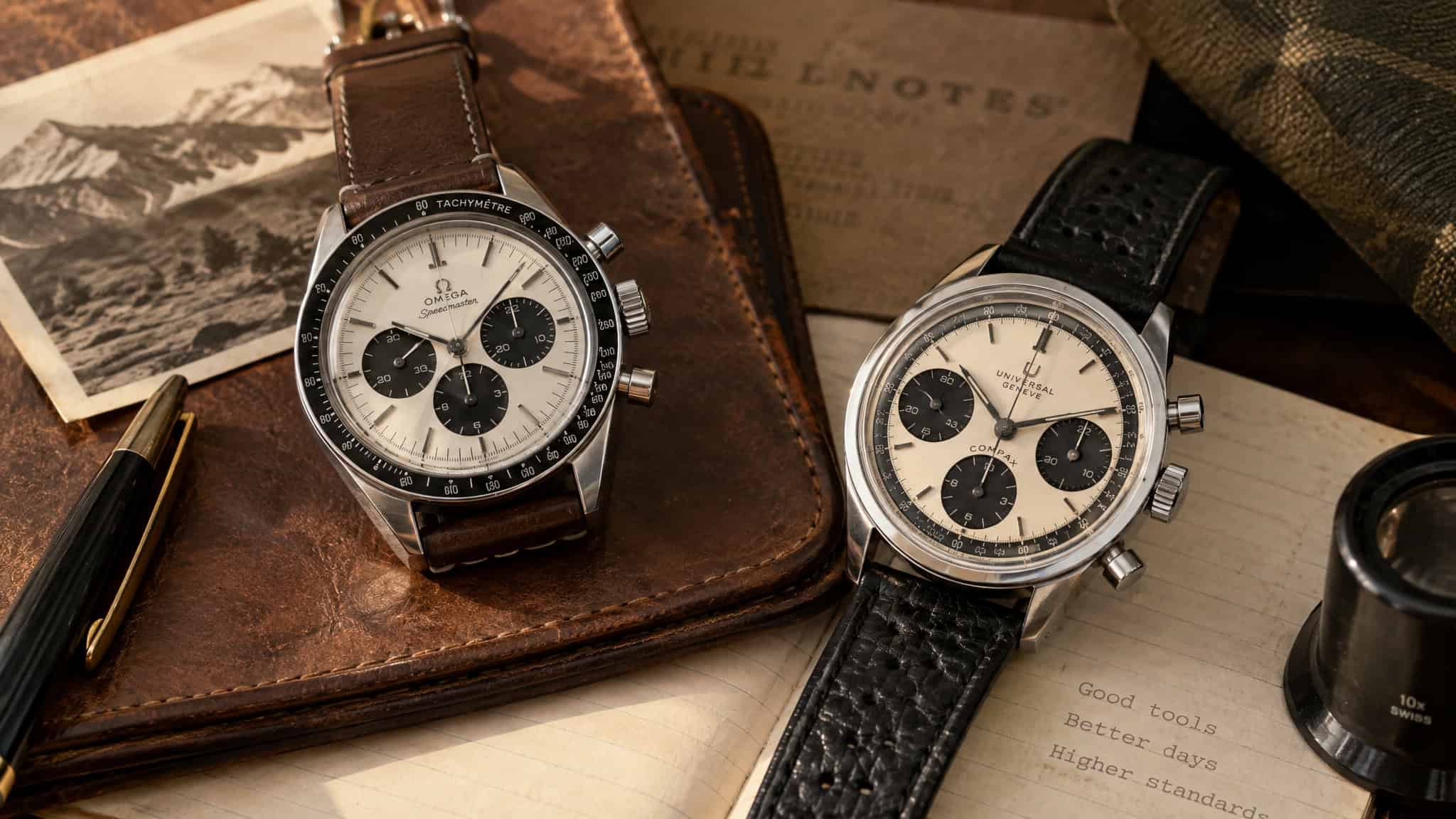
It’s movement provenance: high-frequency quartz, then solar, then shared Swiss Valjoux-based movements, then in-house manufacture. Climb that ladder and the prices make sense.
Bulova Lunar Pilot, $825
The quartz-defense pick. Its 262kHz movement buzzes at eight times the frequency of typical quartz and lands within about five seconds a month, with a sapphire crystal on top. The homage honors the Bulova chronograph Dave Scott wore on Apollo 15, which is a better story than most $8,000 watches have. The catch is real: 46mm case, 13.5mm thick, 52mm lug-to-lug.
It wears big. Smaller wrists should think twice, and 50m of water resistance means splash-safe, not swim-safe. Bulova brought out smaller-case versions in 2023, which solves half that problem.
Seiko Prospex Speedtimer, $750
The wearable counterpoint. 39mm, 45.5mm lug-to-lug, 100m of water resistance you can actually swim with, and sapphire. The solar Caliber V192 runs up to six months on a charge, so battery anxiety isn’t a thing. Tachymeter bezel, red accents for legibility, and on the wrist it reads as a proper little racing chrono rather than a gadget. Seiko’s 1969 original with Caliber 6139 was among the first self-winding chronographs ever made, which buys it some credibility without needing a history lecture.
Hamilton Intra-Matic Auto Chrono, $2,645
A real spend, but still below the Swiss-luxury crowd. 40mm, 49mm lug-to-lug, 100m WR, sapphire: the right-size sweet spot for most guys. Inside is an automatic ETA 7753 on a Valjoux base, the reliable engine everyone uses. The look is the pitch: panda dial, pump pushers, the two-register face that looks like it came from your grandfather’s drawer, in a good way.
Frederique Constant Flyback Chronograph Manufacture, $6,195
This crosses into serious money, and the trade is an in-house FC-760 with a flyback function at a price that undercuts bigger names. Building your own movement is genuinely rare at this price; most brands here would slot in a shared base caliber. 42mm, 13.8mm thick, 50m WR (desk-and-shower territory), sapphire. Released in 2017 with a 1930s vibe and two-tone dials in blue or chocolate: vintage feel without vintage problems.
Omega Speedmaster Professional Moonwatch, $7,800 Hesalite / $9,000 Sapphire
The icon. It started as a 1957 racing watch and went with the Apollo 11 crew in 1969, and that’s the shortest possible version of the most famous backstory in watches. 42mm, hand-wound Caliber 3861, tricompax dial with a tachymeter scale: busy but legible. The surprise caveat is 50m of water resistance on a watch this expensive, and hand-winding is either the charm or the annoyance depending on who you are. Nobody gets to tell you which.
TAG Heuer Carrera Glassbox, $7,250
Put it right next to the Speedmaster’s price tag and compare. 39mm and 13.9mm thick, so it’s the easier daily wear, and 100m of water resistance beats the Speedmaster for actual swimming. The 2023 domed “glassbox” sapphire brings back the 1960s look without the scratch-prone old crystal. The TH20-00 runs an 80-hour reserve with bidirectional winding: take it off Friday, it’s still running Monday. It’s named for the 1964 Carrera Panamericana race. That’s the heritage line; moving on.
Zenith Chronomaster Original, $10,600
For the guy who cares about movement pedigree more than badge recognition. It’s a lot of money, and what you get is a chronograph that times to a tenth of a second: the chrono hand sweeps the entire dial every ten seconds, which never gets old. 38mm and 12.9mm thick, vintage-correct sizing that’s a relief if you’re tired of 42mm everything, though 50m WR is just splash territory. The case copies the vintage A386, and the El Primero inside launched in 1969.
Breitling Chronomat B01 42, $12,200
Real-money territory, and at this price the watch has to earn it. This one mostly does. It’s thick at 15.1mm, but the payoff is 200m of genuine dive-grade water resistance and sapphire. In-house Caliber B01 with a 70-hour reserve is the actual reason for the price.
The ratcheting bezel with interchangeable rider tabs that count up or down is the gimmick that actually works. The rouleaux bracelet? People either love it or find it fussy. You’ll know within a week.
Rolex Cosmograph Daytona, $16,900
Everyone knows this watch, and most guys will never see one at retail. Say it plainly: the $16,900 retail number and street reality are different animals, and getting one at retail is its own quest. 40mm, 100m WR, sapphire, in-house Caliber 4130 (Rolex builds its own chronograph movement, and that’s why this watch is what it is). Released in 1963, named for the racetrack, with the Cerachrom ceramic tachymeter bezel as the modern practical upgrade.
A. Lange & Söhne Datograph Up/Down, $135,000
The ceiling. Let that number sit. 41mm, Caliber L951.6 flyback, 60-hour reserve, Outsize date, solid silver dial, and German AUF/AB labels on the power-reserve indicator. The dial is the most beautiful thing in this article. The dry caveat: 30m of water resistance on a six-figure watch.
You can’t shower with it. It launched in 2012, young by vintage standards but built with modern construction. If that’s out of range, the Lange 1 sibling ($39,900, 38.5mm gold, 9.8mm thin) is the cheapest door into the house, which is still a house payment. Flag: precious-metal case, so it’s here as the aspirational extreme, not a steel pick.
Steel dive watches from tool to icon
Steel dive watches are the most versatile steel watches for men, full stop. One case style that works with a suit or a wetsuit, a bezel that does something, and a price ladder from $395 to $19,100 with an honest pick at every rung. Two rules before the list. Anything beyond 300m of water resistance (Tissot’s 600m, Ball’s 1,000m) is marketing headroom no recreational buyer needs. And the unidirectional bezel is the feature that defines a real dive watch; the Fifty Fathoms entry below explains why.
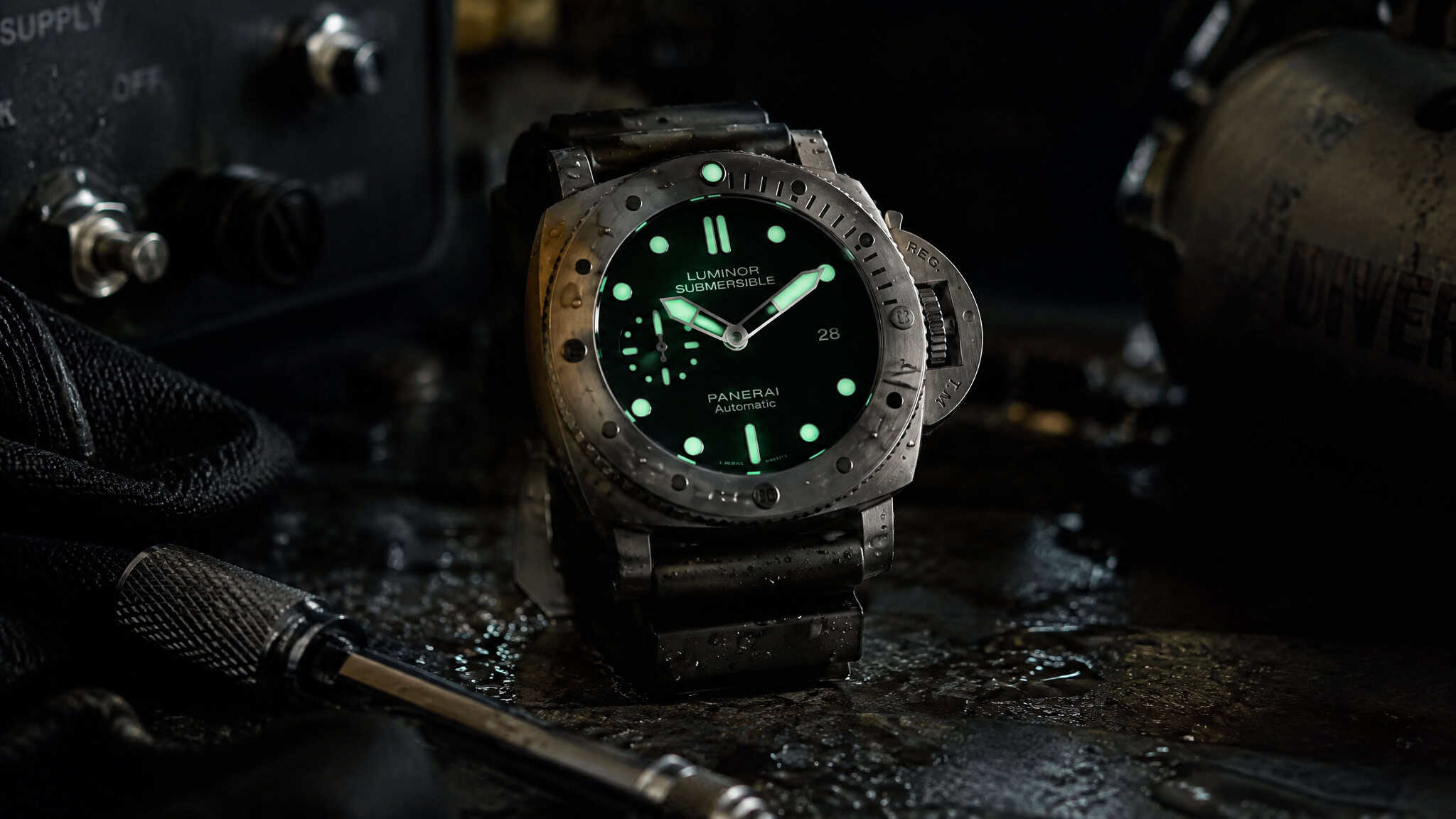
If you’re asking which brand does steel best overall: Seiko for value, Omega and Tudor for the luxury spec case, Rolex for the icon. Everything below is 316L unless noted, per the steel discussion above.
Quick test: Before you buy any diver, check thickness and lug-to-lug first; depth ratings above 300m are the spec that matters least.
Citizen Promaster Diver, $395
Set it and forget it. The Eco-Drive movement charges off any light, so you never open the case and never change a battery. That’s the whole pitch, and it’s a good one. 44mm but only 11.6mm thin, 200m of genuine dive-watch water resistance. The dial is genuinely luminous: check it in a dark movie theater or a garage and it glows like something out of a submarine movie. At this price the question isn’t “is it worth it,” it’s “why don’t I own one already.”
Seiko Prospex Turtle SRPE93, $525
The workhorse. A real 200m diver for the cost of a night out and half a tank of gas. Honest parts: 45mm case and 47.7mm lug-to-lug is big, and the crystal is Seiko’s Hardlex, not sapphire. That’s where the money goes elsewhere instead.
The Caliber 4R36 winds itself, keeps decent time, and stops if you leave it off for a day and a half. The 4:30 screw-down crown is fluted for gloved hands, the cushion case goes back to the 1970s, and the tsunami caseback medallion is the kind of detail that makes it feel like real gear.
Tissot Seastar 2000 Powermatic 80, $1,275
Where Swiss automatics start making sense. 46mm and 15.8mm thick: this one eats a sleeve, and you should know that going in. The 600m rating is absurd overkill, which is half the fun. The Powermatic 80 gives you three-plus days off the wrist and it’s still ticking. The helium valve is for saturation divers you’ll never be; the turquoise gradient dial is why you’d actually buy it.
Doxa SUB 300, $2,190
The cult diver, priced between the mainstreams and the big luxury names. You’re paying for character, not a logo everyone recognizes. 42mm and 45mm lug-to-lug is compact for a proper 300m diver, which is the practical win. The COSC-certified ETA 2824 is reliable and boring in the best way. It debuted in 1967 and got famous in Clive Cussler’s Dirk Pitt novels, and it comes in more dial colors than almost anything else on this list.
Christopher Ward C60 Trident Lumière, $2,470
The insider pick. Here’s how much watch your money gets when the brand doesn’t spend it on ads: the company was founded in 2004 and sells direct, one line of why-it’s-cheaper context, done. 41mm and just 10.85mm thick, a 300m diver that slides under a cuff. COSC-certified Sellita inside, ceramic bezel, Globolight lume indexes, and a micro-adjustable clasp you’ll use more than you think.
Rado Captain Cook Bronze, $3,250
Flagged clearly: this is a bronze case, not steel, included as family context for guys who want something different. The twist is a bronze-aluminum alloy that resists patina, so no green tinge if that’s not your thing. 42mm, 300m WR, sapphire, 80-hour reserve: solid all around at mid-luxury money. You’re paying for the alloy and the Swiss pedigree, a fair trade for some guys and not for others.
Ball Hydrocarbon Deepquest II, $3,749
The spec monster. 1,000m of water resistance, which no reader needs, and that’s precisely the appeal. Monocoque titanium case for strength, COSC-certified movement inside, and tritium tubes: tiny glass vials that glow for decades without ever needing a charge. Roughly triple the Tissot for ten times the depth rating. Do that math and decide if it matters to you. For a lot of guys, it does.
Oris Divers Sixty-Five Carl Brashear, $4,200
Bronze again, flagged. The draw is in-house Caliber 401 with a 120-hour reserve: five days off the wrist, still running. It honors Carl Brashear, the first Black US Navy Master Diver, and it’s limited to 2,000 pieces, which means it may be gone by the time you shop. Check availability first. One fit warning: the lug-to-lug runs long for a 40mm case, so try it on if you can.
Tudor Black Bay, $4,475, $7,725
The answer to you want a Submariner but not the wait and the price. 41mm and 14.8mm thick: chunky, and some guys want exactly that. Tudor builds its own movements now (Caliber MT5602), which used to be the knock on the brand and isn’t anymore. Aluminum bezels scratch; that’s part of the deal. The Black Bay 41 update adds Master Chronometer certification, runs 1.5mm slimmer at 13.6mm, and gets the T-fit clasp.
Omega Seamaster 300, $6,800
The Speedmaster’s water-going sibling: Speedmaster money, but you can swim with this one. Vintage-styled, with co-axial Caliber 8400 and vintage-tinted lume on a 1960s tool-diver look; the aged lume color is the detail people notice. 41mm, 300m WR, sapphire, nothing to apologize for. Worth a nod too: the Seamaster Diver 300M at around $6,000, covered fully in the next section, because it’s the default luxury-dive answer for most guys.
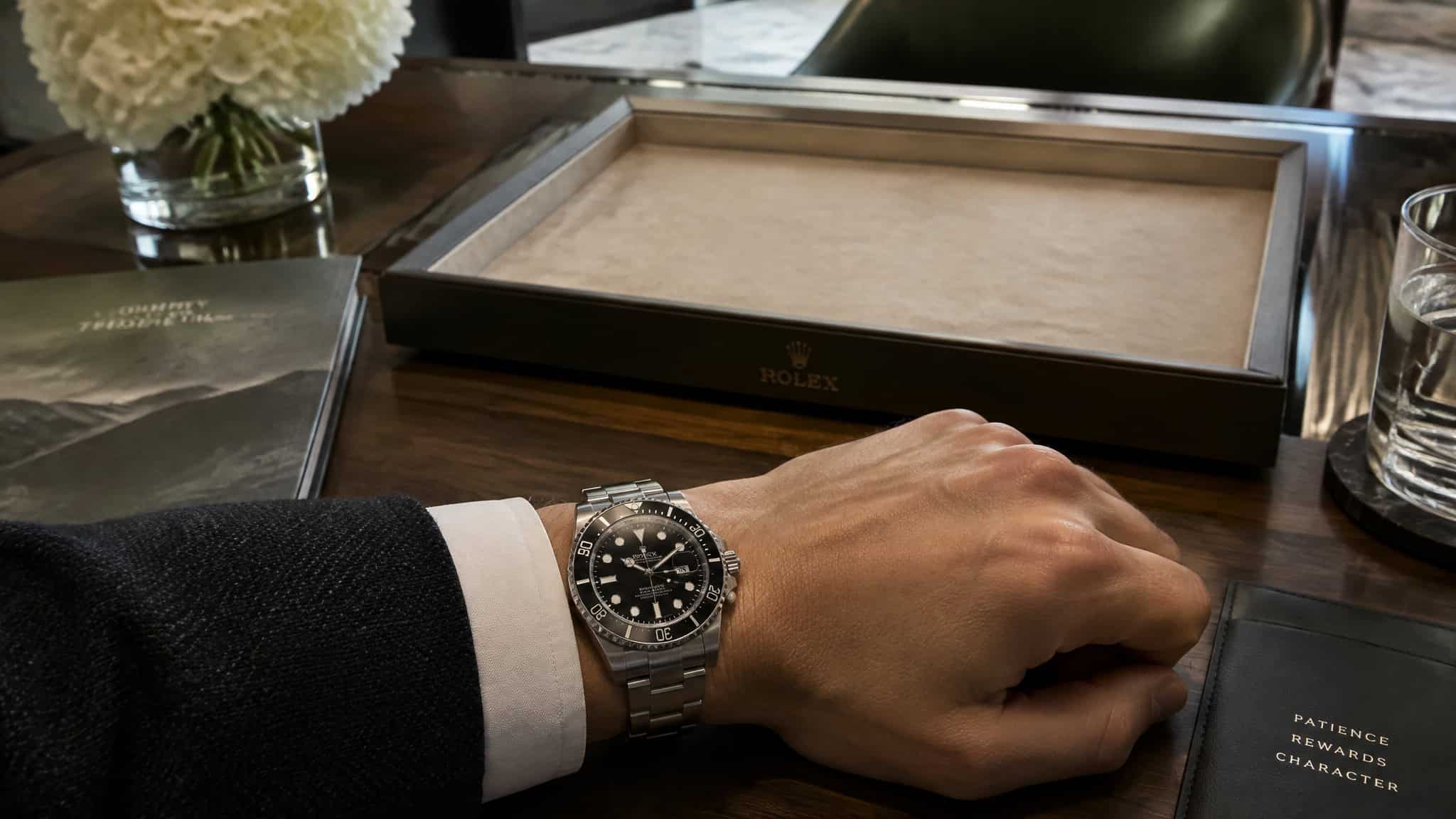
Rolex Submariner, $11,900
The watch everything else on this list gets compared to, so let’s be dry about it. 41mm, 12mm thick, 48mm lug-to-lug, 300m WR: proportions that wear right on almost anyone. Caliber 3235, 70-hour reserve, chronometer-certified. Three days off the wrist, still running. It debuted in 1953, the same year as the Fifty Fathoms, which is fun trivia and not an origin war.
The retail number is almost theoretical; finding one at retail is a story of patience and dealer relationships. The no-date at $9,910 is the smart first-luxury move.
Panerai Submersible, $12,500
A statement watch, and it’s not for everyone. 42mm on paper, but 51mm lug-to-lug, and that’s the number to check on smaller wrists. In-house P.900 with a three-day reserve: competent, modern, not the story. The story is that Panerai supplied Rolex-made dive watches to Italian Navy frogmen in WWII, and the Submersible nods to a 1950s Egyptian navy prototype. You’re paying for the design language more than specs.
Jaeger-LeCoultre Polaris Date, $13,100
Above Submariner retail, and JLC competes on charm and finishing, not resale. Say that honestly and decide if it works for you. 42mm, 200m WR, 70-hour reserve. It’s the 2018 successor to the 1968 Memovox Polaris, the first diver with a mechanical alarm, and the dual crowns with the inner rotating bezel are the conversation starter at any marina.
Blancpain Fifty Fathoms, $19,100
More than the Submariner, for the guy who’d rather have the originator than the most famous one. Released in 1953 and widely considered the first modern divers’ watch, and this is where the unidirectional bezel gets explained: it only turns one way, so a knock against a wall can’t fake extra bottom time. That’s a safety feature disguised as a countdown timer, and it’s why every real dive watch has one. 45mm and 50mm lug-to-lug: big watch, flagging it like I would to a friend. Caliber 1315, and the sapphire bezel survives desk duty better than vintage-style inserts.
Omega Seamaster Diver 300M vs Rolex Submariner: the first luxury dive decision
The Omega Seamaster Diver 300M is the smarter first luxury dive watch on specs and price, at around $6,000 against the Submariner’s $9,910 to $11,900, and the Submariner is the buy if you want the icon and can actually find one. Most people answer this question with brand loyalty, so let’s do it with numbers instead.
| Spec | Seamaster Diver 300M | Submariner (no-date) | Submariner (date) |
|---|---|---|---|
| Price | ~$6,000 | $9,910 | $11,900 |
| Case | 42mm, 13.5mm thick | 41mm, 12mm thick | 41mm, 12mm thick |
| Lug-to-lug | 49.7mm | 48mm | 48mm |
| Movement | Caliber 8800, 55h reserve | Caliber 3235, 70h reserve | Caliber 3235, 70h reserve |
| Water resistance | 300m | 300m | 300m |
| Certification | Master Chronometer | Chronometer | Chronometer |
Both are 300m divers with in-house movements, so the real deltas are price, certification, and the fact that Omega’s Master Chronometer testing is the tougher standard. The usual first-luxury criteria are under $10,000, safe, versatile, iconic, the same qualities that define the best value men’s watch brands. The no-date Submariner at $9,910 is the stated exception that squeezes in, and it’s the cleaner look besides. On fit, ignore case diameter and check thickness and lug-to-lug: the Seamaster runs 13.5mm thick on a 49.7mm footprint.
The common mistake is buying by diameter alone, then discovering the watch overhangs a smaller wrist. Neither watch is a loser here. One is $4,000 cheaper and objectively better tested; the other is the harder watch to buy at retail, and pretending otherwise would be dishonest.
Rolex stainless steel models worth buying
It depends on your budget, and the lineup is clearer than the hype suggests: the Submariner ($9,910 to $11,900) is the single-watch answer, the Daytona ($16,900) is the chronograph grail you’ll likely wait for, and the Explorer and Oyster Perpetual are the simpler steel entries at lower spend. When is the premium worth it over the Tudor Black Bay or the Omega Seamaster already covered here? On specs alone, it’s close: the Submariner’s chronometer-certified Caliber 3235 and 70-hour reserve are matched or beaten by the Tudor’s Master Chronometer movement at half the money. What you’re paying extra for is the finishing, the bracelet, the resale liquidity, and the fact that a Submariner is the reference point every other watch gets measured against. And per the steel discussion at the top, the Oystersteel (904L) is a nice detail, not the reason for the price, steel is just one option among metal watch materials like gold, bronze, and coated alloys, each with its own durability and value trade-offs. If someone asks what the poor man’s Rolex is, the honest answer sits two sections up: the Black Bay, with its own in-house movement and 13.6mm-thin 41 update.
Pilot watches: heritage-styled fliegers vs certified cockpit tools
Spec sheets blur a split that matters. Dress fliegers are styled after 1940s cockpit dials (Stowa, Tutima, Zenith’s downsized Pilot), while certified cockpit tools are built to professional standards (Sinn’s TESTAF certification, argon-filled cases that keep fog off the crystal). The category has also been shrinking for wearability: the Big Pilot 43 arrived in 2021, Zenith downsized its Pilot line in 2023, and the IWC Mark XX landed at 40mm. Proof the category starts cheap: the $1,150 Stowa below.
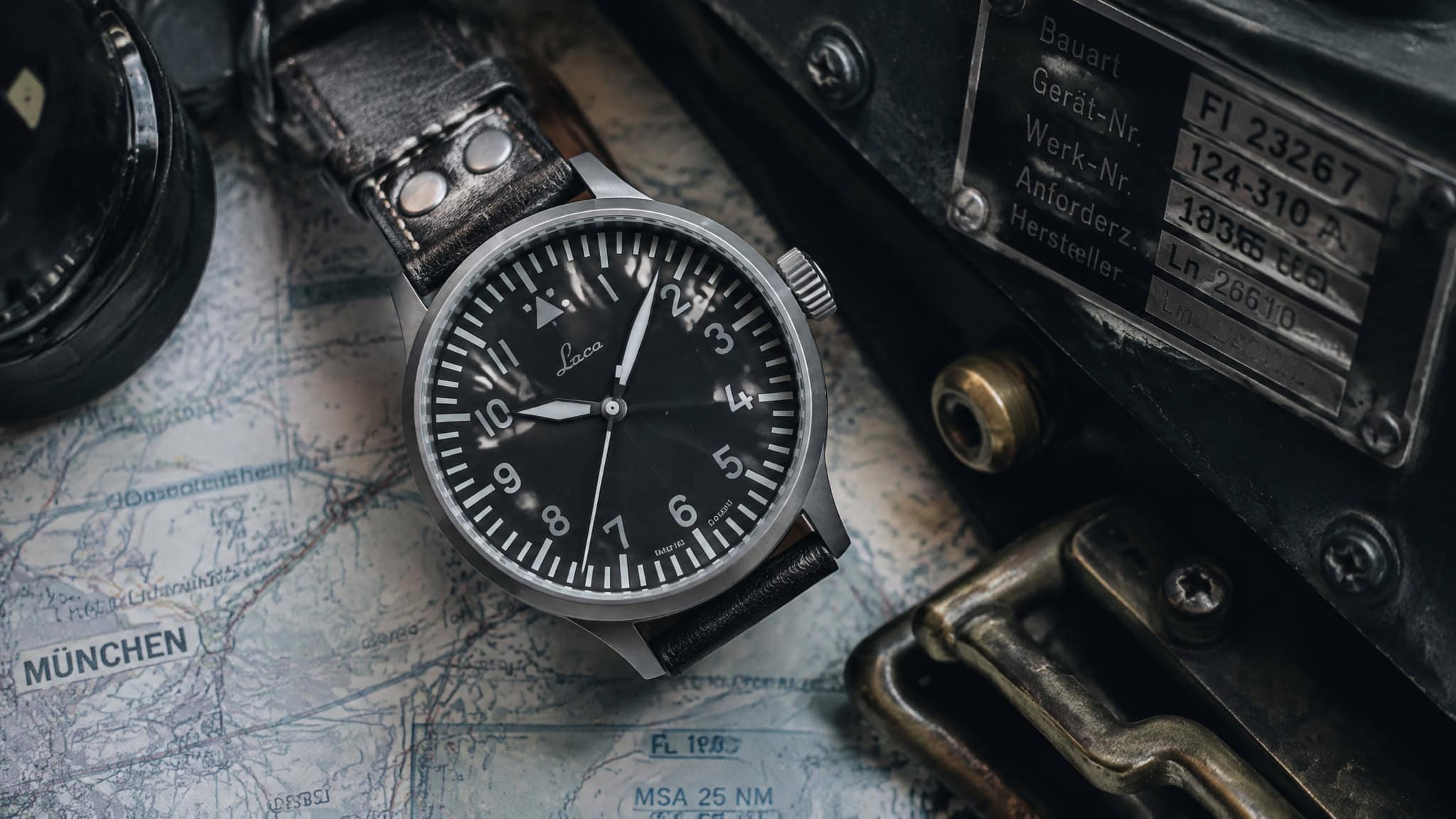
Stowa Flieger Klassik, $1,150
What a proper flieger costs when nobody’s paying for marketing. 40mm and just 10.2mm thin, 50m WR, so leave it off in the pool. Triangle-two-dots at 12, blued hands, onion crown: the cockpit-clock look that never goes out of style. Dependable Swiss SW200 automatic inside, with a 40-hour reserve that means daily wear or a winder.
Alpina Startimer Pilot Automatic, $1,295
Within spitting distance of the Stowa, so frame it as execution style, not value. 44mm is a statement, and 30m of water resistance is the weak spot; both worth flagging before you order. The oversized crown is the signature, with a red triangle at 12. Sellita-based AL-525 inside with a 38-hour reserve: wear it daily or reset it.
Tutima Flieger, $1,950
Double the Stowa, and you’re paying for the Glashütte address and the finishing step-up. Some guys will say worth it, others won’t. 41mm and 100m WR, so it’s more wearable than the Alpina and you can shower with it. Slate-gray gradient dial on a Horween leather strap, on a proven Valjoux-based movement. That combo feels authored.
Longines Avigation BigEye, $4,400
The reason to care is under the dial: a column-wheel chronograph movement, the old-school smooth-pusher kind, and it’s rare at this price. 41mm but thick-ish and splash-only, a tradeoff vintage-styled chronos often make for looks. Titanium keeps it light on the wrist, and the oversized 30-minute counter is the “big eye” people remember.
Bell & Ross BR 01-92, $5,100
One question: does a cockpit-instrument square on your wrist work for you or not? 46mm squared wears differently than a round 46mm, but it’s still a big watch. Real money for a design gimmick that happens to be genuinely well executed, with a tried-and-true ETA 2892-2 inside the very unconventional case. The design dates to 2005, which makes it an icon of its own now, not a fad.
Sinn EZM 10 TESTAF, $5,680
Mission-spec engineering, not jewelry. The argon-filled case keeps fog off the crystal, and TESTAF is the German professional pilot-watch standard, meaning actual pilots signed off. 44mm titanium, 15.6mm thick, 53mm lug-to-lug: titanium keeps the weight down, but flag the lug-to-lug on smaller wrists. If that doesn’t move you, the Bell & Ross or the Longines is the better spend.
Breitling Navitimer B01, $10,700
The slide rule you’ll never use but love owning. Introduced in 1952 as the AOPA’s official watch, which is the trivia that makes the slide-rule bezel make sense; the busy three-register dial is the point, not a flaw. In-house B01 inside, same backbone as the Chronomat. This is a statement purchase about aviation romance, and being honest about that beats any spec talk.
Zenith Pilot Big Date Flyback, $12,800
Zenith’s 2023 downsizing finally made its pilots wearable, at 42.5mm against the IWC’s 46. El Primero Caliber 3652 with a 1/10-second flyback: the seconds hand sweeps like it’s showing off. This competes directly with the IWC below, and for watch nerds the movement is the tiebreaker.
IWC Big Pilot’s Watch, $13,900
46.2mm is not a suggestion. It’s the design, and it’s only for guys who know their wrists can take it. Among the priciest here, but unlike most, you can actually get one. The practical note for most readers: the Big Pilot 43 (2021) is the same story in a size that works.
IWC was one of five contractors supplying the WWII Luftwaffe, stated once, without ceremony. The IWC Mark XX is the sizing benchmark for the category: 40mm, 49mm lug-to-lug, 100m WR, caliber 3211 with a 120-hour reserve.
Breguet Type XX, $23,300
Old-money aviation, not cockpit cosplay. Nearly double the IWC, and the buyer is paying for Breguet’s name and the flyback: reset-and-restart in one push, the detail pilots actually wanted. 42mm, 100m WR, comfortable size for the money and the category.
Integrated-bracelet steel sports icons, and how to get the look without a waitlist
The best luxury steel watches in this integrated-bracelet style run from $4,400 to $56,500, and the whole design DNA traces to one man: Gérald Genta, who drew both the Royal Oak (1972, 50th anniversary in 2022) and the Nautilus. Patek discontinued the Nautilus 5711, which only boosted its desirability, and if you’re eyeing a stainless steel Rolex in this same price universe, its Oystersteel story has its own authenticity quirks. But here’s the reframe: you don’t need a waitlist to own the look. The same design language starts at $4,400 with the Riviera, and even at $450 with the Tissot PRX (cross-referenced from the budget section below). These cases run 8.1 to 12.1mm thin, which is the category’s hallmark.
Baume & Mercier Riviera, $4,400
The 1973 classic, relaunched in 2021. Twelve-sided bezel, with a Baumatic movement option carrying a five-day reserve. The attainable entry into the whole category.
Girard-Perregaux Laureato, $15,000
The 1975 original, returned to its roots in 2016. Octagonal bezel, clous de Paris texture, H-link bracelet, and just 10.68mm thin.
Piaget Polo, $15,800
The 1979 “shape within a shape,” an icon of the 1980s, back in steel since 2016. 9.4mm thin.
Chopard Alpine Eagle, $17,000
From the 1970s St. Moritz, in proprietary Lucent steel with an in-house movement and an eagle-iris dial.
Hublot Big Bang Integral, $22,000
The first Big Bang on an integrated bracelet, with a skeletonized in-house Unico chronograph. 11.1mm.
Vacheron Constantin Overseas, $22,500
Maltese-cross bezel, 2016 revamp, 11mm thin. The quiet one of the Genta family.
Patek Philippe Nautilus, $30,000 base
Genta design, 8.3mm thin, and the 5711’s discontinuation turned desire up another notch. Base price is a starting point, not a promise.
Audemars Piguet Royal Oak, $40,100
The other Genta. Visible screws, tapisserie dial, 8.1mm thin. The original 1972 heresy that became the template.
A. Lange & Söhne Odysseus, $56,500
Lange’s first-ever steel watch, which is the hook. Guilloché dial, Datomatic movement, 120m water resistance.
Design trailblazers beyond the round steel case
Square, rectangular, and movement-as-display steel watches buy more distinctiveness per dollar than the round icons, and the squares carry genuine invention stories. The Cartier Tank set the template in 1917, named after the WWI French tank, and designers have been riffing on non-round cases ever since. If round-and-steel starts feeling like a uniform, this is the exit.
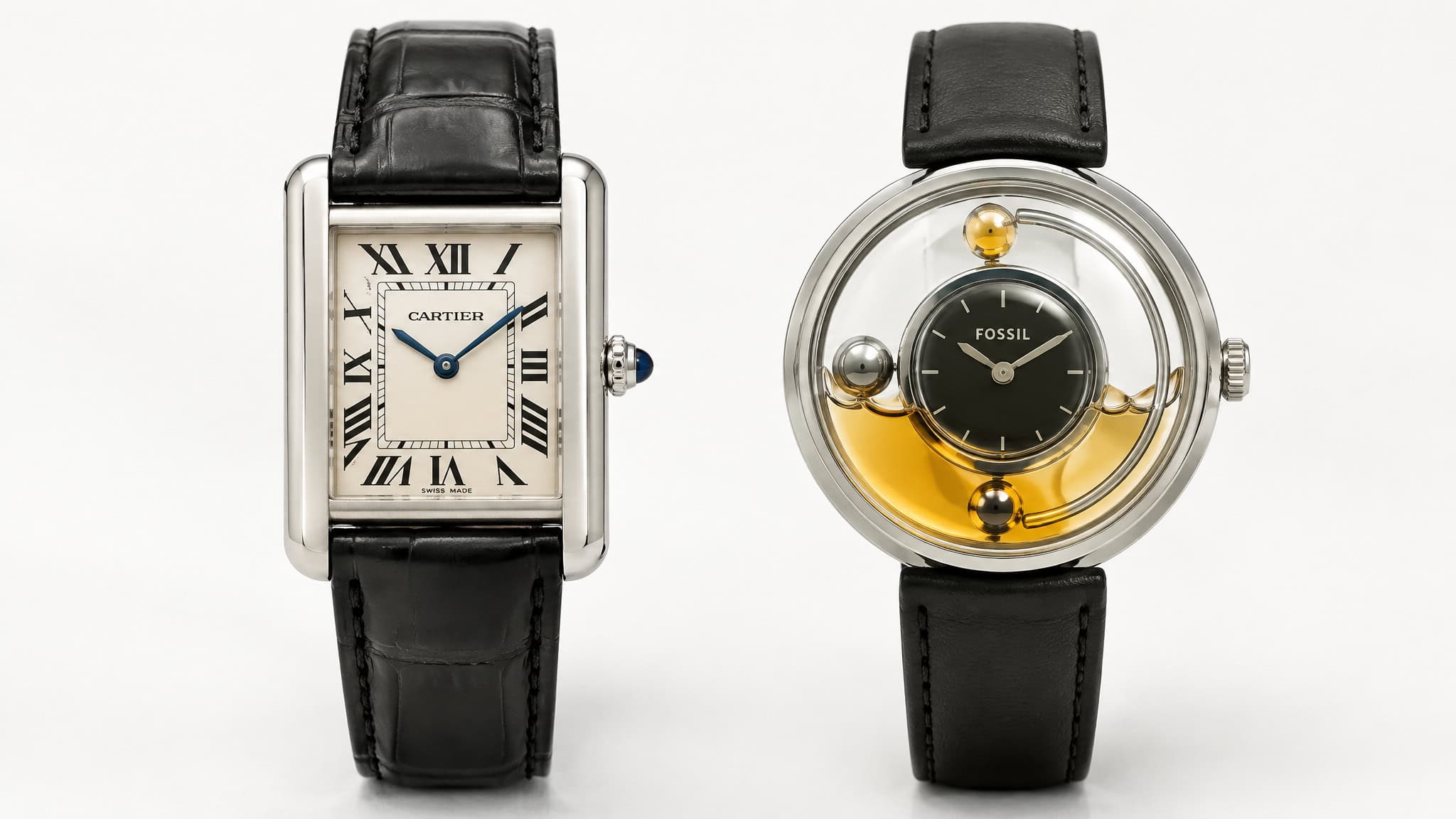
Swatch Sistem 51, $155
A 51-part automatic movement in five modules, held together by a single central screw, unveiled in 2013. At $155, that’s engineering you can wear to the gym. The honest tradeoff: mineral crystal, the weakest glass on this list.
Cartier Tank, $7,350
Created in 1917 and named after the WWI French tank. 44mm by 34mm rectangle, Roman numerals, blued sword hands. The office watch on this list, full stop. The note for first-luxury buyers: the Cartier Santos is the more versatile square pick, especially for the one-watch crowd.
Jaeger-LeCoultre Reverso, $11,700
In production since 1931, and the reversible case was built for polo players flipping it to protect the crystal. The Reverso Tribute model is the one that most faithfully echoes the original Art Deco look.
Bulgari Octo Finissimo, $14,700 bracelet / $13,800 strap
5.15mm thin. That number holds multiple industry thinness records. Say it and let it land.
Ulysse Nardin Freak X, $21,000
Movement-as-dial: the rotating bridge itself shows the minutes, which challenges what a watch face even is. Flagged: titanium case, not steel. It’s the 2019 evolution of the 2001 original.
Ressence Type 3, $51,900
An oil-filled orbital display that challenges what a wristwatch is. Keep it on the shortlist for the guy who already owns everything normal.
Best stainless steel watches under $500, with the flaws spec sheets hide
The best steel dive watches under $500 are the Casio Duro, the Orient Kamasu, the Vostok Amphibia, and Citizen’s NY0040-adjacent picks, and yes, cheap steel watches are genuinely good: the $85 Duro below settles that with 200m of real water resistance. The catch nobody puts on the spec sheet: budget watches ship budget finishing. A common first-buy pattern is ordering online, getting surprised by crown feel or bezel grip, and assuming the watch is defective when it’s just a price-tier tradeoff. It’s not a defect. It’s where the $300 went.
Red flag: A stiff crown or gritty bezel on a new budget watch is usually price-tier finishing, not a defect worth returning.
Casio Duro, $85
A sub-$100 watch that outperforms its price perception. 44.2mm, 12.1mm thick, a real 200m water resistance rating, plain quartz. That’s it. That’s the review. For the price of a pizza night and change, you own a legitimate dive-style watch.
Vostok Amphibia, $100, $200
The wobbly crown is not a flaw; it’s the pitch. It’s a deliberate two-piece design, and the compression-style case actually seals tighter under pressure. 39mm, 200m WR, and an engineering explainer you’ll retell at parties.
Orient Kamasu, $345
Sapphire crystal and an in-house movement (the F6922) at a price that shouldn’t include either. Named flaws, honestly: the crown is fiddly and the bezel grip is weak. You’re trading those for the crystal and movement, and for most guys that’s the right trade.
Seiko Presage Cocktail Time, $450
The dress option: 4R35 automatic under a sunburst dial that looks like it costs three times more. The crystal is Hardlex, and 50m is the safe way to read the water resistance. Office watch, dry hands, zero regrets.
Tissot PRX Quartz, $450
40mm, 10.4mm thin, integrated bracelet: the affordable entry into the integrated-bracelet design language from the section above. ETA F06.115 quartz inside. This is the watch that makes the $40,000 Royal Oak conversation feel less hopeless.
Seiko 5 Sports GMT SSK001, $495
The honest caveats are the review: Hardlex crystal, no screw-down crown, and it’s a caller GMT, not a true GMT. The 4R34 jumps the local hour hand independently in only one direction, and the third time zone comes via the 24-hour bezel instead. Is it still worth buying? If you want a genuine GMT complication at $495 and can live with the compromises, yes. If you want a true traveler’s GMT or a watch you beat against pool decks, skip it and save.
Spec tiebreakers: certifications, crystals, and what actually decides a close call
When two watches tie on style and heritage, certification, crystal, lume, and power reserve break the tie. COSC and Master Chronometer are the objective differentiators: Doxa, Ball, and Christopher Ward hold COSC, and Tudor is the only brand besides Omega applying Master Chronometer across a lineup. There’s one credential nobody else can claim, though: Marathon is the sole current supplier of watches to the U.S. armed forces, which is about as strong a certification as a tool watch can carry. The crystal ladder runs sapphire over Hardlex over mineral.
Tritium tubes glow for decades without charging; standard lume needs a light source. And power reserve figures of 70, 80, or 120 hours have become the modern signal of which spec tier you’re buying into.
Office to weekend: choosing by how you actually live
Match the watch to the week: office picks are the PRX or the Tank; the one-watch answer is the Black Bay, Seamaster, or Santos; weekend and tool duty goes to the Turtle or the Promaster; travel wants a GMT (Longines pioneered the dual-time wristwatch in 1925 with Zulu Time; Rolex defined the modern format in 1955 for Pan Am pilots). The three-watch rule you’ve probably heard about is a collector heuristic, not a standard: one dress, one tool, one travel watch, and this guide’s picks fill all three slots. Apply the lug-to-lug check to every one of them before buying.
The single-watch answer and where to start
On budget alone, the guide’s answer is the Rolex Submariner no-date at $9,910, the stated single-watch exception to the under-$10,000 first-luxury rule, with the Tissot PRX or the Seiko Turtle as the realistic starting points below it. From there, work the sequence: budget tier, then category, then fit (lug-to-lug, not diameter), then tiebreakers, then where it slots into your week. Concrete starting picks by band: under $500, the Casio Duro or the PRX. Under $1,000, the Seiko Turtle or the Bulova Lunar Pilot. Under $3,000, the Hamilton Intra-Matic or the Christopher Ward C60.
Under $7,000, the Seamaster Diver 300M. Above that, the no-date Submariner if you can find it, and patience if you can’t. One watch, bought once, worn constantly: that’s the whole point of steel anyway.
Frequently Asked Questions
What watch is the poor man’s Rolex?
The Tudor Black Bay is the honest answer. It’s the Submariner’s sibling brand, and since Tudor builds its own in-house movements (like the MT5602), the old knock on the brand doesn’t hold anymore. The updated Black Bay 41 runs 13.6mm thin, carries Master Chronometer certification, and costs roughly half what a Submariner does.
Omega Seamaster Diver 300M vs Rolex Submariner: which steel dive watch should I buy first?
The Seamaster Diver 300M is the smarter first luxury dive watch on specs and price, at around $6,000 against the Submariner’s $9,910 to $11,900, and Omega’s Master Chronometer testing is the tougher standard. The Submariner is the buy if you want the icon and can actually find one at retail. Neither is a loser; one is $4,000 cheaper and objectively better tested, the other is simply harder to buy.
Is the Seiko 5 GMT worth buying despite its Hardlex crystal and non-screw-down crown?
Yes, if you want a genuine GMT complication at $495 and can live with the compromises. The honest caveats are exactly those: Hardlex crystal, no screw-down crown, and it’s a caller GMT rather than a true traveler’s GMT, with the local hour hand jumping in only one direction. If you plan to beat it against pool decks or need a true GMT, save up instead.
What’s the difference between a dress flieger and a certified pilot watch?
Dress fliegers are styled after 1940s cockpit dials but built like regular watches, while certified cockpit tools meet professional standards — think Sinn’s TESTAF certification and argon-filled cases that keep fog off the crystal. Both categories have shrunk for wearability, with models like the IWC Mark XX landing at 40mm. Check water resistance carefully either way; many fliegers are splash-only.
How much should I spend on my first serious steel watch?
Realistic starting points are the Tissot PRX (~$450) or the Seiko Turtle ($525), with solid steps at the Hamilton Intra-Matic under $3,000 and the Omega Seamaster Diver 300M under $7,000. The guide’s single-watch answer is the no-date Rolex Submariner at $9,910, but that’s the ceiling, not the entry. Fit (lug-to-lug, not diameter) matters more than price band.