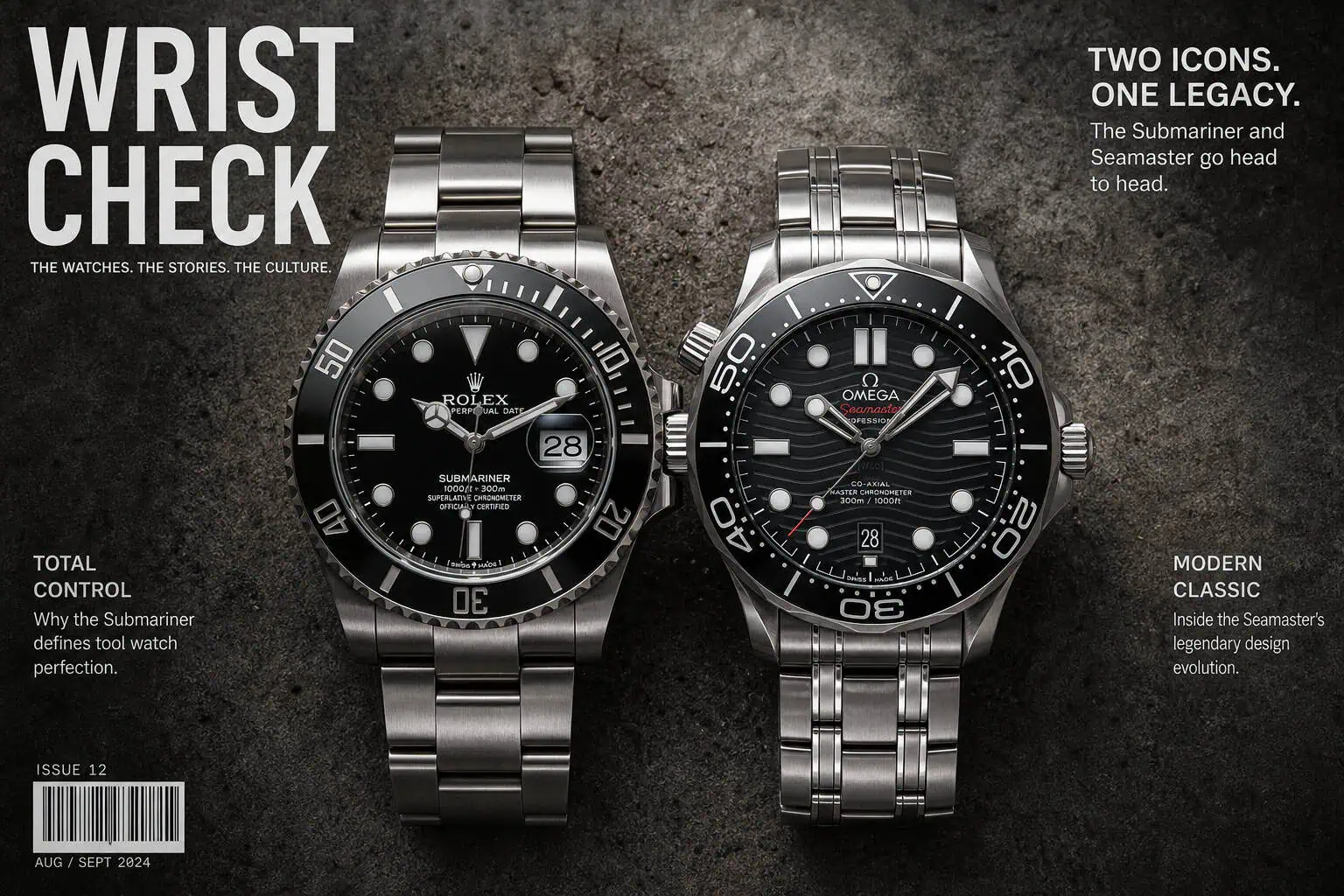
You know the scenario: you’re sitting at a desk next to a pair of powered speakers, and a few weeks later your Rolex Submariner starts running a few seconds fast. Your buddy with a OMEGA Seamaster shrugs and says his hasn’t missed a beat in three years. That’s the kind of real-world durability question that forums live for, and it’s the one this article answers.
Both are Swiss, both are over-engineered, and both’ll outlive you with proper care. But they prioritize different things. Omega leads on magnetic resistance, depth ratings, and technical innovation. Rolex leads on movement simplicity, bracelet comfort, and long-term serviceability. Neither is “more durable” across the board — it depends on what kind of abuse you’re talking about.
Here’s the breakdown across five dimensions that actually matter for daily wear.
Key Takeaways
Omega’s Master Chronometer movements resist magnetic fields up to 15,000 gauss — 15 times the Rolex Milgauss rating, using silicon components inside the movement itself, not a bulky inner cage.
Rolex wins on movement serviceability and bracelet quality: the 3235/3255 calibers have a 70-hour power reserve and tighter accuracy spec (-2/+2 sec/day), and watchmakers consistently prefer working on Rolex over Omega’s coaxial escapement.
Both brands are over-engineered for 99% of buyers — the practical difference is marginal unless you work near strong magnets, need extreme depth, or plan to keep the watch for decades and service it yourself.
Table of Contents
Magnetic Resistance: Omega’s Clear Technical Lead
Omega wins this category by a knockout. The Master Chronometer movements are certified to 15,000 gauss by the Swiss Federal Institute of Metrology (METAS). That’s not a lab number — it was independently verified by Argonne National Laboratory. For context, most watches get magnetized by a fridge magnet. An Omega can sit on an MRI machine and still keep time.
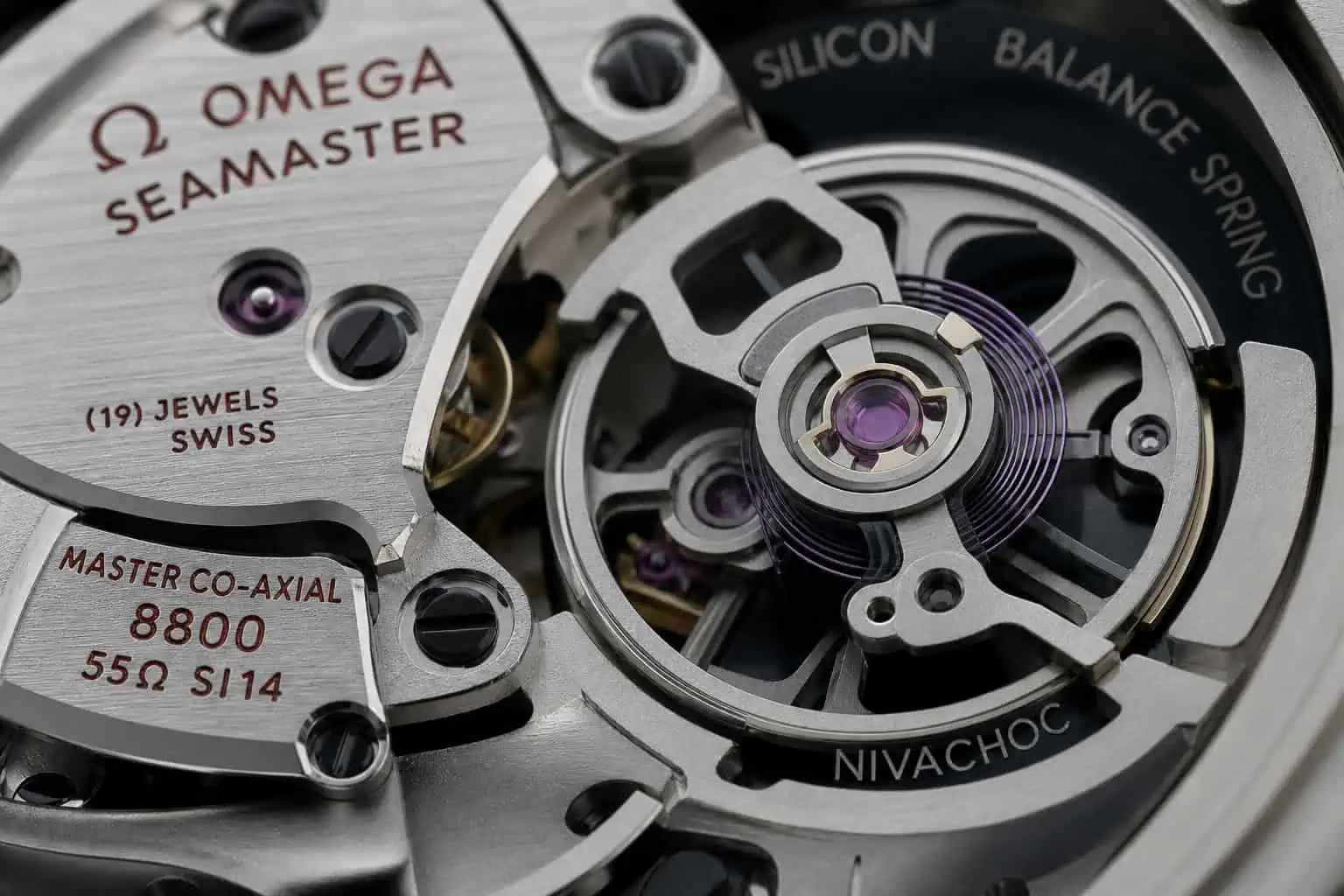
The secret is a silicon balance spring (Si14) and non-magnetic components throughout the movement itself. No bulky cage, no compromises. The entire Master Chronometer line — Seamaster, Constellation, Speedmaster, gets this protection.
Rolex, on the other hand, only has one dedicated anti-magnetic model: the Milgauss, rated to 1,000 gauss. It achieves that with a soft-iron inner cage that makes the watch thicker and prevents a display caseback. Newer Rolex calibers like the 3235 and 3255 use the Blue Parachrom hairspring, which is more resistant than a traditional metal spring, but Rolex publishes no systematic magnetic resistance rating. In practice, a non-Milgauss Rolex can still get magnetized by everyday stuff — laptop speakers, airport scanners, power tools.
If you work near magnets or don’t want to think about it, Omega is the obvious choice. The 15x advantage is real, and it applies across the whole lineup.
Water Resistance: Depth Ratings vs. Real-World Diving
The depth records are a fun trivia point. In 2019, Omega’s Planet Ocean Ultra Deep reached 10,928 meters in the Mariana Trench with explorer Victor Vescovo, beating the Rolex Deep Sea Special’s 1960 record of 10,916 meters by 12 meters. Both are useless for anyone who isn’t a deep-sea submersible pilot.
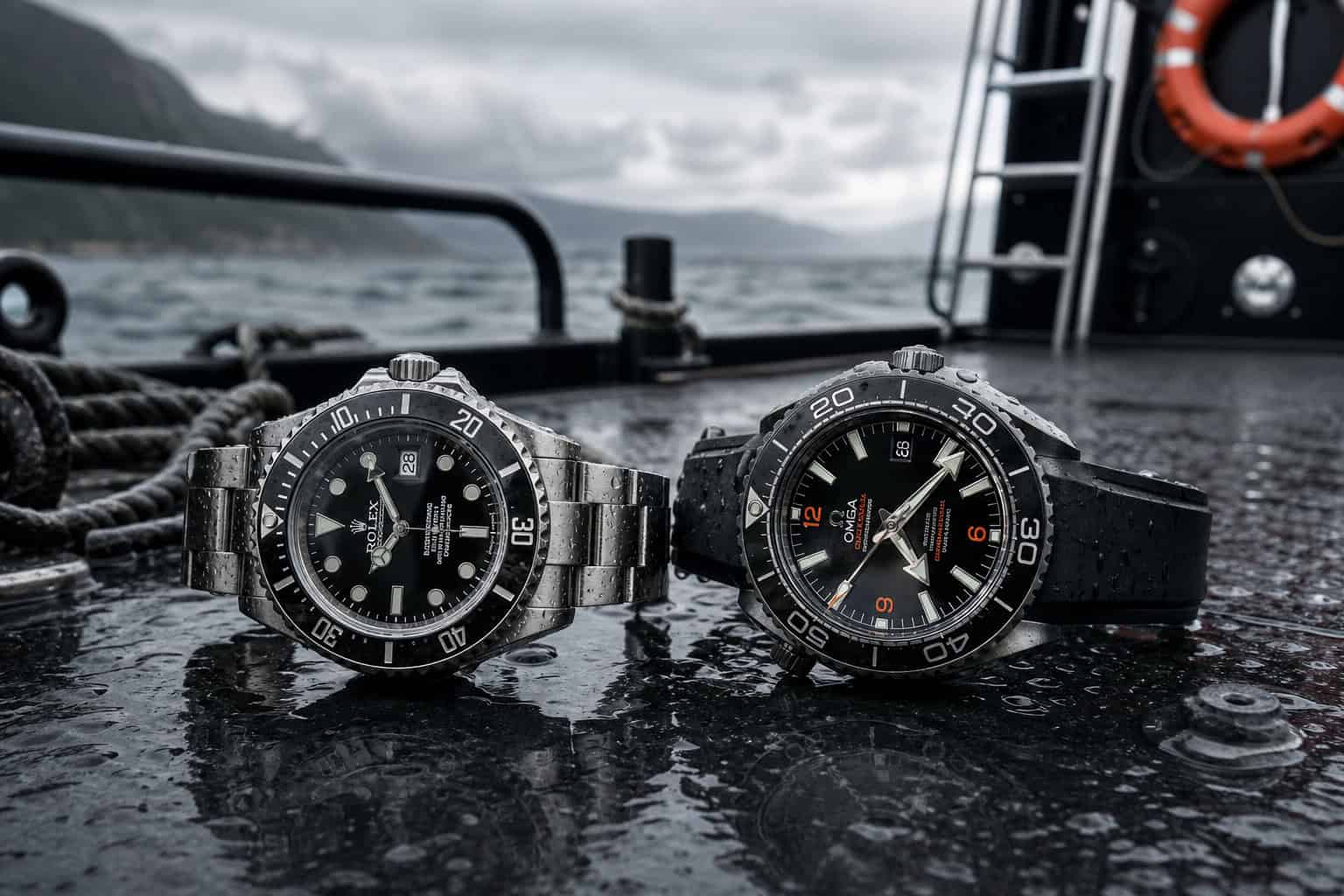
For daily wear, both brands are over-engineered at 300 meters. The practical difference is nil for 99% of buyers. The depth records are a fun trivia point, but they don’t affect real-world use. The real difference is in engineering philosophy.
Rolex invented the Oyster case in 1926 — a screw-down crown and caseback that’s been refined for a century. The Deepsea uses the Ringlock System (a nitrogen-alloyed steel ring inside the case) to reach 3,900 meters. Omega’s Ultra Deep uses a monocoque case design tested to 15,000 meters. Omega also uses its NAIAD lock case back on many dive models, which keeps the case back aligned perfectly and prevents misalignment during pressure changes.
For the guy who swims, snorkels, or does recreational dives, both are bulletproof. The practical differentiator is the helium escape valve. Omega puts one on most of its divers (Seamaster Diver 300M, Planet Ocean), while Rolex only includes it on the Sea-Dweller and Deepsea. If you actually do saturation diving, you’ll want the valve. For everyone else, it’s a non-issue.
Movement Robustness: Coaxial vs. Lever Escapement Tradeoffs
This is the most nuanced section, and there’s no clear winner. Both are excellent; they just excel at different things.
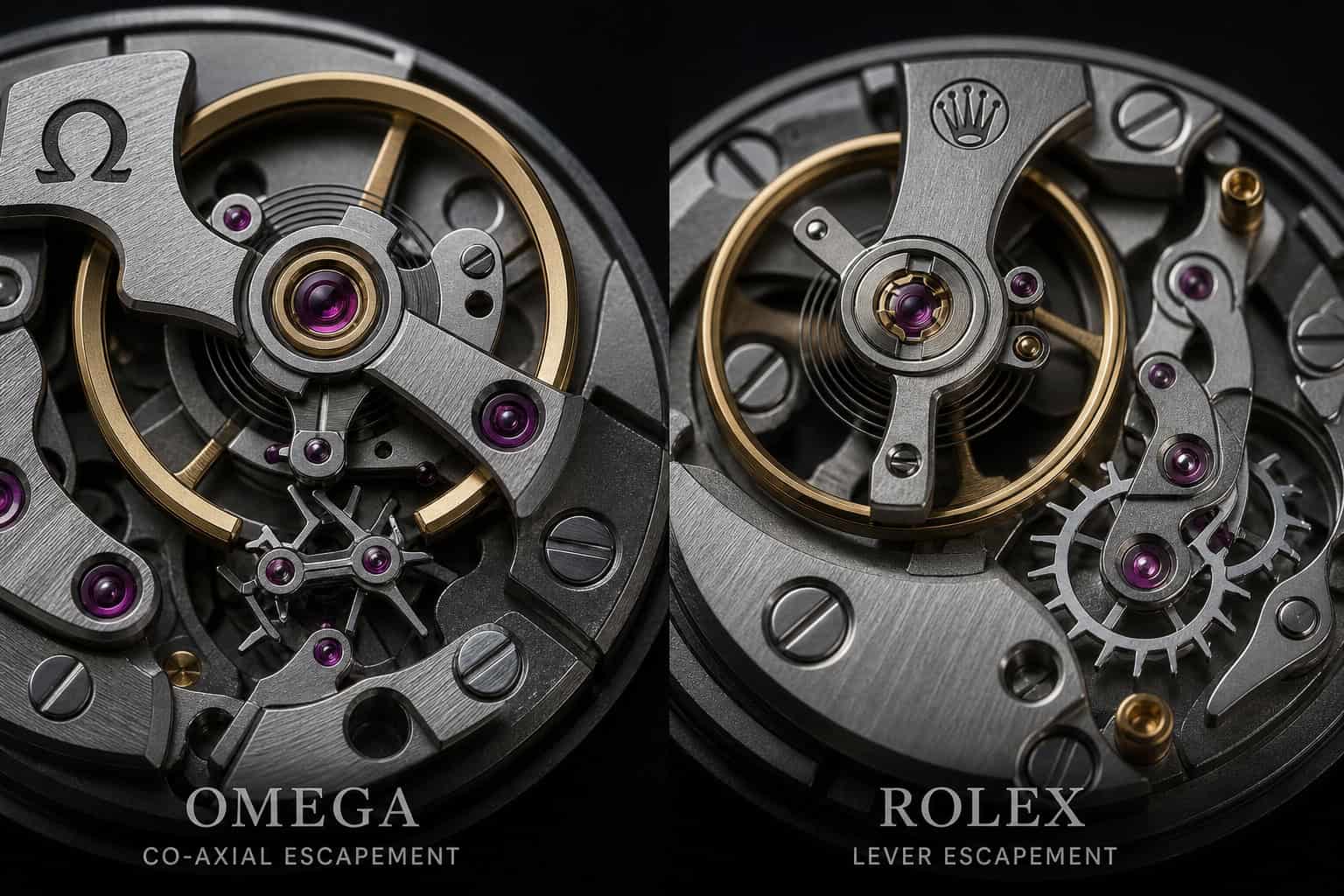
Omega’s coaxial escapement, designed by George Daniels and introduced in 1999, reduces sliding friction compared to the traditional Swiss lever escapement that Rolex uses. Less friction means less wear, and in theory, coaxial escapements extend service intervals and provide increased accuracy. It’s a technical advancement, and many watchmakers consider it one of the greatest modern innovations in horology.
But the coaxial has more total parts, which means more things that could go wrong. It’s also 1–2 mm thicker, making the watch bulkier on wrist. And it requires specialist training to service — not every watchmaker will touch it.
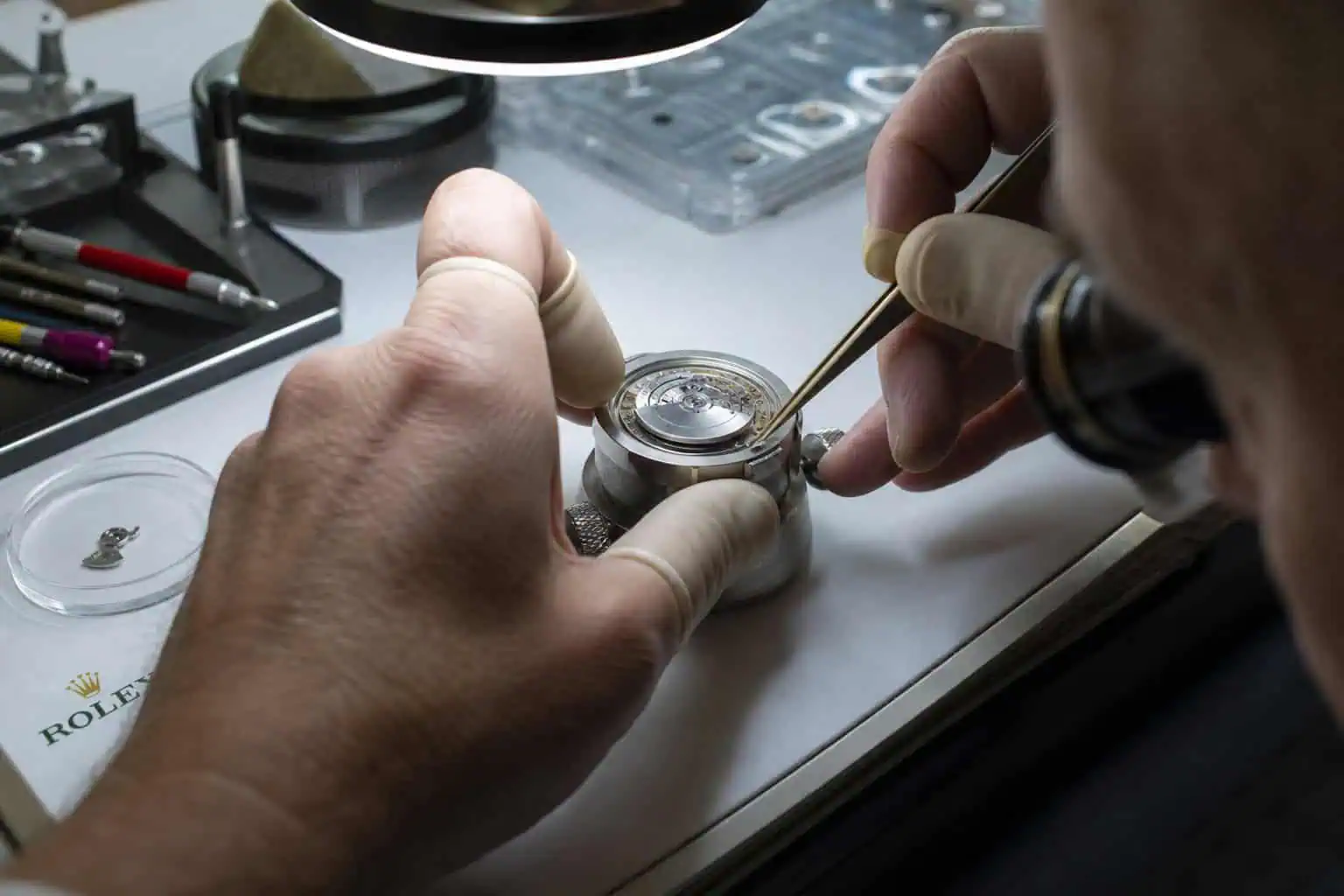
Rolex’s lever escapement has been refined for over 200 years. It’s simpler, more proven, and watchmakers strongly prefer working on it. The modern calibers (3235, 3255) have a 70-hour power reserve, beating Omega’s 55–60 hours. Accuracy specs also favor Rolex: Superlative Chronometer is -2/+2 seconds per day, while Omega’s Master Chronometer is +0/+5. Omega’s new Spirate system can narrow that to +0/+2, but it’s not standard yet—and a separate Omega vs Rolex which is more expensive breakdown shows why Rolex often commands higher retail and secondary prices.
So the tradeoff is: Omega gives you technically superior friction reduction and anti-magnetic protection, but with more complexity and higher service cost. Rolex gives you a simpler, more robust movement that’s easier to live with long-term, with better out-of-the-box accuracy and power reserve. In the author’s experience, service intervals and timekeeping of Rolexes and co-axial Omegas are comparable.
Case Materials and Crystal: Steel, Titanium, and Tradeoffs
The big talking point here is 904L vs. 316L steel. Rolex has used 904L since 1985, and a look at Omega vs Rolex history reveals how each brand’s heritage—from Omega’s NASA and Olympic legacy to Rolex’s Everest and deep-sea milestones—shapes their material choices. It’s more corrosion-resistant in harsh environments, salt water, chemicals, that sort of thing. Omega uses 316L on most models, which is already highly stainless for daily wear.
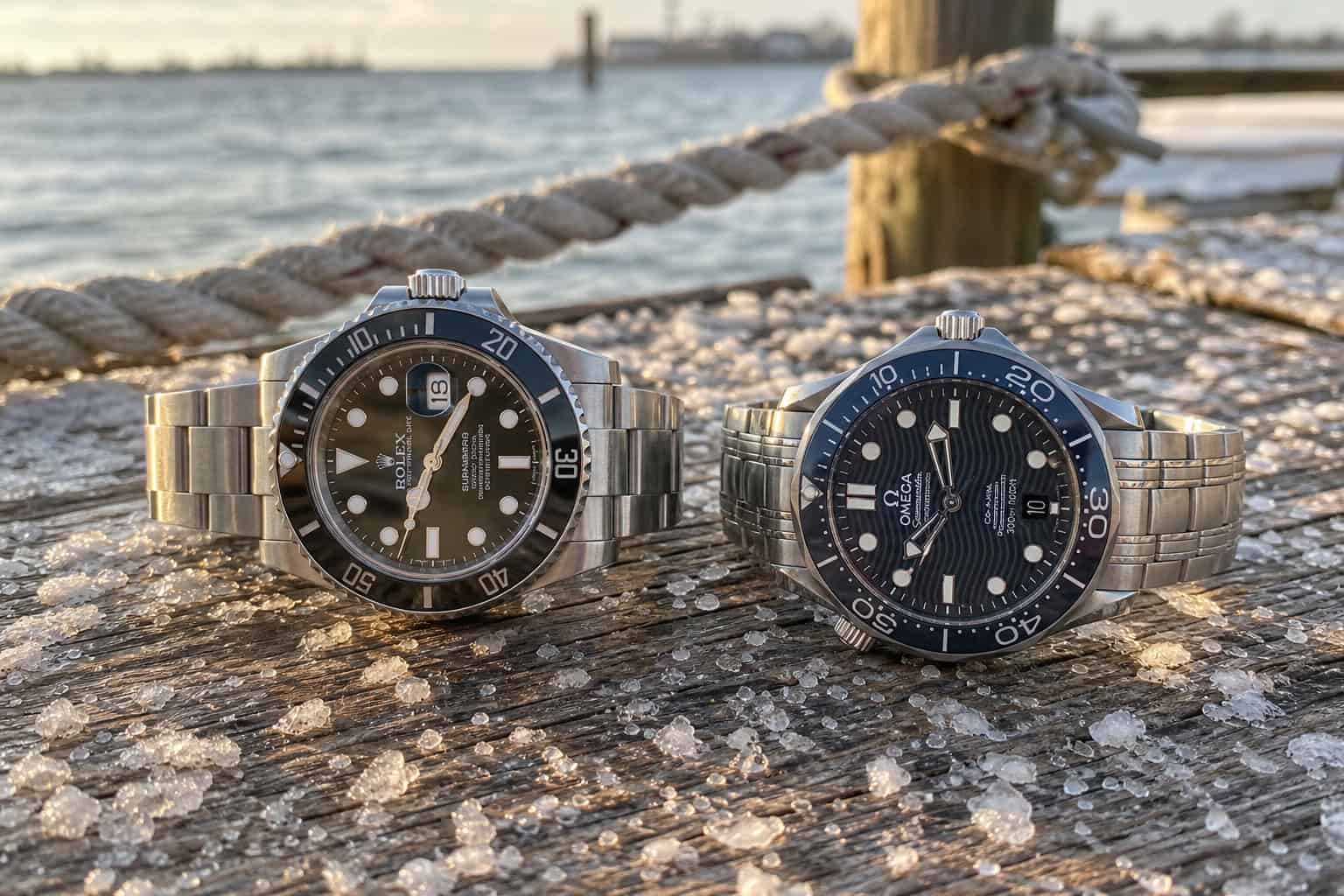
In practice, you won’t notice a difference unless you’re regularly swimming in salt water or handling industrial chemicals. For the office, gym, and weekend wear, 316L is just fine. The real advantage of 904L is that it polishes more easily and looks whiter, but that’s an aesthetic preference, not a durability win.
Omega does offer titanium on some models (Ploprof, Planet Ocean), which is lighter and corrosion-resistant — a real benefit for active wear. Rolex doesn’t use titanium in its sport models, a decision that contrasts with the value-focused approach of best value men’s watch brands.
Crystal choices matter. Omega’s Speedmaster offers Hesalite (plastic-like acrylic) on the original Moonwatch — it’s shatter-resistant but scratches easily. Rolex uses sapphire on all models, which is scratch-resistant but can shatter on impact. The Speedmaster’s NASA qualification for EVA use in space is a good reminder that Hesalite has real-world toughness in extreme conditions.
Omega also uses sapphire casebacks on many models, letting you see the movement. Rolex keeps solid casebacks on its sport watches. The sapphire adds a potential failure point, but for most people it’s a non-issue.
Shock Resistance and Real-World Toughness
Here’s the honest answer: neither brand publishes drop test data. We don’t have a standardized this watch survived a 1‑meter fall onto concrete number for either. So we have to look at indirect indicators.
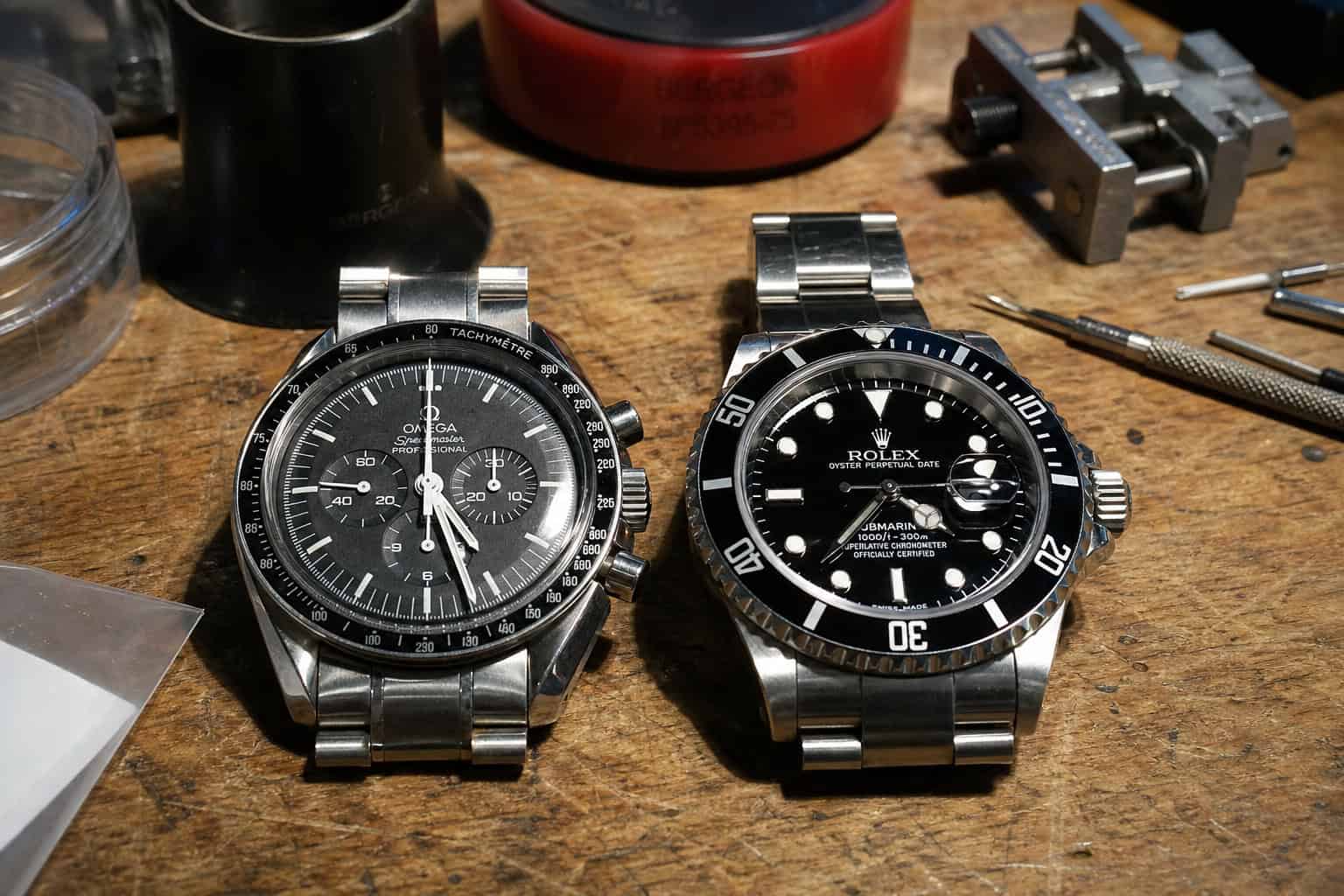
The Rolex Sea-Dweller carries double Mil-Spec MIL-STD-810 certifications — a military environmental testing standard that includes shock, vibration, and temperature extremes. No equivalent claim exists on Omega tool watches, which is notable.
But the Omega Speedmaster was NASA-qualified for space flight. It passed extreme temperature, vibration, and vacuum tests. That’s about as rigorous as it gets. The manual-wind, Hesalite-crystal design is inherently simpler and more shock-resistant than an automatic with sapphire.
In forums, owners who’ve had both brands often say the Submariner feels more rugged, more indestructible, more like one piece. That’s subjective, but it’s consistent. The coaxial movement has more parts, and some watchmakers consider it potentially more delicate to extreme shocks.
The honest takeaway: for normal daily wear — dropping a watch on a tile floor, bumping into door frames, doing yard work, both are fine. If you’re genuinely worried about shocks, a manual-wind Speedmaster with Hesalite is probably the toughest option from either brand.
Bracelets, Clasps, and Strap Durability
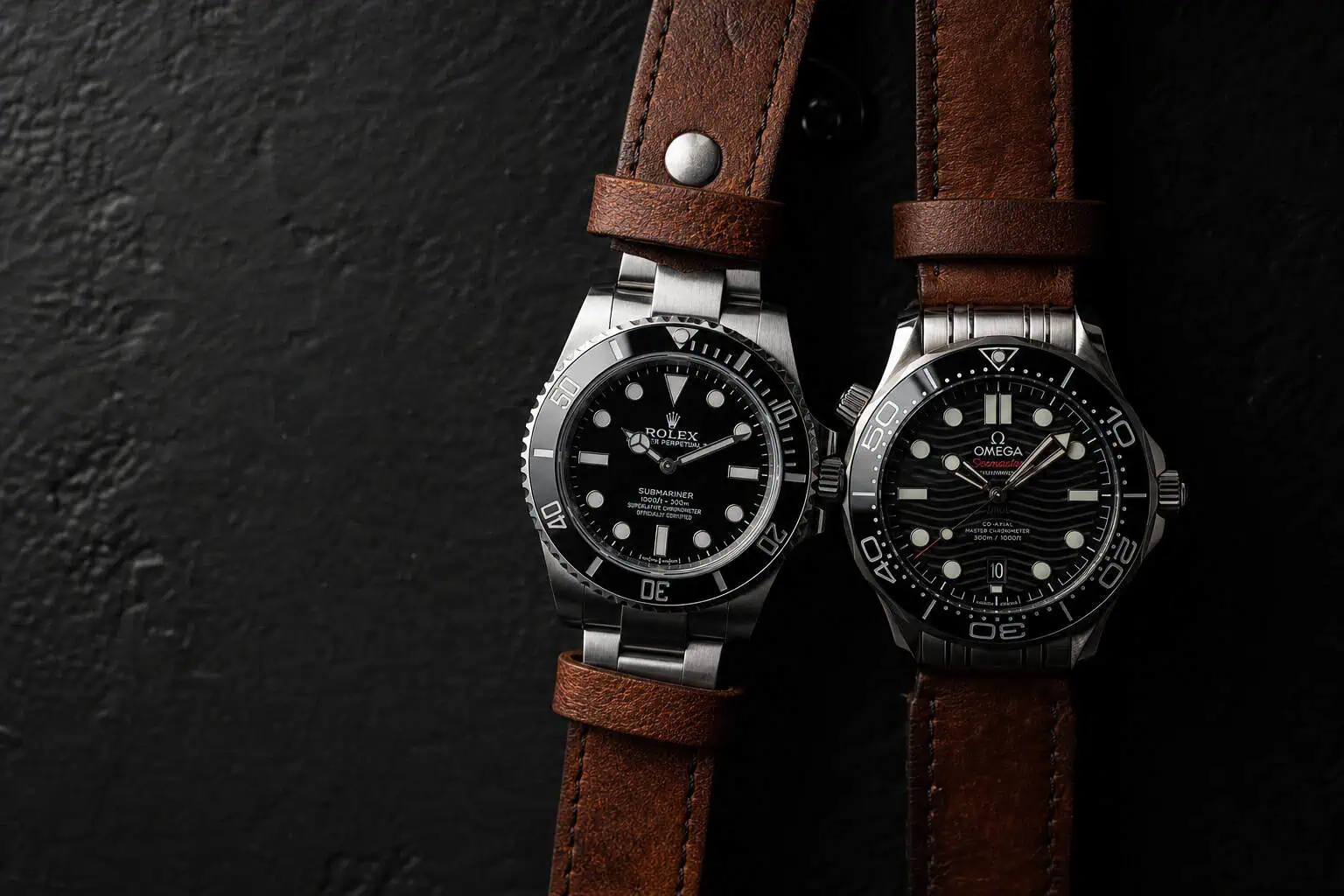
This is one of the clearest wins for Rolex. The bracelets — Oyster, Jubilee, President, are consistently rated higher for comfort, fit, and durability. The tolerances at the end-links and screw-pins are tighter, making the bracelet feel like one piece with the case.
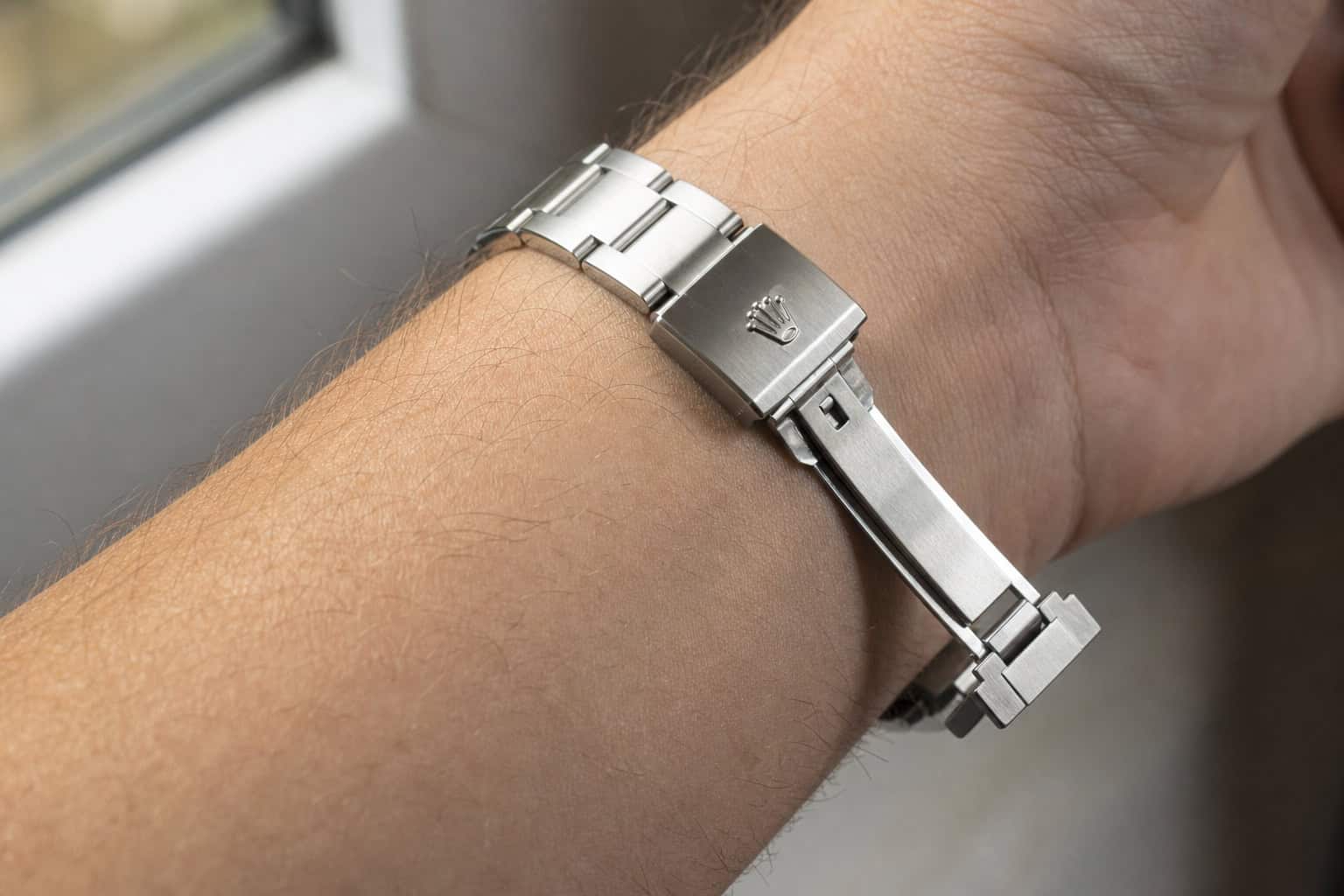
The Glidelock and Easy-Link systems let you adjust the clasp on the fly without tools, and they’re robust enough to handle daily use without loosening up. Rolex bracelets are the benchmark in the industry.
Omega’s screw-link systems and fold-over clasps are functional — they work fine, but the fit and finish isn’t at the same level. The quick-change strap system on newer Seamaster models is convenient, but it’s a potential long-term failure point compared to Rolex’s traditional screw-bar system.
Forum users consistently say Rolex bracelets are “significantly better” and that Rolex watches are “much more comfortable to wear.” That’s not a knock on Omega — it’s just that Rolex has spent decades perfecting this one detail.
Warranty, After-Sales, and Long-Term Ownership
Both brands offer a 5-year warranty (Omega started in 2018, Rolex made it retroactive in 2020). Both have authorized service centers worldwide. But the ease of service differs.
Rolex has more authorized service centers and faster turnaround times. The simpler movements mean any competent watchmaker can work on them. Parts availability is better for vintage models — you can find parts for decades-old Rolex watches. Omega’s coaxial movements require specialist training, which may mean shipping the watch to an authorized center and waiting longer.
Most watchmakers say Rolex is their favorite brand to work on. They find the movements more robust and easier to service. That’s a real-world indicator from the people who repair these things daily.
The practical implication: over a 20‑year ownership, Rolex will likely be cheaper and easier to maintain. Omega service is not bad — it’s just more specialized and potentially more expensive.
Verdict: Which Is More Durable for Daily Wear?
There’s no universal winner. Here’s the scorecard:
- Magnetic resistance: Omega wins (15,000 gauss vs. 1,000 gauss, and the protection covers the whole lineup)
- Water resistance: Tie — both are over-engineered for 99% of users. Omega has the depth record; Rolex has the Ringlock system. For daily wear, it’s a wash.
- Movement robustness: Tradeoff. Omega has the technically superior coaxial, but Rolex is simpler, more accurate out of the box, and easier to service.
- Case materials: Tie. 904L vs. 316L doesn’t matter in practice. Omega offers titanium, which is a real advantage for some.
- Shock resistance: Edge to Rolex based on Mil-Spec certifications and watchmaker reputation, but the Speedmaster’s NASA qualification is a strong counterpoint.
- Bracelets: Rolex wins clearly.
- Serviceability: Rolex wins — simpler movements, more service centers, better parts availability.
So if you work near magnetic fields, want the most technically advanced movement, or prefer a titanium tool watch, choose Omega. If you want a watch that’s easier to service, more comfortable on the bracelet, and simpler to maintain long-term, choose Rolex.
There’s very little separating Rolex and Omega in overall quality, functionality, and design. Both will easily last multiple lifetimes with proper maintenance. The difference is in the details — and which of those details matter to you.
Frequently Asked Questions
What is poor man’s Rolex?
The term ‘poor man’s Rolex’ is often used to describe Omega, but it’s a misleading label. Omega is a premium Swiss brand in its own right, with its own innovations like the coaxial escapement and Master Chronometer certification. The nickname stems more from Rolex’s higher resale value and marketing dominance than any actual quality gap.
Is Rolex higher tier than Omega?
In terms of brand prestige and resale value, Rolex is generally considered higher tier, but the gap in actual build quality and durability is much smaller than the price difference suggests. Both brands produce over-engineered watches that will last multiple lifetimes, and Omega often leads in technical specs like magnetic resistance and depth ratings.
Which has better resale value, Rolex or Omega?
Rolex consistently holds better resale value, with many models appreciating or retaining close to retail price on the secondary market. Omega watches typically depreciate more initially, though limited editions and certain Speedmaster models can hold value well. The difference is driven by Rolex’s controlled supply and stronger brand demand, not durability.
Is Omega more durable than Rolex in daily wear?
It depends on the type of abuse. Omega wins on magnetic resistance and depth ratings, making it more durable if you work near magnets or dive deep. Rolex wins on shock resistance, bracelet quality, and long-term serviceability, making it more durable for everyday bumps and decades of ownership. Neither is universally tougher.
How does Omega’s coaxial escapement compare to Rolex’s lever escapement for durability?
Omega’s coaxial escapement reduces friction and theoretically extends service intervals, but it has more parts and requires specialist training to repair. Rolex’s lever escapement is simpler, more proven, and easier for any watchmaker to service, which gives it an edge in long-term reliability. Both are excellent, but Rolex’s design is more robust for the long haul.
Can a Rolex get magnetized by everyday items?
Yes, a non-Milgauss Rolex can get magnetized by common items like laptop speakers, airport scanners, and power tools. Rolex’s Blue Parachrom hairspring offers some resistance, but the brand doesn’t publish a systematic rating. Omega’s Master Chronometer movements are certified to 15,000 gauss, making them virtually immune to everyday magnetic fields.