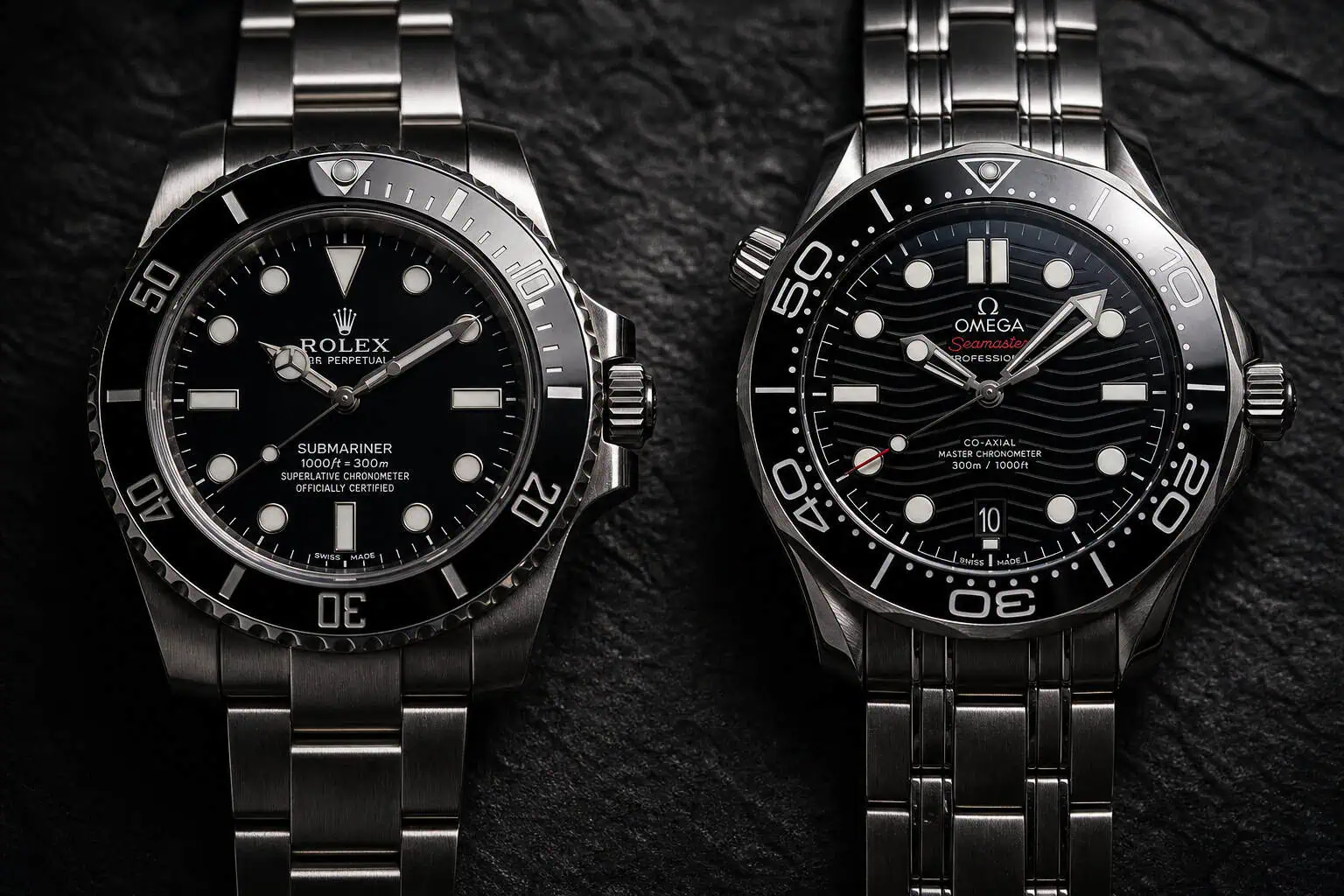
You’re standing at the counter, or maybe you’ve been scrolling forums for weeks, trying to decide between two of the biggest names in Swiss watchmaking. Omega and Rolex. Omega traces its founding to 1848, when Louis Brandt opened a workshop; Rolex was established in 1905 by Hans Wilsdorf and Alfred Davis. Both make exceptional watches. But they pull in very different directions, and that tension is exactly what makes the choice hard.
Omega chases technical innovation — movements that resist magnetism, certified by METAS to withstand 15,000 gauss, Co-Axial escapements, and Master Chronometer certification. Rolex chases prestige, unmatched cultural status, scarcity, and an instantly recognizable crown on the wrist. Both are legitimate paths. But they lead to different watches, different ownership experiences, and different relationships with the thing on your wrist.
You’ll get the full history — founding stories, key milestones, direct rivalries, and the tradeoffs that still matter today. By the end, you’ll have the context to decide which history aligns with your own priorities. I’m not declaring a winner. I’m giving you the facts and letting you decide.
Key Takeaways
Omega was founded 57 years before Rolex (1848 vs. 1905), but Rolex built its reputation through individual human achievements like Everest and the Mariana Trench, while Omega chased institutionally validated precision through observatory records, Olympic timing, and NASA certification.
The accuracy philosophies differ: Omega’s Master Chronometer guarantees 0 to +5 seconds per day (the watch never runs slow), while Rolex’s Superlative Chronometer guarantees -2/+2 seconds per day (tighter tolerance but allows drift in either direction).
Omega offers flagship models like the Speedmaster or Seamaster for $3,000 to $5,000 and you can buy one today, while Rolex steel sport models start above $6,000 and require years on waitlists — with the tradeoff that Rolex typically holds or exceeds retail value on the secondary market.
Table of Contents
Founding and early identity: precision philosophies diverge
From the very beginning, Omega and Rolex pursued accuracy through different paths — Omega through institutional validation and Rolex through real-world endurance. These early choices set the trajectory for everything that followed.
Omega’s early decades (1848–1930s)
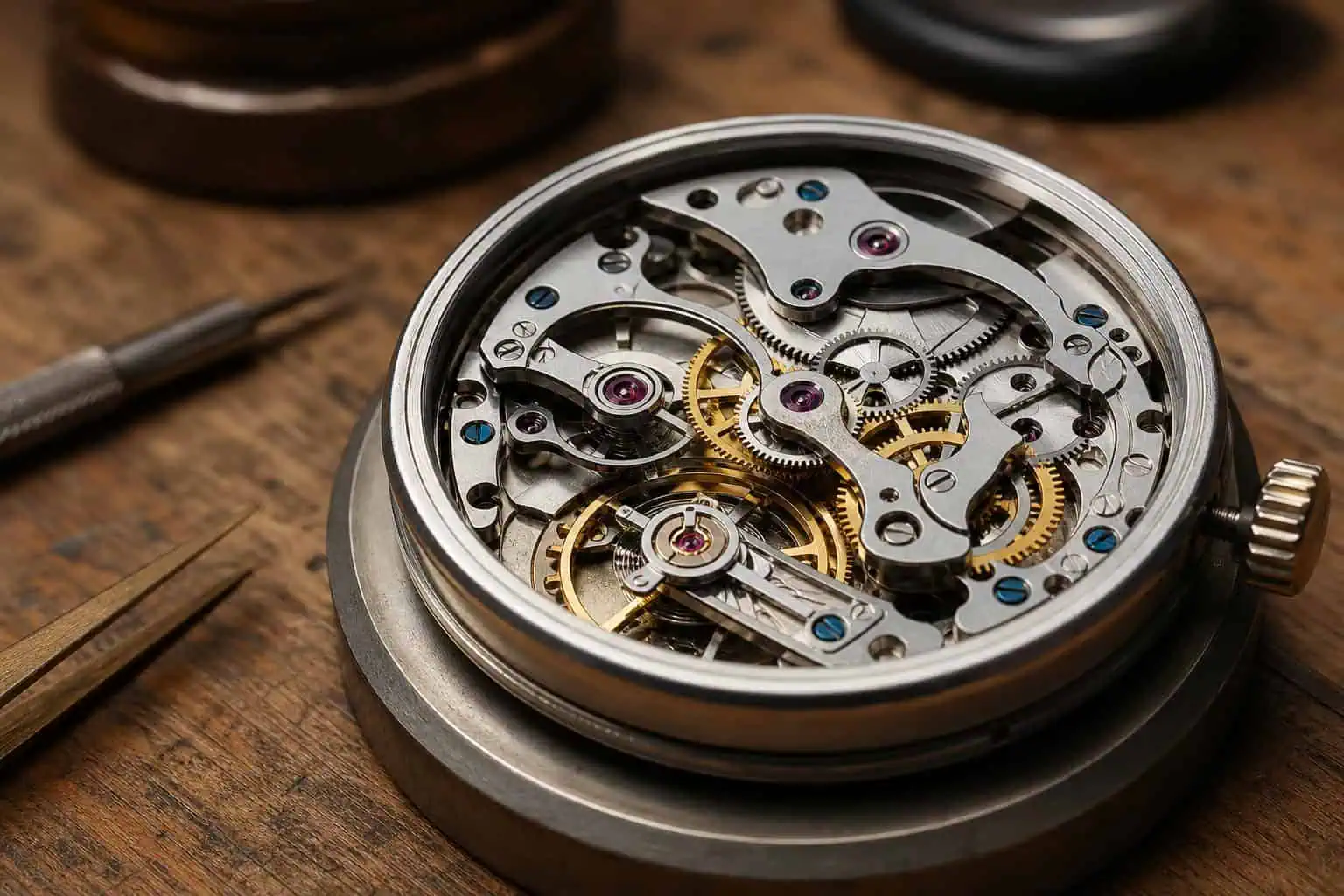
Omega started in 1848 when Louis Brandt started a workshop in La-Chaux-de-Fonds, Switzerland. The company didn’t actually take the name Omega until 1894, after the 19”’ caliber — a movement with interchangeable parts that was easy to service. That movement was so good, they renamed the entire company after it.
From there, Omega went all-in on institutional validation. In 1931, they set six precision records at the Geneva Observatory. In 1933 and 1936, they added records at Kew-Teddington. They became official timekeeper for over a dozen sporting events starting in 1905, and in 1932 they were chosen as the Official Timekeeper of the Los Angeles Olympics. This pattern — seeking third-party verification of accuracy, defined the brand’s DNA.
Rolex’s early decades (1905–1930s)
Hans Wilsdorf founded Rolex in London in 1905, originally as a watch distribution company called Wilsdorf & Davis. The name “Rolex” was registered in 1908 — short, easy to say in any language, and it fit on a dial. The company moved to Geneva in 1919, and that’s where the Swiss watchmaking reputation really took hold.
Rolex’s early focus was on chronometer certification for wristwatches. In 1910, they got the first Swiss Certificate of Chronometric Precision for a wristwatch. In 1914, they received a class A precision certificate from Kew Observatory — meaning a wristwatch matched marine chronometer accuracy, which was a huge deal at the time. But unlike Omega, Rolex also chased real-world toughness.
The Oyster case arrived in 1926 — the world’s first waterproof watch. The Perpetual rotor followed in 1931, the first self-winding movement with a full rotor that actually worked.
By 1931, Omega had set six precision records at the Geneva Observatory while Rolex had already introduced the Oyster case and the Perpetual rotor. Omega was focused on static precision in controlled lab conditions. Rolex was focused on dynamic wearability — water resistance, automatic winding, real-world durability.
Omega timeline: key milestones from 1848 to today
Omega’s timeline runs from precision records to Olympic timing to NASA to modern Master Chronometer certification. Every major milestone reinforces the same message: We are the brand that gets certified by the highest authority.
Early precision era (1848–1936)
- 1848: Louis Brandt opens a workshop in La-Chaux-de-Fonds. The very beginning. His sons later founded Tissot, linking the two houses early on.
- 1894: The company renames itself Omega after the 19”’ caliber — a movement with interchangeable parts that was important for serviceability.
- 1905: Omega starts timing sporting events. This becomes a core part of their identity.
- 1931: Six precision records at the Geneva Observatory. They were chasing accuracy hard.
- 1932: Official timekeeper for the LA Olympics. First of many.
- 1933, 1936: Additional precision records at Kew-Teddington. The obsession with being the most accurate was evident.
Olympic and space era (1932–1970)
- 1948: The Seamaster is introduced. It becomes one of the brand’s two big collections.
- 1957: The “Professional” trilogy launches — Seamaster 300, Railmaster, and Speedmaster. All three are still relevant today.
- 1965: NASA certifies the Speedmaster for all manned space missions and EVA. This isn’t a nickname — it earned the “Moonwatch” title.
- 1969: Buzz Aldrin wears his Speedmaster on the Moon during Apollo 11. That’s the single claim to fame in watch history.
- 1970: Omega receives the Silver Snoopy Award from NASA for the Speedmaster’s role in saving the Apollo 13 mission.
- 1971: Omega uses 904L steel in the Ploprof — before Rolex made it standard. The Ploprof’s movement was supplied by Lemania, a key partner of Omega.
Corporate and technical modern era (1983–2024)
- 1983: ASUAG and SSIH merge, eventually becoming the Swatch Group. Omega ends up under that umbrella, sharing R&D resources.
- 1995: The James Bond partnership begins with GoldenEye. Omega takes the role from Rolex.
- 1995: Cindy Crawford becomes a brand ambassador. Omega has always leaned into celebrity partnerships.
- 1999: The Co-Axial escapement is introduced — invented by independent watchmaker George Daniels, not an in-house Omega engineer. This is a key nuance. It reduces friction, improving long-term accuracy and extending service intervals.
- 2008: The Si14 silicon balance spring arrives. Silicon is anti-magnetic and doesn’t corrode.
- 2011: Omega becomes official timekeeper for the PGA of the Americas. They’re everywhere in sports timing, adding the PGA of the Americas to an already crowded roster.
- 2013: Caliber 8508 handles over 15,000 gauss. That’s not a soft iron cage — the movement itself is built to resist magnetism.
- 2015: The Master Chronometer standard launches — tested by METAS (independent third party) and COSC. More rigorous, includes magnetic field testing. The certification was developed in partnership with the Argonne National Laboratory.
- 2018: Warranty extended to five years. Sign of confidence in the movements.
- 2019: The Caliber 321 returns — that’s the movement from the original Moonwatch. Collectors went nuts.
- 2019: The Planet Ocean Ultra Deep reaches 10,925 meters in the Mariana Trench. Current depth record holder.
- 2021: The Speedmaster Moonwatch gets the Master Chronometer upgrade. Now it’s also anti-magnetic to 15,000 gauss.
- 2024: New Constellation Master Chronometer launched. The Constellation doesn’t get as much attention as the Seamaster or Speedmaster, but it’s a solid dress watch.
Rolex timeline: key milestones from 1905 to today
Rolex built its reputation through individual human achievements — not institutional validation, but personal feats of endurance. The brand’s modern scarcity model flows from this: exclusivity is part of the point.
Founding and early certifications (1905–1935)
- 1905: Hans Wilsdorf founds a watch distribution company in London.
- 1908: The company is renamed Rolex — short, easy to say in any language, looks good on a dial.
- 1910: First Swiss Certificate of Chronometric Precision for a wristwatch.
- 1914: First class A precision certificate from Kew Observatory for a wristwatch — matching marine chronometer accuracy.
- 1919: Rolex moves to Geneva. The Swiss watchmaking reputation takes hold.
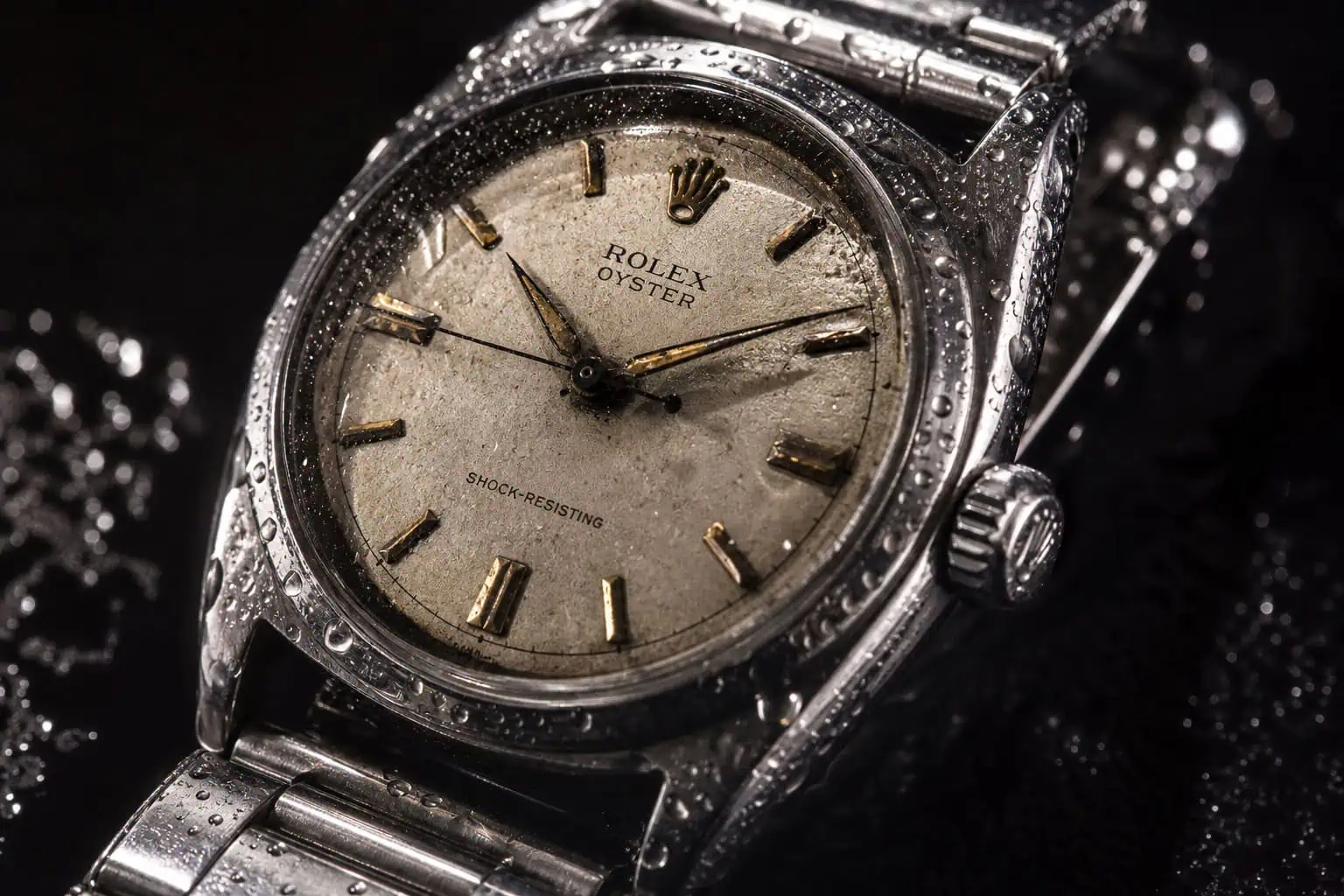
- 1926: The Oyster case — world’s first waterproof watch. Changed everything.
- 1927: Rolex creates the brand ambassador concept with an ad featuring Mercedes Gleitze, who swam the English Channel wearing the Oyster.
- 1931: The Perpetual rotor — first self-winding movement with a full rotor that actually worked. Basis for every automatic watch today.
- 1935: Sir Malcolm Campbell sets a land speed record wearing a Rolex.
Expedition era (1951–1960)
- 1951: Rolex gives its 150,000th chronometer — a gold Datejust, to General Eisenhower.
- 1953: The British Mount Everest expedition is equipped with Oyster Perpetuals. Sir Edmund Hillary wears one to the summit. This is the Explorer’s origin story.
- 1953: The Submariner and Explorer are introduced. Both become icons.
- 1956: The Day-Date is introduced — the “President’s watch.”
- 1960: The Deep Sea Special reaches 10,916 meters attached to the Trieste bathyscaphe with Captain Don Walsh and Jacques Piccard. That was the depth record for decades.
- 1963: The Daytona is introduced.
- 1967: The Sea-Dweller with helium escape valve.
Modern innovations (1976–2024)
- 1976: The Rolex Award for Enterprise is established. Philanthropy, but also good for the brand.
- 1985: Rolex becomes the first watchmaker to use 904L steel for standard-production models. Better corrosion resistance and polish.
- 2000: The Caliber 4130 chronograph movement — fewer parts, easier to service, more reliable. Heart of the modern Daytona.
- 2005: The Cerachrom ceramic bezel — scratch-resistant, doesn’t fade. Now on Submariner, GMT-Master, and Daytona.
- 2005: The blue Parachrom hairspring — niobium-zirconium alloy, resistant to shocks and temperature changes.
- 2012: The Deepsea Challenge accompanies James Cameron’s solo dive to the Mariana Trench — 10,908 meters.
- 2015: The new generation Caliber 3255 with 70-hour power reserve and improved accuracy. The Caliber 2236, also introduced, featured the Syloxi silicon hairspring for enhanced precision.
- 2015: Rolex redefines its Superlative Chronometer certification to -2/+2 seconds per day. Tighter than COSC. They test the fully assembled watch, not just the movement.
- 2017: Rolex becomes the official timepiece for the Academy of Motion Picture Arts and Sciences. Oscars.
- 2024: Steel sport Rolexes — Daytona, GMT-Master II, Submariner, are still nearly impossible to get at retail. Waitlists are years long.
Technical innovation leadership: Co-Axial vs. Chronergy
Omega leads on magnetic resistance: Master Chronometer movements handle over 15,000 gauss. Rolex develops everything in-house for vertical control. Both make excellent movements, but they got there differently.
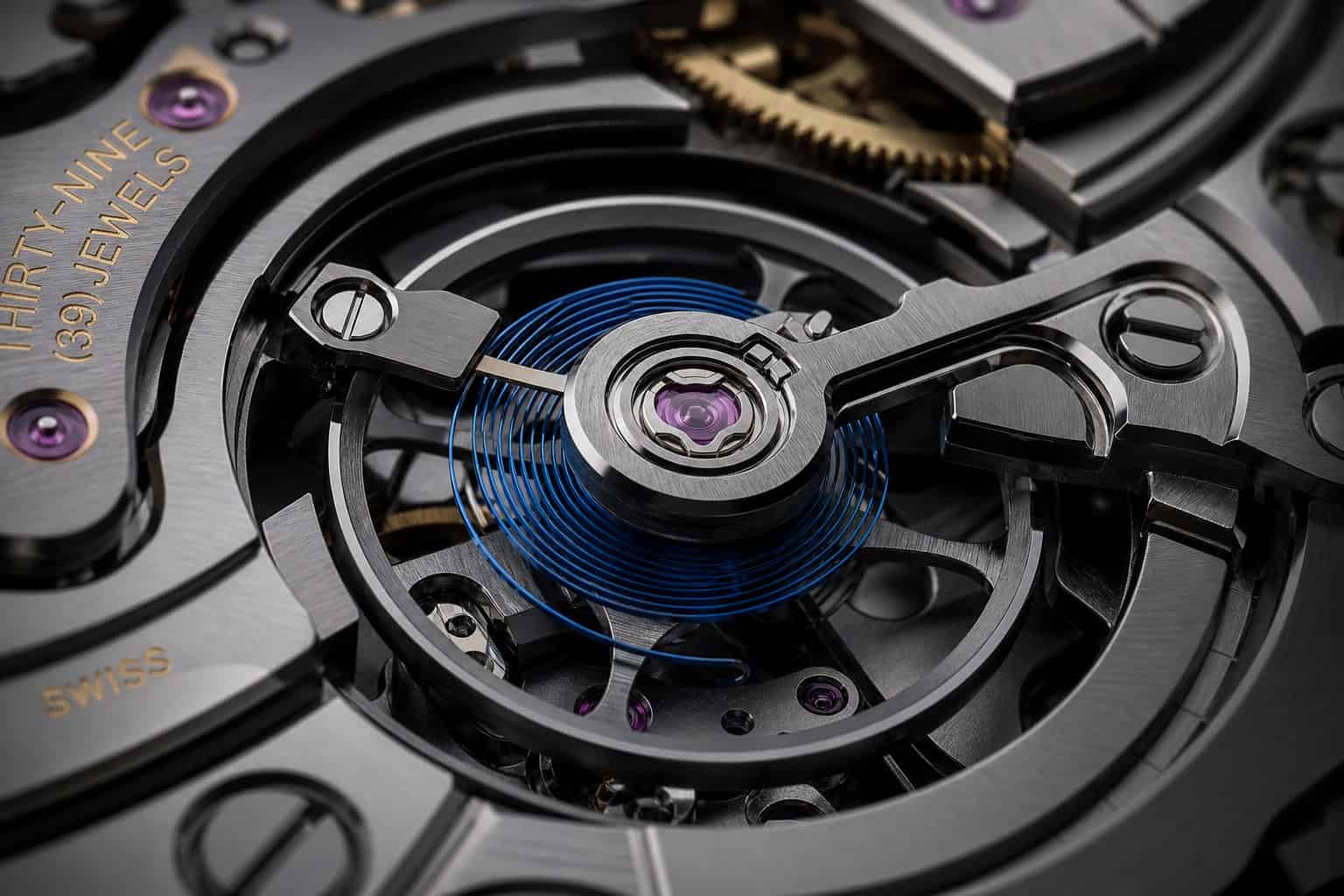
Omega’s big innovation is the Co-Axial escapement, introduced in 1999. It was invented by independent watchmaker George Daniels, not an in-house Omega engineer. That’s a key nuance most comparisons gloss over. The Co-Axial reduces friction, so the movement stays accurate longer between services.
It’s not marketing — it’s a mechanical advance. Omega also leads on magnetic resistance: Master Chronometer movements handle over 15,000 gauss without a protective cage. The movement itself is built to resist magnetism, which means your watch won’t get messed up by a laptop magnet or a speaker. Peace of mind.
Rolex develops everything in-house for vertical control. The Chronergy escapement arrived in 2015 with the Caliber 3235, and it’s Rolex’s answer to the Co-Axial — more efficient, more reliable. They also introduced the Cerachrom ceramic bezel in 2005, the Parachrom hairspring in 2005, and they were the first watchmaker to use 904L steel for standard-production models in 1985. Every component is designed and manufactured by Rolex in Switzerland.
The Co-Axial gave Omega a roughly 15-year anti-friction advantage before Rolex caught up with Chronergy. If you care about R&D philosophy, this distinction matters; if you want a definitive answer to the question of whether Is Omega as luxury as Rolex, the comparison of prestige, craftsmanship, and heritage helps decide which aligns with your goals. If you just want a watch that keeps excellent time, both deliver.
Chronograph heritage: Speedmaster vs. Daytona
These are the two most famous chronographs in the world. But they earned their reputations through completely different paths.
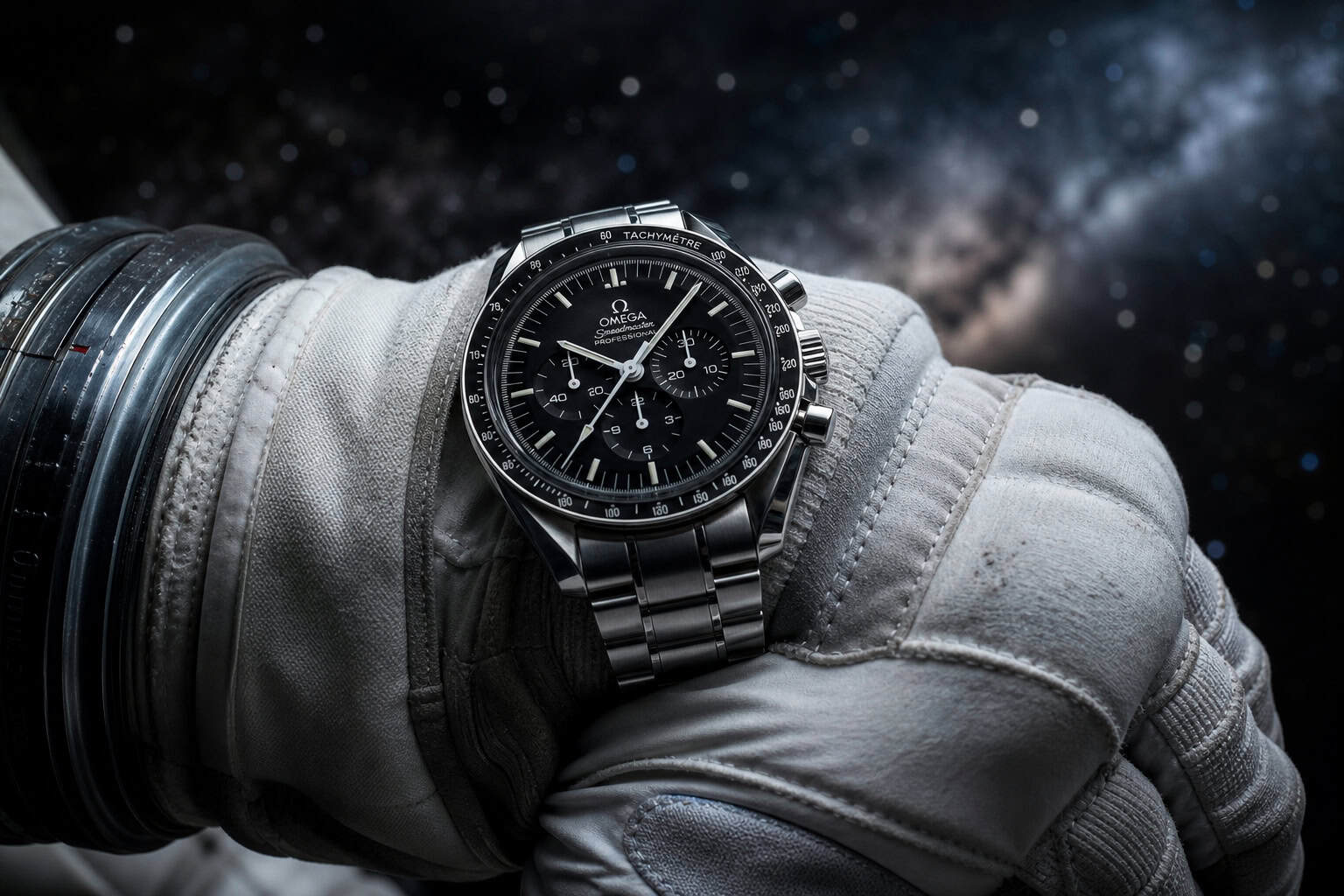
The Speedmaster was introduced in 1957 as part of the “Professional” trilogy. It was certified by NASA in 1965 after passing rigorous tests for all manned space missions. Buzz Aldrin wore his on the Moon during Apollo 11. The Caliber 321 — the original Moon movement, returned in 2019.
The Speedmaster’s authority was NASA saying this watch passed our tests, it’s going to space. That’s institutional validation at the highest level.
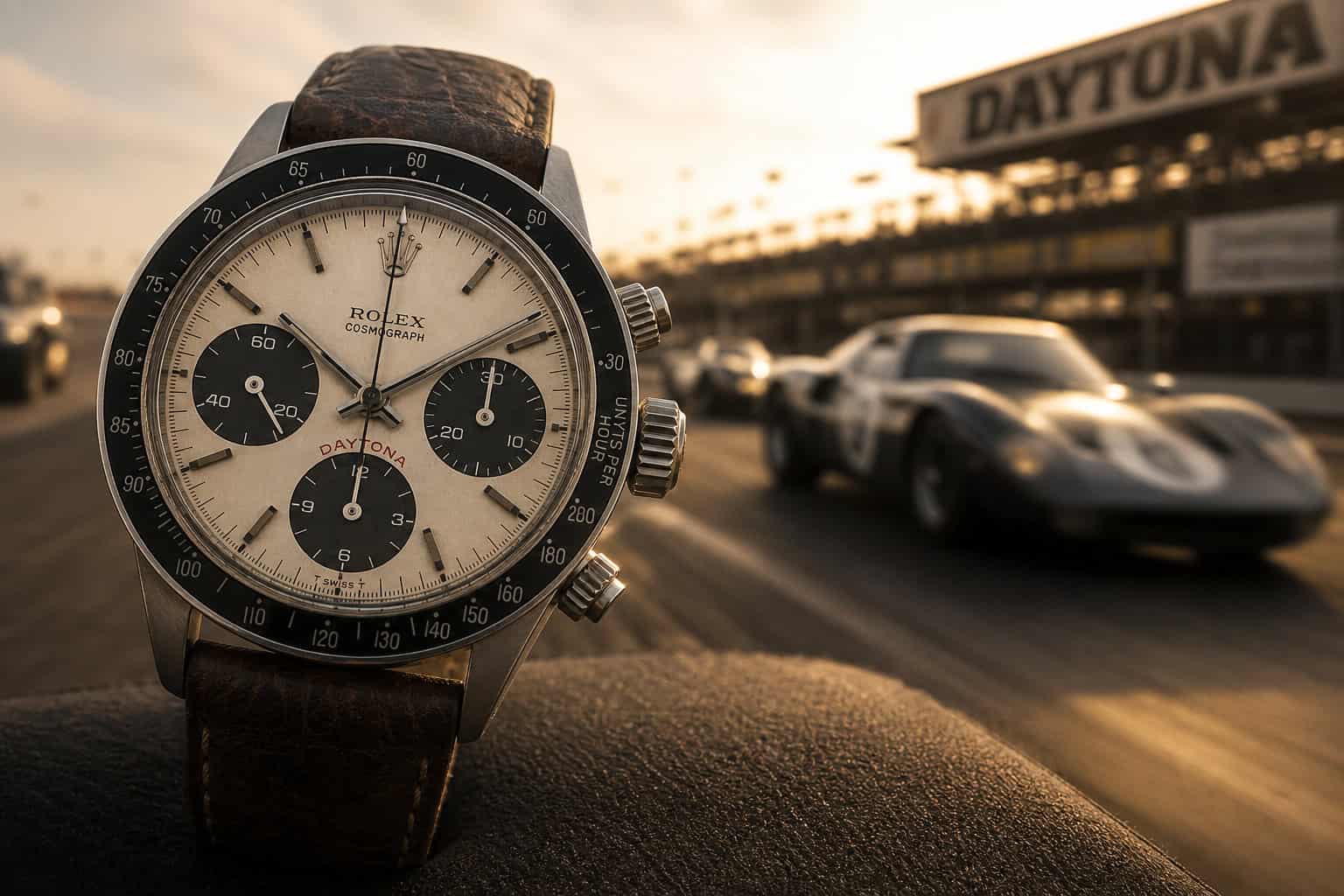
The Daytona was introduced in 1963 as the Cosmograph Daytona. It gained fame through Paul Newman’s association — his reference 6239 sold for $17.75 million in 2017, making it the most expensive Rolex ever auctioned. The Caliber 4130 arrived in 2000 with fewer parts and easier serviceability. The Daytona’s authority came from cultural association. Paul Newman’s personal choice, motorsport heritage, celebrity cachet.
If you want a watch that was chosen by NASA engineers, buy a Speedmaster. If you want a watch that was chosen by Paul Newman, buy a Daytona.
Dive watch depth record rivalry: a direct 12-meter battle
This is the most direct head-to-head competition between the two brands. Both have reached the Challenger Deep. The record has toggled back and forth, and the difference comes down to just 12 meters.
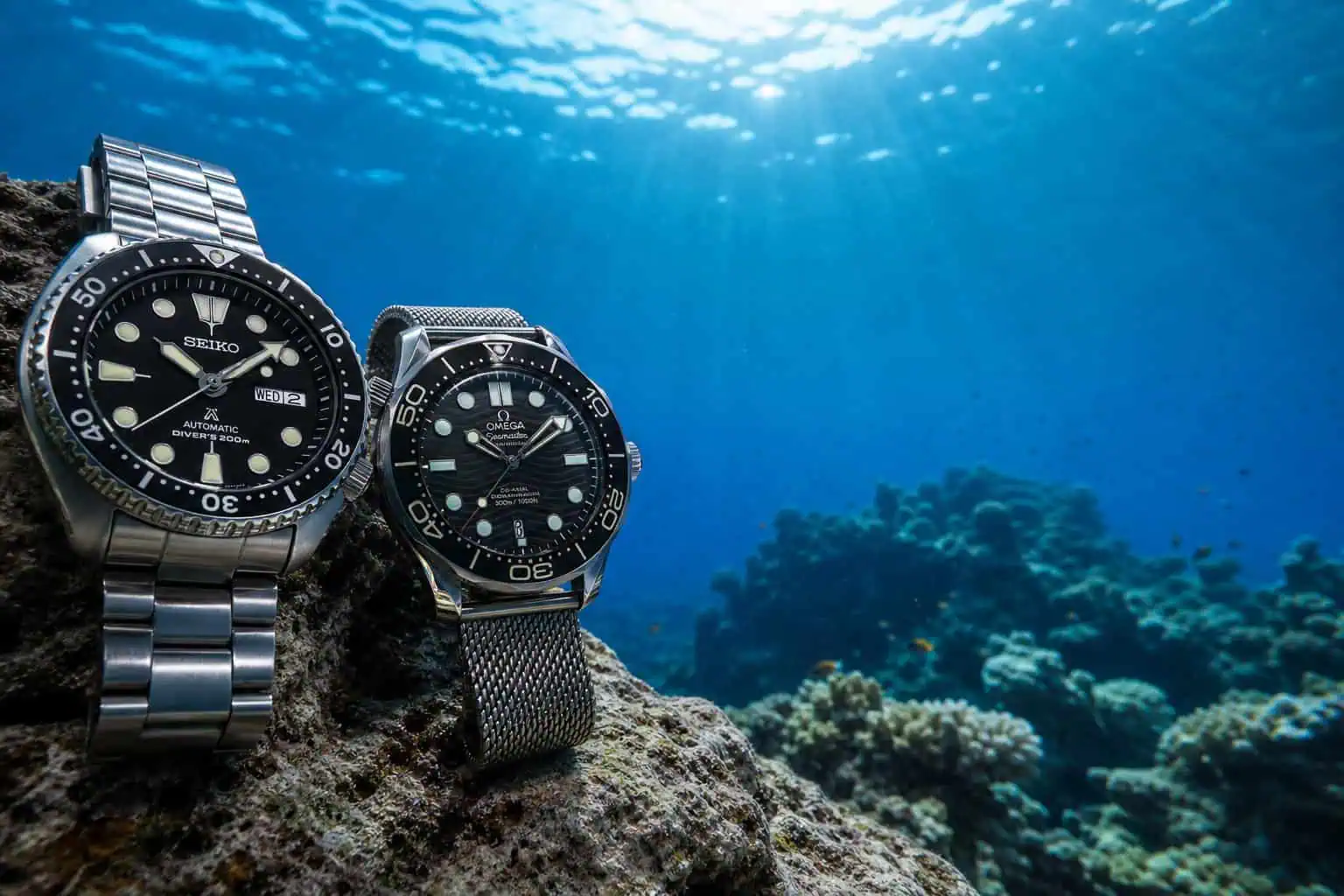
In 1960, a Rolex Deep Sea Special reached 10,916 meters attached to the Trieste bathyscaphe with Captain Don Walsh and Jacques Piccard. That was the depth record for decades — an achievement, especially considering the technology available at the time.
In 2019, Omega’s Planet Ocean Ultra Deep reached 10,925 meters (some sources say 10,928 meters) in the Mariana Trench with explorer Victor Vescovo. The watch was on his wrist during a manned submersible descent. Omega beat Rolex’s 1960 record by 12 meters. The Ultra Deep is certified to 15,000 meters — overkill, but a hell of a spec.
Rolex wasn’t done. In 2012, the Deepsea Challenge accompanied James Cameron’s solo dive to the Mariana Trench — 10,908 meters. And the production Deepsea (2008) is rated to 3,900 meters using the Ringlock System. That’s the deepest dive watch you can buy off the shelf.
Both brands have been to the bottom of the ocean, but a head-to-head comparison of Omega vs Rolex durability reveals key differences in build quality, water resistance, and real-world toughness. The difference in approach — Rolex using a bathyscaphe attachment in 1960, Omega using a manned submersible in 2019, shows different engineering philosophies. The 12-meter gap is close enough to be a real rivalry, not a blowout.
Cultural branding and ambassadors: Bond, Federer, and the Olympics
Both brands have massive cultural reach. But they got there through different kinds of associations.
James Bond
Rolex was Bond’s watch first. Sean Connery wore a Submariner in the early 1960s films — Dr. No and Goldfinger. That’s the original Bond watch.
Omega took over in 1995 with GoldenEye, when Pierce Brosnan wore a Seamaster. They’ve been the official Bond watch ever since. Omega won the sponsorship deal, and it was a massive marketing win.
Here’s the interesting nuance: Daniel Craig wears Omega on-screen as Bond, but he’s been photographed wearing a Rolex in his personal life. Even the brand’s own ambassador’s personal taste doesn’t fully align with the marketing relationship. That’s a detail most Omega vs Rolex owners comparisons miss.
Sports and arts ambassadors
Omega has been the official timekeeper of the Olympic Games since 1932. That’s nearly a century of institutional sports timing. They also time the PGA of the Americas. Omega is the brand that measures the event.
Rolex is big in tennis — Roger Federer is their ambassador, arguably the greatest of all time. They’re also deep in motorsport (Rolex 24 at Daytona, Formula 1) and the arts (Mentor and Protégé Initiative since 2002, Academy Awards since 2017). Rolex is the brand that the champion wears.
High-profile brand faces
Omega runs with George Clooney and Cindy Crawford. In 2023, they put Daniel Craig and Pierce Brosnan in the same ad — two Bonds together. That’s smart marketing.
Rolex runs with Roger Federer. That’s the kind of association they cultivate: classy, successful, timeless.
Market dynamics and value perception: scarcity vs. accessibility
This is where the rubber meets the road — the practical numbers that affect your wallet.
Price and availability
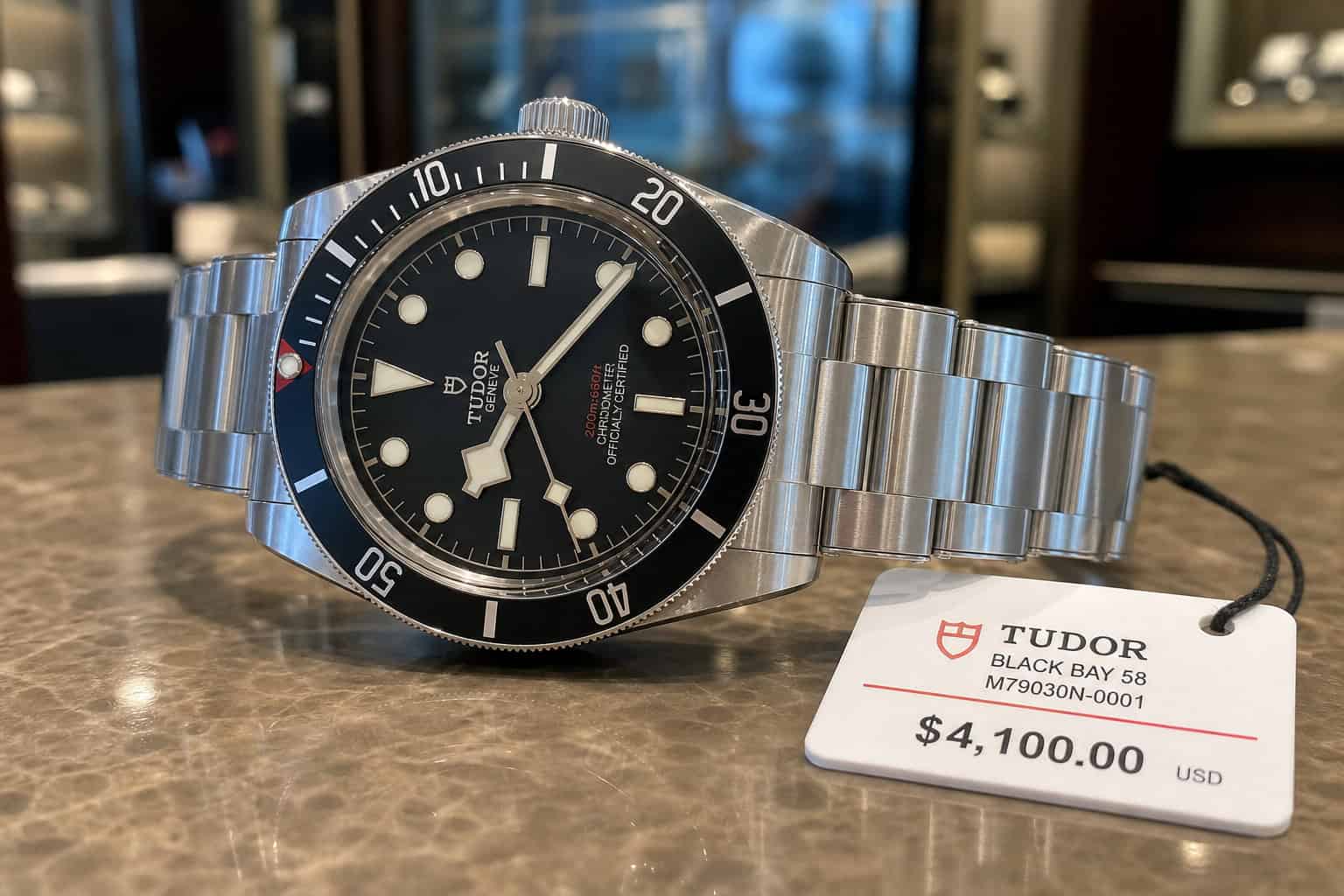
An entry-level steel Rolex starts around $6,000 for the most basic Oyster Perpetual. Popular steel models like the Submariner or GMT-Master II run $8,000 to $14,000 at retail — if you can find one. Rolex deliberately produces below demand, creating years-long waitlists for steel sport models.
Omega’s flagship Seamaster and Speedmaster models run $3,000 to $5,000. That’s significantly less. Higher-end Omegas with precious metals or complications can match or exceed Rolex prices, but the steel models are the value play. You can buy one today.
No games. No waitlist.
Resale value
Rolex sports models hold or exceed retail price on the secondary market. Steel Submariners, GMT-Masters, and Daytonas are basically liquid assets. Even common Rolex configurations hold their value well.
Omega watches typically lose 30-50% of their value on the used market. That is the trade-off for getting more watch for less money upfront. Some vintage Omegas maintain collectability, but most modern models depreciate.
The recent market shift
Rolex’s secondary market share dropped nearly 9 percentage points over three years. Omega’s secondary market share climbed 4% in the second half of 2024. The typical Rolex owner is 24 years older than the typical Omega owner, per Time+Tide Watches data.
The “Rolex holds value, Omega doesn’t” narrative is still mostly true. But the gap may be narrowing. Some buyers are choosing Omega for immediate availability and modern tech over Rolex’s scarcity premium.
Accuracy and certification philosophy: never-late vs. never-more-than-two-off
Both brands make movements that are accurate to within seconds per year. But they certify them differently, and those differences reveal their philosophies.
Rolex’s Superlative Chronometer certification guarantees -2/+2 seconds per day. The watch can run either fast or slow, but it won’t be more than 2 seconds off in either direction. Total window: 4 seconds. They test the fully assembled watch, not just the movement. The philosophy is absolute precision symmetry — the watch should be as close to perfect as possible, regardless of direction.
Omega’s Master Chronometer certification guarantees 0 to +5 seconds per day. The watch can run fast (up to 5 seconds) but never slow. Total window: 5 seconds, all on the positive side. It’s tested by METAS (an independent third party) including magnetic field testing up to 15,000 gauss. The philosophy is guaranteed punctuality — the watch will never lose time.
Both exceed the COSC baseline of -4/+6 seconds per day easily. This isn’t about which is “more accurate” — both produce exceptional movements. The difference is philosophical: Omega guarantees you’ll never be late. Rolex guarantees you’ll never be more than 2 seconds off either way.
If you’re the kind of person who’d rather be early than risk being late, Omega’s philosophy matches yours. If you want to know your watch is within 2 seconds of perfect regardless of direction, Rolex’s philosophy does.
The final question: which history aligns with you?
OMEGA gives you engineering innovation, magnetic resistance, advanced movements, and the ability to buy immediately at retail. You can walk into a boutique and buy a flagship model for what a basic steel Rolex costs. The Speedmaster went to the Moon. The Seamaster has been to the bottom of the ocean.
The movements laugh at magnets. You get more watch for the money, if you care about the movement more than the crown logo.
Rolex gives you prestige, heritage, classic design, and strong resale value over time. A steel Submariner bought at retail is basically a liquid asset. Everyone from your barber to your boss knows what a Rolex means. The Oyster case and Perpetual rotor are genuine milestones in watchmaking history. You pay more and wait longer, but you get a watch that holds its value and says something instantly.
Both brands are accomplished. The question isn’t which is better. It’s which is better for you.
If you value cutting-edge tech and the ability to buy a watch today, Omega’s history supports that choice. If you value prestige and investment-grade resale, Rolex’s history supports that choice. Both are right. Pick the one that fits your values, not the one that fits someone else’s idea of status.
Frequently Asked Questions
Why is Omega declining?
Omega isn’t declining — that perception comes from comparing it to Rolex’s extreme scarcity and resale value. Omega’s secondary market share actually climbed 4% in the second half of 2024, while Rolex’s dropped nearly 9 percentage points over three years. Omega sells more watches at lower prices with immediate availability, which some misinterpret as weakness rather than a deliberate market position.