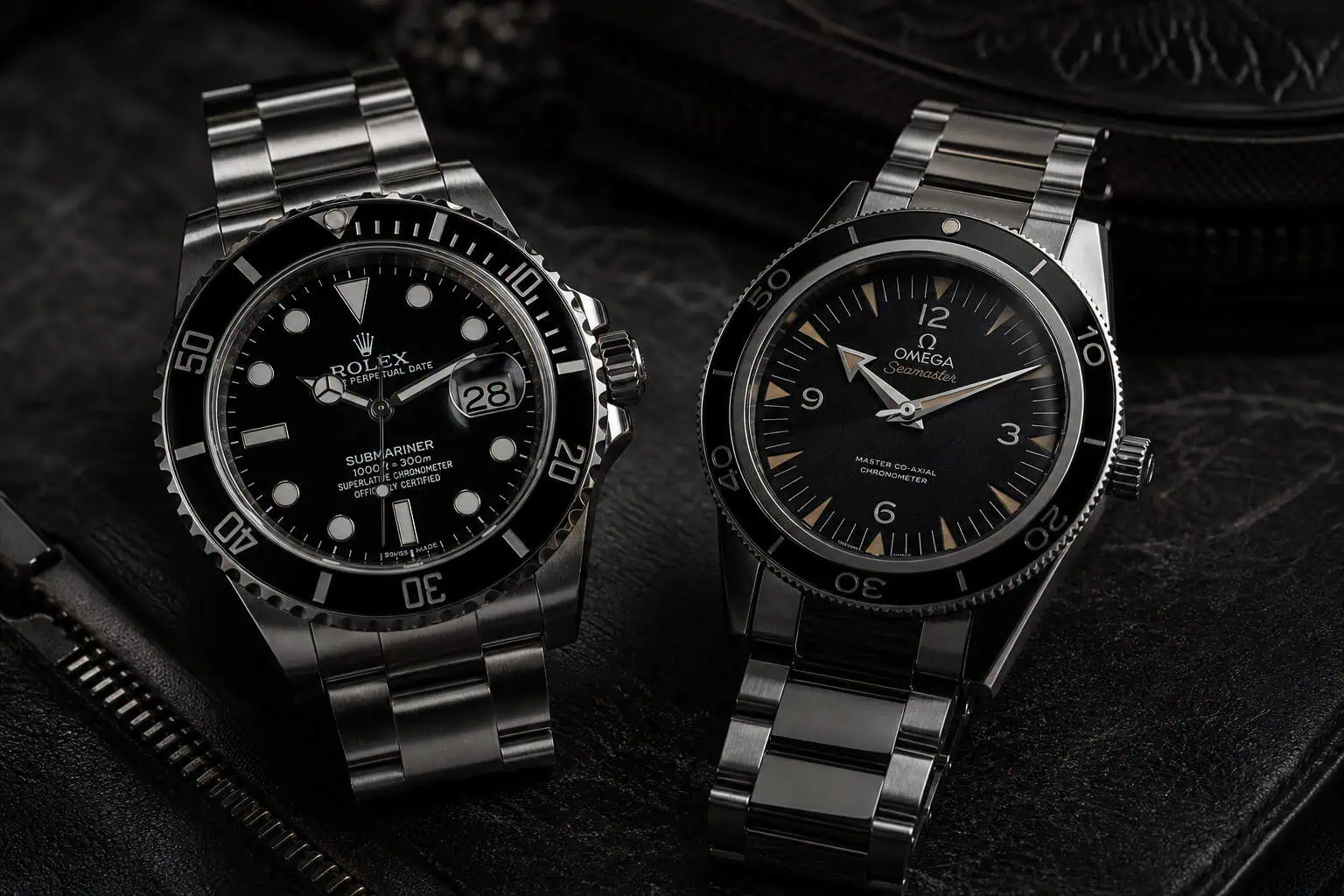
You’ve saved up six grand. You’re looking at a new watch, and you’ve narrowed it down to two options: an Omega and a Rolex. They’re close in price at the entry level — Rolex Oyster Perpetual starts around $6,000, while Omega’s entry point is lower at around $5,250 for a Speedmaster, $5,400 for an Aqua Terra, or $4,900 for a Seamaster Diver 300M. But one of them, the Rolex, holds its value better on the secondary market, as the Submariner trades at a €2,650 premium over list while the Seamaster 300 trades below MSRP.
I spent too long on Chrono24 digging into this, and here’s what I found: Rolex is more expensive on average — the Submariner lists at €9,350 vs the Seamaster 300 at €7,700, but not because it’s better made. At the manufacturing level, these two are a tie. The price gap comes down to something else, controlled scarcity, brand power, and what the market will bear.
Key Takeaways
The Rolex Submariner lists for €9,350 but trades for around €12,000 on the secondary market — a €2,650 premium over retail. The Omega Seamaster 300 lists for €7,700 and trades for about €5,900, saving you money if you buy used.
Rolex has 100% international brand recognition compared to Omega’s roughly 70%. That gap is a primary driver of the price difference — you’re paying for what the name means, not what the watch is.
Omega’s Master Chronometer certification tests for 15,000 gauss magnetic resistance, while Rolex’s Superlative Chronometer is tighter on daily accuracy (-2/+2 seconds vs. 0/+5 seconds). The “better” certification depends on what matters to you.
Table of Contents
Price Tier Showdown: From Entry-Level to Ultra-Luxury
Rolex and Omega diverge sharply as you move up the price ladder, with Rolex commanding a premium at every tier but Omega offering competitive alternatives in the mid-range.
Entry-Level
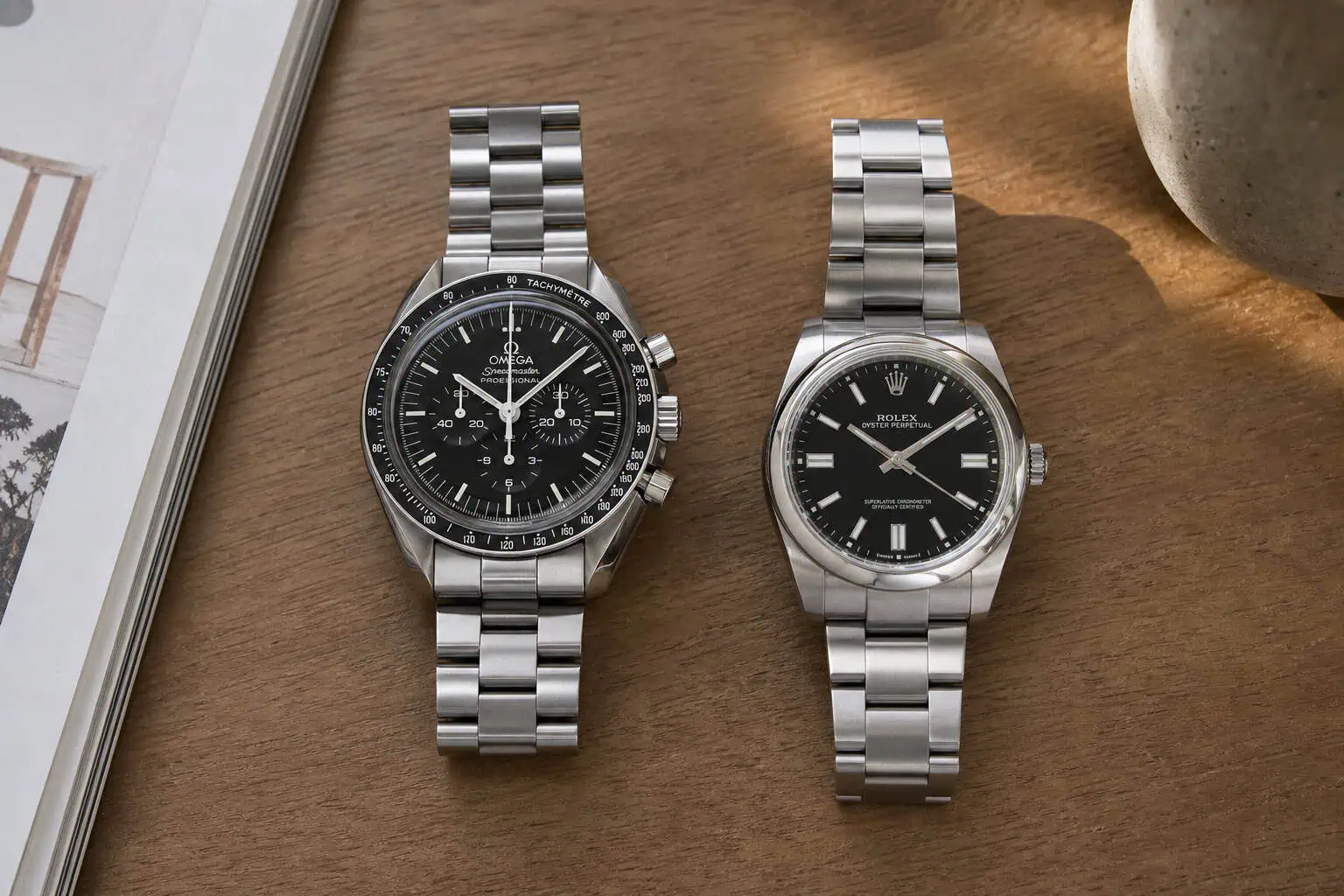
Rolex’s cheapest new watch is the Oyster Perpetual, starting around $6,000. Omega’s entry point is lower — you can get into a Speedmaster for about $5,250, an Aqua Terra for $5,400, or a Seamaster Diver 300M for $4,900. If you’re shopping on a budget, Omega gives you a price advantage at the bottom end.
Mid-Range Overlap
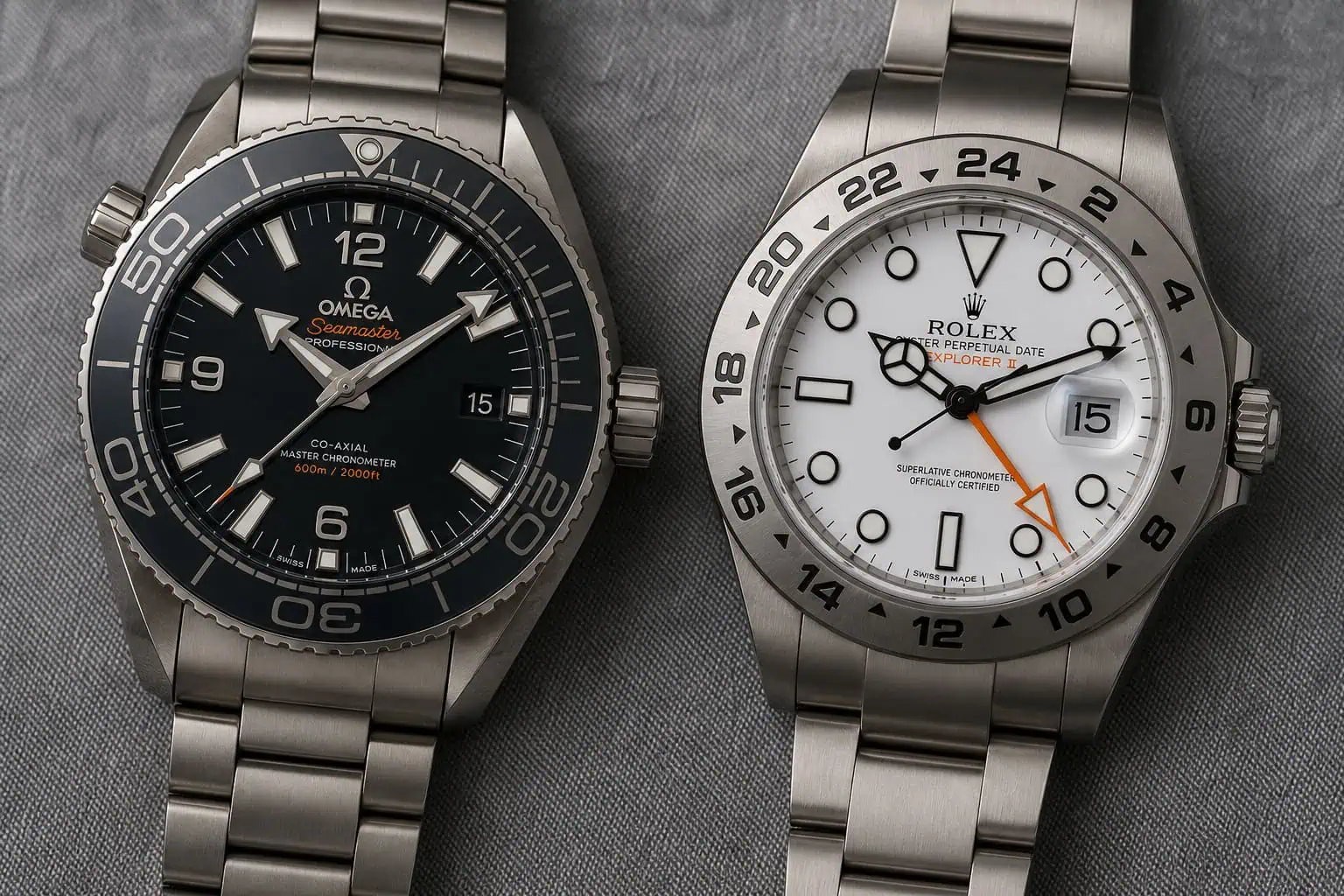
The Omega Planet Ocean 6000M Titanium runs about 43,000 AED. The Rolex Explorer II is around 48,000 AED. That’s not a huge gap. The common assumption is that Omega is always the “budget” option, but the mid-range tells a different story. Omega’s flagship models can cost as much as Rolex’s mid-tier pieces.
Ultra-Luxury
Rolex precious-metal Day-Dates and Daytonas break $50,000 without breaking a sweat. Omega’s top-end precious-metal pieces top out under $50,000. That’s where the separation happens. Rolex has a ceiling that Omega doesn’t touch.
Auction Records
Omega’s most expensive watch sold for $1.43 million. Rolex’s Paul Newman Daytona hit $17.75 million. That’s not a comparison — it’s a different universe. But unless you’re shopping at auction houses, this doesn’t affect your decision.
The Rolex Premium: Scarcity, Branding, and Asset Status
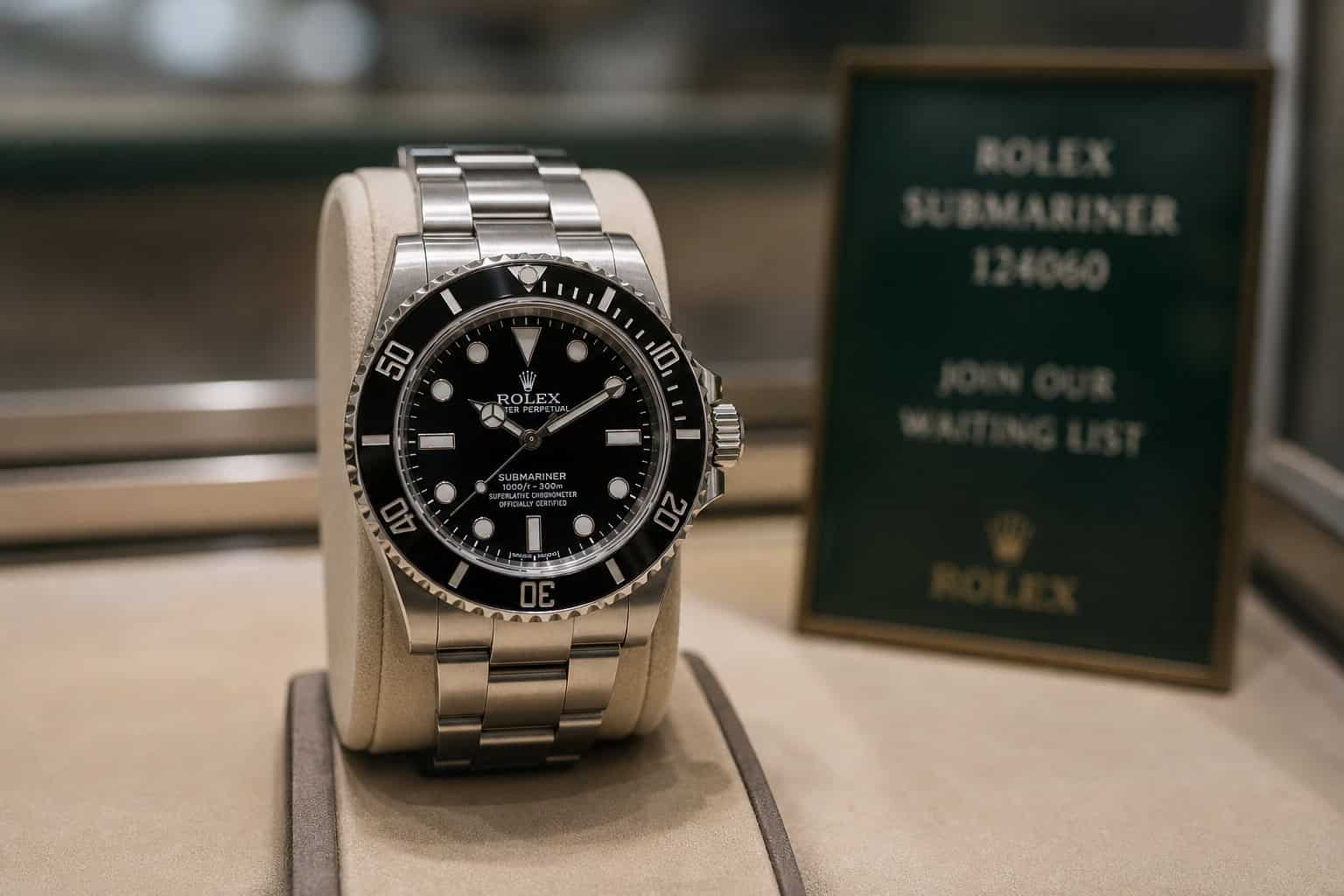
Rolex’s production is deliberately limited — the Submariner 124060 trades at a €2,650 premium on the secondary market, so walking into an authorized dealer and asking for a steel Submariner or Daytona will get you a polite version of ‘get in line’. The waitlist runs years for the most popular models. Sometimes you get offered a two-tone Datejust when you asked for a steel Sub. That’s the game.
The proof is in the secondary market. The Rolex Submariner 124060 lists for €9,350. On Chrono24, it trades for around €12,000. That’s a €2,650 premium just to get the watch now instead of waiting.
Meanwhile, Rolex is the only watch brand with 100% name recognition. Everyone knows the crown. That’s not an accident — since its founding in 1905 and with innovations like the Oyster case in the 1920s, smart marketing and controlled production built that perception.
You’re not paying for a better watch. You’re paying for the fact that it’s hard to get and everyone knows what it means.
Omega’s Value Proposition: Innovation and Pre-Owned Savvy
Omega makes a strong case if you’re buying for the watch itself, not the brand cachet.
The Co-Axial escapement, introduced in 1999 and perfected from George Daniels’ original design, is a mechanical innovation. It reduces friction and extends service intervals. The Master Chronometer certification, tested independently by METAS, is brutal: 15,000 gauss magnetic resistance. Your watch won’t care about MRI machines, laptop magnets, or speakers.
The Rolex Milgauss tops out at 1,000 gauss. That’s a real difference.
But there’s a trade-off. Rolex’s Superlative Chronometer is tighter on daily accuracy: -2/+2 seconds per day versus Omega’s 0/+5 seconds. If precision matters most, Rolex edges ahead. If you want a watch that shrugs off magnetism, Omega wins.
Omega new watches lose 20-40% of their value the moment you buy them. That sounds bad, but it’s a benefit if you’re buying pre-owned. The Aqua Terra retains 60-75% of its value used. The De Ville and Constellation lines retain much less — 30-40%.
So if you buy smart, you get a brilliant watch for less than retail. Omega’s catalog also offers more variety — annual calendars, world timers, tourbillons, and skeletonized movements, at prices that don’t require Patek Philippe money, while best value watch brands offer even more affordable alternatives.
Model Face-Off: Rolex vs. Omega by Category
Comparing Rolex and Omega head-to-head in each category reveals where each brand excels and where the price differences are justified.
Dive Watch: Submariner vs. Seamaster 300
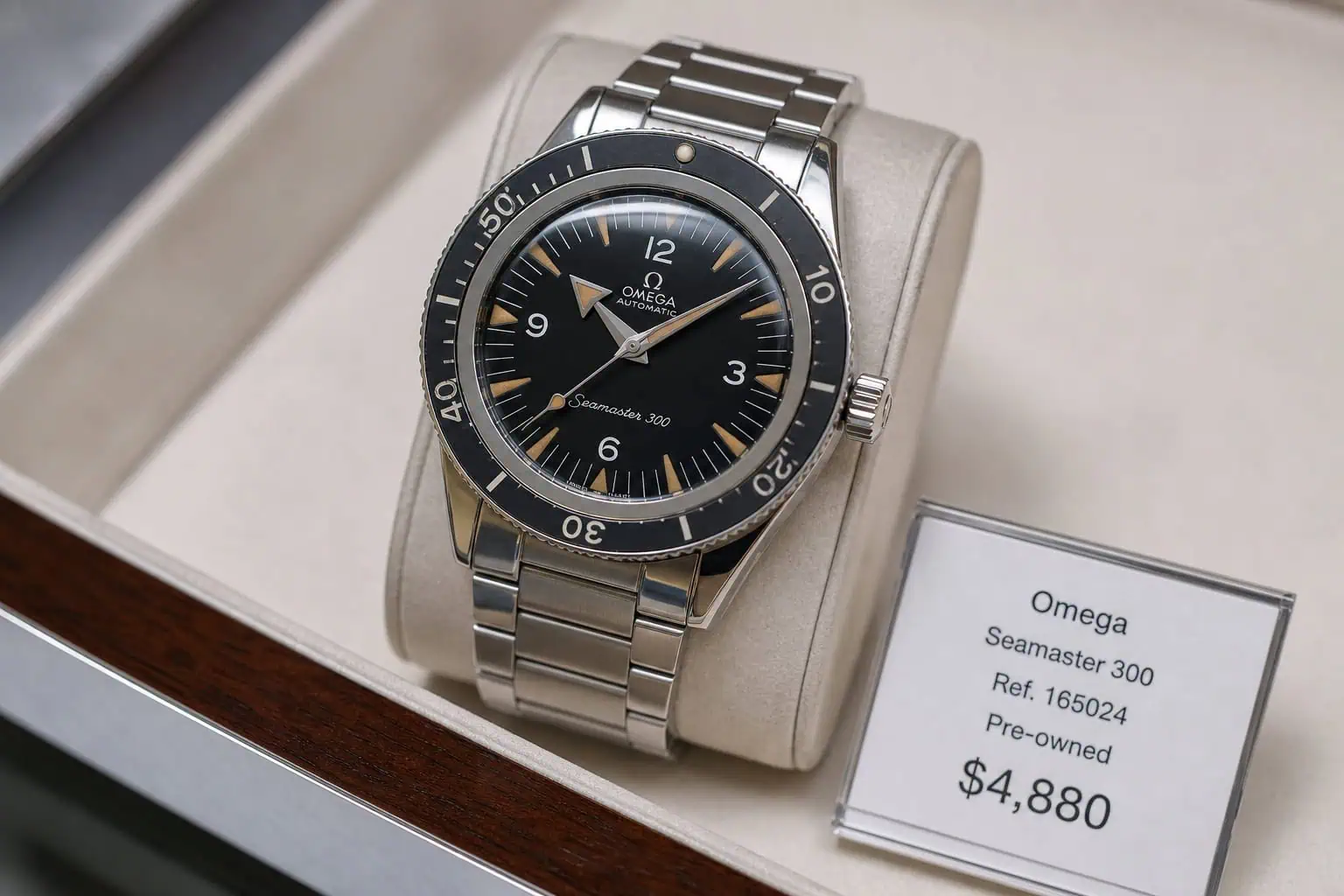
The Submariner no-date (124060) lists at €9,350 and trades around €12,000. The Omega Seamaster 300 lists at €7,700 and trades around €5,900. Both are 300m water-resistant. Both are excellent.
One costs more because of the name, the other costs less because of depreciation. If you want the investment, buy the Sub. For a head-to-head on build quality, water resistance, movement robustness, and real-world toughness, consider Omega vs Rolex durability before deciding: if you want a dive watch that’s just as capable, buy the Seamaster used and pocket the difference.
Chronograph: Daytona vs. Speedmaster
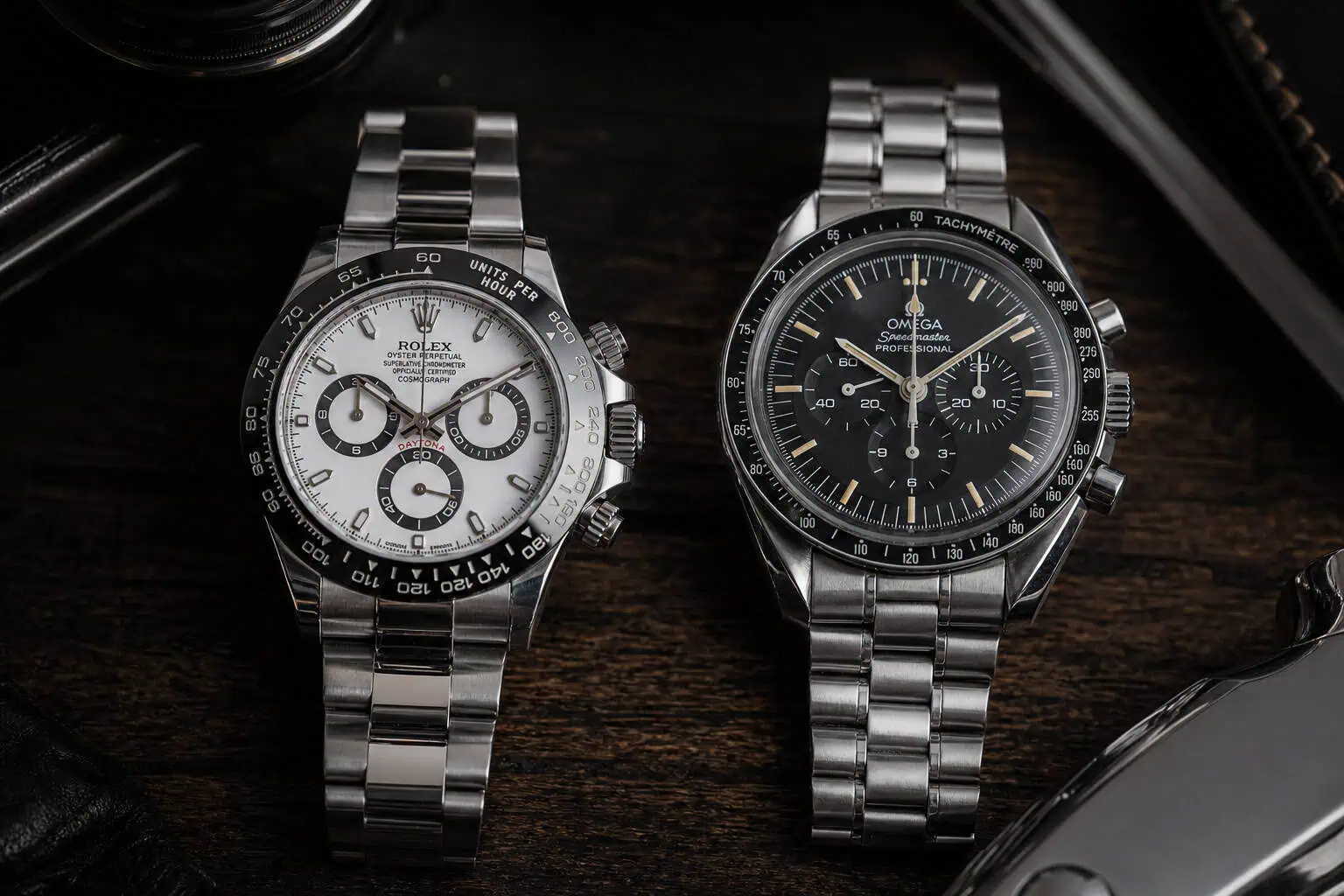
The Daytona is the most collectible Rolex line. Good luck finding one at retail. The Speedmaster is the first watch on the moon and costs a fraction of the Daytona. The Rolex Daytona starts at $13,150 retail, while the Speedmaster is around $5,250.
Rolex model lines have barely changed in decades, while Omega’s Speedmaster alone has over 20 versions, giving Omega buyers more choice but wider depreciation. If you want a chronograph without the waitlist and premium, there’s also the Tudor Black Bay Chrono, which uses a Breitling B01-based movement (the MT5813) for a fraction of Daytona money. That’s a column-wheel chronograph at an accessible price.
Everyday: Datejust vs. Aqua Terra
The Aqua Terra often has better specs — magnetism resistance, water resistance, for a lower price. It’s the go-anywhere, do-anything Omega. The Datejust is the classic Rolex dress watch. Both are one-watch-collection candidates.
The Aqua Terra gives you more tech for less money. The Datejust gives you the crown.
Technical Diver: Sea-Dweller vs. Planet Ocean
This is an arms race. The Rolex Deepsea Challenge (2022) is rated to 11,000 meters. The Omega Ultra Deep is rated to 6,000 meters in production, but Omega’s prototype survived the Mariana Trench at 10,925 meters in 2019, beating Rolex’s record by 12 meters. Both brands have sent watches to the deepest points on Earth.
That’s not marketing — it’s engineering validation. Unless you’re a saturation diver, neither of these ratings matters. But it’s fun to know who’s winning.
What You Really Pay: Servicing, Insurance, and Resale
The sticker price is just the start. Plan to spend 10 to 15 percent of the watch’s price on servicing over ten years. Both brands recommend service every 5-10 years. In the UAE, that runs in the low thousands of dirhams per visit.
Insurance is worth considering for pieces over 40,000-50,000 AED. Below that, you can probably skip it. Above that, you’re protecting a serious asset.
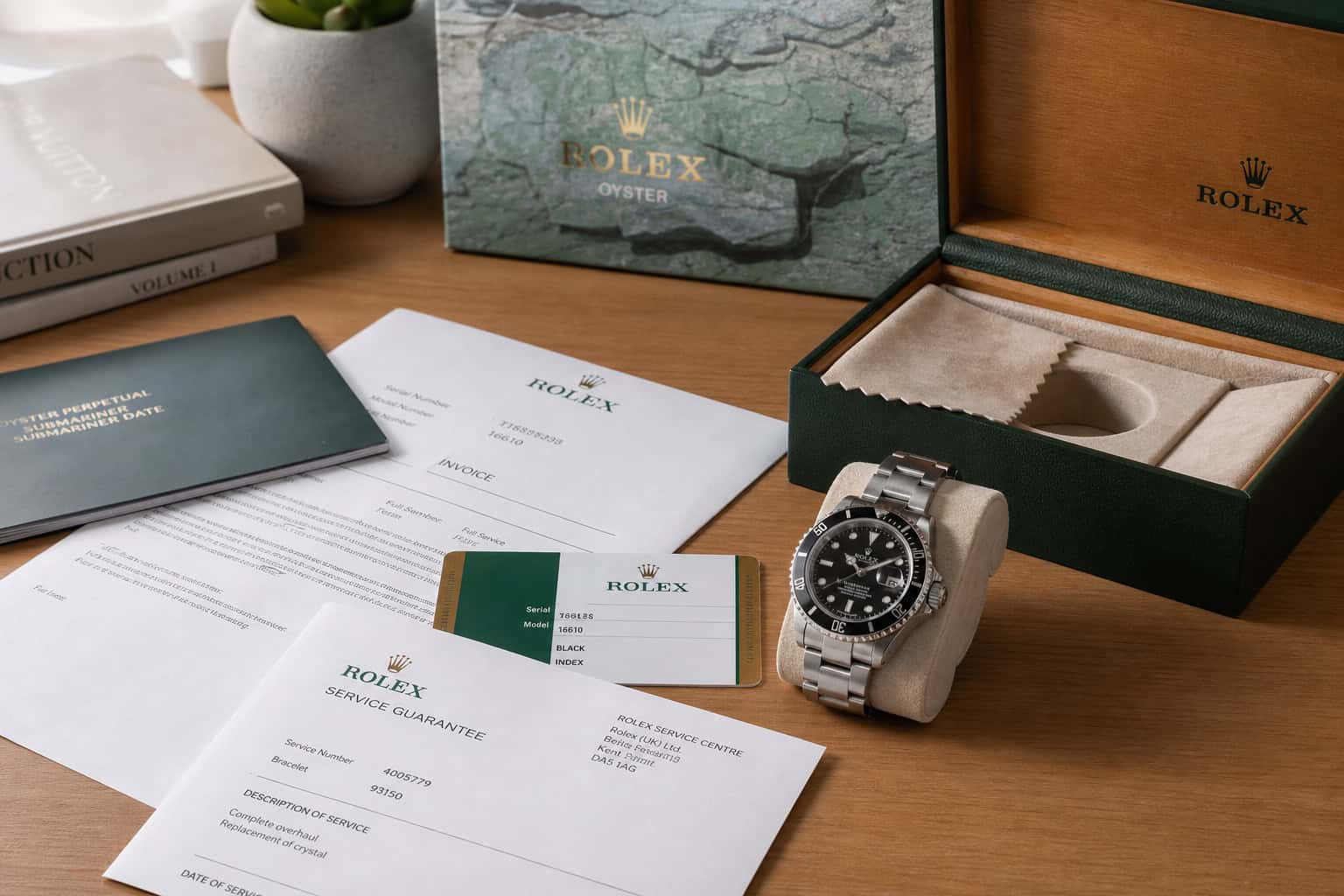
Here’s one thing that matters more than most people realize: keep the box, papers, and service records. They add 15-20% to the resale value for both brands. A complete set is worth money. Don’t throw away the packaging.
Verdict: Which Brand Is More Expensive and Why?
The answer isn’t as simple as “Rolex costs more.” The Omega Planet Ocean can cost as much as the Rolex Explorer II. The mid-range overlaps significantly.
But at the extremes, the picture is. Rolex is more expensive for prestige and investment potential. Omega offers better pure watch value — more movement tech, more variety, lower entry price, and immediate availability.
Buy Rolex if: You want a status symbol that holds its value. You’re okay with the waitlist or the secondary market premium. You want the one watch that everyone recognizes.
Buy Omega if: You want the best watch for your money. You appreciate movement innovation and don’t care about the brand flex. You’re buying pre-owned and want a bargain on a world-class piece.
Frequently Asked Questions
Is Omega more prestigious than Rolex?
No, Rolex is the most recognized luxury watch brand globally with 100% name recognition, compared to Omega’s roughly 70%. That recognition gap, combined with controlled scarcity, gives Rolex a prestige advantage that shows up in both retail prices and secondary market premiums.
What is poor man’s Rolex?
The term ‘poor man’s Rolex’ is often used for brands like Tudor or even Omega, but it’s a misnomer. Omega is a legitimate luxury brand with its own innovations like the Co-Axial escapement and Master Chronometer certification. It’s not a budget substitute — it’s a different value proposition focused on technical excellence rather than hype-driven scarcity.