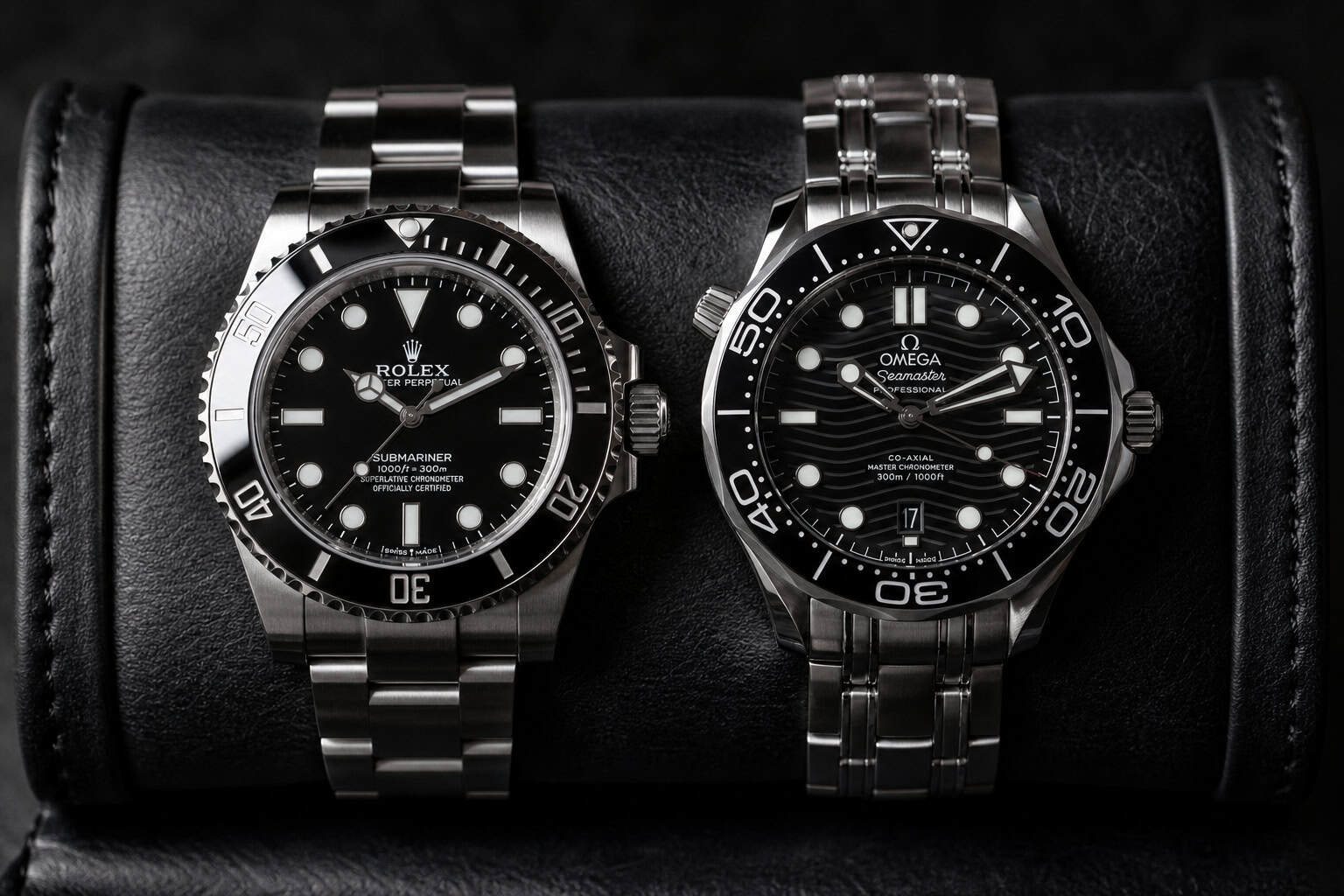
Rolex makes about 1.1 million watches a year and still can’t meet demand. Omega makes more watches than Rolex and makes them more available, so you can buy one the same day at a boutique. That one contrast — deliberate scarcity versus actual availability, is the whole story in miniature.
The question “Is Omega as luxury as Rolex?” misses the point. These two brands define luxury differently. Rolex builds it through scarcity and cultural status. Omega earns it through technical achievement and keeps it accessible.
Key Takeaways
Rolex produces roughly 1.1 million watches per year and deliberately limits supply to maintain scarcity; Omega produces more and allows same-day purchase, making its watches much easier to buy.
Omega’s Master Chronometer certification tests the complete watch against magnetic fields over 15,000 gauss, while Rolex’s Superlative Chronometer focuses on tighter daily accuracy (-2/+2 sec/day) but only tests the movement.
For comparable steel sport watches, Omega typically costs 40-60% less than Rolex at retail, and pre-owned Omegas depreciate 25-40% — which is a buying opportunity, not a warning.
Table of Contents
Brand Positioning and Prestige: Scarcity vs. Innovation
Rolex sells the privilege of being allowed to buy. Omega sells a technically excellent watch you can own today.
How Rolex builds prestige through deliberate scarcity
That 1.1 million figure isn’t a capacity limit — it’s a strategy. Rolex intentionally makes fewer watches than the market wants, creating waitlists that stretch for years on steel sport models like the Submariner, GMT-Master II, and Daytona. Walk into an authorized dealer ready to buy, and you’ll likely hear the wait is measured in years, with no guarantee. The experience is about the privilege of being chosen.
Rolex pioneered brand ambassadorship in 1927 with an ad featuring swimmer Mercedes Gleitze. Today they use Roger Federer — athletic excellence, clean image. The brand sponsors tennis, the Rolex 24 at Daytona, and Formula 1, and is a major supporter of tennis and its ambassadors.
How Omega builds prestige through achievement and accessibility
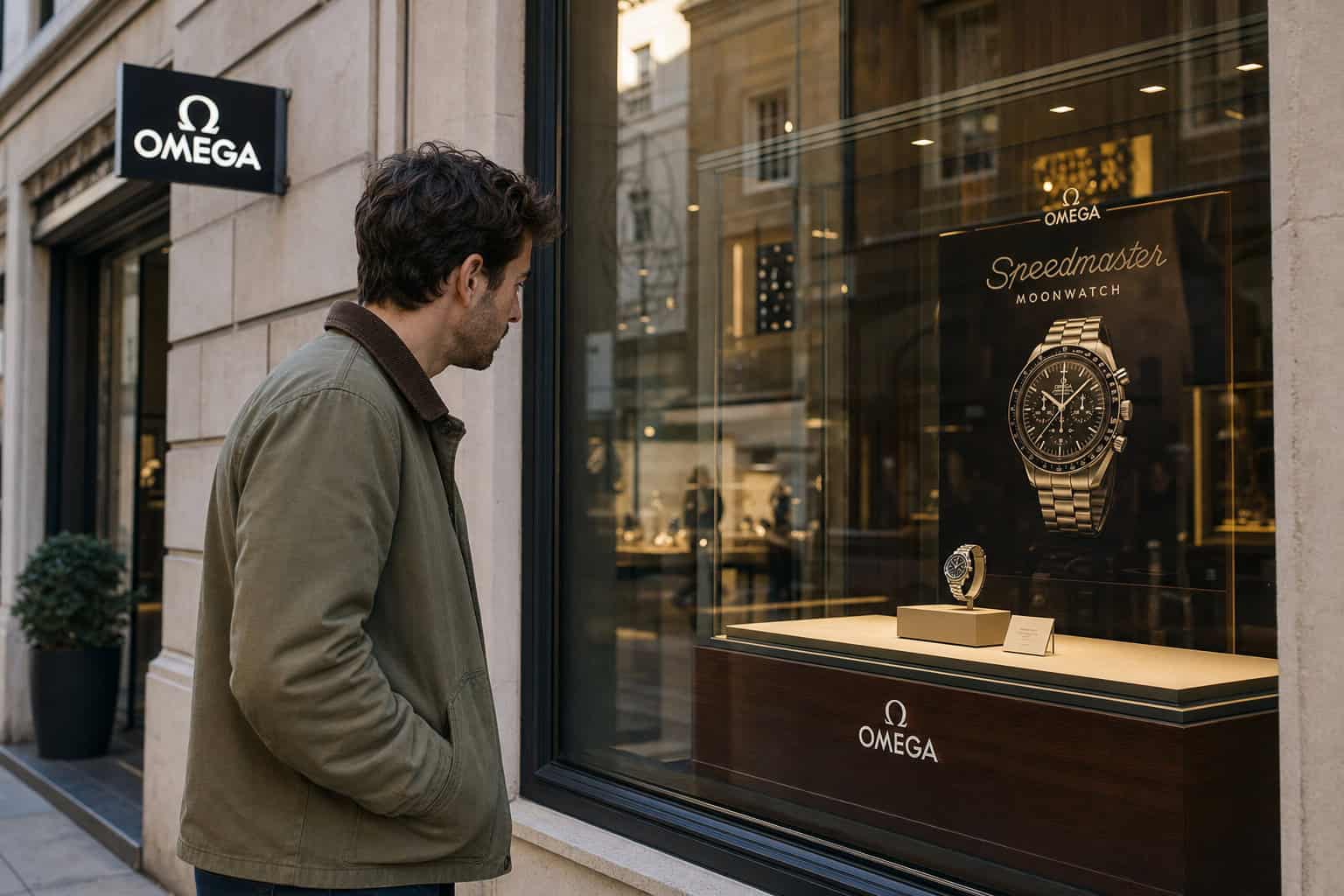
Omega makes more watches than Rolex and makes them more available. You can walk into most Omega boutiques and buy a Speedmaster or Seamaster the same day.
Omega’s brand associations are different. They’ve been the official James Bond watch since 1995’s GoldenEye — over 25 years of pop culture connection. They’re the official timekeeper of the Olympics. They have the NASA certification for all manned space missions.
The Speedmaster went to the moon. The Planet Ocean Ultra Deep went to the bottom of the Mariana Trench.
Here’s the telling detail: Daniel Craig wears an Omega on-screen as James Bond, but he owns Rolex watches personally. Even a paid brand ambassador sees the two brands as occupying different mental spaces. One is for the role, the other for himself.
Movement Technology and Innovation: Where the Specs Matter
Omega pushes technical boundaries. Rolex focuses on proven reliability and tighter accuracy.
Rolex Superlative Chronometer vs. Omega Master Chronometer
Rolex’s Superlative Chronometer certification guarantees accuracy within -2 to +2 seconds per day. That’s tight — tighter than COSC’s baseline of -4/+6. But it’s a movement-only test. The watch is tested on its own, not as a complete package.
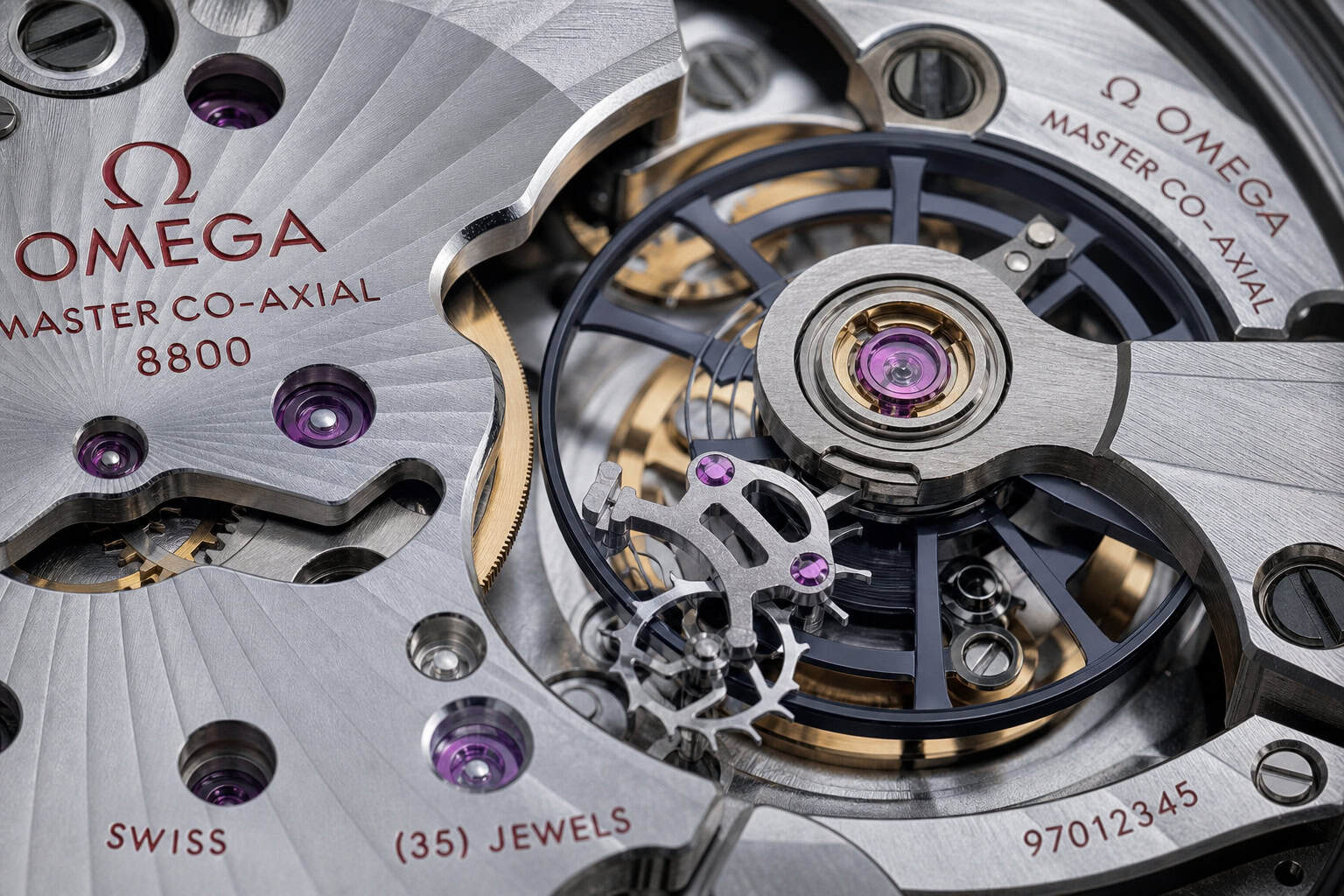
Omega’s Master Chronometer certification, administered by the independent Swiss institute METAS, tests the complete watch. That means accuracy (0 to +5 seconds per day), water resistance, and magnetic resistance all tested together. It’s a wider standard but a more comprehensive one.
Magnetic resistance: 15,000+ gauss vs. ~1,000 gauss
This is the biggest practical difference. Omega’s Master Chronometer watches are certified to withstand magnetic fields over 15,000 gauss. Most Rolex models manage about 1,000 gauss — even the Milgauss, which is Rolex’s dedicated anti-magnetic model, is also 1,000 gauss.
Omega achieves this through movement design — the Co-Axial escapement combined with silicon components, not through case shielding. Practically speaking: an Omega can sit next to an MRI machine without missing a beat. A standard Rolex will start running fast if it gets near a laptop speaker, a tablet case, or a magnetic bag clasp.
Escapement tradeoff: Co-Axial vs. Chronergy
Omega’s Co-Axial escapement, invented by British watchmaker George Daniels and introduced in 1999, reduces friction between components. That means longer service intervals theoretically — less wear over time.
Rolex uses its own Chronergy escapement, which focuses on efficiency and proven reliability. It’s a conservative engineering choice from a brand that doesn’t change much. Rolex introduced the Blue Parachrom hairspring in 2005, improving shock and magnetic resistance.
Both are in-house movements. Both offer 5-year warranties and recommend service intervals of 7-10 years. Rolex’s Caliber 3255/3235 has a 70-hour power reserve; Omega’s calibers range from 60-72 hours depending on the model.
Pricing and Value for Money: What You Actually Pay For
Rolex retails from about $5,700 up into six figures for precious metal and complicated models. A look at the brands’ Omega vs Rolex history reveals how their distinct heritages—from Omega’s NASA and Olympic legacy to Rolex’s Everest and deep-sea milestones—shape modern luxury perception. Omega starts around $3,400 and tops out around $50,000, so for comparable steel sport watches, Omega typically runs 40-60% less.
The specific numbers make the gap real:
| Model Pair | Rolex Price | Omega Price |
|---|---|---|
| Submariner vs. Seamaster 300M | ~$10,050 | ~$5,600 |
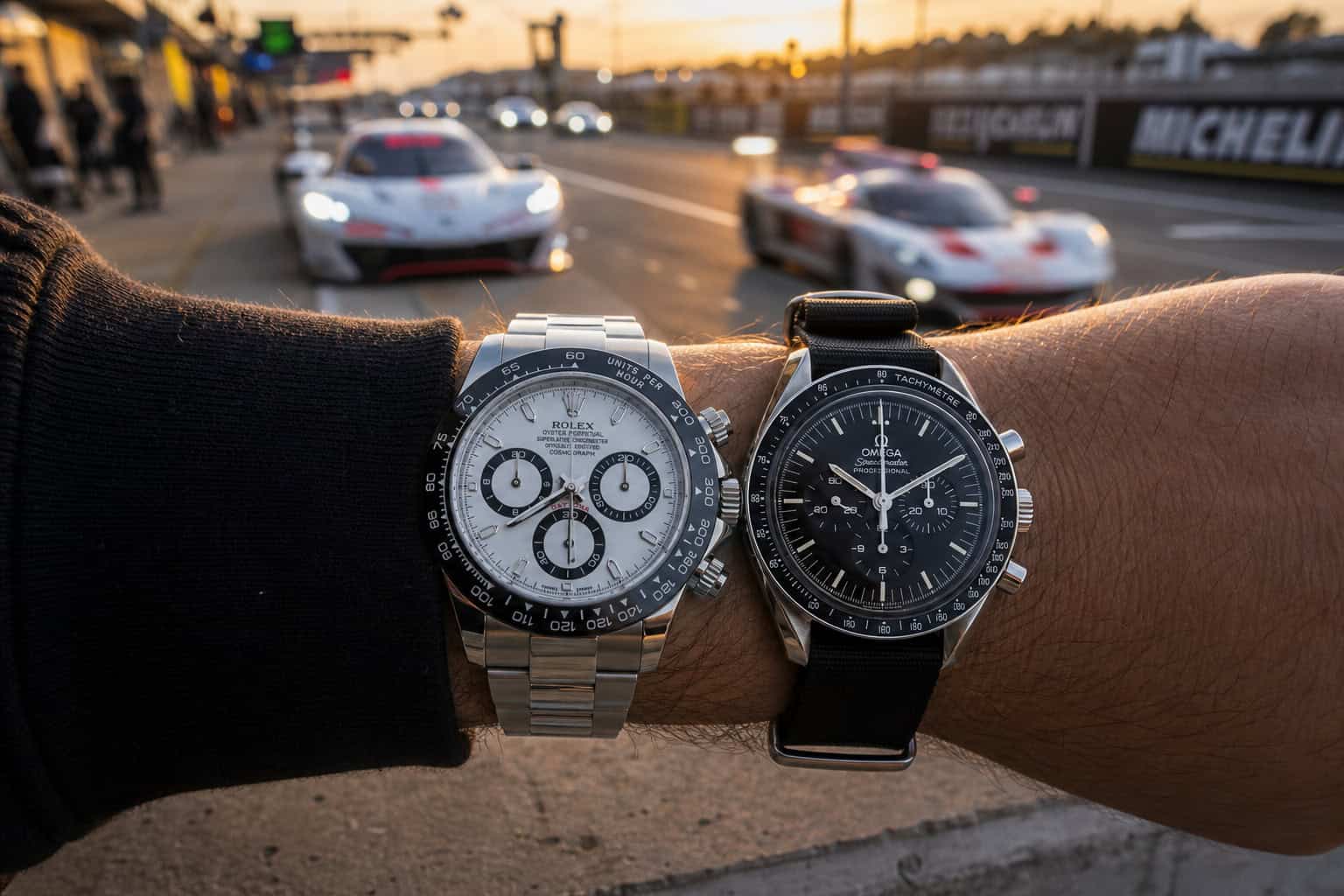
| Daytona vs. Speedmaster Moonwatch | ~$15,350 | ~$6,900 |
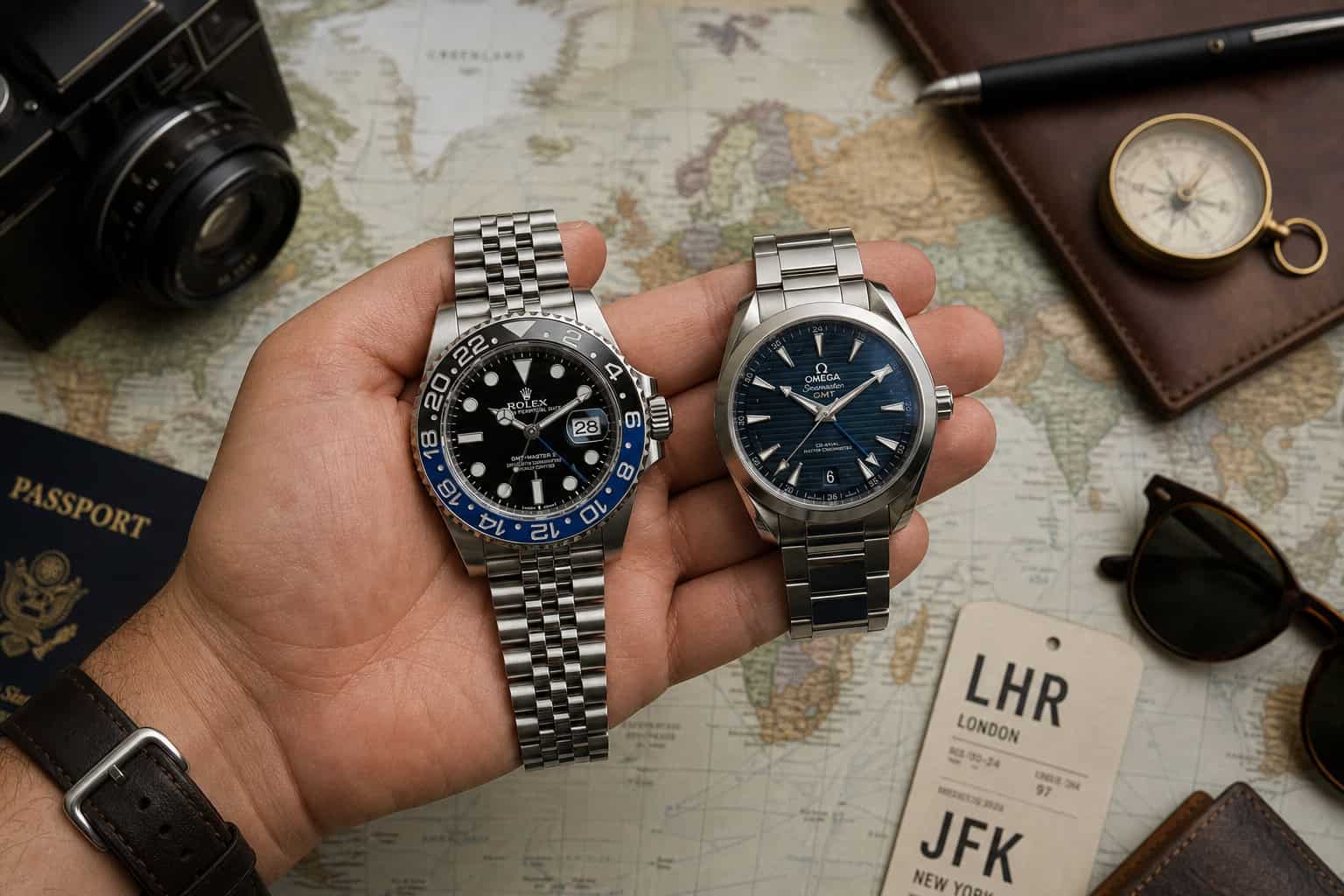
| GMT-Master II vs. Aqua Terra GMT | ~$11,800 | ~$7,200 |
| Datejust 41 vs. Aqua Terra 38/41 | ~$9,700 | ~$6,100 |
What justifies Rolex’s higher prices? Partly materials — Rolex uses 904L steel, which is more expensive to machine and more corrosion-resistant. (Omega used 904L first, in the 1971 Ploprof, but Rolex was first to use it for a standard production model in 1985.) Partly artificial scarcity.
But is Omega considered a high-end luxury watch? Mostly brand positioning — decades of marketing that have made Rolex the most recognized luxury watch brand in the world.
What you get for less with Omega: comparable craftsmanship, more advanced movement technology, better magnetic resistance, and a watch you can buy today.
Resale Value and Depreciation: The Investment vs. Value Play
Rolex steel sport models routinely trade at or above retail on the secondary market. The Rolex market index is up 7.9% year-over-year according to WatchCharts. A Submariner that lists for around €9,350 sells for about €12,000 on Chrono24.
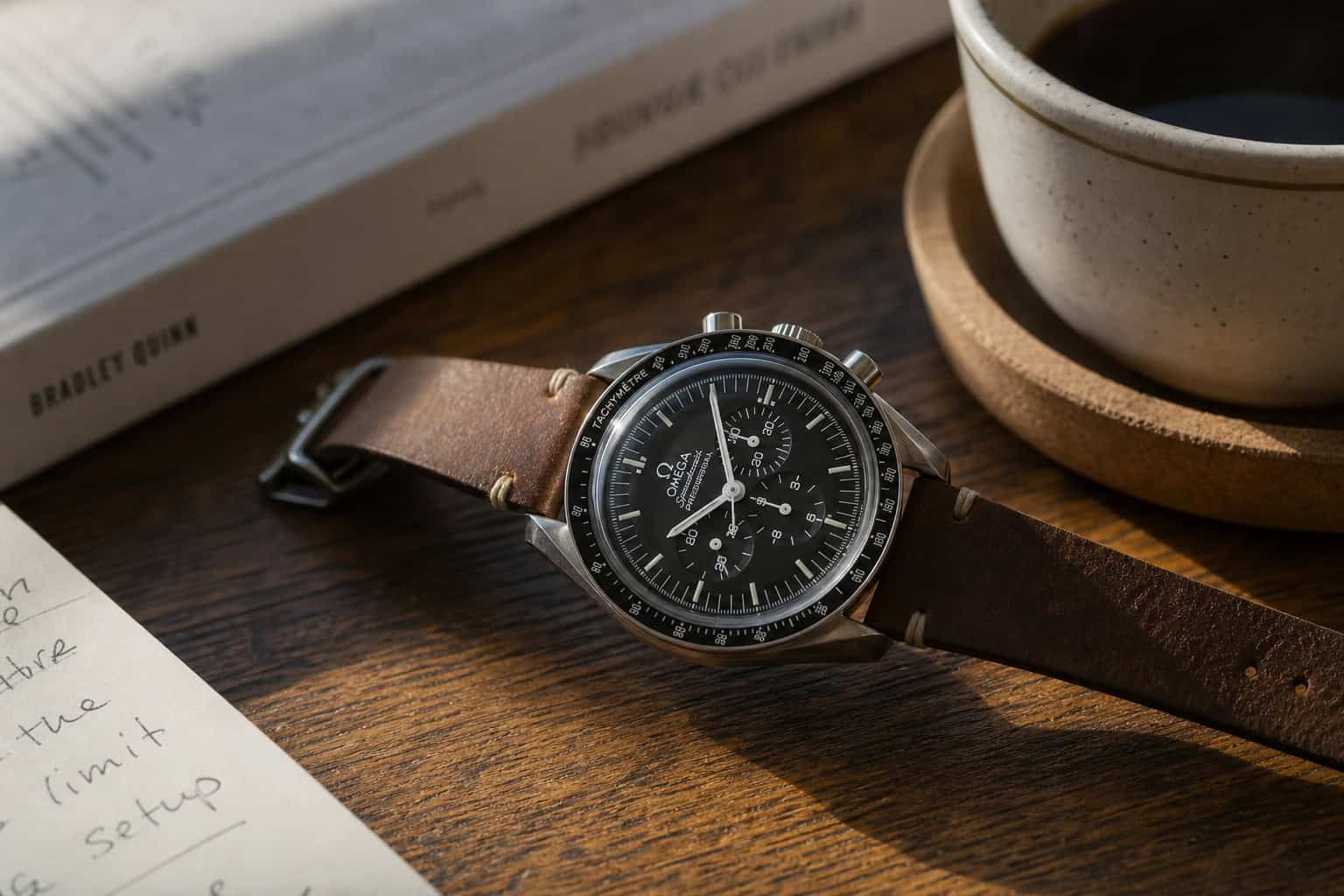
Omega typically depreciates 25-40% from retail. A Seamaster 300M that retails for $5,600 might trade for $3,500 to $4,200 pre-owned.
First-time buyers are often surprised when they try to sell a barely-worn Omega and find it’s worth 30-40% less than they paid.
The smart move: buy Omega pre-owned and let someone else take the depreciation hit. A pre-owned Speedmaster offers Moonwatch-level movement tech at Tudor Black Bay prices. A pre-owned Seamaster gives you a dive watch with better specs than a Submariner at half the cost.
Head-to-Head Model Comparisons: Where the Brands Actually Compete
Here is where the abstract differences in philosophy become concrete. Each pair pits Rolex’s scarcity and resale against Omega’s technical specs and value.
Submariner vs. Seamaster: the dive watch face-off
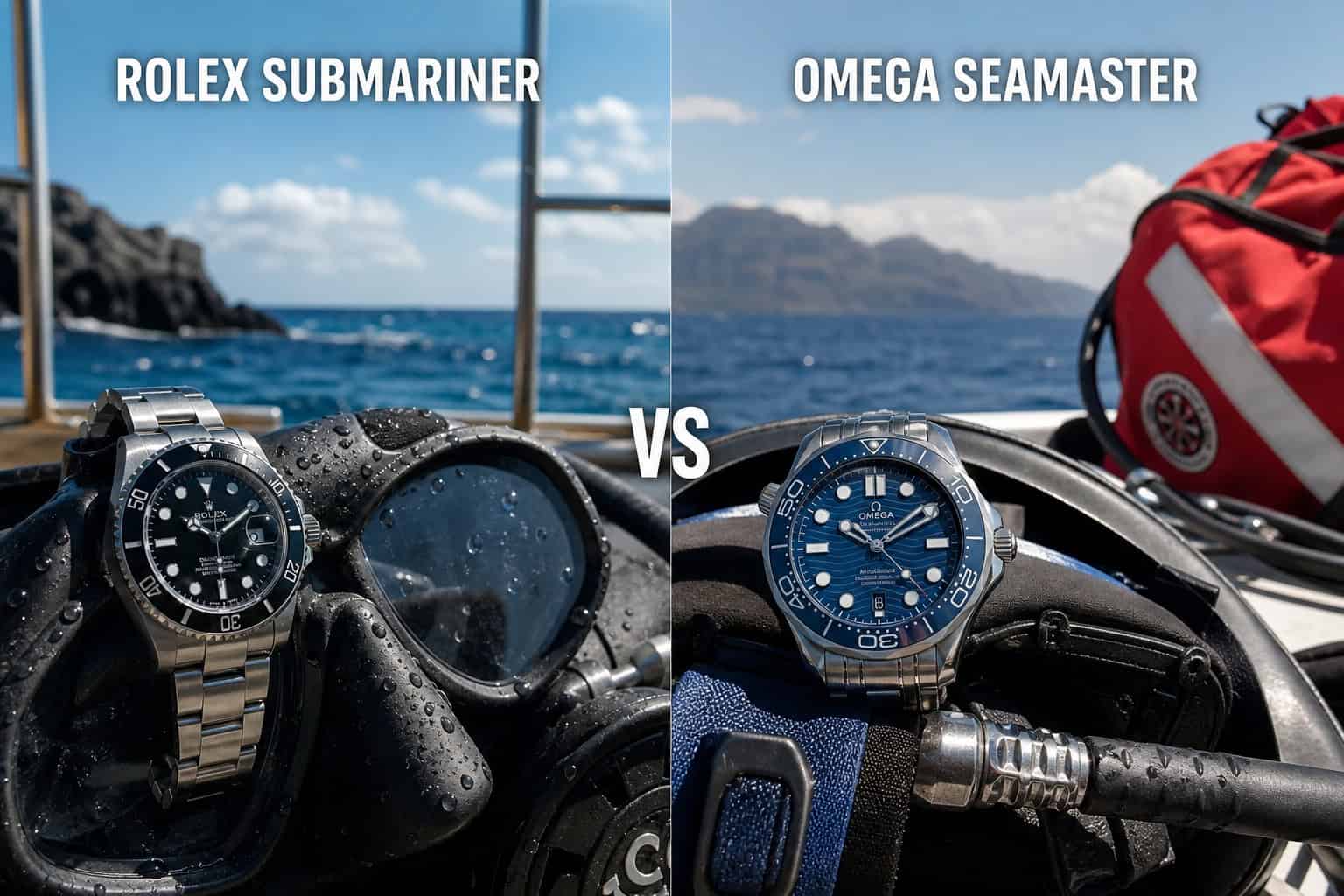
Both offer 300m water resistance. The Seamaster has a helium escape valve; the Submariner Date does not. The Submariner launched in 1953 and is a pop culture icon. The Seamaster debuted in 1948 and is James Bond’s watch. The Rolex Submariner is offered only in 40mm or 41mm.
The Submariner costs about $10,050; the Seamaster about $5,600. The Submariner is harder to find and holds its value. The Seamaster is easier to buy and offers better magnetic resistance. Rolex’s largest contemporary models are the Deepsea Sea-Dweller and Yacht-Master II at 44mm.
If you want the dive watch that everyone recognizes and that may hold value, get the Sub. If you want a better technical package at half the price, get the Seamaster.
Daytona vs. Speedmaster: chronograph legends compared
The Speedmaster was certified by NASA for all manned space missions in 1965. It went to the moon. The Speedmaster was introduced in 1957 for motoring enthusiasts. The Daytona was introduced in 1963 for racing drivers. The Speedmaster costs about $6,900; the Daytona about $15,350.
The Daytona has multi-year waitlists and retains or exceeds value. The Speedmaster is usually available and depreciates. The Speedmaster has a stronger historical claim (it went to the moon) and costs half as much. The Daytona has exclusivity and investment potential.
GMT-Master II vs. Aqua Terra GMT: the traveler’s choice
The GMT-Master II launched in 1955 for airline crews. It’s the classic pilot’s watch with the Pepsi bezel nostalgia. The Aqua Terra GMT is a more modern design with Master Chronometer certification. The GMT-Master II costs about $11,800; the Aqua Terra GMT about $7,200.
The GMT-Master II is harder to find and holds value. The Aqua Terra is available, technically superior in magnetic resistance, and costs less. If you want the nostalgia and the investment, get the GMT. If you want a modern traveler’s watch with better specs, get the Aqua Terra.
Datejust vs. Aqua Terra: everyday luxury
The Datejust debuted in 1945 as the first self-winding chronometer with a date window. It’s a timeless design. The Aqua Terra is more modern, with better magnetic resistance and Master Chronometer certification. The De Ville debuted in 1967 with radical asymmetric cases. The Datejust 41 costs about $9,700; the Aqua Terra 38/41 about $6,100.
The Datejust has longer model history and higher resale. The Aqua Terra has better specs and lower price. Both are excellent everyday watches.
Making the Choice: A Decision Framework
Want resale value and exclusivity? Rolex. Want movement technology and more watch per dollar? Omega.
Want to buy today? Omega. Want an investment? Rolex.
Choose Rolex if:
- You want a watch that may hold or increase in value
- You’re willing to play the waitlist game or pay secondary market premiums
- You want the most recognized luxury watch brand in the world
- The buying experience — being chosen to buy, is part of the appeal
Choose Omega if:
- You want more advanced movement technology (magnetic resistance, Co-Axial escapement)
- You want more watch for your money (40-60% less for comparable models)
- You want to buy today without a waitlist or games
- You value space heritage, sports timing, or the James Bond connection
- You’re willing to buy pre-owned for exceptional value
- You want display casebacks and movement visibility
The honest middle ground: many guys end up with one of each. A Rolex for status and investment, an Omega for daily wear and the satisfaction of owning a technically impressive movement.
For more on the specific price differences, check out our Omega vs Rolex: which is more expensive breakdown. If you’re curious about who wears each brand, read What kind of person wears Omega. And for a deeper dive into resale numbers, see Does Omega hold value as well as Rolex.
Frequently Asked Questions
What is poor man’s Rolex?
It’s an outdated, dismissive term often used for brands like Tudor or Omega that offer similar style or heritage at a lower price. The label ignores that Omega, for example, competes on technical merit, not imitation — walk into a boutique and you’ll find movements with better magnetic resistance and space heritage, not budget copies.
What kind of person wears Omega?
Typically someone who values engineering, space heritage, and the James Bond connection over exclusivity and resale speculation. Omega owners tend to buy for the movement tech — like 15,000 gauss magnetic resistance — and the satisfaction of getting a watch with a stronger spec sheet for roughly half the price of a comparable Rolex.
How much more does a Rolex cost than an equivalent Omega?
For comparable steel sport watches, Rolex typically costs 40–60% more at retail. A Submariner runs around $10,050 against the Seamaster’s $5,600; a Daytona lands around $15,350 versus the Speedmaster’s $6,900. The premium buys you status and resale value, not better specs.