
Your DM just dropped the bomb: “You’ve got a year of downtime. What do you want to do?”
If your first instinct is panic, you’re not alone. A player on the D&D Beyond forums asked the exact same question — a year of in-game time, no direction, and a blank character sheet staring back at them.
A well-run downtime stretch can generate more plot hooks, allies, and enemies than a dungeon crawl. The problem is that the official rules are scattered across the PHB, DMG, and Xanathar’s Guide to Everything, and some of them are deliberately vague.
This guide covers every official option — PHB, DMG, and Xanathar’s Guide to Everything, plus the community-tested ideas that work at the table. Costs, time commitments, risks, and the narrative payoff for each.
Key Takeaways
The PHB’s crafting rate is 5 gp of progress per day; Xanathar’s Guide to Everything bumps that to 50 gp per workweek — roughly 10x faster, but still mostly passive.
Training a new language or tool proficiency takes 250 days under PHB rules, or 10 weeks under Xanathar’s Guide to Everything with an Intelligence modifier discount.
The DMG stronghold rules punish you for adventuring (every day away adds 3 days to construction), while the 2024 Bastion system is more streamlined but Justin Alexander says it exists in a “bubble” disconnected from the plot.
Table of Contents
The PHB Basics: Five Options, Minimal Rules
The original Player’s Handbook (PHB) gave us five downtime activities. They’re intentionally lightweight — almost a time tax to keep the game moving. Here’s what each does.
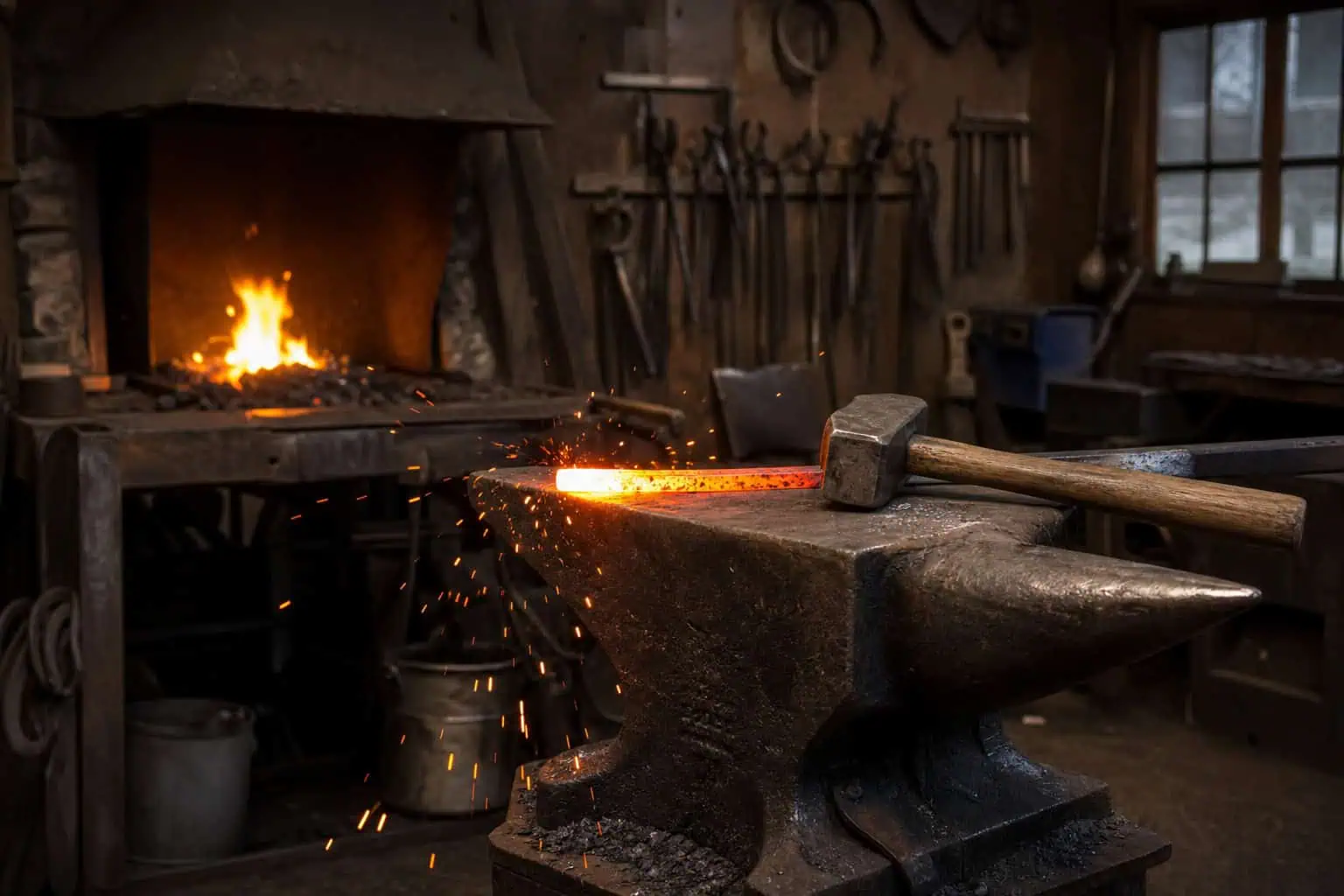
Crafting (PHB) — 5 GP Per Day
You need the right tool proficiency and a place to work. Smith’s tools need a forge. Carpenter’s tools need a workshop. You can’t set up a forge in a tavern room.
The rate is 5 gp of progress per day. That plate armor you’ve been eyeing? 1,500 gp. Solo, that’s 300 days — almost your entire year. Multiple characters with the same tool proficiency can combine their daily progress, so teamwork helps. But you’re still looking at a time commitment for anything expensive.
Practicing a Profession — Covering Your Lifestyle
This is the simple way to earn a living. No big risks, no big rewards. You cover your modest lifestyle (1 gp/day) for free. Guild membership bumps you to comfortable (2 gp/day). Performance proficiency gets you wealthy (4 gp/day) — bards and entertainers do well here.
It keeps the lights on.
Recuperating — DC 15 Constitution Save Every Three Days
This one’s for when you’re dealing with a lingering effect. Every three days, you make a DC 15 Constitution save. Success ends an effect that blocks HP recovery, or gives you advantage on saves against diseases and poisons you’re carrying.
It’s slow. It’s boring. But if you’re carrying a curse or a disease that’s been messing with your adventuring, it’s the only official way to shake it without a spell.
Research (PHB) — 1 GP Per Day for Lore
The classic library trip. You pay 1 gp per day for expenses (on top of your lifestyle costs), and your DM calls for ability checks to see what you learn. You might spend a week and come up empty.
Training (PHB) — 250 Days for a New Proficiency
This is the long haul. 250 days at 1 gp per day to learn a new language or tool proficiency. That’s almost a year of your character’s life. The payoff is a permanent upgrade — your rogue can read Dwarvish, or your fighter can pick up smith’s tools.
Your DM can adjust the time. A good tutor speeds things up. A bad situation slows them down. But the baseline is clear: this is a commitment.
Expanded Options: DMG and Xanathar’s Guide
The Dungeon Master’s Guide (DMG) added eight new activities. Then Xanathar’s Guide to Everything (XGTE) reworked the whole system into a workweek model. The headline improvement: crafting jumps from 5 gp per day (PHB) to 50 gp per workweek (XGTE). That’s roughly 10x faster.
But the Xanathar’s activities are mechanically clear. They exist in a bubble. You roll your checks, you get your result, and unless your DM connects it to the plot, it feels like a spreadsheet exercise.
Here’s what each activity actually does.
Building a Stronghold (DMG)
The big dream. A place to call your own. But you need land, legal permission (charter, grant, or deed), materials, and laborers. Land is usually a reward for service — you can also buy or inherit it.
Here’s the catch: if you’re not there overseeing the work, every day you’re away adds 3 days to the timeline. The system punishes you for adventuring.
Carousing (DMG)
High-risk, high-reward socializing. You maintain a wealthy lifestyle (4 gp/day) for the whole duration. At the end, you roll 1d100 + your level on the Carousing table. Results range from jail to a small fortune. Your level helps your odds, but it’s a gamble.
Crafting a Magic Item (DMG)
The endgame of downtime. You need the formula, the right spell slots, the ability to cast required spells, and a minimum level — Legendary items need a 17th-level character. Each day, you spend 25 gp toward the creation cost. Consumables cost half. Multiple characters can work together, but the total gold cost stays the same.
Costs range from 100 gp to 500,000 gp. Time is 1 day per 25 gp spent, and the days don’t have to be consecutive. Xanathar’s Guide to Everything has more detailed rules if you’re serious about it.
Gaining Renown
Building your reputation with an organization. To increase renown by 1, you spend days equal to your current renown × 10. Going from 0 to 1 is easy. Higher ranks take serious time. Completing a mission gives you +2 renown — faster than just hanging around.
Most games I’ve played don’t use renown. It exists to determine standing in factions. If your campaign uses it, this is how you climb the ranks.
Performing Sacred Rites
A religious downtime activity. It takes 10 days of prayer and ritual. You gain inspiration for 2d6 days. That’s a buff for your next adventures.
But you can’t stockpile inspiration — you either have it or you don’t. Use it or lose it.
Running a Business
A gamble. After your downtime days, you roll 1d100 + the number of days you worked. Low rolls cost you money. High rolls let you break even or turn a profit. Profits average 15 to 75 gp — pocket money, not life-changing.
If you have unpaid debts, your roll takes a -10 penalty. That’s a big hit. And there are no explicit rules for ongoing operational costs, so your DM will have to figure that out.
Sowing Rumors
Social manipulation. You spend 1 gp per day, and the number of days depends on the town size. At the end, you make a DC 15 Charisma (Deception or Persuasion) check. Success shifts someone’s attitude one step.
Training to Gain Levels (Variant Rule)
Not standard, but some DMs use it to make leveling feel earned. It requires time and gold that increases by 10 days and 20 gp per tier of play. Higher levels cost more.
The Magic Item Economy: Craft, Buy, Sell
Getting magic items during downtime isn’t a shopping trip. It’s a mini-quest generator. Every scroll, potion, or unique item can turn into a session — rare ingredients, shady dealers, lost formulas, giving you a perfect opportunity for what to do during downtime beyond just shopping.
Crafting Magic Items: Formula, Slots, and 25 GP Per Day
The prerequisites are the gate. You need the formula, the right spell slots, the ability to cast required spells, and a minimum level. Legendary items need a 17th-level character. Each day, you spend 25 gp toward the creation cost. Consumables cost half. Multiple characters can work together to reduce time, but the total gold cost stays the same.
Costs range from 100 gp to 500,000 gp. Time is 1 day per 25 gp spent, and the days don’t have to be consecutive. Xanathar’s Guide to Everything has more detailed rules with exotic ingredients — worth checking if you’re serious.
Buying Magic Items: Workweek, Persuasion, and No Guarantees
Purchasing seeking a magic item requires time and money out and contact people willing to sell items. Even then, there is no guarantee a seller will possess the items a character wants. It takes one workweek and at least 100 gp to start looking. You make a Charisma (Persuasion) check to see what kind of seller you find. Better roll means better options.
Most merchants don’t have rare items. Advertising what you have invites theft. There’s a grey market, but it’s complicated and risky.
Selling Magic Items: Investigation, Persuasion, and Market Risks
Under DMG rules, you need a DC 20 Intelligence (Investigation) check to find a buyer. The offer ranges from 1/10 to 1.5x the item’s price based on a Charisma (Persuasion) check. Xanathar’s Guide to Everything streamlines it: 1 workweek + 25 gp, then a Persuasion check.
Character Growth: Training, Renown, and Spell Research
Downtime offers several ways to improve your character’s capabilities, from learning new skills to researching spells. Each option has its own time and cost requirements.

Training New Proficiencies: PHB vs. XGTE
The PHB says 250 days at 1 gp per day for a language or tool proficiency. Xanathar’s Guide to Everything cuts it to 10 weeks (70 days), and the cost is reduced by your Intelligence modifier. Smarter characters learn faster and cheaper.
Training to Gain Levels (Variant Rule)
10 days + 20 gp per tier of play. Not standard, but some DMs use it to make leveling feel earned.
Gaining Renown and Performing Sacred Rites
Renown: current renown × 10 days to increase by 1. Completing a mission gives +2. Sacred rites: 10 days, gain inspiration for 2d6 days. Not stackable — you either have it or you don’t.
Spell Research: Learning New Spells and Creating Unique Ones
Only wizards can learn new spells in 5E. Other spellcasters are stuck with what they get on level-up. You need access to libraries, possibly at a fee. Copying a spell into your spellbook costs gold.
Researching a unique spell is homebrew territory. No official rules exist. The easiest approach is to recreate existing spells with different damage types — a fireball that deals lightning damage, for example. Benchmark against existing spells. Require the researcher to cast spells of at least the next higher level. Spells that can be upcast count as higher than their base level for research purposes.
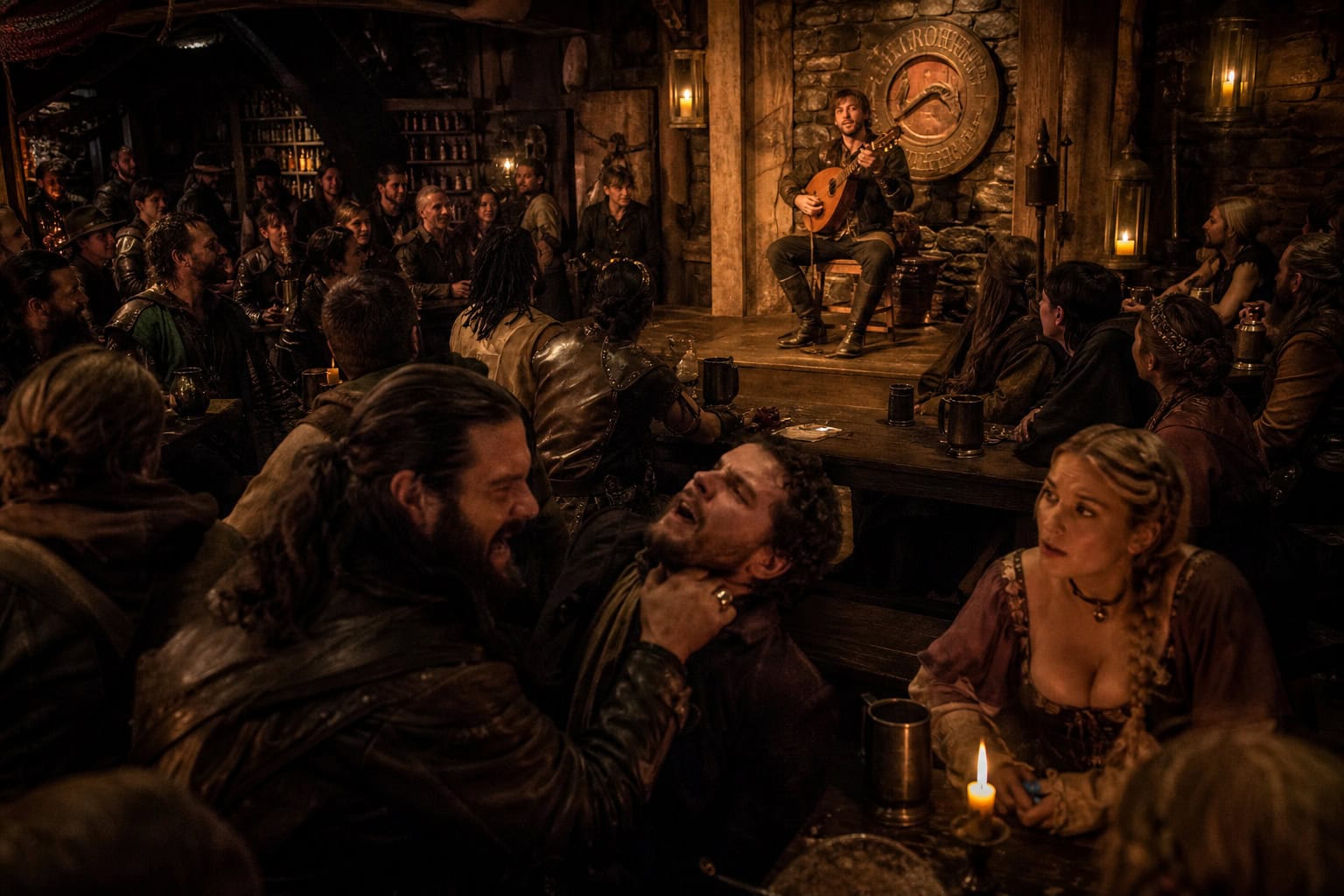
One homebrew framework: 1 month per spell level squared, 100 gp per level per day, with a hard limit of Intelligence modifier number of unique spells. That’s a starting point, not a rule.
Social and Economic Activities: Carousing, Crime, and Business
These are the risk/reward activities — contacts, enemies, debts, reputations. The rules give you the mechanics, but the fallout is up to your DM.
Carousing: Random Outcomes and Social Contacts
Carousing is a default downtime activity for many characters. Between adventures, who doesn’t want to relax with some drinks and friends at a tavern?
The DMG version: 4 gp/day wealthy lifestyle, then roll 1d100 + your level. Results range from jail to a small fortune. Xanathar’s Guide to Everything reworks it into a workweek with a Persuasion check for contacts. Both are gambles, but the Xanathar’s version is more predictable.
Crime: Heists, Skill Checks, and Arrest Risk
One workweek and 25 gp for preparations. You make checks for Stealth, thieves’ tools, and one of Investigation, Perception, or Deception. Success means profit. Failure means arrest risk.
Gambling: High Stakes and Skill Checks
Bet between 10 and 1,000 gp over a workweek. You make checks for Insight, Deception, and Intimidation. Your skills at the table matter. It indulges your character’s rougher edges — good for a rogue or a barbarian looking for trouble.
Pit Fighting: Non-Lethal Combat
Non-lethal brawling over a workweek. Athletics, Acrobatics, and a special Constitution check. You’re not killing anyone — beating them up for money.
Work: Temporary Employment
Skill checks for Athletics, tools, Performance, or musical instruments. Whatever you’re good at. Better rolls mean better pay. It’s temporary, and the quality and wages are unpredictable.
Building a Base: Strongholds, Bastions, and What Actually Works
The official rules give you three approaches, and they’re all flawed in different ways.
DMG Stronghold Rules: Land, Charter, and the Oversight Penalty
You need land, legal permission, materials, and laborers. Land is often a reward for service — you can also buy or inherit it. The problem: if you’re not there overseeing the work, every day you’re away adds 3 days to the timeline. The system punishes you for adventuring.
Bastion System (2024 DMG): Passive, Mechanical, and Bubble-Bound
The Bastion system kicks in at level 5. The Bastion turn is the intended downtime phase. While you’re adventuring, you can’t issue orders. It’s designed to avoid the traps of the old stronghold rules — streamlined, gives players control over downtime options (a wizard’s tower for enchanting, for example).
But critics have a point: the Bastion system isn’t integrated into the plot. It’s cordoned off in a “bubble,” as Justin Alexander describes it. Almost entirely mechanical, no character arc component. You get your benefits, but it doesn’t feed into the story.
Vaesen and Community Alternatives: Integrated Base Building
Vaesen does it better. Clear cycle of play: mystery, solve, return to base, prepare, set out. Rooms offer mechanical boons rooted in the play cycle. You can recruit a companion NPC who accompanies you on adventures — unlike the Bastion system, they’re not stuck at home. The system is built around the stronghold, not a separate bubble.
Community suggestions are simpler: take over a bar, renovate an abandoned manor, build a trading post or guildhouse or watchtower. Less official, more flexible.
Narrative and Investigation: Research, Surveillance, and Rumors
These activities rely on DM improvisation, but they offer the highest plot integration potential.
Research: PHB vs. XGTE Rules
PHB: 1 gp/day, DM calls for ability checks. Xanathar’s Guide to Everything: gold and time, Intelligence check for results. Both are vague. The value is in what your DM does with the information you find.
Conduct Surveillance: Skulking and Investigation
A homebrew approach that works well. You trail parties of interest and learn their routines. Each day, make a skulking skill check (Stealth, Deception, Persuasion, or Performance) to avoid detection. Then an Investigation or Perception check to see what you learned. Better roll means more info.
Start a Newspaper: Shaping Public Opinion
Costs 10 to 100 gp per edition. Every PC can read and write in 5E, so anyone can contribute. Spells and machinery help — there’s a label printing press in Curse of Strahd, for example. A newspaper lets PCs control the narrative, shape public opinion, and gain political favor.
Wandering: Exploration and Random Encounters
Seek a simpler life. Sailing, exploring wilderness, getting away from the adventuring grind. Who knows what you’ll find? It’s open-ended and narrative-driven.
Rumor Cards: Integrating Downtime Into Mystery Campaigns
For mystery campaigns, downtime can find clues and plot hooks. Rumor cards integrate the base directly into the plot. Your stronghold isn’t a place to sleep — it’s a source of information.
Community-Sourced Activities: From the Forums
The forum thread that sparked this guide had players sharing what they do. These are the activities that fill gaps in the official rules.
Acquiring Magic Items Through Contacts
Spend time and money through a contact for leads on locating the item. Uncommon items might be available directly. Rarer items give you rumors on how to find them. Most merchants don’t have rare items, and advertising what you have invites theft.
Crafting Exceptional (Masterwork) Items
Masterwork-quality weapons or armor take time and money. It’s an investment. You usually have to do the work yourself — master blacksmiths are busy and expensive.
Religious Services and Ministry
Spend time in prayer, discuss religion with a cleric, minister to the faithful, or establish a church presence. It’s a way to build influence and connections within a religious organization.
Character-Specific Narrative Sidequests
This is where downtime shines. Personal projects that don’t leave the party out. One player’s character, Droop, mastered bird houses at a woodworking shop. Small, specific, character-driven.
Don’t do anything too adventurous that leaves the party out. Downtime is for personal stuff, not solo adventures.
The Coffeelock Exploit: A Cautionary Tale
The notorious warlock/sorcerer multiclass that doesn’t need sleep (via a warlock invocation). You take 8 short rests instead of a long rest. Convert pact magic slots into sorcery points, then into sorcerer spell slots that don’t disappear unless you sleep. If done 24/7 for a year, you’d have infinite highest-level spell slots.
It’s broken. Don’t do it unless your DM is ready for it. Present it as a warning, not a recommendation.
DM’s Toolkit: Frameworks for Running Downtime
If you’re the DM, you need structural tools to make downtime work. Here are three approaches that deliver.

Campfire Stories: Narrative Between Adventures
Between adventuring moments or travel, prompt characters to tell a story. You can collaboratively worldbuild or expand backstory. Randomly-determined prompts help engage quieter players who might not know what to say. There’s no mechanical component — you could use inspiration to encourage participation.
It’s the simplest, lowest-prep option. Prompt and listen.
Town Mode: Enumerated Activities and Time Pressure
Adapted from Persona 5. Players get an enumerated list of things they can do in town. Press them with plot complications so they never have enough time to do everything. That creates tension.
Rewards are threefold: mechanical (resting), character arc (connect with someone), and plot-focused (decipher the Nether Scroll). It blends all three. Town Mode addresses the problem of not having enough options and the problem of rewards being too one-dimensional.
The Author’s Lessons: Structure, Mechanics, and Play Cycle Integration
In our group, the “every session is roughly a week apart” pace worked best. Long rests requiring 2 weeks in a city campaign created meaningful choice between personal projects and resting. Downtime needs both mechanical and character arc components. It should be built into the play cycle — each night in a hexcrawl, each week in a city campaign.
Video games that do downtime well: Knights of the Old Republic (time aboard the Ebon Hawk), Assassin’s Creed: Black Flag (sailing between quests), Dragon Age: Inquisition (war table activities were more engaging than the main plot for some players). The lesson: downtime works when it’s integrated, not isolated.
Downtime Is the Campaign You’re Not Running
A year of downtime shouldn’t be about breaking the game with a coffeelock exploit.
Build downtime into your play cycle at a regular scale. Blend mechanical and narrative rewards. Let players shape the world between adventures. Next time your DM gives you a week off, you’ll know what to do.

