
You know that feeling. You finally get a break — no meetings, no deadlines, no one asking you for anything, and you settle in for some well-earned rest. An hour later you’re three scrolls deep into a social media feed you don’t care about, half-watching a show you’ve already seen, and somehow you feel more drained than when you started.
That’s not relaxation. That’s a different kind of work, and your brain knows it.
Here at Unfinished Man, we’ve thought deeply about what makes a break worth taking. The problem isn’t that we don’t get enough downtime. It’s that we fill it with passive consumption like social media binges and mindless TV. Our culture romanticizes busyness — we measure success by how stressed we are, so when we finally stop, we feel guilty. And guilt makes us reach for the easiest, most passive option: a screen, a feed, a show we’ve already seen.
This raises the question: what do people do in their downtime? Something that looks like rest but isn’t.
The result is that dissatisfaction you know too well from spending a whole evening scrolling. You had a whole evening free, and you spent it scrolling. You’re not rested. You’re tired in a different way.
The fix isn’t doing nothing. It’s doing something creative or restorative instead of passive consumption.
Key Takeaways
Common downtime activities like social media binges, mindless TV, thinking about work, and obligatory social events look like relaxation but actively drain you — they’re passive consumption, not real rest.
Two low-friction techniques — morning pages (three handwritten pages of stream-of-consciousness writing) and power naps (5–15 minutes) — cover the full spectrum of mental and physical recovery with almost no setup cost.
The best downtime systems combine three reward types: mechanical (rest, skill-building), narrative (character development, relationships), and plot-focused (projects that feed into larger goals). goals) — and they need a clear cycle so you know when downtime starts and ends.
Table of Contents
The Quick Wins — Two Techniques That Cover Everything
If you’re looking for a minimum effective dose of intentional downtime, start here. Morning pages and power naps cost almost nothing, take almost no setup, and cover mental processing and physical recovery.
Morning pages for your head
Morning pages are exactly what they sound like: three handwritten pages of whatever’s in your head. Stream-of-consciousness, no editing, no trying to be interesting. Anne Lammott wrote about them in Bird By Bird, and the idea is simple — you dump the clutter before it has a chance to set the tone for your day.
The key is that they’re three handwritten pages. Typing is too fast and too easy to delete. Handwriting forces you to slow down enough that your brain processes what you’re putting on the page. You’re not writing for an audience.
You’re not even writing for your future self. You’re clearing the cache.
I’ve found that morning pages work best as a processing tool for the previous day, not a planning tool for the current one. You’re not listing tasks. You’re letting the stuff you didn’t deal with yesterday — the awkward conversation, the nagging worry, the thing you should have said, finally get air. Once it’s on paper, it stops rattling around in your head.
Power naps for your body
The other half of the equation is physical. You can’t think your way out of being tired.
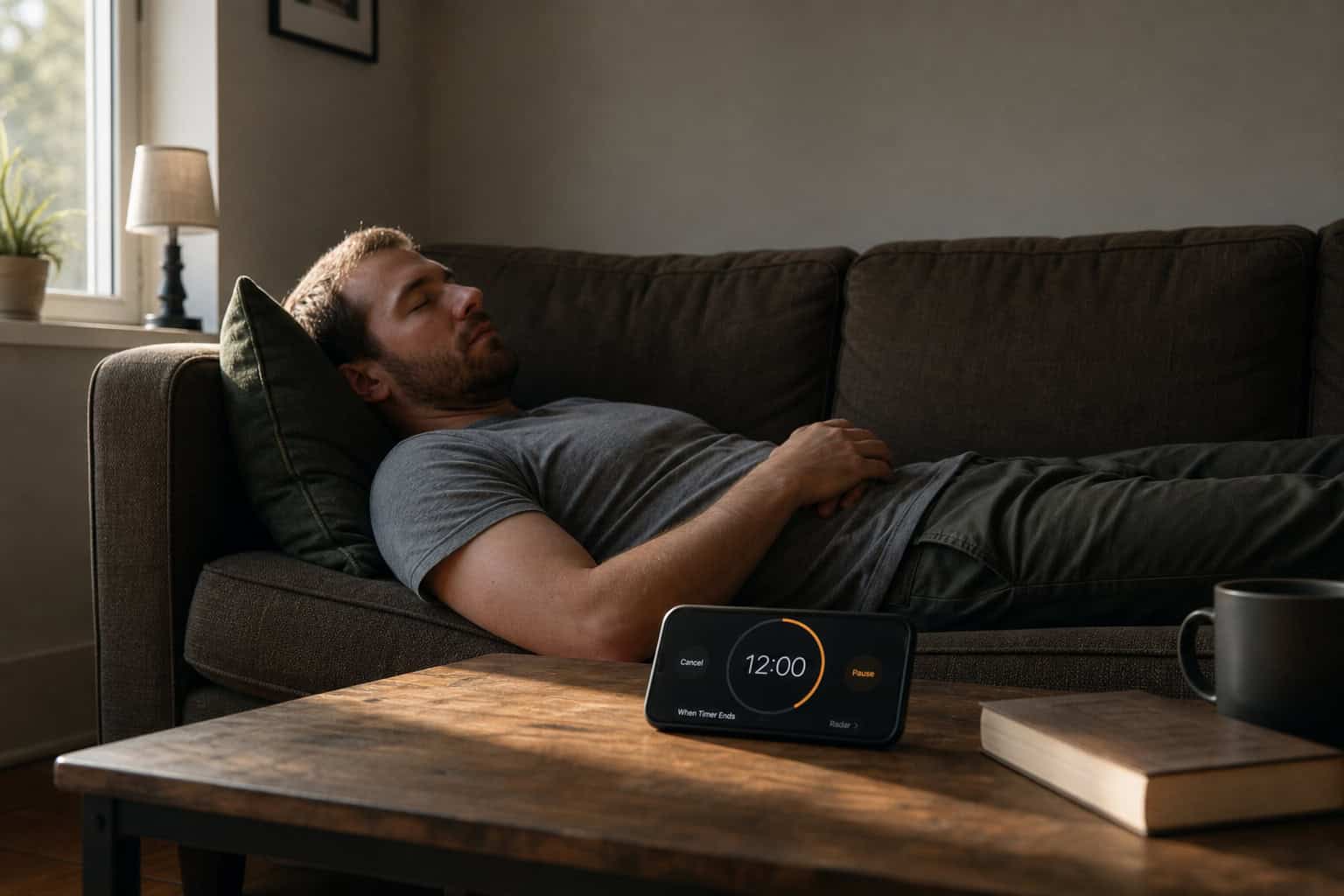
Power naps are 5 to 15 minutes. That’s it. Any longer than 15 minutes and you hit deep sleep, which means waking up groggy and feeling worse than before. The trick is to keep it short enough that you don’t cross that threshold.
Set a timer. Lie down somewhere quiet. Close your eyes. You don’t even have to fall asleep — the act of shutting down your sensory input for ten minutes does something real.
I used to think naps were for people who weren’t getting enough sleep at night. Then I tried a 12-minute nap between work shifts and realized I’d been running on fumes for years without knowing it. It’s not a replacement for a good night’s sleep. It’s a reset button for the afternoon.
Together, morning pages and power naps cover mental clarity and physical recovery — the two things most downtime fails to deliver. They’re cheap, they’re fast, and the ROI is absurd. Try them. If they don’t work for you, fine, but give them a shot before you write them off.
Work Breaks That Build Your Career
Here’s the thing nobody tells you about slow periods at work: they’re career gold, but only if you stop treating them as time to kill.

Most people use downtime at the office to look busy. They open a spreadsheet, stare at it, refresh their email, and count the minutes until lunch. That’s not rest and it’s not productive — it’s time you’ll never get back.
The alternative is to use those slow stretches to build assets that compound. And the best example I’ve ever heard comes from an IT guy who created something he called “The IT Bible.”
Bottom line: Slow periods at work are the best time to build career assets that compound — documentation, automation, skills, and reputation — because nothing else is competing for your attention. For practical, low-effort activities that boost focus and reduce stress, consider what to do during downtime at work.
The documentation that outlasted you
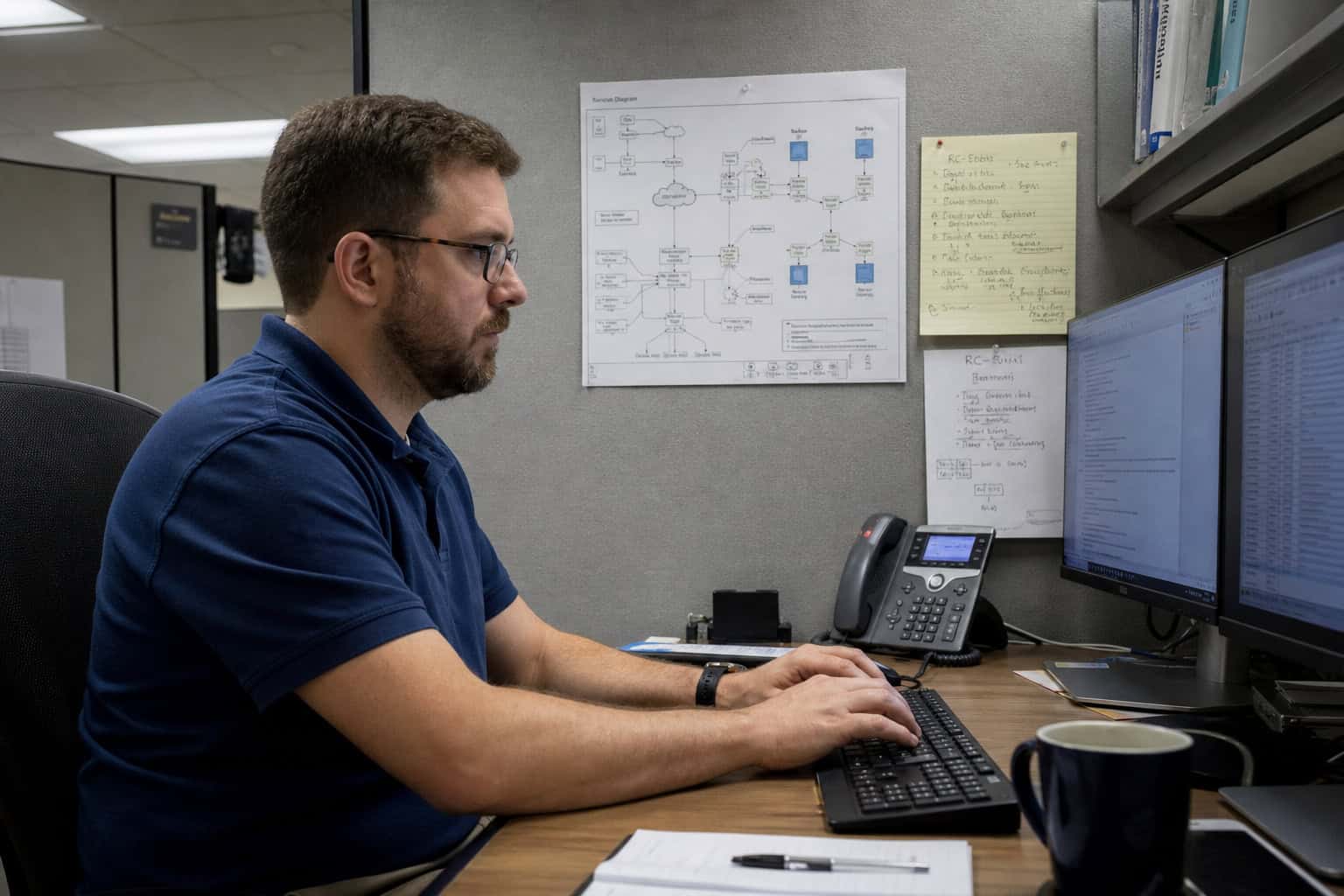
One user on a forum described how he spent his slow periods building a comprehensive documentation document for his small business IT setup, which he called ‘The IT Bible.’ Network diagrams, IP spreadsheets, computer policies, password lists, workflows, priority scales — everything. He called it The IT Bible.
He left that company. Years later, he came back. The documentation was still in use, having survived a switch from NetBeui to TCP/IP and from dial-up to point-to-point connections. It helped him get rehired, and eventually he became Chief I.S. Engineer.
That’s the kind of career asset you can build during downtime. It’s not busywork. It’s insurance that compounds, like the documentation that helped him become Chief I.S. Engineer.
Automation, learning, and presence
The same principle applies to smaller moves. One IT guy wrote simple 20-to-30-line batch scripts during his slow periods — .cmd files that automated repetitive tasks. Nothing fancy — .cmd files that automated repetitive tasks. Those scripts got him noticed by senior engineers who started asking for his help, and he tracked the time saved and steps eliminated for his resume. He tracked the time saved and the steps eliminated, and that data went straight into his resume.
Another user spent his downtime in a virtual test lab, spinning up servers to test software configurations, and learned Python through Pluralsight and Codecademy. He learned Python through Pluralsight (his company paid for it) and free tutorials on Codecademy. When a problem came up, he already knew how to solve it.
Then there’s the simple act of walking around. Multiple IT people described the same pattern: during slow periods, they’d walk the floor, check in with users, ask if everything was running smoothly, and catch problems early. It sounds trivial, but it changed how the company saw them. Instead of the guy who shows up when something breaks, they became the guy who’s always present.
Users stopped being afraid to call IT. Problems got caught early. The whole department’s status improved.
The lesson isn’t “be productive every second.” It’s that slow periods are the best time to build documentation, automation scripts, new skills, and a reputation for being present. For curated real-world advice on how to make the most of downtime at work reddit, from micro-breaks to side projects with honest takes on office culture, consider that documentation, automation scripts, a new skill, a reputation for being present — these are career assets that compound. And they only get built when you have the space to build them.
Recharge Through Creation, Not Consumption
The principle is simple: making something beats watching something. A 2014 study by Csikszentmihalyi and colleagues found that people who engaged in creative activities during leisure time reported significantly higher positive affect and lower stress than those who consumed media passively.

Netflix is fine in moderation. But if your downtime is mostly passive consumption — streaming, scrolling, reading articles you’ll forget in an hour, you’re not recharging. You’re replacing one kind of input with another. Your brain is still processing, still filtering, still working.
Creative output flips the switch. Cooking a meal from scratch, writing a few paragraphs, drawing something, building a piece of furniture, fixing something that’s been broken — these activities produce evidence that you did something. That evidence directly counters the guilt of “wasting time.” You made a thing.
You can point to it. That feels good in a way that finishing a season of a show never does.
The specific activity — cooking a meal from scratch, writing a few paragraphs, drawing something, building a piece of furniture, fixing something broken, doesn’t matter. What matters is that you’re producing instead of consuming. The next time you catch yourself reaching for your phone out of habit, ask: could I make something instead? Even if it’s a decent omelet.
What TTRPGs Teach Us About Downtime
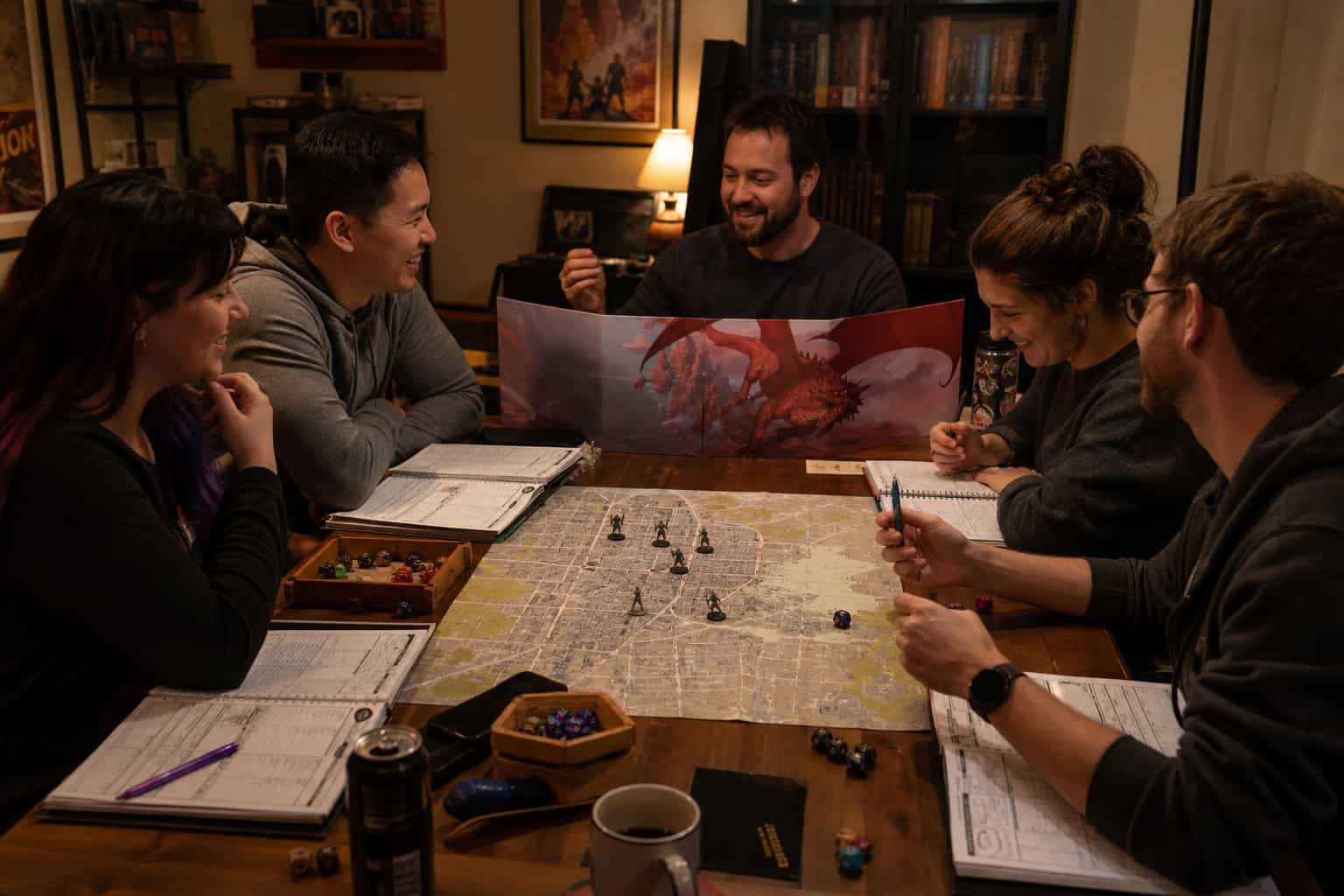
I’ve been running tabletop RPG campaigns for years, and downtime has always been the hardest part to get right. The action scenes write themselves. The quiet moments between adventures? That’s where campaigns die.
But I’ve learned more about downtime from failing at TTRPGs than from any productivity book. The lessons apply to games, sure, but they also apply to how you structure your real-life breaks, your work projects, and your long-term goals. Psychology backs the idea that the best activities for downtime are the most restorative and rewarding, and here’s what I found.
The Author’s Failures
My first attempt at structured downtime was a special forces campaign for a revolutionary government, where players chose which enemy factions to crush. That choice shaped the whole revolution.d the whole revolution. Sounded great on paper.
The problem was the pacing. Missions were months apart in-game, with characters seeing each other for days out of every month. Characters would see each other for only a few days each month. Over three years of in-game time, nothing changed for them.
They aged three years without any narrative payoff, and camaraderie never formed. The camaraderie never formed because they never had time to be together between missions.
I learned the hard way: months of downtime kills momentum, as characters saw each other for only a few days each month. It doesn’t matter how cool the missions are if the space between them is a void.
The Three Lessons
My second campaign was set in a single city, with downtime breaks of about a week or two and long rests requiring two weeks. Here’s what I figured out.
Lesson 1: Structure your downtime. The first campaign had no structure at all — players waited for the next mission, with months between sessions. The second campaign gave downtime a shape with breaks roughly a week apart, enough structure that players who showed up without a plan had something to do, while players with their own projects still had room to move. The key is balance: too much structure and you box people in; too little and they wander.
Lesson 2: Get the time scale right. Monthly gaps kill momentum, as characters aged three years without narrative change. Weekly gaps work. In my second campaign, downtime breaks were roughly a week or two between sessions.
A long rest took two weeks, which forced a choice: do you rest and recover, or do you work on a personal project? That tradeoff made downtime feel meaningful instead of empty.
Lesson 3: Combine mechanical and narrative rewards. If downtime only hands out stat bonuses, the role-players check out. If it’s all character moments, the gearheads get bored. You need both mechanical rewards and character arc development.
Players need something mechanical to do (rest, training, crafting) and something that moves their character’s story forward (relationships, plot hooks, personal arcs). The campaigns that worked best gave players both tracks.
The Systems Compared
I’ve looked at a lot of published downtime systems, and they all have strengths and blind spots.
Xanathar’s Guide to Everything has rules for making money and rolling on tables during downtime. But it’s passive — stuff happens to you. You don’t choose. You roll dice and see what comes up.
No agency, no narrative feed. It’s fine for filling time, but it doesn’t build anything.
Bastions (from the 2024 Dungeon Master’s Guide) give you a base you can build and customize. But Justin Alexander nailed the critique: they don’t have a clear vision of what you’re supposed to do with them. They’re cordoned off from the plot. While adventuring, no orders can be issued, leading to rolling for events.
And if every bastion has a theater, they’re not a choice. They’re almost entirely mechanical and fail the author’s third lesson: no role-playing or character arc advancement.
Vaesen (from Free League) does base-building better. The cycle is clear: mystery, solve it, return to base, prepare for the next one, head out again. Coming home is baked into the story. Buildings offer mechanical boons rooted in the cycle of play.
You can even bring a companion NPC on adventures, which Bastions explicitly disallow. The whole thing feels integrated instead of cordoned off.
Campfire Stories (from Sly Flourish and GM Without a Cause) is a pure narrative approach. Between adventures or during travel, you prompt characters to tell a story. It works great for campaigns without a fixed base and brings out quieter players by taking turns. But there’s no mechanical part for character advancement or magic item production. It’s all role-play, no mechanics.
AngryGM’s Town Mode adapts the downtime system from Persona 5. You get an enumerated list of things you can do in town, plus plot complications that make you choose — you never have enough time for everything. Activities fall into three buckets: mechanical (resting/recovering), character arc (connect with someone), and plot-focused (decipher Nether Scroll). It’s the closest thing to a complete system I’ve seen. But it’s a ton of work for a globe-trotting campaign requiring fleshing out many cities, and AngryGM eventually shifted much of his ‘Town Mode’ content elsewhere before abandoning the project.
The Hybrid Recommendation
None of these systems is perfect on its own. But you can borrow from each.
From Vaesen, take the integrated cycle: downtime should be part of the routine and cycle of play, regardless of location. From Town Mode, take the tripartite reward structure: mechanical rewards, character arc activities, and plot-focused activities, with never enough time to do everything. From Bastions, take the idea of investing in buildings (e.g., wizard’s tower) to always have options available, unlike city-based downtime which depends on location.
The key insight is that downtime should drive plot hooks that feed into the campaign plot, which should then inspire downtime activity. Rumor cards are a good example: during downtime, players find new clues or plot hooks that drive the next adventure. The adventure then gives them new reasons to use downtime — new contacts, new projects, new things to build. It’s a virtuous loop.
The cycle must work regardless of location. Downtime mode needs to be part of the routine and cycle of play, regardless of location. The system should travel with the party.
Building Your Own Downtime System
So what does this mean for you, outside the game?
The same principles apply. Your downtime needs a clearly delineated cycle of narrative — a way to know when you’re in ‘downtime mode’ versus ‘adventure mode.’ It needs options that blend rest with growth, like mechanical rewards, character arc activities, and plot-focused activities. And it needs downtime activities that feed into your larger life goals, so you’re not killing time but building something that compounds.
The guilt lifts when you treat downtime as a design problem rather than a moral one. You’re not supposed to be productive every waking hour. You’re supposed to have a system that lets you recharge intentionally instead of draining yourself accidentally.
Block out time for it. Get off the guilt train — good people aren’t necessarily busy people. Process your active time through morning pages or whatever works for you. Expand your mind with something that adds instead of filling space. And when you’re at work, use the slow periods to build documentation, learn a skill, or be present.
The point isn’t to be maximally productive during every break. It’s to stop draining yourself accidentally and start recharging intentionally. That’s the whole game.
Frequently Asked Questions
What activities are best for downtime?
The best downtime activities involve creative output or active restoration rather than passive consumption. Cooking, writing, drawing, building something, or fixing something produce evidence that you did something, which counters the guilt of wasting time. Power naps and morning pages also deliver real mental and physical recovery with almost no setup cost.
What do people do in their downtime?
Most people fill downtime with passive consumption like social media binges, mindless TV, thinking about work, or obligatory social events. These activities look like relaxation but actively drain you because your brain is still processing and filtering input rather than truly resting.
Why does passive consumption like scrolling feel so draining?
Passive consumption feels draining because your brain is still working — processing, filtering, and managing input — even though your body is still. You’re replacing one kind of work with another, not actually recharging. Creative output flips the switch by producing evidence that you did something, which directly counters the guilt of wasting time.
What’s the difference between passive and active downtime?
Passive downtime is consuming — streaming, scrolling, reading things you’ll forget — and it leaves you drained because your brain is still processing input. Active downtime involves creating or restoring: cooking, writing, building, power napping, or doing morning pages. Active downtime produces evidence that you did something and delivers actual mental and physical recovery.

