
You finally get a free evening. The to-do list is done, the notifications have quieted down, and you’ve got a couple of hours to yourself. Do you finally binge that show everyone’s been talking about? Or do you clean out the garage like you’ve been promising yourself for months?
The way you spend your downtime doesn’t just fill hours — it shapes how you feel about the rest of your life. I’ve been digging into the data on how people actually use their free time, and the patterns are surprising. Men and women often choose different activities, and the ones that lead to satisfaction aren’t always what you’d expect.
This isn’t a productivity sermon. It’s a real look at what people do — and a guide on what to do during downtime that might make your own downtime feel less like wasted time and more like time well spent.
Key Takeaways
Organizing your inbox into a Priority 1 and Priority 2 folder system is a low-effort way to reduce email stress and save time daily.
Simple exercises like calf raises and single-leg stands during waiting-in-line moments strengthen calves, improve balance, and burn calories without any equipment.
The happiest people match their downtime to their own preferences, not a list — autonomy and social connection matter more than the specific activity.
Table of Contents
Common Downtime Activities
People fill their free time in many ways, from productive tasks to pure relaxation. Here are some options worth trying.
Start a new hobby
You probably have everything you need at home already. Photography? Use your phone. Arts and crafts?
Raid the recycling bin for paper and boxes. The barrier to entry is basically zero. When something sounds interesting, Google it, bookmark a few pages, take notes. That’s all it takes to get going.
Organize emails
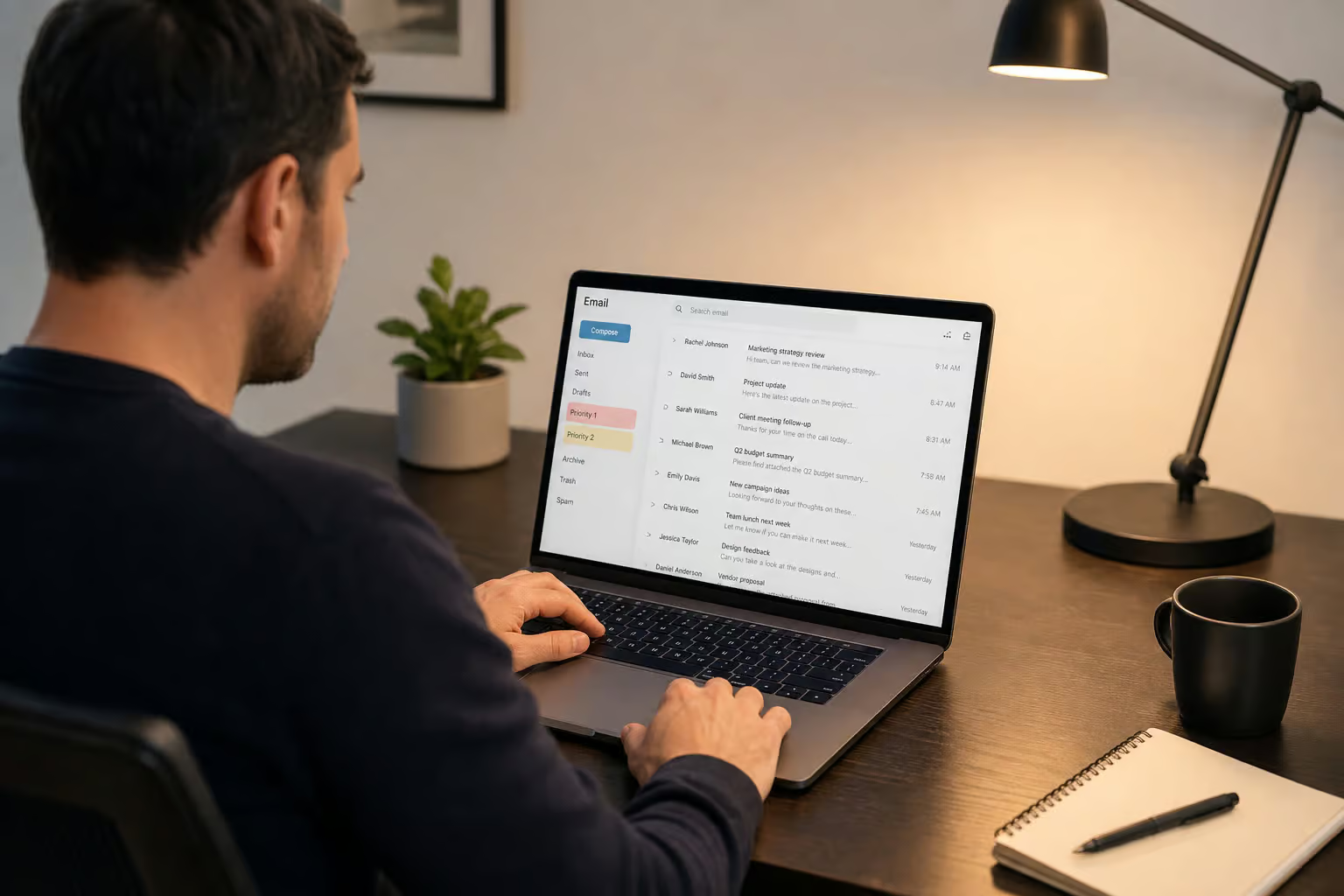
It’s not glamorous, but a clean inbox feels like a real win. I use a simple system: two folders at the top of my email bar — Priority 1 and Priority 2. High-priority stuff goes in the first, lower-priority in the second. Group similar emails together, like receipts and order tracking.
Gmail’s built-in tabs (Promotions, Social) help auto-sort newsletters and social updates. Tackle Priority 1 first, then work through Priority 2 during the day. That’s it.
Revamp budget
This is about seeing where your money actually goes, not some abstract financial planning exercise. Go through your bank statements and look for subscriptions and recurring charges. You’ll probably find a few you forgot about. That $15 or $25 each month seems small, but a few of those add up to a couple hundred bucks a year.
List all your bills, subscriptions, and recurring charges in a spreadsheet or planner. Subtract your total monthly expenses from your income. That’s your real number. Then decide what to keep and what to cancel.
Plan fun activities
Look at your calendar for the next few months. What’s already there? What’s missing? Gather ideas that fit your lifestyle, family, budget, and calendar.
Don’t plan something that’s going to stress you out. Setting aside time for fun things to do after work ensures you actually get that stress-free time off.
Set appointments
Get the boring stuff out of the way so you don’t have to think about it later. Set appointments for the next few months or even the whole year. This ensures you have time for the necessities like doctor and dentist visits. If you’ve been putting off a routine cleaning or a flu shot, use downtime to get it done and schedule the next visit while you’re there.
Take a course
Sites like Coursera, Udemy, and Skillshare offer free trials and free or discounted courses. You can sign up for free and start learning immediately. Don’t forget your local recreation center or community college; they often have affordable in-person courses.
Some courses offer certifications that look good on a resume. But you can also just learn a new skill for fun. Not everything has to be about career advancement.

Discover educational YouTube
YouTube has a whole educational side beyond cat videos. There’s a whole educational side to it. TED Talks are great for big ideas in digestible chunks. Or search for a tutorial on changing your car oil — both are useful in different ways.
You can even listen to a TED Talk while you’re working. It’s like having a smart friend in the room.
Watch documentaries
Netflix has a ton of documentaries. They’re a good way to relax and learn at the same time. Topics cover animals, unsolved crimes, the study of happiness — something for every mood. It’s a way to learn new things without feeling guilty about just watching TV.
Exercise while waiting in line
Turns dead time into something useful. Calf raises: stand on the balls of your feet, keep your legs straight, and repeat. Strengthens calves, improves jumping, burns calories. Standing on one leg: slightly raise one foot, alternate every five seconds.
Builds leg muscles and improves balance. That’s all it takes.
Find a new podcast
Podcasts help you learn about your industry, hobbies, and community. They’re a low-effort way to stay informed. A good podcast can inspire you and raise your productivity — it’s like a pep talk you can listen to while doing dishes.
Learn a new career skill
Find a skill that will actually help your career, not just something random because it’s trendy. Volunteering is a great way to learn a new skill within an organization. Use a mix of resources: books, articles, podcasts, videos, events, and practice. Ask friends or family who have the skill — they can give you insights you won’t find in a book.
Network
Networking can help your career, build skills, introduce you to new hobbies, and open up opportunities. It’s not just about shaking hands at conferences. It can happen informally — at a coffee shop or a playground. It’s just talking to people.
It also builds friendships and social skills. That’s a win even if it doesn’t lead to a job.
Set goals
Goals can be about your career, where you want to live, vacations, or hobbies. Whatever matters to you. Putting your dreams on paper with an action plan turns them into real, motivational goals. The more motivated you are by your goals, the more likely you are to be productive and actually achieve them.
Start a blog
Blogging uses and hones a creative skill you want to develop. You learn by doing. It can also add extra income — not a get-rich-quick thing, but it’s possible. Write about anything: raising kids, fly-fishing, the best restaurants in your city.
You learn by practicing, and you build a community of readers and fellow writers. Employers see blog writing (content marketing) as a valuable skill. It looks great on a resume.
Build personal brand
Your personal brand is how others perceive you, in person or online. Decide what you want to be known for — an expert in your field, or just the guy who bakes amazing bread. Choose the right social media platforms: LinkedIn or Twitter for career stuff, Instagram or Facebook for visual content. Consistency across platforms is key. Don’t be one person on LinkedIn and someone else on Instagram.
Watch movies
Watching movies reduces stress, improves mood, and engages your brain. It’s not just mindless entertainment; in fact, films rank among the best activities for downtime. You can watch a favorite movie at home or go support your local theater. Sometimes the best thing you can do is turn off your phone and just be present.
Try casual online games
If you want something more interactive than another movie, casual online games can fill a quiet evening without turning into a major commitment. Some people play puzzle apps, trivia games, card games, or social sweepstakes casinos when they want a little entertainment that feels more active than scrolling. Just keep it casual: set a time limit, understand the rules, and treat it as downtime, not a plan for making money.
Have a party
Throw a party for an arbitrary reason, or no reason at all. Pick a theme based on something you love. A yogurt party with a game of Spoons? Why not.
Or have a party for one: music, junk food, and time to unwind—or go for a walk. Sometimes that’s all you need.
Do crafts
Use empty boxes and paper scraps. No need to buy anything special. Follow online tutorials or just improvise with scissors. Ideas: paper snowflakes, homemade jewelry, handmade cards, a scrapbook. All doable with basic supplies.
Attend local events
Check your local library for events — they’re often free. Attend school plays or musicals, college or high school. They’re usually cheap and surprisingly good. Most local events are cheap. You don’t have to spend a lot to have a good time.
Read physical media
Read books, magazines, picture books. Whatever interests you. Physical media is underrated in the modern age. There’s something about holding a book.
Visit the library, trade books with friends, buy and annotate books. Make it a habit.
Write
Write a grocery list, a short story, a poem, an article, a letter, an autobiography, a screenplay. Anything. Use any paper or pencil. Decorate a journal if you want. It’s about the act of writing.
Go on adventures
Adventure alone or with a friend or your dog. Get a sweet treat, explore a store you’ve never been to, go down a research rabbit hole. Small adventures count. In Ann Arbor, parks, playgrounds, and lakes are freely accessible. Nature is free.
Fall back into an old hobby
Maybe you were a former chess champion. Maybe you were the kid who always solved a Rubik’s Cube. Maybe you stopped playing an instrument. Maybe you gave up on photography.
Dig out your old camera or that dusty drum set. See if the spark is still there.
Ask people to do things
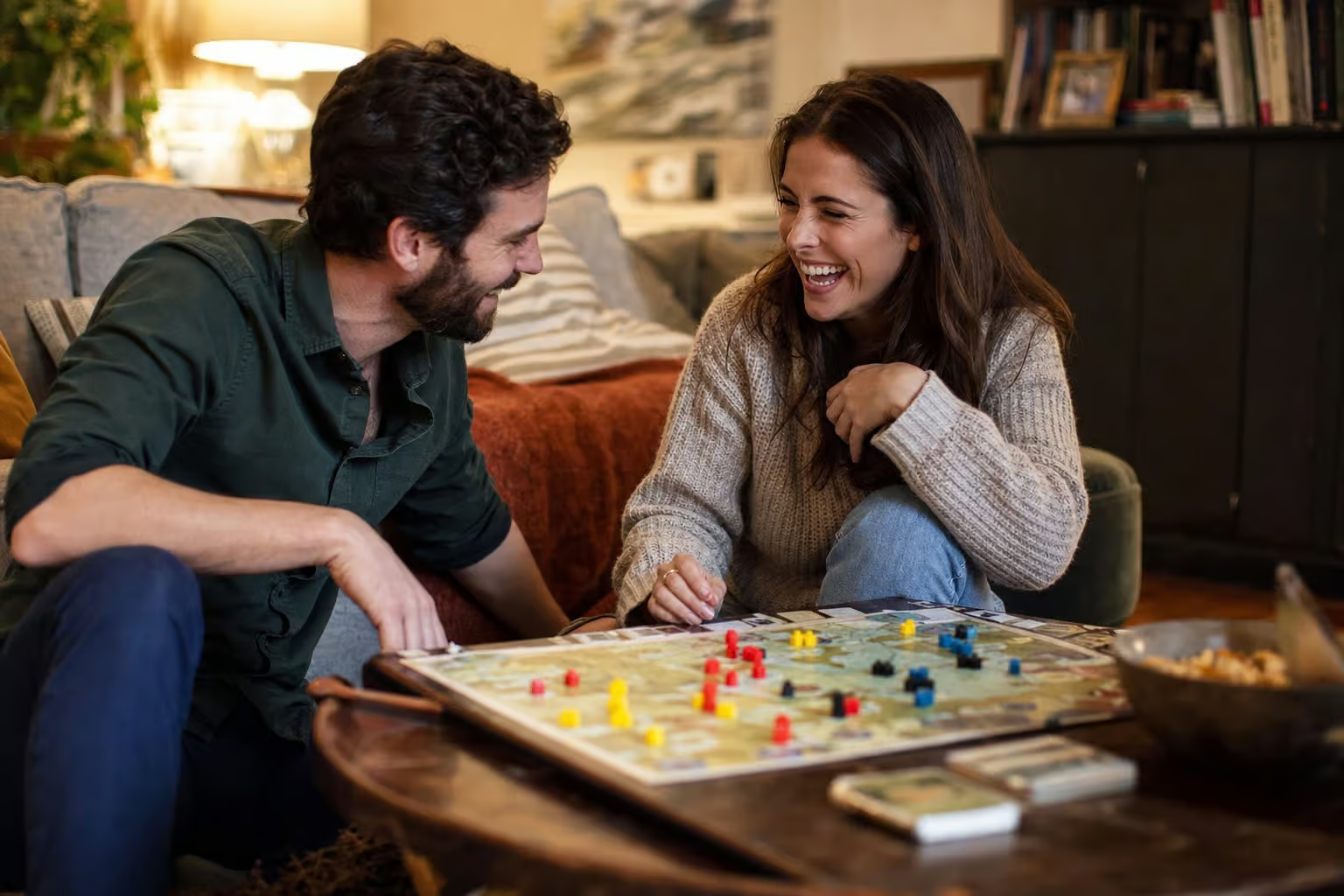
If you’re bored, others probably are too. Reach out. Ask friends to hang out: grab brunch, or have a philosophical discussion about ethics and morality (bonus points if it’s about a fictional world). Ask your teammates to join a fantasy football league.
Ask a classmate to shop for backpacks. Simple, but it’s something to do.
Decorate
Put up a poster in five minutes. It’s a small change that can give you a mental reset. Organize your knick-knacks. Rearrange your closet by color — it’s oddly satisfying. Bedazzle your speaker.
Hang up a school project. Put stickers on your water bottle or laptop. Make your stuff yours. Bedazzle your speaker.
Why not? It’s your stuff.
Gender Differences in Downtime and What Leads to Satisfaction
Research reveals distinct patterns in how men and women use their free time, as well as what actually makes that time feel satisfying. Understanding these differences can help you make better choices for yourself.
How men and women tend to spend free time differently
In general, men are more likely to spend their downtime gaming and exercising. Women tend to lean toward reading and socializing. But here’s the thing: those are broad patterns, not hard rules. Individual variation is huge. The guy who loves a good book and the woman who builds PCs in her spare time aren’t outliers — they’re just people following their own interests.
What actually drives satisfaction
The real surprise is that satisfaction doesn’t come from the activity itself. It comes from two things: autonomy and social connection. Productive downtime feels good only when it’s chosen, not obligatory. The guy who cleans out his garage because he wants to feels great.
The guy who does it because he feels guilty about watching TV feels resentful. Same activity, completely different outcome.
The trap of forced productivity
That feeling of “I should be doing something useful” can ruin perfectly good downtime. Sometimes the most restorative thing you can do is absolutely nothing. Watch a movie. Stare at the ceiling.
Do a craft project that has no purpose. The happiest people match their downtime to their own preferences rather than following a list. If you’re forcing yourself to learn a new skill when you really just want to read a magazine, you’re not optimizing your life — you’re just creating a second job out of your free time.
Making Downtime Work for You
There’s no single right way to use free time. The data shows that the people who feel best about their downtime are the ones who own it — who choose what they do rather than defaulting to whatever’s easiest.
So pick one thing from this list you haven’t done lately. Give it a shot this week. See how it feels. You might surprise yourself.
Frequently Asked Questions
What do you do in your downtime?
People do all kinds of things — from organizing emails and revamping budgets to watching documentaries, starting hobbies, or even exercising while waiting in line. The key isn’t the activity itself but whether you chose it freely and feel connected to it.
What kinds of things do you do in your off-time?
Common off-time activities include reading physical books, listening to podcasts, taking online courses, networking, decorating your space, or falling back into an old hobby like photography or playing an instrument. Even small adventures like exploring a new store or going down a research rabbit hole count.
What do people actually do in their free time?
Men tend to game and exercise more, while women lean toward reading and socializing — but those are broad patterns, not rules. The most satisfying free time activities are the ones you choose for yourself, not ones you feel obligated to do.
What are some examples of downtime?
Examples include watching movies, throwing a party for no reason, doing crafts with household scraps, attending local library events, writing anything from a grocery list to a screenplay, or simply staring at the ceiling. Productive downtime like organizing your inbox counts too, as long as it’s chosen freely.
How do men and women spend their downtime differently?
Research shows men are more likely to spend free time gaming and exercising, while women tend to read and socialize more. But individual variation is huge — the guy who loves books and the woman who builds PCs aren’t outliers, they’re just following their own interests.
What actually makes downtime feel satisfying?
Satisfaction comes from two things: autonomy and social connection. The same activity — like cleaning out a garage — feels great when you choose it and feels resentful when you do it out of guilt. Forcing yourself to be productive when you just want to relax turns free time into a second job.