
I’ll cut straight to it: Plenty of Fish is still running. You can download it, swipe, send messages, all of that. But in 2025, calling it a viable dating app feels generous. It’s more like a dating app ghost town – not dead, but the energy’s gone. Users say you’re sifting through fake profiles and bots, though if you’d rather play a game that actually moves along, Go Fish gives everyone plenty of chances for conversation and jokes.
Key Takeaways
Plenty of Fish launched in 2003 and is owned by Match Group, but the user base is now dominated by bots and scams, making it a low-quality experience for most men.
Modern apps like Hinge, Bumble, and Tinder have built safety features (Face Check, Private Detector, mandatory video chat) that POF never invested in, creating a clear gap.
POF’s free unlimited messaging sounds like a deal, but the time and emotional energy spent filtering out fake profiles makes it more expensive than paying $15–30/month for a curated app.
Table of Contents
Why POF fell behind
POF’s own website still says you can “choose your own adventure” and find a “space for singles to be themselves without pretense.” That’s the marketing. The reality is grimmer.
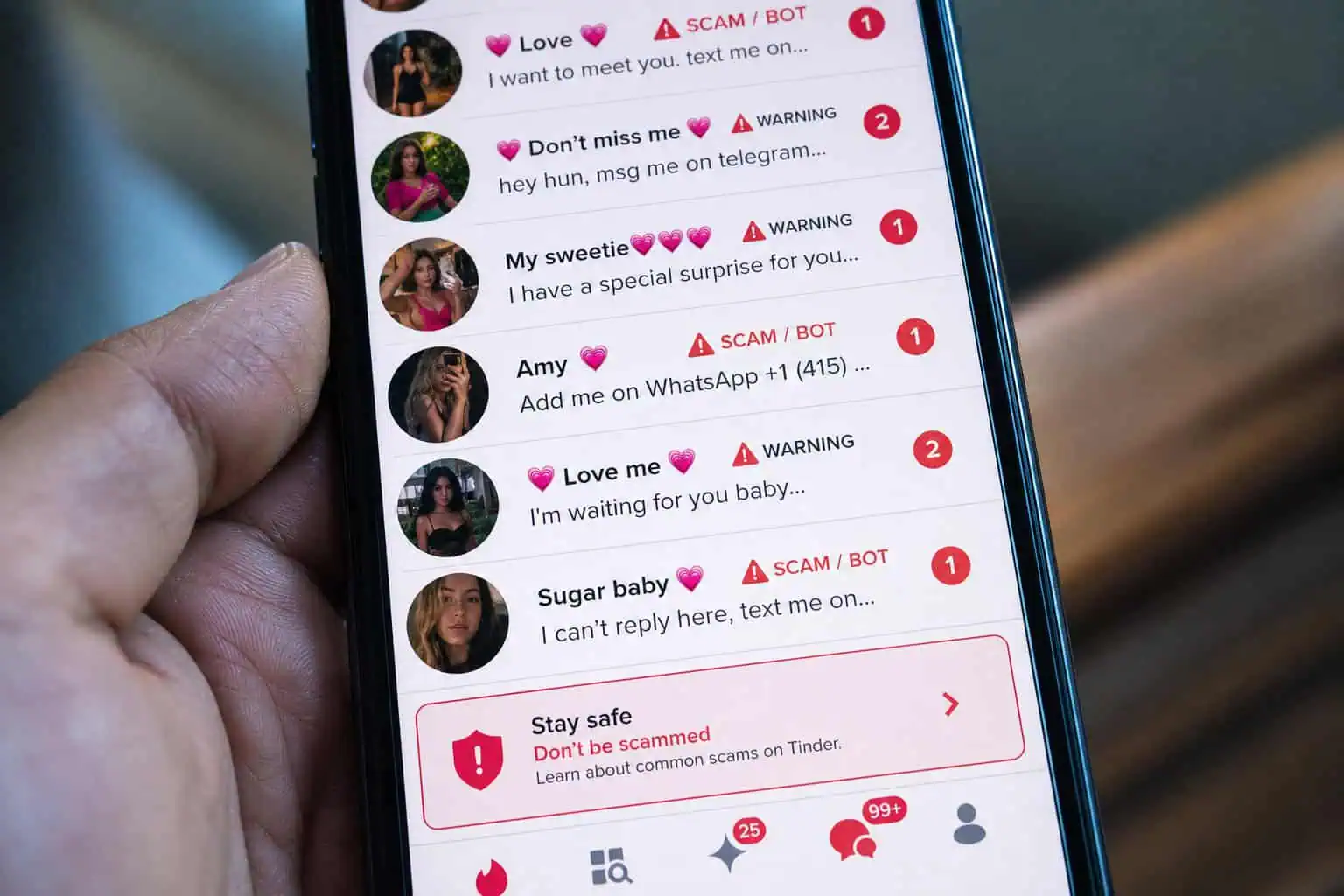
The two killers were bots and neglect. The platform is filled with bots and scams – they’re the norm. You’ll spend more time reporting fakes than talking to real people. Meanwhile, Match Group (which owns Tinder, Hinge, OkCupid, and Match) has left POF as the neglected stepchild. Within Match Group’s portfolio, POF is the low-priority legacy asset, whereas investment goes to Tinder and Hinge.
Why invest in an aging platform when Tinder and Hinge bring in the cash? The result is an app that feels stuck in 2010 – same interface, same problems, no safety features.
How modern apps fixed POF’s problems
The newer apps didn’t just copy POF and make it prettier. They built specific tools to solve the issues that make POF unusable.
Hinge – built to get you off the app
Hinge’s tagline is “designed to be deleted,” and it shows. Instead of endless swiping, you get 8 free likes per day – that’s it. Prompts force better conversations. You’re not swiping on a face; you’re getting a sense of who they are.
Hinge also has Face Check verification to confirm someone looks like their photos, plus a Date Ideas feature that helps you plan an outing. Their internal data says 75% of Gen Z users check “Dating Intention” before even liking someone. Price runs about $30–50/month depending on the plan.
Tinder – still big, but trying harder
Tinder’s still the king of volume with about 50 million monthly users across 190 countries. But it’s also trying to shed the hookup-only reputation. They rolled out Chemistry AI to help match you with compatible people, Astrology Mode if you’re into that, and Music Mode for shared tastes.
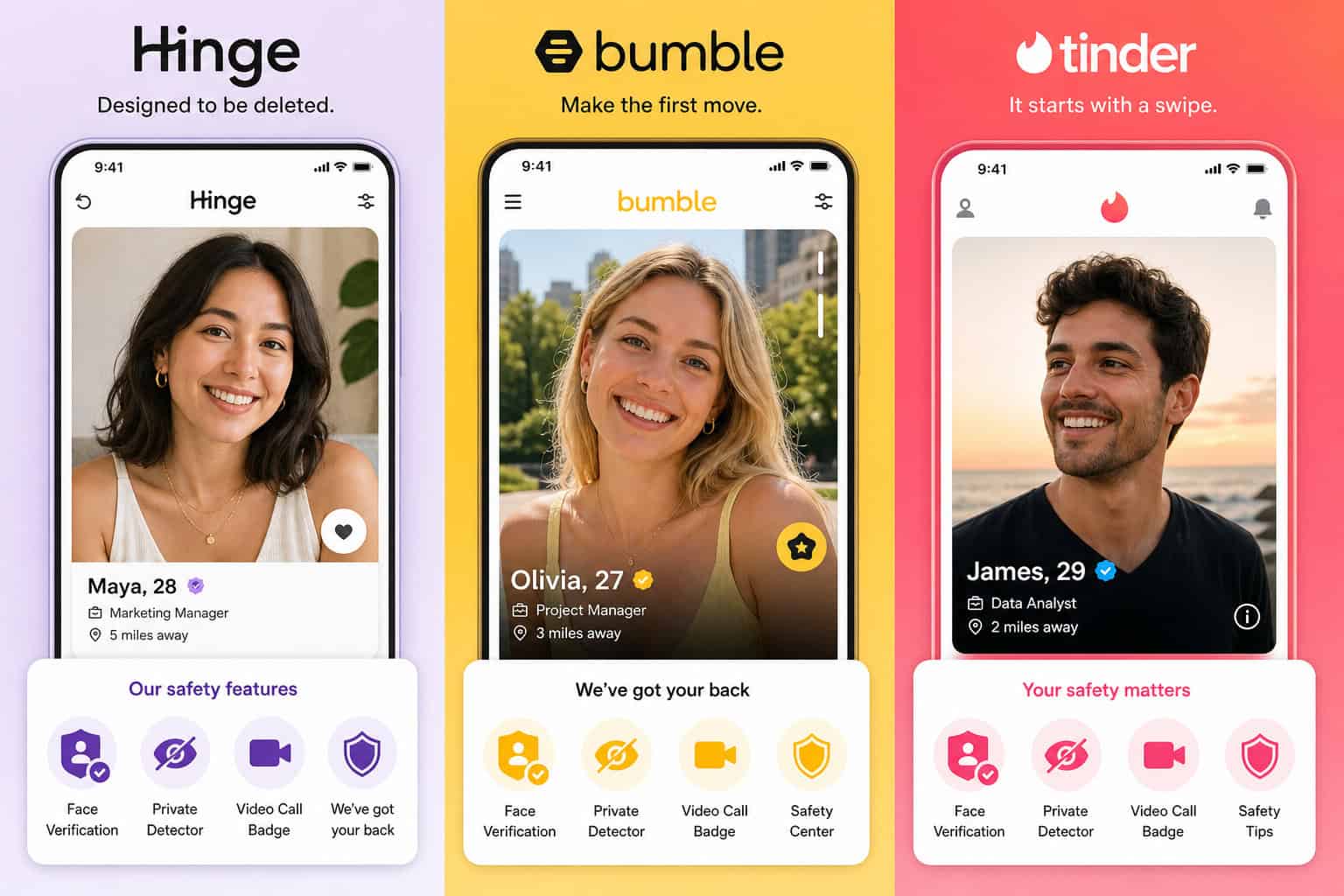
The safety move was making Face-to-Face video chat mandatory – you have to do a live video call before meeting. That’s a direct answer to the catfishing that plagues POF. Tinder also had a $60.5 million class-action settlement in March 2026, so they’re not perfect. Pricing is $17–50/month, and it varies by age and location.
Bumble – women first, safety tools second
Bumble’s “women message first” rule changes the dynamic, but their safety tools matter as much. Private Detector automatically blurs unsolicited explicit images. Deception Detector uses AI to flag spam and fake profiles before they reach you. In 2025, they rolled out ID verification (government ID, not a selfie) and a Share My Date feature that pings a friend about your location.
Matches expire in 24 hours – that’s urgency, but also pressure. You get one extend per day on the free version. About 45% of 18–29 year-olds have tried Bumble, which raises the question: is dating still worth it for men? It costs $30–55/month.
eharmony and Match – for the serious crowd
If you’re looking for a long-term relationship, eharmony uses a 29-dimension compatibility quiz and claims a new connection every 14 minutes. It’s $36–66/month but attracts people who are ready to settle down. Match is $7–43/month, popular with the 50+ crowd (45% of users in that age range). Both have video chat and safety features POF never bothered with.
The false economy of “free”
POF’s main selling point is unlimited free messaging. No cap on likes, no daily limits. Sounds great, right?

Here’s the problem: that “free” access costs you in time and frustration. Every message you send has a high chance of being a bot, a scammer, or someone who’s not real. You spend energy filtering, reporting, and guessing who’s genuine. Compare that to Hinge where you get 8 curated likes per day – each one from a person who had to make an effort. The emotional cost of wading through POF’s noise is higher than the $15–30 you’d drop on a month of a premium app like Goose, as detailed in this Goose dating app review.
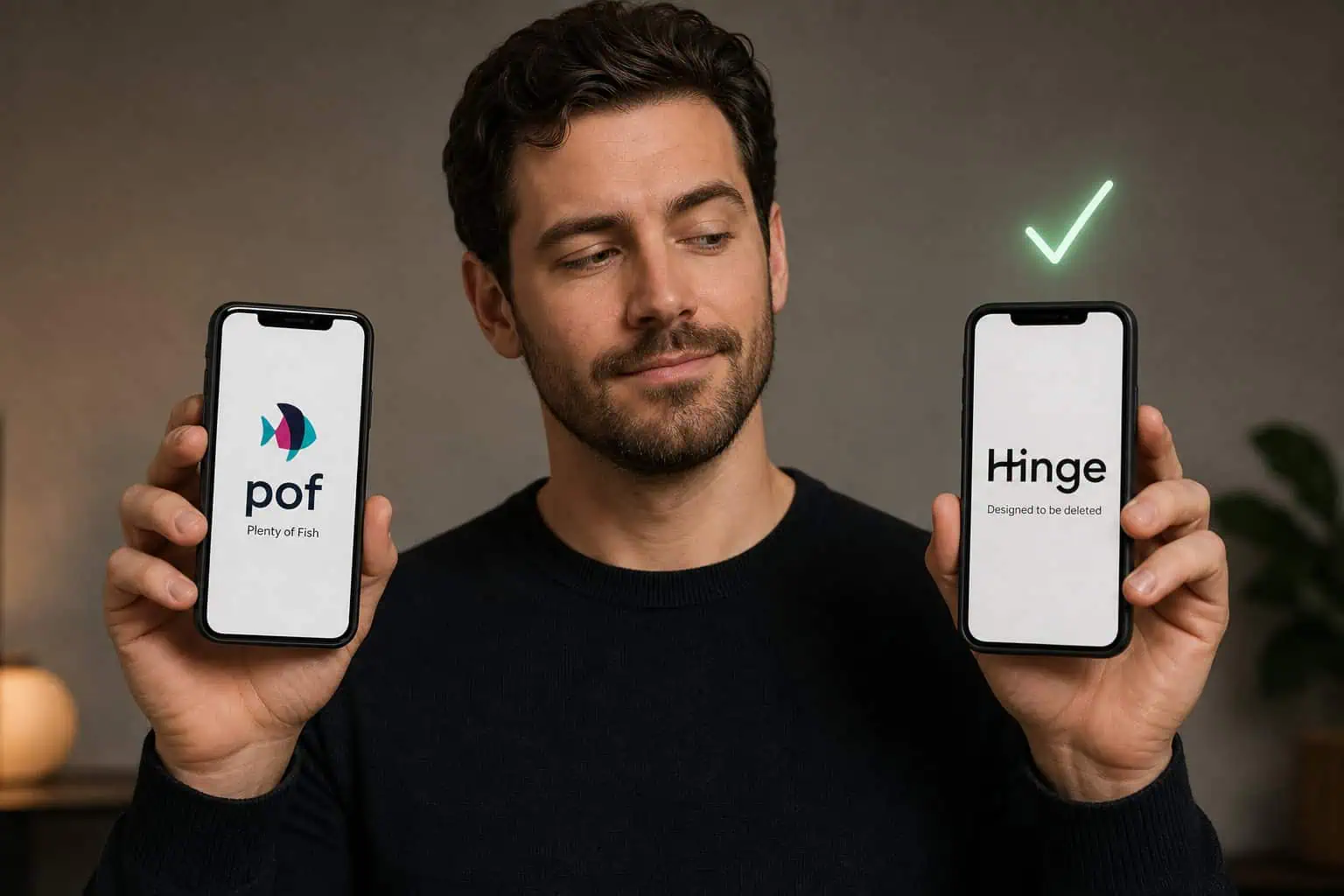
POF vs. the new guard: why niche apps win
Pure hit $100 million in revenue with a 95% jump in user registrations – no names, no profiles, anonymous, immediate connections. True Photo verification cuts down on catfishing. It’s free for women; men pay. A dater knows exactly what to expect on Pure, Feeld, or Goose. On POF, you’re gambling on finding real people amid the noise.
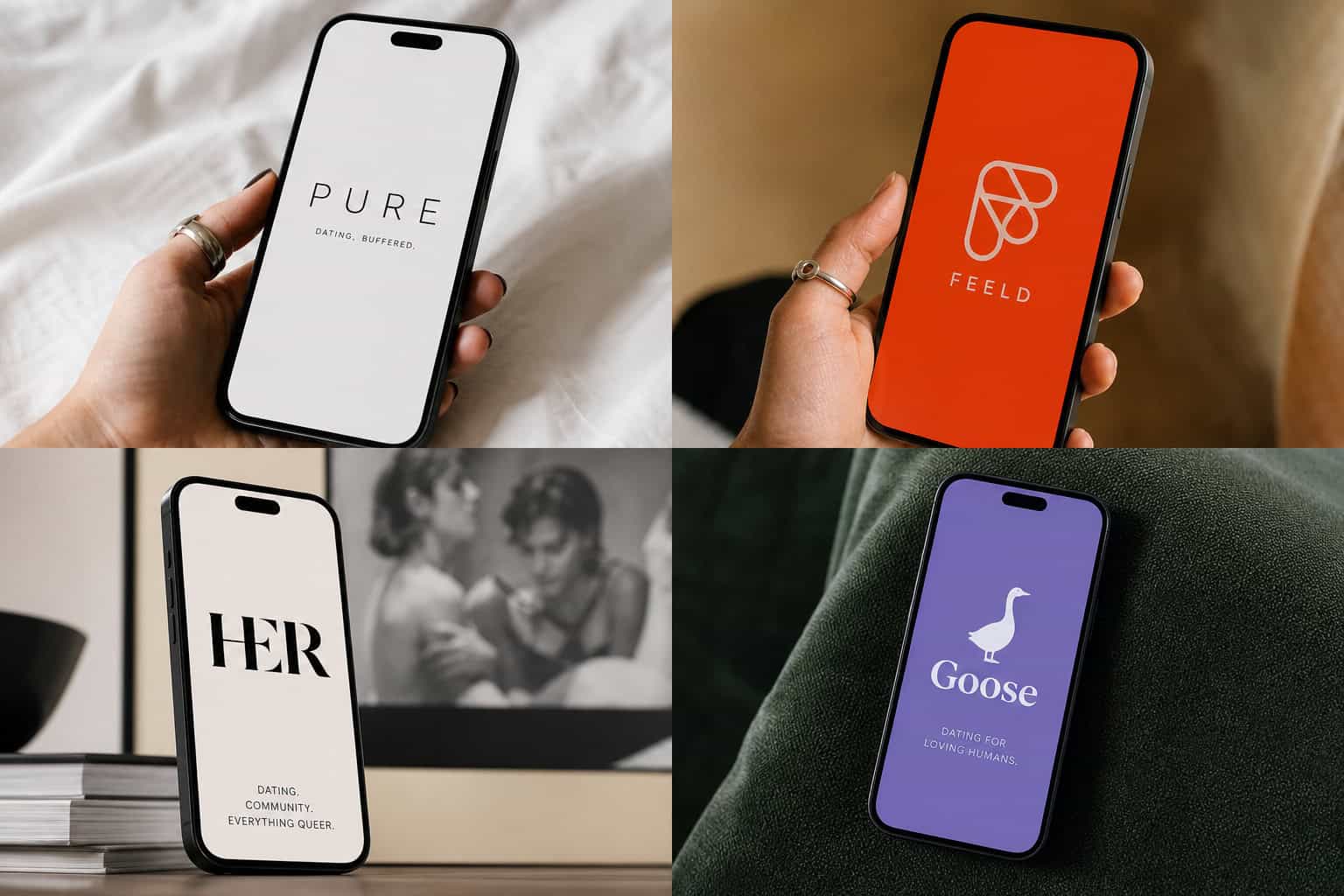
Feeld is for exploring polyamory and non-traditional relationships. $8–12/month, pseudonyms, private photos, incognito mode. It knows what it is.
HER has 15 million users for queer women, with 60% prioritizing emotional safety. Bans TERFs and chasers – clear boundaries that build trust.
Goose (the app that’s part of this conversation) takes a similar niche approach: playful, privacy-focused, built for authentic connection without the noise.
Who should (and shouldn’t) use POF
There’s a shrinking niche where POF might still work: someone who wants free unlimited messaging, doesn’t care about modern safety features, and has a high tolerance for bots. If that sounds like you – maybe you’re in a rural area with few other options – POF isn’t useless.

45% of 50–64 year-olds use Match, and 35% use eharmony. POF’s remaining user base is likely the residual group that hasn’t migrated to Match or eharmony, rather than a distinct demographic POF uniquely serves.
If you’re under 30, the 65% of 18–29 year-olds who use dating apps are on Hinge, Bumble, Tinder, or niche platforms.
The bottom line
Despite burnout, dating apps remain effective. 1 in 5 young adults met their partner on one, and despite the burnout, they remain one of the most reliable ways to meet people.
If you want free and don’t mind the noise, POF is an option. But if you want to meet someone real, put your $20 toward Hinge or Bumble. You’ll save your sanity.
Frequently Asked Questions
Does anyone still use Plenty of Fish?
Yes, the app is still running and you can download it, swipe, and send messages. But the user base has shrunk significantly and is now dominated by bots and scammers, making it feel like a ghost town compared to its heyday.