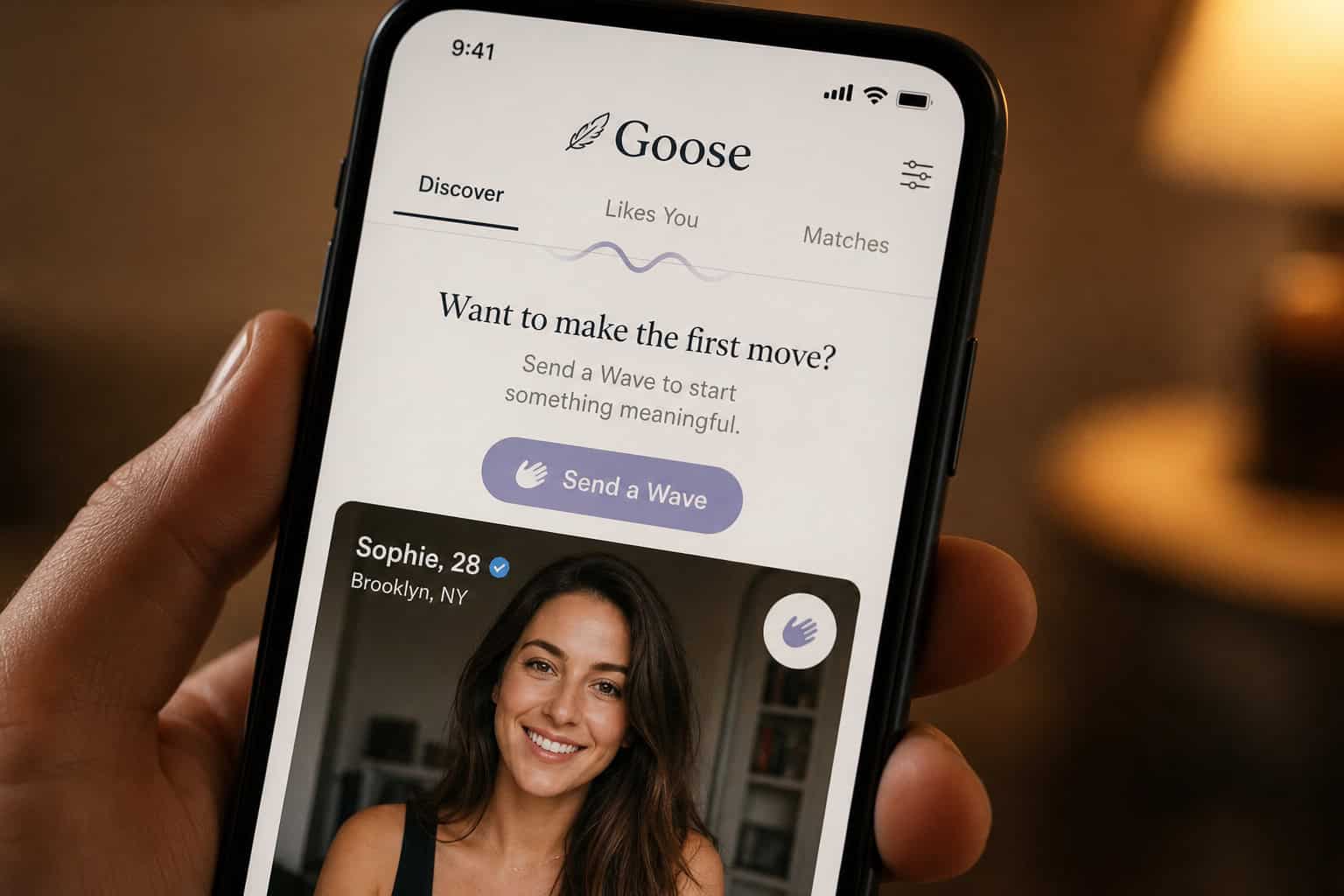
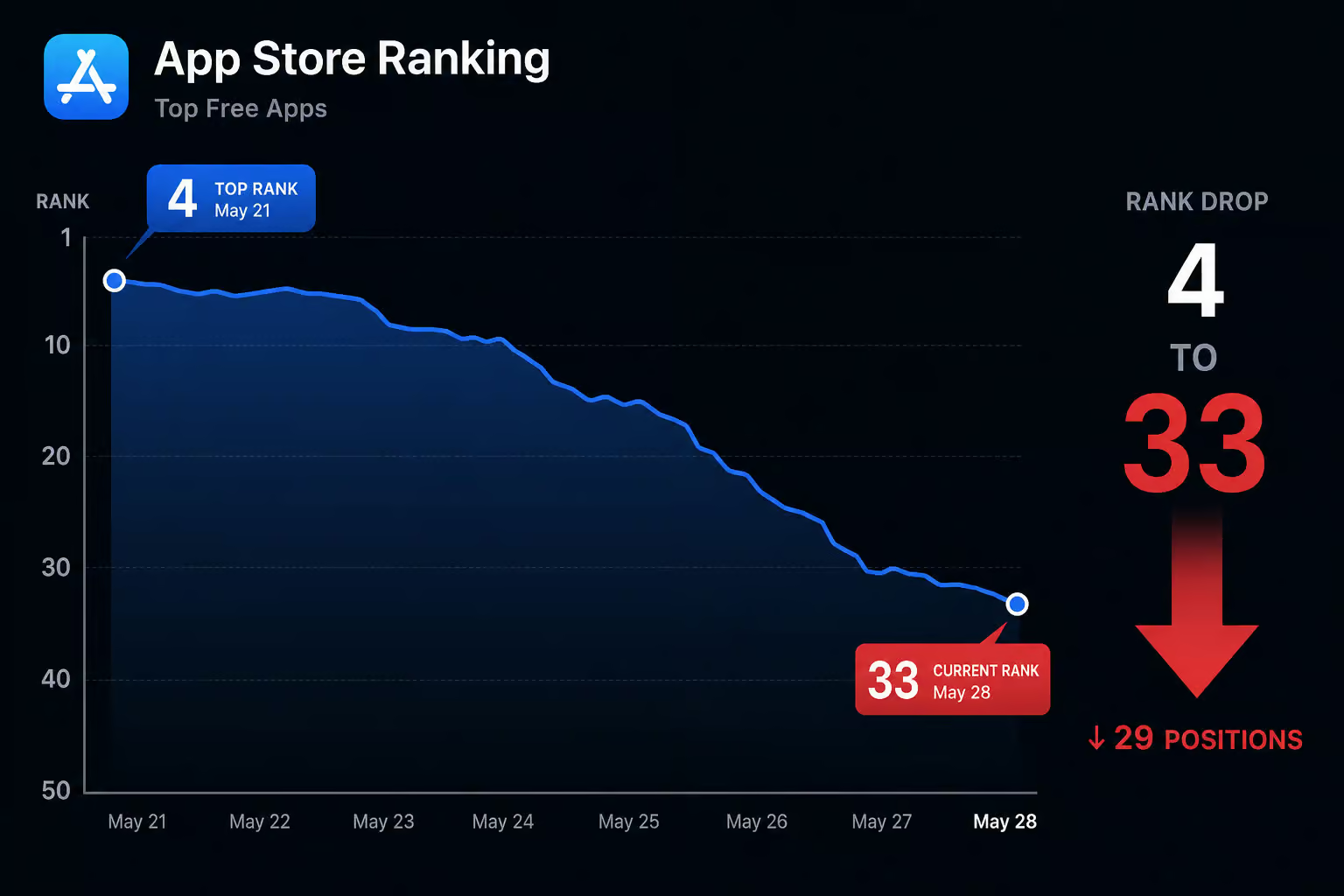
There’s a new dating app for gay men called Goose, and depending on who you ask, it’s either the alternative we’ve been waiting for or a polished marketing machine built on fake accounts. The app launched in mid-2026, reached #4 in the App Store’s free lifestyle downloads category at launch, and then the WIRED investigation dropped. Now it’s ranked 33rd in lifestyle app downloads globally, and the trust gap is real.
Here’s the short version: Goose promises human-curated, algorithm-free matching for guys who are tired of Grindr. But the founders ran a coordinated campaign using AI-generated Instagram influencers to promote it — and cofounder David Aliagas posted Instagram Stories seeking ambassadors to manage three Instagram accounts for $1,800 to $2,100 a month. The screenshots are still in his Story highlights.
This review covers what the app actually does, what the evidence shows about the promotion campaign, the privacy trade-offs, and whether it’s worth your time.
Key Takeaways
Goose’s signature features — the wave mechanic for matching and human profile screening, are genuinely different from mainstream apps, but the privacy policy reveals it still uses a recommendation engine, making the “anti-algorithm” claim misleading.
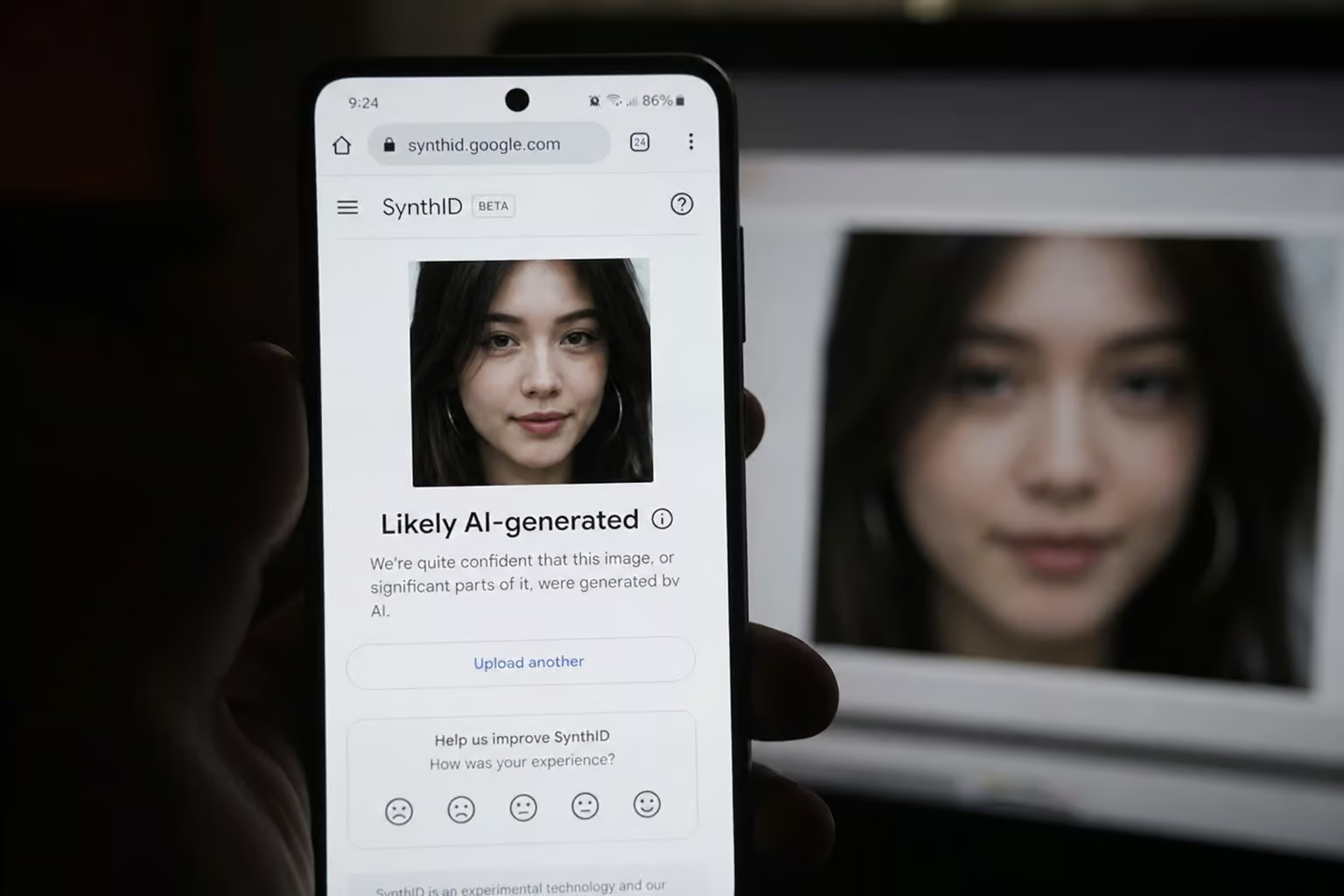
Cofounder David Aliagas posted Instagram Stories seeking ambassadors to manage three Instagram accounts for $1,800 to $2,100 a month and offering to purchase fake Instagram accounts for $100. AI Image Detector returned >90% confidence that Miles and Daniel’s avatars were AI-generated, and Google’s SynthID check confirmed ‘most or all of’ Miles’, Daniel’s, and Alistair’s profile photos were created using Google AI.
The app’s ranking dropped from #4 at launch to 33rd globally. User comments range from “10 dates on the first day” to “shady and deceiving.” User Nick predicted: ‘Give this two weeks tops before it just becomes another hook-up app.’
Table of Contents
How Goose Works: Features, Verification, and the ‘Anti-Algorithm’ Promise
Goose is built around the idea that dating apps have become too transactional. Instead of left-right swiping, you wave at someone. If they wave back, you’re connected. No super likes, no extra signals — just binary yes/no. That simplicity is appealing, but it also means you don’t know if someone waved because they’re interested or because they wave at everyone.
The app’s core selling point is human profile screening. Real people look at your photos and info before you get approved, not an algorithm. In practice, journalist Alex Reimer’s profile took “a couple of hours” to verify. That beats the bot-filled experience of some other apps, but it’s not instant, and it raises questions about consistency and bias.
The wave mechanic and matching
You scroll profiles, wave, and if the other person waves back, you can chat. No inbox spam from people you’re not interested in. But there’s a contradiction worth flagging: DC News Now reported that mutual interaction isn’t required to communicate. That would undercut the whole double-wave system. It might be a misunderstanding or a feature that changed — but it’s unclear, and that’s worth knowing before you assume the app works one way.
Human screening: promise vs. practice
Goose says profiles are reviewed by humans, not algorithms. That’s what sets it apart. But the privacy policy mentions that automated tools and moderators also monitor for terms-of-service violations. So it’s a hybrid system, not purely human. The human element is mainly for account approval; automated systems handle behavior monitoring. That’s reasonable, but it’s not the full picture the marketing sells.
Privacy and safety features
The app includes Vanish Mode, screenshot protection, and a live map that shows who’s nearby. The map is borrowed from Sniffies — useful if you’re out, but also a privacy concern if you forget it’s on. No membership fees, at least for now. That’s a low barrier to entry, but “free” often means your data is the product.
The AI Influencer Controversy: How Goose Promoted Itself With Fake Accounts
This is the ugly part. WIRED investigated a network of Instagram accounts that were DMing gay men, inviting them to join Goose. The accounts looked like real, attractive guys. They weren’t. A Guardian investigation estimated that 40% to 60% of content from big brands is artificially generated, most not identified as such.
The network of accounts
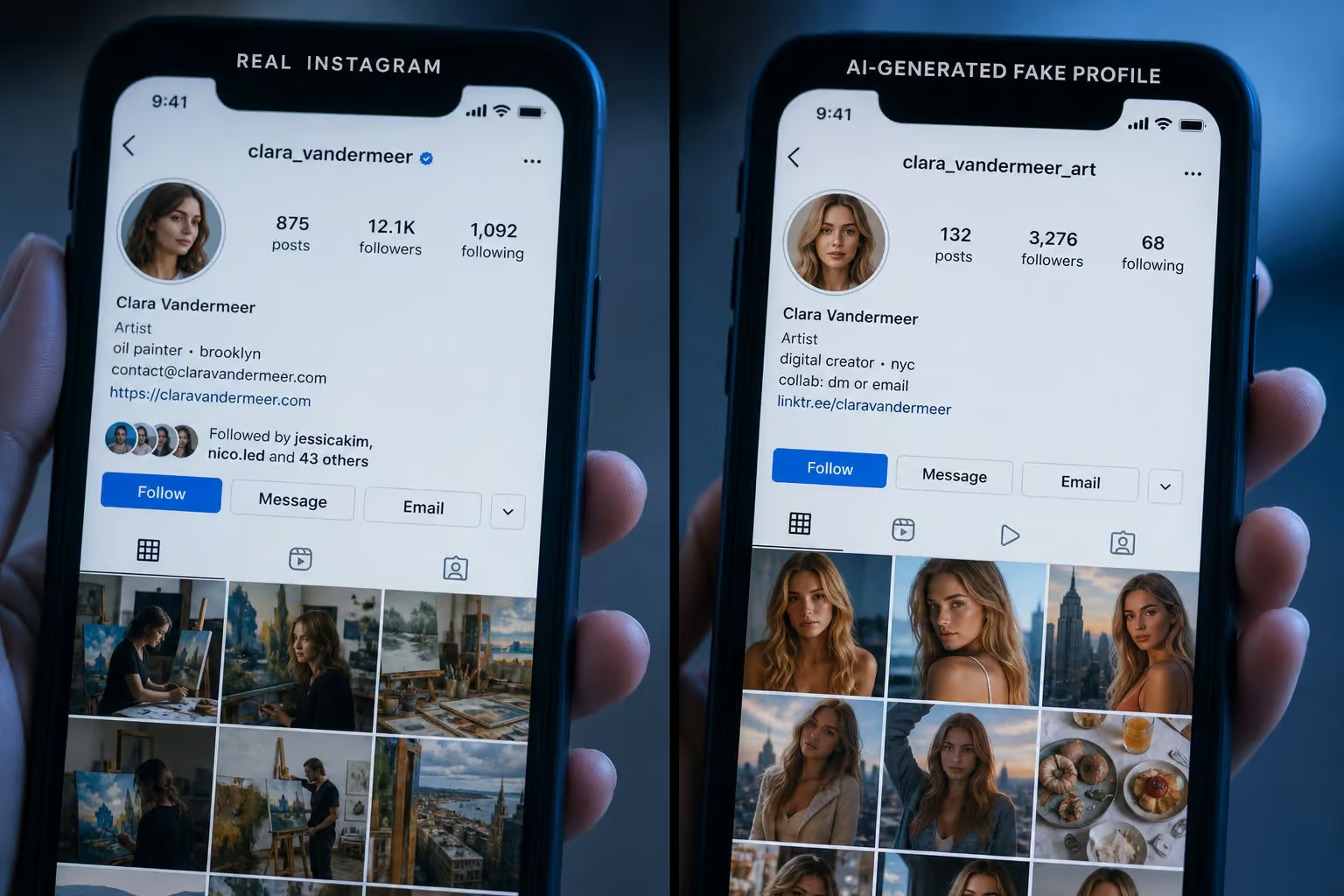
Four specific accounts were identified: @miles.sumrall, @danielmmulugeta, @alistaircrombbie, and @lucalepkowski. They were created in May or June 2026. Each had fewer than 10 posts and high follower-to-following ratios. WIRED identified more than two dozen similar accounts.
The tell? They used identical emoji comments on each other’s posts.
The detection evidence
AI Image Detector scored >90% confidence that Miles and Daniel’s avatars were AI-generated. Google’s SynthID confirmed “most or all” of those images were made with Google Gemini. AI Image Detector found @lucalepkowski profile image 80% likely artificially generated. That’s as close to proof as you get without a confession.
The smoking gun: David Aliagas’ ambassador job postings
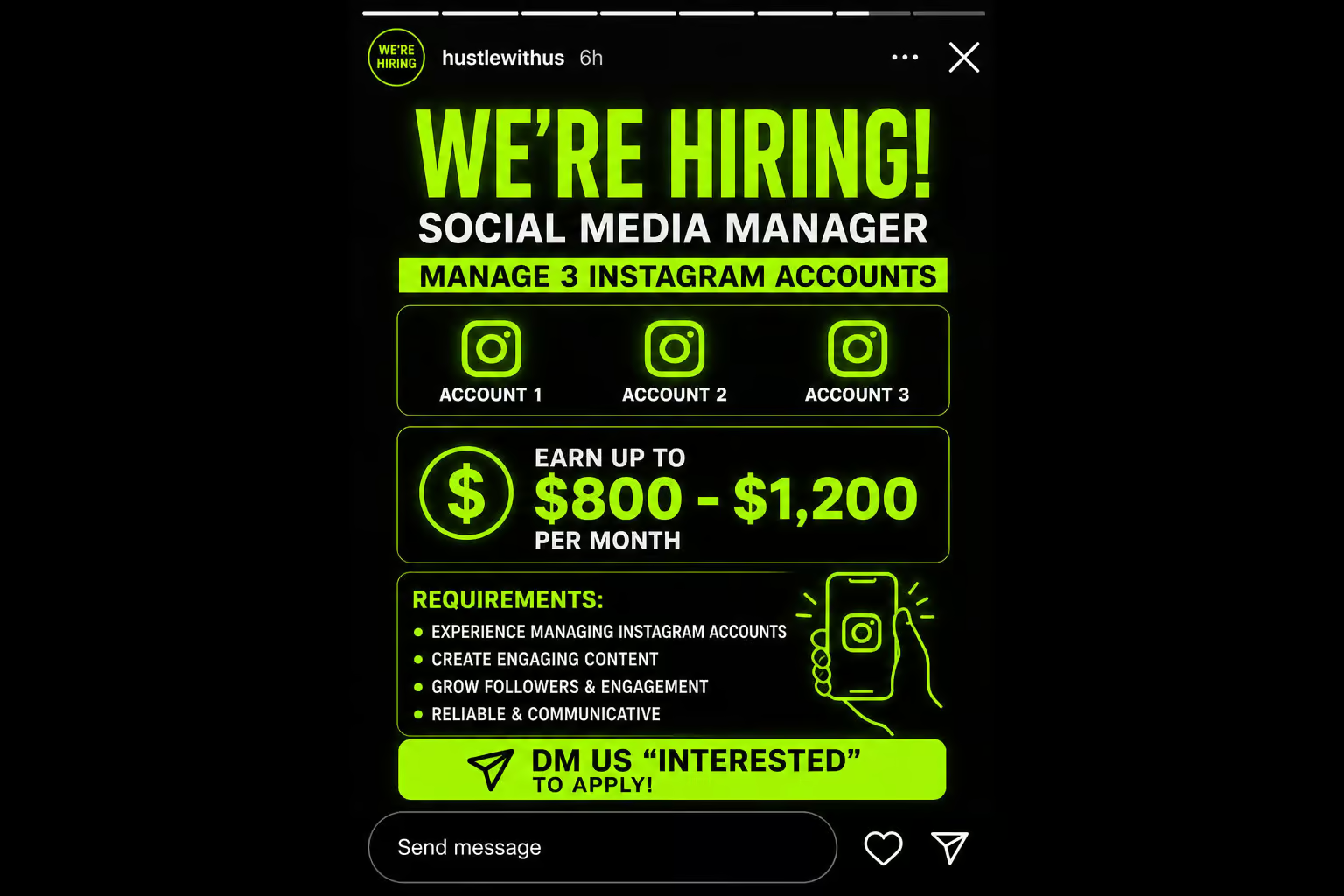
David Aliagas posted Instagram Stories advertising ambassador roles. First role: manage three Instagram accounts, 4 hours/day, 2+ months, $1,800–$2,100/month. Second role: 3-month commitment. And then there’s the direct quote that still sits in his Story highlights: “And btw, still buying finstas [fake Instagram accounts] for $100.”
That’s the cofounder’s own words, preserved on the platform where the fake accounts operated. Aliagas also posted: “time to monetize ur traumas,” a tone that further undermines the app’s sincerity.
Legal and Regulatory Implications: Is This Actually Illegal?
Attorney Rob Freund, who specializes in advertising and ecommerce law, told WIRED the campaign is “very obviously unlawful under FTC guidelines.” The Federal Trade Commission requires that endorsements be real and that paid promotions be disclosed. Paying people to run fake accounts with AI-generated photos and no disclosure is a pretty clear violation.
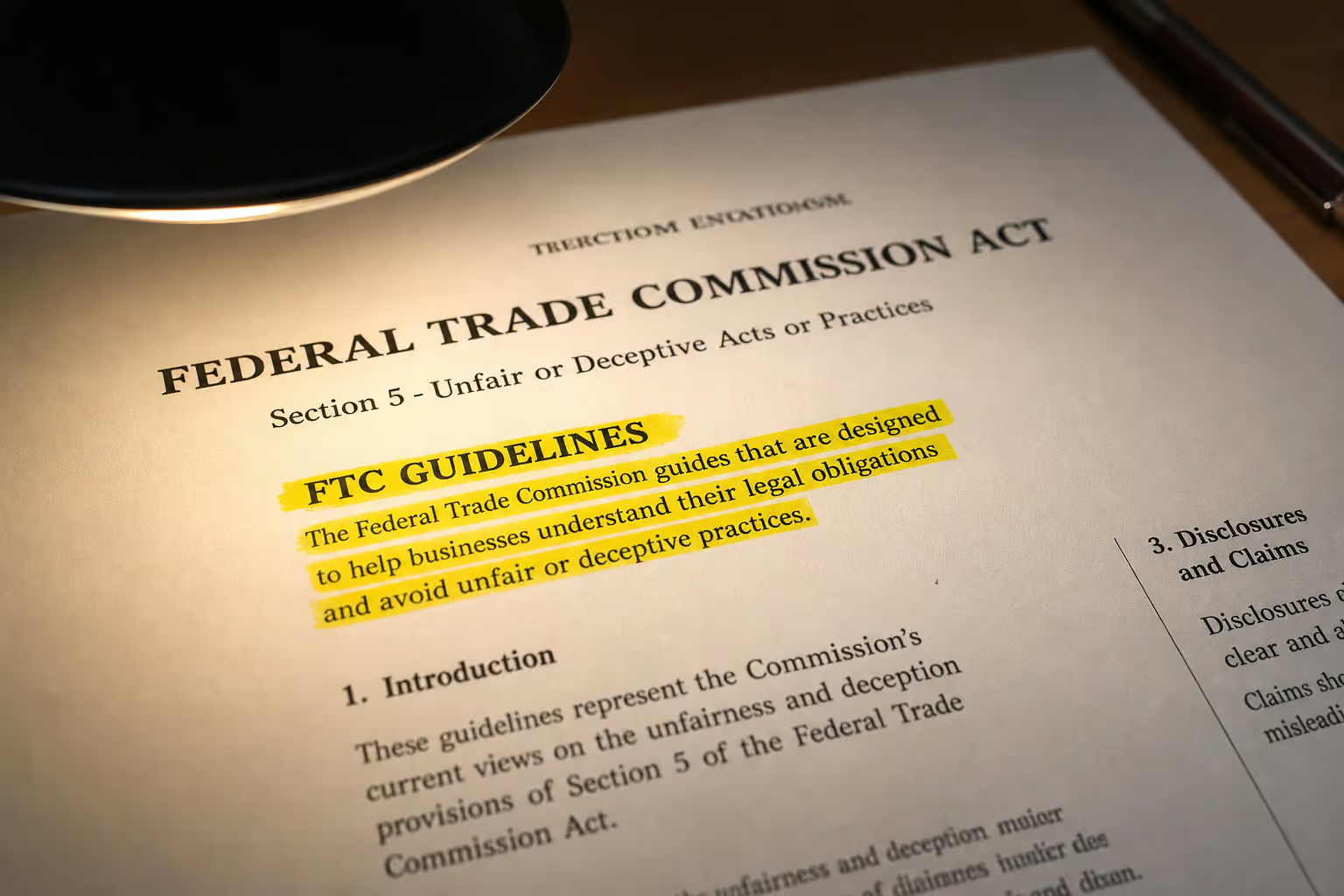
New York law: requires disclosure if content is AI-generated; initial $1,000 fine for failure That’s not a massive penalty for a company, but it sets a precedent. Meta requires users to label artificially generated content; Meta will take down posts not correctly identified
The catch: Goose used DMs and Close Friends Stories — private channels that are hard for platforms to monitor. That’s almost certainly why they chose that route. Enforcement is difficult when the evidence is hidden in private messages. But the job postings were public, and the accounts were discoverable. That’s how WIRED connected the dots to answer what is the Goose app?
Privacy and Data Collection: Is the ‘Anti-Algorithm’ Claim Misleading?
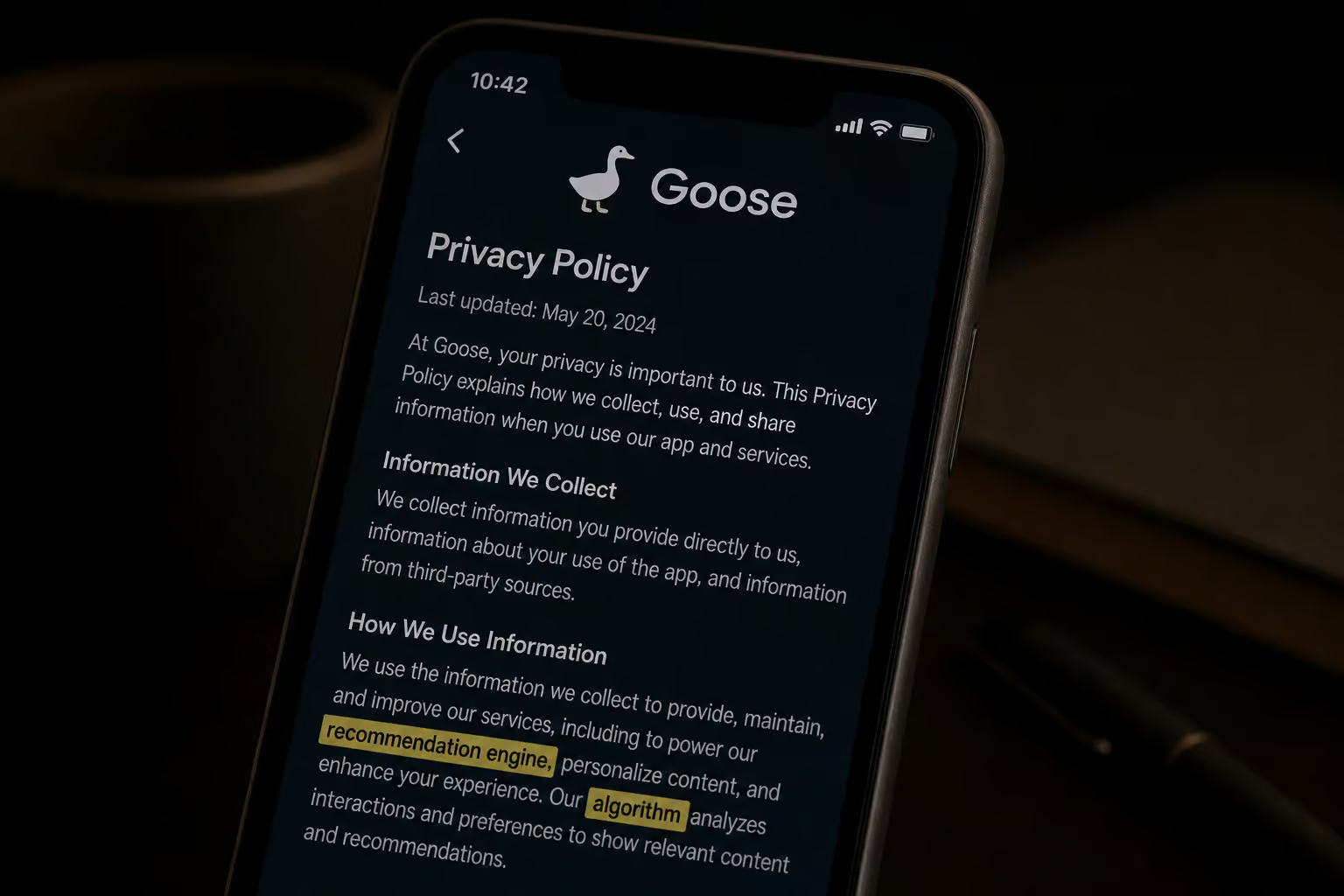
Goose’s marketing leans hard on being “anti-algorithm.” But its privacy policy tells a different story.
What data Goose collects and how it’s used
The app collects the standard dating-app data: phone number, email, date of birth, photos, gender identity, dating preferences, location, and social media handles. That’s expected. What’s less expected is the explicit mention of a recommendation engine that uses your behavior, profile info, and location to suggest content and matches. That is, in fact, an algorithm. The “anti-algorithm” branding is marketing, not engineering.
The data is shared with third parties including HubSpot, Amazon, and PayPal. Servers are in the US and UK using Amazon data centers. The company, Goose Trading Limited, is incorporated in Barbados. That’s not uncommon for startups, but it adds a layer of opacity for users who care about jurisdiction, especially those looking for a Goose dating app download guide.
Data retention and account deletion
If you delete your account, Goose keeps your data for six years. Backup copies are kept for 30 days after closure. Six years is a long leash — standard for legal reasons, but worth knowing before you upload anything you’d rather not have sitting on a server.
User Reception and Market Traction
The launch generated real buzz. 56,000 pre-downloads. #4 in App Store’s free lifestyle downloads category at launch. User Sylvester reported getting 10 dates on the first day of using the app. Goose’s Instagram account has over 22,000 followers
But the skepticism was immediate. Francesco from NYC’s West Village posted, “Goose is basically Pokémon Ho” — waving at guys like you’re trying to catch them all. Another user, Nick said that Give this two weeks tops before it just becomes another hook-up app. Dalton Bauer called it “shady and deceiving.” Ryan Cheam, who was DMed by a fake account said that the need to bait gay guys into signing up feels sketchy.
Technical issues cropped up too. One user reported that entering the verification code causes the app to crash repeatedly. Not a philosophical objection — a real crash.
The ranking dropped from #4 at launch to 33rd globally. The hype didn’t stick.
Goose vs. the Competition
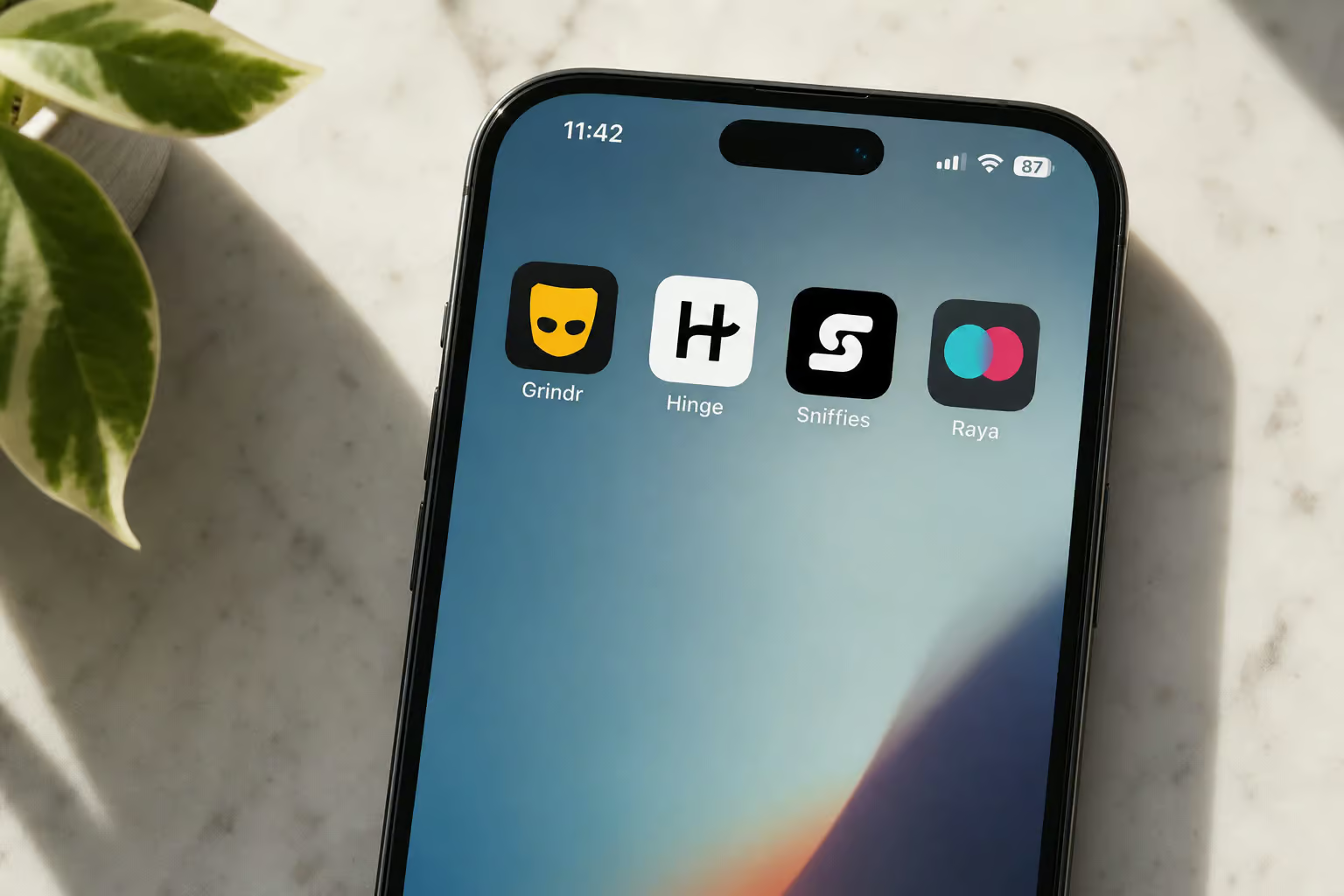
Comparing Goose to other apps isn’t about features. It’s about trust. Alex Reimer described the interface as “a lot like Hinge.”
- Grindr is the elephant in the room. Goose positions itself as the relationship-friendly alternative, but Grindr’s bot problem is mirrored by Goose’s own AI-generated promoters. You can’t claim to be better than the bots while paying people to run fake accounts.
- Hinge has the “designed to be deleted” ethos. It also uses algorithms, but Hinge is transparent about it. Goose’s “anti-algorithm” pitch evaporates once you read the privacy policy.
- Sniffies is map-based and hookup-oriented. Goose’s live map is similar, and users are already predicting the app will slide that direction.
- Raya offers curated, invite-only exclusivity. Goose has application-based membership, but the invite codes were distributed by fake accounts. That undermines the exclusivity.
The core differentiator Goose wants — authentic connection, is directly contradicted by how it marketed itself. That makes it harder to trust than the apps it claims to improve upon.
Verdict: Is Goose Worth Downloading?
Goose has interesting features. The wave mechanic reduces inbox spam. Human screening should, in theory, cut down on catfish. Vanish Mode and screenshot protection are real privacy tools, not just promises.
But the AI influencer campaign isn’t a minor misstep. It was a coordinated, paid operation tied directly to the cofounder. The “anti-algorithm” label is misleading when the app uses a recommendation engine. The ranking decline and user skepticism suggest the trust hit is real.
If you value transparency and authenticity, Goose makes that harder to believe than the apps it claims to replace. If you’re willing to judge the app purely on its feature set — wave matching, human review, privacy tools, you might give it a shot. But go in with your eyes open. The app’s own behavior tells you more about its priorities than its tagline does.
For now, I’d skip it. There are better uses of your time than an app that can’t be honest about how it got off the ground.
Frequently Asked Questions
What is the Goose app?
Goose is a dating app for gay men that launched in 2026, featuring a wave-based matching system instead of swiping, human profile screening, and privacy tools like Vanish Mode and screenshot protection. The app markets itself as an ‘anti-algorithm’ alternative to Grindr, though its privacy policy reveals it still uses a recommendation engine.
Is Hinge good for older people?
Hinge works well for older users because it focuses on detailed profiles and conversation prompts rather than quick swipes, but its algorithm still drives matches based on behavior and preferences. Goose’s human profile screening and wave mechanic could appeal to older users tired of bots, though the app’s AI influencer scandal raises trust questions that may matter more to that demographic.
How does Goose’s wave mechanic work?
You scroll through profiles and wave at someone you’re interested in. If they wave back, you’re connected and can chat — no inbox spam from people you haven’t matched with. The simplicity is appealing, but you can’t tell if someone waved because they’re genuinely interested or just waving at everyone.
Is Goose’s ‘anti-algorithm’ claim accurate?
No — the privacy policy explicitly mentions a recommendation engine that uses your behavior, profile info, and location to suggest matches and content. While profile approval is done by humans, the matching system itself is still algorithmic. The ‘anti-algorithm’ branding is marketing, not a technical reality.
Why did Goose’s App Store ranking drop after launch?
The app dropped from #4 at launch to 33rd globally after WIRED reported that the cofounder ran a coordinated campaign using AI-generated Instagram influencers to promote the app, including paying ambassadors $1,800–$2,100 a month to manage fake accounts. User skepticism grew, with some calling the app ‘shady and deceiving’ and predicting it would become just another hook-up app.