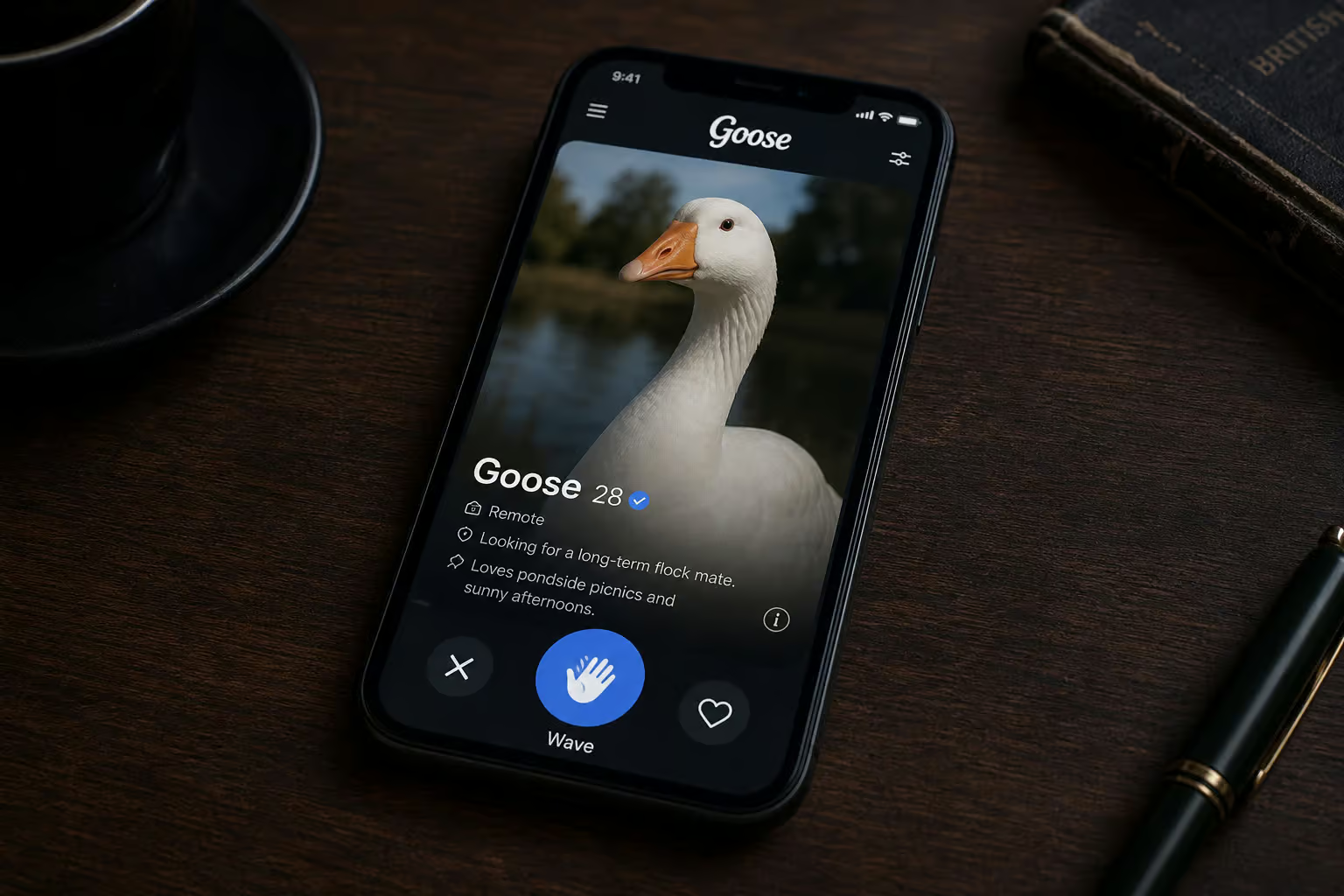
Goose is a dating app for gay men that launched on June 25, 2026, with promises: no swiping, no algorithm deciding who you see, and an alternative to Grindr and Sniffies. The slogan is “for the boys,” and the pitch is about community, not hookups.
The founders are Derek Chadwick—model, actor (you might know him from Scream Queens), founder of the beauty brand Chaddy, and a guy with 1.7 million Instagram followers—and David Aliagas, who used to work on growth at BeReal. They positioned Goose as an “anti-algorithm gay dating and lifestyle platform.” Invite-only. Free.
No membership fees. Everything sounded good.
Then WIRED identified more than two dozen AI-generated Instagram accounts promoting Goose.
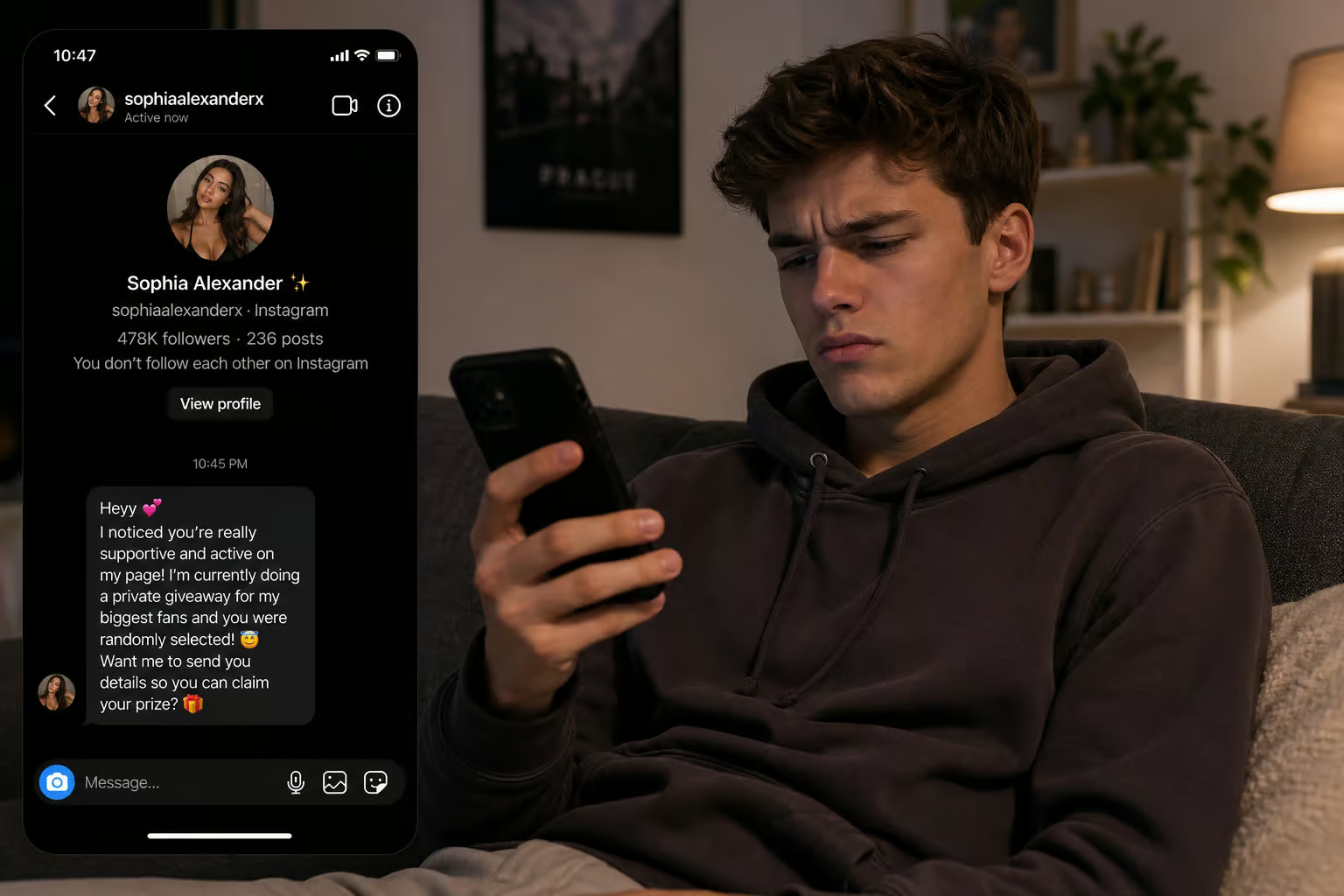
Because while Goose was promising human-curated authenticity, its marketing team had been busy creating fake Instagram influencers with AI-generated faces to lure gay men into signing up. WIRED found more than two dozen of these accounts. The cofounder was posting on Instagram Stories offering to buy “finstas” for $100 and hiring ambassadors to manage fake profiles. The contradiction raises the question: Can you judge a product apart from its promotion?
Key Takeaways
The Goose app launched June 25, 2026 in the US as an invite-only, free app for gay men that combines dating and friendship that uses “waving” instead of swiping and human-curated profiles.
WIRED identified more than two dozen AI-generated Instagram accounts (like @miles.sumrall and @danielmmulugeta) created in May/June 2026 that promoted Goose; detection tools showed >90% confidence their photos were AI-made, and cofounder David Aliagas openly advertised ambassador roles to manage fake accounts.
The campaign may violate FTC guidelines, New York’s AI disclosure law (initial fine: $1,000), and Meta’s labeling rules, even though enforcement in private DMs and Close Friends Stories is tricky.
Table of Contents
How Goose Works: The Features That Actually Sounded Good
Before we get into the mess, you should understand why people were initially drawn to Goose. The features address frustrations with the current dating app landscape.
Waving, Not Swiping
No left-right swiping. No algorithm feeding you people based on who-knows-what. On Goose, you “wave” at someone to signal interest. If they wave back, you can start chatting. That’s it—a consent-based model, like a digital nod.

Both users must opt in before any conversation begins. That removes the low-effort, high-volume dynamic that makes Tinder and Grindr feel like a meat market.
Human-Curated Profiles and the Invite-Only Model
Goose says profiles are reviewed by real humans before they’re approved. You apply to join, similar to how Raya works—curated, invite-only, a members-only community. No membership fees, which sets it apart from Tinder Gold or Grindr Xtra. The idea is that you’re joining a club, not scrolling a database.
Privacy Features: Vanish Mode, Screenshot Protection, Live Map
Goose included features for privacy-conscious users:
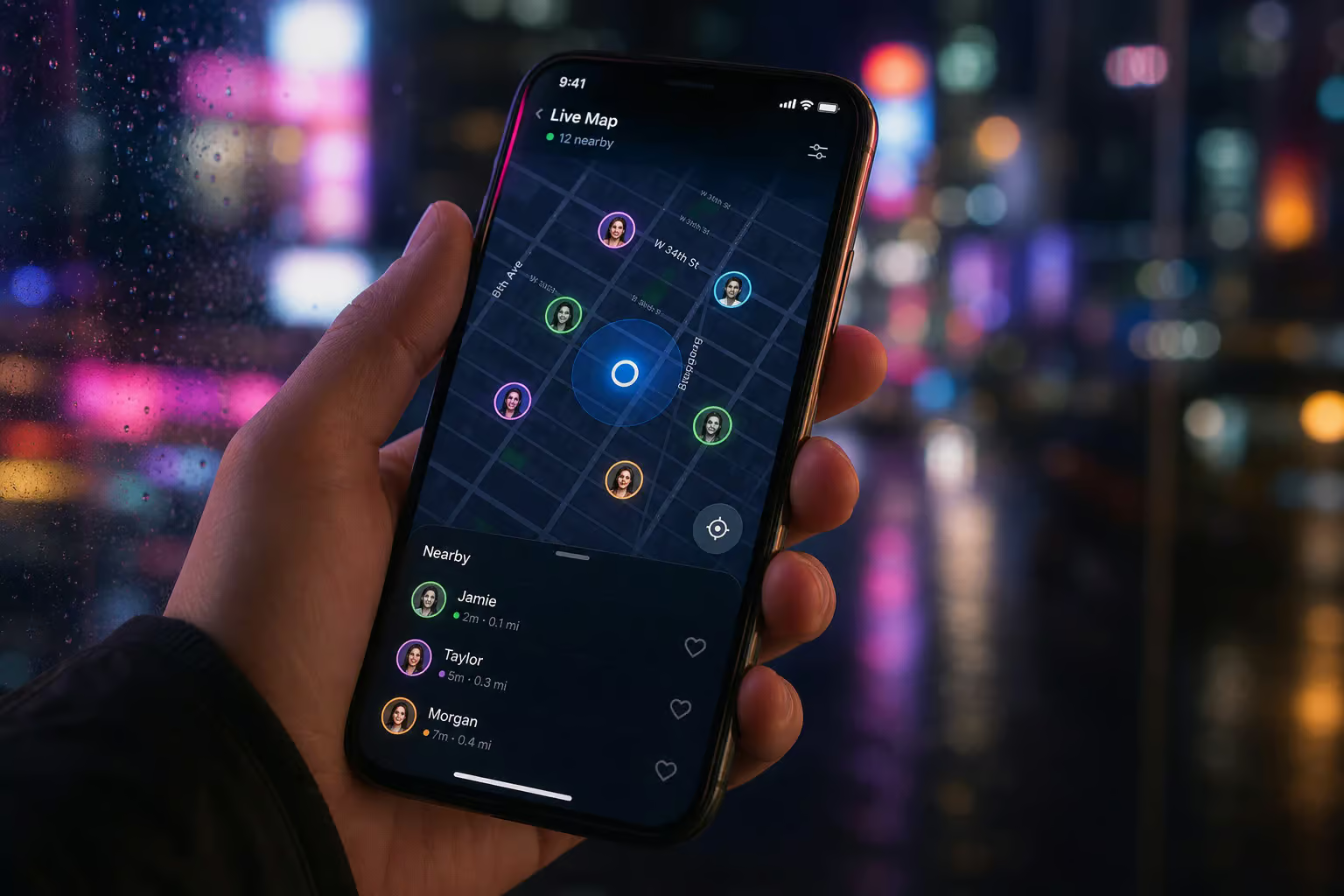
- Live map shows nearby users visually—like Grindr’s grid but with a map interface.
- Media profiles let you post photos, videos, and updates, almost like a social feed rather than a static profile card.
- Vanish Mode for disappearing chats.
- Screenshot protection so people can’t save your pics without you knowing.
And you don’t have to declare what you’re looking for upfront—no relationship or casual labels. You just see what happens.
Over 56,000 people pre-downloaded the app before launch, and it hit #4 in the App Store’s free lifestyle category on day one. It’s now sitting around 33rd globally—but the initial hype has faded.
Bottom line: The features address real frustrations, but the app’s credibility took a hit before most users even got a chance to wave.
The AI-Generated Influencer Campaign That Blew It All Up
WIRED‘s investigation found accounts like @miles.sumrall and @danielmmulugeta. The same week Goose launched, people started noticing something weird on Instagram, prompting many to look for a Goose dating app download to set up their accounts.
The Accounts and How They Were Identified
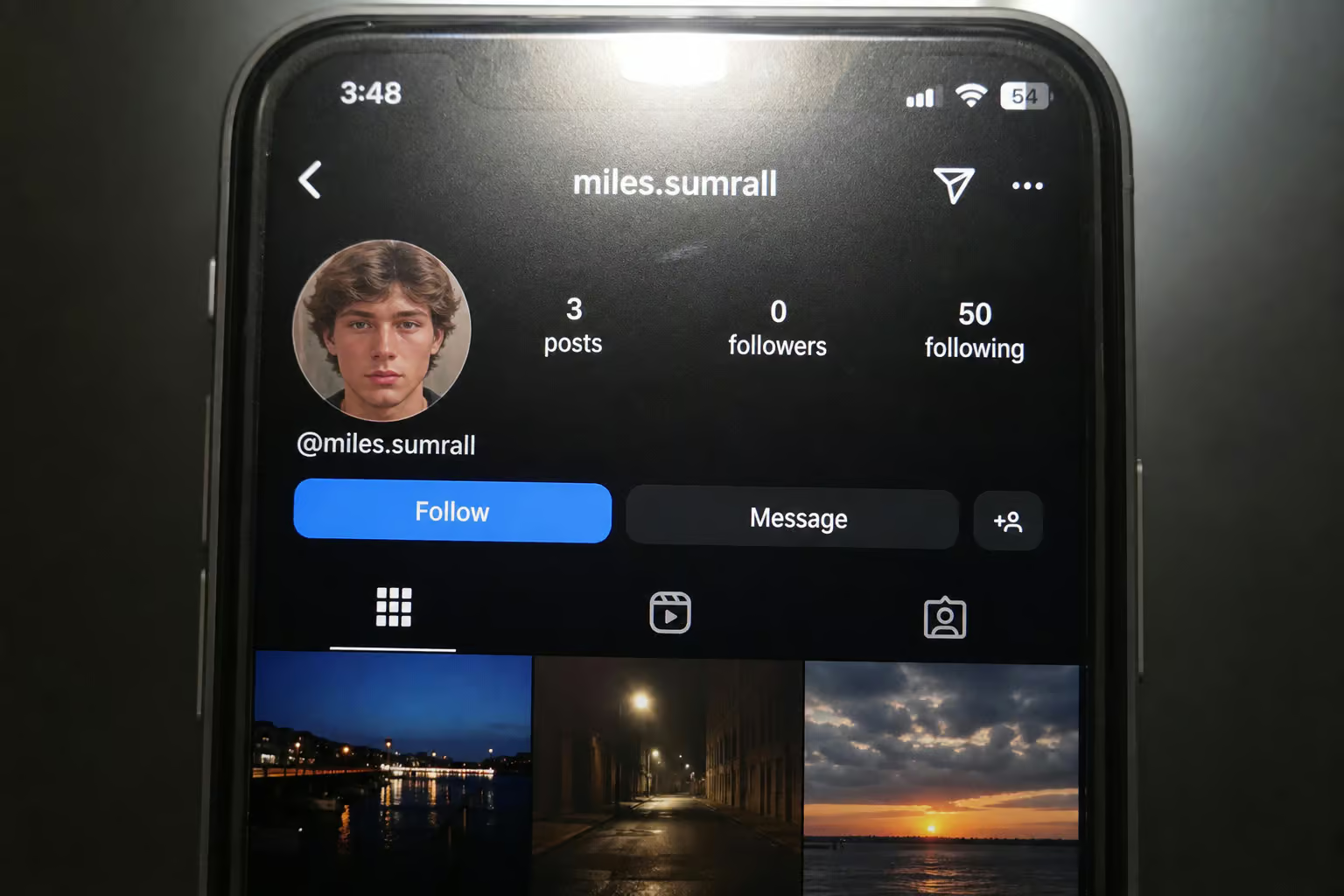
WIRED’s investigation found accounts like @miles.sumrall and @danielmmulugeta, both made in May 2026, just before the app dropped. Each had fewer than 10 posts. They followed hundreds of accounts but had almost no followers. Classic signs of a fake account.
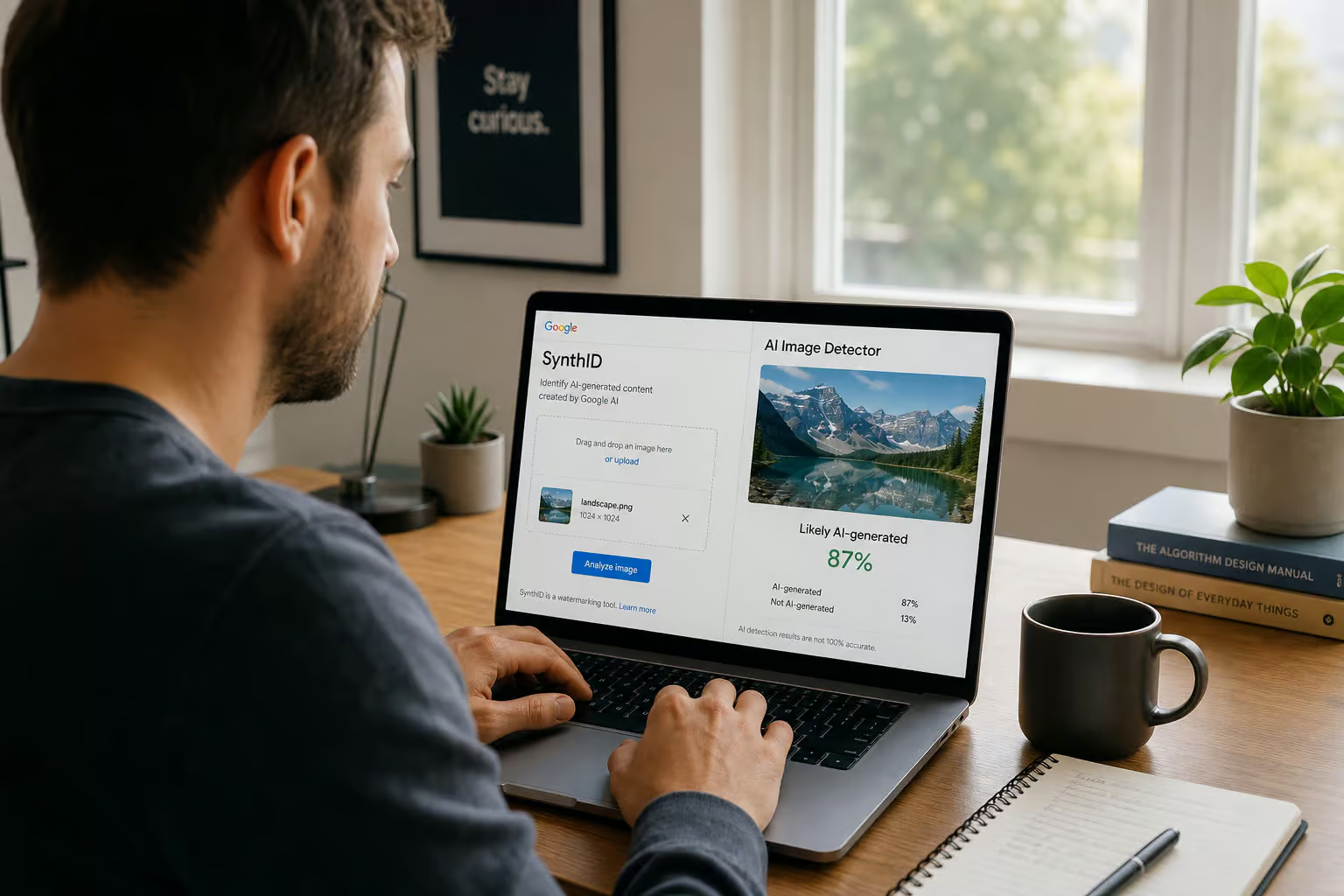
Detection tools flagged their profile photos with over 90% confidence as AI-generated. AI Image Detector software flagged their profile photos with over 90% confidence as AI-generated. Google’s own SynthID tool confirmed that “most or all of” the images on those accounts were created using Google AI. Both AI Image Detector and SynthID flagged the same images.
The Outreach Playbook: DMs, Close Friends Stories, and Cross-Commenting
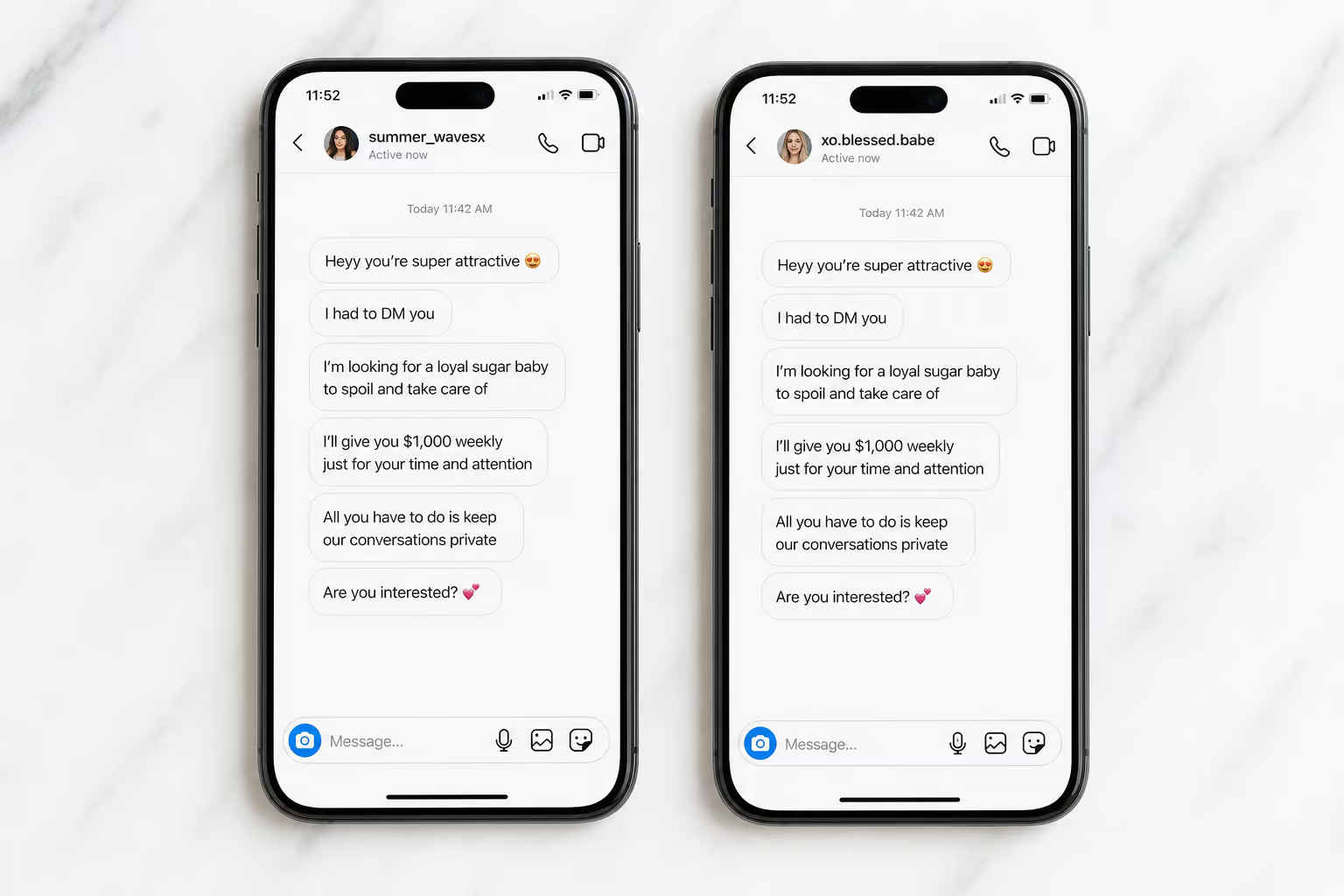
The fake accounts sent DMs and posted on Close Friends Stories. One of them, @alistaircrombbie, sent a direct message to Ryan Cheam, an account executive. The DM read: Hey! This might seem random, but I thought you’d be interested:)—and included an invite to Goose.
Another account, @lucalepkowski, sent the exact same text to Dalton Bauer, a marketing professional. Same script, different fake face.
SynthID confirmed Alistair’s photo was AI-generated. Luca’s profile was flagged at 80% likelihood by AI Image Detector, and Google Gemini also raised red flags. WIRED found more than two dozen similar accounts, all set up in May or June 2026, all with the same pattern: few posts, high following-to-follower ratio, commenting on each other’s photos with heart and fire emojis. The accounts commented on each other’s photos with heart and fire emojis.
Cofounder Involvement: Ambassador Hiring and Finsta Buying
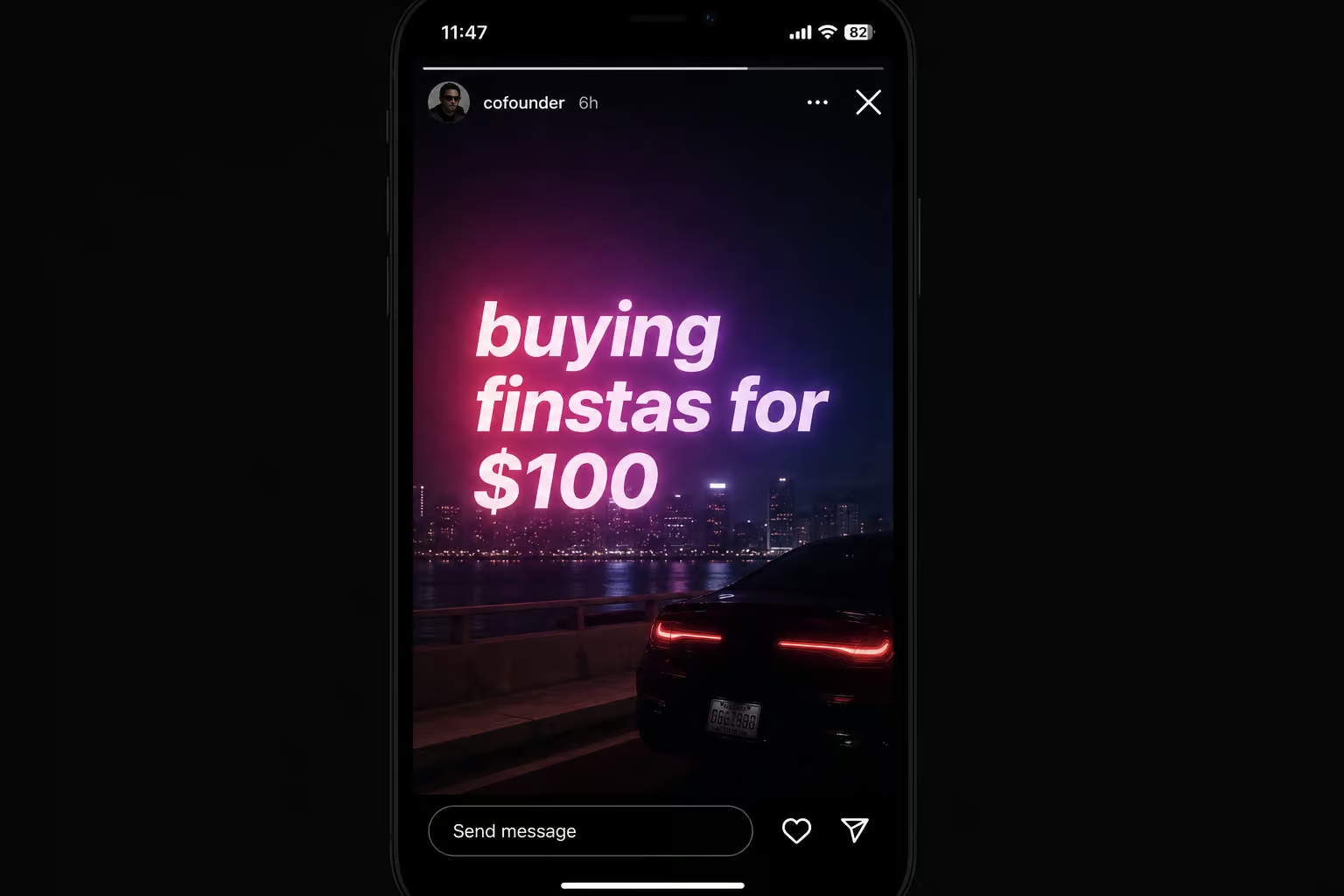
David Aliagas posted on Instagram Stories advertising an ambassador role and offering to buy finstas for $100. He posted on his Instagram Stories advertising an ambassador role: run three Instagram accounts, spending about four hours daily for over two months, with pay of $1,800 to $2,100 per month. In another story, he wrote wrote, that still buying finstas [fake Instagram accounts] for $100. He posted a similar call for ambassadors three weeks earlier, asking for a three-month commitment.
That’s a cofounder openly buying fake accounts and hiring people to run them. The ambassador posts appeared in the same period the AI accounts were created.
User Reactions: Flattered, Then Skeptical
Ryan Cheam and Dalton Bauer received DMs from the fake accounts. Cheam told WIRED he was flattered to be their target audience but found the tactic of baiting gay men into signing up sketchy. Dalton Bauer got three identical DMs from @lucalepkowski in one week.
His take: I haven’t seen anything like this on Instagram before—especially at this scale. It’s shady and deceiving, and people should know about it.
On Threads and X, the reaction was mostly confusion and mockery. One user (@davids.dreamland) couldn’t even find the app in the App Store, while another (@voyage2k) joked about Derek Chadwick, and @stevenrosenphoto described Goose’s ad image a “thirst trap,” and X user @pspthe2nd posted screengrabs alleging the app “employ[s] AI models to generate fake interest” — claims that stand in stark contrast to this honest Goose dating app review.
Users on Threads and X expressed skepticism and mockery.
Legal and Regulatory Risks: This Could Cost Them
Creating fake accounts to promote a product likely violates FTC guidelines. Rob Freund, an advertising and ecommerce attorney, told WIRED that this is very obviously unlawful under FTC guidelines. The Federal Trade Commission has rules against deceptive advertising, and using AI-generated personas to pose as real users falls squarely in that bucket.
New York has a specific law requiring advertisers to disclose AI-generated content. The initial fine is $1,000 per violation. If Goose has multiple fake accounts and DMs, fines could add up.
Meta requires users to label artificially generated content and can remove unlabeled posts. But here’s the catch: the campaign lived in private DMs and Close Friends Stories—channels that are hard for the platform to monitor. The rules exist on paper, but enforcement in private spaces is weak.
Red flag: Private DMs and Close Friends Stories are exactly where deceptive campaigns hide from platform monitors—the rules only work when someone inside the operation talks.
The Trust Paradox: Anti-Algorithm App Meets AI Marketing
Goose’s mission is to be authentic, but its launch strategy used AI-generated fake humans. The website says that meet guys through the life you already have. It rejects algorithms. It promises human review. It’s supposed to be the antidote to the cold, corporate vibe of Match Group-owned Grindr.
And then its launch strategy involves algorithmically generated fake humans. The app rejects algorithms yet used algorithmically generated fake accounts.
The pre-launch hype was real—56,000+ pre-downloads, #4 ranking, launch parties in NYC (oysters, cocktails, photo booth, branded merch), LA, and Miami. The Goose Instagram had 12,500+ followers before the app even existed. But Goose’s team decided to manufacture social proof anyway.
A Guardian investigation found that 40-60% of big brand content is now artificially generated. Goose isn’t alone in using AI to sell itself. But using AI fakes contradicts the anti-algorithm, human-first value proposition.
How to Spot AI-Generated Influencer Accounts
If you’re on Instagram and a too-perfect guy slides into your DMs with a Goose invite, here’s what to watch for:
- Account age. Created very recently—May or June 2026 in Goose’s case.
- Post count. Fewer than 10 posts. No real history.
- Following-to-follower ratio. They follow hundreds but have almost no followers back.
- Profile photos. Look perfect, but something feels off—skin too smooth, eyes too symmetrical, weird background artifacts.
- Cross-commenting. They like and interact on each other’s posts using generic emojis (heart, fire).
- Templated DMs. Identical text sent to multiple people.
- Detection tools. You can run their photos through AI Image Detector, SynthID, or Google Gemini. Not 100% accurate, but if two tools flag the same image, trust the tools.
Remember: the best defense is your own skepticism. If an account looks too polished and has no organic engagement, it’s probably not real.
So Where Does This Leave Goose?
The app offers features like waving, human-reviewed profiles, and Vanish Mode. The features are genuinely different, and the early demand suggests guys want an alternative to Grindr. But the AI influencer campaign damaged credibility. Users may wonder if other users were recruited by the ambassador team that bought finstas for $100.
Can you separate the product from the promotion? That’s the question. Some apps survived controversial launches, such as Uber, Airbnb, and Facebook. Those launches occurred before AI made fake content easy to generate.
In 2026, when fake accounts are used for promotion, authenticity becomes the product. Goose used AI-generated influencer accounts to promote the app.
You should be cautious when receiving DMs from accounts with few posts and high following-to-follower ratios. If you’re waving on Goose or replying to a DM from an account with 3 posts, verify authenticity. Detection tools like AI Image Detector and SynthID can help identify AI-generated images.
Frequently Asked Questions
Is goose AI any good?
The Goose app itself offers interesting features like waving instead of swiping, human-curated profiles, and privacy tools like Vanish Mode and screenshot protection. However, its credibility was severely damaged before launch when an investigation revealed its marketing team used AI-generated Instagram influencer accounts to promote the app, contradicting its anti-algorithm, human-first promise.
Is goose AI free?
Yes, the Goose app is free to use with no membership fees. It launched as an invite-only platform, similar to Raya, but without the paywalls of apps like Tinder Gold or Grindr Xtra.
What is the Goose app?
Goose is a dating app for gay men that launched in June 2026 as an invite-only, free alternative to Grindr and Sniffies. It markets itself as an anti-algorithm platform where you wave instead of swipe, profiles are reviewed by real humans, and features like Vanish Mode and screenshot protection prioritize privacy.
Is the Goose app’s AI marketing legal?
It likely violates FTC guidelines against deceptive advertising, as well as New York’s AI disclosure law, which carries an initial fine of $1,000 per violation. Meta also requires labeling of AI-generated content, but enforcement is difficult when the campaign operates in private DMs and Close Friends Stories.