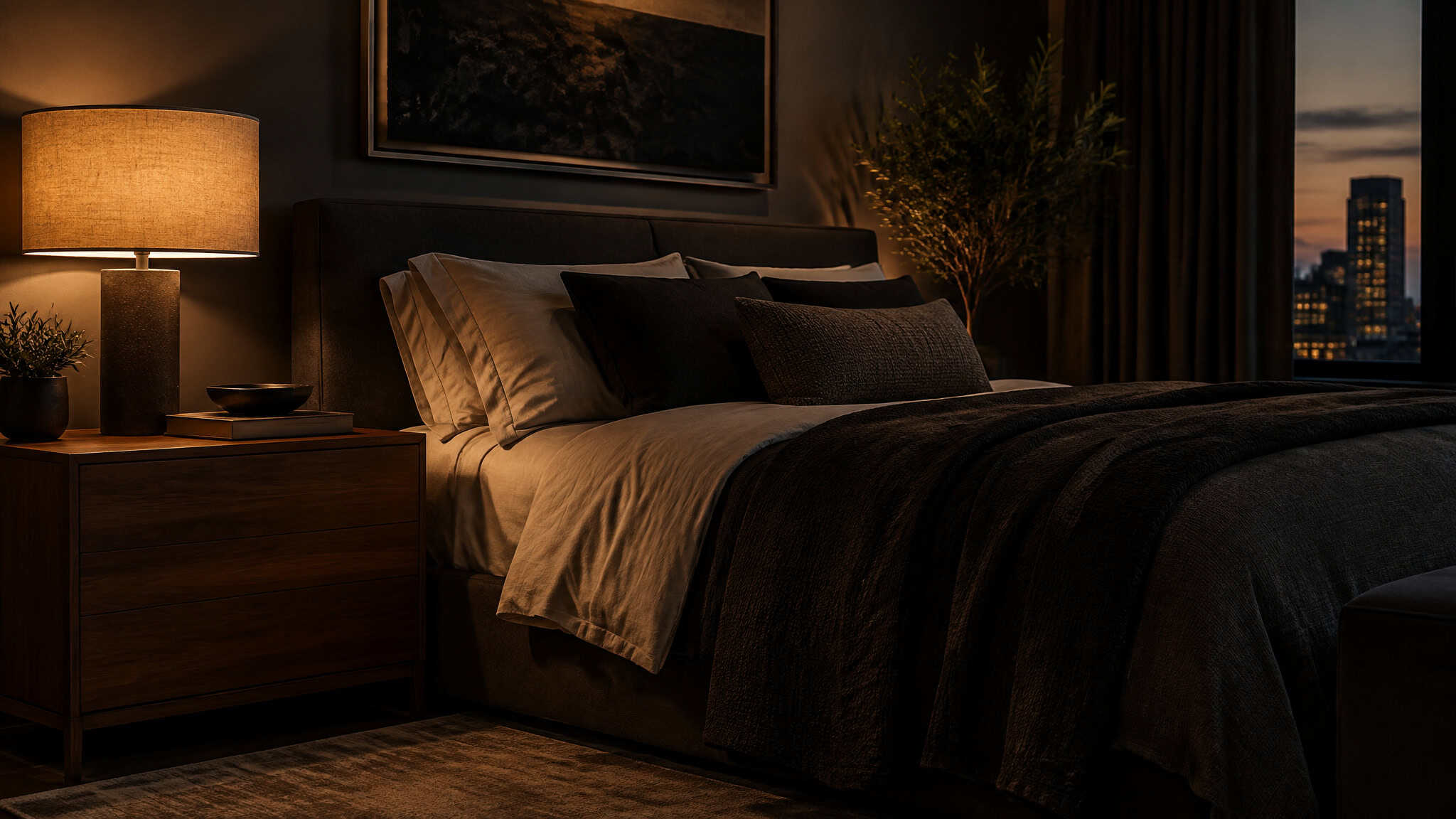
The bedroom photographs well. That’s the problem. You spent a weekend on it two years ago, it looked great in the shots you sent the group chat, and it’s been quietly fighting you at 11pm ever since: one harsh ceiling light, a bedspread that pools on the floor, a nightstand that’s really just a cable nest with a lamp on it. The 2026 shift is that bedrooms stopped being designed for the person visiting and started being designed for the person sleeping there.
That’s Jan Sikora’s point and it’s the right one: the room’s job is rest, not impressing anyone. The trends that matter this year all converge on cocooning, warmth, and a room that feels personal. Below, each trend gets its own rundown and an adopt/skip verdict, all weighed for a moody, masculine bedroom. One honest caveat: no study covers men’s bedrooms specifically, so the verdicts are my judgment layered on real evidence, not market data. And the filter I’d apply: pick two or three compatible trends and skip the rest. Adopting everything is how rooms end up looking like showrooms.
Key Takeaways
56% of King Living customers chose neutral bedding tones in a 2026 study of 3,000+ bed purchases, with warm browns rising and grey and blue declining, so a tonal base is the safest bet and rich color enters through accents.
Dark wood is back, walnut, espresso, charred oak, but the 60-30-10 rule applies: 60% light walls and bedding, 30% medium accents, 10% dark wood.
Layered lighting is the cheapest trend with hard evidence behind it: 2700K in the evening, amber tones at night, dimmers on everything.
Table of Contents
| Pick | Why it stands out |
|---|---|
| Comfort begins with the bed | Comfort begins with the bed: over thirty years of a lifetime spent in bed; beds made to order with removable bedhead and base covers in premium fabric or leather with choice of |
| Style with soft finishes in every layer | Style with soft finishes in every layer: soft tonal base palette: warm neutrals beige/ivory/sand or cool pale grey/stone/taupe; lower foot traffic makes lighter neutral rugs |
| Smart Nightstands with Integrated Charging | Smart Nightstands with Integrated Charging: features: integrated charging stations, touch-activated LED lighting, hidden compartments, lift-top storage, adjustable shelving, |
| Embrace Japandi principles | Japandi blends Japanese simplicity with Scandinavian warmth and is a hallmark style of 2026 master bedrooms. |
| Layer sculptural furniture around the bed | Layer sculptural furniture around the bed: slender bedside table offsetting a curved tactile bed; armchair placed diagonally for fluidity; occasionals add depth without visual |
| Add a lounge element | Add a lounge element: treat master bedroom as extension of living area; lounge chair, coffee table, modular sofa facing TV console; bookcase corner as mini library; low ottoman |
| Choose drapery over blinds | Choose drapery over blinds: full-length curtains in linen or cotton diffuse light, soften acoustics, add movement; drapery used on canopy beds, along walls, custom bunk designs |
| Elevate with art and object | Elevate with art and object: marble side table with design books, hand-thrown ceramic with cut florals, sculptural candle; use travelled objects, sentimental pieces, nostalgic |
Model details derive from the cited sources; check the brand pages for current pricing.
Comfort begins with the bed
Here’s a number worth sitting with: over thirty years of your life gets spent in bed. That makes the bed and mattress the first purchase, and everything else in the room gets styled around them. The good news is beds have gotten smarter about it without getting gimmicky. Made-to-order beds now come with removable headboard and base covers in fabric or leather, plus your pick of timber finish, so you can restyle the frame later instead of replacing it.
Mattresses now come with adjustable layers that improve airflow and ergonomic support too. That’s not a tech upgrade, it’s just tweaking the mattress to how you actually sleep. My verdict: spend here first. Everything else is decoration until the bed is right.
Soft finishes from bed to rug
The base palette for 2026 is tonal and soft: warm neutrals like beige, ivory, and sand, or cooler ones like pale grey, stone, and taupe. Nothing hard-edged dominating the room. And here’s the permission slip most guys don’t know they have: bedrooms get way less foot traffic than the rest of the house, so a lighter neutral rug actually holds up. You don’t need the dark charcoal rug as camouflage.
Accent colors work too, named like you’d point at them in a store: dusty rose, sage, powder blue on the softer side; clay, sand, terracotta if you want earthier. Underfoot, hand-loomed and high-pile rugs feel plusher than low-pile, which matters in the one room where you’re always barefoot. King Living is a good example here: their rugs use premium fibres, 100% New Zealand wool as the durable workhorse, while Art Silk is a finer weave better suited to lighter-traffic spaces, with multi-tonal threads giving you subtle pattern without shouting. Verdict: adopt. Soft finishes are the cheapest way to make a room feel finished.
Tonal, tailored bedding, and what the purchase data says
Tonal tailored bedding is the 2026 direction, and the working palette is white, sandy, stone, clay, blush, and almond. A structured bedspread with matching pillowcases reads refined, and it’s a small detail that makes the bed look like you tried. The purchase data backs it up: in a 2026 study of over 3,000 bed purchases, King Living found 56% of customers preferred neutral tones, with warmer browns rising and cooler shades like grey and blue steadily declining.
The data backs the neutral base. In a 2026 study of more than 3,000 bed purchases, King Living found 56% of customers preferred neutral tones, with warmer browns rising and cooler shades like grey and blue steadily declining in bedding sales. That’s purchase data, not a survey where people say what sounds tasteful. People are voting with their credit cards for warm and quiet.
Texture is how you keep tonal from turning flat. The layering stack that works: linen, waffle weave, and wool, stacked so the eye has something to catch on each layer. And rich color is entering bedrooms through accents rather than base layers. Boll & Branch and Brooklinen keep selling out of plum and terracotta bedding. Guys want some richness, just not wall-to-wall.
The working palette, if you want it as a list:
- White, sandy, stone, clay, blush, almond for the base
- A structured bedspread with matching pillowcases
- Linen sheets, waffle duvet, wool throw for texture
- Plum or terracotta as the accent, if you want one
My verdict: adopt the tonal base without hesitation. The data is on its side. Where rich color fits is the base-versus-accent decision, that’s up next.
Heritage palettes: burgundy, plum, and the drenching question
The in-color story for 2026 is burgundy and plum, and the real decision isn’t warm versus cool, it’s base versus accent.
Heritage-inspired palettes
Burgundy is gaining momentum as a sophisticated, grounding color, old-world but fresh, as Diana Lombard puts it. Boll & Branch and Brooklinen sold out of rich plum and terracotta fast, that’s the retail proof. Ruth Mottershead of Little Greene notes buyers are moving away from blue-toned greys toward earthier warm hues. Backdrop named Adventurer, a regal plum, its color of the year, and launched the La Belle aubergine wallpaper with F. Schumacher & Co. Mark Schubert’s read, in my words: inky blues, oxbloods, deep purples, and smoky greens are what 2026 luxury looks like.
Moody color drenching
Color drenching means layering several shades of the same color for a tonal look, which Claudia Wenger of Boll & Branch describes as stacking shades of one hue. The recipe: slubby linen sheets, a boxy waffle duvet, a plush wool throw. Texture is what keeps monochrome from going flat. Grounding palettes run camel, chocolate, and deep green.
Here’s the resolution: the 56% neutral base and the rich drenching coexist fine. One is the foundation, one is the move. My verdict: drenching suits a moody, dark-leaning men’s bedroom especially well, so adopt it as an accent layer if your room already leans dark.
Texture over bold colour
Linen, bouclé, and velvet are doing the work bold color used to: depth without loudness, which is the register a masculine bedroom wants. Texture also defines zones: an ottoman anchors the sleep side, and a chair dressed with a cushion and throw makes a reading nook without a wall or a screen. Accessories carry contrast cheaply: a bronze trinket tray, a hand-glazed ceramic vase, a tinted glass candleholder. None of that breaks the budget, and it lines up with 2026 bedroom trends favoring tactile styling over bold color.
The five-layer bedding formula
If you want to restyle the bed in one shopping trip without repainting anything, this is the formula:
- Fitted sheet
- Textured flat sheet or lightweight blanket
- Quilted coverlet or matelassé
- Duvet folded at the foot
- Decorative throw
Verdict: adopt. It’s the highest return-per-dollar move on this list.
Timber to ground the bedroom
The question isn’t dark versus light wood. It’s both, done with balance. Either palette works when it’s proportioned right, so stop treating it as a fork in the road. Timber is having a genuine 2026 renewal tied to organic modern design and slow living, and the plain version of that is: wood reads warm, not rustic, and it’s the stable element in a room full of soft stuff.
The finishes to know: Natural Oak and American Walnut for warmth and light, Smoked Oak and Onyx for a cooler, moodier palette. Finishes can also be customized to echo the other timber tones in the room for calm consistency, or contrast them for something more eclectic. Verdict: adopt timber as the grounding layer regardless of which direction you lean.
Dark wood is back, proportion, not palette
2026 marks the return of walnut, espresso, mahogany, and charred oak after years of light oak and whitewashed everything. That’s a pendulum swinging back, not a verdict against light oak, which still works when it’s balanced. The tool that keeps dark wood from eating the room is the 60-30-10 rule: 60% light walls and bedding, 30% medium-tone accents, 10% dark wood. Pair it with off-white, cream, warm grey, or soft taupe walls, brass or gold hardware, natural light, and mirrors doing the brightening. Start with one statement piece.
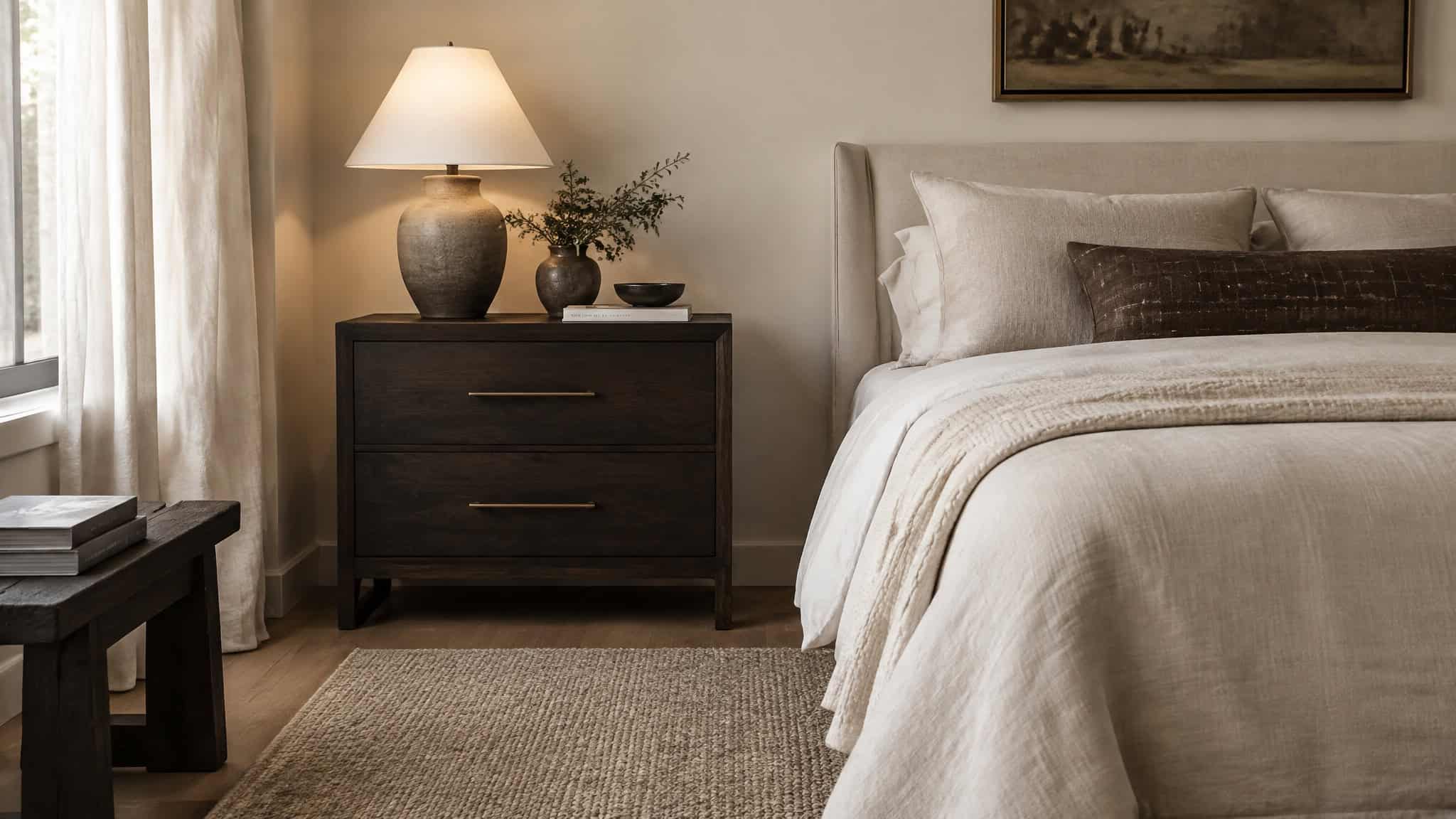
Buyer rule: Keep dark wood to roughly 10% of the room — one statement piece before you touch anything else.
The classic mistake is replacing all the light oak at once. Dark furniture, dark walls, and dark bedding tend to arrive together, and the room goes heavy. The fix is proportion, not eliminating the palette. Dark anchors also keep lighter neutrals from washing out: a deep-toned timber nightstand, a monochrome reading lamp, a charcoal or chocolate leather headboard.
Verdict: dark wood is the highest-leverage material shift for a moody men’s bedroom. Adopt via accents first.
Bed design: upholstered beds, headboards, and low platforms
The top bed design trends for 2026 are upholstered beds with channel tufting, wingback and arched headboards, performance fabrics like linen, velvet, and boucle, oversized proportions, low platform beds that make ceilings look higher and rooms more expansive, extended headboards that add drama when paired with drapery, and disappearing bed frames that make the bed read as built-in rather than standalone. Upholstered beds lead the list as 2026’s most sought-after bedroom centerpiece, and they’re one of the 2026 bedroom trends for men you’ll actually shop.
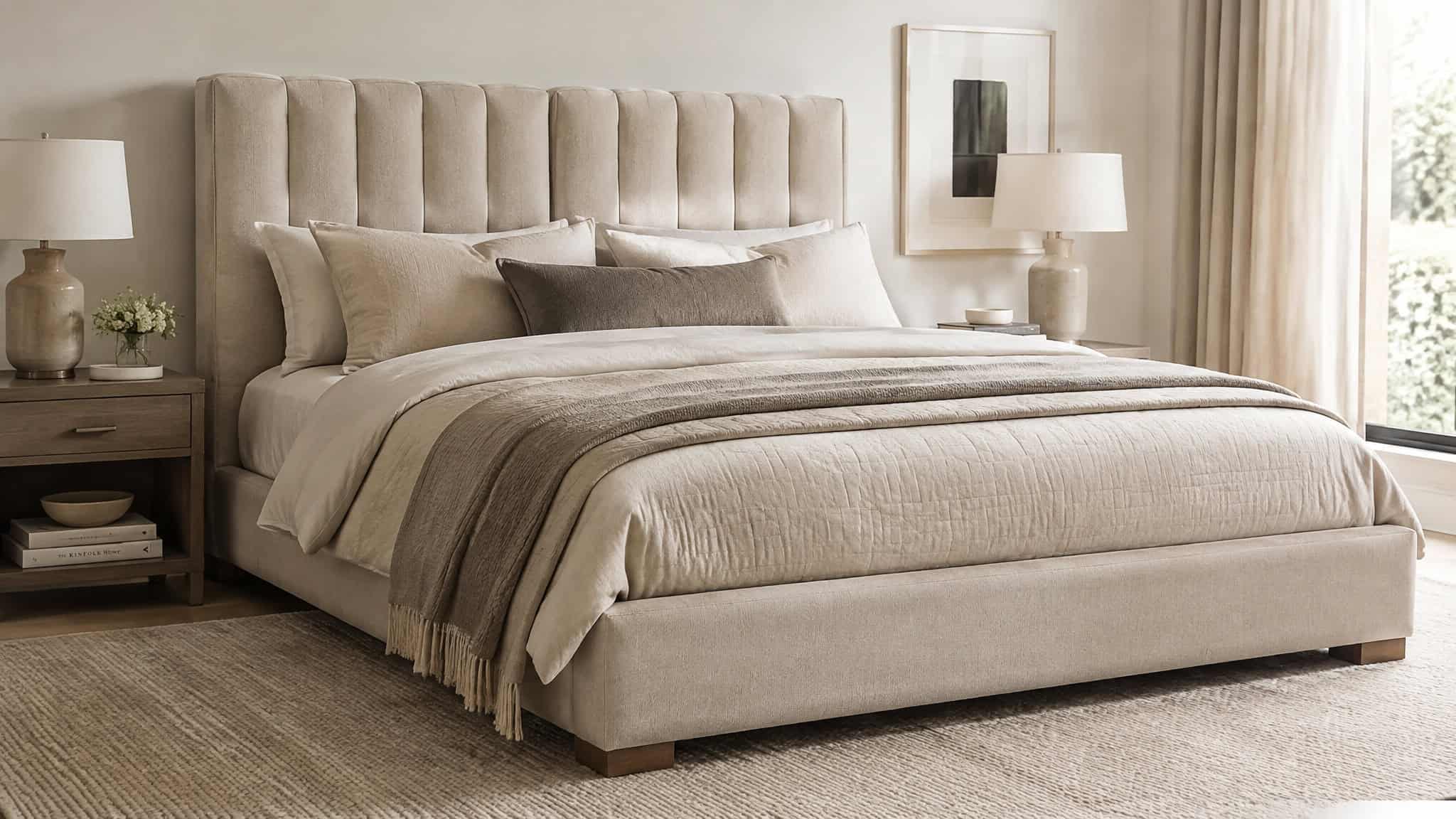
Low platform beds
The whole pitch is a visual trick: lower bed, ceilings look higher, room reads more expansive. Styling it right is about keeping everything horizontal. Euro pillows at 26″×26″, bedding layered in horizontal lines, low-profile nightstands 15 to 20 inches tall, a low bench at the foot, and a vertical element or two to balance it all out. It fits modern, Japanese-inspired, Scandinavian, and minimalist rooms, so check it against your room’s style before committing.
Sculptural, oversized headboards
An extended headboard brings drama, and heavy drapery alongside it keeps the effect warm rather than showy, which is Genevieve Love Lake’s point restated. Jen Dean’s idea in plain terms: hide the bed frame and the bed reads as built-in, which makes the whole room feel more cohesive. Good for small spaces too.
The padded-headboard shortcut
If the full upholstered bed isn’t in the budget, a padded headboard alone gets roughly 80% of the impact for way less. That’s a source estimate, not a lab figure, but the direction is right: this is the any-budget entry point to the trend.
If you’re buying one, pick neutral upholstery like cream, oat, or grey so it lasts, and put the personality in the bedding where it’s cheap to change. Get stain-resistant fabric if there are pets or kids. And if storage matters to you, several upholstered beds now hide it inside the frame, which the storage section covers below.
Verdict: adopt, budget permitting. If not, the padded headboard route gets you most of the way.
Layered, circadian-supporting lighting
The best sleep-friendly setup is a layered scheme at the right color temperatures: 3000-3500K for daytime, 2700K for evening, and amber or red-toned light at night so you’re not disrupting melatonin, which the NIH’s sleep research backs. Dimmers on every light source are the cheapest way to make a bedroom feel like a hotel.
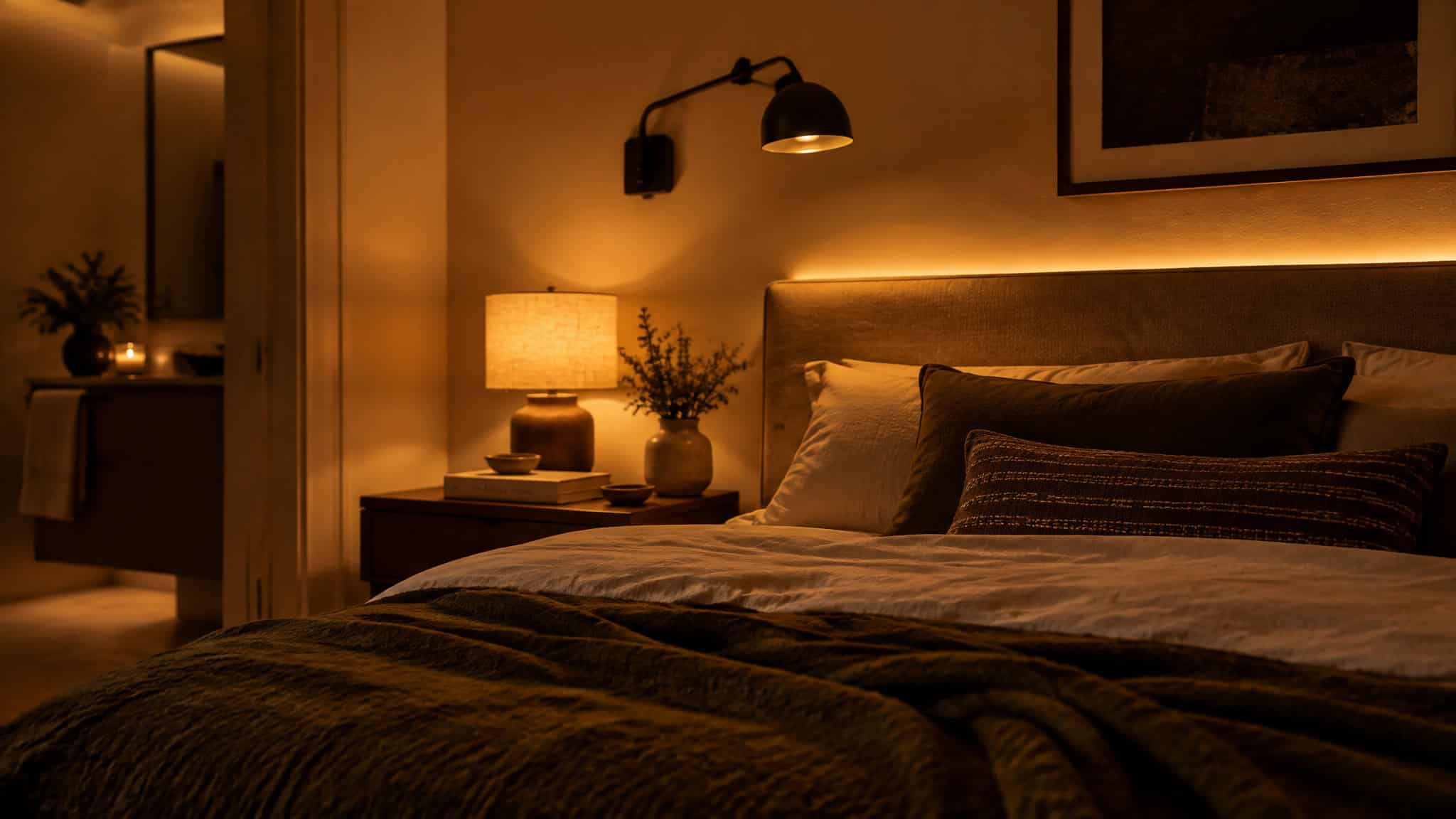
The fixture hierarchy, in stuff you actually buy: ambient lighting covers sculptural pendants, dimmable recessed lights, and LED strip lighting behind the headboard. Task lighting is articulating sconces and adjustable bedside lamps. Accent is arched floor lamps and picture lights. Ceiling fans with attached lights are getting replaced by exactly this kind of layered scheme. The science is one line: warm, dimmable light in the evening supports your circadian rhythm, so you sleep better.
The common sequencing failure: rooms get the statement pendant first and task lighting last, so the room photographs well and fails at night. Build task lighting and dimmers before statement pieces. King Living’s Smart Pockets™ can connect smart lights or a charging table on select beds and sofas, useful if your bedroom doubles as a workspace.
Verdict: this is the cheapest trend with hard physiological evidence behind it. Adopt first.
Seamless storage, and storage beds as the extra closet
Storage beds and smart furniture are now solving the space-and-gear problem, not just a linen-closet one, and they’re among the best ways to modernize a bedroom. Feng shui’s 2026 influence shows up mostly as clutter-free calm, which is the practical 10% of feng shui worth keeping. One styling rule that helps: group accessories in threes or fives for visual rhythm. The options to know: built-in wardrobes, floating drawers, low-profile baskets, bedside tables with drawers, and a slimline console behind the headboard.
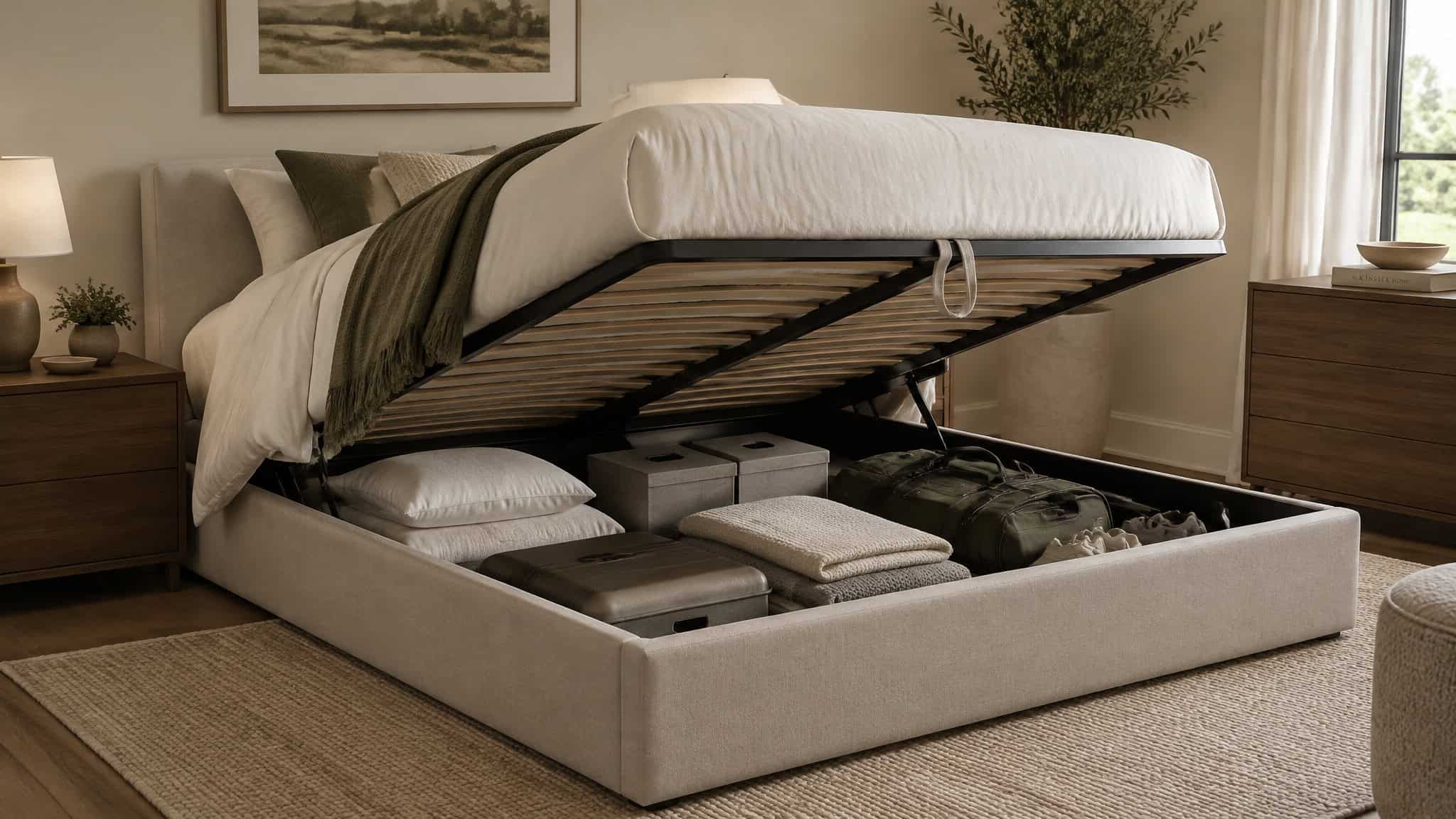
Storage beds as extra closet
Storage beds grew up. Sleek upholstered designs have replaced the kids’-room cubby look, and the Sundays and Hetta Cloud and Dream beds are best sellers, as Barbora Samieian notes. Shrinking city apartments make the case: a storage bed gives you an extra closet without costing any extra floor space. One real example: Drew Michael Scott of Lone Fox stashes cameras, hard drives, and filming gear in his Jake Arnold-designed Crate & Barrel storage bed. That’s gear storage, not spare sheets.
The honest tradeoff: you commit to the frame to get the storage payoff. And in practice the most common mistake is ordering without measuring lift-mechanism clearance or wall-adjacent placement, then finding the compartments unusable. Measure first.
Verdict: adopt if floor space is tight and you’ve measured.
Smart nightstands with integrated charging
The feature list on 2026 smart nightstands: integrated charging, touch-activated LED, hidden compartments, lift-top storage, adjustable shelving, soft-close drawers. The honest tradeoff: you’re paying furniture prices for tech that dates faster than the furniture around it. Whether that’s worth it depends on whether bedside charging bugs you. If cables on the nightstand drive you nuts, this solves it cleanly.
Sizing to check before you buy: the nightstand should sit 2 to 4 inches above the mattress top. That’s 18 to 22 inches for platform beds, 24 to 28 for box-spring setups. Three styling routes: a matching set, coordinated-but-different, or full contrast for eclectic rooms. Wall-mounted floating nightstands are the move for tight spaces.
Verdict: adopt for a tech-heavy bedroom. Charging plus hidden compartments is a real quality-of-life upgrade.
Japandi principles
Japandi, Japanese simplicity plus Scandinavian warmth, is a defining 2026 master bedroom look. Said once. Now what it looks like in practice: natural timber, organic shapes, and minimal styling with a few objects that mean something, a ceramic trinket bowl, a trailing plant, linen-bound books, and it sits comfortably alongside other grounded 2026 bedroom trends like warm woods on any budget. The organizing logic is slow rituals: a morning stretch, an evening wind-down.
Treat it as a style worth stealing from, not a philosophy to adopt. Verdict: steal selectively. The minimal-styling discipline pairs well with almost everything else on this list.
Layer sculptural furniture around the bed
A handful of good extras beats a shelf full of clutter. The bed stays the anchor and everything else shapes around it. A slim bedside table beside a curved, tactile bed, say, a bed made to order with removable bedhead and base covers in premium fabric or leather, with a choice of timber finish, sets up an easy chunky-versus-slim contrast. Place an armchair on a diagonal in the room; it keeps the layout feeling loose instead of grid-locked. Small occasional pieces add depth without visual clutter, and they give you spots for a cherished book or a slow morning coffee. Verdict: adopt lightly.
Curves and organic shapes
Curves break up the bed-centered symmetry that makes bedrooms feel like showrooms. The shapes to know: a flowing rug, a ripple-textured sconce, a curved mirror, a sculpted archway, arched headboards, rounded nightstands, curved dressers, round ottomans. There’s a line of biophilic-design context here, and that’s all it needs: organic shapes read as natural, and natural reads as calming. The plain rationale: curves feel soothing, less sterile, and safer in tight spaces. That’s why they’re trending, not just because they photograph well. Verdict: adopt one or two curved pieces, not a roomful.
Add a lounge element
The mindset shift is one line: the bedroom becomes a place you hang out, not just crash. Treat it as an extension of the living area, this bachelor bedroom ideas guide maps out exactly what that looks like: a lounge chair, a coffee table, a modular sofa facing a TV console, or a bookcase corner set up as a small home library. The quieter option is a low ottoman beside the bed or out on the balcony for journalling and unhurried mornings. That’s a use case, not a ritual.
If the room’s big enough, a seating area earns its spot. If it isn’t, don’t force it. Verdict: adopt only if the square footage is there.
Choose drapery over blinds
Full-length linen or cotton curtains do three plain jobs: they diffuse light, soften sound, and bring movement into the room. Drapery now appears on canopy beds, along walls, even on custom bunks, as Haley Weidenbaum of Everhem has noted. Celeste Robbins’s point restated: full-height drapery blurs the room’s edges, and the whole space goes cocooned and hushed. Naina Hotchkiss adds that enveloping curtains push the calm further.
The dramatic version of the trend: the King Living Adelaide bed’s optional Breeze Canopy mosquito net drapes all the way to the floor. Verdict: adopt. Drapery is a light-and-sound comfort system, not decoration.
Layered rugs and the wall-to-wall carpet return
The layered formula, per Brigette Romanek and Bradley Odom’s advice: a flatweave or jute base with deep wool pile over it, patterns atop solids. Sizing: the base rug should extend 18 to 24 inches past each side of the bed, plus a plush bedside rug, think sheepskin, high-pile wool, or faux fur, or runners on each side. And the surprise: wall-to-wall carpet is back, in bronze, butterscotch, and deep moss, as David Ries of Ries Hayes is championing. Sounds like 1978.
The colors make the case. And remember, low bedroom traffic means lighter neutral rugs are genuinely practical here. Verdict: adopt the layering; treat wall-to-wall as a wildcard for the committed.
Mixed materials instead of matching sets
Matching sets are dated in 2026. Mix, but by rules, or it looks like a garage sale. The three winning recipes, stated as complete combinations:
- Soft + hard: velvet bed, matte black metal nightstands, polished brass lighting, natural fiber rug
- Warm + cool: walnut bed, white marble-topped nightstands, aged brass hardware, warm white linen
- Organic + industrial: reclaimed wood headboard, glass and metal nightstands, concrete or plaster lamps, leather bench
The rule of three: minimum three materials, maximum five. On metals, stay warm (brass, bronze, gold) or cool (chrome, nickel, black), and mix wood tones only within the same temperature family. Mistakes to dodge: competing patterns, random gold-and-silver mixing, over-matched dated sets, ignored scale. If you want a bold accent, velvet benches in emerald green, navy, or rust at the foot of the bed work. Verdict: adopt the rules, skip the set.
Elevate with art and object
The room finishes with stuff you actually like looking at. Concrete combos: a marble side table with design books, a hand-thrown ceramic with cut flowers, a sculptural candle. The best pieces have history, meaning travelled objects, sentimental stuff, old photos. Personal, not gallery.
The standard is honest, not sentimental. Verdict: adopt, slowly, this layer is collected over time, not bought in one trip.
Vintage pieces: the anti-trend trend
The way to make a bedroom timeless is to stop chasing trends: pick two or three compatible ones and let your personal pieces carry the rest. The source material flags vintage personalization as possibly the most significant 2026 trend, and I’d keep the “possibly.” How to do it: one statement antique as the anchor, curated vintage accessories, mixing mid-century with contemporary, and updating finds via reupholstery or new hardware. The real costs: reupholstery isn’t cheap, resale finds are. This is the contrarian angle inside a trend list, not the whole thesis. Verdict: adopt one anchor piece if something good finds you.
Finish with a personal touch
The last layer is the cheap one: a favourite book, a magazine stack, a signature scent, a ceramic tray of keepsakes. This ties back to the vintage thesis. Personal detail beats trend compliance every time. Warm, not sentimental.
Small, real things. Verdict: mandatory, and it costs almost nothing.
Sustainable and eco-conscious furniture
Buy better and skip the “green” label. Screen any purchase against five markers: FSC-certified wood (the timber actually came from managed forests), low-VOC finishes (you’re not sleeping next to off-gassing), recycled or upcycled materials, locally made (less shipping, easier to check quality), and pieces built to last (the most sustainable furniture is the one you don’t replace). Trending materials: solid wood over particleboard, natural latex mattresses, organic cotton and linen bedding, reclaimed wood furniture, rattan and cane accents. No eco-guilt required.
Buying once is just good sense. Verdict: adopt the checklist, not the label.
One standout piece per room
One standout piece carries the room, the bed, a chair, the headboard. Too many accessories kill relaxation. Pick the hero: a four-poster for classic rooms, an elegant upholstered chair or minimalist headboard for modern ones, or a typographic print if the walls are where you want the eye to land. Measure furniture to the room first; a bed that swallows the whole floor plan is the mistake to avoid.
Small-space multi-functional furniture
A headboard with built-in storage can do away with side tables altogether, working as a bookshelf or wardrobe, though you lose the classic nightstand spot for a lamp and phone. The small-room recipe in brief: light colors, few shades, a few bright accents, unblocked natural light, sheer curtains, and solid night lighting.
Budget sequencing: what to buy first
The under-$500 refresh is real: new bedding, nightstand lamps, one large artwork, layered rugs, throw pillows and a blanket, wall-mounted sconces. That proves the trend is reachable without a remodel. But the dollars go furthest in a spending order: bed frame, mattress, and lighting first; nightstands, dresser, and seating in the middle; art and accessories at the very end. The ceiling, wallpaper included, comes after everything else.
The common mistakes, blunt version: trend overload (pick two or three, max), wrong scale, bad lighting planning, skipped storage, blind trend-following, cheaping out on the mattress, forgotten window treatments.
Master vs kids’ rooms
Master bedroom furniture should last years. Kids’ furniture gets outgrown and replaced, so buy accordingly. And the mattress is non-negotiable before any headboard spend.
What’s out for 2026, and what replaces it
What’s outdated for 2026 is a specific list with named replacements: cool grays and crisp all-white bedding without texture, matching furniture sets, bold accent walls, single non-dimmable ceiling lights, and oversized pooling bedspreads. Every skip comes with a next move.
Cool grays and bold accent walls
Cool greys and crisp white bedding are too stark for a room meant for rest, which is Jan Sikora’s point restated. Swap in soft beiges, warm taupes, and earthy browns, starting with linen bedding, timber furniture, and wool throws. Accent walls give way to texture and craft: wood grain, stone, limewash, textured plaster, woven fabrics.
Matching furniture sets
A bedroom should look collected over time, not bought in one cart, which is Rayana Schmitz’s argument. Contrast a rich wood nightstand with an upholstered bed, or a vintage piece set against custom cabinetry, tied together by color, texture, or material.
Single bright ceiling lights
Combine overhead lighting with bedside lamps, sconces, and reading lights. One fixture doing all three jobs does none of them well.
Pooling bedspreads and personality-free bedding
Pooling fabric collects dust, feels fussy, and weighs the room down, as Lindsey Herod points out. Use bedding that falls neatly or a tailored bed skirt instead. All-white works only with varied fabrics, patterns, trims, or a contrasting throw; otherwise it reads hotel room. Layers cost less than a redesign.
Impress-the-guests bedrooms and the bright-color caveat
The room’s job is rest now, which is a win for you. Keep bright colors like red, orange, yellow, and purple to one wall if you use them at all; that’s a different move, not a contradiction of the drenching trend. The incoming counter-trend: wallpapered or painted “fifth wall” ceilings that add character and give you something calm to look at while falling asleep, an idea Christie Ward champions and Diana Lombard supports. A finished ceiling makes the room feel complete.
The through-line across all of it: pick two or three trends that fit how you actually sleep, spend on the bed and lighting first, and let the personal stuff finish the room. That’s a 2026 bedroom that works, whether or not it photographs.
Frequently Asked Questions
What is the in-colour for bedrooms in 2026?
Burgundy and plum are the headline colors for 2026, with Backdrop naming Adventurer, a regal plum, its color of the year. Earthy warm hues like clay, terracotta, and camel are also rising, while cool greys and blue-toned shades are declining. The smartest move is a neutral tonal base with rich color entering through accents.
What are the master bedroom trends for 2026?
Master bedrooms in 2026 are designed for the person sleeping there, not the guest: tonal bedding in warm neutrals, dark timber as a grounding layer, layered lighting at sleep-friendly color temperatures, storage beds that work as an extra closet, and a lounge element if the square footage allows. Japandi is a defining master bedroom look. Master furniture should be bought to last years, unlike kids’ furniture.
Are matching bedroom furniture sets still in style in 2026 or should I mix materials?
Matching sets are dated in 2026 — a bedroom should look collected over time, not bought in one cart. Mix by rules instead: minimum three materials, maximum five, and keep metals either warm (brass, bronze, gold) or cool (chrome, nickel, black). A winning combo is a walnut bed, white marble-topped nightstands, aged brass hardware, and warm white linen.
Is dark wood or light oak better for a 2026 bedroom?
It’s not either-or — both work when proportioned right. Dark wood (walnut, espresso, charred oak) is back after years of light oak, but keep it to roughly 10% of the room under the 60-30-10 rule: 60% light walls and bedding, 30% medium accents, 10% dark wood. Light oak still works when balanced; the classic mistake is replacing all of it at once.
What bedroom storage ideas work for small bedrooms in 2026?
Storage beds are the standout move — sleek upholstered designs now give you an extra closet without costing any floor space, though you must measure lift-mechanism clearance before ordering. Also worth knowing: built-in wardrobes, floating drawers, bedside tables with drawers, wall-mounted floating nightstands for tight spaces, and headboards with built-in storage that can replace side tables entirely.