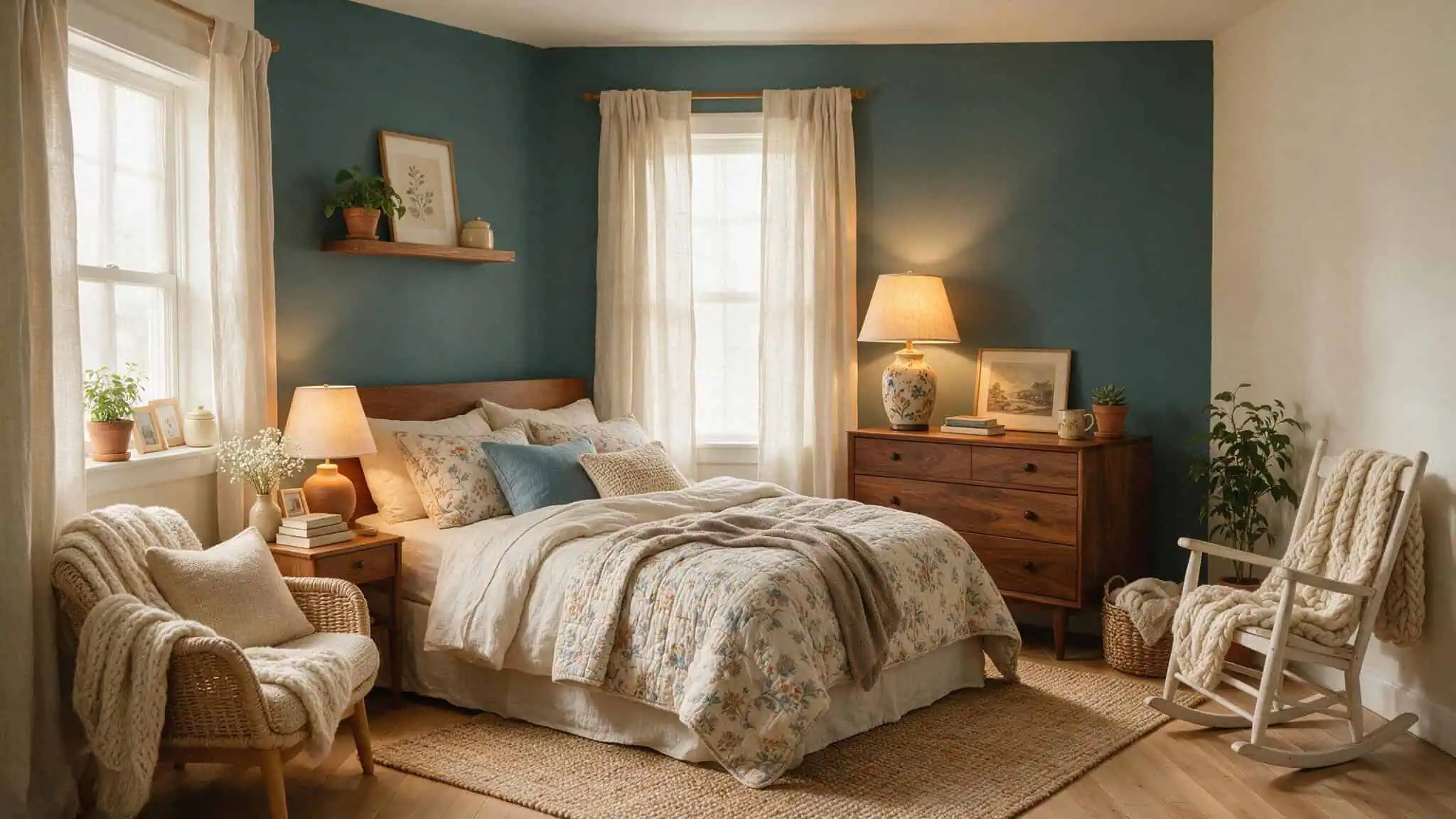
The days of the all-white bedroom with a single Eames chair and a fiddle-leaf fig are ending. For years, the default for men’s bedrooms was cool grays and sterile minimalism—rooms designed to look good in a thumbnail rather than feel good to sleep in.. For years, the default for men’s bedrooms was cool grays and sterile minimalism—rooms designed to look good in a thumbnail rather than feel good to sleep in.
Brad Ramsey, the Nashville-based designer behind Brad Ramsey Interiors, says: Homes are becoming more personal and layered, reflecting inhabitants rather than trends. Birmingham designer Danielle Balanis agrees—Design in 2026 will be about individuality and breaking the mold.
The 2026 bedroom trends for men are moving toward warmth, texture, and actual personality. Here’s what that looks like in practice.
Key Takeaways
Moody, earthy palettes like Behr’s “Hidden Gem” (smoky blue-green) and Valspar’s “Warm Eucalyptus” are replacing the cool grays and stark whites that dominated for years, according to Brad Ramsey, Perry Walter, and Sara Ray
Brown furniture is back—think medium to dark wood tones like walnut burl, overtaking the gray and white furniture that was everywhere, as noted by designers Sarah Storms and Brad Ramsey
Circadian lighting and automated blinds, like Lutron systems, change color temperature throughout the day and are becoming health investments, according to designers Gala Magriñá and Beth Haley
Table of Contents
Moody, Earthy Palettes (Not Just Dark)
The 2026 palette isn’t about slapping black or charcoal on the walls and calling it a day. It’s about warm, grounded colors that make you want to stay in bed longer than you should.
Behr’s “Hidden Gem” is a smoky blue-green that feels serene without being a cave. Valspar’s “Warm Eucalyptus” is a soft, confident green that works with almost everything. The smart move? Use one of those on a single accent wall, then paint the rest with Pantone’s Cloud Dancer (11-4201)—an ethereal white that amplifies natural light and keeps the room from feeling like a dungeon.
Designers Brad Ramsey, Perry Walter, and Sara Ray are all saying the same thing: cool grays and stark whites are being replaced by warm, earthy tones. These colors pair naturally with terracotta, ochre, and sandy neutrals. Apply them to architectural details, reading nooks, or alcoves. It’s a shift that changes the entire feel of the room.
Bottom line: One accent wall in a smoky green or eucalyptus tone beats a full room of cool gray—warmth first, darkness second.
Brown Furniture and Warm Wood Tones
For the last decade, if you wanted a “modern” bedroom, you bought gray or white furniture. That trend is officially dead.
Sarah Storms, a designer who knows her stuff, says it plainly: Brown furniture is returning, with medium to dark wood tones overtaking the gray or white trend, and she recommends looking for pieces with interesting details like walnut burl wood.
The key is texture and grain. A Henley dresser—solid oak in a Japanese tansu form, 85 inches wide—brings serious character. The Bardot dresser has serpentine fronts and lacquered grasscloth, giving it an Art Deco feel that stands out.
The common mistake here is buying a big dark wood piece for a small room without balancing it. Lighten up the walls, throw down a lighter rug, or add a mirror. Let the wood be the anchor, not the whole room.
Smart Lighting and Circadian Rhythms
This isn’t about turning your bedroom into a tech demo. It’s about sleeping better without thinking about it, starting with the basics of what should every man have in his bedroom.
Designer Gala Magriñá says she’s specifying Lutron systems for circadian lighting and automated blinds. The lights shift from cool morning blue to warm evening amber, matching the sun’s natural rhythm. Automated blinds let natural light wake you up gradually instead of a blaring alarm.
The mistake most guys make is installing circadian lighting only in the ceiling fixture. You need to layer it. Combine overhead circadian light with dimmable task lamps and strip lights. Beth Haley calls this “quiet wellness”—technology that enhances comfort without making you think about it. Warm, diffused, indirect lighting using integrated LED strips and discreet spotlights creates a space that helps you wind down, and picking sheet colors like blue, gray, and white can also help improve sleep quality.
The Collected, Personal Aesthetic
This is the big philosophical shift of 2026. Lauren Saab, a designer who gets it, explains: Bedrooms will emphasize meaning and mood. The trend focuses on pieces that feel personal and collected rather than purchased in a single season. For a 25-year-old balancing remote work, social downtime, and a mature aesthetic, that means following 25 year old male bedroom ideas that prioritize function without sacrificing soul. The warmness created by vintage wood tones, family heirloom art, and sculptural lighting cannot be replaced by newly made furniture.
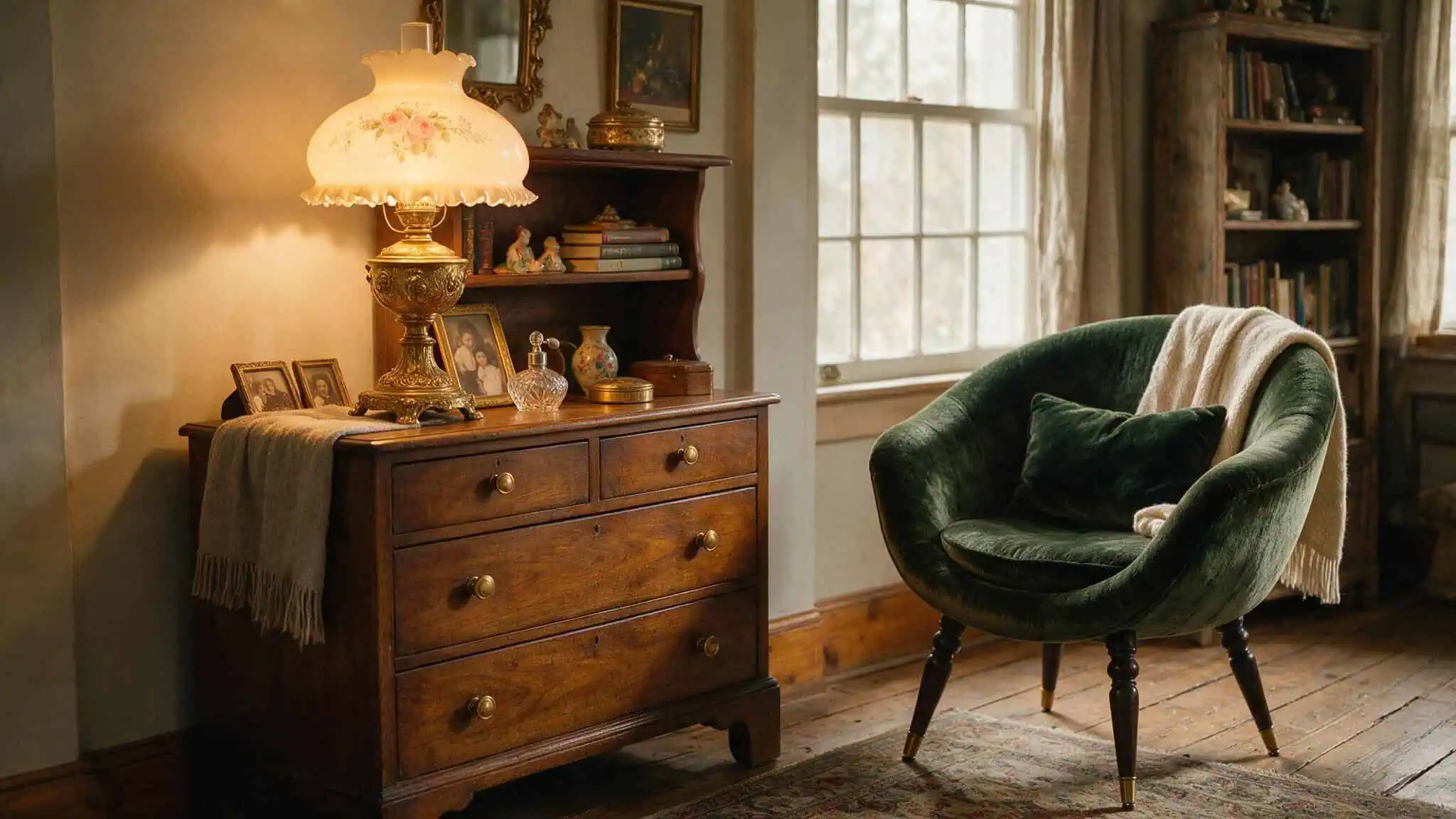
The opposite of this is fast decor—buying everything from one store in one weekend. That’s how you end up with a room that looks like a catalog spread, not a place you actually live in. Designers Brad Ramsey and Justin Orton are calling out the decline of overly themed spaces and designs created purely for social media.
Free-standing furniture is making a comeback because it offers flexibility and character. Start with one anchor piece—a vintage dresser, a family heirloom lamp, a piece of art—and build around it over time. If you need more guidance on the big picture, our comprehensive room ideas for men guide covers the full process.
Upholstered vs. Vintage Beds: A Stylistic Choice
There’s a debate happening in the design world right now, and it comes down to personal preference.
Tracy Morris champions the vertical-channel upholstered headboard as a trend that brings architectural interest and a soft, cocooned feeling. The Surrey Mink headboard is a solid example—vertical channeling, performance fabric, a parawood plinth base. It makes the bed feel like a sanctuary.
But Country Living reports upholstered bed popularity may be waning, and vintage iron and brass beds are making a comeback. The Junk Gypsy sisters (Amie and Jolie Sikes) are big on vintage iron beds. Brass beds have long been a favorite of British designers.
So which is right for you? If you want your bed to feel like a sanctuary, go with the upholstered headboard. If you prefer something light, airy, and easier to clean under, a vintage iron or brass bed is your move. Curved and sculptural bed frames are also rising—rounded headboards, organic shapes. The Watson platform bed, with its solid acacia live-edge headboard, is a solid middle ground.
Biophilic Elements and Greenery
The biophilic trend is getting more architectural. Instead of just placing a potted plant in the corner, designers are integrating shallow ledges into the room—under windows, built into headboards, or above door frames.
Fill them with trailing pothos, ferns, snake plants, or peace lilies. Combine the ledge with hidden LED strips for nighttime illumination. Use self-watering planters to keep upkeep minimal. The Uttermost Zamia palm stands 58 inches high with a 43-inch spread, making it a statement piece.
Plants aren’t just decoration. They influence mood, spatial perception, and psychological well-being. It makes the room feel alive without turning into a jungle.
Quick test: If your bedroom has zero living greenery, start with one low-maintenance snake plant or pothos on a ledge—no jungle required.
Textured Ceilings and Wallpaper Box Rooms
Paige Williams, an interior designer, says textured ceilings are a trend for 2026 because they “add depth and character to a space.” It can be spray texture, wood planks, or wallpaper. Think of it as the ceiling equivalent of a good rug—it adds something to look at and makes the room feel intentional.
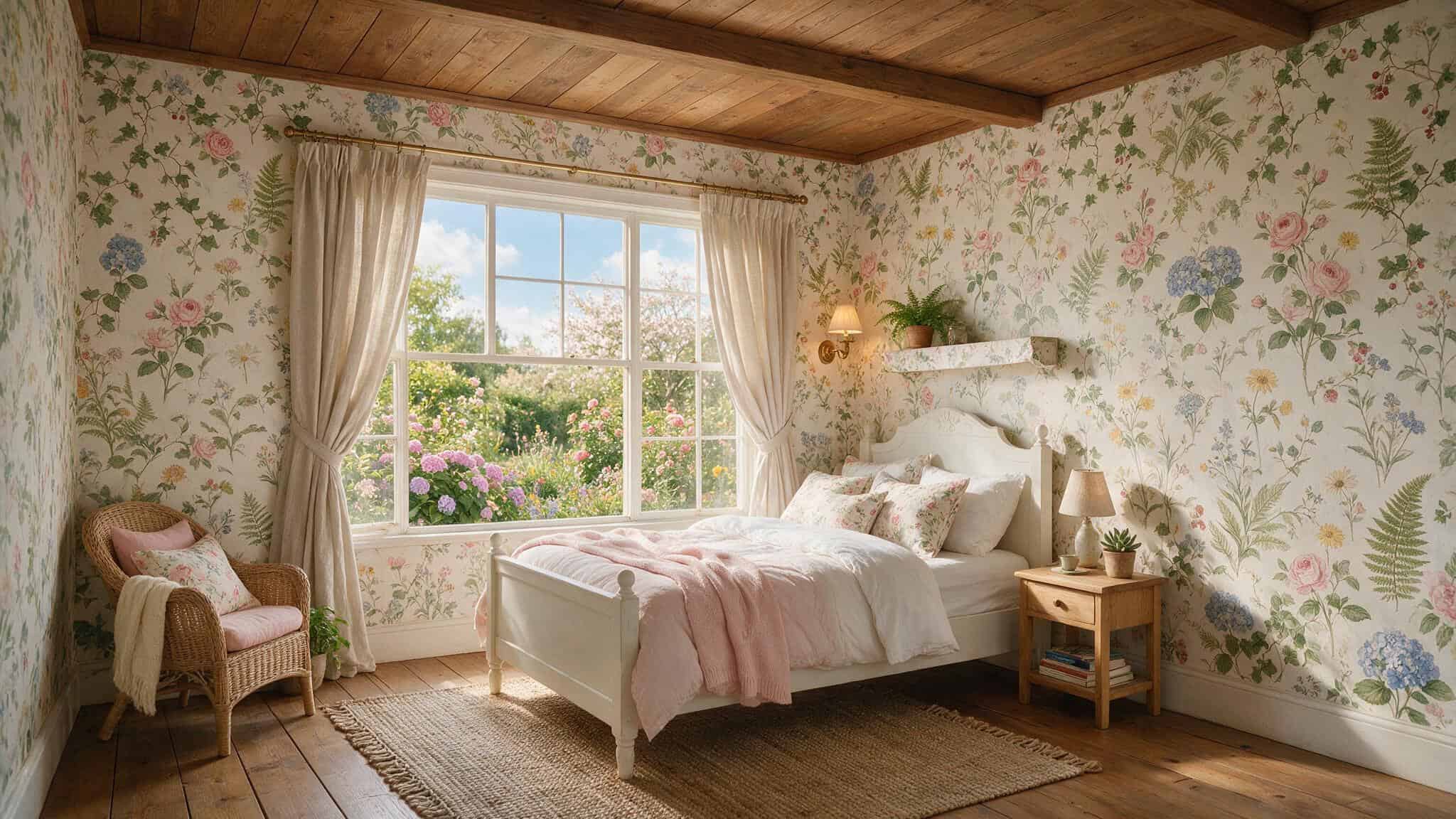
Then there’s the “wallpaper box” trend. This wraps the entire room, including the ceiling, in a single pattern. In 2026, this is evolving beyond florals and geometrics to sketched botanicals, bird motifs, tonal stripes, and metallic line work. The Brunschwig & Fils Les Ensembliers collection has gold geometric lines.
The G P & J Baker Langdale collection features large-scale peonies. The Traveler collection has jaguars, monkeys, and tropical palms.
If you go this route, keep the furniture simple. You don’t want visual overload.
Sculptural Furniture and Soft Shapes
Sharp angles are out. Soft shapes define furniture and accessories in 2026—rounded pieces, sculptural headboards, fluid lines. Bouclé, quilted velvet, and leather with exaggerated piping are the key textures.
Specific pieces worth knowing: the Carmella chaise (chunky taupe performance fabric, splayed black legs), the Björn seating (cream bouclé on a black base, just under five feet across), the Hazel chair (copper-toned velvet, low-slung), and the Frankie chair (cream bouclé, ash wood frame). The Madri dresser has a curved drawer facade, poplar construction, and no hardware—just over five feet wide. The Mellory bed is upholstered in seashell off-white fabric. The Watson platform bed has a live-edge headboard.
The practical benefit of rounded fronts is simple: they prevent bumps in tight spaces. Smart design that actually works.
Performance Bedding and Textiles
Performance bedding is basically gear for your bed. Memory foam, gel-infused fabrics, moisture-wicking textiles, antimicrobial properties—all designed to help you sleep cooler and reduce allergens. It’s not exciting, but it’s important. If you’re building your bedroom from scratch, our list of what every man should have in his bedroom covers the essentials.
Bed skirts are returning from the 1980s, according to Rachel Barrett at Country Living. Quilts have received the “cool-girl treatment” and are now used as jackets, pillows, or upholstery. Macramé accents are trending in oversized knots and multi-tone fibers. The Loloi 20×20 piece works as a throw.
The Ponti wall hanging is cotton with a metal rod, brick red and light beige, with beadwork and fringe. Keep macramé throws clean to prevent dust buildup.
Scaling Trends for Small Spaces and Budgets
Not everyone has a massive master bedroom. If you’re working with a small space or a tight budget, don’t try to do all nine trends. Pick one or two that actually excite you.
Compact pieces like the Alexandra end table (yukas veneer, 20×21 inches) or the Tulum chair (marshmallow-like curves, tufted, just under 17 inches across) work well in tight spots. Free-standing furniture is a rental-friendly alternative to built-ins—it’s easier to move, resell, or re-style. A single textured ceiling accent can replace a full wallpaper box. Pine accents are a budget-friendly natural material option. Use a light-base-color rug to keep the space open.
One statement piece is better than a room full of compromises. If you’re in your mid-twenties and figuring out your space, our guide on 25 year old male bedroom ideas covers this exact situation.
What’s Out: The Anti-Trends
Let’s be clear about what’s declining. All-white walls and sterile environments are on the way out (Jessica Davis, Sara Ray). Cool grays and stark whites are being replaced by warm, earthy tones. Overly themed spaces and designs created purely for social media are declining (Brad Ramsey, Justin Orton).
Beth Haley sums it up well: 2026 is about “lived-in luxury and emotional warmth.” If your bedroom reads as white walls, gray accents, and a single fake plant, it’s time for a change. Swap one thing for something personal—a vintage lamp, a warm-toned rug, a chair that’s actually comfortable.
Authenticity over perfection. That’s the whole point.
People Also Ask
How does circadian lighting actually work in a bedroom?
Circadian lighting shifts color temperature throughout the day—cool blue tones in the morning to warm amber in the evening—matching the sun’s natural rhythm. The mistake is only installing it in the ceiling fixture; you need to layer it with dimmable task lamps and strip lights for it to actually help you wind down.
Is brown furniture making a real comeback for men’s bedrooms?
Yes, medium to dark wood tones like walnut burl are overtaking the gray and white furniture that dominated for the last decade. The key is texture and grain, but don’t drop a massive dark wood piece into a small room without balancing it with lighter walls, a lighter rug, or a mirror.
What’s the difference between an upholstered headboard and a vintage iron bed?
An upholstered headboard gives a soft, cocooned, sanctuary feel with architectural interest like vertical channeling. A vintage iron or brass bed is lighter, airier, and easier to clean under. Choose upholstered if you want cozy; choose iron or brass if you prefer an open, breathable look.
What’s the deal with textured ceilings in 2026?
Textured ceilings are trending because they add depth and character to a space—think spray texture, wood planks, or wallpaper. It’s the ceiling equivalent of a good rug: it gives you something to look at and makes the room feel intentional without overwhelming the rest of the design.
Why are all-white bedrooms finally going out of style?
Because they were designed to look good in a thumbnail rather than feel good to sleep in. Designers are moving toward warm, earthy tones like smoky blue-green and eucalyptus, plus brown furniture and personal, collected pieces. The shift is from sterile perfection to lived-in luxury and emotional warmth.