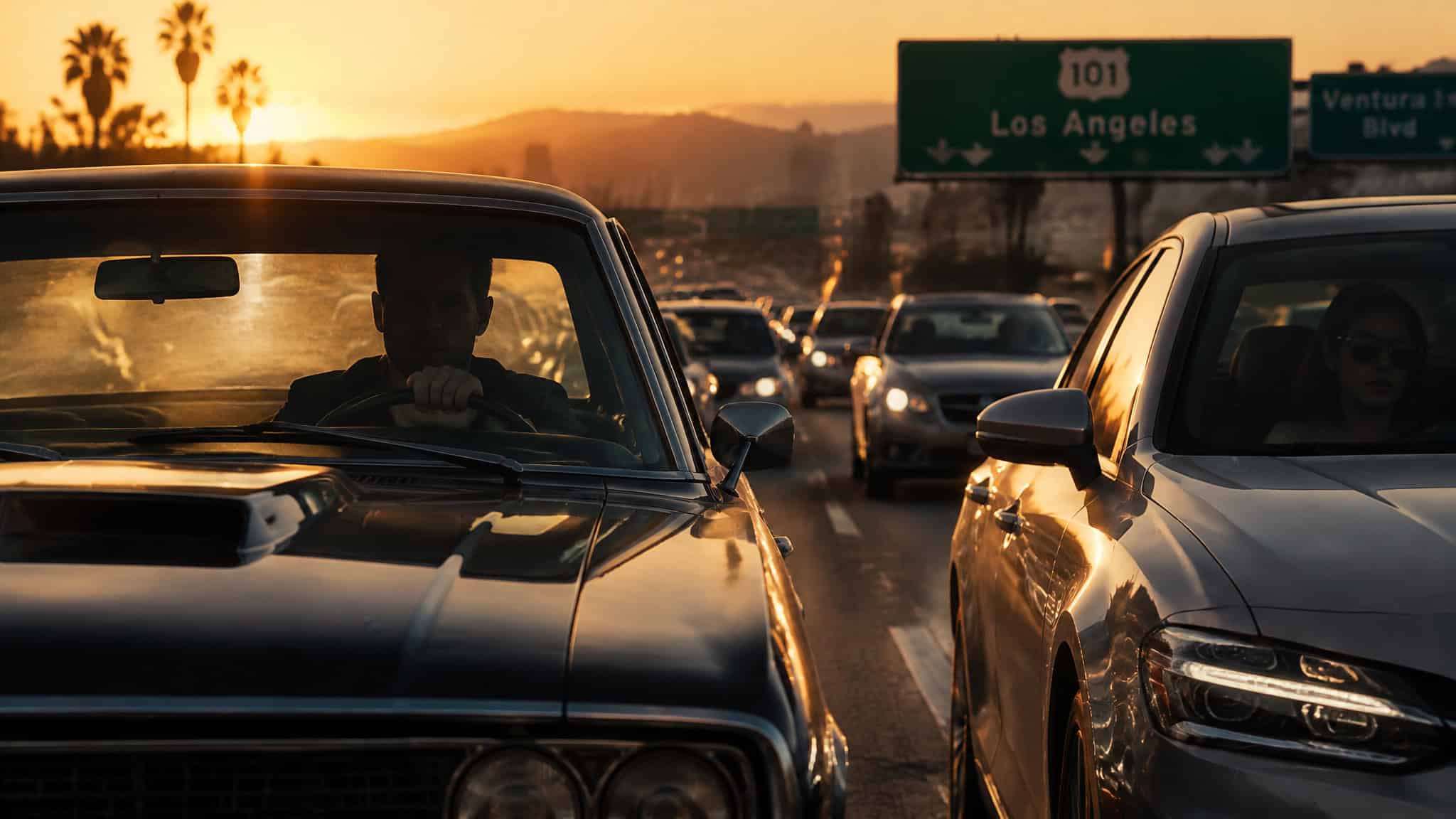
California takes the number-one spot for road rage with a perfect 100 out of 100 score on Forbes Advisor’s confrontational-driver index, while ConsumerAffairs names Arkansas the worst state for fatal crashes and gunfire, and an Angel Reyes & Associates study names Houston the worst city for violent escalation. The real stakes for a driver aren’t which state wins a survey, but what those scores actually track, where highway hostility turns deadly, and what protects you physically and financially when someone loses it.
Key Takeaways
California scored a perfect 100 out of 100 in Forbes Advisor’s 2024 ranking of confrontational drivers. ConsumerAffairs’ 2026 fatal-crash and gun-violence index ranked Arkansas worst and Maine safest. At the metro level, an Angel Reyes & Associates study of 100 cities named Houston the worst after road rage shootings jumped 135% from 2016 to 2023.
Standard Texas auto insurance policies cover accidental mistakes like dropping a phone, but explicitly exclude intentional road rage attacks, making uninsured and underinsured motorist (UM/UIM) coverage the primary financial backstop in a state where 1 in 7 drivers is uninsured.
When an aggressive driver follows you, Fox 26 safety guidance advises never pulling into your own driveway, staying locked inside your car, and calling 911 with the license plate, vehicle description, and location.
Table of Contents
California ranks #1 for road rage, with a perfect 100 score
California is the number-one state for road rage in Forbes Advisor’s ranking of the most confrontational drivers. The state earned a perfect 100 out of 100 score based on surveyed driver hostility from deliberate cutoffs, cursing, tailgating, and drivers exiting their vehicles to fight. Fatality-based rankings like ConsumerAffairs put Arkansas first, while federal crash-rate data also puts states such as Louisiana near the top of the list. KABC reporter Leo Stallworth covered the 2024 ranking on July 26, 2024, noting that plenty of local drivers already had horror stories matching the data.
Those four behaviors trace a clear severity ladder. At the everyday end, an AAA Foundation for Traffic Safety study found 96% of drivers admitted to risky aggressive habits like speeding or cutting people off, while 11% admitted to outright violence such as intentionally bumping another vehicle or getting out to confront someone. California’s 100 out of 100 mark measures how often commuters report that spectrum of hostility, rather than counting fatal wrecks or highway shootings.
Why California leads: traffic, patience, and where it ends up
California drivers rank worst for confrontational driving because of heavy traffic and reduced driver patience, according to California Highway Patrol (CHP) Officer Jordan Church. In a July 2024 KABC report, local drivers and responding CHP officers said the top ranking wasn’t a surprise given how often gridlock boils over into violence, including an Ontario, California incident where one driver stabbed another several times on video and a road-rage shooting on the 60 Freeway in the City of Industry.
“Increased traffic and decrease in patience that we have while we drive trying to get from place to place here in California,” Church said.
More cars packed into the same lanes mean more friction, and a shorter fuse turns a routine merge into a fight. While the Forbes Advisor score measures self-reported hostility rather than violent crime, four Southern California incidents from the KABC report show where that escalation ends up when nobody backs down:
- Ontario, California: One driver stabbed another driver multiple times in an attack caught on video.
- Los Angeles International Airport (LAX): A physical fight between two drivers left a woman knocked unconscious.
- 60 Freeway in the City of Industry: A confrontation escalated into a road-rage shooting on the freeway.
- 14 Freeway in the Antelope Valley: The California Highway Patrol opened an investigation into a car-to-car shooting.
Most highway confrontations start much smaller than a freeway shooting. They start with a car riding right up on another driver’s back bumper at highway speed. One California driver interviewed by KABC described handling tailgaters by refusing to take the bait: instead of brake-checking, speeding up, or trading gestures, he simply moves over into the slower lane and lets the aggressive driver pass. For an Unfinished Man reader looking at the odds, that five-second lane change is the cheapest risk management on the road.
Three rankings, three answers: ‘worst’ depends on the index
Recent road rage studies name California, Arkansas, or Louisiana as the worst state depending on how they score the data: California leads the survey-based Forbes Advisor ranking with a 100 out of 100 score tracking driver complaints, whereas Arkansas ranks worst in the ConsumerAffairs fatal-crash index and Louisiana sits near the top in federal crash shares. At the city level, Houston leads the Angel Reyes & Associates study after logging a 135% jump in road rage shootings between 2016 and 2023. Comparing California and Texas comes down to daily friction versus armed escalation.
ConsumerAffairs (2026): Arkansas worst, Maine safest
Reported by 828newsNOW, ConsumerAffairs blended National Highway Traffic Safety Administration (NHTSA) fatal crash records and Gun Violence Archive roadway incidents across six categories: deadly wrecks, total road deaths, citations for speeding or hostile driving, the percentage of fatal collisions tied to driver aggression, and roadway shootings. Arkansas ranked worst and Maine ranked safest, while NHTSA data placed Colorado fifth for deadly wrecks tied to careless or aggressive driving, trailing only Arkansas, Louisiana, New Jersey, and Hawaii.
North Carolina’s per-capita versus raw-total split
North Carolina ranked 10th worst in ConsumerAffairs’ 2026 study with a score of 52.87, improving from No. 7 after two straight years there. It logged 3.30 fatal crashes and 3.49 deaths per 100,000 residents (8th and 7th nationally), plus a 9th-place violation rate of 0.70 per 100,000 after an 88% year-over-year citation spike. Because of its large population, though, North Carolina produced the highest raw totals among the 10 worst states: 1,509 fatal crashes and 1,619 deaths, or 24% of statewide totals.
Angel Reyes & Associates: Houston #1 among 100 metros
Houston ranked as the #1 worst city in America for road rage after Texas personal injury firm Angel Reyes & Associates studied traffic violence, bottlenecks, and driver behavior across 100 major US metros, as reported by Fox 26 Houston. Los Angeles and New York commuters reported worse daily commute dissatisfaction, but Houston took the top spot, with road rage shootings jumping 135% between 2016 and 2023, as nonstop roadwork, severe choke points, and heavy traffic volume pushed motorists over the edge.
When aggression turns lethal: fatal crashes and gunfire
How many people die from road rage is tracked state by state through aggressive-driving crash shares and highway shootings rather than a single national body count, with North Carolina logging 1,509 fatal crashes and 1,619 deaths tied to aggressive or careless driving, Colorado recording 288 such fatal crashes, and Maryland investigating 225 highway firearms cases.
In a July 21, 2026 analysis of NHTSA data, the Colorado Springs Gazette reported that 288 of Colorado’s 642 fatal crashes the prior year (nearly 45%) stemmed from careless or aggressive driving, a category covering speeding, tailgating, abrupt lane changes, and inattentive driving. In 2025, more than 500 fatal and injury crashes in Colorado involved at least one speeding driver. By the time of the July 2026 Gazette report, the Colorado Department of Transportation counted more than 250 statewide traffic deaths in 2026, including 32 vehicle deaths in Colorado Springs (six ahead of the prior year’s pace, with 59 motorist deaths there over the past 365 days) and 34 traffic deaths on Denver’s Vision Zero dashboard, though how many of those 2026 deaths involved aggressive driving wasn’t yet known.
Gunfire adds a separate tally. North Carolina recorded 0.51 traffic gun-violence incidents per 100,000 residents via the Gun Violence Archive. In Maryland, where WBAL-TV 11 News Investigates covered roadway shootings and murders in June, the Maryland State Police launched a Highway Gun Violence Initiative in 2024 that investigated 225 firearms-related cases, seized 90 firearms, and made 70 arrests.
Aggression is nearly universal, and contagious
Road rage is common now because heavy traffic and shrinking patience, as CHP Officer Jordan Church noted, feed into a cycle AAA researchers describe as “contagious” aggression, one motorist’s hostility sparking payback from the next, which pushed real-time hazard calls on State Patrol’s *277 line to 58,117 last year, with over 57% tied to road rage or aggressive driving.
In an update to its 2016 study reported by WBAL-TV 11 Baltimore, the AAA Foundation for Traffic Safety drew on 53 self-admitted aggressive drivers and more than 3,000 national survey respondents, noting that road courtesy, mutual respect, and overall safety had all declined. Fully 96% of drivers admitted to aggressive actions that put others at risk, and 11% owned up to violent behavior such as deliberately ramming another vehicle or getting out to confront another motorist.
Routine friction escalates fast when drivers answer hostility in kind, especially when anger behind the wheel has an ADHD root or a driver’s threat response takes over in traffic. One driver described getting cut off, retaliating by cutting the other guy off, throwing a hand up out the window, and driving on. Another reported a man pulling in front of him, rolling down his window to yell obscenities with his car full of kids, and intentionally ramming his vehicle.
The financial aftermath: insurance won’t pay for intent
Drivers who want financial protection against road rage need uninsured and underinsured motorist (UM/UIM) coverage on their own policy, because standard Texas liability insurance covers accidental mistakes rather than deliberate attacks. If someone swerves into your lane because they dropped their phone or accidentally ran a red light, that’s negligence, and a standard policy pays up. If an angry driver rams your bumper on purpose or shoots at your door, their liability insurer can walk away.
“An intentional act is not covered under any insurance policy in Texas, so it can be a double whammy,” Texas personal injury attorney Angel Reyes told Fox 26.
You get hit, and then you find out the attacker’s policy excludes intentional violence. Suing the other driver personally looks fine on paper, but Reyes pointed out that 1 in 7 Texas drivers is uninsured to begin with. Adding UM/UIM coverage to your own auto policy is the practical hedge that keeps someone else’s tantrum from becoming your out-of-pocket repair and hospital bill.
What to do when an aggressive driver follows you
If an aggressive driver follows you, the safest move is to avoid driving home, stay inside your locked vehicle, and call 911 with the license plate, vehicle description, and location, because pulling into your own driveway traps you in a dead end and shows a hostile stranger where you live. Most road-rage tails start over nothing: a tapped horn at a green light, a tight merge, or a hand gesture that the other guy decides to make his afternoon project. Once you make a turn and realize the same grill is still filling your rearview mirror, Fox 26 safety guidance pairs carrying UM/UIM coverage ahead of time with a three-part physical protocol.
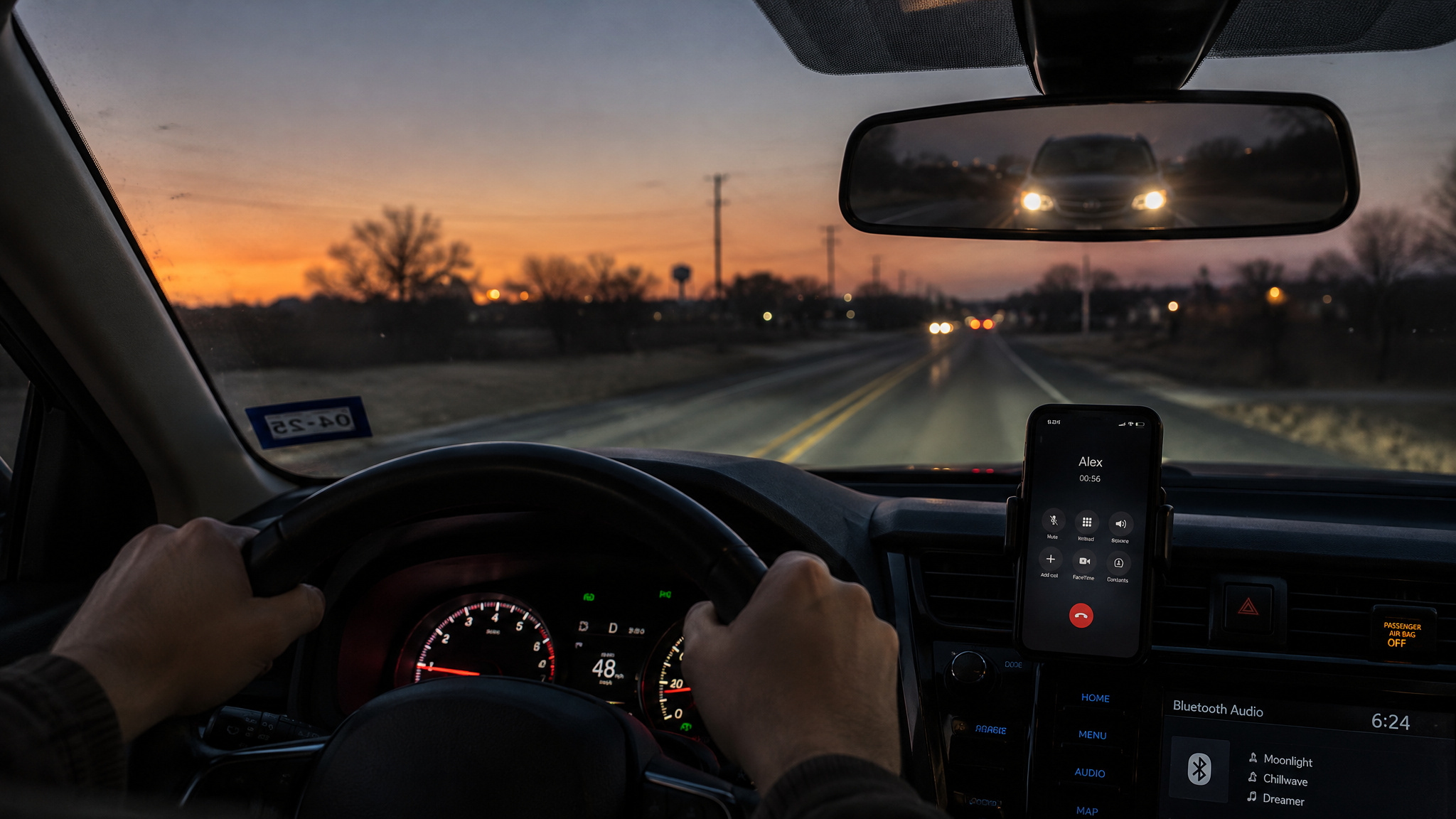
Never drive home
Your first instinct when rattled is to get back to your own garage. Skip it. Leading an angry driver down your street reveals your home address to an aggressive stranger and corners your vehicle against a closed garage door. Keep moving toward a police station or a busy, well-lit public place where witnesses and cameras are hard to avoid. If the friction on the road hasn’t turned into a tail yet, use the move KABC’s California drivers rely on and defuse the confrontation before it starts by giving the other car space or sliding into the slower lane so they can blow past you.
Stay inside your vehicle
Once you pull into a police lot or a crowded parking area, keep your doors locked, keep your windows up, and stay in your seat. Disengage completely. Getting out of the car to explain your side of a lane change is how a fender dispute turns into the kind of parking-lot fight that left a driver unconscious at LAX or the roadside stabbing caught on camera in Ontario. Steel and safety glass work much better from the inside.
Call 911 with specifics
Get on the phone with 911 while you’re still inside the locked car. Give the dispatcher three concrete details right away: the other car’s license plate number, the vehicle description, and your exact location. If the other driver shows a weapon at any point during the encounter, tell the dispatcher immediately, because a displayed weapon escalates a traffic complaint straight into a criminal investigation.
Reporting an aggressive driver, and the limits of ticketing
To report an aggressive driver in real time, drivers in North Carolina can dial *277 to reach the State Patrol hazard line, which carries an exemption under North Carolina’s hands-free driving law, and provide the dispatcher with the vehicle description, license plate number, and specific behavior. State Patrol dispatchers answered 58,117 calls on the *277 line last year, up nearly 6% from 54,956 in 2024, and more than 57% of those calls reported road rage or aggressive driving. State Trooper Sherri Mendez noted that the hands-free exemption protects drivers who call in active threats while on the road.
Calling in a reckless driver helps dispatchers target real-time hazards, but patrols can’t write enough citations to fix the problem on their own. Colorado State Patrol troopers issued more than 42,000 speeding tickets last year, yet Colorado still logged more than 500 speeding-involved fatal and injury crashes in 2025. As Colorado State Patrol Chief Matthew Packard told the Gazette, troopers can’t ticket their way out of the state’s top-five fatality ranking; changing speeding, tailgating, and unsafe habits takes pressure from families and loved ones at home.
De-escalation: refusing the contagion
The surest way to stop a highway confrontation before it turns lethal is to refuse to mirror the other driver’s hostility. State Trooper Sherri Mendez warns that trading hostility is how the worst road-rage crashes start, and that most fatal wrecks are avoidable when drivers rethink speeding, leave space, drive the limit, and watch their lane changes. Experts advise skipping eye contact and gestures, breathing deeply, and assuming distraction over malice, while KABC drivers simply take the slower lane and view getting behind the wheel as a serious responsibility rather than an entitlement.
Frequently Asked Questions
What is the most common form of road rage?
Everyday aggressive maneuvers like speeding, tailgating, and deliberately cutting off other motorists are by far the most widespread behaviors. An AAA Foundation for Traffic Safety study revealed that 96% of drivers admitted to engaging in these risky habits behind the wheel. By comparison, only 11% owned up to outright violent escalation, such as intentionally ramming a vehicle or exiting their car to confront someone.
Does auto insurance cover damage from an intentional road rage attack?
Standard liability policies in states like Texas cover accidental negligence, such as a distracted driver dropping a phone and swerving into your lane, but they explicitly exclude intentional acts. If an angry motorist rams your bumper on purpose or fires a weapon at your car, their liability insurer can deny the claim entirely. Carrying uninsured and underinsured motorist (UM/UIM) coverage on your own policy is the best way to protect yourself financially, especially in Texas where 1 in 7 drivers has no insurance at all.

