
A guy can stay completely level-headed through a brutal workday and a tense dinner at home, then lose his mind over a sloppy highway merge while standard advice to just stay calm fails every time. Road rage isn’t a clinically classified trauma response, though Kaytee Gillis, LCSW, notes on her Psychology Today blog Invisible Bruises that unresolved trauma can power the fight-or-flight machinery behind it for some drivers. The outburst looks identical through a windshield, but the engine underneath differs depending on whether trauma is firing the threat response.
Key Takeaways
Road rage is a behavior category coined in the late 1980s and tracked by the National Highway Traffic Safety Administration (NHTSA) through acts like blowing red lights, riding bumpers, speeding, and flipping off other drivers, rather than a medical diagnosis, though unresolved childhood trauma can drive the fight-or-flight reactions behind it.
During a rage episode, the amygdala hijacks the brain by cutting off the prefrontal cortex where reasoning lives, flooding the system with norepinephrine for fight-to-the-death survival and releasing a dopamine spike that chemically reinforces the habit.
When willpower fails because the thinking brain is offline, trauma-informed options like cognitive behavioral therapy (CBT), dialectical behavioral therapy (DBT), acceptance and commitment therapy (ACT), and Dr. Kate Truitt’s “CPR for the amygdala” target the misfiring alarm system before aggression joins the more than 60% of U.S. crashes that involve aggressive driving.
Table of contents
Table of Contents
Is road rage a trauma response or just bad behavior?
No, road rage is not itself a clinically classified trauma response, except when unresolved trauma powers the fight-or-flight machinery and emotional dysregulation behind the wheel. Clinicians and traffic safety researchers treat road rage as an umbrella behavior category where trauma can drive the nervous system overdrive for some people, without being the sole cause for every angry driver. The phrase road rage was coined in the late 1980s to describe angry, aggressive driving triggered by stress or frustration, and the National Highway Traffic Safety Administration (NHTSA) defines aggressive driving strictly by observable actions rather than medical diagnoses. General commute stress, learned habits, or the simple anonymity of being sealed inside a vehicle can produce the exact same behavior.
At Unfinished Man, we’re willing to talk plainly about a habit most guys hide and translate the nervous-system mechanics into plain English for men who normally distrust therapy-speak. Breaking the label down shows why the distinction matters:
- Late-1980s behavior label: DriveSafe Online noted on November 5, 2024, that the term describes stress- or frustration-driven aggression behind the wheel, not a clinical disorder.
- NHTSA aggressive driving behaviors: Blowing through red lights, riding bumpers, speeding, and throwing rude gestures.
- Built-in defense mechanism: Gillis points out that anger is a natural response that activates the energy you need to protect yourself, turning dangerous only when it interferes with safe driving.
- Same outburst, different engine: Two drivers can lay on the horn and ride a bumper, while one is reacting to a bad commute and the other is caught in a trauma-sensitized threat response.
Why the car amplifies anger for everyone
Driving triggers a fight-or-flight response in some people when road stress, perceived invasions of personal space, or challenged control tip ordinary traffic friction into aggressive anger. About one-third of people admit to feeling stress and frustration behind the wheel, though everyone has different triggers. The cabin also acts as an anonymity machine that gives drivers a false sense of security, and because people treat their vehicles as extensions of their own personal space, getting boxed in or cut off registers as a physical invasion.
That combination explains why a guy who politely apologizes when someone bumps his cart in a grocery store aisle will scream obscenities at a stranger through a windshield. Sealed behind glass and steel, you’re detached from normal face-to-face social accountability, which makes it much easier to let territorial instincts take over behind the wheel. Context pours fuel on that fire: heavy traffic congestion, summer heat, and living in places where aggressive driving is culturally accepted all push ordinary commute frustration closer to a blown fuse.
How trauma turns traffic into a fight-or-flight zone
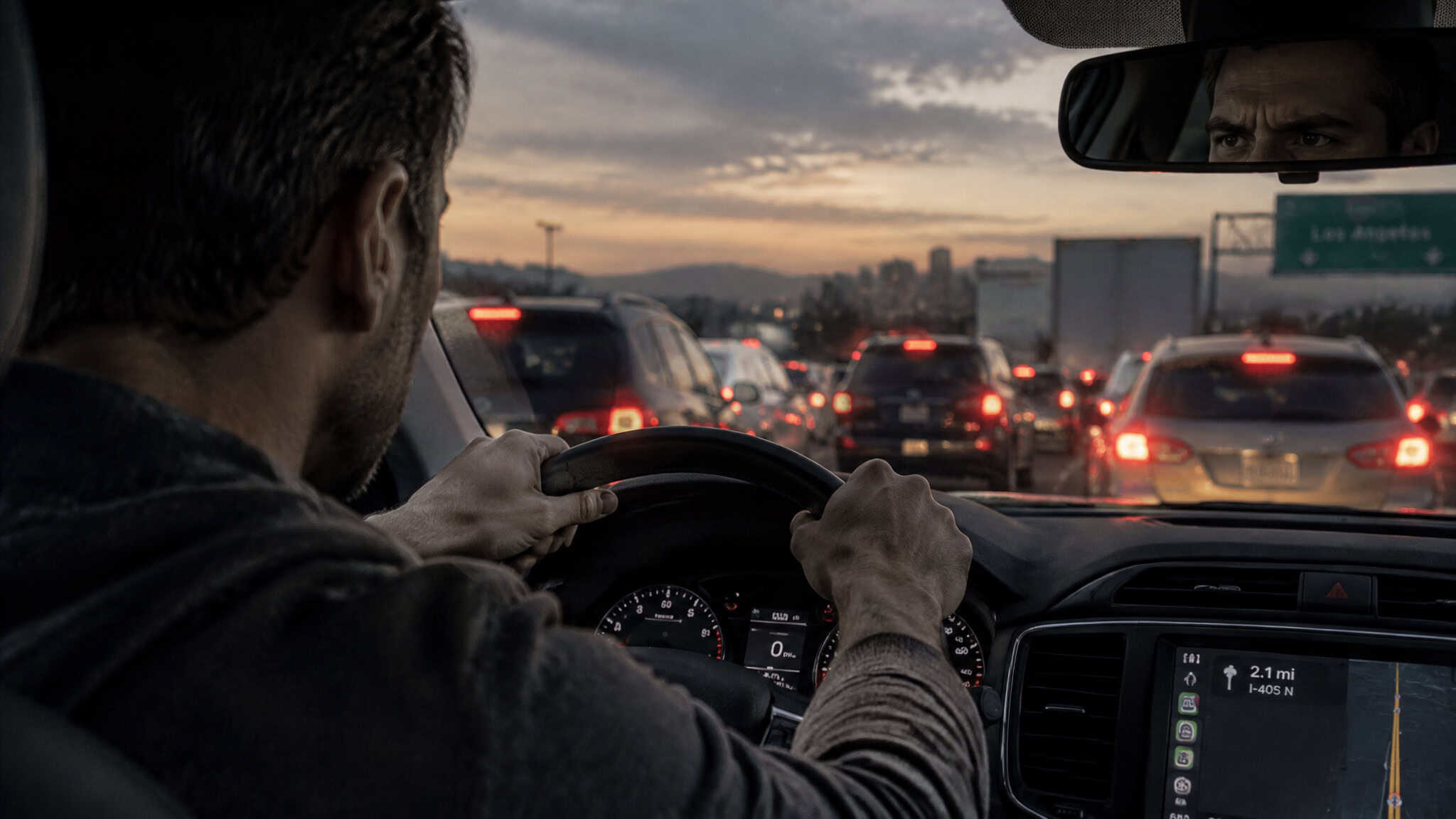
Unresolved trauma built around powerlessness locks the autonomic nervous system into chronic hypervigilance, so an ordinary merge or tailgater activates full survival mode. When past experiences leave behind unresolved fear, anger, or helplessness, the body converts any sudden vulnerability on the road straight into protective rage. Unresolved childhood trauma built around powerlessness produces a lower frustration threshold and intense emotional reactions, while hypervigilance acts as a direct sign of complex trauma by keeping the brain constantly scanning the environment for the next threat.
How hypervigilance works after trauma
After trauma leaves someone feeling unsafe and powerless, Dr. Donnelly “Doc” Snipes explains that the nervous system stays parked on at least moderate alert, running on yellow alert instead of green so it never gets caught off guard again. Tim Fletcher notes that complex trauma shows up as this constant guard duty: you can’t relax, you struggle to focus on what’s right in front of you, and you’re always reading faces and surroundings for danger.
Walk into a room of 100 people where 99 smile at you and one scowls, and a hypervigilant brain fixates entirely on the one scowling face. In traffic, that same selective threat-fixation means neutral moves by other drivers get misread as deliberate slights.
An exaggerated startle response travels right alongside it, leaving no middle gear between feeling calm and jumping out of your skin. A minor merge happens, the body fires before thought kicks in, and only afterward does the driver realize the reaction didn’t match the actual danger. Those symptoms only fade as a person figures out what they need to feel safe and in control in the present moment.
When rage defends against shame and powerlessness
A guy who grew up in an abusive household often learned anger as basic self-preservation, and his nervous system keeps using that exact tool decades later when a stranger cuts him off. Aggression steps in to defend against old childhood shame and powerlessness, grabbing back control even when the highway threat makes no logical sense.
What happens in the brain during a road rage episode
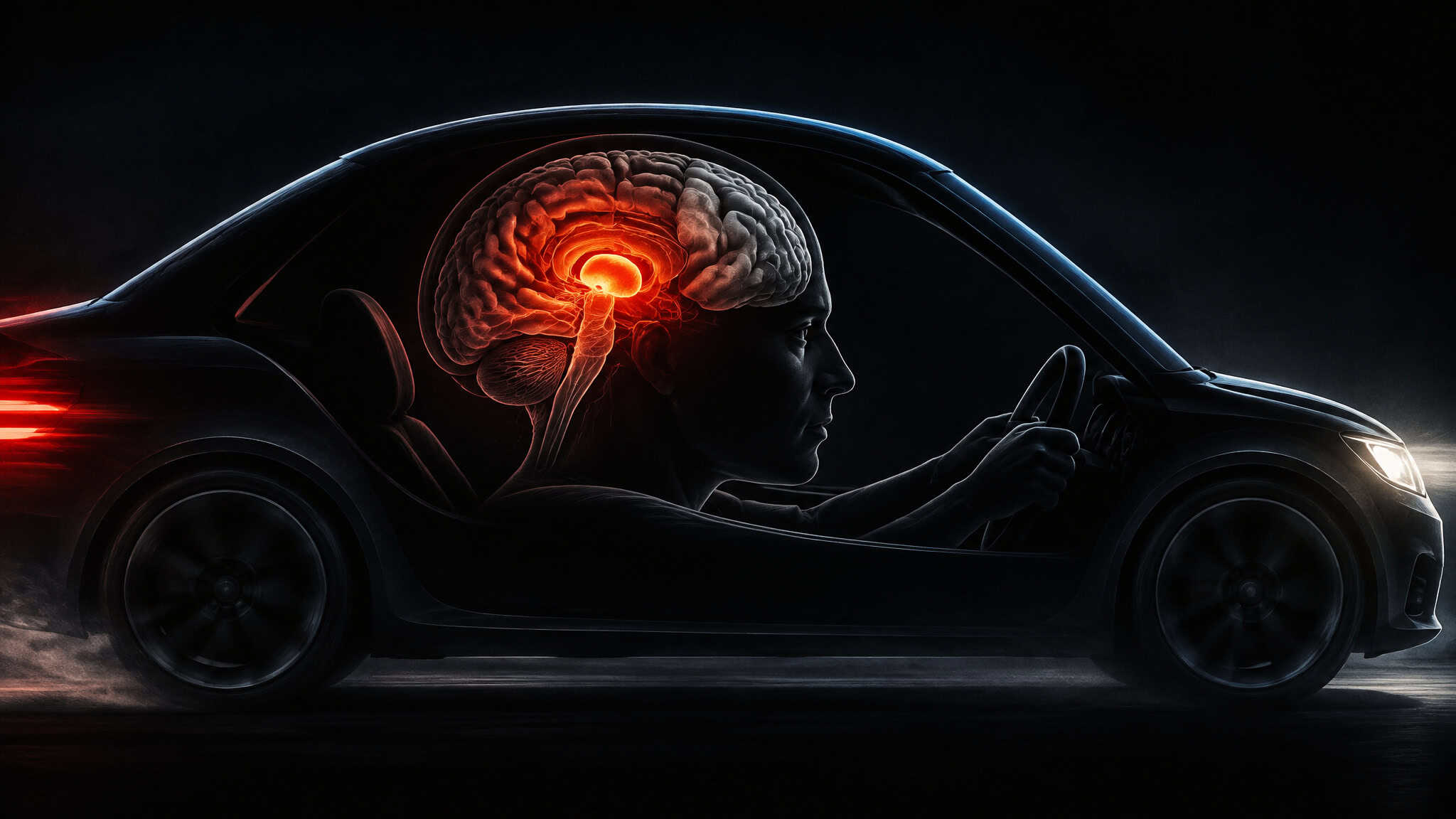
The amygdala hijacks the brain during road rage by weakening its connection to the prefrontal cortex where reasoning happens, taking the thinking brain offline while chemistry reinforces the outburst. Once stress or a perceived boundary violation fires that emotional center, survival circuitry takes the wheel until the episode passes.
The amygdala hijack
Dale Werner, LCSW, at Huntsman Mental Health Institute in Salt Lake City, explained to KUTV / 2News Investigates what happens inside the skull when a driver snaps:
“When anger hits, the amygdala tends to hijack the brain,”
Dr. Kate Truitt notes that this shift disconnects the reasoning prefrontal cortex just when you need brakes the most. Worse, Werner points out that anger delivers a dopamine spike, which chemically rewards the brain and reinforces the angry behavior over time even when you hate how you acted ten minutes later.
Defensive rage and the learned-vs-hardwired question
Deep inside the amygdala sit nuclei dedicated specifically to defensive rage, an extreme survival response Truitt describes as kicking in when the brain perceives no escape, no ability to fight normally, and no odds of survival. The system floods with norepinephrine for fight-to-the-death action, operating as a variant of dissociation where a person fights until the death blow instead of checking out. Repeat that state often enough in a childhood that never felt safe, and defensive rage becomes the default threat response, bringing severe emotional dysregulation, blackouts of rage, and heavy wear on the nervous system.
Werner notes that anger is learned behavior triggered when something crosses a boundary in our lives during stress or frustration, and that learned script runs right on top of Truitt’s hardwired survival circuitry. The same built-in hardware that lets mothers lift cars off children, sends people into burning buildings for loved ones, and drives soldiers to fight for their comrades gets triggered by a Honda Civic drifting into your lane.
PTSD, gender, and who rages on the road
A 2014 study of National Guard and Reserve service members by Worthen et al. in the Journal of Psychiatric Research (vol. 55, pp. 52-58) found that anger problems show up more frequently in males with PTSD, a link that may help explain why young men are tied to road rage incidents more often. Men aren’t inherently angrier than other genders, and road rage affects drivers of all genders, but guys are socialized to express anger differently and get far more social acceptance when they let it fly.
Signs your road rage may be trauma-linked
Signs that road rage may be trauma-linked include visible aggressive driving habits paired with internal nervous-system misfires like disproportionate panic-anger, threat scanning, and heavy post-episode shame. While any frustrated driver might lean on the horn, a trauma-driven response is marked by how quickly the body treats minor traffic friction as a personal attack and how hard the crash hits once your heart rate drops. Here’s how the outward habits break down against the internal reactions (and if your temper flares alongside restlessness and impulse-control issues outside the car, check whether ADHD emotional dysregulation is driving your road rage):
- Visible behavioral warning signs: Laying on the horn, tailgating, reckless passing or lane-weaving, yelling or flipping off other drivers, and intentionally blocking other cars.
- Internal trauma signatures: Reactions that feel wildly out of proportion to the actual danger once you cool down, reading neutral driving mistakes as calculated personal disrespect, predictable blowups over specific triggers like slow drivers ahead or getting cut off, and a wave of shame afterward.
Most guys don’t spot this pattern on their own while they’re white-knuckling the steering wheel. Behavior crosses into a real problem when it starts creating difficulties in your own life or in other people’s lives. In practice, the real early-warning system is feedback from a passenger, partner, or friend who tells you that riding with you has become frightening, which is the signal to take a hard look at the habit and seek counseling if episodes happen often.
Why willpower fails and what helps
Trauma-informed therapy for anger and road rage includes individual counseling, cognitive behavioral therapy (CBT), dialectical behavioral therapy (DBT), acceptance and commitment therapy (ACT), and somatic regulation techniques like Dr. Kate Truitt’s “CPR for the amygdala” for drivers whose outbursts don’t respond to sheer willpower. Because trauma impairs prefrontal cortex impulse control during a perceived threat, effective treatment has to calm the misfiring survival alarm rather than just lecturing the driver on polite manners. Standard tips fail because they assume your reasoning brain is still in the driver’s seat. Trauma-focused options instead work directly on the reflex, starting with one-on-one trigger mapping or intensive group programs.
Why ‘just calm down’ is neurologically backwards
Telling a guy in an amygdala hijack to calm down fails because his prefrontal cortex is offline. White-knuckling your temper on the morning commute only holds until a truck cuts across your bumper, firing norepinephrine and your learned boundary-defense reflex before you can think. Generic anger management polices the outward explosion; trauma-informed work targets the yellow-alert wiring underneath.
Trauma-informed treatment options
Treatment scales according to how often and how severely the rage takes over:
- Individual counseling: Works one-on-one to map your specific road triggers and build pre-planned coping strategies before you turn the key.
- Cognitive behavioral therapy (CBT), dialectical behavioral therapy (DBT), and acceptance and commitment therapy (ACT): Clinical modalities that train practical emotion-management and distress-tolerance skills so a spike in frustration doesn’t automatically convert into foot-to-the-floor aggression.
- Somatic neurobiological reset (“CPR for the amygdala”): A body-based technique described by Truitt that you apply as you near a defensive rage episode or right after it hits, halting the neurobiological momentum toward an outburst while helping heal the amygdala and mind-body system over time.
- Group therapy or intensive programs: Recommended when individual sessions aren’t enough to break a long-standing pattern.
- Court-ordered anger treatment: Mandated in extreme cases after aggressive driving crosses into legal trouble.
Breaking the post-episode shame cycle
Once the adrenaline clears after a defensive rage episode, drivers almost always get slammed with shame and self-judgment, muttering the classic I knew better, why did I do that script all the way to work. Truitt points out that beating yourself up over a hijacked nervous system only taxes your wiring further and primes you for the next hair-trigger reaction. Real recovery starts with self-compassion rather than self-punishment, treating the episode as a physiological alarm malfunction you’re learning to rewire rather than proof that you’re irredeemable.
How to calm your nervous system behind the wheel
Calming your nervous system behind the wheel requires settling your physical body first and pre-planning your responses to known triggers before you start the engine. Because an amygdala hijack runs on fast physical reflexes, giving your body distance, slower breathing, and lower sensory stress keeps the alarm from hitting the red line where impulsive rage takes over. Pairing Werner’s in-cabin de-escalation moves with practical habits stops road rage before the trigger even lands:
- Leave with extra time: Plan the route ahead so a five-minute delay doesn’t flip your system into a frantic time-crunch threat response.
- Open up physical distance: Drop back a few car lengths from the bumper ahead so you aren’t boxed in.
- Use deep-breathing and relaxation drills: Slow, deliberate breaths signal your autonomic nervous system that you aren’t in a fight for your life.
- Control the cabin audio: Put on calming music or a good podcast to keep your headspace steady before heavy traffic hits.
- Skip eye contact and don’t engage: Looking over at an erratic driver feeds the territorial challenge; keep your eyes down the road.
- Refuse to take bad driving personally: Give other drivers the benefit of the doubt and empathize with a clumsy merge instead of reading it as calculated disrespect.
- Pull over safely when anger climbs: If your chest tightens and your vision narrows, get off the road until your prefrontal cortex comes back online.
- Debrief your triggers after you park: Spend two minutes noting what set you off and what you’ll do differently next time so the reaction stays less impulsive.
- Take a defensive driving course or book counseling: Defensive driving classes teach tactical ways to handle aggressive traffic, while frequent blowups call for a professional counselor.
Treating those steps like a pre-flight routine takes the pressure off your willpower at seventy miles an hour. When you already know that getting boxed in behind a slow semi in the left lane is your reliable fuse, deciding in your driveway that your move is to drop back two car lengths and turn up a podcast means you don’t have to invent a strategy after your blood pressure spikes.
What to do when another driver targets you
Utah Highway Patrol troopers give one primary rule when an angry driver targets you: do not engage. If they keep coming, call 911 and drive straight to a busy public place or police station. Because a raging driver may be locked in an amygdala-hijacked survival response with their reasoning brain completely offline, you can’t talk them down or win a highway standoff. Treat the encounter as an escape drill. Keep your distance, avoid eye contact, and never answer a gesture or brake-check with aggression of your own.
Slow down, change lanes, or let the other vehicle pass so they can take their fight somewhere else. If the driver follows you or escalates the confrontation, get on the phone with 911, don’t drive to your own house, head straight for a busy public area or the nearest police station, and stay inside your car with the doors locked until help arrives.
The cost when road rage goes wrong
Road rage is dangerous enough that NHTSA estimates more than 60% of U.S. crashes involve aggressive driving, while speeding alone accounted for 18.5% of fatal crashes. A 2016 meta-analysis by Zhang and Chan in Accident Analysis & Prevention (vol. 90, pp. 50-62) reviewed twenty years of evidence and confirmed the direct link between anger behind the wheel and higher road accident rates. Aggressive driving also brings routine traffic citations or felony criminal charges.
In June 2023, a road rage crash in Utah involving Peter Matheson killed two innocent people. Matheson was sent to prison, turning his ex-wife, Ashley Matheson, into a single parent and sole breadwinner overnight while their kids were left asking whether their dad is a bad person and when he will come home.
KUTV / 2News Investigates also tracked related Utah fallout, including early parole granted for 2027 in a fatal Eagle Mountain road rage crash and a St. George road rage altercation involving four juveniles. Ashley Matheson’s warning to drivers who think they have their temper under control until it blows past the point of return comes down to one question: “Is it worth it?” Dialing down anger behind the wheel and speaking up when someone drives aggressively makes the road safer for everyone on it.
Frequently Asked Questions
Can complex trauma cause anger?
Yes, unresolved childhood or complex trauma rooted in powerlessness lowers your frustration threshold and triggers intense emotional flare-ups. If you grew up in an unsafe or abusive environment, your nervous system often learned to deploy aggression as a basic self-preservation tool to fight off helplessness and shame. Decades later, that same survival mechanism still fires whenever a sudden vulnerability—like getting cut off in traffic—registers as a threat.
How does the amygdala hijack the brain during road rage?
When a perceived boundary violation triggers your temper, the amygdala takes over and weakens its connection to the prefrontal cortex, effectively knocking your rational, thinking brain offline. Deep inside the amygdala, nuclei dedicated to defensive rage flood your system with norepinephrine for fight-to-the-death survival when the brain senses no escape. At the same time, Dale Werner, LCSW, notes that the outburst releases a spike of dopamine, chemically rewarding your brain and reinforcing the angry habit even if you regret it ten minutes later.
Is hypervigilance a sign of complex trauma behind driving anger?
Yes, hypervigilance is a direct hallmark of complex trauma that keeps your brain on constant guard duty, scanning every environment for the next danger. Dr. Donnelly “Doc” Snipes explains that trauma leaves the nervous system parked on yellow alert so it never gets caught off guard, while Tim Fletcher points out that this state makes you fixate on the single threat in a crowd and jump at minor surprises. Behind the wheel, that selective threat-scanning and exaggerated startle response cause you to misread clumsy, neutral merges as calculated personal attacks before rational thought even kicks in.
Why doesn’t willpower alone stop road rage reactions?
Willpower relies on your prefrontal cortex, which is the exact part of the brain that gets disconnected during an amygdala hijack. Once a truck cuts across your bumper, norepinephrine and your learned boundary-defense reflexes fire faster than conscious thought can intervene. Standard advice to just stay calm fails because it tries to lecture a rational brain that has already left the driver’s seat, rather than calming the misfiring survival alarm underneath.
What trauma-informed therapy helps with anger and road rage?
Effective options include one-on-one counseling to map your triggers before you turn the key, alongside clinical approaches like cognitive behavioral therapy (CBT), dialectical behavioral therapy (DBT), and acceptance and commitment therapy (ACT) that build distress-tolerance skills. Dr. Kate Truitt also points to “CPR for the amygdala,” a somatic, body-based reset used right before or after defensive rage hits to halt neurobiological momentum and help heal the mind-body alarm system. When solo sessions are not enough to break an entrenched habit, intensive group programs or court-mandated anger treatment step in.