You’ve tried cutting back. You’ve white-knuckled a few weekends, and by Sunday night you’re back at six beers because everyone’s still out and so are you. So the honest question underneath isn’t how to stop, it’s what causes binge drinking in the first place, because the cause decides which fix actually works. Quick preview: most binge drinkers aren’t alcoholics, which sounds reassuring until you look closer. Several distinct drivers are in play here, biological timing, social context, stress, habit, and they don’t all respond to the same tool.
Key Takeaways
Binge drinking means 5 drinks in 2 hours for men and 4 for women, but a second common definition uses 4+/5+ drinks per sitting, and hitting a .08% blood alcohol level counts either way.
A Molecular Psychiatry study found adolescent binge drinking permanently changed how adult mouse brain cells responded to alcohol: the normal “off switch” never appeared, even after long abstinence.
1 in 3 American adults drink excessively and 90% of them aren’t alcoholics, yet excessive drinking still kills about 88,000 people a year through heart disease, breast cancer, and liver disease.
Table of Contents
What counts as binge drinking
Binge drinking is five standard drinks in two hours for men, four for women, per Dr. Nikki Crowley, a neuroscientist who studies drinking and the developing brain. You’ll also run into a second version in the wild: 4+ drinks per sitting for women, 5+ for men, per Dr. Holly Phillips. Neither is more correct. The “binge” label is a counting rule, not a hard biological boundary, which is why the two definitions coexist without anyone reconciling them.
A third yardstick: hitting a blood alcohol level of.08%, the legal driving limit, a familiar reference point for when intoxication kicks in. And excessive drinking isn’t just bingeing. Heavy weekly drinking counts too, 8+ drinks a week for women, 15+ for men. The full thresholds and standard drink sizes get a proper breakdown in what is considered heavy binge drinking.
Here’s the part that surprises people: binge drinking is the most common form of alcohol consumption in the United States, per Crowley. Not fringe behavior. Default behavior. If you’re under either number, that doesn’t automatically make you safe. It just means the label doesn’t apply.
Why people binge drink: the four drivers behind the behavior
Binge drinking comes from a combination of biological, social, psychological, and habit/reinforcement factors. There’s no single cause, which is exactly why generic advice keeps failing. Alcohol stimulates the brain’s reward system and lowers inhibitions, so the same substance that feels like a party is also quietly retraining your habits.
The psychological inventory is long, and it differs from person to person: boredom, pleasure and reward-seeking, stress and anxiety coping, the self-esteem damage that comes with dependence, value conflict, loneliness, guilt and shame, emotional numbing, depression, trauma and PTSD. All ten show up in real drinking patterns. Some guys drink because it’s Tuesday and the game’s on. Some drink because 11pm is the only quiet they get.
That’s the organizing idea here. The drivers differ across people, so the rest of this piece takes them one at a time, then maps each to the fix that actually matches it. Think of it as a working map, not a diagnosis.
Why the teenage brain is more prone to binge drinking
Yes, the teenage brain is more prone to binge drinking, because reward-seeking systems run hot in adolescence while the planning and self-control regions are still maturing. Hot gas, weak brakes. That imbalance is why chugging six beers at 19 can feel like a reasonable idea at the time.
The prefrontal cortex, the part that vetoes dumb ideas, doesn’t finish developing until roughly age 25 to 30. Overall brain and head size are set by adolescence; the wiring between the prefrontal cortex and the rest of the brain is still being built. And the reframe worth keeping: adolescent risk-taking is normal and even serves a purpose: new social situations, sports, trying things.
Alcohol exploits that same deliberately under-construction circuitry. Not a flaw. A feature with a cost.
The numbers: teens who drink between ages 13 and 16 have a 50% increased likelihood of an alcohol use disorder as adults. That’s early exposure compounding, not destiny. About 11% of adolescents binge drink, and about 29% of young people report it. The window is real, and it’s open.
Does adolescent binge drinking permanently change the adult brain?
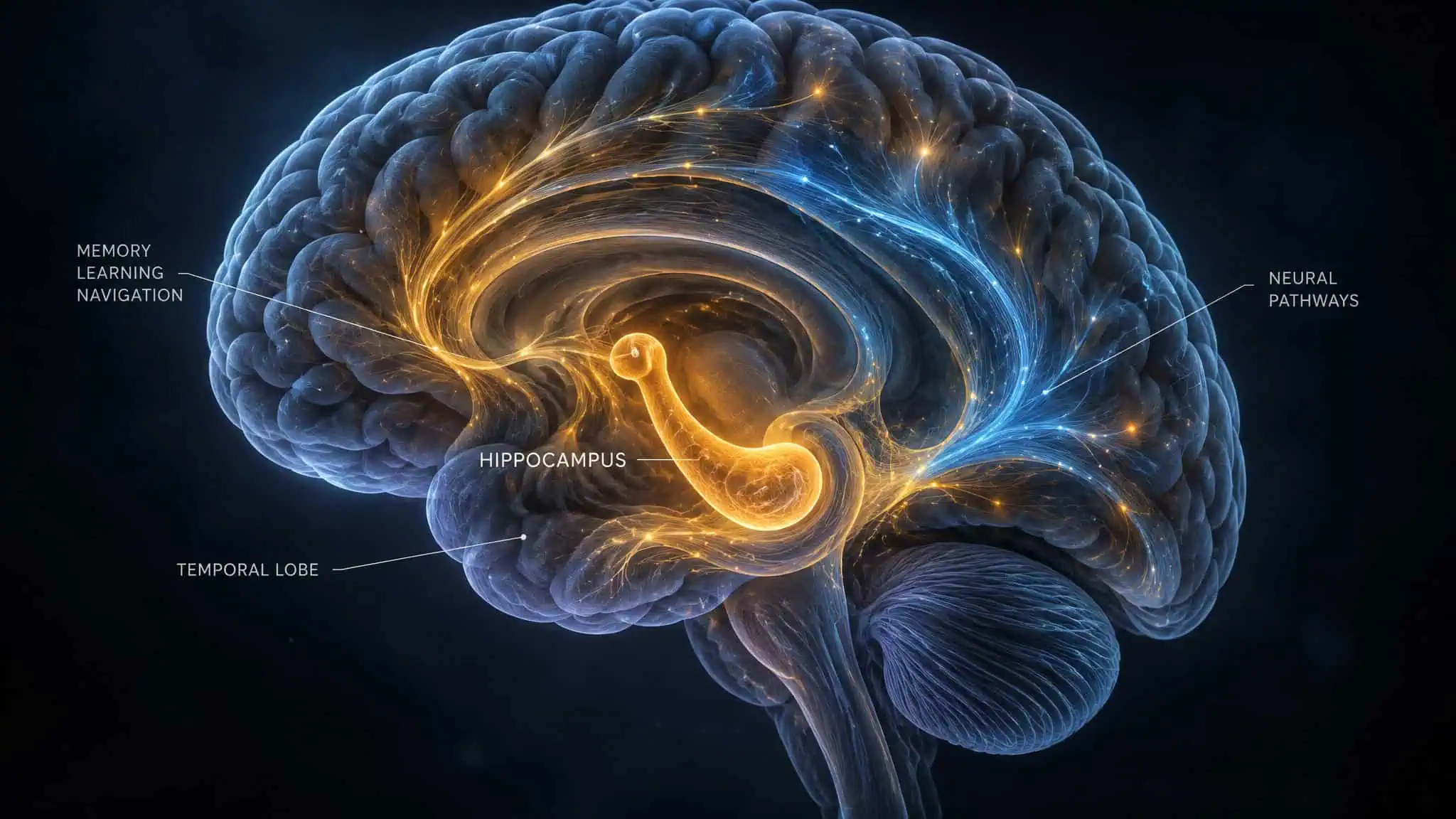
In mice, yes. Adolescent binge-like drinking permanently changed how adult hippocampal nerve cells responded to alcohol. Mice, not men, every time. The study ran in Molecular Psychiatry, from a team at Friedrich-Alexander University of Erlangen-Nuremberg in Germany. Setup, spec-sheet style: adolescent mice about 30 to 45 days old got 20% alcohol access during their active hours for about two weeks, then nothing until adulthood, then recordings from the hippocampus, the memory region.
Two mechanisms, one sentence each. GIRK channels act like brakes on nerve cells, and alcohol can engage them: they let potassium cross the cell membrane, and when they open, the cell’s odds of firing drop. Activin A, a signaling protein involved in brain development, learning, and emotional behavior, raised alcohol sensitivity in adolescence and dialed it down in adulthood in alcohol-naive mice. The kicker: mice with a heavy adolescent drinking history never got that adult dial-down.
That adult dampening never appeared, and their cells stayed extra-sensitive even after long abstinence. In some experiments, alcohol shut down firing in most of the tested cells.
Baclofen, a drug that hits the same channels and is sometimes prescribed off-label for alcohol use disorder, shrank the oversized response. In mouse brain slices. Slices, not people.
Crowley’s lab adds a second mechanism: somatostatin, a neuropeptide believed to carry the prefrontal cortex’s risk-taking signal. Higher expression looks protective against depression, anxiety, bipolar disorder, schizophrenia, and cognitive decline. Adult drinking dampens the signal; adolescent exposure hyperactivates it. The result is a brain stuck saying “yes, take the risk” long after the teenage years, potentially for life.
Own the fine print before you ask: this work is hippocampus-focused while alcohol touches many brain regions, and a two-week cage model doesn’t match real teenage drinking’s variety, duration, or social context. But prior animal work already linked heavy adolescent drinking to lasting changes in memory, anxiety, and impulsivity. This fits a pattern. It is not proven permanent human brain damage.
Social drinking: the cause hiding in plain sight
People reliably drink more in social contexts than alone, and the research field has barely looked at it. Studies of the solitary drinker outnumber studies of the social drinker by nearly ten to one. We’ve been studying the wrong guy.
Concession first: drinking alone does mark some of the most severe alcohol use disorder cases. But focusing there exclusively ignores the behaviors behind most alcohol-related harm:
- Violence
- Risky sex
- Extreme binge drinking
- Traffic fatalities
All primarily or exclusively social-drinking phenomena. Two mechanics feed the loop: peers initiate young people into drinking, and heavy drinkers seek out other heavy drinkers. The crew finds you, or you find the crew. And the uncomfortable stat: people who report the highest enjoyment from social drinking are the most likely to develop alcohol-related problems. Let that sit.
The assumption that company tempers overindulgence is backwards, and it hands everyone an excuse not to feel responsible when a buddy drinks too much. Alcohol works as a social lubricant, which is exactly why it’s hard to problematize. There’s also evidence people drink to patch troubled relationships, which usually doesn’t repair anything. How alcohol got woven into social life is a preview of the legal and medical mess coming for cannabis, but that’s another article.
Researchers have documented the pattern, and it’s never about one named person: the guy who “doesn’t even want to drink that much” matching the group’s pace because rounds and shared pitchers set a rhythm nobody chose, then drinking noticeably less alone. That comes from a review by Catharine Fairbairn of the University of Illinois Urbana-Champaign and Dahyeon Kang of the University of Washington, published in Current Directions in Psychological Science, NIH-supported, and covered by the Illinois News Bureau on May 6, 2025. The review argues social drinking is under-examined. It does not claim social drinking causes alcohol use disorder in any individual.
Boredom, pleasure, and the habit loop
Two drivers get a quick treatment. Boredom: drinking to fill empty hours or get out of your head, and when drinking is your main hobby, sobriety sounds dull by comparison. Circular logic, but it runs a lot of Tuesdays. Pleasure is the cleaner hook: alcohol hits the brain’s reward system, delivers euphoria you didn’t earn, and then reinforces the desire to drink again, the loop closes itself. No moralizing needed, that’s just what it does.
One trend worth watching: nicotine and alcohol travel together, and the old cigarette-at-the-bar pattern is shifting toward e-vapes. Co-abuse sets bad habits, and it’ll keep growing.
Stress and anxiety: why self-medication backfires
Yes, stress and anxiety can drive binge drinking, and the decisive condition is that the relief rebounds. Alcohol lowers inhibitions and produces confidence, so it becomes the answer to social situations, then to all situations, including work events you didn’t want to attend in the first place.
The trap, concretely: alcohol does nothing good for how long or how well you sleep, and it makes the next day worse. Then hangxiety shows up, the anxiety and social weirdness that arrives with the hangover. You know the feeling. That’s the rebound manufacturing the very distress the next drink is meant to treat. Right after drinking, decision-making, social behavior, executive control, and working memory are all impaired, so the “relaxing” night costs you a day of worse functioning.
Red flag: If a drink is your default answer to stress, the relief is borrowing from tomorrow. The rebound anxiety is the bill.
Comorbidity is real: drinking and depression or anxiety frequently travel together, each feeding the other through self-medication. People with alcohol use disorder may also carry underlying or undiagnosed mental health issues, and no armchair diagnosing required. Women’s drinking rates jumped during the Covid pandemic, hypothesized as coping with work-from-home and parenting stress. The hypothesis fits the pattern.
This is why “just cutting back” failed if stress is your driver. The loop is the problem, not the willpower.
Low self-esteem, guilt, and loneliness: the loop that feeds itself
Drinking can damage the exact self-image it’s being used to escape, and each cycle makes the next one more likely. The pattern, as clinicians and sobriety speakers describe it, often looks like this: dependence erodes self-confidence, which reinforces reliance on alcohol. Heavy drinking produces behavior contrary to personal values, and that gap wrecks self-esteem. The karaoke version: singing Bohemian Rhapsody to strangers despite missing the high notes, with the video in the group thread by morning. The shame drives more drinking to escape the regret and self-blame.
Damaged self-esteem breeds loneliness, and alcohol offers a counterfeit version of connection. The slide: daily bar visits to avoid seeming lonely, then the cheaper at-home version, then full self-isolation. Spending less money makes the isolation easier, not better.
The barrier that keeps the loop closed is belief: I can’t be the same fun person when I’m sober, “I don’t know how to socialize sober.” Those are thoughts, not facts. The dry counter: only three things you can’t do sober. Drink alcohol, get drunk, and get caught driving drunk. That’s the whole list.
One honest flag: these cycle claims come from a sobriety-focused speaker, not clinical trials. Lower the evidence weight accordingly.
Trauma, PTSD, and numbing: the cost of drinking to forget
People with trauma or PTSD drink to numb emotional pain, suppress memories, and manage symptoms, and the numbing is indiscriminate. First, correct the record: PTSD isn’t a combat-veteran-only thing. It can come from job loss, loan default, verbal or emotional abuse, illness, childhood neglect, infidelity. Ordinary life can do it.
The trade nobody mentions: numbing the bad also numbs the good. Concretely, that means holding onto vacations and birthdays: the trips you took, the people around the table, the conversations worth keeping. That’s what’s at stake.
Using alcohol to escape depression backfires the way water does on a grease fire: it feels right in the moment and spreads the flames. Heavy use also puts ambitions, emotions, and responsibilities on hold.
The healing frame, honestly: quitting may mean sitting with feelings you’ve been dodging, the “do not open” box in the attic. They get less scary the more you sit with them, and the same stuff feels smaller when you reopen it as a more capable adult. Laying it out to air out is the processing. Cognitive behavioral therapy is one of the most effective treatments here, and the fix section maps it properly.
From pleasure to escape: when the reason for drinking changes
Binge drinking can develop into alcohol use disorder, though many binge drinkers never meet the criteria, and the reason drinking starts is often not the reason it continues. For chronic drinkers, motivation moves from drinking because it feels good to drinking to feel normal. The jargon version: positive reinforcement, meaning pleasure, becomes negative reinforcement, meaning avoiding withdrawal and negative emotions. The initial hook was the reward system, euphoria without effort.
The mechanism: repeated cycles of withdrawal followed by heavy consumption can produce lasting mood changes. The National Institute on Alcohol Abuse and Alcoholism has a clunky name for the pattern, reward deficit stress surfeit disorder. Said once. Moving on.
The payoff: this is why “I can stop anytime” stops being true. The reason for drinking changed without the drinker noticing. Recognizing whether you’re at “I want to” or “I need to” is part of diagnosing the cause.
Scope honestly: the shift is not inevitable, and it’s not irreversible for every drinker.
Is a binge drinker the same as an alcoholic?
No, binge drinking is not the same as alcoholism. Binge drinking alone doesn’t mean someone has an alcohol use disorder, you can regularly binge drink and never meet the diagnostic criteria, so your doctor may never say a word about it. Alcoholism is a medical condition with multiple criteria: heavy drinking is one, but so is continuing despite harm to work, home life, or legal standing, plus an inability to control consumption. The numbers back this up: a government study found 1 in 3 American adults drink excessively, and 90% of them aren’t considered alcoholics. That gap is exactly why heavy drinking slides under the radar.
Alcoholism is a medical condition with multiple criteria: heavy drinking is one, alongside continuing despite harm to work, home life, or legal standing, plus inability to control consumption. The practical test that doesn’t care how much you drink: negative consequences interfering with work, social activities, and family engagement.
Now the numbers that flip assumptions. A government study, discussed by Dr. Holly Phillips on CBS Mornings, found 1 in 3 American adults drink excessively, and 90% of them are not considered alcoholics. Separately, 29 million people over age 12 have an alcohol use disorder diagnosis. This is not an edge-case population.
Here’s the honest twist, and it deserves full weight: 88,000 deaths a year are attributed to excessive drinking. Not alcoholism, just excessive drinking, through increased heart disease, breast cancer, and liver disease. Women who drink are more likely to get breast cancer than women who drink no alcohol. So the “I drink but I’m not an alcoholic” refrain can be literally true and still be false comfort.
No label is required for real harm. Even weekend-only bingeing carries acute impairment plus long-term disease risk without any dependence. The calendar doesn’t grant immunity, and the 88,000 figure includes exactly these drinkers.
| Regular binge drinker | Alcoholic | |
|---|---|---|
| Meets alcohol use disorder criteria | No (not from bingeing alone) | Yes |
| Can reliably control consumption | Partial (varies by person) | No |
| Doctor has flagged it | Often no | Usually yes |
| Long-term disease risk (heart, liver, breast cancer) | Yes | Yes |
| Drinking despite harm to work, home, or legal standing | No (that’s what rules out the label) | Yes |
The diagnostic line is real, and it’s worth respecting. The health toll accrues regardless of whether it applies to you, and the 90% stat is a description of where the harm actually lives, not an excuse. If you’re weighing a break, how long it takes to recover from binge drinking covers what happens to sleep, liver, and mood after you stop.
Who binge drinks: the demographics that break the stereotype
Binge drinking skews affluent, young, male, and social, while dependence skews the other way. The income split is the interesting wrinkle: higher incomes track with binge drinking, lower incomes track with alcohol dependence. Two different problems at two different pay grades. If you “don’t fit the alcoholic picture,” you precisely match the undiagnosed binge-drinker profile, the social one.
Younger people, particularly men, are more likely to binge drink. That’s the data, not a callout. The gender gap is closing, and the explanation is access and social change, not biology. Two caveats kept: women increasingly drink alone, and even at equal amounts, long-term effects may differ between males and females.
Matching the fix to the cause
The fix depends on the cause. Stress-driven bingers need stress-regulation tools, socially-driven bingers need context and expectation strategies, habit-driven bingers need habit-disruption. Generic fixes fail predictably because the causes differ, which is why your past attempts didn’t stick. Unfinished Man’s position: you’re an adult sorting your own pattern, not a patient following a checklist. This map is an explanatory tool, not a validated self-diagnosis instrument.

Nobody’s telling you which driver you have. Read, sort, decide.
Stress- and trauma-driven drinking
Cognitive behavioral therapy is one of the most effective therapies for addiction and alcohol use disorder. Recommend it the way you’d recommend a good mechanic: because it works, not because it’s fashionable. Without therapy-based coping tools for fears, anxieties, traumas, and regrets, alcohol keeps doing an emotional-processing job it was never built for. Effective treatment also includes medications and life changes aimed at stress or co-occurring mental health disorders. Three categories, not a therapy-only pitch.
Habit- and reinforcement-driven drinking
Medications are a category here, including baclofen. It activates the same GIRK channels from the mouse study and is sometimes prescribed off-label for alcohol use disorder, with the evidence so far being mouse brain slices only. No dosing, no prescription guidance, no cure framing. Then the one rule worth keeping from the experts, as a rule of thumb rather than a commandment: never drink to cope with stress, the speaker’s own number-one advice, paired with drinking only when you’re happy, celebrating, or socializing.
Drink when you’re happy, celebrating, or socializing. The coping-versus-celebrating distinction is the easiest self-check there is.
Quick test: Before you pour one, ask whether you’re celebrating something or escaping something. Only one of those is a green light.
What the field expects next
Two tracks over the next 5 to 10 years: prevention by delaying drinking onset at the individual, family, school, and societal levels, and precision intervention for people with heavy drinking histories that accounts for individual history and other health conditions. In plain words, the same fix doesn’t fit everyone. There’s also a real push to de-stigmatize substance use, and the practical reason is simple: shame keeps guys from getting help, and that’s the actual cost.
The short version of the map:
- Stress, anxiety, trauma: CBT first, plus medications and life changes aimed at the underlying distress
- Social context: context and expectation strategies, because the driver lives in the room, not in you
- Habit and reinforcement: habit disruption, with medications like baclofen as a category to raise with a doctor
For the practical side of actually stopping, the guide to how to stop binge drinking covers recognition and where to seek help.
Prevention: protecting the switch that can’t be reset
What works is boring and practical: talk, watch, delay, set rules. And it matters most before the first drink ever happens. The findings, from the Prevention Research Center at Penn State via Dr. Nikki Crowley: prevention before a child starts drinking strongly shapes later decisions, and lax parental attitudes increase youth consumption. No judgment on specific families. That’s just the data.
The four actions, as a short list:
- Open communication about alcohol
- Monitoring
- Delaying onset
- Clear rules against drinking
Professor Rob Turrisi’s guide “The Power of Parents” is free on the MADD website. That’s the whole pitch.
Why the unpopular rules have a scientific basis: the earlier alcohol enters the picture, the higher the adult alcohol use disorder risk, and the mouse and somatostatin work showed adolescent exposure can permanently rewire a developmental switch. Prevention isn’t policing a behavior. It’s protecting circuitry whose window doesn’t reopen.
One cultural note: society once treated baking in the sun without sunscreen as a rite of passage, then the norms changed and now it reads as obviously dumb. Youthful drinking norms can move the same way.
Frequently Asked Questions
What is the psychology of binge drinking?
There’s no single psychology behind it — binge drinking comes from a mix of biological, social, psychological, and habit/reinforcement factors. The psychological inventory includes boredom, pleasure-seeking, stress and anxiety coping, loneliness, guilt and shame, emotional numbing, depression, trauma and PTSD, and self-esteem damage. Because the drivers differ from person to person, generic advice like ‘just cut back’ keeps failing — the cause determines which fix actually works.
What qualifies you as a binge drinker?
The most common definition is five standard drinks in two hours for men and four for women. A second widely used version counts 4+ drinks per sitting for women and 5+ for men, and a third yardstick is reaching a blood alcohol level of .08%, the legal driving limit. Neither definition is more correct — the label is a counting rule, not a hard biological boundary.
Why do people binge drink? The psychology and brain science behind it
Alcohol stimulates the brain’s reward system and lowers inhibitions, delivering euphoria you didn’t earn — which is also how it quietly retrains your habits. On top of that biology sit social context, stress and anxiety coping, boredom, habit loops, and emotional numbing after trauma. No single cause explains it, which is why the same advice doesn’t work for everyone.
How many drinks is considered binge drinking for a man or a woman
Five drinks in two hours for men and four for women is the standard definition, though a second common version uses 5+ drinks per sitting for men and 4+ for women. Hitting a .08% blood alcohol level counts as bingeing under either framework. Separately, heavy weekly drinking is 15+ drinks a week for men and 8+ for women.
Can stress and anxiety cause someone to start binge drinking?
Yes, and the decisive condition is that the relief rebounds. Alcohol lowers inhibitions and produces confidence, so it becomes the answer to social situations, then to all situations — but it wrecks sleep, impairs decision-making and working memory the next day, and produces ‘hangxiety,’ the anxiety that arrives with the hangover. That rebound manufactures the very distress the next drink is meant to treat, which is why ‘just cutting back’ fails when stress is the driver.
How low self-esteem, guilt, and loneliness lead to drinking to cope
Drinking can damage the exact self-image it’s being used to escape: dependence erodes self-confidence, heavy drinking produces behavior contrary to personal values, and the resulting shame drives more drinking to escape the regret. Damaged self-esteem also breeds loneliness, and alcohol offers a counterfeit version of connection — daily bar visits slide into cheaper at-home drinking, then full self-isolation. The belief that you can’t be fun sober keeps the loop closed, but it’s a thought, not a fact.
Why do people drink alcohol to numb trauma or PTSD symptoms?
People with trauma or PTSD drink to numb emotional pain, suppress memories, and manage symptoms — and PTSD isn’t a combat-veteran-only condition; job loss, abuse, illness, or childhood neglect can cause it. The trade nobody mentions is that numbing is indiscriminate: it blunts the good memories and feelings along with the bad. Cognitive behavioral therapy is one of the most effective treatments for this pattern.