
Friday starts with good intentions. Two beers, maybe three, home by midnight. Then somebody calls a round, the pace picks up, and somewhere past the fourth drink the night stops taking notes. You wake up with your shoes still on, a phone full of texts you don’t remember sending, running the audit: did I do something stupid, did I leave myself exposed, did I say the thing.
You’ve got a job. You don’t drink every day. Most of your weeks are dry. And you still can’t find the off switch once the first one lands.
That’s the pattern this piece is built around, and it has a name. Figuring out how to stop binge drinking doesn’t have to start with never drinking again. The choice isn’t bingeing versus total abstinence; there’s a real middle ground, and this article routes by your actual situation: tactics first, a prescription option second, the medical red lines last.
Key Takeaways
Binge drinking means 5 or more drinks for men, 4 or more for women, in about two hours; only about 10% of binge drinkers are dependent, so dry days between sessions don’t mean the pattern is harmless.
Tactics only stick when they match the driver: a written hard limit for pacing, a refusal script plus 4-2-6 breathing for social nerves, and a go-home time decided before Friday for weekend sessions.
The Sinclair Method (naltrexone before drinking, prescription only) is a legitimate route to moderation, and SAMHSA’s free helpline, 1-800-662-4357, routes you to local treatment 24/7.
Table of Contents
What counts as binge drinking, and how it differs from alcoholism
Most guys underestimate their own count, so the numbers come before the tactics. We covered the full definition, the self-check, and where to seek help in our explainer on binge drinking versus alcoholism; here’s the working version, plus what counts as heavy binge drinking if you want the thresholds laid out in more detail.
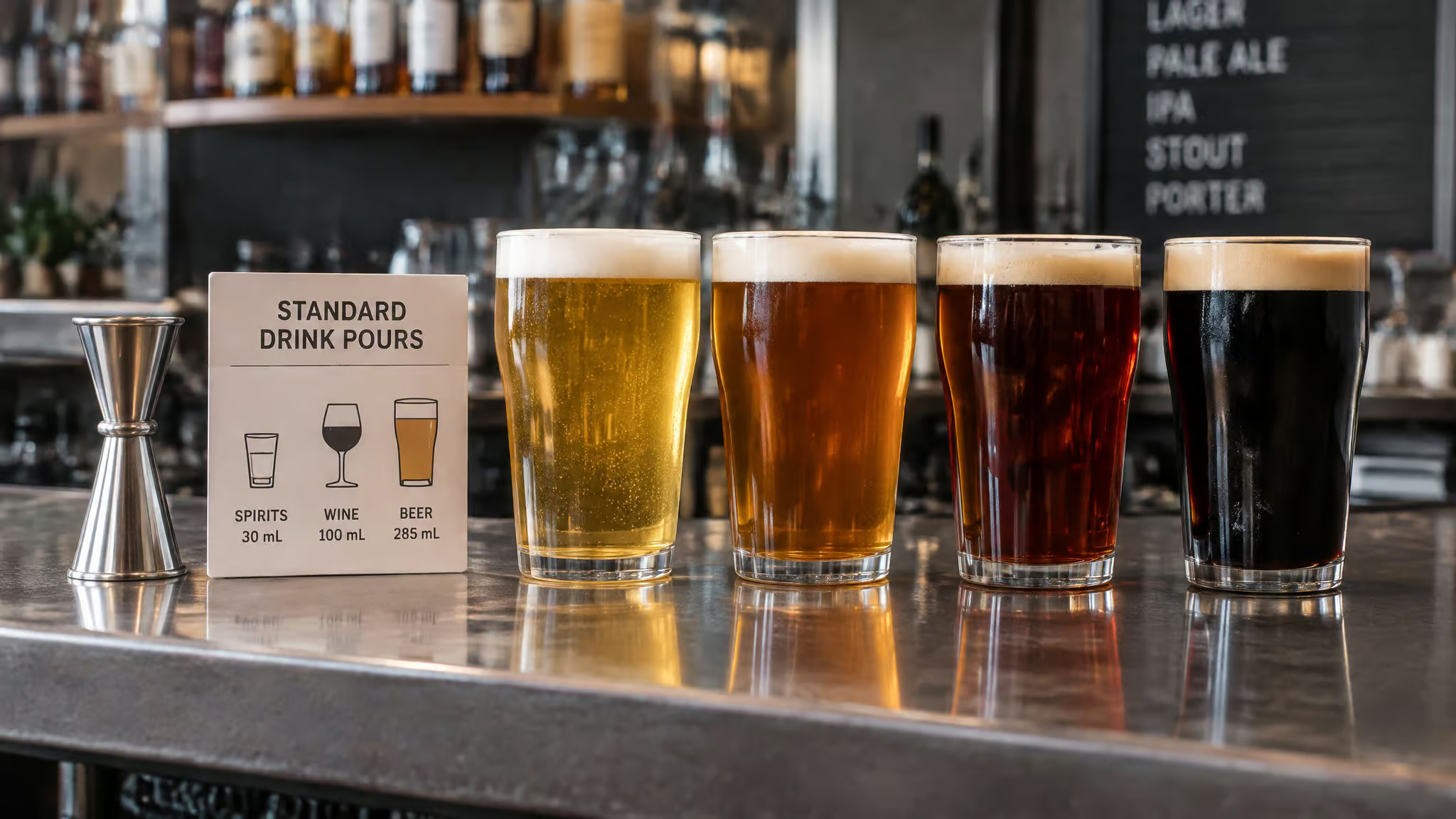
The two-hour rule
Binge drinking is enough alcohol in about two hours to push your blood alcohol concentration to 0.08%. In practice: 5 or more drinks for men, 4 or more for women, in one session. A “drink” means a standard drink, 12 oz of beer, 5 oz of wine, or 1.5 oz of spirits, which is smaller than most actual pours. The UK counts in units instead, flagging over 8 per session for men (about 5 bottles of beer) and over 6 for women (about 4 alcopops or 3 large gin and tonics).
Why it isn’t alcoholism
Alcoholism means physical and psychological dependence. Binge drinking doesn’t require either: only about 10% of binge drinkers are dependent, and abstaining between sessions is itself a defining feature of the pattern. So “I don’t drink every day” is the tell, not the exoneration. Can the pattern turn into alcohol use disorder?
Yes, over time, and frequency is the condition that decides it. The slide is gradual: tolerance builds, dry days shrink, drinking eats more time and energy, and cutting back brings headaches, fatigue, anxiety, and irritability that read as proof it “isn’t working.”
Does this sound familiar
No scoring, just a list:
- Regularly ending up drinking more than you planned
- Chasing the feeling once you’ve started
- Frequent blackouts
- Guilt or shame the morning after
- A worse mood the day after drinking, not a better one
- Reckless calls while drunk: driving, stunts, going home with strangers
And don’t file this under 22-year-olds. Dr. Sealove reports seeing it in patients over 65 at an astronomical rate, with one in six reporting binge drinking. Across the general population, 15 to 20% of US adults binge drink, about 5% qualify as heavy drinkers (8 or more drinks a week for women, 15 or more for men), and 21.5% of Americans 12 and up reported past-month binge drinking in 2021 NIAAA figures.
Why you keep binge drinking: find your motivation
The plans keep failing for a specific reason: each binge has a driver, and the fix has to match the driver. Naming your why determines which tactic sticks. Five show up most:
- Stress. Unwinding after work or exams, getting through a breakup or a loss. The catch is ugly: alcohol is a depressant, so the drink you reach for to feel better tends to drag your mood down further.
- Boredom or loneliness. An empty evening at home, a drink in hand, the TV running for company. Drinking to fill a gap that the drinking doesn’t fill.
- Misjudged tolerance. Young guys blow past limits they don’t know yet; older guys assume a tolerance they no longer have.
- Social anxiety. The drink that makes talking, flirting, and joking with strangers feel possible. It works right up until it doesn’t.
- Peer pressure. Rounds of shots, plus the self-imposed pressure to fit in. Still real well past college.
If depression is in the picture, watch the loop: drink to cope, sleep falls apart, symptoms deepen, and the drinking resumes. Alcohol throws off neurotransmitter balance, which shows up as mood swings and irritability. Personality plays a part too; impulsive and novelty-seeking types drink riskier. Whatever your temperament, drinking habits can still change, and we go deeper on the drivers in what causes binge drinking. The socially anxious reader needs the breathing technique in Step 2, not the liquor-cabinet advice.
What binge drinking does to your body and brain
The risks run on two clocks: tonight and this decade. And the comfortable belief that moderate drinking is heart-healthy didn’t survive contact with the evidence. Earlier research pointed to benefits from low amounts and red wine’s resveratrol, but a large April 2023 synthesis covering 100-plus studies found even moderate consumption may cause health problems, per Dr. Sealove.
Tonight
Alcohol poisoning first: heart rate, breathing, and body temperature drop, and seizures, loss of consciousness, choking, and death are possible. Then the accident column: car crashes and DUIs, falls, drownings, burns, and assaults, including sexual violence, and the impaired-judgment downstream, STDs and unintended pregnancy.
This year
A 12 oz beer runs about 150 calories, so five beers is 750 extra before the pizza shows up. The brain damage lives here too, in the literal sense of what’s damaged. A blackout is the brain failing to file short-term memory into long-term storage, which is why the night comes back in fragments; it’s a mechanism, not a moral failing. Working memory and impulse control take hits, and for teenage and young-adult brains still developing, the cost shows up in learning and concentration. Dr. Sherer puts it plainly: any addiction can push the brain’s pleasure-reward circuitry into overdrive, and the trade is unfair, because impulse-control areas can weaken while reward areas strengthen.
This decade
High blood pressure, arrhythmias, heart attack, heart failure, stroke, liver disease, GI damage. Cancer risk rises across the breast, mouth, throat, esophagus, larynx, liver, and colorectal region, because alcohol damages tissue and impairs how the body handles nutrients and harmful chemicals. For pregnant readers, binge drinking risks fetal alcohol spectrum disorders, heart and skeletal concerns, weaker attention and memory, learning disabilities, plus miscarriage, stillbirth, and elevated SIDS risk. On recovery timelines, the honest answer is that it depends, and we resist inventing a schedule.
Dr. Sherer’s framing is that habits take years to form and years to permanently stop, but the effort improves both mental and physical health. The fuller consequences rundown lives in the same pillar piece, and how long recovery actually takes gets its own guide.
Step 1: Set a hard limit and change how you drink
Decide the number before the first drink and make it external: write it down, set a phone reminder, tell a friend. Alcohol impairs exactly the judgment you’d need to enforce the limit later, so the enforcement can’t live in your head. Then the mechanics: alternate every alcoholic drink with a non-alcoholic one, take small sips, pick lower-alcohol choices, eat first, and keep alcohol out of easy reach, back of the fridge, high cabinet. About the water trick: hangovers aren’t solely dehydration, which is why chugging water at midnight has never once saved anybody. Drinking less is the only sure prevention, but when the limit keeps slipping despite every trick above, that’s usually the sign that it’s time to look into drug & alcohol rehab in Columbia, rather than another resolution.
Step 2: Handle peer pressure and social anxiety without alcohol
Willpower at 11 p.m. loses; preparation wins. Have the words ready: a firm “No, thank you” delivered without apology, or blame an early morning, then change the subject. People who respect you accept the no. The ones who keep pushing are showing you who they are. Holding any drink makes fitting in easier, and a non-alcoholic one counts fully, drinking games included.
For the social nerves that make the first drink feel necessary, use the 4-2-6 pattern: inhale for 4 seconds, hold for 2, exhale for 6. The long exhale triggers the body’s relaxation response and settles your nerves. “Breathe deeply” is useless advice; the numbers are the point. Then point your attention outward, at the room, at other people’s body language, instead of inward at the nerves. When the inner monologue starts up, answer it with something realistic, because people are far less focused on you than you believe.
Step 3: Reclaim your weekends with harm reduction and drink-free plans
The fix for the weekend drinker is deciding the shape of the night before you’re out, then pre-booking the alternative so it exists before Friday arrives. Willpower is a fine plan until the third round. A decision made on Wednesday holds better.
Field note: Decide Wednesday what Friday looks like. A plan made sober survives the third round; a plan made at the bar doesn’t.
Most of the night-of tactics below come from Drinkaware‘s harm-reduction set, and they work best run as a package:
| Tactic | The concrete move |
|---|---|
| Go-home time | Set before you leave, not negotiated at 1 a.m. |
| Drink and spending limit | A number for each, decided in advance |
| Rounds | Skip buying into them; saves real money too |
| Pace | Wait until you actually want a drink, then drink slowly |
| Food | A real meal first |
| Alternating | Water or a soft drink between alcoholic ones |
| Ride home | Planned before the night starts |
| Company | Stick with people you trust |
| NA options | Non-alcoholic beer, wine, spirits, mocktails; legitimate, no stigma |
The counting is handled for you: Drinkaware‘s free MyDrinkaware App and its Unit and Calorie Calculator track intake, and the Drinking Check is a low-pressure self-assessment if you want a read on your habits. For a benchmark, the UK Chief Medical Officers’ guideline caps intake at 14 weekly units, paced across at least three days, with multiple alcohol-free days and no binge sessions.
Book the alternative before Friday
The other half is replacement, and it’s a planning problem, not deprivation. Leave a Friday night blank and the pub wins by default, because the default always wins. Book something: Hijingo’s futuristic bingo, a zombie experience, roller disco, outdoor cinema, brunch instead of the pub, foraging for homemade cordial if that’s your lane, or a night in with a video catch-up, which is a valid choice, not a consolation prize. The strongest version is a training goal: sign up for a first 5K or a swimming challenge. Hangovers and a 5K plan don’t coexist, so the motivation comes built in.
The payoff framing: cutting down buys back the weekend. More energy, more money, better mood. You’re not giving up Saturday; you’re getting it back.
Step 4: Choose your goal, abstinence or moderation
Either goal is valid; which one fits comes down to signs of dependence and what you want for yourself. There’s real space between binge drinking and total abstinence, and you can keep enjoying your favorite drinks without jeopardizing your health or safety, as long as the red-line criteria later in this piece don’t describe you. Cutting back is a meaningful outcome, not a failure: Dr. Kelly estimates that a 1% reduction in heavy drinking could save roughly 1,000 lives a year from alcohol-related car crashes alone. The counterweight stays in the room, though: a number of experts argue that no amount of alcohol is entirely risk-free, so make this choice honestly rather than as a rationalization.
The paths split cleanly. Abstinence runs through AA or SMART Recovery. Moderation runs through Moderation Management and the Sinclair Method in the next section. If the red-line criteria apply to you, that’s the tiebreaker, and moderation stops being the right experiment.
Step 5: Consider medication-assisted moderation (the Sinclair Method)
The honest verdict: it can work for reducing drinking, but the evidence has real gaps, and it requires a prescription and a clinician’s oversight.

How it works
You take naltrexone 1 to 2 hours before drinking, every time you drink, not daily. It dulls alcohol’s rewarding effects, gradually teaching the brain to unlink drinking from pleasure; researchers call the process pharmacological extinction. John David Sinclair pioneered the approach in the late 1980s, and there’s no abstinence requirement, which is the whole appeal for a lot of readers. Some background: naltrexone was originally built for opioid addiction and was approved for alcohol use disorder in 1994.
Standard use is daily or several times a week for relapse prevention, with Sinclair’s targeted protocol as the variant. Dosing runs 50 mg standard, with some people starting at 12 or 25 mg. Side effects include nausea, headache, dizziness, and trouble sleeping, which usually fade; rare liver problems occur, mostly in people with pre-existing liver damage. You need a prescription or a telehealth program. Full stop.
What the evidence doesn’t settle
Dr. Kelly’s caveats deserve your attention: few head-to-head trials have compared the method against CBT, AA, or SMART Recovery, and there’s no built-in peer-support system the way AA has one. Moderation Management is the free pairing often suggested to fill that gap. Cravings fade over weeks to many months, and outcomes range from moderation to complete abstinence. His summary: “If naltrexone helps people drink less, the net effect is often beneficial.”
When self-directed change isn’t enough: five signs to see a doctor
If any of these five is true, self-help is over and a doctor is the correct next step:
- You can’t control your drinking despite negative consequences
- You get withdrawal symptoms when you quit: tremors, insomnia, seizures
- You have physical health problems like liver damage, high blood pressure, or heart disease
- You have mental health issues including anxiety, depression, or suicidal thoughts
- Self-directed quit attempts keep failing
And the warning almost no how-to article includes: for dependent drinkers, quitting cold turkey is itself the dangerous move. Sudden unsupervised cessation can cause seizures, confusion, shaking, and anxiety, and per Dr. Sherer, it can be fatal. The pattern clinicians describe goes like this: a guy after years of heavy sessions attempts cold turkey, hits tremors and insomnia, and reads it as a willpower failure when it’s withdrawal. Withdrawal symptoms are a medical signal, not a character flaw. At that point, recovery may require ongoing therapy, medication, or inpatient detoxification.
What actually happens when you call SAMHSA’s National Helpline
Treatment help is free to find, and the call asks almost nothing of you. SAMHSA’s National Helpline is a free, confidential, 24/7, 365-day-a-year treatment referral and information service in English and Spanish. Here’s the part that removes the fear of first contact: it routes, it doesn’t counsel, and it asks only for a ZIP.
| Channel | Details |
|---|---|
| Phone | 1-800-662-HELP (4357), 24/7, English and Spanish |
| TTY | 1-800-487-4889 |
| Text | Text your 5-digit ZIP to 435748 (HELP4U) |
| Online | SAMHSA’s Behavioral Health Treatment Services Locator |
The text line exists because not making a phone call is a real barrier, and nobody should skip getting help over it. Texting is English-only SMS, message and data rates may apply, and you can reply STOP to cancel or HELP for assistance. The locator is a searchable tool for treatment facilities if you’d rather find them yourself, and it pairs well with the helpline.
What the call does and doesn’t do
Trained information specialists answer, and their job is routing, not counseling: they transfer callers to state services and local intake centers, and they don’t request personal information beyond the geography needed to route you. The referral itself costs nothing. Uninsured or underinsured callers get pointed to their state office for state-funded programs, facilities with sliding fee scales, or facilities that accept Medicare and Medicaid. Insured callers are encouraged to contact their insurer for in-network providers.
For scale: the line took 833,598 calls in 2020, up 27% from 656,953 in 2019. That’s demand context, not a verdict on your call.
If you’re calling for someone else
SAMHSA publishes family resources too: a booklet for families covering symptoms, treatment types, recovery, and what kids worry about; “It’s Not Your Fault” from NACoA for teens with a parent who drinks; After an Attempt, which supports families following a suicide-related emergency department visit; and “Family Therapy Can Help.” More titles come through the SAMHSA Store. We cover where to seek help in more depth in the pillar piece.
Support groups beyond AA, matched to your goal
The right group depends on whether your target is abstinence or moderation, and which country you’re in. Pick by goal, not by default.

For abstinence: AA is the 12-step, abstinence-based option, and what it asks of you is exactly that, abstinence and the steps. SMART Recovery is the non-12-step route, abstinence through self-directed change. Women for Sobriety is built for women. For moderation: Moderation Management is the group for people aiming at cutting down rather than quitting, and it doubles as the free peer-support pairing suggested with the Sinclair Method. For families: Al-Anon and Alateen serve loved ones and teens, and most of these organizations have worldwide chapters.
Country directories, kept tight. UK: Drinkline at 0300 123 1110, Drinkaware’s tools, and NHS support. Canada: the Finding Quality Addiction Care in Canada resource. Australia: Family Drug Helpline at 1300 660 068, Counselling Online, and regional Help and Support Services.
One disclosure if you’ve seen BetterHelp promoted alongside articles like this one: that’s sponsored content from the source, an online therapy service matching users to licensed therapists in as little as 48 hours. Affiliate material, not our endorsement.
How to help someone stop binge drinking without pushing them away
Helping someone else start with the same honesty this piece asks of you: you can set the conditions, but you can’t do the changing for them. What follows is a protocol for raising the issue without triggering a fight, supporting without policing, and knowing where your role ends.
Timing and the limits of your role
The protocol works when the timing does. Never bring up your concerns when they’re mid-drink or paying for the last round; mid-hangover conversations reliably trigger denial, and supporters misread that pushback as failure. The working pattern is one calm, respectful, nonjudgmental conversation, a few days of space, then a revisit. Expect denial, deflection, or anger on the first pass.
If they’re open to it, work out a written limit for their drinking together, and remind, never enforce; that distinction keeps it from becoming a policing dynamic. Model moderation out loud (announcing, say, “That’s my one for tonight”), set up responsibility the way a designated driver gets chosen before the night starts, and offer alcohol-free alternatives when someone’s going through a breakup or job loss: a hike or a road trip instead of a bar. The hard limit, stated plainly: you cannot control another person’s behavior, and you’re not their therapist or monitor.
If it’s your teenager
The stakes are lifelong effects on a developing brain and body, school struggles, other substance use, alcohol poisoning, and legal trouble. What helps is the order of operations: understand why they’re drinking first, then talk without judgment. Alateen and NACoA’s “It’s Not Your Fault” are built for exactly this.
Sticking with it: what change actually takes
Whatever tactic you pick, plan on sticking with it longer than feels necessary, a 2024 clinical FAQ suggests treatment of at least 6-12 months, with outcomes improving when therapy runs past three months. Even extended-release naltrexone injections (Vivitrol), which make adherence easier, still see one-third of patients stop within 90 days. And if any of the five red-line criteria applies to you, contact SAMHSA’s helpline at 1-800-662-4357 or a doctor rather than attempting unsupervised cessation.
Frequently Asked Questions
What is considered heavy binge drinking?
Binge drinking itself means 5 or more drinks for men, 4 or more for women, in about two hours — enough to push blood alcohol concentration to 0.08%. Heavy drinking is a separate threshold: 8 or more drinks a week for women, 15 or more for men. About 5% of US adults qualify as heavy drinkers, compared to 15–20% who binge drink.
How long does it take for your body to recover from binge drinking?
The honest answer is that it depends, and there’s no reliable fixed schedule. Clinicians frame it this way: habits take years to form and years to permanently stop, but the effort improves both mental and physical health along the way. One caution — if you’re a dependent drinker, quitting cold turkey can be dangerous and even fatal, so withdrawal symptoms are a signal to see a doctor, not a willpower failure.
How to stop weekend binge drinking
Decide the shape of the night before you’re out: a go-home time, a drink limit, and a spending cap all set in advance, plus a ride home planned before the night starts. Then pre-book the alternative so it exists before Friday arrives — a training goal like a first 5K works especially well, because hangovers and a 5K plan don’t coexist. A decision made sober on Wednesday survives the third round; a plan made at the bar doesn’t.
What are the short-term and long-term health risks of binge drinking?
Tonight: alcohol poisoning (dropping heart rate, breathing, and body temperature, with seizures and death possible) plus car crashes, falls, drownings, assaults, and impaired-judgment outcomes like STDs and unintended pregnancy. This year: blackouts, hits to working memory and impulse control, and roughly 750 extra calories from five beers alone. This decade: high blood pressure, arrhythmias, heart attack, stroke, liver disease, and elevated cancer risk across the breast, mouth, throat, esophagus, liver, and colorectal region.